
Reviewed · COOKING CLASSES
Kid-Friendly Sushi Making Class in Tokyo (English-Led)
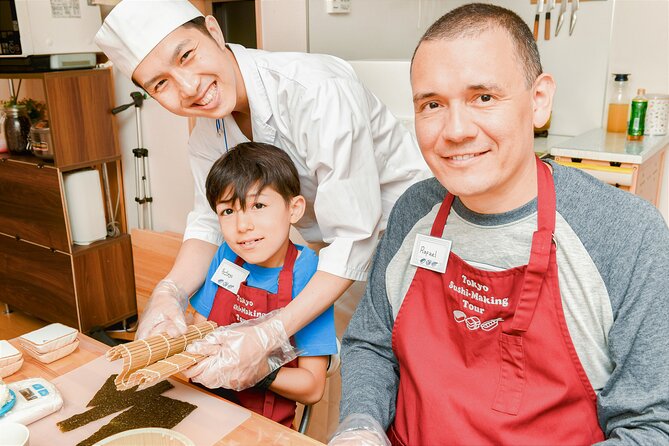
Sushi is better when you make it yourself. This 2.5-hour class in Kita-Senju gives you hands-on practice with sushi rice, decorative rolls, nigiri, and battleship rolls, while an English-speaking instructor explains sushi customs, history, and useful Japanese phrases. I especially like the small maximum of eight people and the clear focus on doing, not just watching. I also like that children from age eight can take part, making this a useful family break from Tokyo’s temples and shopping streets.
The main consideration is the location. Kita-Senju is well connected, but it is not in the center of the usual sightseeing districts. You must also tell the provider about dietary needs in advance, especially if you need non-raw fish, vegetarian, or gluten-free ingredients. At about $68.97 per person, the price is fair if you value instruction, a small group, and a meal you prepare yourself, but it is more than a quick sushi lunch.
In This Review
- Key points at a glance
- Meeting at Kita-Senju at 10:30 a.m.
- The opening quiz makes sushi etiquette fun
- Preparing vinegared rice, the foundation of the meal
- Four sushi projects keep the class moving
- Decorative sushi roll
- California roll
- Nigiri-sushi
- Battleship roll
- English instruction from Nat or Morris
- A good fit for children age eight and older
- Raw fish and dietary planning
- Eating your own sushi at the end
- Is $68.97 a fair Tokyo food experience?
- Getting there and fitting it into your day
- Who should book this sushi class?
- Booking, cancellation, and final advice
- FAQ
- Where does the sushi class meet?
- What time does the class start?
- How long does the experience last?
- Is the class taught in English?
- What kinds of sushi will I make?
- Can children join the class?
- Does the class use raw fish?
- Are vegetarian and gluten-free options available?
- What is the cancellation policy?
Key points at a glance
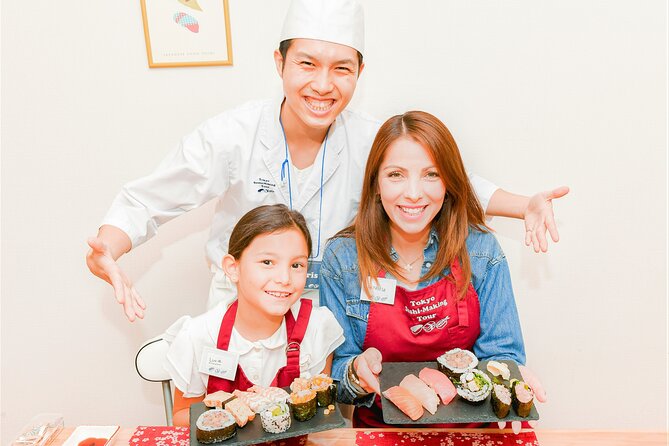
- Four sushi styles in one class: Make decorative sushi rolls, California rolls, nigiri-sushi, and battleship rolls.
- A real family activity: Children age eight and older are welcome, and the pace includes quizzes, instruction, preparation, and eating.
- English-led guidance: Instructors such as Nat and Morris explain techniques clearly and answer questions throughout the session.
- Small-group attention: The class is limited to eight people, so you should have a better chance to receive hands-on help.
- Food choices can be arranged: Non-raw fish, vegetarian, and gluten-free menus are available when requested ahead of time.
- Easy public transport access: Meet at the East exit of Kita-Senju Station at 10:30 a.m., then return to the meeting point when the class ends.
Meeting at Kita-Senju at 10:30 a.m.
Your morning begins at the East exit of Kita-Senju Station. The listed meeting address is 3-5 Senjuasahicho, Adachi City, Tokyo 120-0026. The provider describes the area as convenient from Asakusa, Akihabara, Ueno, and Ginza, with public transportation nearby.
The 10:30 a.m. start works well for families. You do not need to rush through an early breakfast, and the class finishes around lunchtime. It also leaves the afternoon free for another part of Tokyo. Since the activity ends back at the meeting point, you can continue exploring from Kita-Senju or return toward the central districts by train.
I would allow extra time to find the correct station exit. Tokyo stations can be large, and a calm arrival is especially helpful when you are traveling with children. The provider sends confirmation within 48 hours, subject to availability, so check the final meeting details before setting out.
The class is often booked about 40 days ahead. That is useful planning information, especially if your family has fixed travel dates. A maximum of eight people keeps the setting personal, but it also means limited places. I would reserve early for school holidays and popular travel periods.
More Cooking Classes in Tokyo
- Sushi Making Tokyo Roll and Authentic Japanese Sushi Class
★ 5.0 · 3,971 reviews - Tokyo: Roll and Authentic Sushi Making Class in Asakusa
★ 4.9 · 1,957 reviews - Tokyo Shinjuku Chopsticks Making Class
★ 5.0 · 1,763 reviews
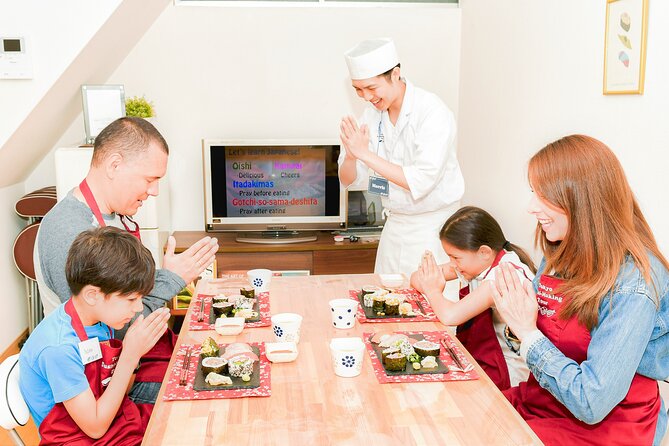
The opening quiz makes sushi etiquette fun
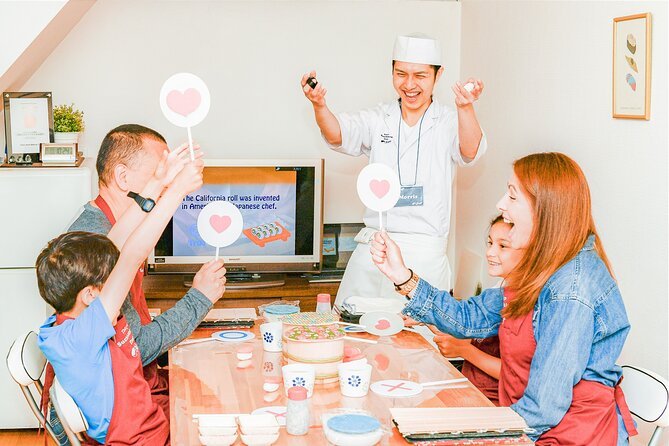
The class begins with a quiz covering sushi etiquette and trivia. This is a smart way to start. Instead of giving you a long lecture about rules, the instructor turns cultural information into something interactive.
You may learn how sushi is traditionally approached, how to handle it, and why certain customs matter. The quiz also gives children a reason to pay attention before the preparation begins. A family can compete casually, laugh at wrong answers, and pick up useful information without feeling as if it has entered a classroom.
The session also includes an introduction to sushi’s history. That background helps explain why sushi is more than raw fish placed on rice. You get context for the ingredients and forms you are about to prepare, which gives the cooking portion more meaning.
The instructor also teaches useful Japanese phrases and offers travel tips. These details will not turn you into a fluent speaker, but they add a practical link between the class and the rest of your Japan trip. For children, learning a few words connected to food can make later restaurant visits more interesting.
Preparing vinegared rice, the foundation of the meal
The first practical cooking task is making vinegared rice. This is the least flashy part of sushi, but it is one of the most important. If the rice is too wet, too dry, too sweet, or poorly seasoned, even careful shaping will not rescue the final result.
The class gives you professional tips for getting sushi right at home. That matters because rice is often where home cooks struggle. You should come away with a better sense of texture, seasoning, and handling rather than simply copying a few shapes for one meal.
The hands-on format also helps children understand that sushi is built in stages. They are not simply handed prepared pieces to decorate. They take part in the basic work, then use that rice in several different forms.
The supplied details do not specify every utensil or cooking step, so you should not expect a full professional kitchen course. Think of this as a practical introduction that teaches core methods in a friendly setting.
Four sushi projects keep the class moving
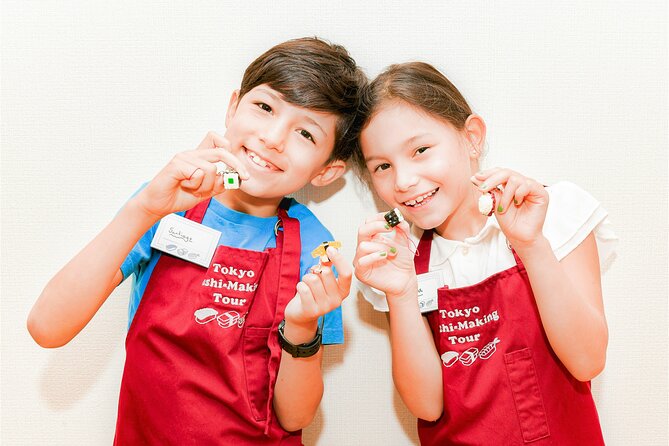
The strongest feature is the range of sushi you make. Four styles give you different skills and keep the class from becoming repetitive.
A completely different kind of day out:
- Tokyo Disney Resort – Tokyo Disneyland & Tokyo DisneySea Park Tickets
★ 4.8 · 99,488 reviews - SHIBUYA SKY Ticket
★ 4.7 · 46,509 reviews - JR Whole Japan Rail Pass
★ 4.8 · 29,150 reviews - Mt Fuji and Hakone 1-Day Bus Tour Return by Bullet Train
★ 5.0 · 26,383 reviews
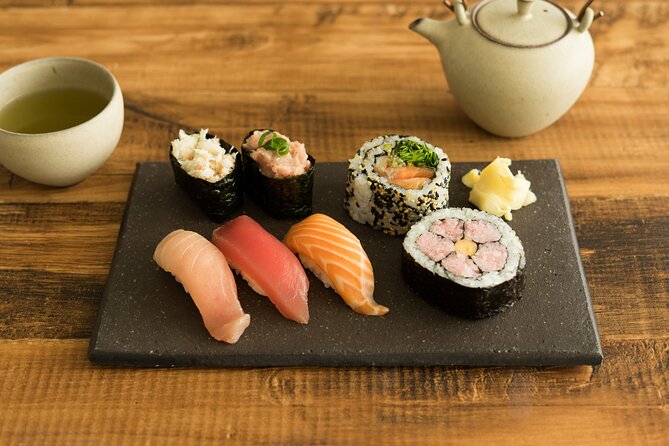
Decorative sushi roll
Decorative sushi is the most playful option. Ingredients are arranged inside the roll so that a pattern appears when you cut it. This is often the moment when beginners realize that sushi can be both food and design.
You will need to follow instructions carefully, since the arrangement determines the finished image. That makes it a good task for older children and adults who enjoy precise work. It can also be the most satisfying piece to photograph before eating.
California roll
The California roll introduces the inside-out roll format. It gives you practice with rice on the outside and filling inside, which requires a different touch from ordinary rolled sushi.
This style is familiar to many people outside Japan, so it can serve as an easy starting point. At the same time, making one yourself shows how much control is needed to keep the roll firm and even.
Nigiri-sushi
Nigiri is simple in appearance, but shaping it neatly takes practice. You form a small portion of rice and place fish on top. The class normally uses raw salmon and tuna, subject to the menu selected for the session.
This is where the instructor’s hands-on help is especially useful. A small group allows the teacher to watch how you shape the rice and correct your technique. Do not expect every piece to look like one from a skilled sushi counter. That is part of the fun, and the class is designed for beginners.
Battleship roll
The battleship roll, sometimes called gunkan sushi, uses a strip of seaweed around the rice to create a raised edge. The shape can hold toppings that would not sit neatly on a flat piece of nigiri.
It is visually distinctive and gives children another clear goal. You are not making four versions of the same item. Each style asks you to handle rice, seaweed, and fillings in a different way.
English instruction from Nat or Morris
The class is led in English, which removes a major worry for first-time cooks. The information describes instructors including Nat and Morris, and the teaching style comes through as friendly, patient, and well organized.
Nat is specifically praised for clear English, sushi knowledge, practical explanations, and the ability to answer questions. That combination matters more than a polished speech. You want an instructor who notices when your roll is coming apart and can explain how to fix it.
Morris is also described as making the session interesting, fun, and delicious for a family with young children. Those details suggest that the class is not built only for adults who already enjoy cooking. The teaching can adjust to a family group.
The strongest pattern is the mix of education and humor. You learn etiquette and history, but you also get to work with your hands, ask questions, and eat what you make. That balance helps the two and a half hours pass quickly.
A good fit for children age eight and older
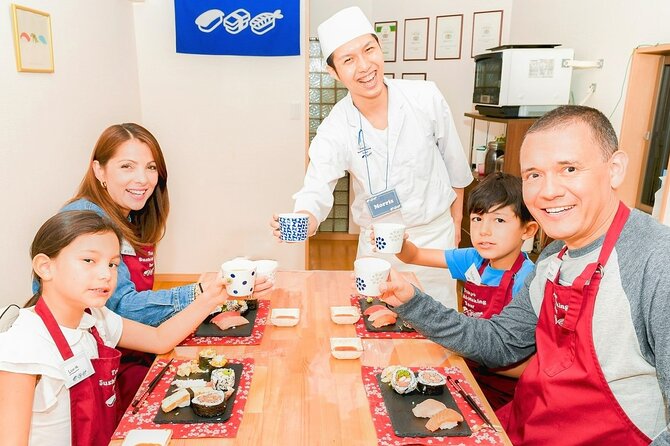
This is one of the better Tokyo food activities for families because children have a real role. They learn about sushi, make several kinds, and eat the finished food. That is more engaging than asking a child to sit quietly through a food demonstration.
The class includes enough variety to hold attention: a quiz, cultural information, rice preparation, four sushi forms, and the final meal. The hands-on work also gives children a chance to see that attractive sushi takes care and practice.
Still, age eight is the stated minimum, not a promise that every eight-year-old will enjoy every step. Decorative sushi and rolling can require patience. If your child dislikes unfamiliar textures, raw fish, or detailed food preparation, arrange a non-raw menu or consider another activity.
Families with children aged 10 and 12 have found the format particularly suitable, with both history and practical instruction included. You should also expect some pieces to look uneven. That is normal for beginners and part of the shared amusement.
Raw fish and dietary planning
The standard ingredients typically include raw salmon and tuna. If you enjoy sushi, this makes the meal feel close to the food you came to Japan to learn. If you do not eat raw fish, you are not automatically left out.
The provider offers a Non-Raw Fish Menu, Vegetarian Menu, Gluten-Free Menu, and other dietary adjustments. You must request these options in advance. Do not wait until you arrive, since the ingredients and preparation need to be planned before the class.
The supplied information does not list every possible allergy accommodation, so you should state your restrictions clearly when booking. If your needs are complex, ask for confirmation rather than assuming a standard alternative will cover them.
This is also a good class for families with mixed preferences. One person can choose raw fish while another uses a non-raw or vegetarian option, subject to advance arrangement. That flexibility adds real value to the booking.
Eating your own sushi at the end
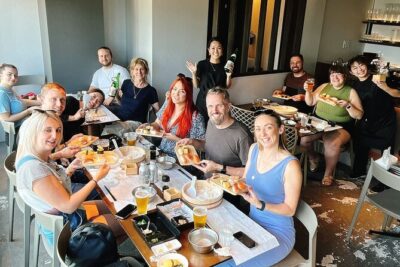
After the preparation, you sit down to enjoy what you made. This final meal is not an afterthought. It gives the class a clear reward and lets you compare the four styles side by side.
You will probably notice the difference between sushi that looks easy and sushi that is easy to make. A decorative roll may look impressive but require careful assembly. Nigiri may appear plain but demand a light touch. Eating the results helps you understand those differences.
The food also becomes part of your trip memory. Instead of only taking photos of restaurant dishes, you have a meal connected to a skill you learned in Tokyo. The techniques are simple enough to try again at home, especially the rice and rolling methods.
There is no indication that the class includes a separate restaurant meal or additional tasting menu. The value comes from eating your own creations, learning the process, and receiving guidance along the way.
Is $68.97 a fair Tokyo food experience?
At $68.97 per person, this is not the cheapest way to eat sushi in Tokyo. If your only goal is a filling meal, a sushi restaurant will give you more food for less effort.
The price makes more sense when you count the instruction and cultural content. You receive about two and a half hours of English-led teaching, make four sushi types, learn etiquette and history, pick up Japanese phrases, and eat the finished food. The small group, capped at eight, is another reason the price feels reasonable.
I would compare it with the cost of a standard sightseeing attraction. Here, you are not just looking at something. You are learning a skill and taking home methods you can use again. That makes it a strong choice for families and first-time visitors who want a more active experience.
The value is weaker if you already make sushi regularly or dislike group cooking. It is also less appealing if your schedule is tight and Kita-Senju adds too much travel time. The class deserves its price, but only if you want the activity as much as the meal.
Getting there and fitting it into your day
Kita-Senju gives you a practical base for this morning activity. The provider lists access from Asakusa, Akihabara, Ueno, and Ginza, so it can fit into an itinerary focused on northern or eastern Tokyo.
The meeting time is fixed at 10:30 a.m., and the experience ends at the same meeting point. Plan your day around that rather than expecting flexible arrival or a different drop-off point.
Because the class lasts about 2.5 hours, lunch is built into the timing through the sushi you prepare. You can then continue sightseeing in the afternoon without losing a full day. This schedule works especially well for a family that needs a clear activity with a definite finish.
The activity is near public transportation, but the details provided do not include a private transfer or hotel pickup. You should plan to reach Kita-Senju independently.
Who should book this sushi class?
I would recommend it most strongly to:
- Families with children aged eight and older
- First-time sushi makers
- Visitors who want an English-speaking activity
- People who enjoy learning food customs along with cooking
- Couples or small groups who prefer a personal class
- Anyone who wants practical sushi skills for home
I would be more cautious if you need a highly specialized allergy arrangement, dislike raw fish and do not request an alternative ahead of time, or prefer a formal restaurant meal. The class is relaxed and hands-on, not a luxury dining experience.
The provider has welcomed more than 7,000 participants since 2013, and the available feedback is consistently positive. The most praised features are the patient instruction, clear English, family-friendly pace, good organization, and the pleasure of eating the sushi you create.
Booking, cancellation, and final advice
You can cancel for a full refund if you do so at least 24 hours before the 10:30 a.m. start time. Changes or cancellations made less than 24 hours ahead are not accepted for a refund, and cut-off times use Tokyo local time.
I would book this class if you want a memorable morning that combines food, culture, and useful skills. Reserve well ahead because it is commonly booked about 40 days in advance, and send dietary requests at the time of booking.
Skip it if you only want the lowest-cost sushi meal or if a central Tokyo location is essential. For families, curious beginners, and anyone who likes learning by doing, this is a well-paced and good-value way to spend part of a Tokyo morning.
FAQ
Where does the sushi class meet?
The meeting point is 3-5 Senjuasahicho, Adachi City, Tokyo 120-0026, Japan, at the East exit of Kita-Senju Station.
What time does the class start?
The class starts at 10:30 a.m.
How long does the experience last?
The class lasts approximately 2 hours and 30 minutes.
Is the class taught in English?
Yes. The class is led by English-speaking instructors.
What kinds of sushi will I make?
You will make decorative sushi rolls, California rolls, nigiri-sushi, and battleship rolls.
Can children join the class?
Yes. Children age eight and older are welcome.
Does the class use raw fish?
The class typically uses raw salmon and tuna, but alternative menus are available by advance request.
Are vegetarian and gluten-free options available?
Yes. Vegetarian, gluten-free, non-raw fish, and other menu options can be arranged when you inform the provider in advance.
What is the cancellation policy?
You can cancel at least 24 hours before the start time for a full refund. Cancellations or changes made less than 24 hours before the experience are not accepted for a refund.
Just added in Tokyo
- Tokyo The Izakaya tour★ 5.0 · 131 reviews
- The Best Family-Friendly Tokyo Tour with Government Licensed Guide★ 5.0 · 28 reviews
- Highlights & Hidden Gems of the Shibuya District Private Tour★ 5.0 · 48 reviews
- Tokyo Deep Inside Cycle Tour~3 Hours E Bike Tour around Tokyo★ 5.0 · 50 reviews
- Tattoo-friendly open-air Onsen & drink★ 5.0 · 25 reviews
- Tokyo Traditional Tea Ceremony with a Japanese Tea Master★ 5.0 · 40 reviews
- Taisho Sushi Making Class in Tokyo★ 5.0 · 89 reviews
- Baseball Professional • Yomiuri Giants★ 4.5 · 13 reviews
Cooking Classes, compared.
Sushi Making Tokyo Roll and Authentic Japanese Sushi Class
Read our review →
Roll and Authentic Sushi Making Class in Asakusa
Read our review →
Ramen Cooking Class at Ramen Factory in Kyoto
Read our review →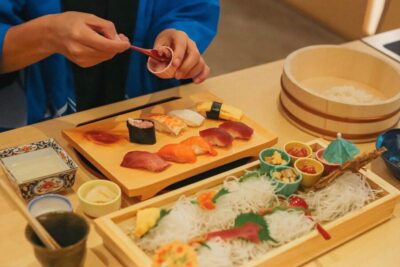
Sushi Making Class in a Happi Coat near a Famous Spot
Read our review →
Sushi Making Osaka Roll and Authentic Japanese Sushi Class
Read our review →
Tokyo Sushi Making Class in Tsukiji with Professional Chef
Read our review →
Ramen & Gyoza Cooking Class in Tokyo with Local Supermarket Visit
Read our review →Browse the lists this tour appears in