
Reviewed · CYCLING AND E-BIKE TOURS
Kyoto: City Secrets eBike Tour
Kyoto reveals itself on two wheels. I like this tour for its quiet side streets and its mix of famous sights with peaceful temples, shrines, and mountain roads. I also like the electric bikes, which make the 9-kilometer route manageable, but you should be comfortable cycling in traffic, on cobblestones, and down occasional steep sections.
In 225 minutes, you can see much more than you would on foot, while still having time to stop, listen, and look around. Guides such as Yuta, Henry, Sean, Shawn, Michael, and Shizuka have been praised for thoughtful route choices and clear cultural explanations. The main catch is timing: arrive at least 15 minutes early, since missing the departure means losing the booking.
In This Review
- Key points before you book
- Why Kyoto works so well by bicycle
- Starting at NORU and settling into the ride
- The Golden Pavilion: Kyoto’s famous first impression
- Geisha streets and Kyoto’s shrine of learning
- Daitoku-ji and the quiet work of Zen gardens
- Mountain roads, streams, and a different Kyoto
- What the guides add to the experience
- Is $127 a fair price?
- Who should book this Kyoto e-bike tour?
- The final call: a strong choice for seeing Kyoto differently
- FAQ
- Where does the Kyoto City Secrets eBike Tour meet?
- How long is the tour?
- How far do you ride?
- What departure times are available?
- Is the tour suitable for children?
- What is included in the price?
Key points before you book
- A 9-kilometer route through old and quiet Kyoto: The ride links major temples and shrines with backstreets, mountain roads, streams, and less-visited corners.
- The Golden Pavilion is paired with calmer places: You get one of Kyoto’s most famous sights, then move away from the crowds toward Zen gardens and local temples.
- Small groups make city cycling easier: Groups are limited to eight people, allowing the guide to watch the pace and help with road safety.
- The electric bikes handle hills well: Most of the route is easy, though one steep climb, a fast descent, tight turns, or rough paving may require care.
- Guides add real value: Yuta is praised for his Zen background, while Henry, Sean, Shawn, Michael, and Shizuka have each been singled out for history, culture, humor, or careful leadership.
- A traditional snack can be part of the pleasure: Stops have included a 1,000-year-old cafe, old-style mochi, tea, and small sweets, depending on the route and day.
Why Kyoto works so well by bicycle
Kyoto is broad and spread out. Its temples and shrines do not sit in one compact sightseeing district, and moving between them by train or bus can take as much time as the visit itself. A bicycle gives you a better sense of how the city changes from one neighborhood to the next.
This tour covers about 9 kilometers, which is enough to connect several sights without turning the afternoon into an endurance test. The electric motor matters most on the hills. You still pedal, but the bike takes much of the sting out of slopes and helps you keep up without arriving at every stop exhausted.
I especially like the choice to use smaller roads whenever possible. Kyoto’s main streets can be crowded, and riding beside buses is not the relaxed picture many people have in mind. The guides appear to choose quieter lanes and adjust the route around busy areas. You still need to watch traffic lights, stay to the left, and follow Japanese road rules, but a group of no more than eight is much easier to manage than a large cycling procession.
This is not a cycling tour for someone who has not ridden a bike in years. You should be able to brake, steer, handle a tight turn, and control your speed on a descent. Most of the ride is flat and gentle, but the final sections can bring more technical riding, including cobblestones and sharper downhill stretches.
More Bike Tours in Kyoto
- Bike Tour Exploring North Kyoto plus Lunch
★ 5.0 · 1,087 reviews - Arashiyama Bamboo Forest & Hidden Gems Bike Tour (Early Bird)
★ 5.0 · 613 reviews - 5 Top Highlights of Kyoto Full Day Bike Tour (E-bike option)
★ 5.0 · 511 reviews
Starting at NORU and settling into the ride
The meeting point is NORU, where you receive the bike and helmet before setting off. Departure times are 9 am, 9:30 am, and 1 pm. The afternoon start is useful if you spent the morning at another Kyoto sight, while the morning departures give you cooler conditions in warmer months.
Arrive 15 minutes early. This is not a suggestion to interpret loosely. If you arrive at the scheduled departure time, the group may already be on the road, and the missed tour is not refundable.
The guides receive strong praise for making riders feel safe. Yuta, in particular, is often described as attentive to the group’s comfort and pace. Other guides have helped families, teenagers, and first-time e-bike riders settle in quickly. The small group format helps here, since the leader can keep an eye on each rider rather than simply pointing toward the next turn.
The bikes are described as comfortable and dependable, with electric assistance that makes the route less strenuous. Water or refreshments have been provided on some outings, especially in hot weather, but you should not rely on that as your only drink for the day.
The Golden Pavilion: Kyoto’s famous first impression
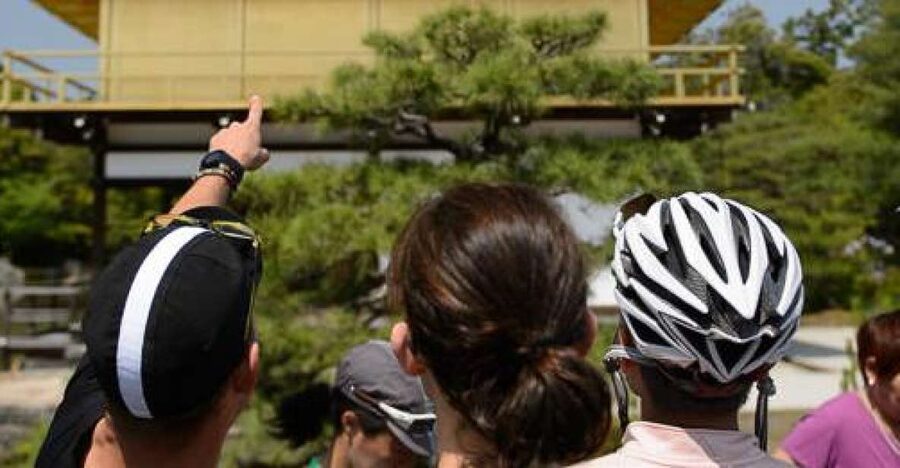
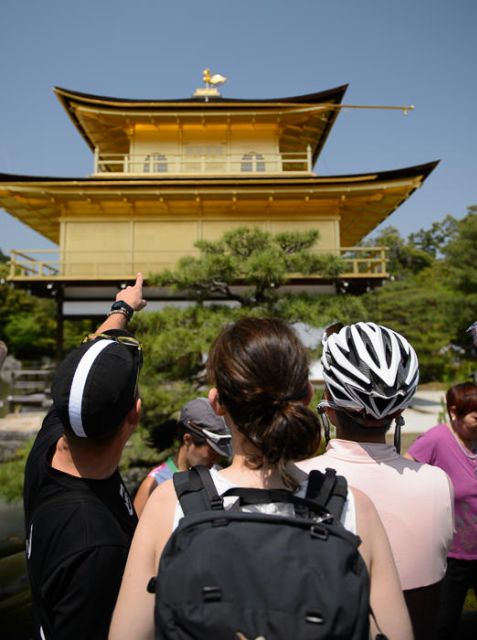
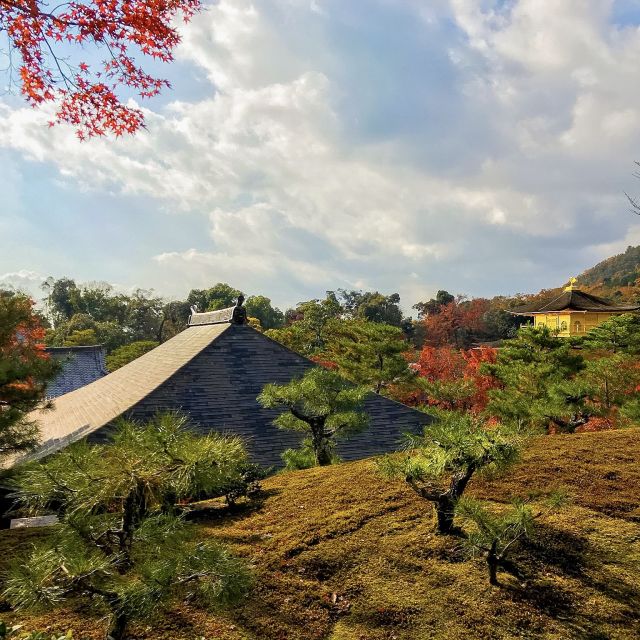
Kinkaku-ji, better known as the Golden Pavilion, is the major headline stop. Its gold-covered upper floors reflect across the pond, creating one of Kyoto’s most familiar views. It is beautiful, but it is also one of the city’s busiest attractions, so expect a very different mood here than at the quieter temples later in the ride.
The value of visiting it by bike is not that you avoid all crowds. You do not. The advantage is that the pavilion becomes one part of a larger route rather than your entire Kyoto experience. You can see the iconic building, take in the garden setting, and then leave the heaviest foot traffic behind.
Entrance fees are included, which keeps the day simple. Your guide can provide context about the site and Japanese religious traditions, though the amount of time here may vary. This is a moving tour, not a long private temple study.
If the Golden Pavilion is your main reason for booking, check the exact route at the start. The experience is designed to combine it with less familiar places, so you should not expect to spend hours exploring every corner of the grounds.
Geisha streets and Kyoto’s shrine of learning
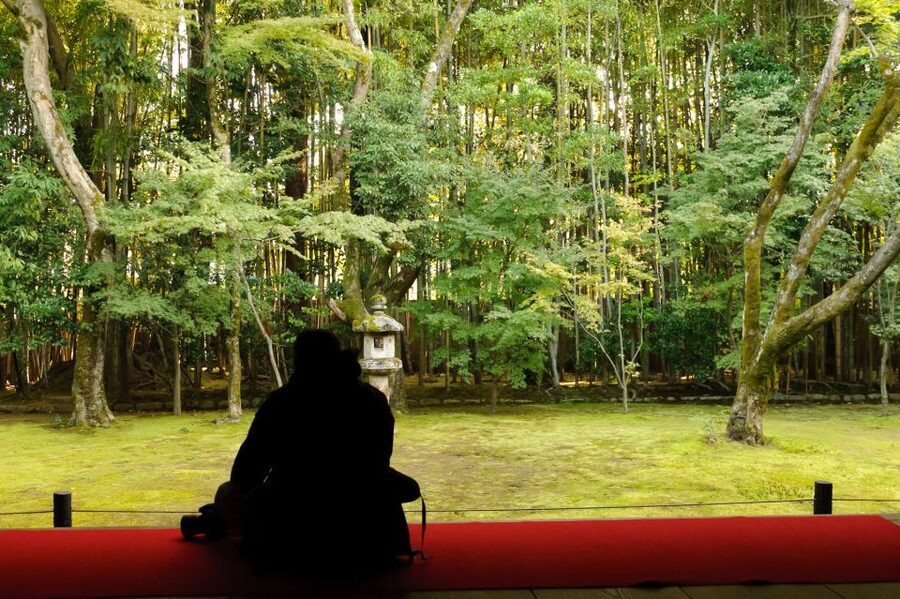
The route also passes through Kyoto’s oldest geisha district. The pleasure here is less about checking off a landmark and more about seeing the older street pattern and the quieter side of the city. You might spot traditional buildings, narrow lanes, and the sort of local setting that is easy to miss from a bus window.
Keep your expectations respectful. A geisha district is a living neighborhood, not a stage set. The tour’s cultural explanations can help you understand the role of these areas without treating them as a photo prop.
Another important stop is Kyoto’s shrine of knowledge, generally associated with Kitano Tenmangu. Shrines dedicated to learning are especially meaningful for students and families, but the appeal is wider. The site offers a chance to see how Japanese Shinto practice connects everyday hopes, education, seasonal visits, and sacred space.
The guide’s explanation is a major part of the stop. Without context, a shrine can look like a series of gates, stone lanterns, and wooden buildings. With a good explanation, you begin to notice the difference between a shrine and a Buddhist temple, the purpose of offerings, and the way people move through the grounds.
A completely different kind of day out:
- PERFECT KYOTO 1-Day Bus Tour
★ 5.0 · 13,518 reviews - [Kyoto & Nara Day Tour] Sagano Scenic Railway & Nara Park & Fushimi Inari Taisha Thousand Torii Gates & Togetsukyo Bridge & Bamboo Grove & Kimono Forest (Departing from Osaka)
★ 4.9 · 10,942 reviews - Kyoto: Fushimi Inari, Kinkakuji, Bamboo Grove 1 Day Bus Tour
★ 4.8 · 4,316 reviews - Kyoto: Tea Ceremony in a Traditional Tea House in Kiyomizu
★ 4.9 · 3,519 reviews
Daitoku-ji and the quiet work of Zen gardens
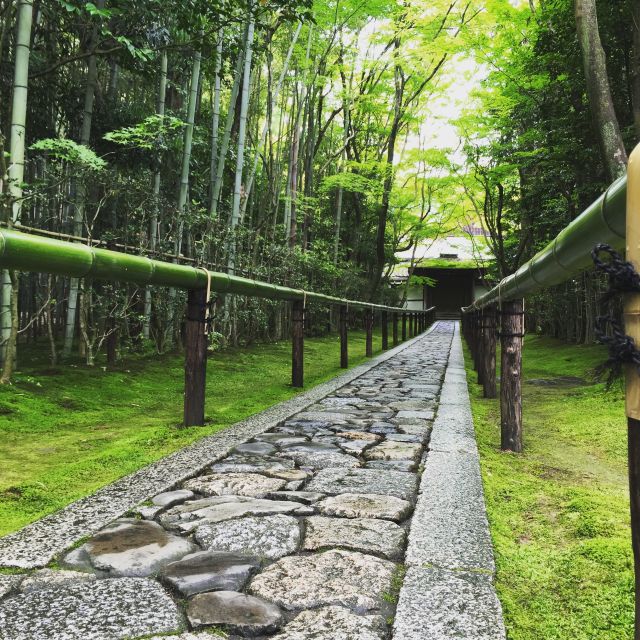
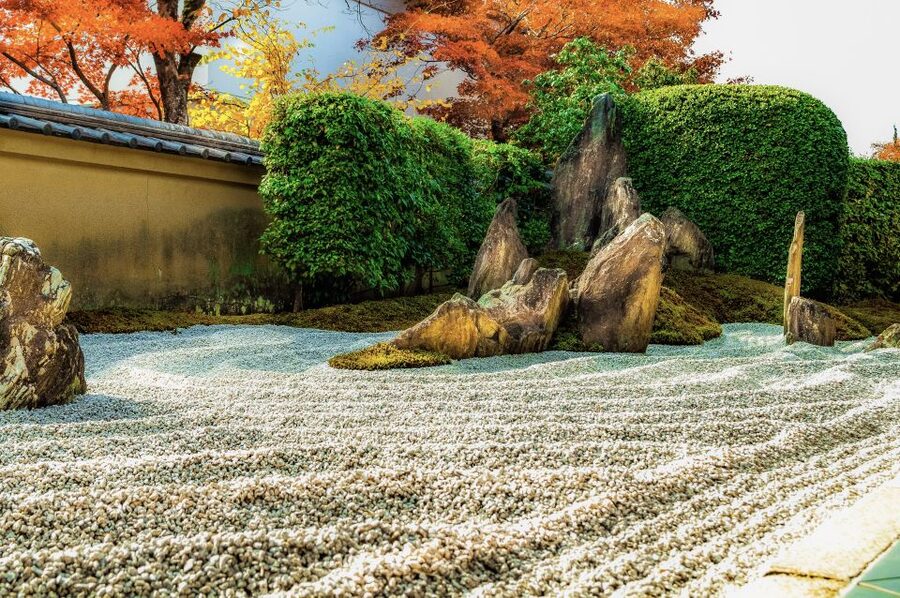
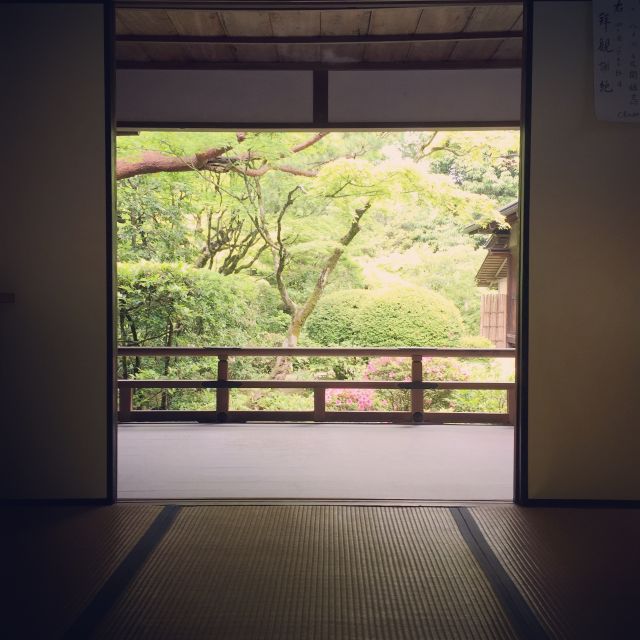
The route gradually shifts toward Daitoku-ji and other quieter Zen settings. This change of pace is one of the tour’s best ideas. Kyoto can feel noisy and crowded in the morning, then suddenly calm when you enter a temple garden and hear little more than birds or the sound of water.
The gardens are not designed as scenic backdrops alone. Their spare arrangements invite you to sit still and consider space, balance, and restraint. You do not need a background in Buddhism to appreciate them. The guide’s explanation can give you a useful introduction to Zen ideas without turning the visit into a lecture.
Shizuka has been praised for explaining Zen philosophy clearly, and Yuta’s personal connection to Zen Buddhism has made monastery visits especially meaningful. Guides also differ, so the tone may range from historical storytelling to personal reflection. That variety is part of the appeal, but it also means the exact emphasis depends on who leads your group.
A tea stop at Daitoku-ji has included traditional sweets and a tea ceremony. Other outings have featured chilled tea at a very old cafe. These pauses are welcome after cycling, but they are also culturally useful. A drink and a small sweet create time to slow down and talk about what you have seen.
Do not assume every listed food or tea moment is guaranteed on every departure. The route can be adapted, and the precise stops may change with opening hours, weather, or the group’s pace.
Mountain roads, streams, and a different Kyoto
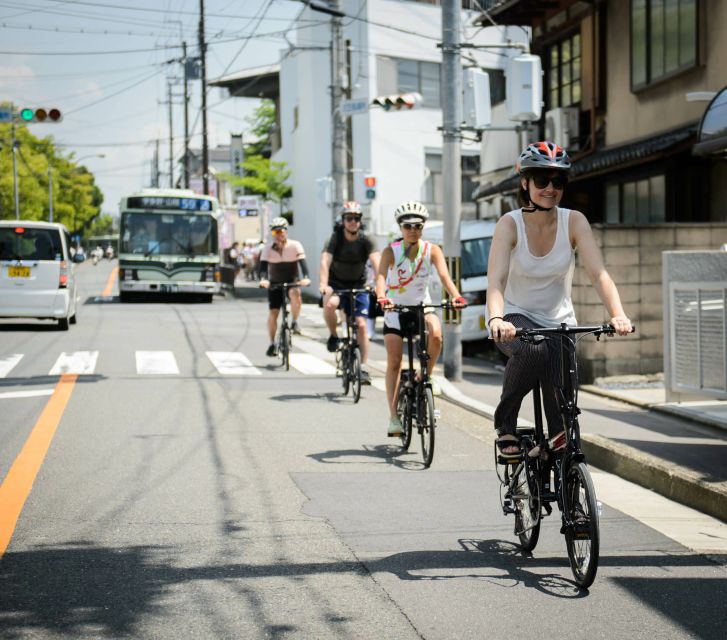
One of the tour’s strongest features is the move away from the central streets toward wooded roads, mountain water, and quieter temple areas. This is where the e-bike becomes more than a convenient way to get around. It carries you into parts of Kyoto that would be awkward to reach on foot and inconvenient by public transport.
The scenery shifts quickly. You may ride along narrow lanes, pass mountain streams, and reach a temple or monastery where the city noise fades. One route includes a climb followed by a downhill section with broad views. The climb is made easier by the electric motor, but the descent requires attention. Control your speed and leave room between bikes.
There may also be bamboo plantings and small local streets. These are not necessarily the famous bamboo paths of Arashiyama, and that is a benefit if you want a calmer ride. The tour is not built around one famous photograph. It is built around a sequence of small changes: tiled roofs, temple gates, water, trees, neighborhood streets, and sudden views.
This section can be especially rewarding for returning visitors. If you have already seen the major central temples, the tour gives you a more local sense of Kyoto’s edges and residential quarters. First-time visitors can also enjoy it, but I would pair it with a standard sightseeing day so you understand the city’s main landmarks before seeking its quieter corners.
What the guides add to the experience
The route matters, but the guide determines how much you take from it. The strongest praise goes to guides who combine historical facts with personal observations, humor, and practical care.
Yuta is frequently noted for his warmth, Zen background, safety checks, and ability to explain Japanese culture. Henry is praised for energy, local knowledge, and recommendations for later meals and sightseeing. Sean has been appreciated for adapting the ride to the group and for offering useful follow-up suggestions. Shawn is remembered for learning everyone’s names and giving clear explanations at each stop.
Michael has led family groups through temples and shrines while keeping the ride fun. Shizuka has been praised for bringing Zen philosophy and tea culture to life. These details matter because a small group gives you a chance to ask questions. You are not simply following a flag through a crowded entrance.
The guides also seem willing to adjust the pace. That is important in Kyoto’s changing weather. In summer, the heat can be tiring even with electric assistance. In rain, ponchos have been available on some rides, and the supplier may cancel during heavy rain, storms, or other unsafe conditions.
Is $127 a fair price?
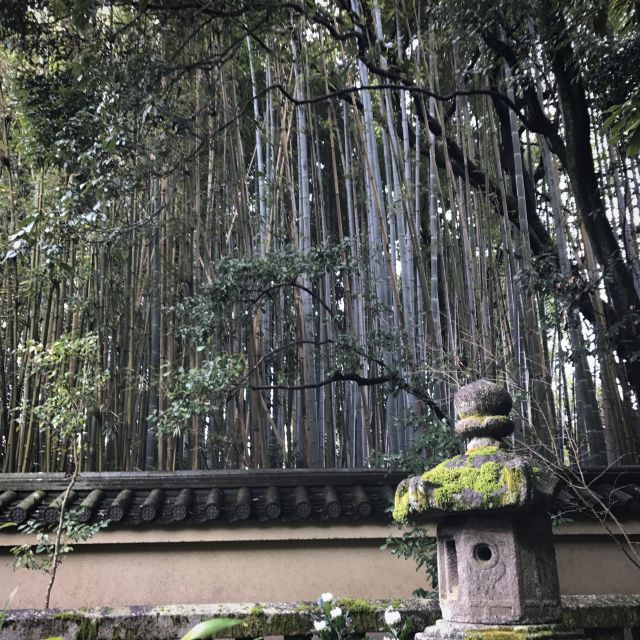
At $127 per person, this is not the cheapest way to see Kyoto. You can rent a bicycle independently for less, and many temples can be visited without a paid guide. The comparison is not quite fair, though.
Your price includes the e-bike, helmet, English-speaking guide, and entrance fees. You are also paying for route planning, navigation, safety management, and access to a series of places that would take more effort to connect on your own. The small maximum of eight people adds value, especially in a city where cycling routes can be confusing.
I would call it a good value for a short stay, a first afternoon in Kyoto, or a return visit when you want something beyond the usual temple circuit. It is less compelling if you prefer to linger for a long time at one temple, avoid all physical activity, or travel on the tightest possible budget.
The tour also saves mental energy. You do not need to work out which bus reaches the next district, where to rent a bike, or how to manage a hill that looked easier on the map. That convenience is a real part of the price.
Who should book this Kyoto e-bike tour?
This ride suits confident cyclists aged 13 and older who want to cover ground without rushing from one major sight to another. Families with teenagers have enjoyed the electric bikes, and couples can expect a social small-group outing rather than a private ride.
It is particularly good for:
- Repeat visitors who have already seen Kyoto’s best-known sights
- First-time visitors who want a broad introduction with local detail
- People interested in Zen Buddhism, temple gardens, and Japanese customs
- Riders who want to avoid long bus journeys between sights
- Anyone who enjoys food, tea, neighborhoods, and scenery as much as monuments
It may not suit you if you are under 140 centimeters tall, cannot ride confidently, dislike hills or downhill sections, or want a slow, highly detailed visit to every temple. The electric motor reduces effort, but it does not remove the need for balance and road awareness.
Book with weather in mind. The supplier can cancel for heavy rain, storms, or unsafe conditions, with a full refund in those cases. The booking information gives both 24 hours and 12 hours as cancellation cutoffs in different places, so check the exact terms attached to your reservation before paying.
The final call: a strong choice for seeing Kyoto differently
I would book this tour if I had three and a half hours and wanted Kyoto to feel like a city, not a checklist. The Golden Pavilion gives you the famous image, while the geisha district, shrine, Zen gardens, mountain roads, old cafe stops, and quiet temple areas supply the character.
The most important advice is simple: arrive early, ride with care, and do not book unless you are comfortable on a bicycle. If that fits you, the e-bike makes Kyoto’s hills and distances far easier, and the guide can provide the cultural context that independent sightseeing often lacks.
For a first visit, use it alongside the classic sights. For a return visit, it may be one of the best ways to see a side of Kyoto you would otherwise miss.
FAQ
Where does the Kyoto City Secrets eBike Tour meet?
The meeting point is NORU.
How long is the tour?
The tour lasts 225 minutes, or three hours and 45 minutes.
How far do you ride?
The route is approximately 9 kilometers.
What departure times are available?
The listed departure times are 9 am, 9:30 am, and 1 pm. You should arrive 15 minutes before your selected time.
Is the tour suitable for children?
Riders must be over 13 and able to ride a bicycle confidently. The tour is not suitable for anyone under 140 centimeters tall.
What is included in the price?
The price includes an English-speaking guide, an e-bike, a helmet, and entrance fees to the attractions visited.
Just added in Kyoto
- The “Golden Route” and Ancient Japan by DIAMIR Erlebnisreisen – 14-Day Tour★ 2.0 · 2 reviews
- Japan: Castles & Cuisine by G Adventures – 6-Day Kyoto to Osaka Tour★ 4.5 · 4 reviews
- Cycle Japan by Explore! – 13-Day Kyoto to Tokyo Tour★ 4.7 · 12 reviews
- Cycle Japan by Intrepid Travel – 11-Day Kyoto to Tokyo Tour★ 4.8 · 2 reviews
- Classic Japan by Intrepid Travel – 11-Day Kyoto to Tokyo Tour★ 4.4 · 14 reviews
- Ancient & Modern Japan 14-Day Tour by Exodus Adventure Travels★ 4.4 · 40 reviews
- 5 Day Cultural Adventure of Kyoto, Nara & Osaka by Tourist Journey★ 2.5 · 2 reviews
- 12 Days Kinosaki Onsen Escape: A Journey Through Japan’s Timeless Towns by UME Travel★ 4.8 · 5 reviews
Cycling and E-Bike Tours, compared.

3h Tokyo E-Bike Tour: Hidden Gems, and Local Life with guide
Read our review →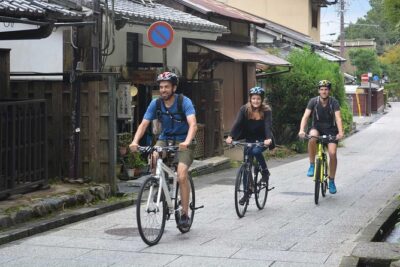
Arashiyama Bamboo Forest & Hidden Gems Bike Tour (Early Bird)
Read our review →
5 Top Highlights of Kyoto Full Day Bike Tour (E-bike option)
Read our review →

Hiroshima 2hr Peace Cycling Tour with Local Guide
Read our review →Browse the lists this tour appears in