
Reviewed · CYCLING AND E-BIKE TOURS
Kyoto: Fushimi Inari Shrine and Tofukuji Temple E-Bike Tour
Kyoto rewards slow travel. This four-hour e-bike ride links Gion, Fushimi Inari Shrine, and Tofukuji Temple while adding quieter streets and local context along the way. I like the easy electric bikes and the chance to see ordinary Kyoto neighborhoods, not just the city’s headline sights. I also like the guide’s cultural storytelling, especially Maki’s friendly explanations of Shinto customs, Buddhism, geisha culture, and daily life. The main drawback is time: with several stops and a group of up to eight, you may have less time at Fushimi Inari than you would on a private visit.
This is a good fit if you want a useful first look at Kyoto without spending a full day on temples. You should be comfortable cycling and walking, though the electric assistance helps on steeper sections and when your legs begin to tire. Families with teenagers, couples, and active adults are likely to get the most from it.
In This Review
- Five things to know before you ride
- Why an e-bike works well in Kyoto
- Starting through Gion and Higashiyama-Sanjyo
- Riding safely on Kyoto streets
- Reaching Fushimi Inari Shrine
- Finding calm at Tofukuji Temple
- The return ride beside Kyoto’s water
- Maki’s guiding style
- Is $83 a fair price?
- Who should book this Kyoto ride?
- Should you book the Fushimi Inari e-bike tour?
- FAQ
- How long is the Kyoto e-bike tour?
- Where does the tour meet?
- Which language is the tour offered in?
- What places does the tour visit?
- Are e-bikes and helmets included?
- Is the tour suitable for children?
- Can I cancel the booking?
Five things to know before you ride
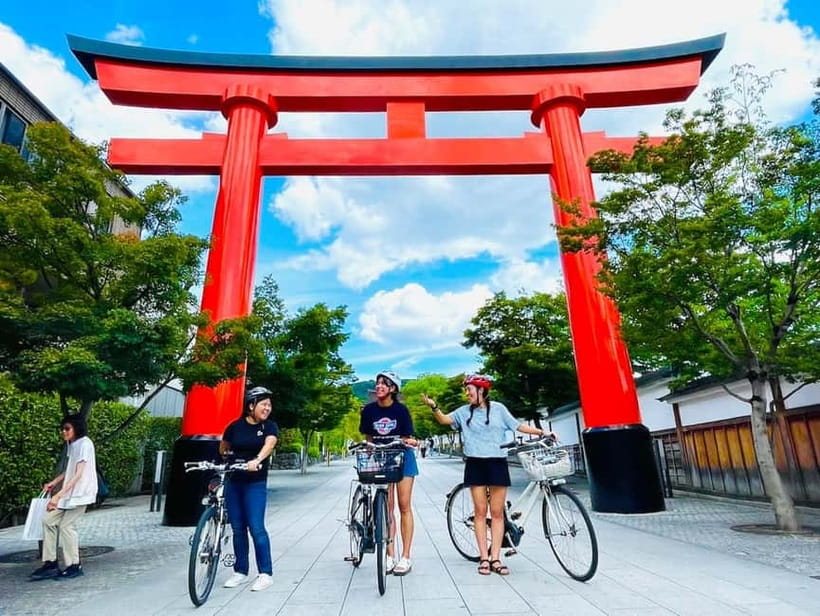
- A four-hour route with real variety: You move from Gion streets to residential lanes, major shrines, a Buddhist temple, and a river route.
- Maki is a major part of the appeal: Her humor, personal stories, clear English, and careful road guidance receive especially strong praise.
- E-bikes make Kyoto easier: The bikes are described as clean, sturdy, well maintained, and simple to use.
- Fushimi Inari is only one part of the visit: The route also includes less crowded shrines, temples, and quiet city corners.
- Plan for active sightseeing: Comfortable clothes, shoes, sunscreen, and water matter because you combine cycling with walking.
- Small groups keep the outing manageable: The group is limited to eight participants, with an English-speaking guide.
Why an e-bike works well in Kyoto
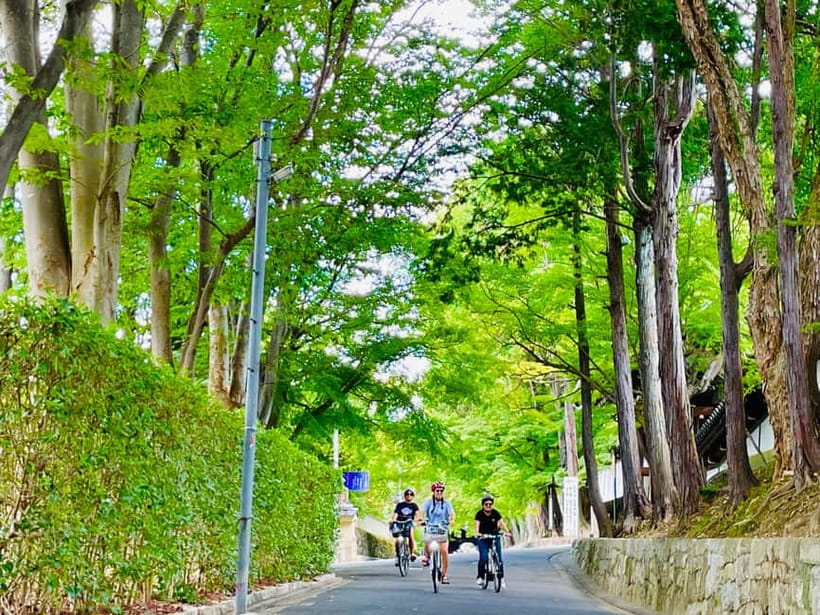
Kyoto is spread out. Its most famous temples and shrines are not all within a pleasant walking distance of one another, and public transport can leave you watching the clock between stops. An e-bike gives you a practical middle ground: quicker than walking, more personal than a bus, and open to the sights between major attractions.
I like the way this tour uses the bicycle as transport rather than making cycling the whole point. You are not simply pedaling from one famous site to another. You pass through Gion, residential streets, quieter temple areas, and routes beside the river, gaining a better sense of how Kyoto fits together.
The electric motor matters, too. The route includes some steeper sections, and the assistance is helpful late in the ride. Several people who were initially worried about keeping up found the pace manageable. Still, this is not a sightseeing bus. You need to ride a bicycle, follow your guide’s directions, and stay alert around traffic.
The tour begins at Pedal Adventure Kyoto, near a temple in the Higashiyama-Sanjyo area. Before setting off, you receive an orientation on riding in Japan and an explanation of how to use the e-bike. That introduction is especially useful if you are not used to cycling in a Japanese city.
More Bike Tours in Kyoto
- Bike Tour Exploring North Kyoto plus Lunch
★ 5.0 · 1,087 reviews - Arashiyama Bamboo Forest & Hidden Gems Bike Tour (Early Bird)
★ 5.0 · 613 reviews - 5 Top Highlights of Kyoto Full Day Bike Tour (E-bike option)
★ 5.0 · 511 reviews
Starting through Gion and Higashiyama-Sanjyo
Gion is one of Kyoto’s best-known districts, but a short ride through it can offer more than a quick photo stop. Your guide explains geisha culture, local manners, and Kyoto customs as you move through the area. The value here is context. Without guidance, you may see a traditional-looking street and move on. With explanation, you begin to understand why certain buildings, practices, and forms of etiquette matter.
You should not expect a long, formal lecture while riding. The cycling stops allow your guide to gather the group and explain what you are seeing. Maki is particularly good at making these pauses lively, using humor and personal stories rather than delivering dry facts.
The route then shifts away from the most recognized parts of central Kyoto. You may ride along smaller streets and through suburban areas where daily life takes center stage. This is one of the strongest parts of the experience for me. You get a look at the Kyoto people live in, not only the Kyoto presented on postcards.
The group format helps keep things social. With no more than eight riders, it is small enough to ask questions and easy enough for the guide to keep an eye on everyone. The tradeoff is that the pace must suit different cycling abilities. If one person needs extra time at the start, the group may lose a few minutes that could otherwise be spent at a shrine.
Riding safely on Kyoto streets
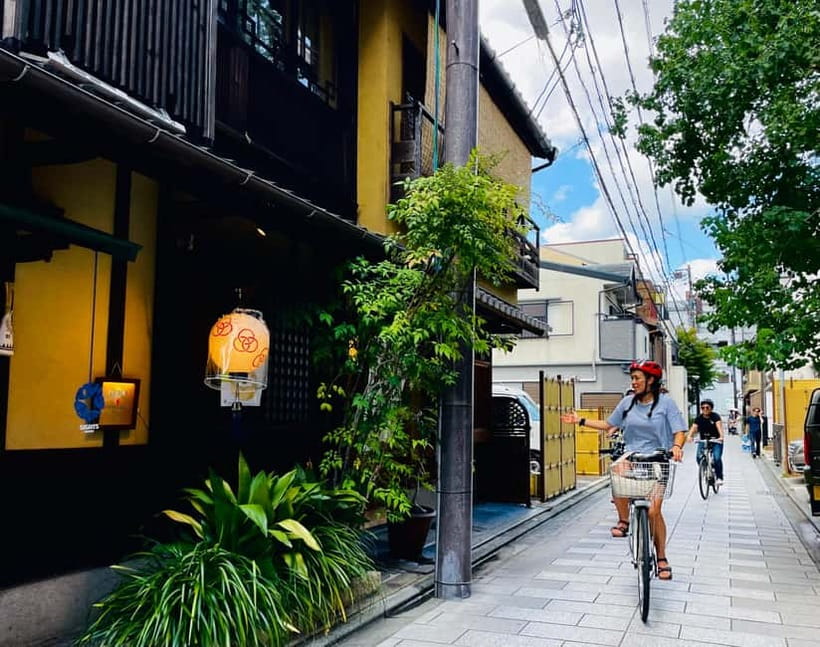
Cycling in an unfamiliar country can make even a relaxed tour feel tense. The guide’s road briefing and route choices are therefore important parts of what you are paying for. Maki has been praised for using quieter side streets where possible, while handling busier roads with clear instructions.
You will ride in a line and stop at points where the guide talks. One useful suggestion from a participant was the possible addition of a microphone or earpiece, since it can be hard to catch every word while the group gathers. That is worth keeping in mind if you are short of hearing or prefer not to miss spoken details.
The bikes themselves are another strong point. They are described as comfortable, clean, sturdy, and in good condition. Helmets, insurance, a snack, and a water bottle are included. You still need to bring suitable clothing and shoes, and sunscreen is a smart choice on sunny days.
This is not suitable for children under 12, pregnant women, or people with mobility impairments. Alcohol and smoking are not allowed in the vehicle, though the experience is primarily a cycling tour rather than a vehicle-based outing.
Reaching Fushimi Inari Shrine
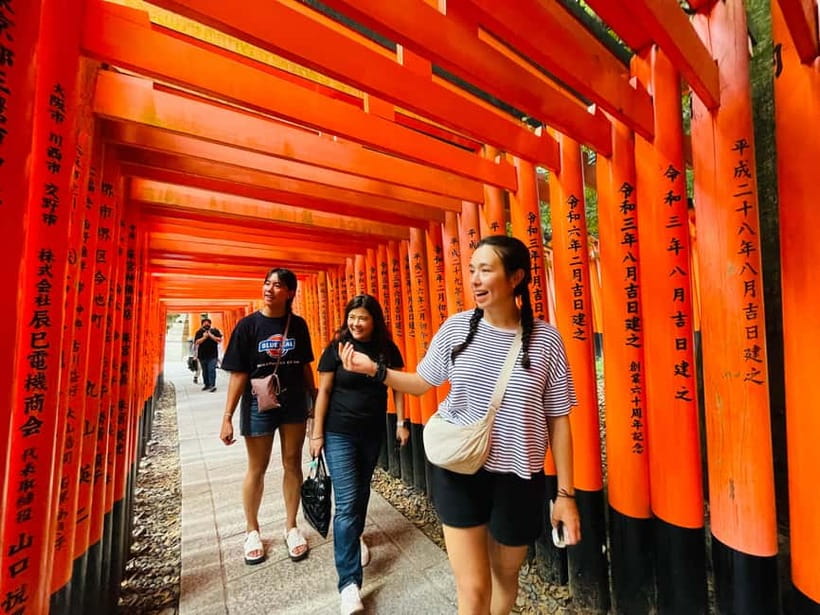
Fushimi Inari Shrine is the tour’s big-name stop. Its rows of orange torii gates have made it one of Japan’s most recognizable sights, and it can be crowded. Arriving by e-bike gives you a different approach from simply stepping off a train and joining the main flow of visitors.
Your guide explains the shrine’s history and Shinto beliefs, including the customs that shape how people behave at a Shinto site. This explanation is valuable because the shrine is more than a photogenic tunnel of gates. The visit gives you a chance to ask questions about worship, symbols, and the differences between Shinto and Buddhism.
Do not assume the tour takes you through every part of the mountain complex. The schedule includes several destinations, and the group must keep moving. One person specifically wished for more time at Fushimi Inari, while also recognizing that the mixed cycling abilities of a group can affect the timetable.
That is the central choice here. If Fushimi Inari is your main reason for coming to Kyoto, visit independently with plenty of time. If you want a broader introduction to Kyoto, the shorter stop is balanced by all the other places and explanations included in the ride.
More Temples and Shrines in Kyoto
- [Kyoto & Nara Day Tour] Sagano Scenic Railway & Nara Park & Fushimi Inari Taisha Thousand Torii Gates & Togetsukyo Bridge & Bamboo Grove & Kimono Forest (Departing from Osaka)
★ 4.9 · 10,942 reviews - Kyoto: Fushimi Inari, Kinkakuji, Bamboo Grove 1 Day Bus Tour
★ 4.8 · 4,316 reviews - Kyoto: Tea Ceremony in a Traditional Tea House in Kiyomizu
★ 4.9 · 3,519 reviews - Kyoto Nara Day Trip │ Kiyomizu-dera Temple + Fushimi Inari-taisha Shrine + Nara Park (Departing from Osaka/Kyoto)
★ 4.7 · 3,408 reviews
Finding calm at Tofukuji Temple
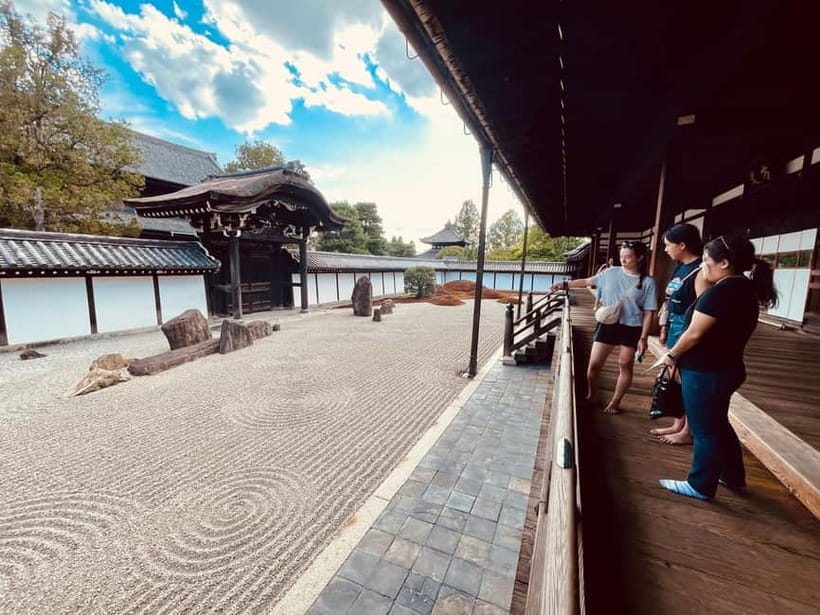
After Fushimi Inari, the route continues to Tofukuji Temple. The mood changes here. Instead of the visual drama and constant movement associated with Fushimi Inari, Tofukuji offers a quieter place to pause and consider what you have seen.
The Zen garden is the key feature of this stop. You are given time to relax and take in the setting rather than being rushed from one photo opportunity to the next. I especially like this built-in pause because a morning or afternoon filled with sights can become a blur. A few quiet minutes help the visit feel more thoughtful.
Your guide also explains Buddhist traditions and how they differ from Shinto practices. That comparison is one of the most useful cultural elements of the tour. You are not just collecting temple names. You are learning how two major Japanese traditions appear in architecture, rituals, and everyday customs.
The included entrance fees for two places help keep the price clear. Tofukuji and Fushimi Inari form the main religious stops, while the route may also pass other shrines and temples. You should not expect every passing site to be a full guided visit, but the variety gives the ride a pleasing rhythm.
The return ride beside Kyoto’s water
The final stretch follows a river route back toward the city and the shop. This is a welcome finish after several cultural stops. The ride is described as pleasant and scenic, with fewer demands on your attention than a busy city street.
A riverside ride also shows why a bicycle can be so useful in Kyoto. You can cover ground efficiently while still noticing the city around you. The return route becomes part of the sightseeing instead of dead time between attractions.
The guide may also take photos during the outing. Maki is repeatedly praised for taking family and group pictures, which is useful if you are traveling without a convenient photographer. You should still bring your own camera, especially for the shrine gates, temple gardens, and quieter streets.
Maki’s guiding style
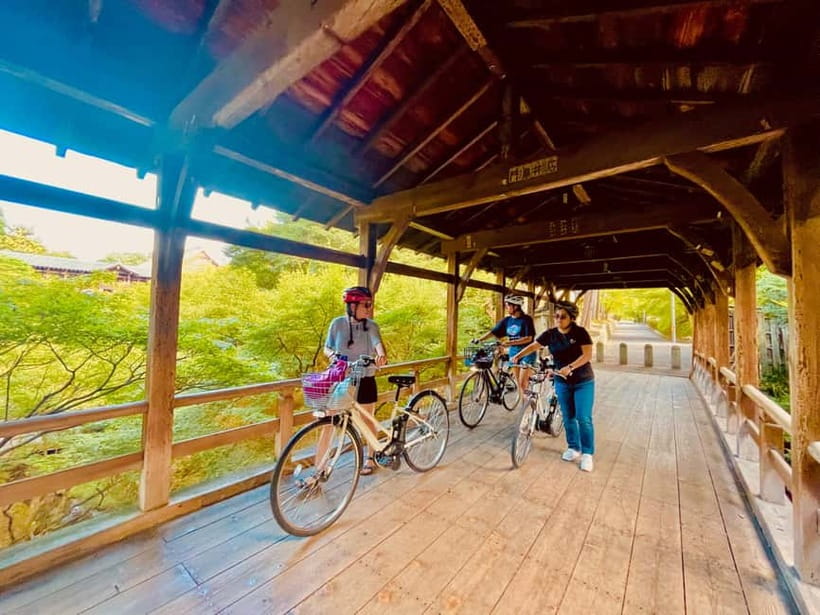
The route matters, but the guide makes the difference here. Maki is praised for her strong English, humor, warmth, energy, and ability to explain complicated subjects in an approachable way. She covers Japanese history, religion, samurai battles, infrastructure, geisha culture, customs, and modern daily life.
Her use of visual material, including a binder with pictures, can make historical explanations easier to follow. Personal stories add another layer. Instead of treating Kyoto as a museum, she connects what you see with Japanese life and her own experiences.
You can also ask questions throughout the tour. That is useful if you want to understand temple etiquette, the difference between a shrine and a temple, or the meaning of a ritual. Maki’s style appears to work particularly well for teenagers, who may not welcome four straight hours of formal sightseeing.
The tone is informal, but the care is serious. She explains how to ride, keeps the group together, helps people feel safe on the roads, and takes account of different abilities. If you prefer a silent ride with little narration, this may feel too talkative. If you want a guide who brings the city to life, it is a strong match.
Is $83 a fair price?
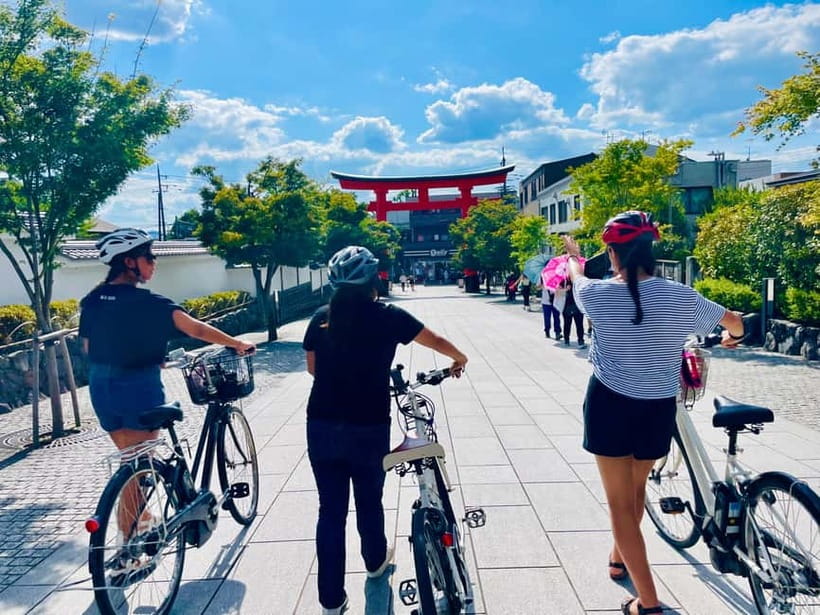
At $83 per person, this is not the cheapest way to reach Fushimi Inari. You can visit the shrine independently for much less, and Kyoto has excellent public transport. The comparison changes once you count the e-bike, helmet, insurance, guide, snack, water bottle, and entrance fees for two places.
You are also paying for route planning and local interpretation. The quieter streets and less familiar shrines would be harder to connect into a four-hour outing on your own. The guide saves you from working out how to combine Gion, Fushimi Inari, Tofukuji, and the return route while keeping the trip within half a day.
I would call the price fair for an active, guided introduction to Kyoto, especially if you value cultural explanation. It is less appealing if you already know the city well, dislike group activities, or want to spend a long time at one shrine.
The reserve-now-and-pay-later option gives you some flexibility, and cancellation is free up to 24 hours before the tour for a full refund. Hotel pickup and drop-off are not included, and lunch is not provided, so allow time to reach Pedal Adventure Kyoto and arrange food separately.
Who should book this Kyoto ride?
I would recommend it to you if:
- You have only a few days in Kyoto and want a broad first orientation.
- You enjoy cycling but do not want a strenuous full-day ride.
- You want to combine famous sights with ordinary streets and quieter religious sites.
- You appreciate a guide who explains culture through stories and humor.
- You are traveling with teenagers aged 12 or older.
- You want a small group rather than a large sightseeing crowd.
I would think twice if your priority is a long visit to Fushimi Inari alone. You may also prefer another format if cycling in traffic makes you uncomfortable, though the route and guide support are designed to make the ride feel safe.
Wear comfortable clothes and shoes, bring sunscreen, and carry water even though a bottle is supplied. Leave room in your schedule afterward, because the tour should give you enough cultural background to make your own visits to Kyoto’s temples and shrines more meaningful.
Should you book the Fushimi Inari e-bike tour?
Book it if you want more than a checklist of Kyoto sights. The strongest reasons are the well-kept e-bikes, small group, careful route, and Maki’s lively local guidance. You get major attractions, quiet streets, a Zen garden, and a useful introduction to Shinto and Buddhism in four hours.
Skip it if you want complete freedom over timing or several uninterrupted hours at Fushimi Inari. For most active visitors, though, this is a sensible half-day choice that delivers both movement and meaning without taking over your entire Kyoto schedule.
FAQ
How long is the Kyoto e-bike tour?
The tour lasts four hours. Starting times vary, so you should check availability when booking.
Where does the tour meet?
The meeting point is Pedal Adventure Kyoto. Hotel pickup and drop-off are not included.
Which language is the tour offered in?
The tour is conducted in English with a live local guide.
What places does the tour visit?
The route includes Gion, Fushimi Inari Shrine, and Tofukuji Temple, along with other shrines, temples, residential streets, and city areas.
Are e-bikes and helmets included?
Yes. Electric bicycle rental and a helmet are included in the price. Insurance, a snack, a water bottle, and entrance fees for two places are also included.
Is the tour suitable for children?
Children under 12 are not permitted. Teenagers and older children who can cycle should bring comfortable clothing and shoes suitable for riding.
Can I cancel the booking?
You can cancel up to 24 hours in advance for a full refund. You can also reserve now and pay later.
Just added in Kyoto
- The “Golden Route” and Ancient Japan by DIAMIR Erlebnisreisen – 14-Day Tour★ 2.0 · 2 reviews
- Japan: Castles & Cuisine by G Adventures – 6-Day Kyoto to Osaka Tour★ 4.5 · 4 reviews
- Cycle Japan by Explore! – 13-Day Kyoto to Tokyo Tour★ 4.7 · 12 reviews
- Cycle Japan by Intrepid Travel – 11-Day Kyoto to Tokyo Tour★ 4.8 · 2 reviews
- Classic Japan by Intrepid Travel – 11-Day Kyoto to Tokyo Tour★ 4.4 · 14 reviews
- Ancient & Modern Japan 14-Day Tour by Exodus Adventure Travels★ 4.4 · 40 reviews
- 5 Day Cultural Adventure of Kyoto, Nara & Osaka by Tourist Journey★ 2.5 · 2 reviews
- 12 Days Kinosaki Onsen Escape: A Journey Through Japan’s Timeless Towns by UME Travel★ 4.8 · 5 reviews
Cycling and E-Bike Tours, compared.


3h Tokyo E-Bike Tour: Hidden Gems, and Local Life with guide
Read our review →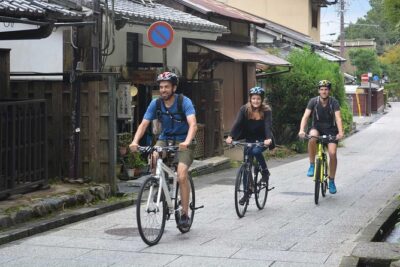
Arashiyama Bamboo Forest & Hidden Gems Bike Tour (Early Bird)
Read our review →
5 Top Highlights of Kyoto Full Day Bike Tour (E-bike option)
Read our review →

Hiroshima 2hr Peace Cycling Tour with Local Guide
Read our review →Browse the lists this tour appears in