
Reviewed · CYCLING AND E-BIKE TOURS
Kyoto: Half-day Guided Bike Tour with Fushimi Inari
Kyoto reveals itself best at bicycle speed. This half-day ride links major temples with quiet lanes, canals, riverside paths, and the backstreets of Gion, giving you a useful mix of famous sights and everyday Kyoto. I especially like the route through Gion’s less crowded lanes and the chance to reach Fushimi Inari without spending the morning shuffling between buses and trains.
I also like the small group, limited to eight people, and the strong guides, including Jay, Julian, Indra, Sean, Juan, Mayco, and others who have been praised for clear explanations and an easygoing manner. The main caution is physical: the ride can cover more than 15 kilometers, and it is not suitable if you cannot ride a bicycle, have back problems, or prefer a completely effortless sightseeing morning.
In This Review
- At a glance: the details that matter
- Why a bicycle works so well in South Kyoto
- Meeting the group near Kyoto Station
- Toji: beginning with Kyoto’s oldest temple
- Higashi-Honganji and the city’s temple scale
- Following the Takase Canal and Kamo River
- Gion from the backstreets, not just the postcard view
- Tofukuji: a 30-minute photo stop
- Fushimi Inari and the orange torii gates
- What the guides add to the morning
- The real cost and what you receive for $77
- Who should book this ride?
- Practical tips for a smoother ride
- Should you book the Kyoto bike tour?
- FAQ
- How long does the Kyoto bike tour last?
- Where does the tour begin?
- What sights are included?
- Is bicycle rental included?
- Is the tour conducted in English?
- What is the minimum age?
- Can I use an e-bike?
At a glance: the details that matter
- A 210-minute route through South Kyoto: You visit Toji, Higashi-Honganji, the Takase Canal, Kamo River, Gion, Tofukuji, and Fushimi Inari in one outing.
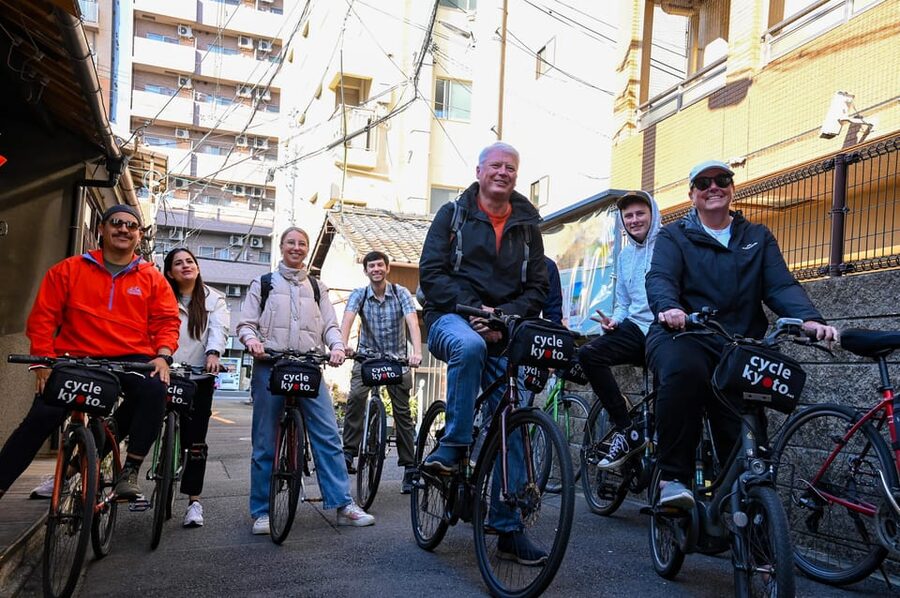
- A small group of up to eight: This gives the guide a better chance to answer questions and adjust the pace.
- Fushimi Inari without a long transfer: You cycle directly into the shrine area, then walk around the famous orange torii gates.
- More than temple hopping: The route includes riverside cycling, residential streets, Gion lanes, and canal paths.
- Regular bicycles included: Helmets, water, and a small pouch for personal items are provided.
- E-bike upgrade available: You can request an e-bike for an additional 3,000 yen, subject to availability.
Why a bicycle works so well in South Kyoto
Kyoto’s main sights are spread across a wide area. By train, bus, or taxi, you can reach them, but each transfer takes time and often puts you on the same crowded routes as everyone else. A bicycle lets you connect the spaces between the sights, which is where this tour earns its price.
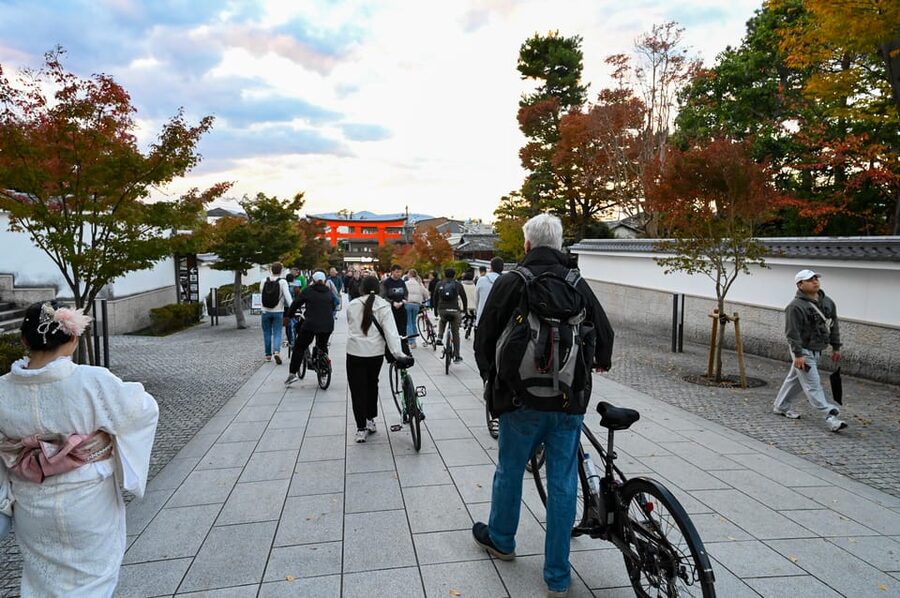
The route is not simply a ride from one temple gate to another. You follow the Takase Canal and Kamo River, pedal through local neighborhoods, and pass through Gion’s backstreets. That gives you a better sense of Kyoto as a living city rather than a string of postcard stops.
The pace is intended to be gentle, but you should still regard this as an active tour. One participant recorded riding more than 15 kilometers, so the distance can be meaningful even if the pace feels relaxed. You will need comfortable clothing, suitable shoes, and enough energy for several hours in the saddle.
The group size is another advantage. With no more than eight people, the guide can keep the group together without turning every stop into a loud public lecture. The guide-led format also adds context that is easy to miss when you visit temples on your own.
More Bike Tours in Kyoto
- Bike Tour Exploring North Kyoto plus Lunch
★ 5.0 · 1,087 reviews - Arashiyama Bamboo Forest & Hidden Gems Bike Tour (Early Bird)
★ 5.0 · 613 reviews - 5 Top Highlights of Kyoto Full Day Bike Tour (E-bike option)
★ 5.0 · 511 reviews
Meeting the group near Kyoto Station
The starting point is Cycle Kyoto, a short distance from Kyoto JR Station. From the station, go past Avanti, cross one set of traffic lights, pass the Daily Yamazaki convenience store, and take the next left.
Allow a little extra time to find the shop. Kyoto Station is large, and getting out on the correct side can take longer than expected. Once you arrive, you receive a 15-minute safety briefing before setting off. This is useful for getting familiar with the bicycle, listening to road instructions, and making sure your helmet fits properly.
Bicycle rental, a helmet, and water are included. A small pouch on the bicycle is available for personal items, but you should keep your belongings light. A camera, sunscreen, warm clothing, and comfortable clothes are sensible choices. Check the weather before you leave, since the ride continues outdoors even when conditions are less than perfect.
Toji: beginning with Kyoto’s oldest temple
The first major stop is Toji, a UNESCO World Heritage site and one of Kyoto’s key temple complexes. The experience gives you an early dose of monumental religious architecture before the ride moves into narrower streets and quieter corners.
The guided visit lasts about 35 minutes. That is enough time to see the main setting and hear about its role in Kyoto without using up the entire morning at one location. Toji works well as the opening stop because it immediately shows you the scale and visual drama of old Kyoto.
You should not expect a long private temple study session. The tour has several more stops ahead, so the guide needs to keep the group moving. If Toji is a particular priority for you, take note of the time and return later on your own if your schedule allows.
Higashi-Honganji and the city’s temple scale
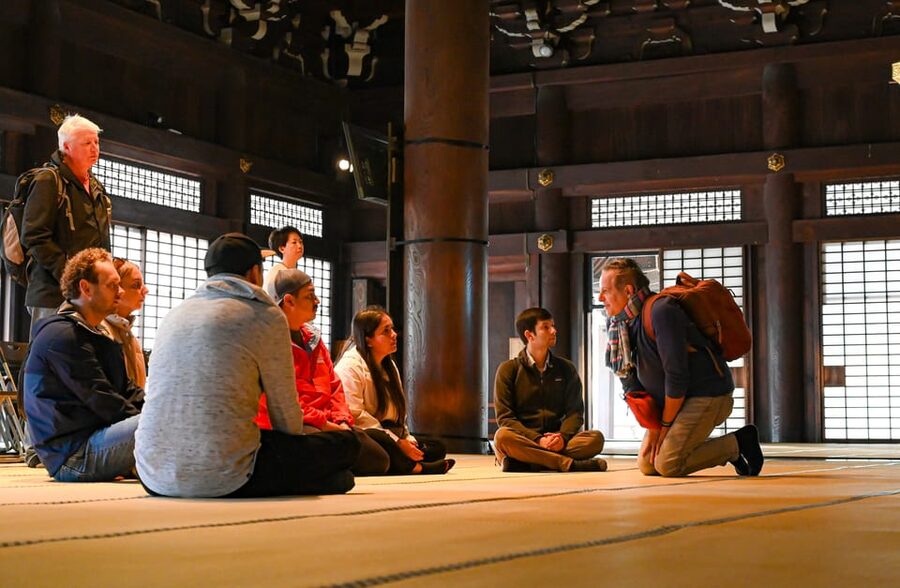
Next comes Higashi-Honganji, one of Japan’s largest temples. The tour allows roughly 35 minutes here, giving you time to appreciate the broad temple grounds and large wooden buildings.
This stop is valuable because it adds a different kind of temple experience. Toji introduces a historic temple complex with a famous UNESCO designation, while Higashi-Honganji gives you a sense of the scale and continuing importance of major Buddhist institutions in the city.
Your guide provides the explanation, so listen for the details that connect the buildings to Kyoto’s religious life. The stop is also a reminder that Kyoto is not only about small atmospheric lanes and carefully framed gardens. Some of its religious sites are huge, formal, and built to accommodate large communities.
More Temples and Shrines in Kyoto
- [Kyoto & Nara Day Tour] Sagano Scenic Railway & Nara Park & Fushimi Inari Taisha Thousand Torii Gates & Togetsukyo Bridge & Bamboo Grove & Kimono Forest (Departing from Osaka)
★ 4.9 · 10,942 reviews - Kyoto: Fushimi Inari, Kinkakuji, Bamboo Grove 1 Day Bus Tour
★ 4.8 · 4,316 reviews - Kyoto: Tea Ceremony in a Traditional Tea House in Kiyomizu
★ 4.9 · 3,519 reviews - Kyoto Nara Day Trip │ Kiyomizu-dera Temple + Fushimi Inari-taisha Shrine + Nara Park (Departing from Osaka/Kyoto)
★ 4.7 · 3,408 reviews
Following the Takase Canal and Kamo River
After the central temple visits, the route becomes more about movement and the spaces between attractions. You follow the Takase River for about 10 minutes, then spend around 15 minutes at the Kamo River.
This is one of my favorite parts of the plan because it gives your eyes a break from temple roofs and shrine gates. The canal and river show a quieter side of Kyoto, and cycling beside water makes the trip feel less like a checklist of monuments.
The Kamo River is also a useful orientation point. It helps you understand how Kyoto’s central districts fit together, with major neighborhoods connected by waterways and roads. You are still close to famous sights, but the rhythm is more local and open.
Weather matters here. On a clear day, the riverside sections should be especially pleasant. On a rainy or cold day, you will feel the exposure more. One guide, Julian, helped keep a tour enjoyable despite poor weather, but you should still bring warm layers and check the forecast before booking.
Gion from the backstreets, not just the postcard view
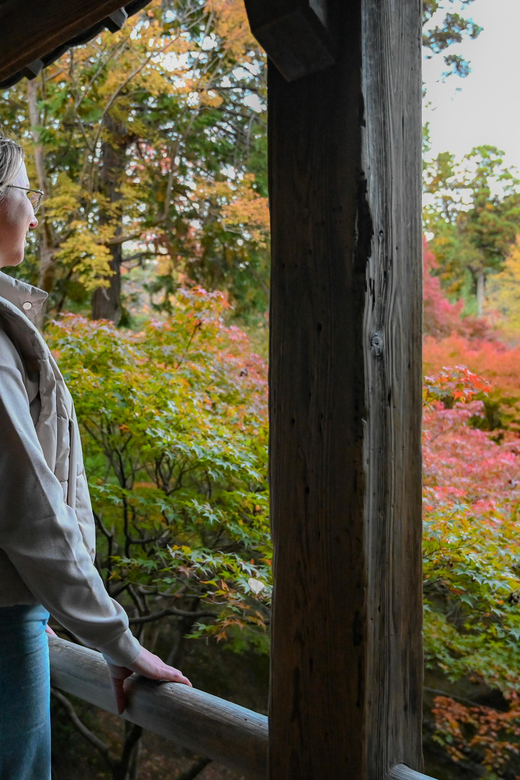
The ride continues into Gion, Kyoto’s famous geisha and teahouse district. The guided portion lasts about 30 minutes, and the focus is on the backstreets rather than simply stopping for a quick photograph on a main lane.
This is where the bicycle format pays off. You can move through the district efficiently, seeing the traditional streets without spending a large part of your morning walking between distant areas. The guide can also help you understand the difference between a historic entertainment district and the everyday neighborhoods around it.
Please ride and walk respectfully here. Gion is not a stage set. It is a working district with homes, businesses, and private spaces. Stay with the group, follow the guide’s instructions, and avoid blocking narrow lanes for photographs.
The Gion section may be one of the most rewarding parts of the tour for anyone who wants atmosphere without committing to a formal evening experience. It does not promise a geisha performance or a tea ceremony. Instead, it gives you a guided look at the streets and setting that make the district famous.
Tofukuji: a 30-minute photo stop
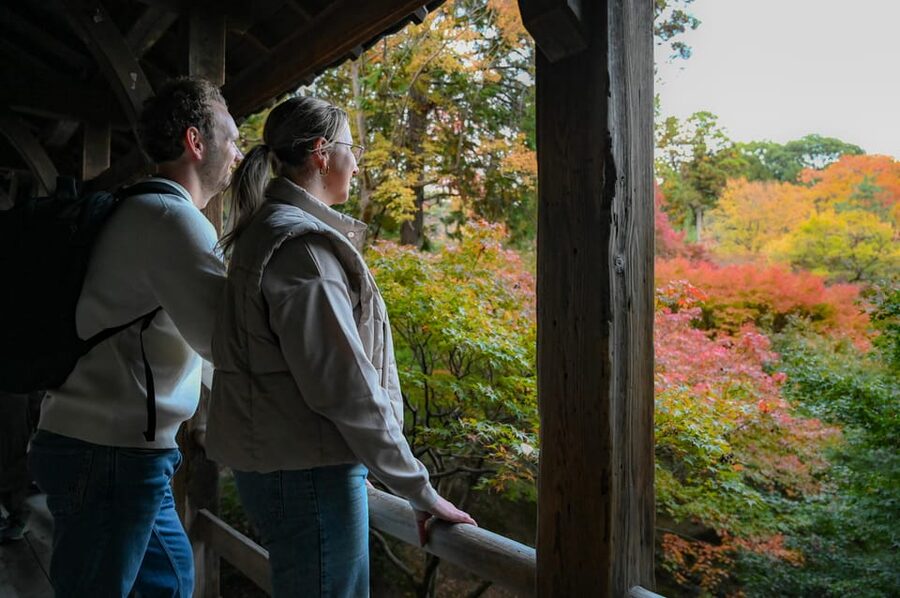
Tofukuji Temple comes next, with about 30 minutes set aside for photographs. The temple is especially appealing as a visual stop, and the route gives you time to take pictures without requiring a full temple visit.
A photo stop is not the same as a detailed guided tour. You may hear useful background from the guide, but the emphasis is on seeing the site and capturing it. This makes Tofukuji a good middle section of the ride, offering a calm pause before the route heads toward Fushimi Inari.
The timing is also practical. A half-day tour needs to balance depth with variety, and Tofukuji provides another strong Kyoto view without adding a long indoor visit. Bring a camera or phone, but keep it secure while cycling and use the bicycle pouch for small personal items.
Fushimi Inari and the orange torii gates
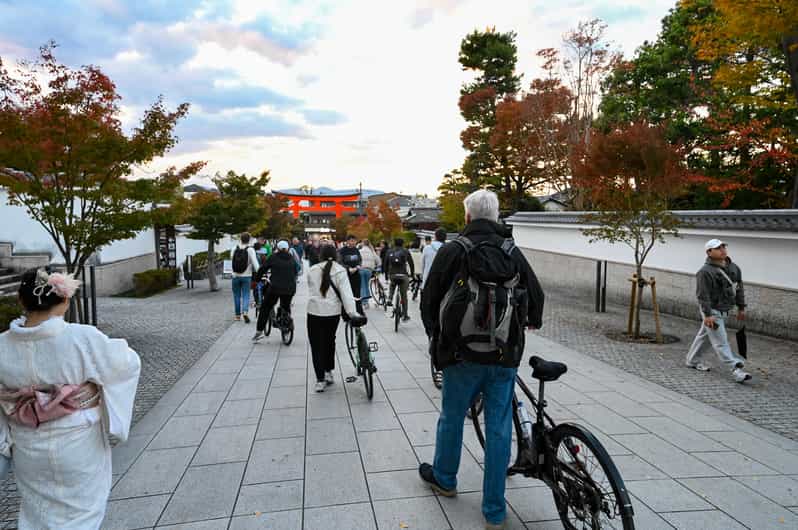
The final major stop is Fushimi Inari Taisha, the tour’s most famous destination. You cycle into the Fushimi Inari area, then leave the bicycles for a 45-minute guided visit and walk around the orange torii gates.
Fushimi Inari is often the busiest and most visually familiar stop on the route. The rows of torii gates climb through the shrine grounds, creating one of Kyoto’s most recognizable scenes. Seeing it at the end of a bike ride gives the tour a strong finish, especially if this is your first visit.
The 45-minute visit is enough to experience the lower shrine area and walk through part of the gates. It is not enough for a full climb to the upper mountain sections, so set your expectations correctly. If you want to hike deep into the torii tunnel, plan a separate visit and allow much more time.
The guide-led format helps you focus. Fushimi Inari can feel confusing on a first visit, with multiple paths and large crowds near the entrance. You will have a set amount of time, so stay aware of the meeting instructions and do not wander too far from the agreed area.
After the shrine visit, you cycle back to Cycle Kyoto. The return ride completes a loop through South Kyoto rather than leaving you to work out your own transport from Fushimi Inari.
What the guides add to the morning
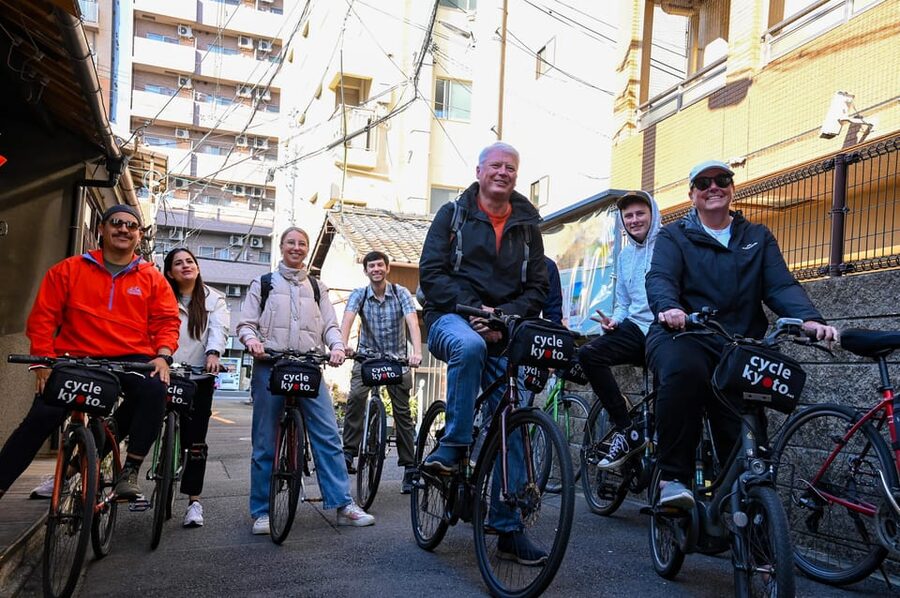
The guide is central to the quality of this experience. The strongest feedback has focused on guides who explain Kyoto’s history and culture clearly while keeping the mood relaxed.
Jay has been praised for his passion and for making everyone feel comfortable, seen, and included. Julian has been described as easygoing and able to keep the tour enjoyable in poor weather. Indra is noted for answering questions and pointing out less crowded places. Sean adjusted the time at stops to suit the small group, while Juan was praised for patience and a friendly manner. Mayco also received strong praise for making the outing interesting and easy to recommend.
These details matter because a bike tour can become stressful if the leader rushes, loses people, or gives little help on the road. Here, the guide’s role is not only to narrate the temples. It is also to manage the pace, keep the group together, explain the route, and help you feel comfortable in an unfamiliar city.
Guides may adjust the time spent at stops when the group is small. Do not count on a completely private itinerary, but a group of four or fewer can sometimes allow more flexibility than a full departure of eight.
The real cost and what you receive for $77
At $77 per person, this is not the cheapest way to see Kyoto’s temples. You can visit many sites independently using public transport and pay admission separately. The value comes from combining bicycle rental, helmet, water, an English-speaking guide, route planning, and several hours of sightseeing in one package.
You are also paying for efficiency. In roughly three and a half hours, you connect Toji, Higashi-Honganji, Gion, Tofukuji, and Fushimi Inari, with the Takase Canal and Kamo River included. Recreating that route alone would require planning, navigation, bicycle rental, and decisions about how to move between each stop.
The price makes the most sense if you have limited time in Kyoto or want a useful orientation at the start of your stay. It is less attractive if you already know the city well, dislike group tours, or plan to spend long periods inside each temple.
The e-bike option costs an additional 3,000 yen. Consider it if you are concerned about the distance, have not cycled recently, or want to save energy for the shrine walk. It must be requested and is subject to availability.
Who should book this ride?
I would recommend this tour to adults and teenagers aged 13 or older who are comfortable cycling for several hours. It suits first-time Kyoto visitors who want to cover several important sights while also seeing canals, rivers, and local streets.
It is particularly useful for you if:
- You want more variety than a temple-only tour.
- You prefer a small group to a large bus outing.
- You enjoy light exercise while sightseeing.
- You want an English-speaking guide to explain the places you see.
- You have limited time and want Fushimi Inari included.
- You are willing to ride more than 15 kilometers at a gentle pace.
I would choose another format if you cannot ride a bicycle, have back problems, or want a slow indoor cultural tour. Children under 13 cannot join the public tour, and the operator does not provide a substitute activity for non-riders.
Smoking, alcohol, and drugs are not allowed. That is standard for a guided activity, but it is worth knowing before you arrive.
Practical tips for a smoother ride
Wear shoes that are comfortable for both cycling and walking. Fushimi Inari includes time on foot, and temple grounds can involve more standing and walking than the schedule suggests.
Bring warm clothing even if the forecast looks mild. The riverside portions can feel cooler, and weather conditions affect how comfortable the ride feels. Sunscreen is also useful on bright days because you are outside for most of the experience.
Keep your bag small. A pouch is provided on the bicycle for personal items, but it is not intended for bulky luggage. Carry only what you need for the ride, and keep your camera or phone secure.
If you are unsure about your stamina, ask about the e-bike when booking rather than waiting until the morning. The upgrade fee is 3,000 yen, and availability is not guaranteed.
The tour offers free cancellation up to 24 hours before departure and allows you to reserve while paying later. Those policies give you some flexibility, especially when Kyoto’s weather is uncertain.
Should you book the Kyoto bike tour?
Book it if you want a well-planned, active introduction to South Kyoto and like the idea of linking famous temples with quieter streets. The combination of Gion backstreets, riverside riding, and Fushimi Inari gives you more variety than a standard point-to-point sightseeing trip.
Skip it if cycling 15 kilometers sounds tiring, if you want extended time inside each temple, or if you need a fully private and flexible schedule. For most capable cyclists aged 13 and up, though, the $77 price is fair for the route, equipment, guide, and time saved. Request the e-bike if you have any doubt about the distance, and check the weather before you go.
FAQ
How long does the Kyoto bike tour last?
The tour lasts 210 minutes, or about three and a half hours.
Where does the tour begin?
It begins at Cycle Kyoto near Kyoto JR Station. From the station, go past Avanti, cross one set of traffic lights, pass the Daily Yamazaki convenience store, and take the next left.
What sights are included?
The route includes Toji, Higashi-Honganji Temple, the Takase Canal, the Kamo River, Gion, Tofukuji Temple, and Fushimi Inari Taisha.
Is bicycle rental included?
Yes. Bicycle rental, a helmet, a guide, and water are included.
Is the tour conducted in English?
Yes. The tour has a live English-speaking guide.
What is the minimum age?
The minimum age for the public tour is 13. Children under 13 cannot join.
Can I use an e-bike?
E-bikes are available upon request for an additional 3,000 yen. Availability is not guaranteed.
Just added in Kyoto
- The “Golden Route” and Ancient Japan by DIAMIR Erlebnisreisen – 14-Day Tour★ 2.0 · 2 reviews
- Japan: Castles & Cuisine by G Adventures – 6-Day Kyoto to Osaka Tour★ 4.5 · 4 reviews
- Cycle Japan by Explore! – 13-Day Kyoto to Tokyo Tour★ 4.7 · 12 reviews
- Cycle Japan by Intrepid Travel – 11-Day Kyoto to Tokyo Tour★ 4.8 · 2 reviews
- Classic Japan by Intrepid Travel – 11-Day Kyoto to Tokyo Tour★ 4.4 · 14 reviews
- Ancient & Modern Japan 14-Day Tour by Exodus Adventure Travels★ 4.4 · 40 reviews
- 5 Day Cultural Adventure of Kyoto, Nara & Osaka by Tourist Journey★ 2.5 · 2 reviews
- 12 Days Kinosaki Onsen Escape: A Journey Through Japan’s Timeless Towns by UME Travel★ 4.8 · 5 reviews
Cycling and E-Bike Tours, compared.
3h Tokyo E-Bike Tour: Hidden Gems, and Local Life with guide
Read our review →
Arashiyama Bamboo Forest & Hidden Gems Bike Tour (Early Bird)
Read our review →
5 Top Highlights of Kyoto Full Day Bike Tour (E-bike option)
Read our review →

Hiroshima 2hr Peace Cycling Tour with Local Guide
Read our review →Browse the lists this tour appears in