
Reviewed · CYCLING AND E-BIKE TOURS
Kyoto: Hidden Gems E-Bike Tour with Local Japanese Guide
Kyoto rewards two wheels. I like the calm ride beside the Kamogawa River and the way this route links major sights with quieter corners of northeast Kyoto. I also like the friendly, conversational guiding from Aska, Tai, Natsuki, or another English-speaking Japanese guide who has lived abroad. The main catch is that you need to be a confident cyclist, since the route includes city streets, pedestrians, and occasional crowds.
This 210-minute tour costs $75 per person, including the electric bike, helmet, an entry ticket, and parking fees. I think that is fair value if you want local orientation, easy transport between sights, and useful Kyoto advice in one morning or afternoon. Bring water, comfortable clothing, and shoes, and leave large bags at your accommodation.
In This Review
- Key points at a glance
- Why cycling works so well in northeast Kyoto
- Meeting near Gojo and getting comfortable on the bike
- Kamogawa River and the stepping stones
- Ginkaku-ji and the shopping street
- Philosopher’s Path and the ride to Nanzen-ji
- Nanzen-ji and its large-scale setting
- Heian Jingu, the final major stop
- The guides make the difference
- How difficult is the ride?
- Weather, seasons, and the best time to ride
- Is $75 good value?
- Who should book this Kyoto e-bike tour?
- Practical details before you reserve
- Should you book it?
- FAQ
- How long does the Kyoto e-bike tour last?
- Where does the tour begin?
- Which places does the tour visit?
- Is the bike rental included?
- Is temple or shrine admission included?
- How many people can join the group?
- Is the tour conducted in English?
- Do I need to bring food or water?
- What happens if it rains?
- Can I continue using the bike after the tour?
Key points at a glance
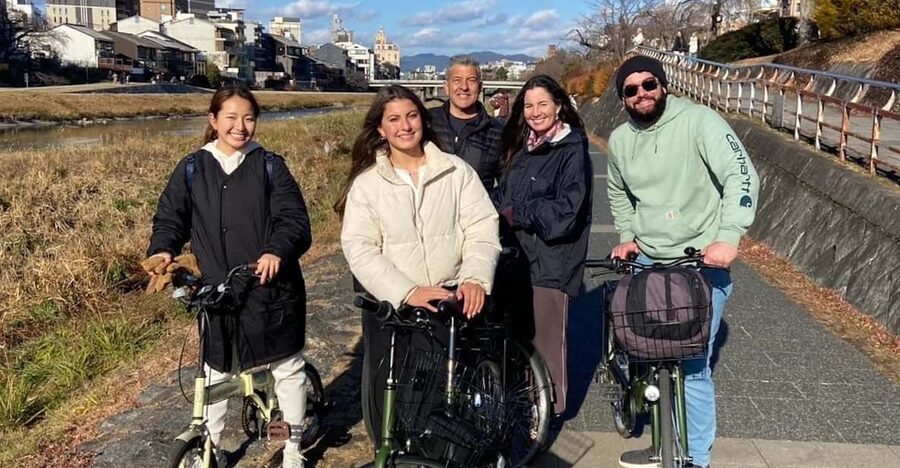
- Ride beside the Kamogawa River: The opening stretch gives you a peaceful view of Kyoto and a chance to try the stepping stones across the water.
- See Ginkaku-ji, Nanzen-ji, and Heian Jingu: The route covers three important cultural sights without spending the whole day in the busiest parts of the city.
- Use an e-bike for Kyoto’s longer distances: The motor helps on uphill sections and keeps the ride manageable for moderately fit riders.
- Travel in a group of eight or fewer: The small size makes conversation and flexible stops much easier.
- Enjoy local advice beyond the route: Guides can suggest places to eat, further sights, and ideas for the rest of your Kyoto visit.
- Expect a social outing, not a race: The pace is relaxed, with time for sightseeing, questions, shopping, and photography.
Why cycling works so well in northeast Kyoto
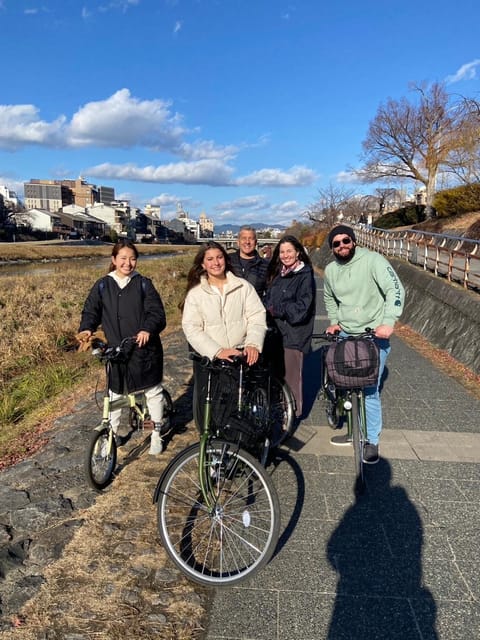
Kyoto’s temples are spread across a large area, and walking between them can take more time and energy than you expect. Public transport helps, but buses can be slow, especially when roads are crowded. An electric bike gives you a practical middle ground: you cover distance quickly, yet you still notice riverbanks, residential streets, canals, and small local scenes along the way.
I especially like the way this tour avoids making the entire experience a checklist of famous buildings. You ride between the stops, and those connecting stretches are part of the point. The Kamogawa River, quiet side roads, Philosopher’s Path, and canal views give you a better sense of how Kyoto works beyond its postcard temples.
The electric assistance matters too. You still pedal, but the motor takes the sting out of hills and longer stretches. One rider described needing to pedal only lightly, while another found the bikes easy and relaxing even without previous e-bike experience. You should still know how to control a bicycle, brake smoothly, and keep a steady line.
More Bike Tours in Kyoto
- Bike Tour Exploring North Kyoto plus Lunch
★ 5.0 · 1,087 reviews - Arashiyama Bamboo Forest & Hidden Gems Bike Tour (Early Bird)
★ 5.0 · 613 reviews - 5 Top Highlights of Kyoto Full Day Bike Tour (E-bike option)
★ 5.0 · 511 reviews
Meeting near Gojo and getting comfortable on the bike
The tour begins at a rental cycling shop in the Gojo area. From Kyoto Station, the meeting point is about six minutes by train or roughly 20 minutes on foot. Allow enough time to arrive calmly, since you do not want to start a three-and-a-half-hour ride while searching for the shop.
You receive an electric bike and helmet, then head out with your guide. The available bikes have generally been described as comfortable and easy to ride, though not every bicycle is new. That is not necessarily a problem, but I would check the saddle height, brakes, and electric assistance before leaving the shop.
One useful improvement would be a slightly longer start-of-tour bike adjustment and route briefing. A rider specifically wished for five minutes to get familiar with the bike and see the route. If you are new to e-bikes, ask your guide how the assistance levels work before you set off.
The group is limited to eight participants. That is small enough for the guide to keep an eye on the group and answer questions without turning every stop into a formal lecture. Some departures may be much smaller, including the possibility of a private-feeling ride if few people book.
Kamogawa River and the stepping stones
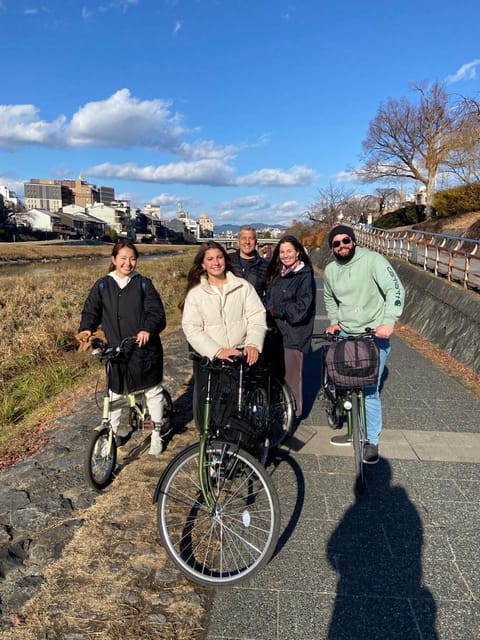
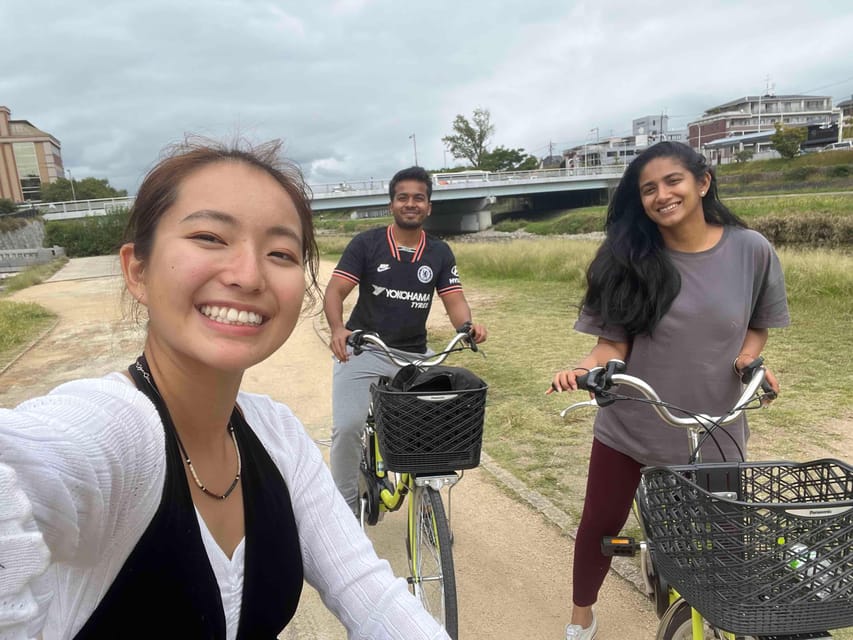
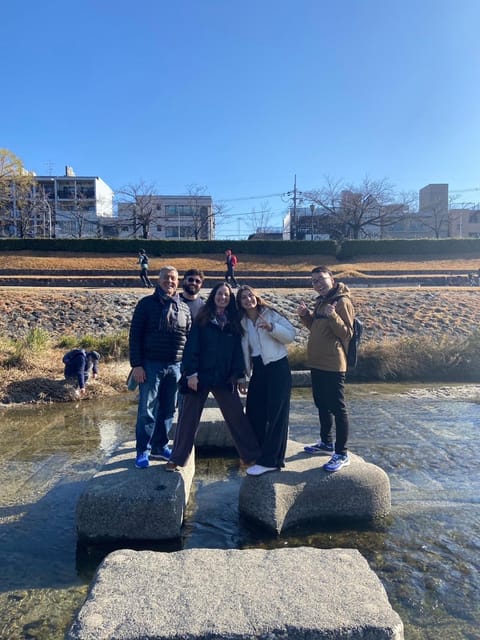
The first ride heads toward Ginkaku-ji along the Kamogawa River. This is one of the most enjoyable parts of the route because it slows the tour down at the start. You get open views, fresh air, and a pleasant contrast to Kyoto’s busier streets.
The stepping stones across the river are a playful stop. You can try crossing them on foot and enjoy a small, distinctly Kyoto moment before getting back on the bike. It is not a major monument, and that is exactly why it works. You begin by experiencing the city instead of immediately joining a line at a temple gate.
River paths are not always empty. Pedestrians may be walking, and you need to ride with care, give people room, and follow your guide’s pace. One route description praises the quiet river riding, while another points out that the tour also uses moderately trafficked roads. Expect a mix rather than a completely car-free ride.
Ginkaku-ji and the shopping street
Ginkaku-ji, often called the Silver Pavilion, is the first major temple stop. The building itself is more restrained than its name suggests, but the grounds are the real attraction. The setting gives you traditional Kyoto gardens, carefully shaped spaces, and a peaceful atmosphere that rewards taking your time.
You receive an included entry ticket, so there is no separate admission charge at the temple. The tour does not rush you through the grounds. Several riders appreciated having enough time at each stop, and the guide can sometimes allow a little extra time when the group wants to look around or take photographs.
Near the temple is a shopping street where you have free time. This is a useful break after the first ride and a chance to pick up souvenirs, coffee, or a matcha crepe. Food is not included, so carry money for anything you want to buy. Water is also not included, and I strongly suggest bringing a bottle, especially in summer.
The shopping stop adds a personal touch, but it can also tempt you to spend too long browsing. Keep an eye on the schedule. The route still includes the Philosopher’s Path, Nanzen-ji, and Heian Jingu, and the full experience lasts only about three to three and a half hours.
A completely different kind of day out:
- PERFECT KYOTO 1-Day Bus Tour
★ 5.0 · 13,518 reviews - [Kyoto & Nara Day Tour] Sagano Scenic Railway & Nara Park & Fushimi Inari Taisha Thousand Torii Gates & Togetsukyo Bridge & Bamboo Grove & Kimono Forest (Departing from Osaka)
★ 4.9 · 10,942 reviews - Kyoto: Fushimi Inari, Kinkakuji, Bamboo Grove 1 Day Bus Tour
★ 4.8 · 4,316 reviews - Kyoto: Tea Ceremony in a Traditional Tea House in Kiyomizu
★ 4.9 · 3,519 reviews
Philosopher’s Path and the ride to Nanzen-ji
After Ginkaku-ji, you cycle along the Philosopher’s Path toward Nanzen-ji. This tree-lined route follows a canal and is one of the prettiest connecting sections in Kyoto. In spring, seasonal blossoms can add color, while autumn brings changing leaves. Even outside those periods, the water, trees, and quiet walking path create a restful pause.
You should not think of this as a fast cycling route. The path can include pedestrians, and you may need to slow down or walk the bike in crowded sections. A confident rider will find this easy enough, but anyone who wobbles, brakes late, or dislikes sharing space with walkers may feel less comfortable.
The route’s mix of riding and sightseeing is one of its strengths. You are not seated on a bus while the city passes by, nor are you walking long distances between every sight. Instead, you get short stretches of exercise followed by time to look around and listen.
Nanzen-ji and its large-scale setting
Nanzen-ji offers a change of mood after the narrow canal path. The temple complex has a broad, impressive entrance and a grand sense of space. The tour highlights the large view of the temple, then gives you time to take in the setting.
A particularly memorable detail from the ride is the aqueduct near Nanzen-ji. It adds a layer of everyday engineering to the temple visit and shows how Kyoto’s historic and modern functions overlap. You get more than a sequence of shrine gates and temple halls. You also see the infrastructure that helped shape the area.
Your guide supplies historical and cultural context, but the information is not meant to be an academic lecture. That balance suits this format. You receive enough background to understand what you are seeing, with room for questions and casual conversation.
Heian Jingu, the final major stop
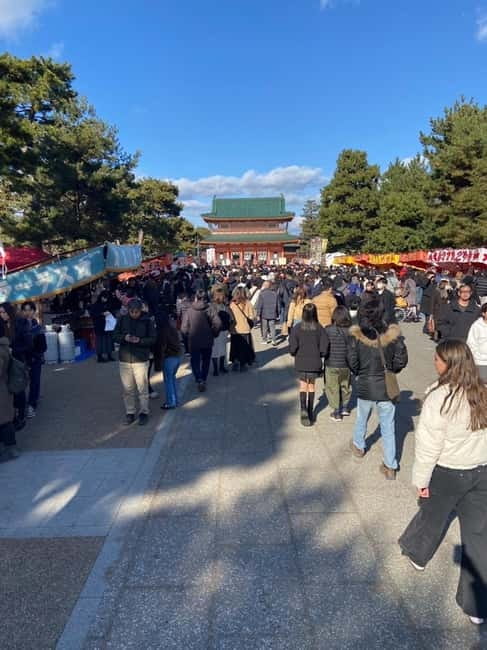
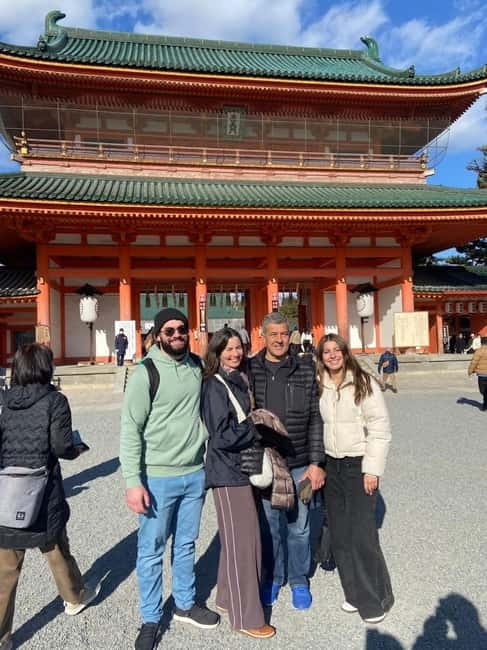
The final destination is Heian Jingu Shrine. Its broad approach and striking architecture provide a fitting finish after the smaller paths and temple grounds earlier in the tour. The scale feels different from Ginkaku-ji and Nanzen-ji, giving the route a useful variety.
The shrine is also a good place to think about the range of Kyoto’s religious architecture. The day is not built around one single famous attraction. Instead, it moves between river scenery, a shopping street, a canal path, a temple garden, a large temple complex, and a major shrine.
The exact amount of time at each place can vary with the group, weather, traffic, and crowd levels. The guides are described as patient and flexible, so you can ask questions or request a little more time where possible. Still, this is a guided group ride, not a private photography session, and you should expect to keep moving.
The guides make the difference
Aska founded the tour and is the guide most often named by riders. She studied sociology and international relations in the United Kingdom and has also lived in North Carolina and London. That background helps explain the tour’s easy cross-cultural conversation and clear English.
Aska’s appeal is not just her ability to explain sights. She also talks comfortably about Japanese culture, daily life, food, travel planning, and other countries. She wants you to make at least one Japanese friend, and the social side of the tour is a real part of the experience.
Other guides, including Tai, Natsuki, and Tatsuya, may lead some departures. The common thread is that they are friendly Japanese guides with overseas experience and strong English. Tai has been praised for being energetic and attentive, while Natsuki was described as a warm presence. You should expect the personality and exact style to vary slightly by guide.
The best guides keep the pace relaxed and explain just enough. One rider appreciated receiving useful information without an overload of facts. That is the right approach on a bike, where you need to watch the road as well as listen.
How difficult is the ride?
The tour is aimed at people who can ride a bicycle and have at least a moderate level of fitness. You do not need to be a serious cyclist. The electric motor helps with hills, and the route includes regular sightseeing stops.
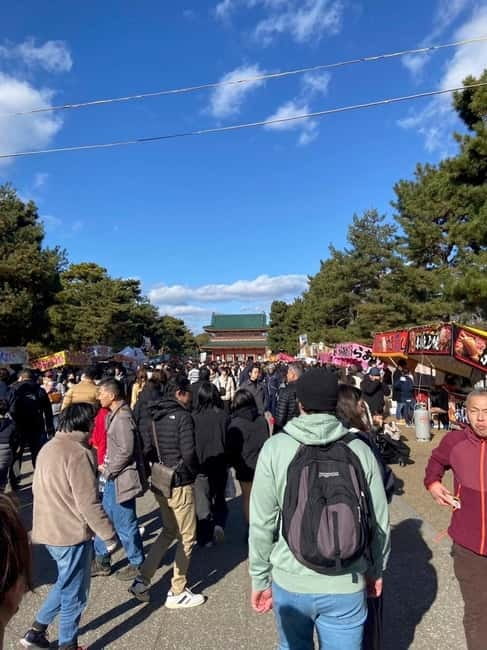
You do need to feel comfortable in an urban setting. The route includes quiet river riding, paths shared with pedestrians, and moderately busy roads. During peak autumn leaf season or on a Saturday, temple areas can be crowded, and you may need to guide the bike carefully through people.
The tour is not suitable for children under 12, pregnant women, wheelchair users, people who cannot ride a bike, or people with a low level of fitness. The conditions also exclude people with diabetes, altitude sickness, and those over 95 years old. These restrictions are worth reading carefully before booking.
Wear comfortable shoes and clothes. High heels are not allowed, and large bags or oversize luggage cannot be taken along. A small, secure day bag is the practical choice, but the provided information specifically warns against large luggage.
Weather, seasons, and the best time to ride
Kyoto can be very hot in summer. Riders have completed the route in July and September heat and still enjoyed the scenery, but the conditions made hydration important. Since water is not included, bring your own bottle and consider choosing a cooler morning departure if one is available.
Autumn can bring beautiful foliage, especially around the Philosopher’s Path and temple areas. It can also bring more people. One early morning ride in November offered a quieter experience, while a Saturday during peak leaf color included crowds at some sights.
Rain does not automatically cancel the ride. Raincoats may be provided, or the tour can be rescheduled. If the forecast looks poor, contact the operator ahead of time rather than assuming the ride will proceed exactly as planned.
Spring, autumn, and cooler parts of the day are likely to feel most comfortable for cycling, but the tour operates across different seasons. The scenery changes, and so does the crowd level. Your best choice depends on your tolerance for heat and your preference for quiet streets or seasonal color.
Is $75 good value?
At $75 per person, the price is not the cheapest way to move around Kyoto. You could rent a bicycle independently for less, and public transport may cost less still. Those options do not include a guide, organized route, helmet, or included temple entry.
The value here comes from combining transport and interpretation. In a little under four hours, you cover several parts of northeast Kyoto that would take substantial walking time. You also avoid the work of planning a safe route between Ginkaku-ji, Nanzen-ji, and Heian Jingu.
Parking fees and an entry ticket are included, which keeps the final cost clearer. Food and drinks are extra, and there is no hotel pickup or drop-off. Tips are not included either, so budget separately if you want to thank your guide.
I think the tour is good value for a first or second day in Kyoto. The guide can also suggest places to eat and sights for the rest of your visit, which may save you from spending your limited holiday time on trial and error.
Who should book this Kyoto e-bike tour?
I would choose this tour if you want to see Kyoto actively but do not want a demanding cycling day. It suits couples, solo visitors, families with children aged 12 and over, and small groups who enjoy conversation as much as sightseeing.
It is particularly useful if you have limited time. The route gives you a broad introduction to northeast Kyoto, and you can return later to the place that interests you most. It also suits anyone who finds walking seven or eight miles in a day tiring.
I would hesitate if you want a completely quiet route, a long temple visit, or a highly technical cycling experience. The ride shares space with cars and pedestrians, and popular sights may still be busy. You should also be prepared to pedal, follow traffic rules, and stay alert.
The experience has received a 4.9 rating from 189 bookings, with repeated praise for the guides, easy bikes, comfortable pace, and lesser-known stops. The strongest pattern is clear: people value the combination of friendly company and a route they might not have planned alone.
Practical details before you reserve
You can cancel up to 24 hours before the start for a full refund, and the reserve-now, pay-later option keeps your plans flexible. Starting times vary, so check availability for your preferred date.
The tour ends back at the rental bike shop. If you want to continue cycling afterward, the operator may be able to arrange an extension, which is useful if you want to keep exploring Kyoto independently.
Do not bring a suitcase or large luggage. Arrive in comfortable clothes, wear shoes suitable for pedaling and walking, and carry water. Most important, be honest about your cycling ability before you book.
Should you book it?
Book this tour if you want a friendly, low-pressure way to connect Kyoto’s temples, river paths, and side streets. The best reasons are the relaxed pace, small group, English-speaking Japanese guides, and the electric assistance that makes a long city route easier.
Skip it if you cannot ride confidently or if you dislike cycling near traffic and pedestrians. For everyone else, $75 buys more than a bicycle rental. It gives you a route, local conversation, cultural background, and a useful first look at the northern Higashiyama area without spending the whole day on foot.
FAQ
How long does the Kyoto e-bike tour last?
The tour lasts about 210 minutes, or roughly three to three and a half hours.
Where does the tour begin?
You meet your guide at a rental cycling shop in the Gojo area. The meeting point is about six minutes from Kyoto Station by train or 20 minutes on foot.
Which places does the tour visit?
The route includes the Kamogawa River, Ginkaku-ji Temple, the Philosopher’s Path, Nanzen-ji Temple, and Heian Jingu Shrine.
Is the bike rental included?
Yes. The price includes an electric bike and helmet.
Is temple or shrine admission included?
An entry ticket is included in the tour price. The supplied information does not specify which particular admission it covers.
How many people can join the group?
The group is limited to eight participants.
Is the tour conducted in English?
Yes. The live tour guide language is English.
Do I need to bring food or water?
Food and water are not included. You should bring water and money if you want coffee, matcha crepes, or other items at the shopping street.
What happens if it rains?
You may be able to use raincoats, or the tour can be rescheduled if it rains.
Can I continue using the bike after the tour?
The tour ends at the rental bike shop, but the operator may be able to arrange continued bike rental if you ask.
Just added in Kyoto
- The “Golden Route” and Ancient Japan by DIAMIR Erlebnisreisen – 14-Day Tour★ 2.0 · 2 reviews
- Japan: Castles & Cuisine by G Adventures – 6-Day Kyoto to Osaka Tour★ 4.5 · 4 reviews
- Cycle Japan by Explore! – 13-Day Kyoto to Tokyo Tour★ 4.7 · 12 reviews
- Cycle Japan by Intrepid Travel – 11-Day Kyoto to Tokyo Tour★ 4.8 · 2 reviews
- Classic Japan by Intrepid Travel – 11-Day Kyoto to Tokyo Tour★ 4.4 · 14 reviews
- Ancient & Modern Japan 14-Day Tour by Exodus Adventure Travels★ 4.4 · 40 reviews
- 5 Day Cultural Adventure of Kyoto, Nara & Osaka by Tourist Journey★ 2.5 · 2 reviews
- 12 Days Kinosaki Onsen Escape: A Journey Through Japan’s Timeless Towns by UME Travel★ 4.8 · 5 reviews
Cycling and E-Bike Tours, compared.
3h Tokyo E-Bike Tour: Hidden Gems, and Local Life with guide
Read our review →
Arashiyama Bamboo Forest & Hidden Gems Bike Tour (Early Bird)
Read our review →
5 Top Highlights of Kyoto Full Day Bike Tour (E-bike option)
Read our review →

Hiroshima 2hr Peace Cycling Tour with Local Guide
Read our review →Browse the lists this tour appears in