
Reviewed · TEA CEREMONIES
Kyoto: Kimono and Tea Ceremony Experience at Cultural Asset
Old Kyoto still has a few doors worth opening. At Tondaya, you dress in a high-quality silk kimono, tour a 140-year-old machiya, and watch a tea master prepare matcha in a setting built for quiet attention. I like the beautiful woodwork and gardens, and I like that the tea ceremony is explained rather than simply performed. The main drawback is that shared sessions can feel crowded, and English explanations may depend on a translation device.
This is not a slick stage show. It is a traditional house that also hosts cultural activities, so the pace and organization can feel a little informal. That can be part of the charm, but at $222 per person, you should know you are paying for the setting, the silk kimono, the staff assistance, and the cultural presentation, not just a cup of tea.
In This Review
- Four things to know before you book
- Entering Tondaya, a 140-year-old Kyoto machiya
- Choosing and wearing the silk kimono
- Photographing the gardens and old rooms
- Watching the tea ceremony in a traditional room
- How group size changes the experience
- Language, staff, and the human side of Tondaya
- Is $222 a fair price?
- Timing, clothing, and practical preparation
- Who will enjoy this Kyoto experience most?
- Should you book Tondaya?
- FAQ
- Where does the kimono and tea ceremony experience take place?
- How long does the experience last?
- Is the tea ceremony private?
- What should I bring?
- Can I take photographs during the kimono dressing?
- Is the experience offered in English?
- What is included in the price?
Four things to know before you book
- The setting is the star: Tondaya is a 140-year-old machiya recognized by Kyoto City as a culturally significant property.
- The kimono dressing is quick: Staff aim to fit you in about five minutes, but you cannot take pictures while being dressed or undressed.
- The tea ceremony may be shared: Unless you select the private option, you may wait or sit with other participants.
- Bring socks: Bare feet are not allowed, and stockings are discouraged.
- Photo time is generous: You have time to use the house, gardens, and traditional interiors as backdrops.
- English support varies: Some staff speak English well, while others use a translation device.
Entering Tondaya, a 140-year-old Kyoto machiya
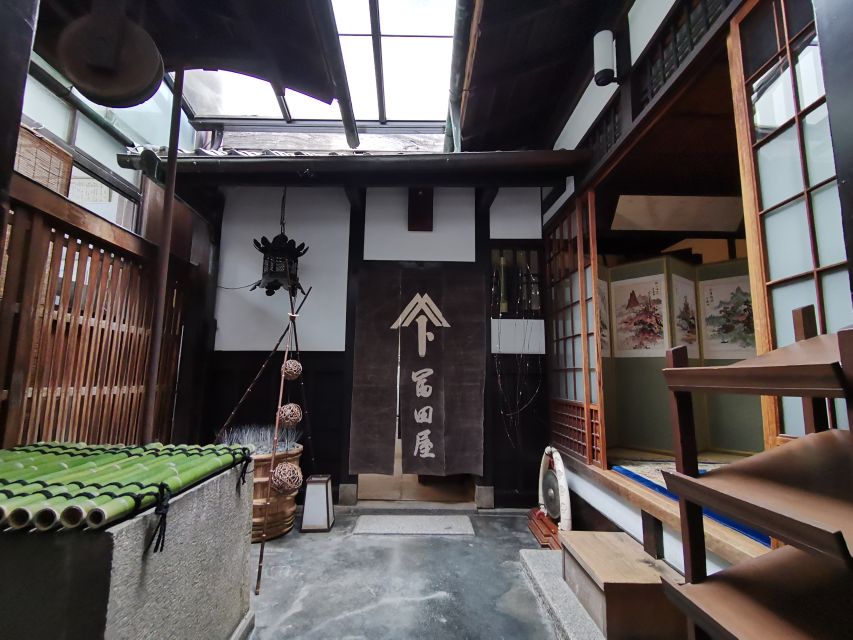
Your meeting point is Tondaya, Nishijin Japanese Cultural Experience Museum, at 697 Ishiyakuchicho in Kyoto’s Kamigyo Ward. The building itself gives this experience its strongest sense of place.
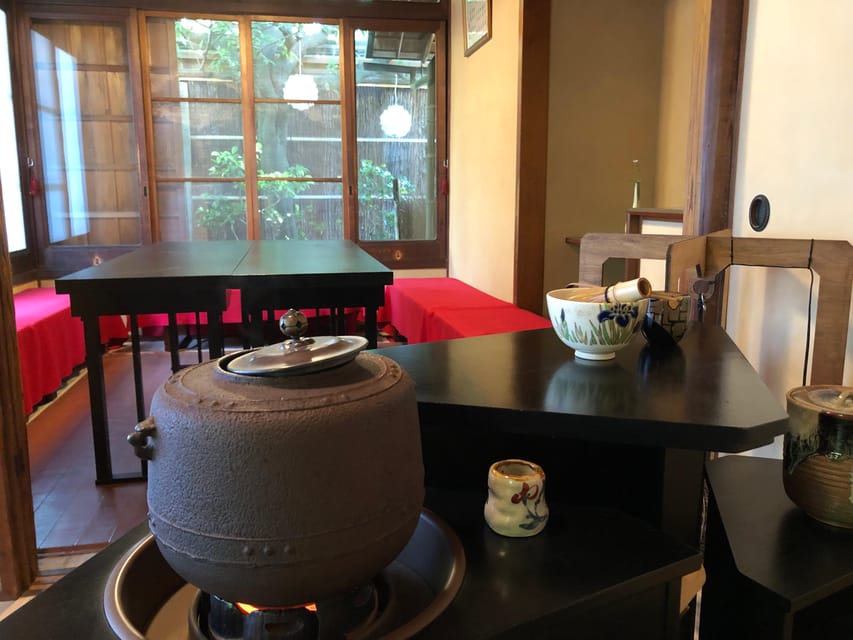
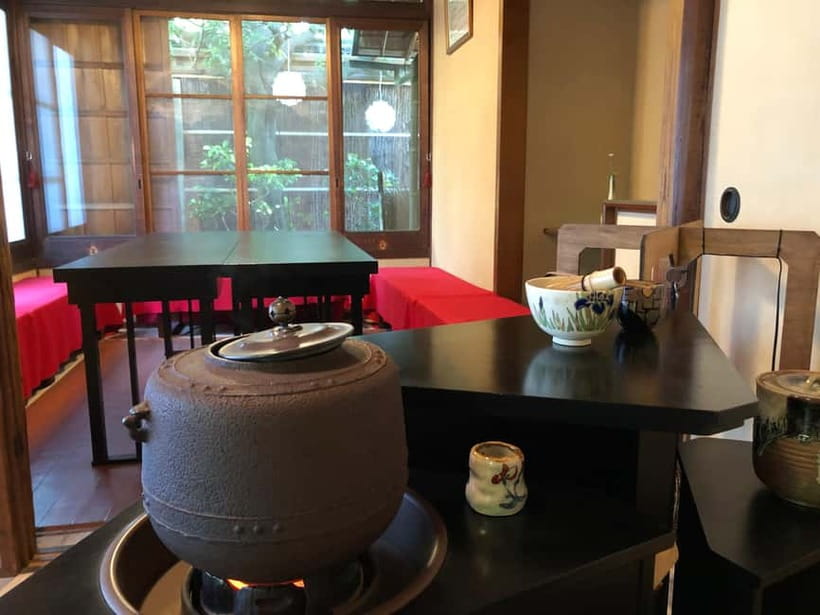
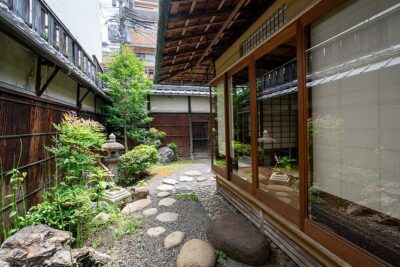
A machiya is a traditional Kyoto townhouse, and Tondaya has the details you hope to find in one: crafted wooden features, interior gardens, old rooms, and historical objects. You are not being taken into a modern studio dressed up with a few Japanese decorations. The building carries the atmosphere of an older Kyoto home.
That matters because the kimono and tea ceremony make more sense here. The garments are framed by the kind of architecture and household space in which traditional arts developed. You can look closely at the construction, move through the rooms, and hear stories connected with the property.
The house tour is part of the value. Some people may arrive focused on photographs, but the building gives the visit more weight. It turns the activity from simple dress-up into a short look at Kyoto’s domestic culture.
The trade-off is that this is a working cultural attraction, not a museum where you move at your own pace. Several groups may be in the house at once, and the atmosphere can become noisy. I would arrive on time, stay patient, and treat the rooms with care.
More Kimono Experiences in Kyoto
- [Kyoto & Nara Day Tour] Sagano Scenic Railway & Nara Park & Fushimi Inari Taisha Thousand Torii Gates & Togetsukyo Bridge & Bamboo Grove & Kimono Forest (Departing from Osaka)
★ 4.9 · 10,942 reviews - Kyoto Geisha Walking Tour: Gion District & Hidden Gems
★ 4.7 · 3,273 reviews - Kyoto: Gion Magical Night Walking Tour with Geisha Trivia
★ 4.9 · 2,393 reviews
Choosing and wearing the silk kimono
The kimono portion begins in a dressing room, where staff help you select and put on an authentic silk garment. The fitting is described as taking about five minutes. That is useful if you have a packed Kyoto schedule, though it also means this is not a long lesson in kimono construction or dressing technique.
The staff handle the practical work. You do not need to know how the layers are arranged, and you will be guided into the correct shape. The result is a polished traditional appearance without asking you to manage complicated folds and ties.
Bring your own socks. Bare feet are not permitted, and the instructions specifically ask you not to wear stockings. A loose-necked top is also the better choice, since a tight neckline can show above the kimono and affect the look.
Pay attention to clothing condition. If your T-shirt is wet, the staff cannot help dress you in the kimono. Bring a dry shirt to change into, or be prepared to purchase one at the venue.
The garment selection may not be equally satisfying for every body type. One tall participant found that the larger available kimonos were solid colors, while shorter participants had access to more patterned designs. Another person felt that a kimono did not fit quite correctly.
That does not mean you should avoid the activity if you are tall or have a different body shape. It does mean you should keep expectations sensible. The selection and fit can vary, and the experience is not presented as a full custom fitting.
I also wish the cultural explanation of the clothing were more consistent. The staff may explain the garment and its role in Japanese tradition, but some sessions offer more detail than others. If this subject matters to you, ask questions while you are being dressed or during the house tour.
Photographing the gardens and old rooms
Once you are dressed, you have time to take photographs around the property. This is one of the most praised parts of the experience, and the setting does much of the work for you.
Wooden corridors, traditional rooms, gardens, and old architectural details provide a calmer background than a busy tourist street. Several participants appreciated having enough time to take their own pictures, and staff may also help with photos.
Photography is not allowed during dressing or undressing. That rule protects your privacy and keeps the dressing process practical. You can take pictures after you are fully dressed and during the appropriate parts of the house visit.
The photo time can feel surprisingly personal even when the session itself is shared. One couple found that their pictures looked intimate despite the presence of other people. That is a useful distinction: the room may be busy, but the photographs can still turn out well.
Do not expect an elaborate professional photo shoot with a fixed portrait package. The emphasis is on giving you access to the house and allowing you to make your own pictures. Staff assistance is a welcome extra, not the central product.
The best approach is to enjoy the building first and take pictures second. If everyone tries to occupy the same corner at once, the old rooms quickly feel cramped. A little courtesy makes a large difference.
Watching the tea ceremony in a traditional room
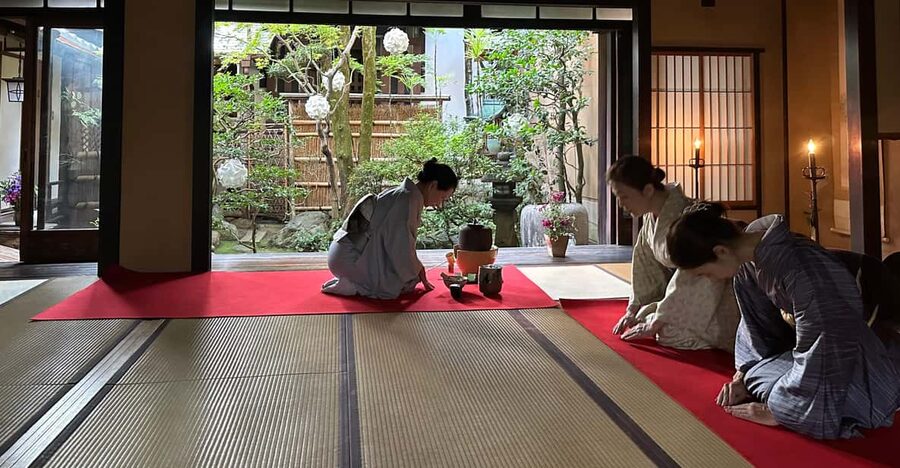
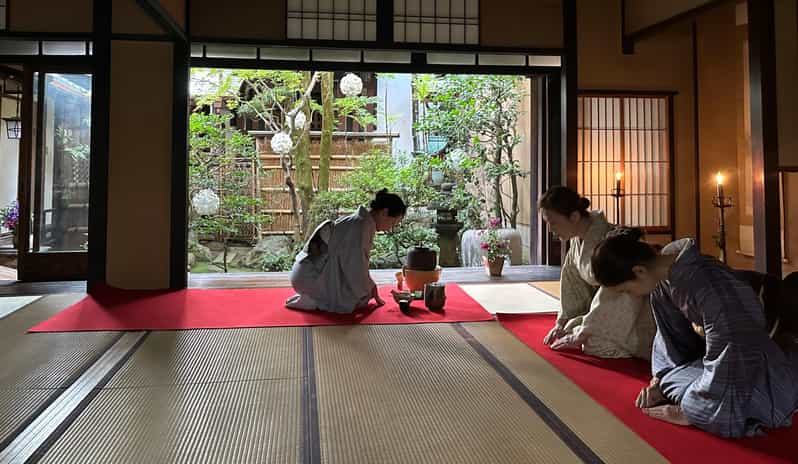
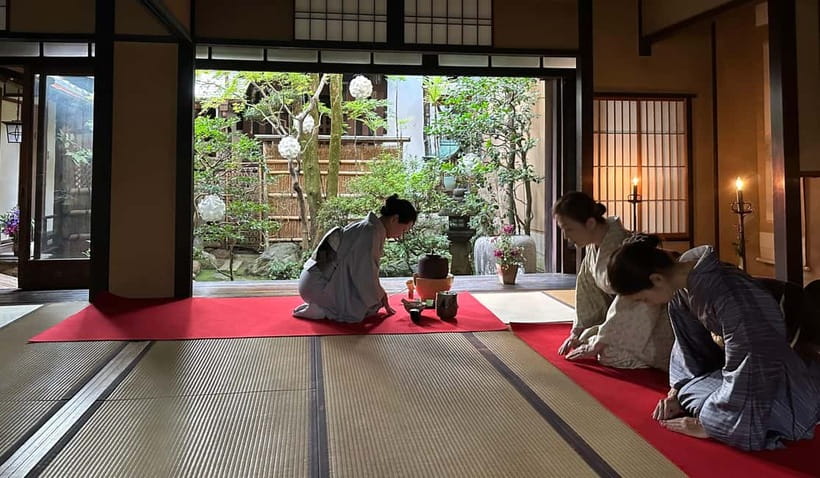
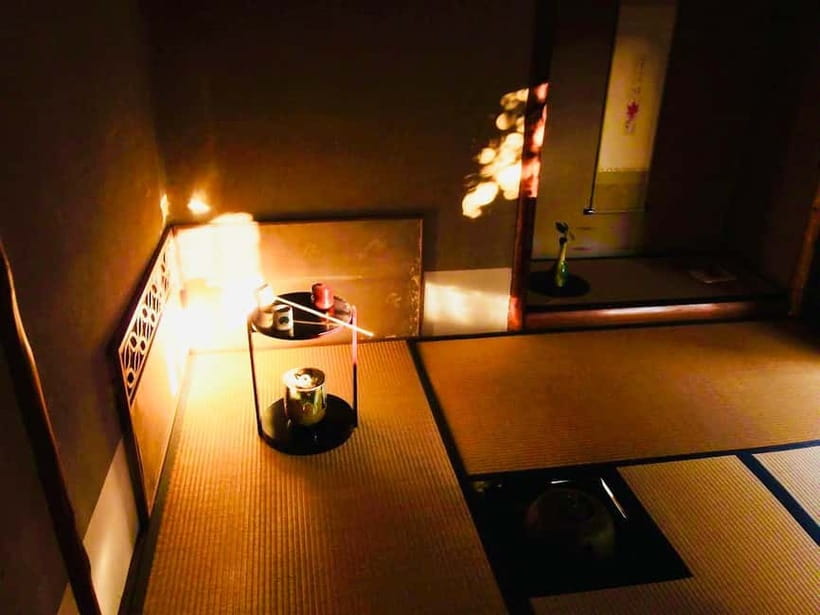
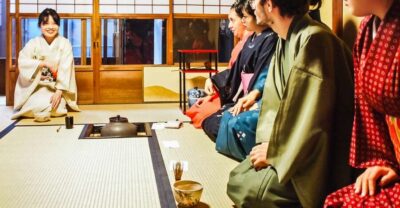
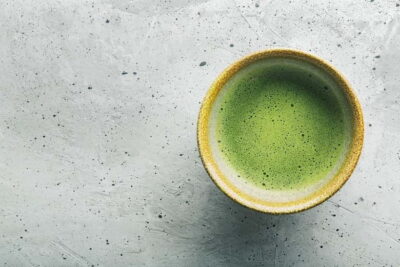
The tea ceremony is performed by an experienced tea practitioner in the machiya. You watch the preparation of Japanese tea and receive explanations about the actions, manners, and meaning behind the ceremony.
This is where the experience becomes more than a costume activity. Tea preparation in Japan is built around controlled movement, attention to objects, and respect between host and participant. Even a short demonstration lets you notice how much care goes into each step.
Many people find the ceremony calming after the energy of dressing and photography. The quiet room, deliberate movements, and traditional setting create a clear change of pace. The ceremony is also educational when the guide can explain in English.
The quality of the explanation can vary. Some sessions have a clear English-speaking guide. In others, English is limited, and a translation app or device may be used. One participant found that little cultural background was provided because the guides did not speak English, while others had detailed and useful explanations.
That inconsistency is important at this price. If you want a fully narrated lesson on tea culture, confirm the language support when booking or choose the private option if available. The performance itself can remain beautiful even when the words are limited, but interpretation affects how much you take away.
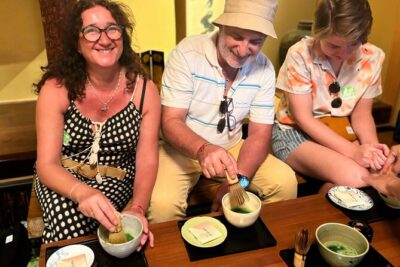
You usually watch rather than prepare the tea yourself. One person specifically wished for a chance to mix the tea. If your main goal is hands-on matcha preparation, this may not be the right format.
Seating also deserves attention. The tea ceremony takes place close to the floor, and one participant noted that it was fortunate the ceremony was short. A few small chairs may be available, but the information does not promise chair seating for everyone. If sitting on the floor is difficult, contact the provider before booking rather than assuming a chair will be ready.
More Tea Ceremonies in Kyoto
- Kyoto: Tea Ceremony in a Traditional Tea House in Kiyomizu
★ 4.9 · 3,519 reviews - Kyoto: Tea Ceremony Ju-An at Jotokuji Temple
★ 4.9 · 3,207 reviews - Kyoto: 45-Minute Tea Ceremony Lesson Experience
★ 4.3 · 2,378 reviews - Kyoto: Table-Style Tea Ceremony at a Kyo-Machiya
★ 4.9 · 1,211 reviews
How group size changes the experience
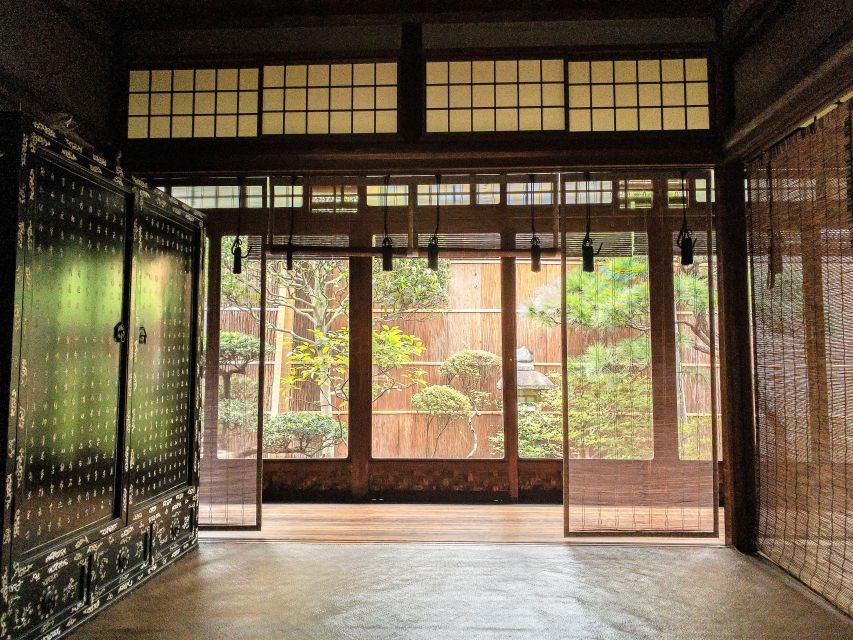
The standard arrangement is conducted with other participants, although a private experience can be selected. The description also identifies the booking as a private group, so check the exact option you are reserving. In practical terms, the shared version can include several people, while the private option is intended to give you a more personal session.
This distinction affects nearly everything: how quickly you are dressed, how close you sit to the tea master, how much quiet you have, and how much time you spend waiting. A smaller group gives you a better chance of seeing the ceremony clearly and asking questions.
A larger group can still be enjoyable, but the room may feel crowded. Some participants found the house busy, and one called the experience chaotic but still worthwhile. Another person felt the ceremony would have been better with fewer people.
Your fellow participants also matter. The tea ceremony is meant to be peaceful and attentive, yet phones, whispering, late arrivals, and loud requests can distract from the presentation. You are given plenty of time to take photographs, so put your phone away once the ceremony begins.
If quiet matters to you, choose a private session if the extra cost fits your budget. If you are flexible and mainly want the kimono and building, the shared option may offer better value.
Language, staff, and the human side of Tondaya
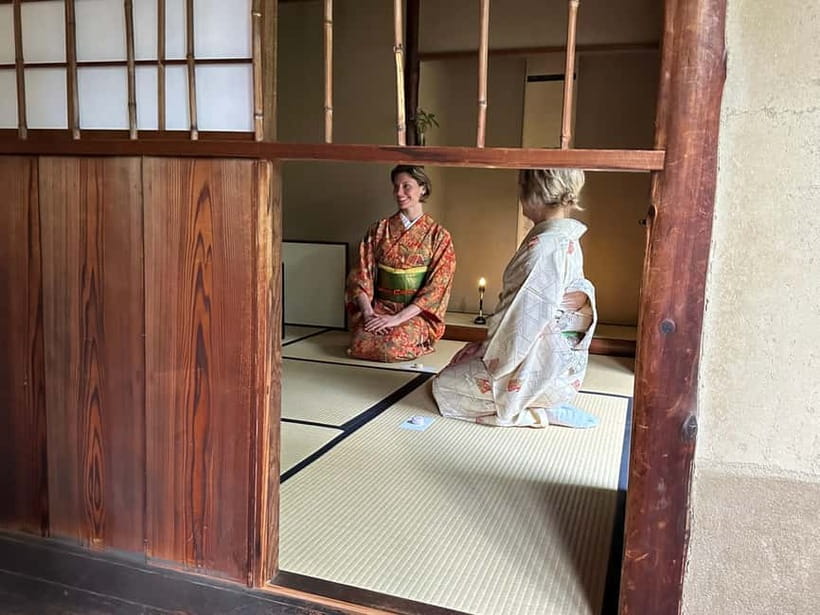
The activity is offered in English and Japanese. Staff members help with kimono dressing, explain the property, conduct or support the tea ceremony, and may take photographs.
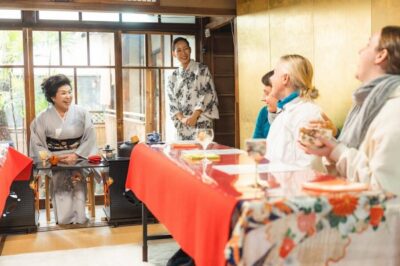
The strongest praise goes to the staff’s warmth. People describe the women who run the experience as welcoming, patient, attentive, and good-humored. One older woman was especially praised for dressing participants and performing the ceremony, while a younger staff member explained the house and customs.
The language issue is not simply a matter of good or bad service. Some staff speak English clearly, and some do not. The provider may arrange an interpreter, but a translation device can also be used. You should allow extra patience when a question needs to pass through translation.
That informal human contact is part of the appeal. Tondaya does not feel like a large attraction where every sentence comes from a polished script. At times, the staff’s effort to communicate across languages becomes part of the exchange.
Still, the provider could improve consistency in the explanations, especially given the price. If your interest is primarily historical or academic, the amount of detail may not satisfy you in every session.
Is $222 a fair price?
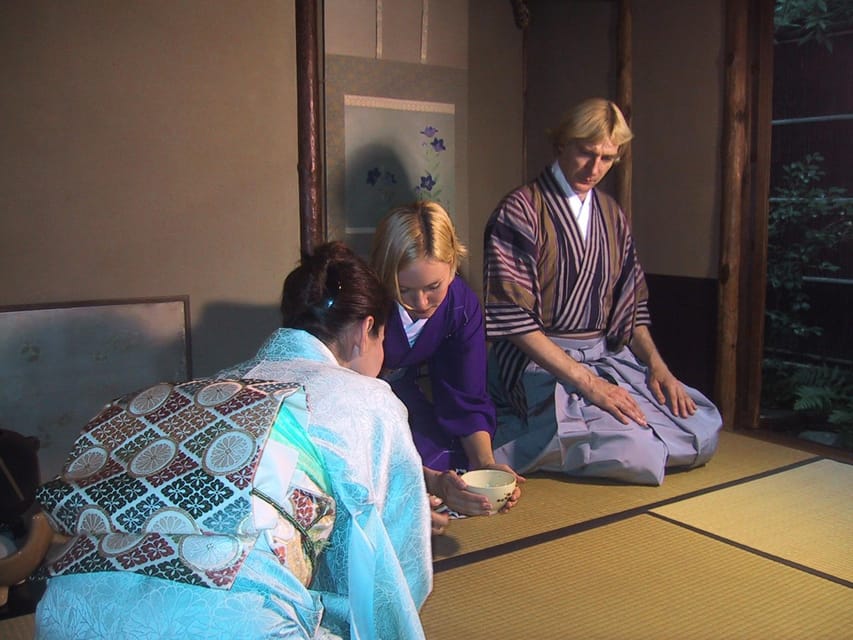
At $222 per person, this is a costly short activity. The stated duration ranges from 90 minutes to four hours, depending on the selected experience and timing. The basic inclusions are entrance to Tondaya, kimono dressing, and the tea ceremony.
The price makes more sense if you value several things at once:
- A real traditional townhouse rather than a hotel room or photo studio
- A silk kimono supplied and fitted for you
- A tea ceremony in a historically significant setting
- Time for photographs
- A guided look at the property and its objects
It makes less sense if you only want to wear a kimono for a few quick photos or only want to drink matcha. Kyoto offers many cultural activities, and this one asks you to pay for the building and the overall setting.
A private session may offer better value for couples, families, or anyone who wants detailed explanations and a calmer ceremony. The private experience costs more, but it may reduce waiting and crowding. The shared version is the more reasonable choice if you are comfortable with an informal group setting.
The overall score is 4.3 from 306 ratings, with especially strong praise for the house, kimono photographs, friendly staff, and tea ceremony. The repeated concerns are also clear: crowding, uneven English support, fit and selection of kimonos, and a price that can feel high.
Timing, clothing, and practical preparation
Plan for at least 90 minutes, and allow more time if your selected option runs longer. The published duration can reach four hours, so check the starting time and exact version before you commit to another activity afterward.
Arrive on time. Early arrival may help you get settled, but do not assume that arriving very early will shorten the official experience. One participant arrived 30 minutes early and was immediately taken for dressing, then spent roughly 90 minutes at the property in total.
Wear a dry, comfortable top with a loose neckline. Bring socks, not stockings. You should also avoid tight clothing around the neck, since the kimono looks best when the collar sits properly.
The meeting point is Tondaya at 697 Ishiyakuchicho, Kamigyo Ward, Kyoto. One person had trouble finding a taxi from the property, even while using a ride app, so plan your onward transportation rather than expecting an easy pickup.
Cancellation is flexible up to 24 hours before the activity for a full refund, and you can reserve now and pay later. Those policies help if your Kyoto schedule is still changing, but they do not solve the main practical concern: leaving enough time for a session that may take longer than the minimum.
Who will enjoy this Kyoto experience most?
I would recommend Tondaya to you if you want a visually beautiful introduction to Kyoto traditions and prefer a historic home to a modern activity venue. It suits couples, families, and first-time visitors who want one compact experience combining clothing, architecture, photographs, and tea.
It is also a good fit if you enjoy watching a ritual and learning its basic meaning without needing to become a tea practitioner yourself. The ceremony is short enough for most sightseeing schedules, though floor seating may affect your comfort.
You may want another option if you need a quiet, highly structured event with guaranteed fluent English. You should also think twice if your main goal is hands-on tea preparation, since the usual format centers on watching the tea master.
Tall participants and anyone with specific kimono preferences should keep the clothing selection in mind. The garments are described as high quality silk, but the available colors and patterns may differ by size.
Should you book Tondaya?
Book it if the old machiya matters as much to you as the kimono. The combination is the point: you are dressed in traditional clothing, walk through a 140-year-old cultural property, take photographs in a genuine Kyoto setting, and watch tea prepared with care.
Choose the private option if you can afford it and want more room, better sightlines, and a stronger chance for conversation. Choose shared participation if you mainly want the photographs and atmosphere, and you can remain patient when the house gets busy.
I would not call this a bargain. But for someone who wants a memorable cultural portrait of Kyoto rather than a quick costume rental, it can justify the price. Arrive prepared, bring socks, keep your phone down during the ceremony, and let the house do much of the talking.
FAQ
Where does the kimono and tea ceremony experience take place?
It takes place at Tondaya, Nishijin Japanese Cultural Experience Museum, located at 697 Ishiyakuchicho in Kyoto’s Kamigyo Ward.
How long does the experience last?
The duration is listed as 90 minutes to four hours. The exact length depends on the option and starting time you select.
Is the tea ceremony private?
The standard experience is conducted with other participants. A private experience option is available for a more personal setting.
What should I bring?
Bring your own socks. Bare feet are not allowed, and the instructions ask you not to wear stockings.
Can I take photographs during the kimono dressing?
No. Photography is not allowed while you are being dressed or undressed. You can take photographs after dressing and during the appropriate parts of the house visit.
Is the experience offered in English?
The activity is offered in English and Japanese. Not every staff member speaks English fluently, so an interpreter or translation device may be used when needed.
What is included in the price?
The price includes entrance to Tondaya, kimono dressing, and the tea ceremony. Socks, hair styling, and makeup are not included.
Just added in Kyoto
- The “Golden Route” and Ancient Japan by DIAMIR Erlebnisreisen – 14-Day Tour★ 2.0 · 2 reviews
- Japan: Castles & Cuisine by G Adventures – 6-Day Kyoto to Osaka Tour★ 4.5 · 4 reviews
- Cycle Japan by Explore! – 13-Day Kyoto to Tokyo Tour★ 4.7 · 12 reviews
- Cycle Japan by Intrepid Travel – 11-Day Kyoto to Tokyo Tour★ 4.8 · 2 reviews
- Classic Japan by Intrepid Travel – 11-Day Kyoto to Tokyo Tour★ 4.4 · 14 reviews
- Ancient & Modern Japan 14-Day Tour by Exodus Adventure Travels★ 4.4 · 40 reviews
- 5 Day Cultural Adventure of Kyoto, Nara & Osaka by Tourist Journey★ 2.5 · 2 reviews
- 12 Days Kinosaki Onsen Escape: A Journey Through Japan’s Timeless Towns by UME Travel★ 4.8 · 5 reviews
Tea Ceremonies, compared.
Tea Ceremony in a Traditional Tea House in Kiyomizu
Read our review →
World Heritage Kyoto & Nara Uji Authentic Matcha Experience
Read our review →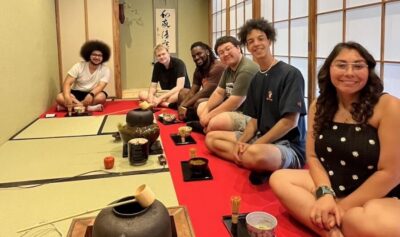
Browse the lists this tour appears in