
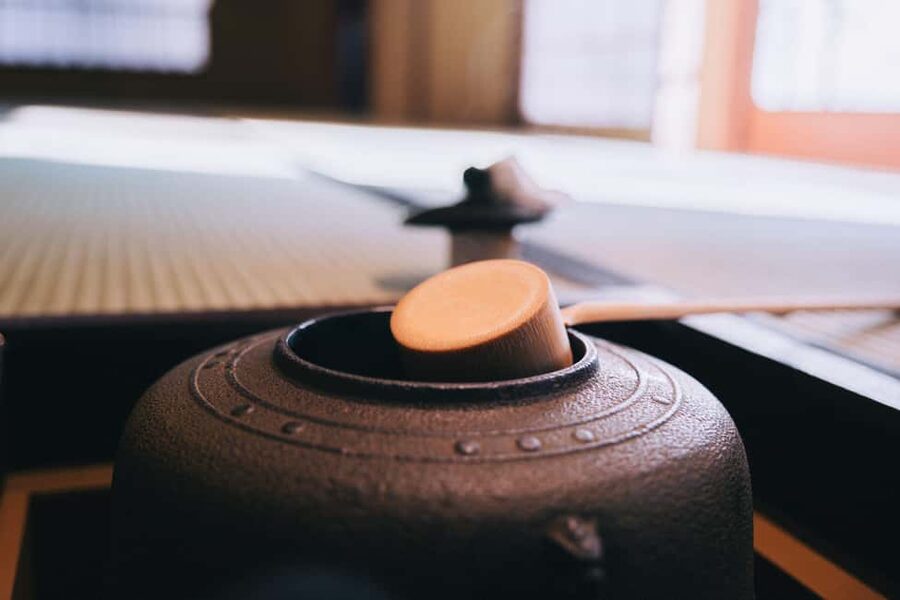
Reviewed · TEA CEREMONIES
Kyoto: Kimono Tea Ceremony at Orizuruya Gion
Dress up, then slow down. This Kyoto activity pairs a kimono fitting with a traditional tea ceremony in Gion, giving you a gentle introduction to Japanese customs without worrying about getting every small gesture right. I especially like the choice of more than 200 kimono designs and the patient English instruction during the matcha lesson.
The small group, limited to 10 people, keeps the room personal. Women receive simple hairstyling, and the staff take photos during the visit. The main consideration is time: the kimono fitting and ceremony take about 90 minutes, or two hours if you add calligraphy, and sitting in traditional dress may not suit everyone.
In This Review
- Key details at a glance
- Arriving at Orizuruya in Gion
- Choosing a kimono from 200 designs
- Entering the tea room and learning the rules
- Whisking matcha for yourself
- Adding the two-hour Japanese calligraphy option
- Photos, Gion walks, and the 5 p.m. return time
- What the staff do well
- Is $49 a fair price?
- Who should book this Kyoto activity?
- My verdict on Orizuruya Gion
- FAQ
- Where is the kimono tea ceremony held?
- How do I reach Orizuruya Gion?
- How long does the experience take?
- Is the activity conducted in English?
- Is hairstyling included?
- Can I keep wearing the kimono after the ceremony?
- Can I cancel the booking?
Key details at a glance
- Choose from more than 200 kimono designs: Staff help you select and put on the outfit, rather than handing you a costume and sending you on your way.
- Make your own matcha: An English-speaking instructor explains the tea tools and shows you how to use the bamboo whisk.
- Try wagashi from a century-old confectionery: The Japanese sweet gives you something pleasant to enjoy alongside the tea.
- Add Japanese calligraphy: The longer two-hour option includes a calligraphy set and a patient, hands-on lesson.
- Stay in the kimono after the ceremony: Many bookings allow you to walk around Gion in your outfit until 5 p.m., turning a short activity into part-day value.
- Meet in central Gion: The shop is a 10-minute walk from Hankyu Kyoto-Kawaramachi Station and seven minutes from Keihan Gion-Shijo Station.
Arriving at Orizuruya in Gion
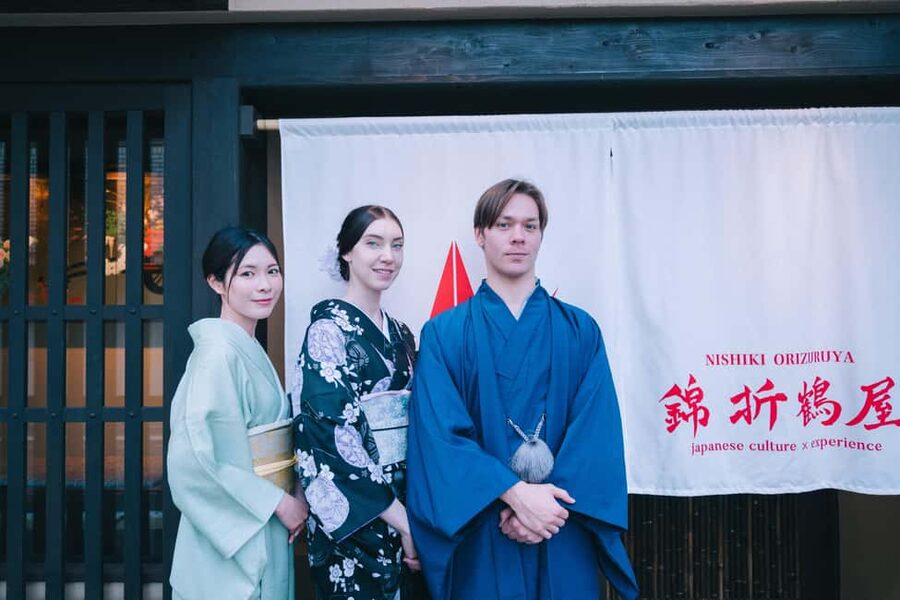
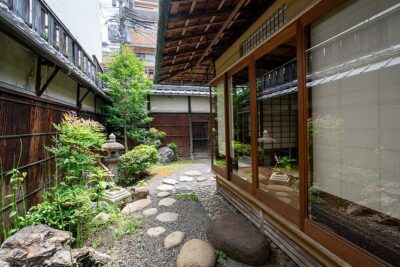
Orizuruya is at 572-7 Minamigawa, Gion-machi, in Kyoto’s Higashiyama district. The location works well if you already plan to visit Gion, Yasaka Shrine, or nearby streets, though the cost and effort of reaching the meeting point are your responsibility.
From Hankyu Kyoto-Kawaramachi Station, allow about 10 minutes on foot. From Keihan Gion-Shijo Station, the walk is about seven minutes. I would build in a little extra time, especially if you are unfamiliar with Kyoto’s narrow streets and busy shopping lanes.
The central setting matters because the outing does not end at the tea room for some booking times. Several people have been able to keep their kimono on and walk around Gion afterward, with nearby temple visits and photos becoming a natural extension of the activity.
The shop is described as new and spotless, which helps when you are changing clothes and handling tea equipment. You will want to arrive ready to follow staff directions, since the fitting is done efficiently and the schedule needs to keep moving for the next appointment.
More Kimono Experiences in Kyoto
- [Kyoto & Nara Day Tour] Sagano Scenic Railway & Nara Park & Fushimi Inari Taisha Thousand Torii Gates & Togetsukyo Bridge & Bamboo Grove & Kimono Forest (Departing from Osaka)
★ 4.9 · 10,942 reviews - Kyoto Geisha Walking Tour: Gion District & Hidden Gems
★ 4.7 · 3,273 reviews - Kyoto: Gion Magical Night Walking Tour with Geisha Trivia
★ 4.9 · 2,393 reviews
Choosing a kimono from 200 designs
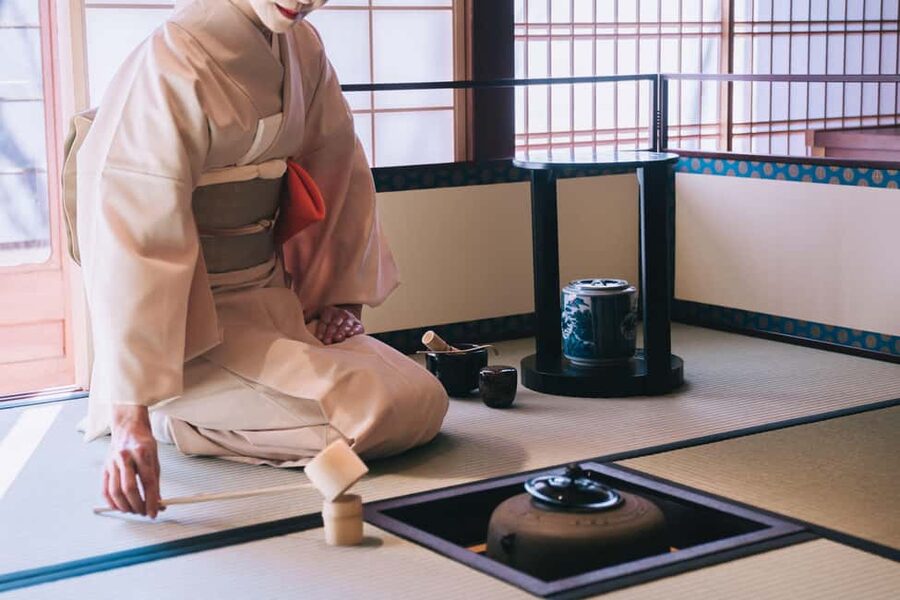
The first major part of the visit is selecting your kimono. With more than 200 designs, you get a real choice of color and pattern instead of being assigned a single standard outfit. That simple decision is one of the most enjoyable parts, particularly if you want photographs that feel personal.
Staff then help you dress in the proper layers. This is not just a matter of putting on a robe and tying a belt. The attendants arrange the clothing carefully and make sure you look presentable before you enter the tea room.
The fitting is professional and quick, according to the detailed comments about the service. That is useful because traditional clothing can feel unfamiliar at first. You do not need to know how to tie anything or understand the order of the garments in advance.
For women, simple hairstyling is included. It is not presented as a full salon treatment, but it completes the traditional appearance and makes a noticeable difference in photographs. Some participants specifically enjoyed the combination of the kimono and hair styling, saying the staff helped them feel comfortable and attractive.
A practical note: kimono are beautiful, but they are structured clothing. You may feel restricted around the legs and waist, and sitting in the tea room requires attention to posture. The staff guide you through the process, so discomfort should not come from fear of making a cultural mistake. Still, wear something underneath that you will be comfortable changing in.
Entering the tea room and learning the rules
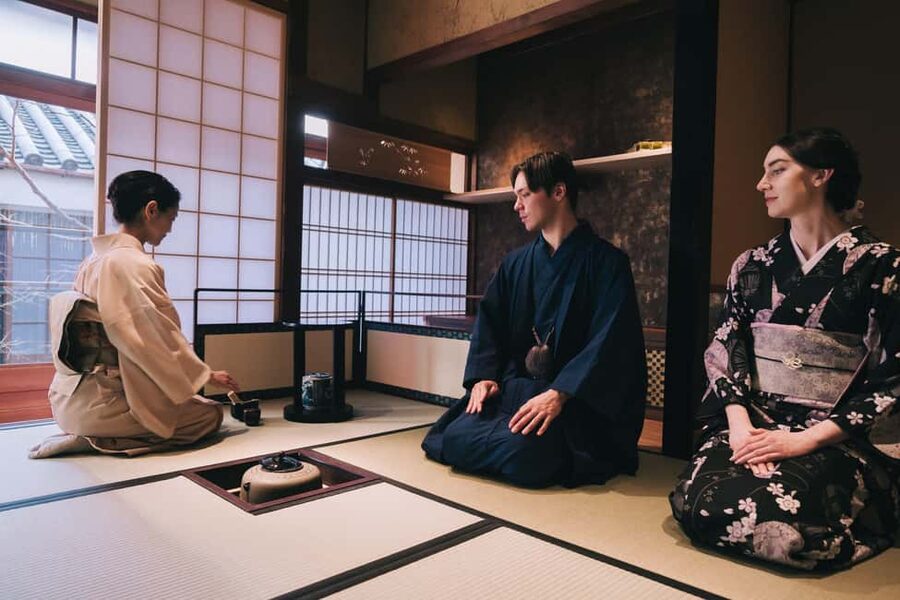
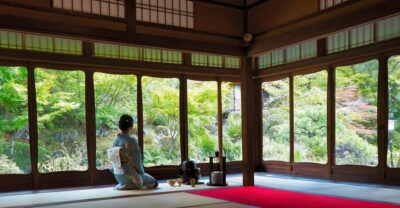
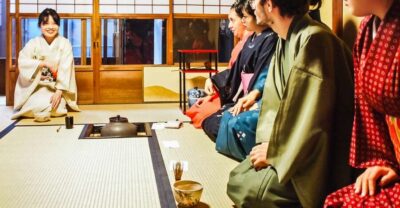
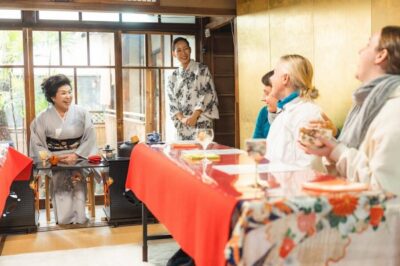
Once dressed, you enter a quiet tea room for an explanation of the ceremony. The instructor speaks English and explains the purpose behind the main actions, including the order of preparation and the respectful way to receive the tea and sweet.
This is where the activity earns its cultural value. You are not simply served a cup of matcha while wearing a costume. You learn why the utensils are arranged as they are, how the host handles the tools, and how the ceremony creates a calm, focused setting.
The instruction also takes away the worry about faux pas. You can ask questions, watch the demonstration, and follow along at a comfortable pace. Several detailed accounts praise the guides for explaining both the large ideas and the small movements, from tea preparation to the meaning behind the ceremony.
The ceremony itself is peaceful and deliberate. If you have spent the morning crossing Kyoto on trains and sidewalks, the change of pace is welcome. The room asks you to pay attention to a few simple actions rather than rush toward the next sight.
At the same time, this is an introduction for visitors, not a full course in the many schools and traditions of Japanese tea. The format is designed to be understandable and approachable. That makes it a good first experience, though someone already deeply trained in tea ceremony may want something more specialized.
Whisking matcha for yourself
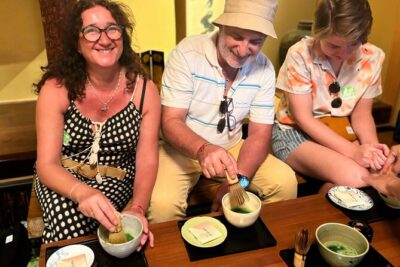
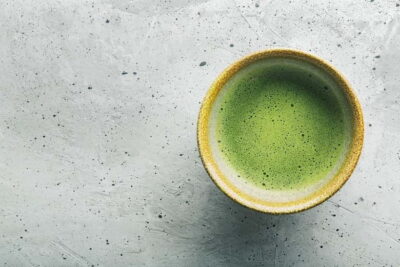
After watching the instructor, you get to prepare your own bowl of matcha with a traditional bamboo whisk called a chasen. This hands-on part is more satisfying than simply watching a demonstration because you immediately discover how much technique goes into producing the right texture.
The guide shows you how to work the whisk and gives you time to try. Do not expect your first bowl to look perfect. That is part of the fun, and the instruction is designed for beginners.
You also learn that matcha can vary. One participant particularly enjoyed asking about how the tea is made and what makes different types taste different. That kind of question and answer gives the activity more substance than a quick photo stop.
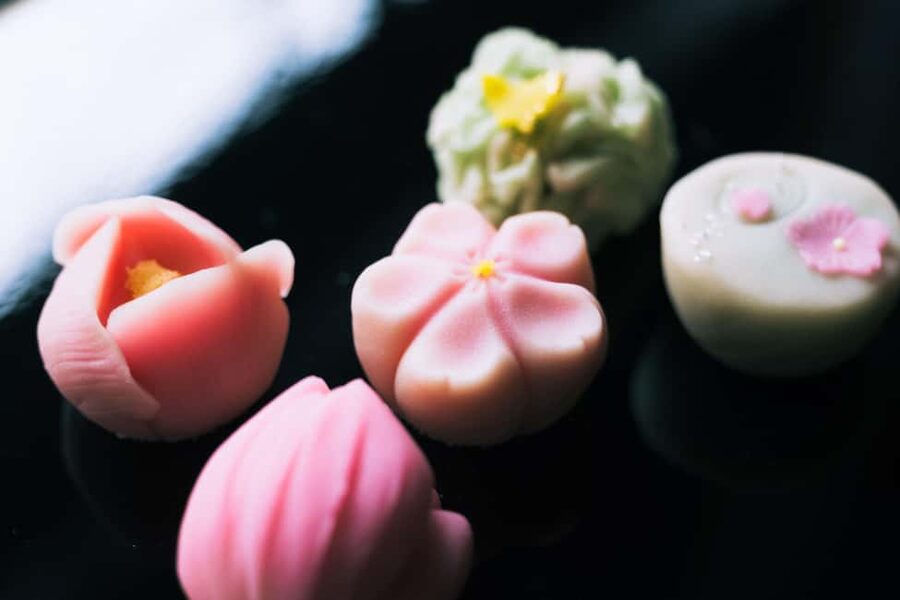
The matcha is served with wagashi, a traditional Japanese sweet. The sweet balances the tea’s stronger, grassy flavor and gives the ceremony a clear rhythm: observe, prepare, taste, and take a quiet moment before moving on.
If you normally find matcha bitter, the wagashi helps. If you already love matcha, you will appreciate making it with the proper tool and learning how the whisk changes the drink. Either way, you leave with a practical new skill you can try again at home.
More Tea Ceremonies in Kyoto
- Kyoto: Tea Ceremony in a Traditional Tea House in Kiyomizu
★ 4.9 · 3,519 reviews - Kyoto: Tea Ceremony Ju-An at Jotokuji Temple
★ 4.9 · 3,207 reviews - Kyoto: 45-Minute Tea Ceremony Lesson Experience
★ 4.3 · 2,378 reviews - Kyoto: Table-Style Tea Ceremony at a Kyo-Machiya
★ 4.9 · 1,211 reviews
Adding the two-hour Japanese calligraphy option
The basic kimono tea ceremony lasts about 90 minutes. The calligraphy option extends the visit to roughly two hours and includes a Japanese calligraphy set.
Calligraphy adds a useful second layer to the experience. Tea ceremony teaches controlled movement with a whisk, while calligraphy asks you to slow down and guide a brush with care. You get to create something to remember the visit by, rather than relying only on photographs.
The calligraphy teacher receives especially warm praise for being patient, friendly, and encouraging. That matters because brush writing can feel intimidating when you are unfamiliar with the tools. The lesson is described as challenging but enjoyable, with enough support to keep it from becoming frustrating.
I would choose the calligraphy option if this is one of your few cultural activities in Kyoto or if you want a longer visit. The extra time gives the outing a fuller shape, and the additional fee may be worthwhile for anyone who likes hands-on activities.
If you mainly want photographs and a taste of matcha, the 90-minute version should be enough. Families and couples should also consider attention spans. The tea ceremony is calm, while calligraphy demands another stretch of concentration.
Photos, Gion walks, and the 5 p.m. return time
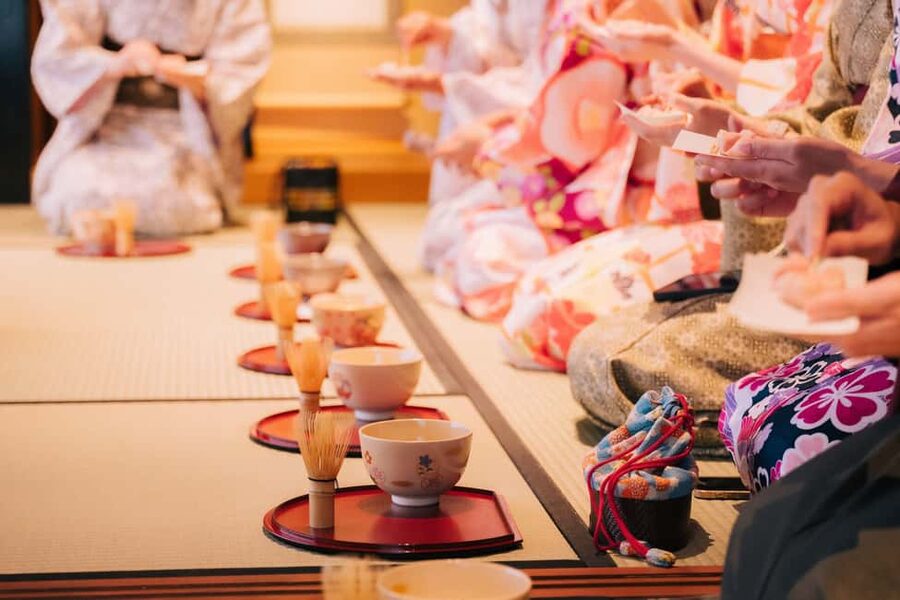
The staff take photos during the activity, which is helpful when you are dressed and do not want to rely entirely on a phone held at arm’s length. You should still take your own pictures if you have specific poses or group shots in mind, but the staff are clearly used to helping people record the occasion.
One of the strongest practical benefits is the chance to keep the kimono after the ceremony. Several detailed accounts say the outfit can be worn around the area until 5 p.m., particularly when the appointment is early in the day.
That can change the value calculation. At $49 per person, the activity already includes the kimono rental, hair styling for women, tea, wagashi, instruction, equipment, and taxes. If you can also use the kimono for a few hours in Gion, the booking functions partly as a short kimono rental with a cultural lesson included.
Check the exact return arrangement for your chosen time, since the supplied details do not state that every appointment has the same period outside the shop. If the option is available, keep your plans nearby. Walking to a temple or taking pictures in Gion makes sense, while a long trip across Kyoto in formal clothing may be tiring.
Cold weather is another reason to consider an early booking. One person appreciated being able to remain in the kimono during a chilly day. You may want a coat for the walk, and you should keep enough time to return the clothing by the stated deadline.
What the staff do well
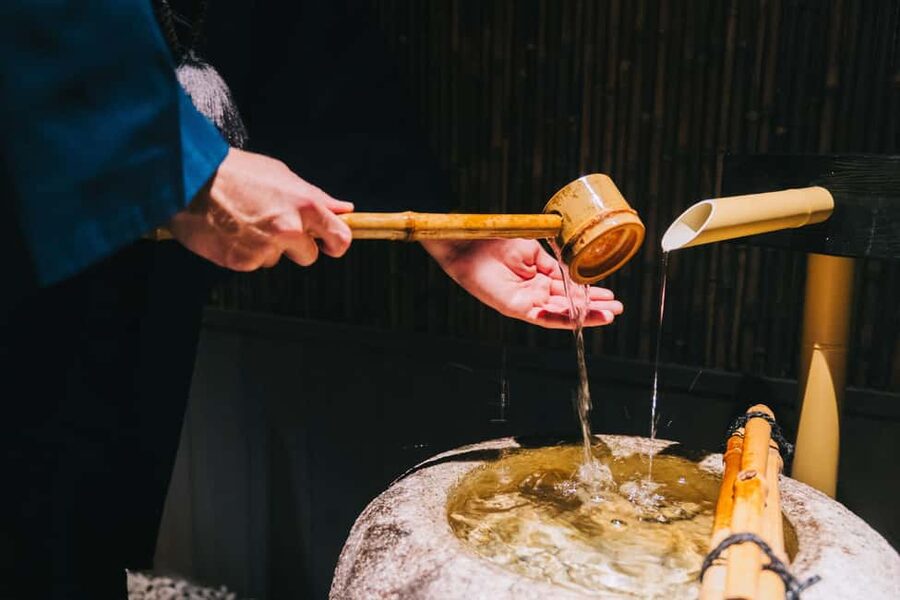
The staff are the most consistently praised part of the experience. The dressing attendants are described as professional, warm, and efficient, even when their English is limited. The English-speaking guide handles the cultural explanation and tea instruction.
That division works well. You get practical help with the clothing from people who do it every day, then a clear explanation in English once you enter the tea room.
The atmosphere is friendly without being careless. You are encouraged to ask questions, take pictures, and enjoy yourself, but the ceremony still feels respectful. That balance is important. Some cultural activities flatten tradition into a photo opportunity. Here, the tea preparation and the reasons behind the gestures remain central.
Specific staff names are not consistently provided, although Juki is thanked for the tea experience, kimono dressing, and photos. One solo participant also described receiving especially attentive guidance when the group became very small. The maximum group size is 10, but the actual number may be lower.
You should expect a polished visitor activity rather than a private ceremony in a local household. That is not a criticism. The strength is that the format gives you access, explanation, and confidence in a short period.
Is $49 a fair price?
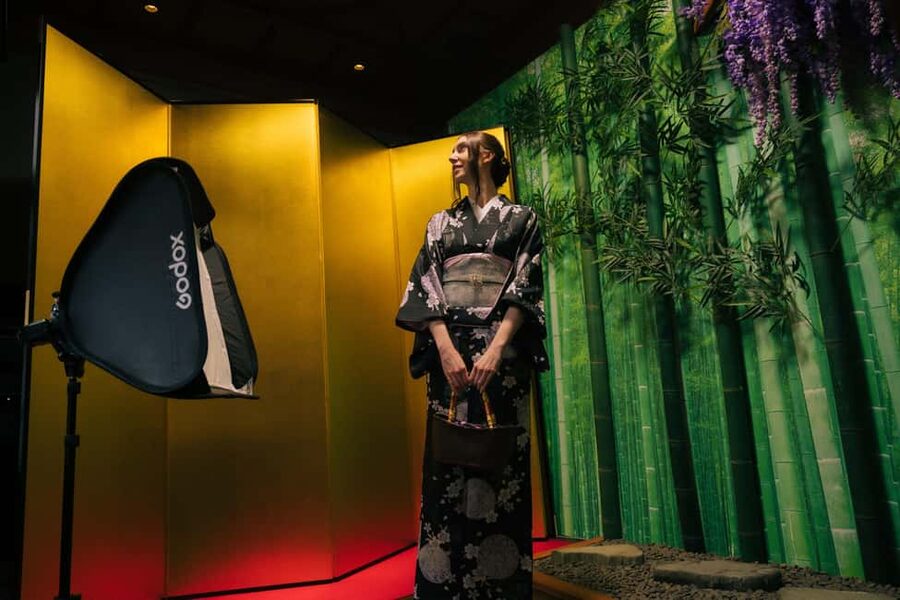
At $49 per person, this is a good value if you want both the clothing and the cultural lesson. A simple kimono rental alone does not necessarily teach you anything about tea, while a tea demonstration without the kimono would miss much of the visual appeal.
Here, your price covers the kimono set, tea utensils, wagashi, matcha, simple hairstyling, a licensed guide, and all fees and taxes. The calligraphy set is included only when you select the longer calligraphy option.
The strongest value comes with an early appointment that lets you keep the kimono until 5 p.m. In that case, you get a 90-minute or two-hour lesson plus time for photos and a walk around Gion. Confirm the exact clothing return terms when you book, rather than assuming every time slot includes the same outside use.
The price does not include transport to and from Orizuruya. That is a small but important point when you are setting a Kyoto activity budget. The free cancellation deadline is 24 hours before the appointment, and the reserve-now, pay-later option can help if your schedule is still shifting.
Who should book this Kyoto activity?
I would recommend it for first-time visitors who want a respectful introduction to Japanese customs. It also suits couples, friends, families with older children, solo visitors, and anyone who wants meaningful photographs without arranging a full-day cultural tour.
The activity seems particularly good for people who worry about etiquette. An instructor guides you through the ceremony, and staff handle the difficult part of dressing. You can focus on the experience instead of wondering if you are holding the cup correctly.
The calligraphy version is a strong choice for creative people and for anyone who wants more than a short photo session. It also gives teenagers a second activity to look forward to after the kimono fitting.
I would think twice if you dislike tight clothing, quiet instruction, or guided cultural activities. The kimono is not ordinary streetwear, and the ceremony moves at a measured pace. You also need to protect time in your itinerary because the full visit can take two hours, followed by the clothing return if you wear the kimono around Gion.
My verdict on Orizuruya Gion
This is one of the better short cultural activities to place between Kyoto’s major sights. You get the pleasure of choosing a kimono, the calm of preparing matcha, and the chance to understand the ceremony instead of simply observing it.
The small group, kind staff, clear English explanations, and optional calligraphy give it enough substance to justify the price. The possibility of wearing the kimono around Gion until 5 p.m. makes the deal even better when available.
I would book the tea ceremony for a gentle introduction and choose calligraphy if you want a fuller two-hour visit. Pick an early time if you hope to take photographs or visit a nearby temple in the outfit. For $49, this is a practical, memorable way to add culture to a Kyoto itinerary without giving up an entire day.
FAQ
Where is the kimono tea ceremony held?
It is held at Gion Oritsuruya, 572-7 Minamigawa, Gion-machi, Higashiyama-ku, Kyoto-shi, Kyoto.
How do I reach Orizuruya Gion?
The meeting point is about a 10-minute walk from Hankyu Kyoto-Kawaramachi Station and about seven minutes from Keihan Gion-Shijo Station.
How long does the experience take?
The kimono tea ceremony takes approximately 90 minutes. The tea ceremony with Japanese calligraphy takes about two hours.
Is the activity conducted in English?
Yes. The instructor and activity information are provided in English.
Is hairstyling included?
Simple hairstyling is included for women. The kimono set rental, tea utensils, matcha, wagashi, guide, fees, and taxes are also included.
Can I keep wearing the kimono after the ceremony?
Several booking times allow you to wear the kimono around Gion until 5 p.m. Confirm the exact return arrangement for your selected appointment.
Can I cancel the booking?
You can cancel up to 24 hours in advance for a full refund. A reserve-now, pay-later option is also available.
Just added in Kyoto
- The “Golden Route” and Ancient Japan by DIAMIR Erlebnisreisen – 14-Day Tour★ 2.0 · 2 reviews
- Japan: Castles & Cuisine by G Adventures – 6-Day Kyoto to Osaka Tour★ 4.5 · 4 reviews
- Cycle Japan by Explore! – 13-Day Kyoto to Tokyo Tour★ 4.7 · 12 reviews
- Cycle Japan by Intrepid Travel – 11-Day Kyoto to Tokyo Tour★ 4.8 · 2 reviews
- Classic Japan by Intrepid Travel – 11-Day Kyoto to Tokyo Tour★ 4.4 · 14 reviews
- Ancient & Modern Japan 14-Day Tour by Exodus Adventure Travels★ 4.4 · 40 reviews
- 5 Day Cultural Adventure of Kyoto, Nara & Osaka by Tourist Journey★ 2.5 · 2 reviews
- 12 Days Kinosaki Onsen Escape: A Journey Through Japan’s Timeless Towns by UME Travel★ 4.8 · 5 reviews
Tea Ceremonies, compared.
Tea Ceremony in a Traditional Tea House in Kiyomizu
Read our review →
World Heritage Kyoto & Nara Uji Authentic Matcha Experience
Read our review →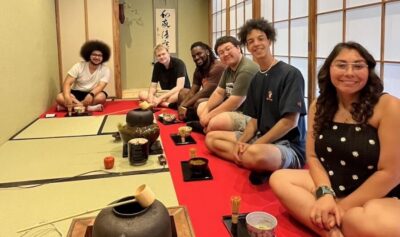
Browse the lists this tour appears in