
Reviewed · TEA CEREMONIES
Kyoto: Kimono Tea Ceremony with Matcha and Sweet
Put on a kimono, then slow down over tea. This Kyoto experience pairs traditional dress with a guided Japanese tea ceremony, giving you a clear introduction to customs that can otherwise feel hard to approach. I especially like choosing your own kimono and preparing a bowl of premium matcha yourself. The main consideration is that this is a shared session, usually with about 12 to 14 people, and the ceremony may last 90 to 120 minutes.
The staff help with dressing, hair styling for women with long hair, and the small details that make the outfit look right. I also like the calm explanation of the four tea principles: harmony, respect, purity, and tranquility. If you expect a private ceremony where a tea master prepares every bowl for you, note that you will also take part in making your own matcha.
In This Review
- Key points to know before booking
- Choosing a kimono before the ceremony
- Entering the tea room and settling on tatami
- Learning what each tea tool does
- Making a bowl of premium matcha
- Wagashi and the changing seasons
- Why the kimono adds real value
- Photos, timing, and the pace of the visit
- Is $66 a fair price in Kyoto?
- Who will enjoy this Kyoto activity most?
- Practical details that make the visit easier
- Should you book this tea ceremony?
- FAQ
- How long does the kimono tea ceremony last?
- Is the experience conducted in English?
- Is kimono dressing included in the price?
- Can I choose my own kimono?
- Do I make my own matcha?
- Are Japanese sweets included?
- Do I have to sit on tatami mats?
- Can young children join the activity?
Key points to know before booking
- Kimono comes first: You choose your outfit before entering the tea room, with staff assistance for dressing and styling.
- You make your own matcha: The tea master demonstrates the process, then guides you as you whisk your own bowl.
- Seasonal wagashi are included: The Japanese sweets change in color, flavor, and design through the year.
- English guidance is built in: The tea master explains the tools, movements, history, and etiquette in English.
- Tatami seating is optional: Bamboo chairs are available if requested in advance.
- Plan around two hours: The advertised duration is 90 minutes, but the full experience can run closer to 120 minutes.
Choosing a kimono before the ceremony
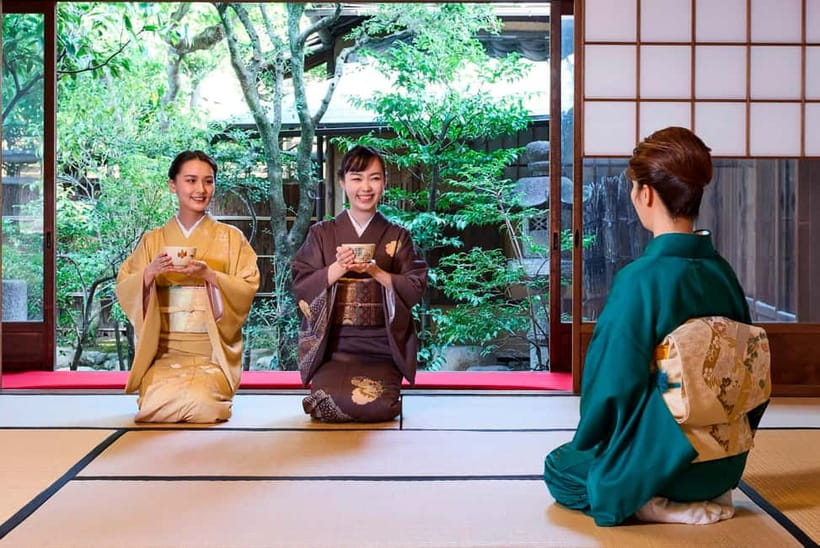
The experience begins with the part many people look forward to most: choosing a kimono. You can select from various styles and sizes, then choose an obi, the wide sash that holds the outfit in place. Staff members assist with the dressing, so you do not need to know how to wrap or secure a kimono yourself.
For women with long hair, hair styling is included. You may also choose flowers for the hairstyle, adding a personal touch to the finished look. The staff are described as patient, warm, and attentive, which matters here because putting on a kimono is not a quick costume change. The layers and sash need to be arranged properly if the outfit is to look polished.
You also receive kimono socks, a small but useful detail. Traditional footwear and tight dressing can feel unfamiliar, so wear simple clothing underneath and avoid arriving in anything bulky. The dressing process is one of the most enjoyable parts, but it can move quickly. If you want photographs before the ceremony, arrive prepared with your camera or phone ready.
One point deserves a little balance. The quick fitting may leave you less time than expected for makeup or personal preparation. This is a timed cultural activity, not a full beauty appointment. You can still take photographs before and after the ceremony, and several photo spots are available around the venue. Some bookings may also let you keep the kimono for up to two hours, but confirm the exact arrangement when you reserve.
More Kimono Experiences in Kyoto
- [Kyoto & Nara Day Tour] Sagano Scenic Railway & Nara Park & Fushimi Inari Taisha Thousand Torii Gates & Togetsukyo Bridge & Bamboo Grove & Kimono Forest (Departing from Osaka)
★ 4.9 · 10,942 reviews - Kyoto Geisha Walking Tour: Gion District & Hidden Gems
★ 4.7 · 3,273 reviews - Kyoto: Gion Magical Night Walking Tour with Geisha Trivia
★ 4.9 · 2,393 reviews
Entering the tea room and settling on tatami
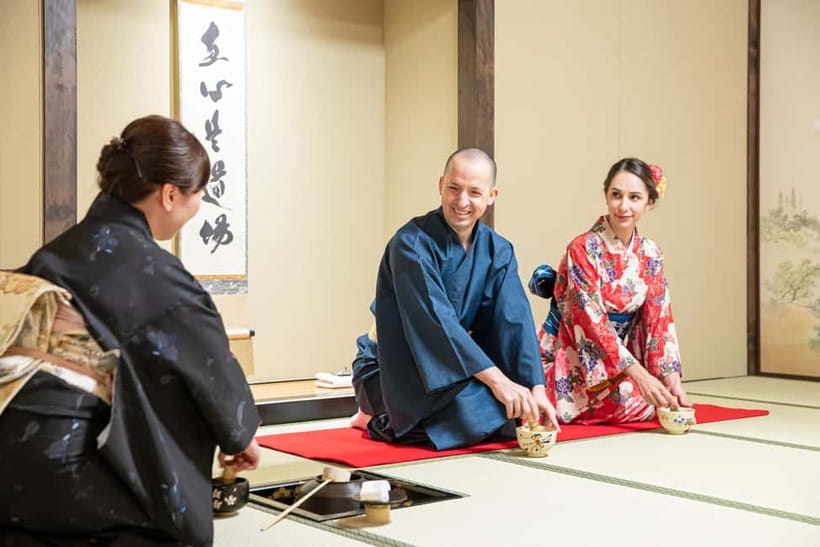
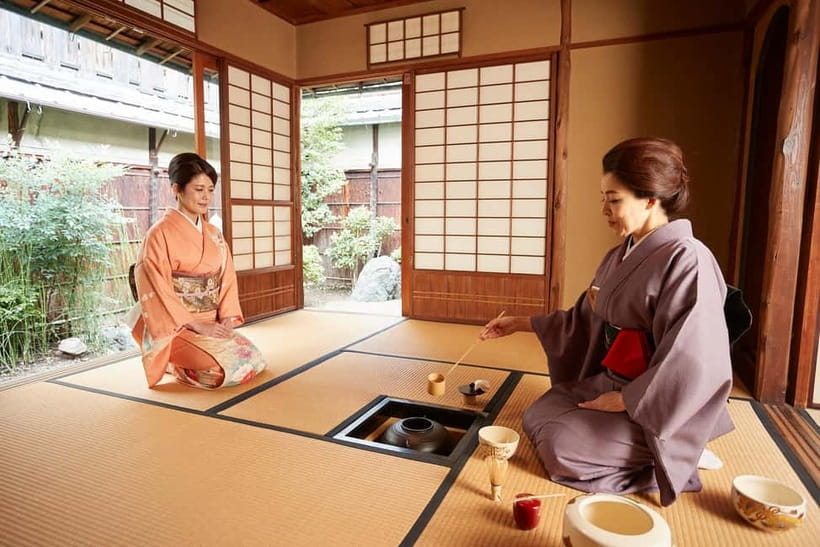
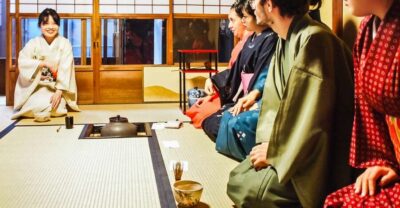
Once dressed, you move into a traditional tea room. The utensils are arranged carefully, and the room itself helps explain why the ceremony is about more than drinking tea. Placement, movement, silence, and attention all matter.
Tatami seating is customary. You may sit on the floor as part of the traditional setting, but you do not have to force yourself into an uncomfortable position. Bamboo chairs can be arranged in advance for anyone who prefers raised seating. Request one before the session rather than waiting until you arrive.
This detail is especially useful for older adults, anyone with knee trouble, or anyone unused to sitting on the floor. You can still take part fully from a chair. The experience is designed to preserve the setting without treating discomfort as part of the lesson.
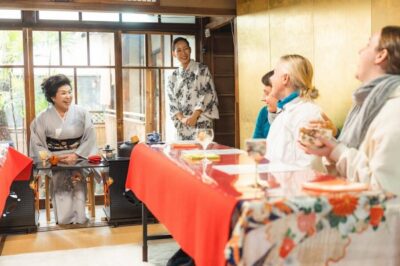
The group size is normally around 12 to 14 people because bookings from different sites can be combined. That makes the session less private than a one-to-one demonstration, but it also gives you the feel of a shared cultural class. Smaller sessions can happen, and some time slots have had only a few people, but you should plan for a group.
Learning what each tea tool does
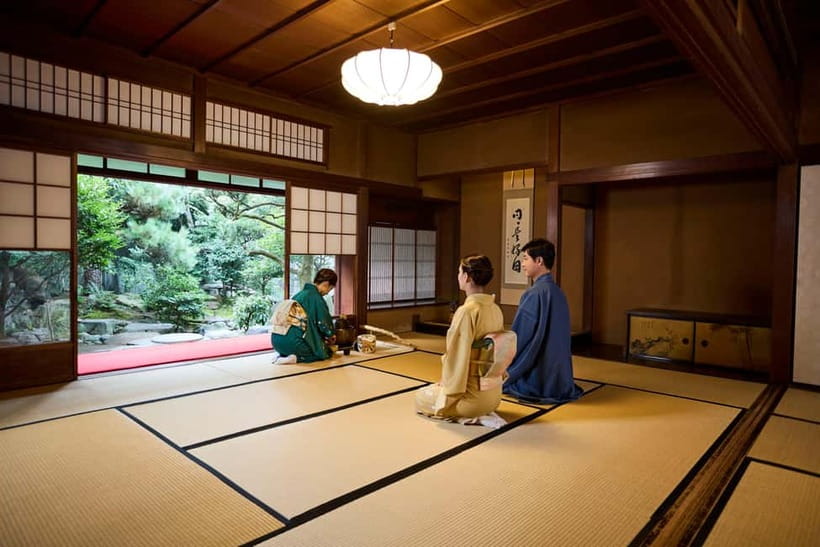
The tea master explains the tools and the order of the ceremony in English. This is where the activity becomes more than wearing attractive clothing for photographs. You learn why the utensils are handled with care, how the movements are arranged, and which manners are expected.
The instruction is meant for beginners. You are not expected to know Japanese etiquette or understand the ritual before arriving. The English explanations are delivered slowly enough for an international group, and the guide encourages participation rather than asking you to sit silently and watch.
The four ideas behind the ceremony provide a useful framework:
- Wa, or harmony: The host, visitors, setting, and season should work together.
- Kei, or respect: Care is shown through greetings, handling utensils, and attention to others.
- Sei, or purity: Clean tools and a prepared space help clear the mind.
- Jaku, or tranquility: The ceremony creates a quiet pause away from ordinary noise.
These principles give the activity some depth without requiring you to become a tea scholar. The explanations connect small movements to broader Japanese ideas about hospitality and mindfulness. You begin to see why the ritual takes its time.
Making a bowl of premium matcha
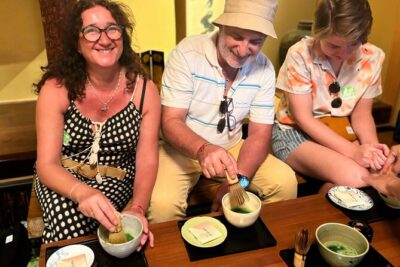
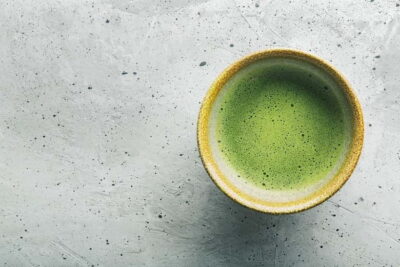
The most hands-on section comes when you prepare your own matcha. After watching the demonstration, you use the provided matcha powder and follow the tea master’s instructions. The aim is to create a smooth, frothy bowl rather than simply stir green powder into hot water.
This part works well because you are doing something, not just observing. The guide can correct your technique and explain how the whisking affects the texture. With a little practice, you can produce a creamy foam and understand why the bamboo whisk is shaped as it is.
The tea has a strong, grassy taste that may surprise you if your usual experience with green tea comes from a teabag. A traditional sweet is served alongside it to balance the bitterness. You are not simply handed a drink. You learn how the drink is made and why it is presented in that particular way.
There is one expectation to manage. If you want to sit quietly while a tea master prepares a bowl specifically for you, this activity may not match your ideal. You observe the formal process, but you also prepare your own tea. That makes it more like an introductory workshop combined with a ceremony.
More Tea Ceremonies in Kyoto
- Kyoto: Tea Ceremony in a Traditional Tea House in Kiyomizu
★ 4.9 · 3,519 reviews - Kyoto: Tea Ceremony Ju-An at Jotokuji Temple
★ 4.9 · 3,207 reviews - Kyoto: 45-Minute Tea Ceremony Lesson Experience
★ 4.3 · 2,378 reviews - Kyoto: Table-Style Tea Ceremony at a Kyo-Machiya
★ 4.9 · 1,211 reviews
Wagashi and the changing seasons
The wagashi, or traditional Japanese sweets, are included with the matcha. Their flavor, color, and shape change with the season, so the small sweet on your plate is part of the cultural lesson.
Wagashi are often designed to suggest flowers, leaves, weather, or other seasonal images. The changing selection gives repeat visitors a reason to return, and it keeps the presentation connected to the time of year. You may find that the sweet is less sugary than a Western dessert, with a texture and flavor chosen to work with the tea.
This small serving also helps you understand Japanese hospitality. The sweet is not an afterthought. It prepares your palate for matcha and adds a visual element to the ceremony. The presentation is especially appealing when you are already dressed in a kimono and seated in the tea room.
The food offering is limited to Japanese sweets and matcha. Do not book this as a meal. It is a tasting within a cultural activity.
Why the kimono adds real value
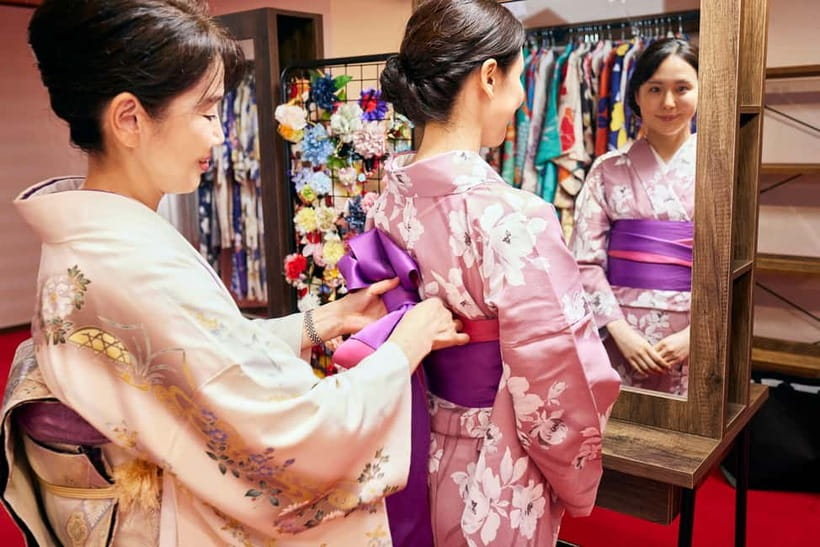
You could learn the basic steps of a tea ceremony without changing clothes. The kimono, however, changes how you move and how you pay attention. You become more aware of posture, sleeves, the obi, and the space around you.
That does not make the outfit a requirement for appreciating tea. It does make the event feel more special and gives you a visual connection to the setting. Several people find the dressing and photographs as memorable as the tea itself.
The staff also help make the clothing feel less intimidating. You can choose your preferred kimono and obi, and the fitting is handled for you. For couples and families with older children, it creates a shared activity rather than a simple sightseeing stop.
Children under seven are not allowed, so this is better for older children, teenagers, couples, friends, and solo adults. Keep in mind that the kimono can feel formal while you are making tea. One useful way to think about it is that the slight awkwardness is part of the lesson. Traditional clothing changes how you approach an ordinary action.
Photos, timing, and the pace of the visit
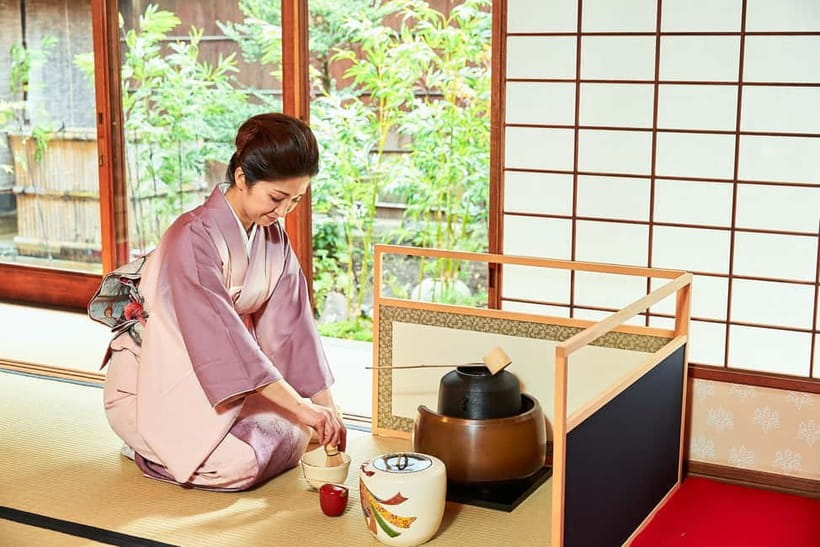
Build in time for photographs. You can take pictures in the kimono before and after the ceremony, and there are several suitable spots nearby. One particularly practical suggestion is to use a professional selfie studio down the road if you want more polished portraits.
Do not count on a long, leisurely preparation period. The staff are efficient because the session has to keep moving, and the fitting may leave little time for makeup. Arriving with your hair and face mostly ready will make the morning easier.
The activity is listed as 90 minutes, but the full experience can take 90 to 120 minutes. Dressing is included at the beginning, and the ceremony follows. If you have a temple visit, restaurant reservation, or train to catch afterward, allow extra time rather than planning a tight connection.
The atmosphere is calm and orderly. The tea room, the arranged utensils, the seasonal sweet, and the kimono all work together to create a focused break from Kyoto’s busy sightseeing routes. You are still taking part in a scheduled group activity, but the tone is patient rather than rushed.
Is $66 a fair price in Kyoto?
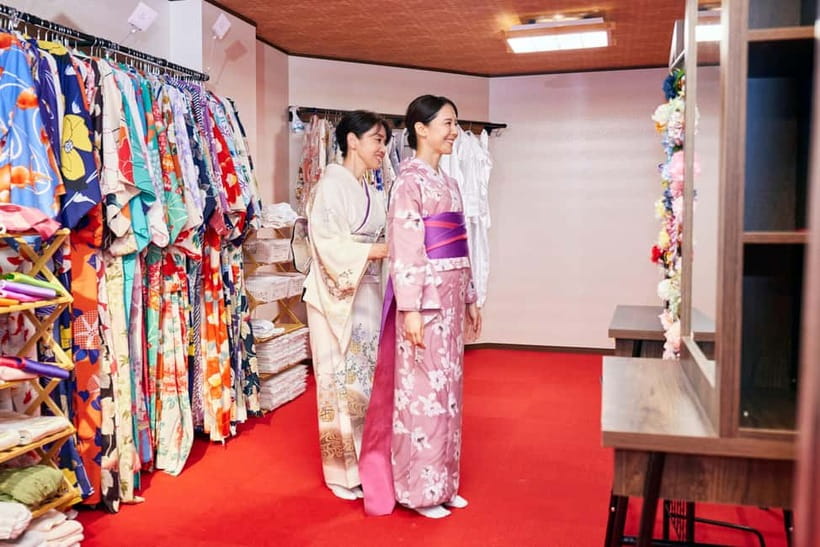
At $66 per person, this is not the cheapest way to taste matcha in Kyoto. You are paying for several parts bundled together: kimono dressing, hair styling for women with long hair, a tea master, English instruction, hands-on tea preparation, wagashi, and time for photographs.
The value is strongest if you want a guided cultural introduction and would otherwise pay separately for kimono rental and a tea activity. The staff assistance matters because proper kimono dressing is difficult to arrange on your own, and the English explanation helps turn an unfamiliar ritual into something you can follow.
The value is weaker if you mainly want a formal tea ceremony where you remain an observer. You will be asked to make your own matcha, and the group may include as many as 12 to 14 people. The session is polished and accessible, but it is not a private appointment with a tea master.
For many first-time visitors to Japan, $66 is reasonable because you leave with more than a drink. You gain a basic understanding of the ceremony, a chance to wear traditional clothing, a seasonal sweet, and photographs that help preserve the memory.
Who will enjoy this Kyoto activity most?
I would recommend it to you if you want an easy entry point into Japanese culture without needing prior knowledge. The English guidance, gentle instruction, and staff assistance remove much of the uncertainty.
It suits:
- Couples looking for a shared cultural activity
- Families with children aged seven and above
- Solo visitors who want a structured experience
- Anyone interested in Japanese clothing and photography
- First-time visitors who want context for tea customs
- People who prefer participating rather than only watching
It may not suit you if you dislike floor seating and do not request a bamboo chair ahead of time. It may also disappoint if you want a completely private ceremony, a full meal, or a long period to perfect your makeup and outfit.
The activity is also a good choice for people who are curious about Zen ideas but do not want a lecture. The four principles are explained through the ceremony itself, which makes them easier to grasp.
Practical details that make the visit easier
The venue does not include transportation, so you need to make your own way there and back. Check the meeting location and allow time to arrive before the dressing begins.
English is the stated activity language, and bilingual staff assist with the kimono fitting and ceremony. The tea master explains the history, tools, and etiquette, while the staff help you take part at a comfortable pace.
You can cancel up to 24 hours before the activity for a full refund, and the reserve now, pay later option can help if your Kyoto schedule is still changing. Children under seven cannot join.
If you need a chair, request it in advance. If you want photographs, prepare your phone or camera before getting dressed. If you are sensitive to strong green tea, remember that matcha has a concentrated flavor, though the wagashi helps balance it.
Should you book this tea ceremony?
Book it if you want a friendly, well-organized introduction to Kyoto culture that combines clothing, history, food, and participation. The strongest parts are the wide kimono choice, careful staff assistance, seasonal sweets, and the tea master’s clear English guidance. Hosts such as Maki and Megumi have been praised for creating a relaxed, welcoming session, and that warm approach is important for beginners.
Skip it if your priority is a private, highly formal ceremony with the host preparing every bowl. Also think twice if you need a lot of time for personal styling or cannot sit on tatami unless a chair is arranged.
For most visitors, the mix works. You put on the clothes, learn the meaning behind the ritual, make matcha, eat a seasonal sweet, and leave with a better sense of why tea matters in Japan. At $66, it is a fair cultural experience, especially when you value guidance and photographs as much as the drink itself.
FAQ
How long does the kimono tea ceremony last?
The advertised duration is 90 minutes, but the full experience can last approximately 90 to 120 minutes, including kimono dressing.
Is the experience conducted in English?
Yes. English instruction is provided, and bilingual staff assist with the kimono fitting and ceremony.
Is kimono dressing included in the price?
Yes. Kimono dressing is included, along with hair styling for women with long hair.
Can I choose my own kimono?
Yes. You can choose from available kimonos, sizes, and obi styles with staff assistance.
Do I make my own matcha?
Yes. You first watch the tea master explain and demonstrate the process, then prepare your own bowl using premium matcha powder.
Are Japanese sweets included?
Yes. Traditional wagashi are served with the matcha, and the selection changes according to the season.
Do I have to sit on tatami mats?
Tatami seating is customary, but bamboo chairs are available upon advance request.
Can young children join the activity?
Children under seven are not allowed to participate.
Just added in Kyoto
- The “Golden Route” and Ancient Japan by DIAMIR Erlebnisreisen – 14-Day Tour★ 2.0 · 2 reviews
- Japan: Castles & Cuisine by G Adventures – 6-Day Kyoto to Osaka Tour★ 4.5 · 4 reviews
- Cycle Japan by Explore! – 13-Day Kyoto to Tokyo Tour★ 4.7 · 12 reviews
- Cycle Japan by Intrepid Travel – 11-Day Kyoto to Tokyo Tour★ 4.8 · 2 reviews
- Classic Japan by Intrepid Travel – 11-Day Kyoto to Tokyo Tour★ 4.4 · 14 reviews
- Ancient & Modern Japan 14-Day Tour by Exodus Adventure Travels★ 4.4 · 40 reviews
- 5 Day Cultural Adventure of Kyoto, Nara & Osaka by Tourist Journey★ 2.5 · 2 reviews
- 12 Days Kinosaki Onsen Escape: A Journey Through Japan’s Timeless Towns by UME Travel★ 4.8 · 5 reviews
Tea Ceremonies, compared.
Tea Ceremony in a Traditional Tea House in Kiyomizu
Read our review →
World Heritage Kyoto & Nara Uji Authentic Matcha Experience
Read our review →
Browse the lists this tour appears in