
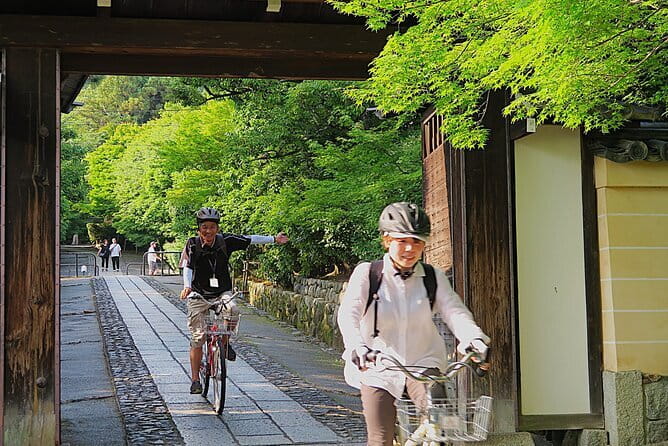
Reviewed · CYCLING AND E-BIKE TOURS
Kyoto Shogun Cycling Tour
Kyoto’s shogun story makes a fine bike route. I like the way this private cycling tour links the Golden Pavilion, quiet Toji-in Temple, and Nijo Castle in one half-day outing. I also like the easy downhill format, which takes some strain out of riding through Kyoto, while the small group size keeps the guide close at hand. The main drawback is the price: at $153.50 per person, this is not a cheap sightseeing ride, especially since the tour lasts about three and a half hours.
The route works best if you want more than quick temple photos. History guides the ride, from the Ashikaga rulers at Kinkakuji and Toji-in to the Tokugawa shoguns at Nijo Castle. You should also know that the tour requires at least two participants, children must be at least 10 years old and 145 centimeters tall, and the cycling takes place on roads, so every rider must be able to control a bicycle without help.
In This Review
- Key points at a glance
- Why this route tells Kyoto’s shogun story well
- Kinkakuji: Kyoto’s golden first act
- Toji-in Temple and the calm of wabi-sabi
- Nijo Castle: where shogun power met its ending
- The guides are a major part of the value
- Is $153.50 a fair price?
- Rain plans and the practical side of riding
- What the ride adds that a bus tour cannot
- Who should book this Kyoto bike tour?
- Should you book the Kyoto Shogun Cycling Tour?
- FAQ
- How long does the Kyoto Shogun Cycling Tour last?
- What places does the tour visit?
- Is admission included?
- Is bicycle use included?
- Is matcha service included?
- Where does the tour begin?
- Where does the tour end?
- How many people can join one guide?
- Can the tour operate in rain?
- Can children join the tour?
Key points at a glance
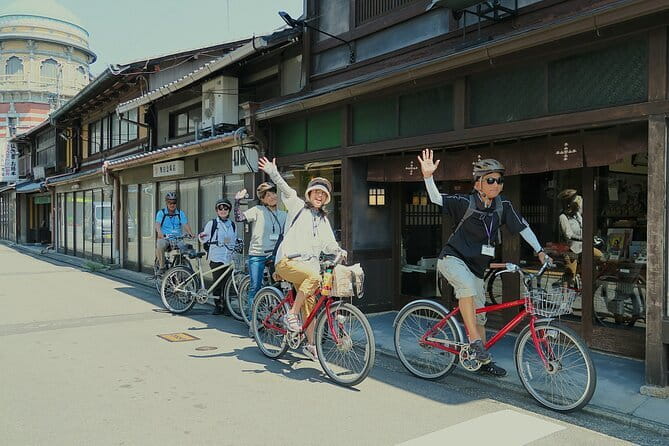
- Three major stops in 3.5 hours: Kinkakuji, Toji-in Temple, and Nijo Castle make up the planned route.
- A genuinely small private group: One guide accepts two to six people, with an extra guide available for groups of seven to twelve.
- The route runs downhill: That makes this a friendlier choice than a demanding hill ride.
- Strong guide quality: Guides named in the feedback include Seiya, Makoto, Nozomi, Kaz, JJ, Yutaka Kaneda, and Yasunobu Yagyu.
- Rain will not automatically cancel the outing: You can ride with a free poncho or switch to a walking tour using public transportation.
- The price buys more than a bike: Admission, a helmet, rainwear, and a private English-speaking guide are included, but matcha service is not.
Why this route tells Kyoto’s shogun story well
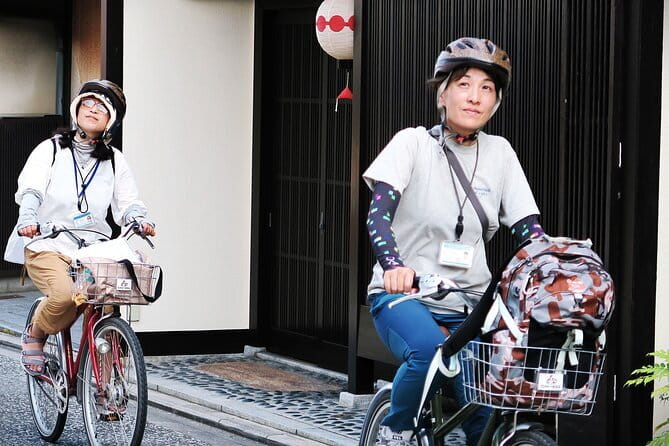
Kyoto can feel like a long list of temples until someone explains how the places connect. This route gives you a clear thread. Kinkakuji recalls the Ashikaga shoguns, Toji-in is tied to the Ashikaga family, and Nijo Castle points to the Tokugawa rulers and the closing chapter of shogun rule.
That structure matters. You are not simply pedaling from one famous building to another. You are moving through different periods of political power, religious practice, garden design, and courtly life. I find that kind of route easier to remember than a day packed with unrelated sights.
The tour begins at Wara Tenjin mae in the Kinugasa area of northern Kyoto. It ends at the Kyoto Cycling Tour Project’s Kyoto Station Cycle Terminal, so you do not need to return to the starting point. That one-way arrangement is useful if you plan to continue sightseeing or catch a train after the tour.
The route is described as easy and downhill. Still, you should treat it as a real urban bike ride, not a slow roll through a closed park. You need to ride safely on the road, and children must be able to do so independently.
More Bike Tours in Kyoto
- Bike Tour Exploring North Kyoto plus Lunch
★ 5.0 · 1,087 reviews - Arashiyama Bamboo Forest & Hidden Gems Bike Tour (Early Bird)
★ 5.0 · 613 reviews - 5 Top Highlights of Kyoto Full Day Bike Tour (E-bike option)
★ 5.0 · 511 reviews
Kinkakuji: Kyoto’s golden first act
The first stop is Kinkakuji, better known as the Golden Pavilion. The pavilion is covered in gold leaf and reflected in the surrounding pond, making it one of Kyoto’s most instantly recognizable sights.
Your admission is included, and the visit allows about an hour. That is enough time to walk through the garden, see the pavilion from the designated viewpoints, and hear how the site connects to the Ashikaga shoguns. The building once served as the center of government for that ruling family, so your guide can give the glittering exterior a political setting.
The practical catch is that Kinkakuji is famous for a reason. It is a heavily visited sight, and the pavilion itself is viewed from outside rather than explored room by room. If you expect a quiet, private look at the building, adjust your expectations. The value here comes from combining the visual impact with a guide who can explain why the place mattered.
An hour at Kinkakuji is well judged. A shorter stop would feel rushed, while a much longer one could leave you standing in a crowd after the main view has been enjoyed. Keep your attention on the garden as well as the gold facade. The setting is part of the experience.
Toji-in Temple and the calm of wabi-sabi
Toji-in offers a useful change of pace. After the bright, polished appearance of Kinkakuji, you move to a quieter temple linked to the Ashikaga family. The guide takes you inside the historic temple and through its garden, including a small tea house.
This is the stop where the tour’s cultural side comes into sharper focus. The temple is associated with wabi-sabi, a Zen-influenced appreciation of restraint, age, simplicity, and imperfection. You are not just looking at carefully arranged plants and buildings. You are being shown a different Japanese idea of beauty, one that does not depend on shine or grandeur.
The planned visit lasts about an hour, giving you time to sit in the temple hall and look across the garden. The setting is described as a place where Zen masters once contemplated the world. That detail helps you slow down. A bike tour can tempt you to keep moving, but Toji-in rewards a quiet pause.
For me, this is likely to be the most rewarding stop for anyone who prefers atmosphere to fame. It may not have the instant visual punch of Kinkakuji, but it offers more room for reflection. The guide’s explanation matters here, since the garden and tea house can be easy to glance at without understanding what makes them meaningful.
Matcha service is not included. You may see the tea house and learn about its role, but do not assume a tea tasting is part of the tour. If that is important to you, ask before booking.
Nijo Castle: where shogun power met its ending
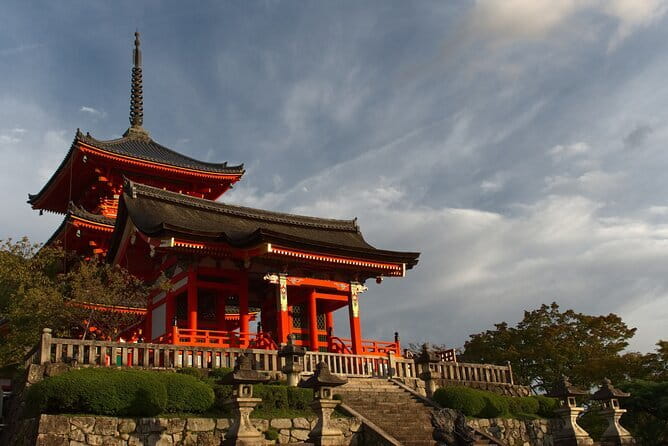
The final major stop is Nijo Castle, with about an hour and a half set aside for the grounds. This is the largest portion of the tour, and that makes sense. The castle has ornamental carvings, grand buildings, and four centuries of political history to explain.
Nijo Castle served as the Kyoto residence of the final shoguns of the Tokugawa government. It was also the setting for events that helped shape the end of shogun rule. A guide can connect the formal architecture to the people who lived, governed, and made decisions there.
The stop is not only about military strength. Nijo Castle shows how power was displayed through buildings, decoration, ceremony, and control of space. The ornamental details give you plenty to examine, while the broader story helps explain why the site mattered beyond its walls.
The longer visit also gives your legs a break from the bicycle. You will be walking through the grounds rather than riding continuously, so the day has a good rhythm: cycle, explore, cycle, sit and look, then finish with a substantial castle visit.
If your main goal is to see the inside of every castle building at length, confirm how the guide structures the visit. The supplied plan promises a tour of the grounds and the major buildings, but the exact balance between indoor and outdoor time can vary.
A completely different kind of day out:
- PERFECT KYOTO 1-Day Bus Tour
★ 5.0 · 13,518 reviews - [Kyoto & Nara Day Tour] Sagano Scenic Railway & Nara Park & Fushimi Inari Taisha Thousand Torii Gates & Togetsukyo Bridge & Bamboo Grove & Kimono Forest (Departing from Osaka)
★ 4.9 · 10,942 reviews - Kyoto: Fushimi Inari, Kinkakuji, Bamboo Grove 1 Day Bus Tour
★ 4.8 · 4,316 reviews - Kyoto: Tea Ceremony in a Traditional Tea House in Kiyomizu
★ 4.9 · 3,519 reviews
The guides are a major part of the value
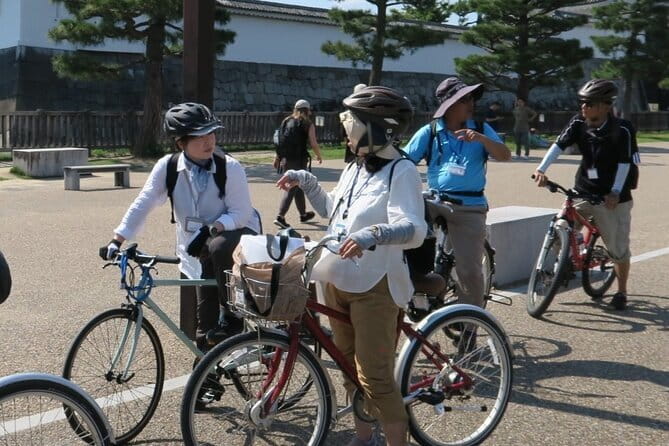
The strongest theme in the feedback is the quality of the guides. Seiya is praised for his excellent English, broad knowledge of Kyoto, and ability to keep a 12-year-old engaged. Makoto is described as personable, fun, and willing to add time when a local festival appeared along the route.
Nozomi is singled out for clear information about Shinto and Buddhist temples, Gion, and the Imperial Palace. Other named guides include Yutaka Kaneda, Yasunobu Yagyu, Kaz, and JJ. Yasunobu is praised for sharing local insight about Kyoto, its people, and its culture, while Kaz and JJ are noted for their humor and friendly approach.
These details matter because a cycling tour rises or falls on the guide. A bicycle gets you from place to place, but the guide gives the ride meaning. The best version of this experience should help you understand what you are seeing, keep the pace comfortable, and handle questions along the way.
The guide can also make the tour feel personal. The feedback describes extra time for a festival and an ability to keep both adults and children interested. That is useful for families and mixed-age groups, who may not all want the same amount of history at every stop.
The tour is private, with two to six people assigned to one guide. That is a real advantage over a large group. You can ask questions without shouting, and the guide can pay closer attention to cycling ability and timing. Groups of seven to twelve can be accepted with an additional guide.
Is $153.50 a fair price?
At $153.50 per person, this sits in the expensive half-day sightseeing category. You are paying for a bicycle, helmet, rainwear, admission to all three listed attractions, a private guide, and a point-to-point route that ends near Kyoto Station.
The price makes more sense if you are traveling as a small group and want a guide focused only on your party. It also offers practical value if you would otherwise need to arrange admission, transport between three sites, and a separate guide. The cycling format lets you see more than you might on foot without committing to a full-day tour.
It is less attractive if you are comfortable using buses and trains, already know Kyoto’s history, or only want to see Kinkakuji and Nijo Castle. You may also find the cost hard to justify if you are traveling alone, since solo participants are not accepted.
I would view this as a convenience and interpretation purchase, not a budget activity. The small group, included admissions, and strong guide record help support the price. The short duration and lack of included matcha keep it from being a full cultural package.
Rain plans and the practical side of riding
The tour operates in rain, which is useful in Kyoto’s changeable weather. You have two choices: continue by bicycle with a free rain poncho, or switch to a walking tour using public transportation. Bus or metro costs are included in the tour fee for that alternative.
That flexibility is a plus. You do not have to decide in advance that rain will ruin the day. On the other hand, some people will not enjoy cycling in wet conditions, even with rainwear. If you strongly prefer dry sightseeing, ask about the walking option before setting out.
A helmet and bicycle are included. The tour also accepts most participants, but the road-riding requirement is important. Children must be at least 10 years old, at least 145 centimeters tall, and able to ride safely without assistance.
The start and finish are different. Begin at Wara Tenjin mae, Kinugasa Oharaicho, in Kyoto’s Kita Ward, and finish at the Kyoto Cycling Tour Project terminal near Kyoto Station. Check both points carefully on a map before the day of the tour, since the end point is not the same place as the start.
Confirmation is sent within 48 hours of booking, subject to availability. The minimum group size is two people, and if that minimum is not met, the operator may cancel and offer another date or experience, or provide a full refund.
There is an important cancellation detail to check before paying. The supplied terms say cancellation at least three days before the tour, by 18:00 Japan time, can qualify for a refund, but another policy states that the experience is non-refundable and cannot be changed. Because those terms conflict, confirm the current rule directly before booking.
What the ride adds that a bus tour cannot
The bicycle changes your sense of Kyoto. You move between major sights under your own power, rather than stepping on and off a coach. The route is described as an easy downhill ride, so the cycling should support the sightseeing instead of becoming the main challenge.
You also get the chance to pass through parts of the city between the formal stops. The specific tour plan centers on three attractions, but guide-led cycling in Kyoto can include smaller streets and local areas depending on the route and timing. Some guide experiences have included places such as Gion, the Imperial Palace area, riverside sections, shrines, and other districts, so ask whether your booking follows only the three listed stops or includes additions.
That question is worth asking because the title suggests a focused Shogun route, while some guide accounts describe broader Kyoto cycling days. The answer will help you set realistic expectations about what you will see.
Who should book this Kyoto bike tour?
I would recommend it to a couple, family, or small group that wants history explained in plain language and prefers active sightseeing. It is especially suitable if you want to see three major sites in one direction, avoid returning to the starting point, and have a guide adjust the pace for your group.
Families should pay close attention to the age, height, and riding rules. The guide feedback suggests children can be included successfully, but a 12-year-old who rides confidently is a different case from a child who is still learning road skills.
This is also a good fit if you are visiting Kyoto for the first time and want context rather than a quick checklist. The progression from Ashikaga power to Tokugawa rule gives the day a clear purpose.
I would hesitate if you dislike riding in city traffic, want a slow indoor temple tour, or are traveling alone. I would also compare the price with a standard walking and transit day if you do not care about the private guide.
Should you book the Kyoto Shogun Cycling Tour?
Book it if you want a compact, well-organized Kyoto history lesson with wheels. The three stops are carefully chosen, the downhill format is approachable, the group is small, and the guides receive unusually strong praise for English, humor, local insight, and flexibility.
Skip it if $153.50 feels too high for a half-day, if you need a fully refundable booking, or if your group includes riders who are not ready for roads. Before committing, confirm the cancellation terms and ask whether your guide will follow the three-stop Shogun route exactly.
For the right group, this is a smart way to connect Kyoto’s famous sights with the people and power behind them. You will leave with more than photographs of gold, gardens, and castle carvings. You will have a clearer sense of how Kyoto’s shogun era began, flourished, and came to an end.
FAQ
How long does the Kyoto Shogun Cycling Tour last?
The tour lasts approximately 3 hours and 30 minutes.
What places does the tour visit?
The planned stops are Kinkakuji Temple, also called the Golden Pavilion, Toji-in Temple, and Nijo Castle.
Is admission included?
Yes. Admission tickets for Kinkakuji Temple, Toji-in Temple, and Nijo Castle are included.
Is bicycle use included?
Yes. Bicycle use, a helmet, and rainwear are included in the tour price.
Is matcha service included?
No. Matcha service is not included.
Where does the tour begin?
The tour begins at Wara Tenjin mae, Kinugasa Oharaicho, Kita Ward, Kyoto, 603-8351, Japan.
Where does the tour end?
The tour ends at the Kyoto Cycling Tour Project, Kyoto Station Cycle Terminal, 552-13 Higashiaburanokojicho, Shimogyo Ward, Kyoto, 600-8235, Japan.
How many people can join one guide?
A guide can accept a minimum of two and a maximum of six people. Groups of seven to twelve can be accommodated with an additional guide.
Can the tour operate in rain?
Yes. You can continue by bicycle with a free rain poncho or switch to a walking tour using buses or the metro. Public transportation costs are included in the tour fee.
Can children join the tour?
Children must be at least 10 years old, at least 145 centimeters tall, and able to ride a bicycle safely on the road without assistance.
Just added in Kyoto
- The “Golden Route” and Ancient Japan by DIAMIR Erlebnisreisen – 14-Day Tour★ 2.0 · 2 reviews
- Japan: Castles & Cuisine by G Adventures – 6-Day Kyoto to Osaka Tour★ 4.5 · 4 reviews
- Cycle Japan by Explore! – 13-Day Kyoto to Tokyo Tour★ 4.7 · 12 reviews
- Cycle Japan by Intrepid Travel – 11-Day Kyoto to Tokyo Tour★ 4.8 · 2 reviews
- Classic Japan by Intrepid Travel – 11-Day Kyoto to Tokyo Tour★ 4.4 · 14 reviews
- Ancient & Modern Japan 14-Day Tour by Exodus Adventure Travels★ 4.4 · 40 reviews
- 5 Day Cultural Adventure of Kyoto, Nara & Osaka by Tourist Journey★ 2.5 · 2 reviews
- 12 Days Kinosaki Onsen Escape: A Journey Through Japan’s Timeless Towns by UME Travel★ 4.8 · 5 reviews
Cycling and E-Bike Tours, compared.
3h Tokyo E-Bike Tour: Hidden Gems, and Local Life with guide
Read our review →
Arashiyama Bamboo Forest & Hidden Gems Bike Tour (Early Bird)
Read our review →
5 Top Highlights of Kyoto Full Day Bike Tour (E-bike option)
Read our review →

Hiroshima 2hr Peace Cycling Tour with Local Guide
Read our review →Browse the lists this tour appears in