Reviewed · KYOTO TOURS
Kyoto: Traditional Concert at Townhouse or Bathhouse
Let the temples rest for an evening. This Kyoto concert gives you a close look at Japanese music through professional koto and shamisen performances in either a small traditional townhouse or a historic bathhouse hall. I love the small audience sizes, especially the townhouse program, and I like the way the bilingual explanations make unfamiliar instruments easy to follow. The main consideration is that the bathhouse program runs irregularly, while the townhouse can be difficult to locate without careful attention to the meeting details.
The music moves between classical pieces, newer works, and original arrangements. You may hear solo koto, shamisen singing, or a duet with shakuhachi, flute, guitar, taishōgoto, or another instrument. At $32 per person, this is a strong value for a 45 to 105 minute cultural experience, especially if you choose the townhouse session with the hands-on koto workshop.
In This Review
- Key Points at a Glance
- What This Kyoto Concert Is Really Like
- The Traditional Townhouse: Small, Quiet, and Personal
- The Historic Bathhouse Hall: Bigger Sound and Duet Programs
- The Instrument Introduction Makes the Music Easier to Hear
- A Program That Mixes Old and New
- Q&A, Photos, and the Koto Workshop
- Why the $32 Price Is Good Value
- Fitting the Concert Into a Kyoto Day
- Who Will Enjoy This Most?
- Should You Book the Kyoto Traditional Concert?
- FAQ
- How much does the Kyoto traditional concert cost?
- How long does the experience last?
- What instruments will I hear?
- Are the performances suitable for beginners?
- Is the koto workshop included?
- Is the bathhouse venue a bathing experience?
- How large are the groups?
- Can I cancel my booking?
Key Points at a Glance
- Two very different venues: Choose a cozy townhouse for a close solo performance, or a former bathhouse hall for a larger duet concert with dramatic natural reverberation.
- Professional musicians up close: Performers present four or five pieces and may sing while playing koto or shamisen.
- Clear bilingual introduction: English and Japanese commentary covers the instruments, notation, materials, playing techniques, and background of each work.
- A real chance to participate: Townhouse bookings can include a 35 to 40 minute beginner-friendly koto workshop after the concert.
- Easy to pair with sightseeing: The venues are positioned for visits before or after Nijō Castle, Arashiyama, Kinkaku-ji, or Nishiki Market.
- Excellent for first-time listeners: You need no previous knowledge of Japanese music, and the Q&A lets you ask about anything you have just heard.
What This Kyoto Concert Is Really Like
This is not a grand theater production. That is the point.
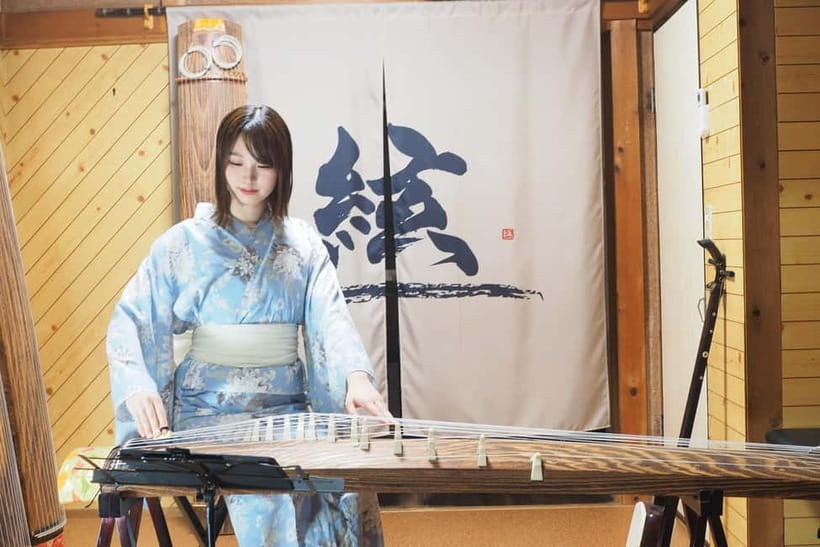
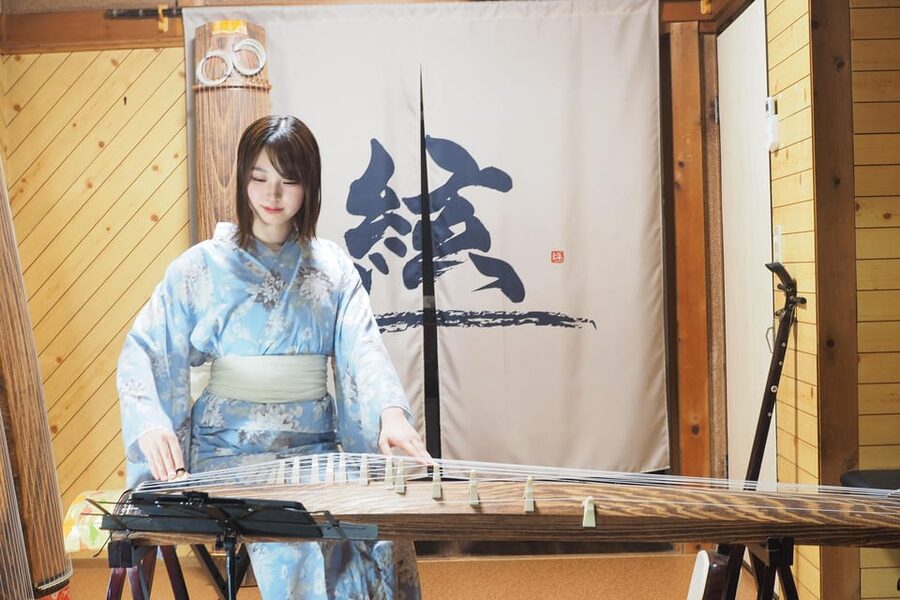
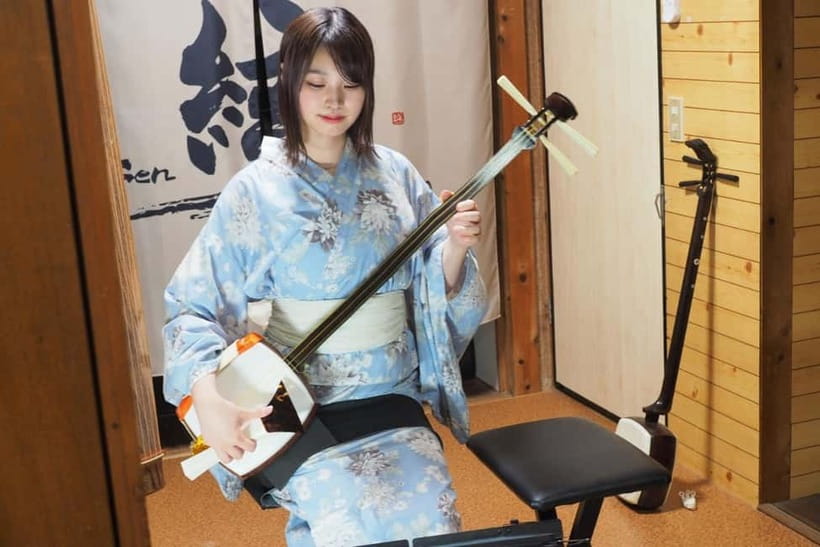
At the traditional townhouse, the audience is limited to about 11 people. You sit on cushions or chairs in a home-like room, close enough to notice the movement of the performer’s hands and the changing tension of each note. The setting feels more like being invited into someone’s living room than attending a formal concert hall.
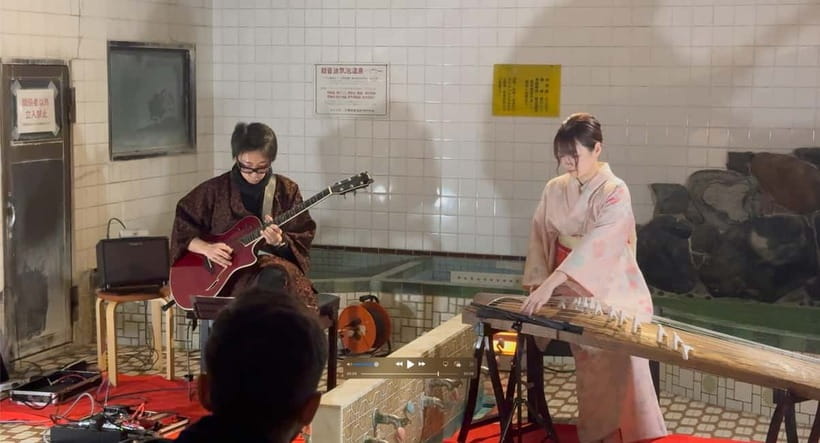
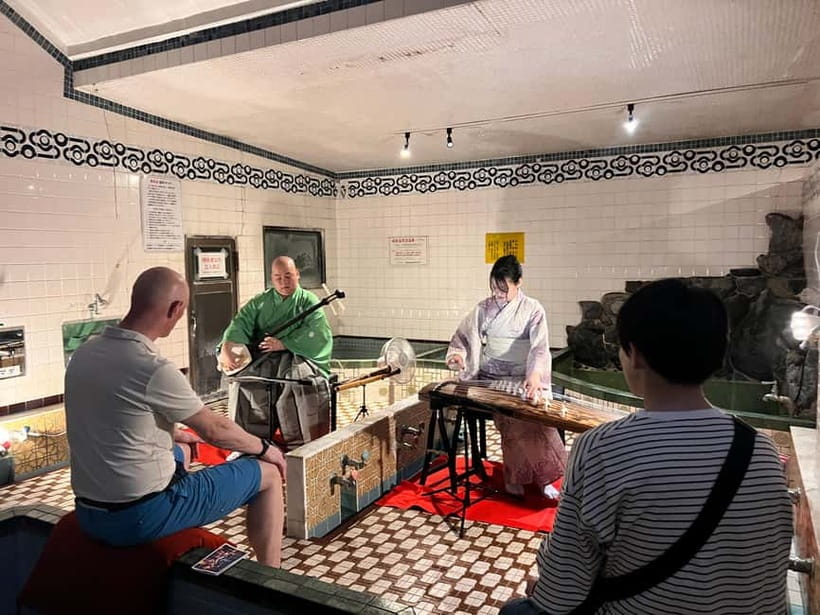
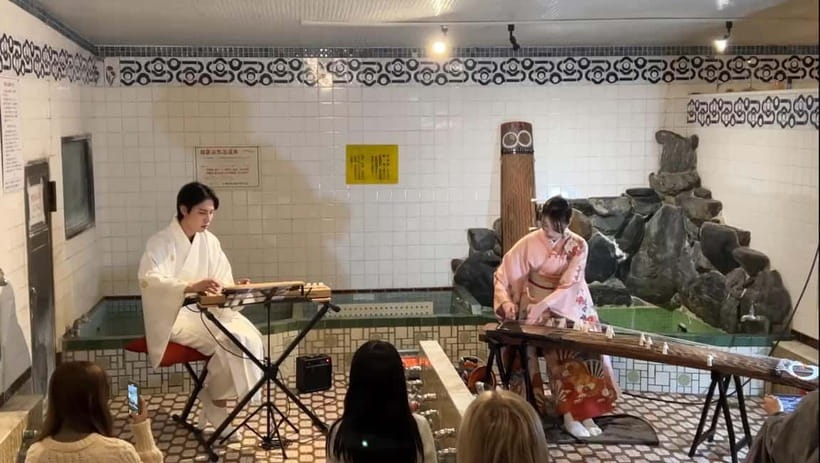
The bathhouse hall offers a different mood. It can hold about 30 people, with seating arranged in rows. Its tiled walls create a natural echo, so the koto and accompanying instruments carry farther and linger longer. That sound can make a duet feel more dramatic, though it is less private than the townhouse option.
The core program lasts about 45 minutes. Check-in and seating take roughly five to ten minutes, followed by a 10 to 15 minute instrument introduction. The concert itself runs about 25 to 30 minutes, and the final five to ten minutes allow for questions and photographs.
If you add the townhouse workshop, plan on 35 to 40 more minutes. That brings the full visit close to 80 to 105 minutes, depending on the exact schedule.
A few more options to weigh up in Kyoto
- Concerts Played with Traditional Instruments in Kyoto
★ 5.0 · 50 reviews - Kyoto: Japanese Koto & Shamisen Concert and Koto Class
★ 4.9 · 31 reviews
The Traditional Townhouse: Small, Quiet, and Personal
For most people, I would choose the traditional townhouse first.
The limited capacity is its greatest strength. With only a handful of people in the room, the performer does not disappear behind a stage or a crowd. You can watch the picks touch the strings, see how the bridges support the koto, and follow the posture needed to play each instrument.
The solo program normally includes four or five pieces. The repertoire can include Japanese classical works, contemporary compositions, and music written or arranged by the performer. Titles may include Kajimakura, Chidorino Kyoku, and Kaede no Hana, though the exact program changes by season and musician.
That changing repertoire is useful if you visit Kyoto more than once, but it also means you should not book expecting a fixed set list. One performer may focus on lyrical koto pieces. Another may bring in shamisen, vocals, or a more modern arrangement.
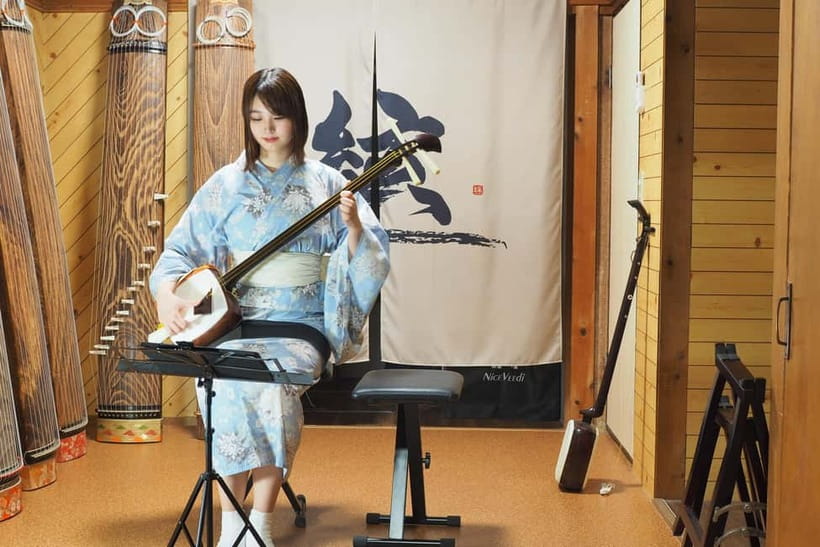
The room also helps you hear details that a larger venue might soften. A koto can sound delicate, bright, and spacious. Shamisen has a sharper attack, with a dry twang that gives the music a very different character. When the performer sings, the voice adds another layer, often making the pieces feel more direct and personal.
The townhouse has one feature the bathhouse does not: an optional koto workshop. Instruments are sanitized, and the instructor guides you through basic techniques and a short phrase. You will not become a koto master in one sitting, but you can learn how the instrument responds and why the player’s hand position matters.
This workshop is particularly good for families with older children, couples, and anyone who learns better by trying something rather than simply watching. It is also suitable for complete beginners. You do not need to read music or understand Japanese notation.
One practical warning: several audience members found the townhouse location a little difficult to find. The building may look less like a tourist attraction than a private home, and the address may not immediately reassure you that you are in the right place. Check the meeting instructions closely, and consider using the supplied map position or longitude and latitude if the street address proves unhelpful.
The Historic Bathhouse Hall: Bigger Sound and Duet Programs
The former bathhouse hall is the more unusual choice.
This is not a bathing experience. Your ticket does not include food, drinks, bathing, or use of bathhouse facilities. You are attending a concert in a historic hall whose tiled surfaces create a strong natural reverberation.
The audience can number up to about 30 people, so the mood is less like a private house concert and more like a small public performance. That is not a weakness. The room is designed to let sound travel, and the echo gives the music a broader, more enveloping quality.
The program combines solo works with duets. A koto may be paired with shamisen, shakuhachi, taishōgoto, flute, or guitar. These combinations let you hear how traditional Japanese instruments respond to one another and to instruments from other musical traditions.
The repertoire is selected to suit both the hall and the musicians. A slow solo may take advantage of the long decay of the room, while a duet can use contrast between the koto’s clear tones and the breathy sound of a shakuhachi. A guitar or flute pairing can give the program a more contemporary feel.
The bathhouse option is offered irregularly on Mondays, so it requires more planning. It is not the best pick if you have only one possible evening or if your Kyoto schedule is already packed. Check the calendar before building your day around it.
If the date works, this venue gives you something the townhouse cannot: the chance to hear the music change as it fills a larger, tiled space. I would choose it for a second visit, for music lovers, or for anyone curious about how architecture shapes sound.
The Instrument Introduction Makes the Music Easier to Hear
The short explanation before the concert is more useful than a long lecture would be.
The host or guide explains what the instruments are made from, how they are played, and how the notation works. You learn about the koto’s strings, bridges, and picks, along with the physical techniques used to produce different sounds. The shamisen receives its own explanation, including its construction and playing method.
This matters because traditional music can seem difficult to approach when you do not know what to listen for. Once you understand that a change in pressure, a plucked string, or a pause can alter the sound, you begin to watch and listen with more purpose.
The explanations are given in English and Japanese. The exact presenter may vary, but past sessions have included hosts such as Gen, Shohei, Shima, Samuel, Sofia, and others working with the musicians. Their role is not only translation. They connect the performance to the audience, explain unfamiliar terms, and help questions move naturally between the room and the performer.
The introduction also gives you context for the pieces themselves. You may hear why a work was written, what period it comes from, or how a contemporary arrangement differs from a classical one. The aim is not to turn the concert into a history class. It is to give you just enough information to hear the music with fresh ears.
A completely different kind of day out:
- PERFECT KYOTO 1-Day Bus Tour
★ 5.0 · 13,518 reviews - [Kyoto & Nara Day Tour] Sagano Scenic Railway & Nara Park & Fushimi Inari Taisha Thousand Torii Gates & Togetsukyo Bridge & Bamboo Grove & Kimono Forest (Departing from Osaka)
★ 4.9 · 10,942 reviews - Kyoto: Fushimi Inari, Kinkakuji, Bamboo Grove 1 Day Bus Tour
★ 4.8 · 4,316 reviews - Kyoto: Tea Ceremony in a Traditional Tea House in Kiyomizu
★ 4.9 · 3,519 reviews
A Program That Mixes Old and New
The music is one of the strongest reasons to book this activity, but it helps to know what it is not.
You are not getting a full evening recital with a large orchestra and a long printed program. You hear four or five pieces, usually across 25 to 30 minutes. The selection is designed to show range rather than present one narrow style.
A typical townhouse program may include several koto pieces and a shamisen selection. Some sessions include singing. The balance between classical and modern works can vary, which keeps the event from feeling like a museum display of old music.
The bathhouse program may include both solo and collaborative works, with the duet format changing from one date to another. A koto and shamisen pairing will feel different from koto with shakuhachi or guitar. Ask about the instruments during the Q&A if you want to understand why a particular pairing was chosen.
The performances are the main attraction, and the standard is high. The musicians are professionals, and several are university-level teachers or advanced performers. Names and lineups can change, so book for the format and setting rather than expecting one specific artist unless your booking details identify that person.
Some of the most memorable moments may come from contrast. A quiet classical piece can be followed by something modern. A calm koto passage may give way to the forceful sound of the shamisen. A singer’s voice can make an instrumental tradition feel immediately human.
Q&A, Photos, and the Koto Workshop
The post-concert period is short but important.
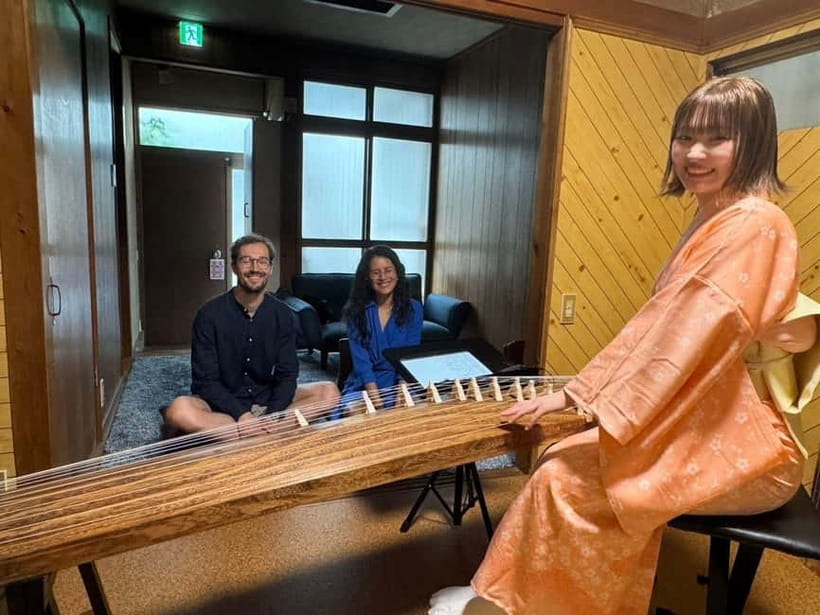
You have about five to ten minutes for questions and photographs. The small scale means you can ask about technique, instruments, or the story behind a piece without shouting across a theater. This is also the time to speak directly with the musician and thank them.
Photography is allowed during the designated photo period. Follow the host’s instructions during the performance itself, since etiquette can vary between the townhouse and bathhouse settings.
The workshop is optional and available only with traditional townhouse bookings. It adds real value to the $32 price because you are not just watching a musician handle an unfamiliar instrument. You sit correctly, learn how to pluck the strings, and attempt a short phrase with guidance.
Do not worry if your first notes sound uneven. The lesson is intended for beginners, and the instructors are patient. One parent especially appreciated the help given to a child during the workshop, which suggests that younger participants can take part when they are old enough to follow instructions. Babies under one year are not suitable for this activity.
Why the $32 Price Is Good Value
At $32 per person, this is priced well against many paid cultural activities in Kyoto.
The value comes from several parts working together: a professional performance, bilingual interpretation, a close setting, time for questions, and the option of hands-on practice at the townhouse. If you choose only the concert, the visit is relatively short. Still, the small audience and direct access to the performers make it feel more substantial than a brief stage show.
The townhouse offers the best value if you want participation. Add the workshop and the experience can last up to 105 minutes, with much of that time spent actively learning.
The bathhouse may offer better value for someone who cares most about sound and collaboration. You get a larger room, a duet format, and acoustics that are part of the experience. It is less flexible, though, because sessions are scheduled irregularly on Mondays.
Free cancellation up to 24 hours in advance and reserve-now, pay-later booking can help if your Kyoto plans are still shifting. Transportation, food, drinks, and bathing are not included, so budget for your own train or bus fare.
Fitting the Concert Into a Kyoto Day
The location works well as part of a wider day, but leave time to reach the correct meeting point.
From the Saiin area, Nijō Castle is about 20 minutes away. That makes the concert easy to pair with a castle visit before or after the music, especially if you want a quieter evening after sightseeing.
Arashiyama is about 25 minutes away. The suggested route involves walking to Saiin Station, taking the Hankyu Line to Katsura, and transferring to the Randen Line. This can work before or after the concert, but allow extra time for transfers and for finding the venue.
Kinkaku-ji is about 20 minutes away by bus from Nishioji Sanjō, followed by a short walk. Nishiki Market is about 25 minutes away by direct Hankyu service to Karasuma or Kawaramachi, making it a useful pairing for food and shopping.
The most sensible plan is to place the concert after a major sightseeing stop, then keep the rest of the evening light. Traditional music rewards attention, and you will appreciate it more if you are not rushing in from three temples and a crowded market.
Who Will Enjoy This Most?
I recommend this to you if you want a cultural activity that feels personal rather than mass-produced.
It suits first-time visitors because the introduction explains the basics without assuming prior knowledge. It also suits repeat visitors who have already seen Kyoto’s famous temples and want a different way to understand the city.
Music lovers will appreciate the close view of professional technique. Families can consider the townhouse workshop, provided children can sit quietly for the concert and take part in the lesson. Couples may prefer the small room and reflective mood.
The bathhouse option is better for people who enjoy unusual venues and fuller sound. The townhouse is better for anyone who values conversation, close observation, and a calm setting.
You may want to skip it if you need a long concert, dislike sitting in a small room, or have no flexibility around the bathhouse schedule. The performance is compact, and the exact repertoire changes. That variety is a benefit, but it also means the experience is not built around one famous piece.
Should You Book the Kyoto Traditional Concert?
Yes, if you want to hear Japanese music in a setting where you can see, understand, and try the instruments.
I would book the traditional townhouse for a first visit, especially with the workshop. It offers the strongest personal connection, the smallest audience, and the clearest sense of being welcomed into a Kyoto home. Choose the bathhouse hall if the Monday date fits and you want duet performances with more echo and a larger audience.
At $32, the concert is a sensible use of part of your Kyoto budget. Check the meeting point carefully, allow time to find it, and do not expect bathing at the bathhouse venue. If you make those points clear before booking, this is an excellent way to add music, conversation, and a little hands-on fun to a temple-heavy itinerary.
FAQ
How much does the Kyoto traditional concert cost?
The experience costs $32 per person.
How long does the experience last?
The concert portion lasts about 45 minutes. Townhouse bookings with the optional koto workshop can last between 80 and 105 minutes, depending on the schedule.
What instruments will I hear?
You may hear koto and shamisen in solo performances. Bathhouse duet programs may pair koto with shamisen, shakuhachi, taishōgoto, flute, guitar, or another instrument.
Are the performances suitable for beginners?
Yes. Most participants have little previous knowledge of Japanese instruments, and the bilingual introduction explains the instruments, notation, materials, and playing methods.
Is the koto workshop included?
The hands-on koto workshop is optional and available only with traditional townhouse bookings. It lasts about 35 to 40 minutes and includes guidance on basic techniques and a short phrase.
Is the bathhouse venue a bathing experience?
No. The bathhouse option is a concert in a historic bathhouse hall. Bathing, food, drinks, and use of the bathhouse facilities are not included.
How large are the groups?
The townhouse holds up to approximately 11 people. The bathhouse hall holds up to approximately 30 people. Private or small-group options are available.
Can I cancel my booking?
You can cancel up to 24 hours in advance for a full refund. Reserve-now, pay-later booking is also available.
Just added in Kyoto
- The “Golden Route” and Ancient Japan by DIAMIR Erlebnisreisen – 14-Day Tour★ 2.0 · 2 reviews
- Japan: Castles & Cuisine by G Adventures – 6-Day Kyoto to Osaka Tour★ 4.5 · 4 reviews
- Cycle Japan by Explore! – 13-Day Kyoto to Tokyo Tour★ 4.7 · 12 reviews
- Cycle Japan by Intrepid Travel – 11-Day Kyoto to Tokyo Tour★ 4.8 · 2 reviews
- Classic Japan by Intrepid Travel – 11-Day Kyoto to Tokyo Tour★ 4.4 · 14 reviews
- Ancient & Modern Japan 14-Day Tour by Exodus Adventure Travels★ 4.4 · 40 reviews
- 5 Day Cultural Adventure of Kyoto, Nara & Osaka by Tourist Journey★ 2.5 · 2 reviews
- 12 Days Kinosaki Onsen Escape: A Journey Through Japan’s Timeless Towns by UME Travel★ 4.8 · 5 reviews
Kyoto Tours, compared.
![[Kyoto & Nara Day Tour] Sagano Scenic Railway & Nara Park & Fushimi Inari Taisha Thousand Torii Gates & Togetsukyo Bridge & Bamboo Grove & Kimono Forest (Departing from Osaka)](https://media.japanvisits.com/wp-content/uploads/kyoto-nara-day-tour-sagano-scenic-railway-nara-park-fushimi-inari-taisha-thousand-torii-gates-togetsukyo-bridge-bamboo-grove-kimono-forest-departing-from-osaka-k110001-400x257.jpg)
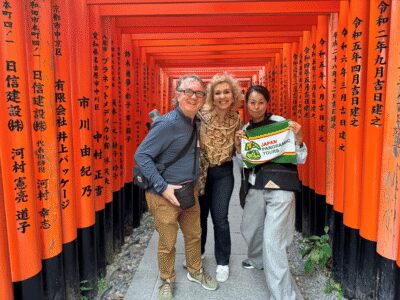
Fushimi Inari, Kinkakuji, Bamboo Grove 1 Day Bus Tour
Read our review →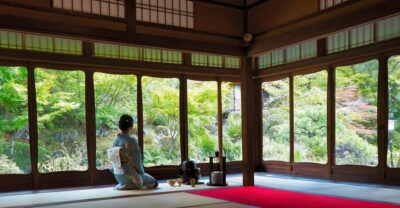
Tea Ceremony in a Traditional Tea House in Kiyomizu
Read our review →
Gion Make Your Own Chopsticks with Engraving Option
Read our review →
Kyoto Nara Day Trip │ Kiyomizu-dera Temple + Fushimi Inari-taisha Shrine + Nara Park (Departing from Osaka/Kyoto)
Read our review →
Kyoto Geisha Walking Tour: Gion District & Hidden Gems
Read our review →