
Reviewed · WORKSHOPS
Kyoto: Japanese Koto & Shamisen Concert and Koto Class
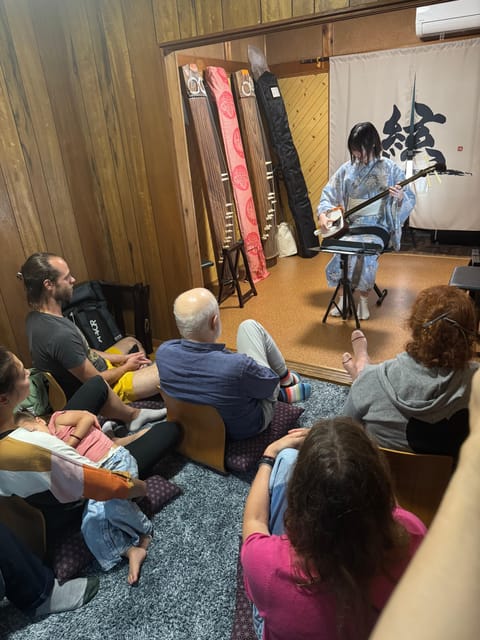
Hear Kyoto in a living room. This intimate concert brings the koto and shamisen into an old, small Japanese house, where professional musicians perform classical, contemporary, and original pieces. I especially like the close contact with the performer and the chance to try the koto yourself, rather than simply sitting through a formal concert. The warm home setting is another strong point. It feels personal and welcoming, not like a large stage show.
The main drawback is practical: the house sits in a residential area and can be tricky to find, especially after dark. One attendee described a dark alley and a short wait outside before the doors opened. You should allow extra time for the meeting point, which can vary by booking option, and avoid arriving at the last minute.
In This Review
- Key points at a glance
- A small Kyoto house instead of a concert hall
- The opening: instruments, origins, and unusual sheet music
- The concert: classical pieces, vocals, and modern energy
- The question period: ask what you actually want to know
- Playing the koto yourself
- Why the private format changes the experience
- The $38 price: a strong cultural value
- Pairing the concert with nearby Kyoto sights
- Who will enjoy this most?
- How the experience feels as a Kyoto memory
- Should you book the koto and shamisen experience?
- FAQ
- How long does the Kyoto koto and shamisen experience last?
- How much does the experience cost?
- Is the koto lesson suitable for beginners?
- What instruments will I hear?
- Is the experience held in a temple or theater?
- Is transportation included?
- Can I cancel the booking?
Key points at a glance
- A real home setting: The concert takes place in a cozy, older Japanese house instead of a temple, theater, or restored townhouse.
- Two very different instruments: You hear the bright, delicate koto alongside the sharper, more rhythmic shamisen.
- Music beyond the usual postcard version of Japan: The program can include classical works, modern compositions, vocals, and original pieces.
- Hands-on koto lesson: Beginners receive guidance from a professional and play a simple piece themselves.
- Private and small-group options: The intimate format gives you room to ask questions and speak directly with the performer.
- Good value at $38: The price includes the concert, cultural introduction, instrument use, instruction, materials, and photos of your session.
A small Kyoto house instead of a concert hall
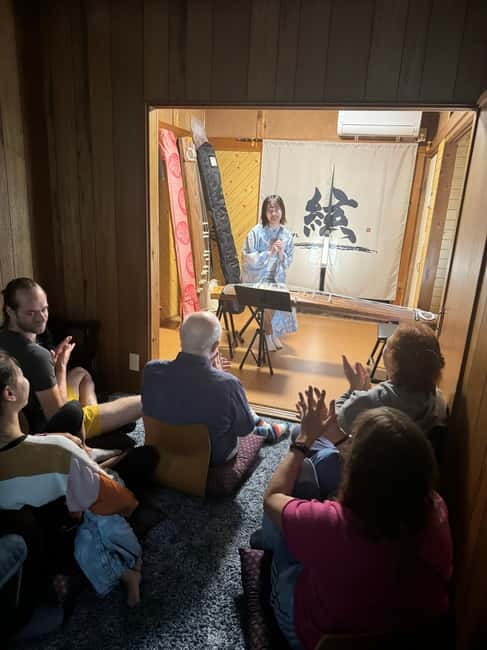
The first thing that shapes this experience is the setting. You do not enter a grand temple or a polished concert venue. You visit a small, old Japanese house in a residential part of Kyoto, with a quiet, homey feel that makes the music seem close enough to touch.
That setting matters. A koto can sound formal and distant in a large hall, but here you sit near the instrument and watch the performer’s hands work across its long wooden body. The shamisen, with its taut strings and compact shape, also feels more immediate in a small room.
The house may take some patience to locate. One person found the address manageable by taxi but noted that the alley was dark and that waiting outside until five minutes before the performance was necessary. I would save the exact meeting instructions, check your route in daylight if possible, and leave a little extra time.
The meeting point varies according to the option you book, so do not assume every session begins at the same door. Transportation is not included, and the activity information does not promise a hotel pickup.
A few more options to weigh up in Kyoto
- Kyoto: Traditional Concert at Townhouse or Bathhouse
★ 4.9 · 224 reviews - Concerts Played with Traditional Instruments in Kyoto
★ 5.0 · 50 reviews
The opening: instruments, origins, and unusual sheet music
The program begins with a short introduction to the koto and shamisen. You learn what the instruments are, how they are used, and how their music is written.
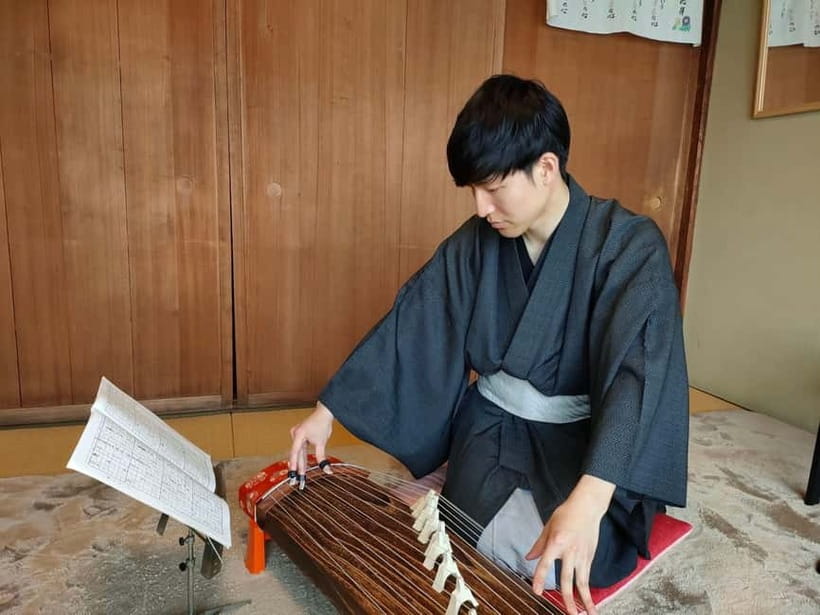
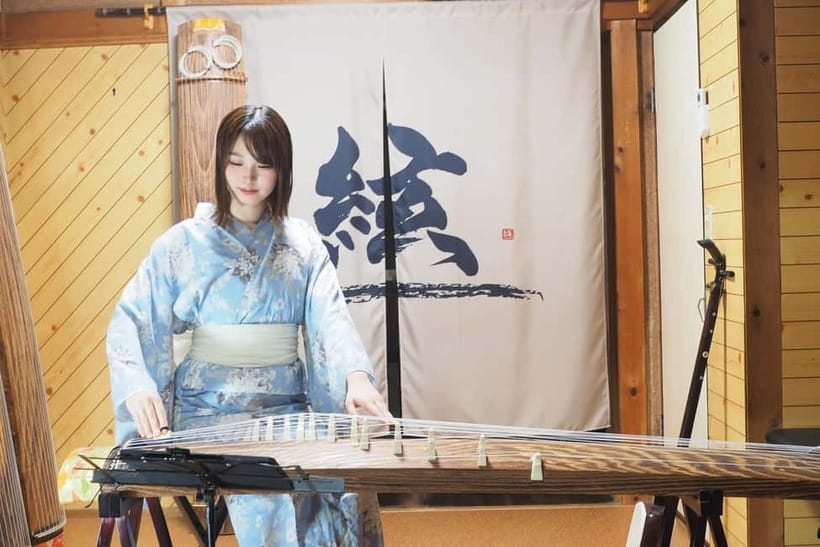
The koto is a long zither with strings stretched across a wooden body. Its tone can be soft and bell-like, but it can also carry force when the player uses stronger plucking techniques. Small bridges under the strings help shape the pitch, and the performer’s hand position creates much of the instrument’s character.
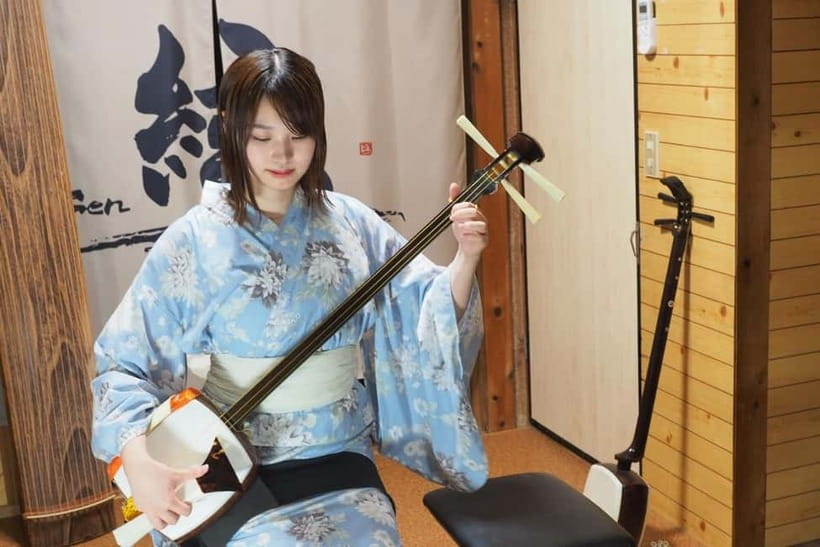
The shamisen is a three-stringed instrument played with a plectrum. Its sound is more direct and percussive than the koto. Hearing both in one sitting helps you understand that Japanese traditional music is not one single sound. The instruments have different voices, different techniques, and different moods.
The explanation also covers the instruments’ distinctive sheet music. This is a useful part of the hour because you begin to see that the performance is not simply a matter of reading familiar Western notes. The cultural introduction is brief, but it gives you enough context to listen with sharper ears.
English and Japanese are available. An English-speaking guide or interpreter helps make the explanation accessible, and the experience is designed for beginners rather than trained musicians.
The concert: classical pieces, vocals, and modern energy
After the introduction, professional musicians perform a changing selection of music. The program can include classical pieces, contemporary works, and original compositions, with the exact choice changing according to the season or performer.
That variety is one of the best reasons to book this instead of a performance limited to familiar ceremonial music. You may hear the koto in a restrained classical work, then encounter a more energetic modern piece. Traditional songs may include vocals, adding another layer to the sound.
Aoi is praised for both her koto playing and singing. Her performance style can move from delicate and emotional to forceful and energetic. One session included a birthday song, showing that the small format can sometimes allow a personal touch, although you should not book expecting a custom request unless it is confirmed in advance.
The shamisen adds welcome contrast. The koto’s notes can shimmer and linger, while the shamisen brings a plucked, earthy attack. When the two instruments appear in the same program, you get a clearer sense of their range.
The concert lasts within a one-hour to 100-minute format, depending on the option selected. That is long enough to hear a meaningful program and receive instruction, but short enough to fit into a busy Kyoto day.
The question period: ask what you actually want to know
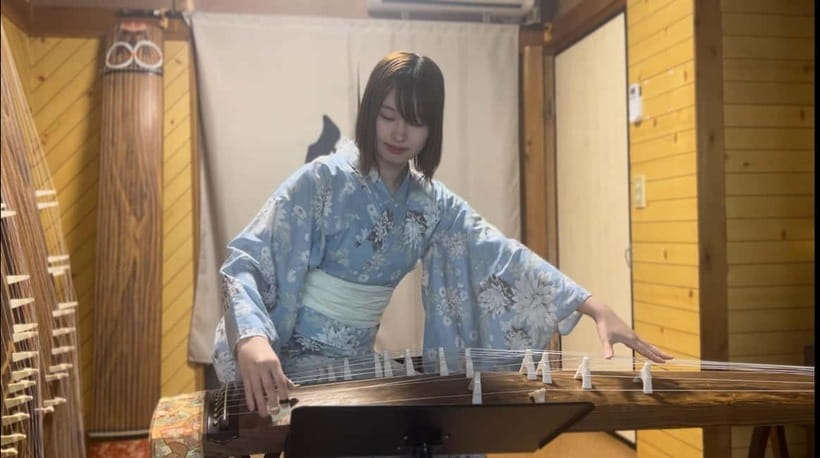
After the performance, you have time for a close-up question-and-answer session. This is where the experience becomes more than a concert.
You can ask about the construction of the instruments, the playing techniques, the music notation, or the performer’s training. The small room makes conversation easy, and you are not shouting questions across a large auditorium.
This portion is especially useful if you have little background in Japanese music. You can ask the basic questions that might feel out of place at a formal recital. How does the performer create different tones? Why does the music notation look different? How does the instrument handle modern compositions? The session gives you room to follow your own curiosity.
Photos are also included. You can take photos with the performer and instrument, and photos of the hands-on portion are sent afterward. That is a thoughtful extra, particularly for families or anyone who wants a lasting record of the session.
A completely different kind of day out:
- PERFECT KYOTO 1-Day Bus Tour
★ 5.0 · 13,518 reviews - [Kyoto & Nara Day Tour] Sagano Scenic Railway & Nara Park & Fushimi Inari Taisha Thousand Torii Gates & Togetsukyo Bridge & Bamboo Grove & Kimono Forest (Departing from Osaka)
★ 4.9 · 10,942 reviews - Kyoto: Fushimi Inari, Kinkakuji, Bamboo Grove 1 Day Bus Tour
★ 4.8 · 4,316 reviews - Kyoto: Tea Ceremony in a Traditional Tea House in Kiyomizu
★ 4.9 · 3,519 reviews
Playing the koto yourself
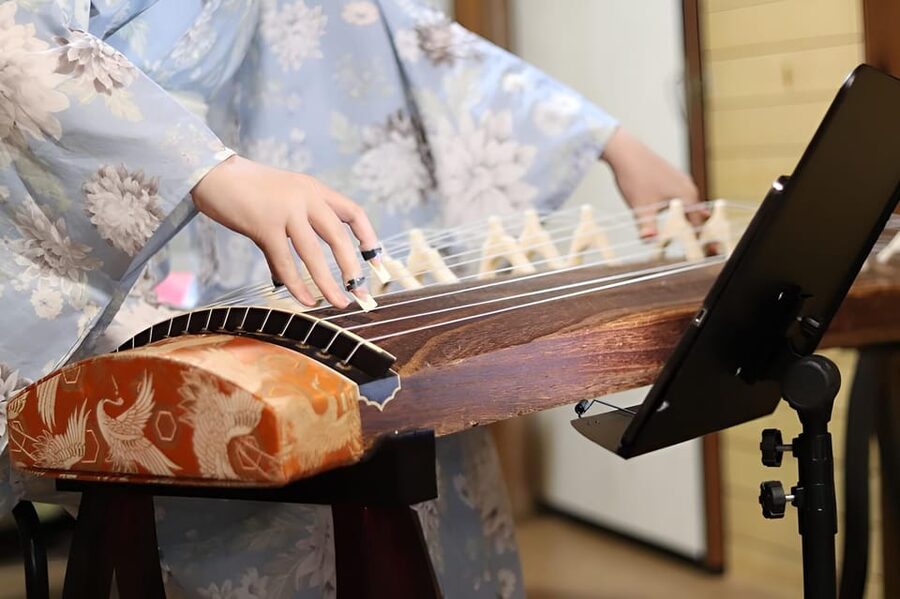
The final part is the hands-on lesson. Under professional guidance, you sit at the koto and try a simple piece.
You do not need musical training. The instruction is aimed at first-time players, and the teacher helps with the basic technique, hand position, and movement needed to produce a sound. Several participants with little or no musical confidence found the instrument approachable after a short lesson.
That does not mean the koto is easy to master. Producing a few notes is different from shaping a polished performance. The value is in feeling the instrument respond under your fingers and gaining a small understanding of the control required.
The lesson can also be flexible. One participant who played another instrument was encouraged to try personal ideas, while others received patient support through the basic piece. The performer and teaching team have been praised for being warm, patient, and encouraging.
If you are visiting with a child old enough to take part, this active section may hold attention better than a concert alone. The experience is not suitable for babies and very young children. The age information lists children under two, under three, and under four among those not suited, so families should check the exact restriction for their selected session.
Why the private format changes the experience
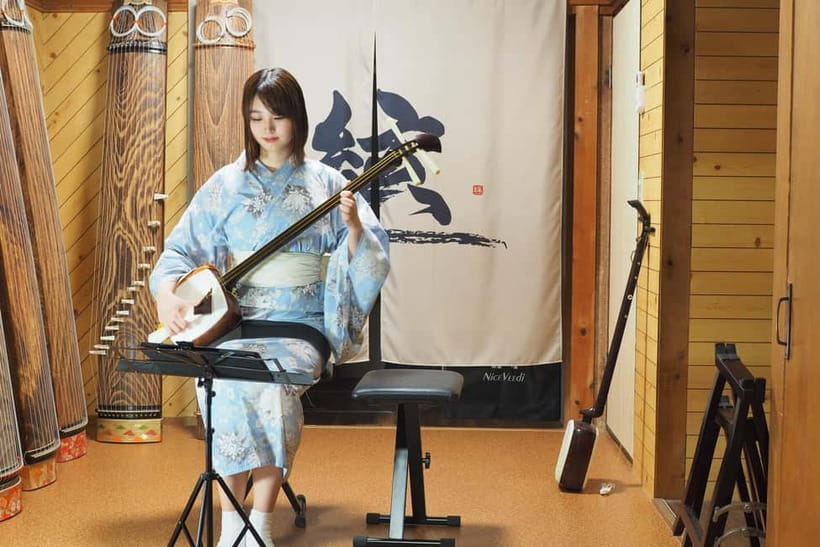
Private or small-group sessions are available, and the difference is important. In a large cultural show, you may hear polished music but have little contact with the person performing it.
Here, you can sit close, ask questions, try the instrument, and receive direct correction. A session may have only your group present, creating a calm atmosphere that suits people who prefer personal contact over spectacle.
The format also works well for families, couples, and small groups of friends. You can share the lesson without worrying about holding up a large class. Musicians may also appreciate the chance to discuss technique and repertoire in greater detail.
The tradeoff is that the small house has limited room. If you want a grand visual production, a large stage, or a full ensemble, this will feel modest. Its strength is closeness, not scale.
The $38 price: a strong cultural value
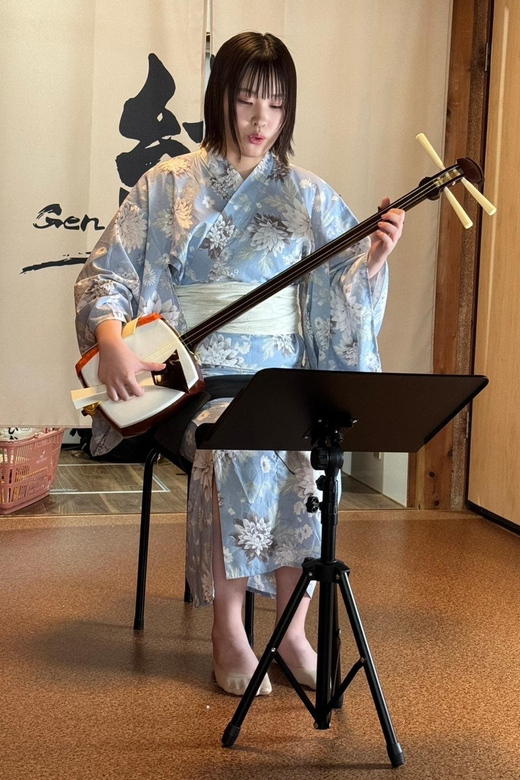
At $38 per person, this is a good-value experience for Kyoto. The price covers the live concert, an introduction to the instruments and their background, use of the koto, instructor guidance, necessary materials, and photos.
You are effectively receiving three activities in one: a performance, a cultural talk, and a beginner music lesson. The direct access to a professional performer adds value that you would not get from simply attending a public concert.
The price does not include transportation, food, drinks, souvenirs, or extra koto accessories. That is easy to manage because the session is short, but you should budget for your own route to the house.
There is also a performance-only option mentioned in the activity information, which may suit you if you want the music but do not need the lesson. Check the available choices carefully because the duration, meeting point, and inclusions can vary.
Pairing the concert with nearby Kyoto sights
The location works well as part of a day in western or central Kyoto, though you should allow time for transfers and walking.
- Arashiyama: The route takes about 25 minutes by train and on foot. Saiin Station is a useful transfer point between the Hankyu Line and the Randen Line, making it practical to combine the concert with Arashiyama.
- Nijo Castle: The journey takes about 20 minutes by train and on foot. The area is close enough to Nijo Castle-mae on the Tozai Line to make a before-or-after visit possible.
- Kinkakuji, the Golden Pavilion: Allow about 20 to 25 minutes by bus and on foot. Nishioji Sanjo bus stop provides access in roughly 16 minutes, according to the supplied route information.
- Nishiki Market: A direct Hankyu Line ride can take you toward Karasuma or Kawaramachi. That makes the concert a sensible addition to a market and food-shopping day.
Do not pack the schedule too tightly. The house can be difficult to identify, and late arrival may shorten your session. I would place the concert between two nearby activities rather than crossing Kyoto solely for it.
Who will enjoy this most?
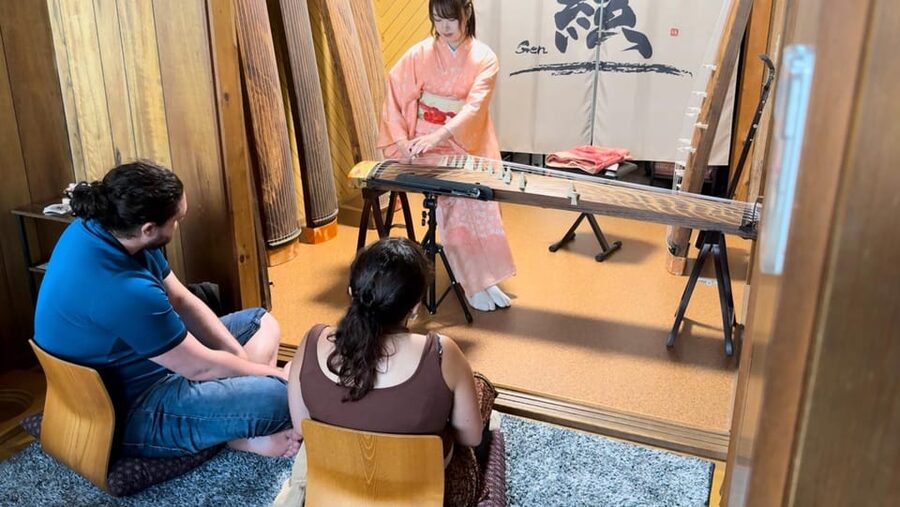
I would recommend this experience to anyone curious about Japanese music but unsure where to begin. You do not need to know the difference between a koto and a shamisen before arriving. The introduction gives you the basics, and the lesson lets you understand the instrument through your own hands.
It is particularly well suited to:
- Couples seeking a quiet cultural activity
- Families with older children
- Music lovers and amateur musicians
- Visitors who prefer small groups to large shows
- People who want a personal connection with a local art form
- Anyone looking for something different from temples, gardens, and food tours
It may not suit you if you need a highly polished theater production, dislike sitting in a small home, or have difficulty finding residential addresses. The music can be emotional and traditional, but it also includes modern material, so the program may not match a very narrow expectation of Japanese classical music.
The experience is offered in English and Japanese. If your group has physical limitations or allergies, notify the organizers ahead of time. Late arrivals may receive less time, so punctuality matters.
How the experience feels as a Kyoto memory
The strongest part of this activity is the balance between watching and doing. You first listen to the instruments at a professional level, then learn enough about them to make the performance easier to understand, and finally try the koto yourself.
That sequence gives the music a human scale. You hear the clean sound of a practiced hand, then discover how much control is needed to produce even a simple phrase. The contrast makes the performance more impressive without turning the lesson into a test.
The setting adds to the memory. In a city famous for temples and grand streets, a small residential house offers another side of Kyoto. You are not only looking at a cultural object behind glass. You are sitting close to an instrument, talking with the person who plays it, and making your own first attempt.
The current rating is 4.9 out of 5 from 31 ratings, and the most consistent praise centers on the intimacy, musicianship, friendly instruction, and chance to play. Aoi’s performance receives particular praise, as do the support and interpretation provided by the team, including Kyoko and Shohei in some sessions.
Should you book the koto and shamisen experience?
Yes, if you want a personal and hands-on introduction to Japanese music. For $38, the concert, explanation, question period, lesson, instrument use, and photos make this a strong value, especially in a private or small-group setting.
Book it with realistic expectations. You are going to a small house, not a major concert venue. The location may take effort to find, the program changes, and the lesson is an introduction rather than serious musical training.
I would choose the full concert and class for a first visit. It gives you the best sense of the koto and shamisen, and the short lesson turns a pleasant performance into something you actively remember. If your schedule is tight or you only want to hear the music, consider the performance-only option if available.
FAQ
How long does the Kyoto koto and shamisen experience last?
The duration is between one hour and 100 minutes, depending on the option and starting time you select.
How much does the experience cost?
The listed price is $38 per person.
Is the koto lesson suitable for beginners?
Yes. The lesson is beginner-friendly, and a professional instructor guides you through playing a simple piece.
What instruments will I hear?
The program features the traditional Japanese koto and shamisen. It begins with an introduction to the instruments and their sheet music.
Is the experience held in a temple or theater?
No. It takes place in a cozy, old, small Japanese house in a residential area of Kyoto.
Is transportation included?
No. Transportation to and from the location is not included. The meeting point can vary depending on the option booked.
Can I cancel the booking?
You can cancel up to 24 hours in advance for a full refund. A reserve-now-and-pay-later option is also available.
Just added in Kyoto
- The “Golden Route” and Ancient Japan by DIAMIR Erlebnisreisen – 14-Day Tour★ 2.0 · 2 reviews
- Japan: Castles & Cuisine by G Adventures – 6-Day Kyoto to Osaka Tour★ 4.5 · 4 reviews
- Cycle Japan by Explore! – 13-Day Kyoto to Tokyo Tour★ 4.7 · 12 reviews
- Cycle Japan by Intrepid Travel – 11-Day Kyoto to Tokyo Tour★ 4.8 · 2 reviews
- Classic Japan by Intrepid Travel – 11-Day Kyoto to Tokyo Tour★ 4.4 · 14 reviews
- Ancient & Modern Japan 14-Day Tour by Exodus Adventure Travels★ 4.4 · 40 reviews
- 5 Day Cultural Adventure of Kyoto, Nara & Osaka by Tourist Journey★ 2.5 · 2 reviews
- 12 Days Kinosaki Onsen Escape: A Journey Through Japan’s Timeless Towns by UME Travel★ 4.8 · 5 reviews
Workshops, compared.

Sushi Making Tokyo Roll and Authentic Japanese Sushi Class
Read our review →
Gion Make Your Own Chopsticks with Engraving Option
Read our review →
Roll and Authentic Sushi Making Class in Asakusa
Read our review →
Ramen Cooking Class at Ramen Factory in Kyoto
Read our review →
Tokyo Asakusa Chopsticks Workshop: Make Your Own Pair
Read our review →
Ring Making Workshop : Vintage Japanese Coin Ring
Read our review →Browse the lists this tour appears in