Reviewed · TEA CEREMONIES
Learn Zen in a class of making Matcha tea near Osaka Castle
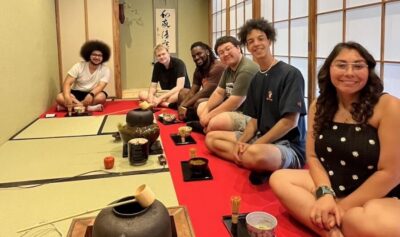
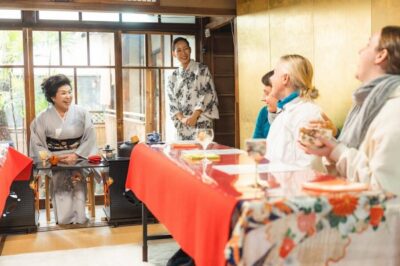
Tea turns into theater here. This one-hour experience near Osaka Castle combines matcha preparation, traditional clothing, wagashi sweets, and a formal tea ceremony in a small group of no more than six people. I like the careful cultural explanation and the chance to prepare tea for another person, not simply watch a demonstration. I also like that photos are taken during the activity, so you can focus on the ceremony instead of your phone. The main drawback is the short schedule: changing clothes and learning the etiquette leaves little room for a relaxed, unhurried lesson.
The setting is Bushi no Homare, or Samurai Honor, in Osaka’s Joto-ku district. You will need to arrive 30 minutes early for changing and instructions, and the address can be easy to mishandle because Apple Maps shows the wrong location. Use Google Maps and look for the wooden Samurai Honor sign. The price is $40 per person, a fair deal for a kimono or hakama, matcha, wagashi, an English-speaking instructor, and emailed photographs, though some clothing and hair options cost extra.
In This Review
- Key points to know before booking
- Getting to Bushi no Homare in Osaka
- Changing into kimono, hakama, and dogi
- Crossing the tea-room entrance
- Making and receiving matcha
- Wagashi and the Japanese sense of seasons
- Photos, hairstyles, and the value of the package
- A good choice for families and first-time visitors
- Price, timing, and practical limits
- Should you book this Osaka tea ceremony?
- FAQ
- How long does the matcha tea ceremony experience last?
- Where does the experience take place?
- Which map should I use to find the location?
- What clothing is included?
- Is hair styling included?
- Are photographs included?
- Is the activity available in English?
- Can children join the tea ceremony?
- Can I cancel for a full refund?
Key points to know before booking
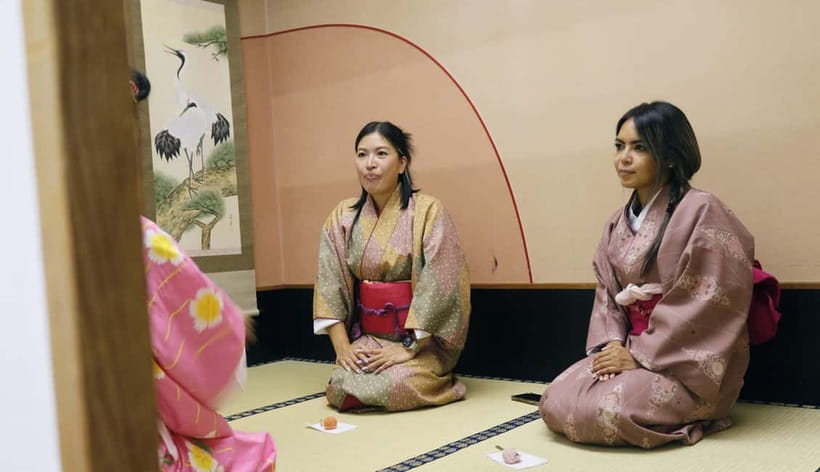
- You dress as part of the lesson: Men wear hakama and dogi, while women wear kimono and may have Japanese hair styling available depending on the selected option.
- The ceremony teaches guest etiquette: You practice sitting, bowing, walking, standing, and responding properly to the tea master.
- Wagashi carries the seasonal message: These hand-shaped sweets introduce wabi-sabi, Japanese beauty, and the importance of spring, summer, autumn, and winter.
- You prepare matcha yourself: The experience is not just a performance. Participants get a chance to make tea for one another.
- Photos are included: A photographer takes pictures during the activity and sends the files to your designated email address.
- The group stays small: With a maximum of six people, you should receive more personal help than in a large cultural show.
Getting to Bushi no Homare in Osaka
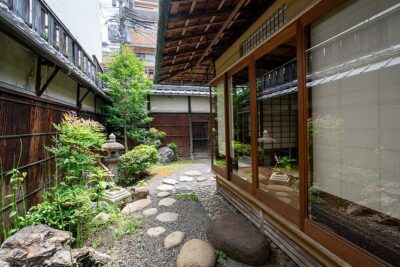
The activity takes place at Bushi no Homare, also known as Samurai Honor, at Excellence Takayama 1F, 2-3-19 Shiginonishi, Joto-ku, Osaka-shi, Osaka 536-0014. The name can sound grand, but the practical detail matters more: use the Google Maps location supplied for the activity because the Apple Maps address is incorrect.
You are looking for a wooden sign reading Honor of the Samurai. A rack of Samurai Honor pamphlets sits outside, and kimonos and hakama may be hanging nearby. Those clothes make a useful visual clue, especially if you arrive in a quiet neighborhood and wonder if you have found the right doorway.
There is no hotel or train-station pickup. Transportation is your responsibility, so allow enough time to reach the address. Arrive 30 minutes before your booked start time. That half hour is used for instructions and changing clothes, not for extra sightseeing.
The experience is listed as near Osaka Castle, but the supplied information does not give a walking time from the castle. I would treat it as a separate appointment rather than assume you can leave the castle grounds and arrive in a few minutes. Build in a cushion, particularly if you are traveling with children or wearing uncomfortable shoes.
More Castles and Historic Sites in Osaka
- Osaka Castle Ticket
★ 4.7 · 12,450 reviews - Osaka Castle: Museum and Tower Entry Ticket
★ 4.5 · 2,380 reviews - Ultimate Osaka Walking Tour: Castle, Dotonbori & Hidden Gems
★ 5.0 · 862 reviews
Changing into kimono, hakama, and dogi
The clothing is not a quick costume photo at the doorway. It sets the tone for the lesson and places you inside the social world of the tea ceremony.
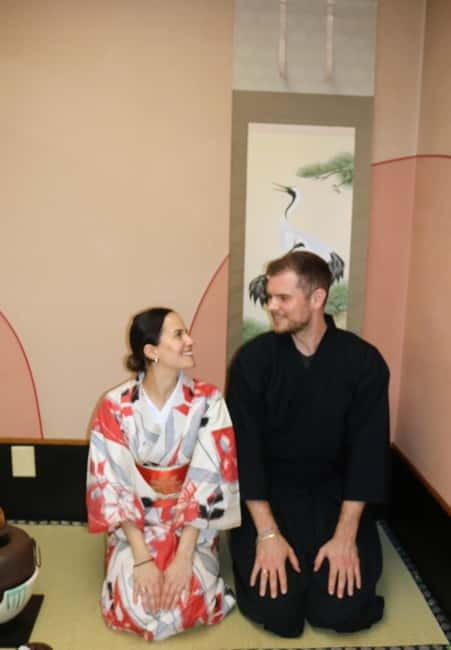
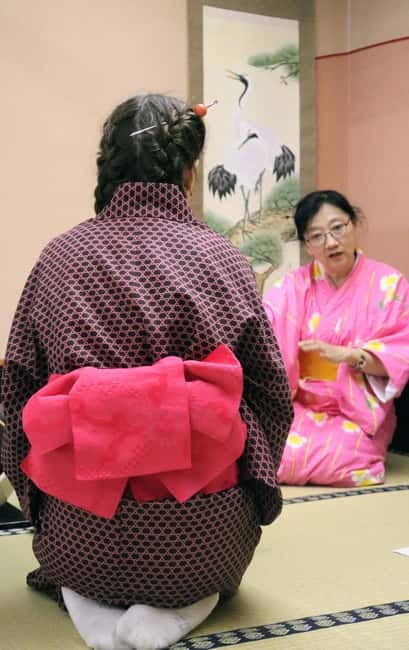
Men wear hakama, the traditional pleated trousers, with dogi, a traditional robe. The intended effect is a samurai appearance. Women wear kimono and take on the look of Yamato Nadeshiko, an old Japanese ideal of feminine grace. You will be dressed before entering the ceremony room, so arrive ready to change without fuss.
Bring a T-shirt. That is the only item specifically requested, and it is a sensible base layer under the clothing. The listed experience includes kimono clothing, but the details also identify wagami, meaning collected hair with kanzashi hair ornaments, as a paid option. Some participants received hair styling and flower ornaments as part of their visit, so confirm exactly what your chosen booking includes before paying.
The same caution applies to outdoor photographs. Female packages may offer hair styling, kimono, obi, tabi socks, zori sandals, a basket bag, and an outdoor photo shoot as a paid upgrade. Male options may add kimono, obi, tabi, geta wooden clogs, and an outdoor photo shoot. The standard package includes photo shooting and emailed images, but the outdoor portion is listed separately.
Color choice is another nice touch when available. One participant found the kimono beautiful and was able to choose the colors. That makes the clothing feel more personal, though choices can depend on the day and the selected package.
Crossing the tea-room entrance
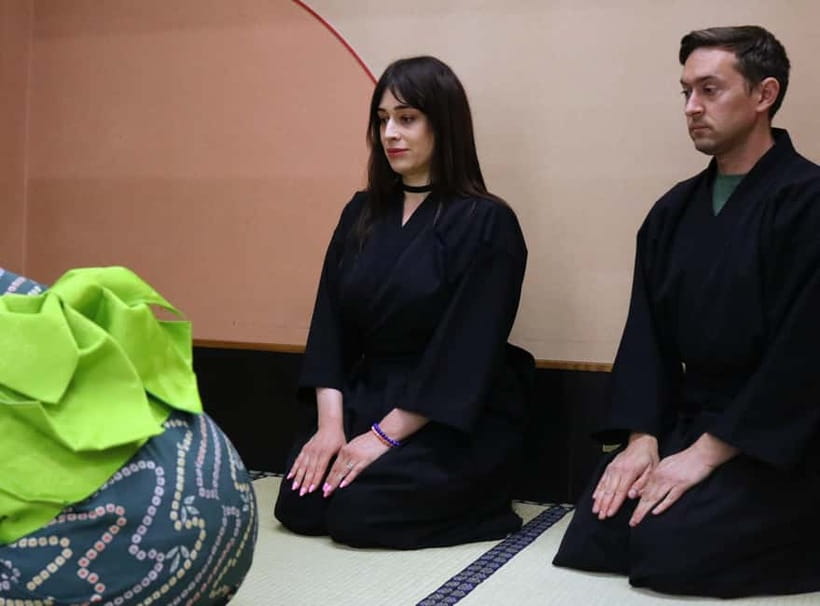
The central idea of this activity is equality. Once you pass through the nijiriguchi, the low entrance to a tea ceremony room, nationality, age, gender, and social status are set aside. Everyone enters as a participant in the same ritual.
That small doorway has a practical effect. You must pay attention to how you move, bow, sit, and respond. The ceremony asks you to slow down and notice actions that daily life usually makes automatic. For a first-time visitor, this is more useful than hearing a long lecture about tea culture.
The tea ceremony is built on a two-way exchange. The host offers care and hospitality, but the person receiving tea also has duties. You show respect through your posture, gestures, attention, and response. In this way, the host and the participants create the mood together.
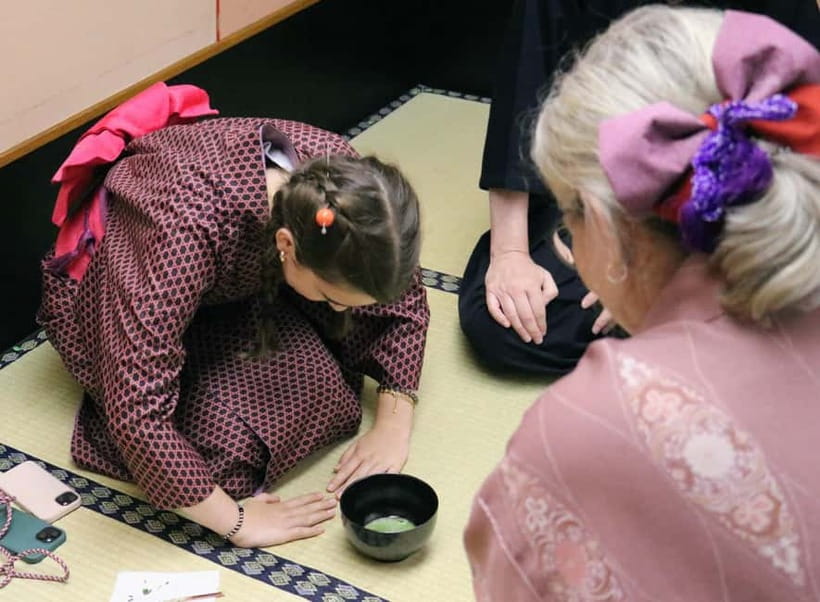
An instructor guides you through the rules. You learn how to serve tea, where to sit, how to bow, how to stand, and how to walk. The details may feel formal at first, but the instructor’s job is to make them manageable. One participant specifically appreciated having each person take a turn at making tea, rather than watching the host do everything.
The English interpreter guide staff and certified professional instructor are included. English and Japanese are the regular languages. Italian, Spanish, French, Chinese, Thai, and Indonesian interpretation may be possible, but staffing is limited, so you need to ask about availability before booking.
Making and receiving matcha
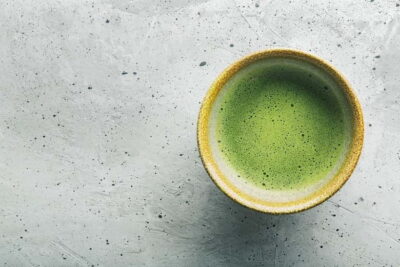
Matcha is powdered green tea whisked with hot water. Here, it is served within the larger rules of chanoyu, the Japanese tea ceremony, rather than treated as a casual drink.
The host demonstrates the preparation step by step. You then learn how to receive the bowl and how to behave as a tea guest. The experience description uses the word samurai for the guest role, linking the lesson with the formal tea culture associated with Japan’s warrior class.
The best part for many people will be the turn at preparation. You may make tea for another participant and receive tea in return. That exchange makes the lesson active and social. You are not merely dressed up while someone else performs in front of you.
Keep your expectations realistic. This is a one-hour introduction, not professional tea-school training. You will learn the basic manners and spirit of hospitality, but you will not master every movement in one visit. The short length works well as an introduction during an Osaka itinerary, though anyone seeking a slower, more technical study may find it too brief.
More Tea Ceremonies in Osaka
- Osaka: Tea Ceremony Experience
★ 4.9 · 1,426 reviews - Tea Ceremony Experience in Osaka Doutonbori
★ 5.0 · 754 reviews - Matcha Making Class in Osaka with Authentic Japanese Sweets Set
★ 5.0 · 509 reviews - Osaka: Matcha Making Experience with Japanese Sweets
★ 5.0 · 146 reviews
Wagashi and the Japanese sense of seasons
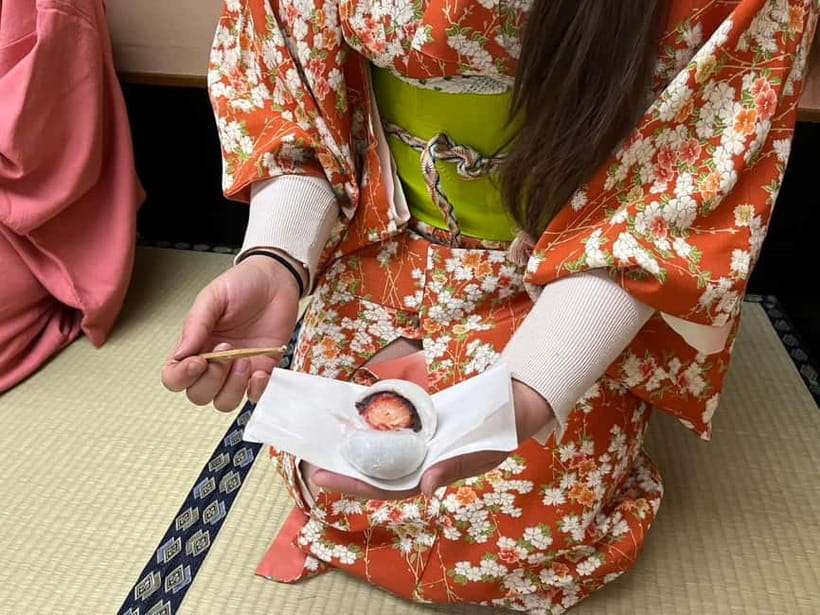
The wagashi is more than a sweet served beside the tea. These traditional Japanese confections developed alongside tea culture and are made by hand in shapes and colors that reflect the seasons.
Their appearance is part of the lesson. You may see delicate workmanship designed to suggest spring flowers, summer forms, autumn colors, or winter restraint. The point is not simply that the sweets look attractive. Their design reflects a Japanese appreciation for seasonal change and the beauty of small, temporary things.
This is where the ideas of wabi and sabi enter. The terms are difficult to translate into a single English phrase, but they relate to simplicity, quiet beauty, imperfection, and the passage of time. The wagashi gives you a concrete way to think about those ideas. You can look at the sweet, notice its handmade character, and connect it to a particular season before eating it.
The lesson also introduces food culture and history. Wagashi developed with tea ceremony traditions during the Kamakura period, according to the activity material. That connection helps explain why the sweet is shaped with such care. It is not a random snack added to make the booking more appealing.
I would pay attention to this section even if you are more interested in the kimono photographs. The wagashi often provides the clearest window into Japanese ideas about beauty. It is also the part most likely to make children pause, since the sweets can look almost too carefully made to eat.
Photos, hairstyles, and the value of the package
Photography is included, with the finished images sent to a designated email address. A photographer takes pictures during the ceremony, which means you can keep your hands free and pay attention to the instructor.
The photographs are useful because the clothing and hair arrangement are temporary. Once the kimono or hakama is removed, the visual record becomes your main souvenir. One participant received the images on the same day, though delivery timing is not formally guaranteed in the supplied details.
The standard package includes kimono clothing, matcha, wagashi, the instructor, English interpreter staff, taxes, tips, and photo shooting. That is a strong bundle for $40, particularly if you value both cultural instruction and photographs.
Still, read the clothing options carefully. Hair styling with kanzashi, outdoor photographs, and some complete clothing combinations are listed as paid additions. The material is not perfectly clear about when hair styling is included, since some participants received an elegant updo and flowers without an added charge. Ask before booking if the hairstyle is important to you.
The photos are likely to be more formal than casual snapshots. That suits the experience. You are being photographed in a prepared setting, during a ceremony with deliberate movements and traditional clothing. If you want a broad Osaka photo session, the outdoor photo option may be the better choice.
A good choice for families and first-time visitors
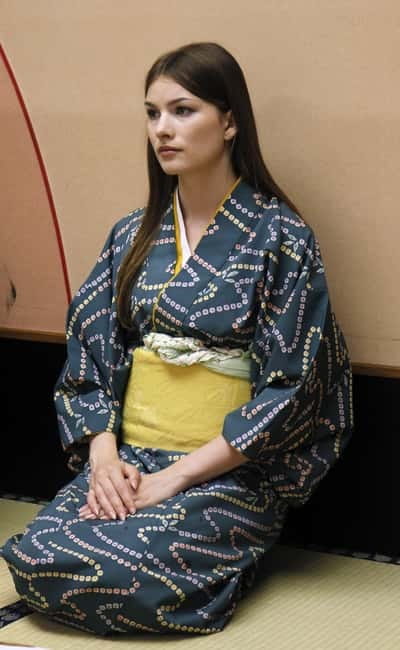
This activity suits adults and children aged 10 or older who enjoy trying something hands-on. Children can change clothes, learn the basic gestures, make tea, taste wagashi, and take home photographs. Sharing the preparation with a parent or sibling gives the activity a natural sense of occasion.
The formal rules may be harder for very young children. Anyone under 10 is not suitable for this experience, and the one-hour schedule leaves little spare time for a restless child. If your family prefers active attractions, the quiet pace may feel demanding. If you want a calm cultural hour, it should work better.
A small group limit of six helps. You should have a reasonable chance to ask questions and receive correction on your movements. Private bookings are not promised, but a small group can feel personal. One participant happened to have the ceremony alone, with a friendly and informative guide, though that depends on the booking day.
The activity also works well for couples, friends, and solo visitors who want a meaningful photograph in traditional clothing. You do not need prior knowledge of tea ceremony etiquette. The instructor teaches the rules as you practice them.
Price, timing, and practical limits
At $40 per person, this is good value if you want several elements in one appointment: clothing, tea, wagashi, instruction, and photos. Comparable cultural activities can vary widely in price, but this package avoids charging separately for the main tea lesson and the basic photographs.
The price is less attractive if you mainly want to rent a kimono for a long outdoor photo session. The activity lasts one hour, and outdoor photography, certain clothing pieces, and hair arrangements may cost extra. Think of it as a tea ceremony class with dressing and photographs, not a full-day rental.
The free cancellation rule allows a full refund when you cancel at least 24 hours ahead. You can also reserve now and pay later, which helps if your Osaka schedule is still shifting. Alcohol, drugs, pets, and nudity are not allowed.
The experience is not suitable for people with altitude sickness or anyone over 95 years old, according to the supplied restrictions. No accessibility details are provided, so contact the provider if you need specific information about entering the room, sitting, kneeling, or changing clothes.
Should you book this Osaka tea ceremony?
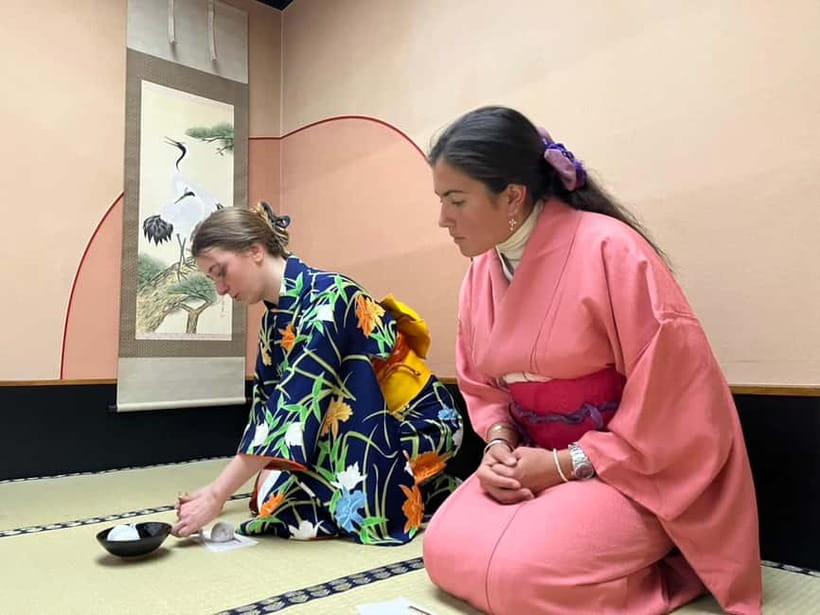
Book it if you want more than a quick costume photograph. The strongest reason to choose this experience is the combination of participation and explanation. You learn how to act as a tea guest, prepare matcha for another person, taste wagashi, and understand why seasons and simple beauty matter.
I would especially recommend it to first-time visitors, families with children aged 10 or older, couples, and anyone who wants polished photos without giving up cultural context. The English support, small group, and patient instruction make it approachable.
Think twice if your schedule is tight around Osaka Castle, if you dislike formal sitting and bowing, or if you want a long outdoor photo shoot. In that case, the one-hour format and extra-cost options may not match your plans.
For most people, $40 buys a pleasant and purposeful introduction to Japanese tea culture. Confirm the hair and outdoor photography options, use Google Maps, arrive 30 minutes early, and you should get the most from this compact experience.
FAQ
How long does the matcha tea ceremony experience last?
The activity lasts one hour. You should also arrive 30 minutes before the reserved start time for instructions and changing clothes.
Where does the experience take place?
It takes place at Bushi no Homare, also called Samurai Honor, at Excellence Takayama 1F, 2-3-19 Shiginonishi, Joto-ku, Osaka-shi, Osaka 536-0014.
Which map should I use to find the location?
Use Google Maps because the address shown on Apple Maps is incorrect. Look for the wooden sign reading Honor of the Samurai and the rack of activity pamphlets outside.
What clothing is included?
Kimono clothing is included for women, and men wear hakama and dogi for the samurai-style experience. Some clothing combinations and accessories are listed as paid options.
Is hair styling included?
Wagami, meaning collected hair with a kanzashi ornament, is listed as a paid option. Ask the staff what is included in your chosen booking, since the available hair service can depend on the package and staffing.
Are photographs included?
Yes. Photo shooting is included, and the photo data is sent to your designated email address. Outdoor photo shoots are listed as paid options.
Is the activity available in English?
Yes. English and Japanese are the regular languages, and English interpreter guide staff are included. Italian, Spanish, French, Chinese, Thai, and Indonesian support may be available if staff schedules allow.
Can children join the tea ceremony?
Children under 10 years old cannot join. Children aged 10 or older may participate if they meet the other activity requirements.
Can I cancel for a full refund?
Yes. You can cancel up to 24 hours before the activity for a full refund. The experience also offers reserve-now, pay-later booking.
More Temples and Shrines in Japan
- [Kyoto & Nara Day Tour] Sagano Scenic Railway & Nara Park & Fushimi Inari Taisha Thousand Torii Gates & Togetsukyo Bridge & Bamboo Grove & Kimono Forest (Departing from Osaka)
★ 4.9 · 10,942 reviews - Mount Fuji & Hakone – Lake Ashi Torii Gate, Hakone Shrine, Hakone Pirate Ship, Hakone Ropeway, Owakudani, Lake Yamanaka & Oshino Hakkai Day Trip: Sea, Land, and Air Panoramic Tour from Tokyo
★ 4.8 · 7,989 reviews - Kyushu One-Day Tour: Yufuin no Mori Train & Yufuin Town & Nyoirin-ji Temple & Dazaifu & Hell Hot Springs (Departing from Fukuoka)
★ 4.9 · 4,474 reviews - Kyoto: Fushimi Inari, Kinkakuji, Bamboo Grove 1 Day Bus Tour
★ 4.8 · 4,316 reviews
More Temples and Shrines in Osaka
- Osaka: Katsuo-ji Temple
★ 4.9 · 996 reviews - Osaka: Minoh, Katsuoji Temple, & Minoh Falls Full-day Tour
★ 4.9 · 172 reviews - Sagano Romantic Train & Arashiyama, Kiyomizudera, Fushimi Inari Taisha Day Tour
★ 4.5 · 171 reviews - Osaka Temple Cool Foot Bath & Matcha Experience〈45min〉
★ 4.9 · 82 reviews
Just added in Japan
- Japanese Home Cooking Class & Walk in Todoroki Temple Tokyo★ 5.0 · 88 reviews
- A One-of-a-Kind Sushi Experience in a Special Place of Japan★ 5.0 · 15 reviews
- Tokyo Cute Bento Cooking Class – Make a Kawaii Character Lunchbox★ 5.0 · 126 reviews
- Japan Tokyo Tower Observatory Deck E-Ticket★ 4.0 · 34 reviews
- Catch a Baseball Game in Tokyo with a Local – Tickets Included★ 5.0 · 24 reviews
- JDM Experience with Fast&Furious RX-7 (English speaking Driver)★ 5.0 · 57 reviews
- Tokyo Private Day Tour by Car with English speaking Driver Guide★ 4.0 · 29 reviews
- Japan Classic 10 Day – One Life Adventures★ 5.0 · 129 reviews
Tea Ceremonies, compared.
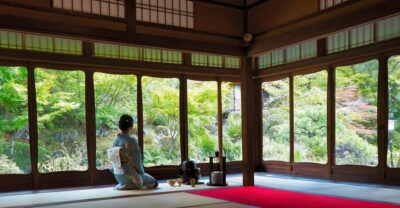
Tea Ceremony in a Traditional Tea House in Kiyomizu
Read our review →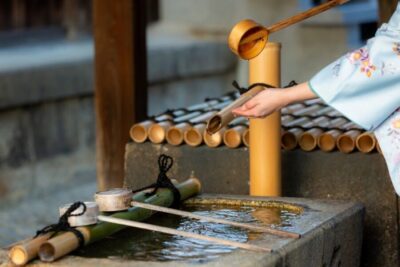
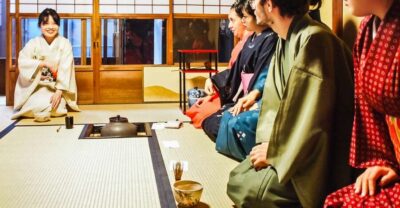
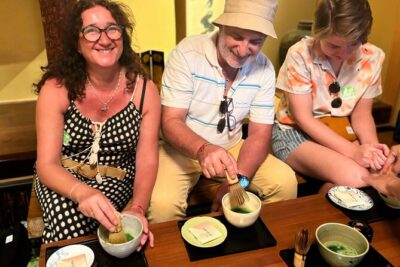
World Heritage Kyoto & Nara Uji Authentic Matcha Experience
Read our review →