
Reviewed · SAKE TASTINGS
Osaka Cooking Class and Sake Tasting with Local Supermarket Visit
Food tells you how a city lives. This four-hour Osaka cooking class combines a local supermarket visit with hands-on lessons in okonomiyaki, gyoza, and niku-sui, giving you more than a meal to remember. I like the practical recipes and the chance to shop for ingredients with a guide. I also like that sake, beer, and soft drinks are included for the meal. The main consideration is the price, $92.50 per person, which is fair for a small-group class but more than a simple market tour or casual meal.
The class begins at 10:00 a.m. near Minamimorimachi Station and ends at the same meeting point. I especially appreciate the small maximum of seven people, since it should give you room to ask questions and receive live cooking help. The supermarket portion is useful, not just decorative, though the experience may feel less appealing if you want a sightseeing tour with many different Osaka landmarks.
In This Review
- Key reasons this Osaka class earns attention
- Starting at Minamimorimachi Station at 10:00 a.m.
- Seeing Osaka through a supermarket basket
- Returning to the studio for niku-sui
- Folding gyoza without kitchen panic
- Making okonomiyaki, Osaka’s flexible savory pancake
- Pairing the meal with sake, beer, or soft drinks
- What the instructors add to the experience
- Who will get the most from four hours here
- The value of $92.50 per person
- Practical planning before you book
- My verdict on this Osaka food experience
- FAQ
- Where does the Osaka cooking class begin?
- What time does the activity start?
- How long does the experience last?
- Where does the experience end?
- What dishes will I make?
- Is cooking experience required?
- What drinks are available with the meal?
- How many people can join the class?
- What is the cancellation policy?
Key reasons this Osaka class earns attention
- Three Osaka-style dishes in one session: Make niku-sui, okonomiyaki, and gyoza rather than learning only one recipe.
- A real supermarket stop: See local ingredients in their everyday setting and learn what to buy for each dish.
- Small groups capped at seven: The format allows closer guidance than a large demonstration class.
- Sake with the finished meal: Taste local sake alongside beer or a soft drink while enjoying what you cooked.
- Friendly named instructors: Yuka and Mari have both been praised for clear guidance, shopping help, and hands-on teaching.
- Beginner-friendly recipes: You do not need previous kitchen experience to take part.
Starting at Minamimorimachi Station at 10:00 a.m.
Your morning begins outside the FamilyMart on the south side of Minamimorimachi Station, at 2-chōme 3-10, 1F, in Osaka’s Kita Ward. The location is near public transportation, and the start time gives you a useful first activity before spending the rest of the day on your own.
I would arrive early. A station-area meeting point is convenient, but large Japanese stations can have several exits and busy sidewalks. Give yourself enough time to find the correct south-side location rather than rushing in at 9:59.
From there, the class moves into Osaka’s food culture through a local supermarket visit. This is an important part of the experience. Instead of meeting at a studio and finding all the ingredients already laid out, you get to see the products in the place where local residents shop.
More Cooking Classes in Osaka
- Sushi Making Osaka Roll and Authentic Japanese Sushi Class
★ 5.0 · 1,220 reviews - Matcha Making Class in Osaka with Authentic Japanese Sweets Set
★ 5.0 · 509 reviews - Osaka Sushi Making Experience
★ 5.0 · 400 reviews
Seeing Osaka through a supermarket basket
A supermarket can teach you plenty about Japan without a formal museum label. You see how ingredients are packaged, which foods are easy to find, and how everyday cooking differs from the restaurant dishes you may have already tried.
Your guide helps select the ingredients needed for the recipes. That guidance matters because Japanese supermarkets can be confusing if you cannot read the labels. You may find unfamiliar cuts of meat, seasonings, vegetables, dumpling wrappers, and prepared products that look similar at first glance.
The shopping visit also makes the recipes easier to repeat at home. You are not only shown a finished plate. You get a sense of what to look for when buying ingredients yourself. Mari, one of the instructors, received particular praise for explaining what to shop for when preparing the different dishes.
This stop has a modest drawback. It is a food-shopping visit, not a full market expedition with many stalls or a long neighborhood walk. If you expect the famous sights and seafood displays of a major Osaka market, adjust your expectations. The benefit is a closer look at ordinary food shopping, which can feel more useful than another quick photo stop.
Returning to the studio for niku-sui
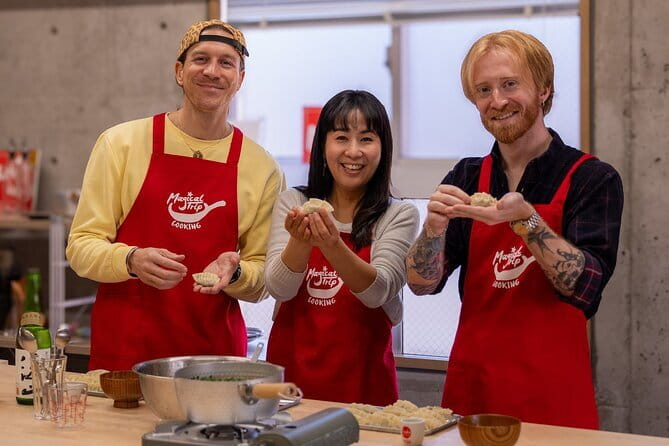
After choosing the ingredients, you return to the cooking studio operated by MagicalTrip. The class then becomes hands-on, with your guide explaining each stage and offering live feedback.
Niku-sui is one of the more interesting dishes on the menu because it is less internationally familiar than okonomiyaki or gyoza. The name refers to a beef soup, a simple, comforting dish that lets you pay attention to broth, meat, and seasoning.
I like having niku-sui in the mix because it gives the class a different pace. Okonomiyaki involves shaping and cooking a savory pancake, while gyoza requires folding and sealing. Soup adds another basic Japanese cooking lesson: how a few ingredients can create a satisfying bowl when the balance is right.
The available details do not specify every ingredient or cooking step, so you should not expect a fixed recipe list beyond the three named dishes. What you can expect is step-by-step instruction designed for people with little or no cooking experience.
Folding gyoza without kitchen panic
Gyoza is often the most skill-based part of a class like this. The filling may be easy enough to understand, but folding the wrappers neatly takes practice. You get to work with your hands and learn how to close the dumplings rather than simply watching an instructor do it.
This is where the small group size makes a real difference. With no more than seven people, the instructor has a better chance of seeing when your wrapper needs more water, when the filling is too generous, or when the fold is not holding.
Do not worry about making perfect restaurant-shaped dumplings. The point is to learn the method and get a feel for the process. Your first few gyoza may look uneven. That is part of the fun, and the final plate still gives you an immediate reward for trying.
The class is suitable for all skill levels, but that does not mean every person will move at the same speed. Beginners should feel comfortable asking for help. More experienced cooks may find the basic technique familiar, but they can still benefit from learning how these dishes fit into everyday Osaka cooking.
A completely different kind of day out:
- Osaka Go Karting Tour with Funny Costume
★ 5.0 · 2,658 reviews - Osaka Castle: Museum and Tower Entry Ticket
★ 4.5 · 2,380 reviews - Osaka: Shinsekai Food Tour with 13-15 Dishes at 5 Eateries
★ 4.8 · 2,204 reviews - Osaka Food Tour: 13 Dishes at 5 Local Eateries
★ 5.0 · 2,149 reviews
Making okonomiyaki, Osaka’s flexible savory pancake
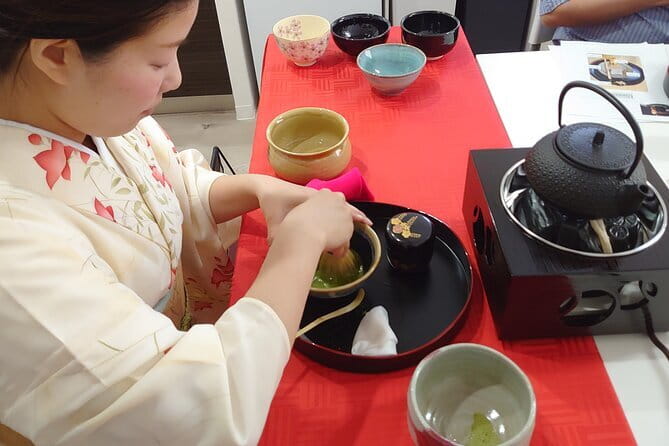
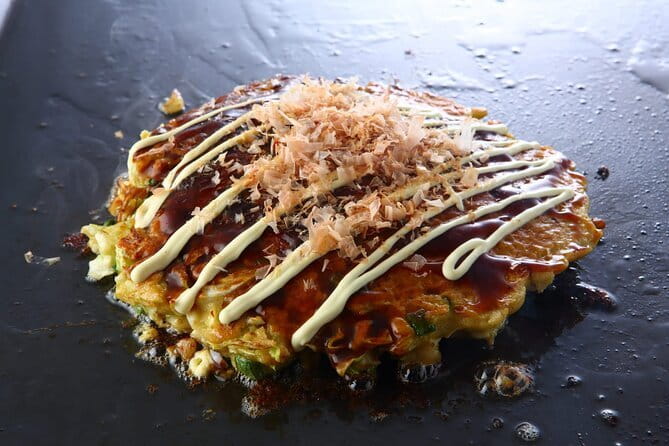
Okonomiyaki is the dish most closely tied to Osaka’s food identity in this class. It is a savory pancake that can be adapted with different ingredients, which makes it both approachable and practical.
The class gives you a chance to prepare and cook it yourself. That matters because the texture depends on how the mixture comes together and how it is handled during cooking. You are not simply eating a finished pancake at a restaurant. You are learning the basic process behind one of Osaka’s best-known comfort foods.
I would pay close attention to the instructor’s timing and handling advice. The exact method may vary by class and instructor, but the goal is to help you make a dish that works in a home kitchen rather than only in a restaurant setting.
Okonomiyaki is also a strong choice for cooking at home after your Japan trip. It does not require the same delicate shaping as gyoza, and the recipe can be adjusted around ingredients you can find. The class helps turn a memorable Osaka meal into something you can attempt again.
Pairing the meal with sake, beer, or soft drinks
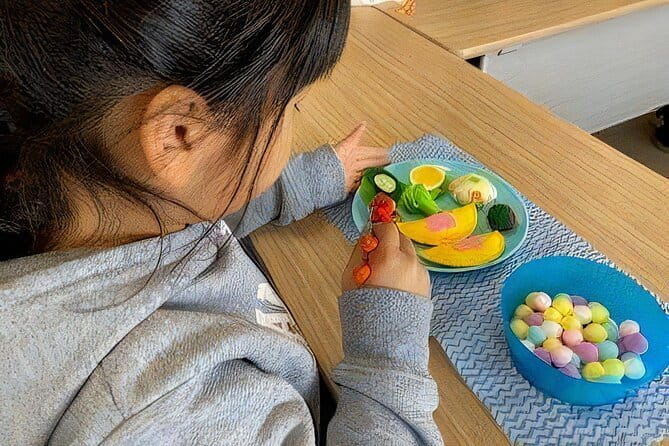
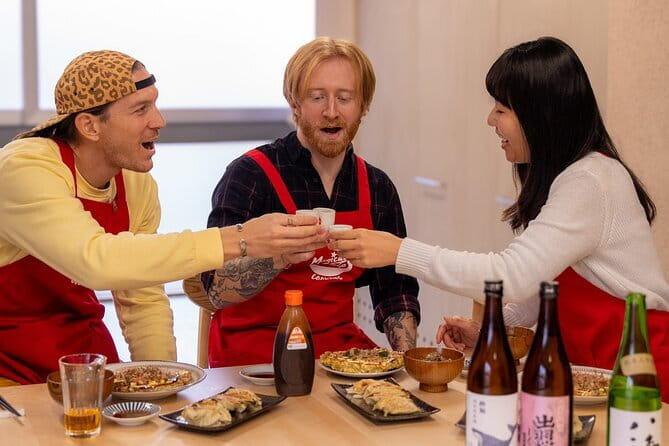
Once the cooking is finished, you sit down to enjoy the dishes. Local sake is available for tasting, along with beer or soft drinks. This makes the class feel like a complete food experience rather than a lesson that ends the moment the stove is switched off.
The sake tasting is a useful addition because it gives you a simple way to connect food and drink. You can compare the flavors with the beef soup, savory pancake, and dumplings. The experience is not presented as a dedicated sake seminar, so I would view it as a tasting alongside lunch rather than an advanced lesson in brewing or regional sake styles.
You do not have to drink alcohol. Soft drinks are available, which makes the class suitable for mixed groups and for anyone who prefers not to drink. Beer is another option for those who want a familiar pairing.
The food and drinks also help justify part of the $92.50 cost. You are paying for instruction, ingredient shopping, studio time, multiple dishes, and a shared meal with beverage choices. It is not the cheapest way to eat lunch in Osaka, but it offers skills and context that a restaurant meal cannot.
What the instructors add to the experience
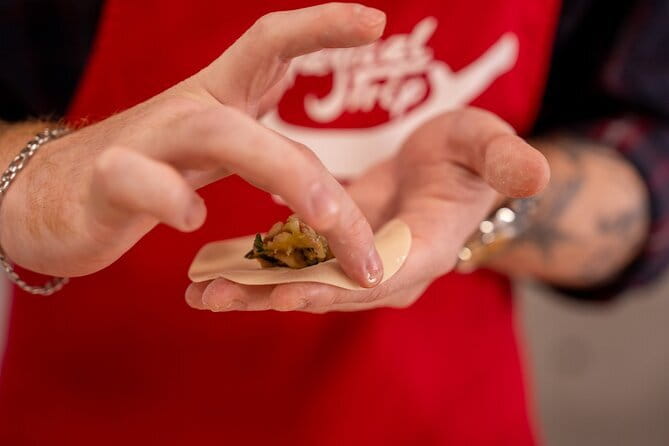
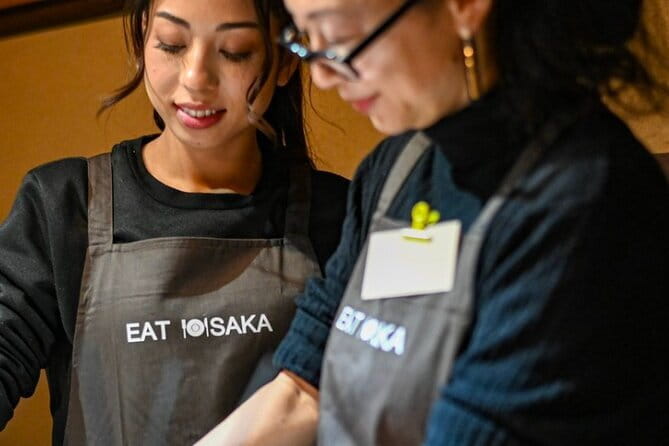
The instructor can shape the whole day. Yuka is specifically praised for leading a fun and informative four-hour session, explaining the supermarket ingredients, and guiding the hands-on preparation of okonomiyaki, niku-sui, and yaki-gyoza.
Mari is also praised for explaining what to buy and making the cooking active for everyone. These details point to the strongest part of the class: personal guidance. You are not left to follow a recipe card while an instructor works at the front.
That said, guide quality can vary from one date to another, and you may not be assigned either Yuka or Mari. The useful thing is that the format is built around direct teaching, and the class has a maximum of seven participants.
The atmosphere is described as friendly and relaxed. That suits people who want to cook without feeling tested. You can make mistakes, ask questions, and still finish with a meal.
Who will get the most from four hours here
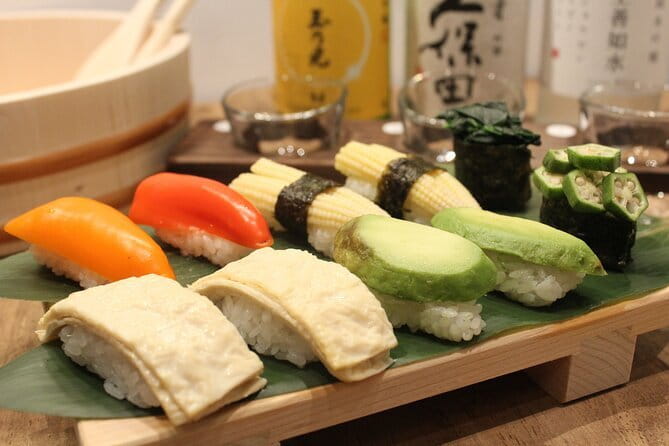
I would recommend this class to several types of visitor:
- First-time visitors to Osaka: You get a food-focused introduction without needing prior cooking knowledge.
- Solo visitors: A small group gives you a natural social setting without the scale of a large tour.
- Couples and friends: Preparing, folding, and eating together creates an easy shared activity.
- Families: The hands-on format can be more engaging than a long seated explanation, though younger children should be able to take part in a cooking class.
- Home cooks: You leave with methods and ingredient-shopping ideas rather than only memories.
- Food-focused visitors: The supermarket stop adds daily life to the meal preparation.
I would be less likely to recommend it to someone who wants a packed sightseeing schedule. Four hours is a sizable block of your morning and early afternoon, and the focus stays on food. It is also not the right choice if your main goal is a formal sake education session.
The value of $92.50 per person
At $92.50, this is a midrange paid activity rather than a budget meal. The value depends on how much you want from the experience.
If you count only the food, the price will seem high compared with eating okonomiyaki, gyoza, or soup at a local restaurant. But that misses the main point. You are also paying for a guided supermarket visit, ingredients, instruction, studio use, three dishes, and sake, beer, or soft drinks.
The group limit helps. A seven-person maximum is small enough for a more personal lesson, especially when you need help with gyoza folding or cooking technique. The class also runs for approximately four hours, so it is not a short demonstration followed by a quick sample.
I see the price as fair for someone who values participation. If you only want to taste Osaka food, spend less at a restaurant. If you want to understand how to make it and take the ideas home, the fee is easier to justify.
Practical planning before you book
The class starts at 10:00 a.m. and returns to the original meeting point. Plan your morning around that return rather than assuming you will finish at a different neighborhood.
You receive confirmation at the time of booking, and the experience uses a mobile ticket. Keep the ticket easy to access on your phone. The meeting location is the FamilyMart near Minamimorimachi Station, south side, in Kita Ward.
The tour runs for about four hours. Wear something comfortable for cooking and choose clothes you can move in easily. The supplied information does not state whether aprons, storage, or specific dietary substitutions are available, so ask the provider before booking if those details matter to you.
Free cancellation is available when you cancel at least 24 hours before the local start time. Cancellations or changes made within 24 hours are not refunded or accepted, so check your Osaka schedule carefully.
My verdict on this Osaka food experience
You should book this class if you want a practical food activity with a strong local angle. The supermarket visit, small group, three dishes, and drink pairing give it more substance than a basic cooking demonstration.
I especially like that the recipes are beginner-friendly and useful beyond Japan. You learn dishes that are closely connected with Osaka, then get a chance to eat your work while trying sake, beer, or a soft drink.
Skip it if you prefer a sightseeing tour, need a very flexible morning, or want an expert-level culinary course. For everyone else, $92.50 buys a social, hands-on way to understand Osaka through its kitchen, with enough instruction to keep cooking after you return home.
FAQ
Where does the Osaka cooking class begin?
It begins at the FamilyMart on the south side of Minamimorimachi Station, at Japan, 530-0041 Osaka, Kita Ward, Tenjinbashi, 2-chōme 3-10, 1F.
What time does the activity start?
The start time is 10:00 a.m.
How long does the experience last?
The cooking class and supermarket visit last approximately four hours.
Where does the experience end?
The activity ends back at the original meeting point.
What dishes will I make?
You will prepare niku-sui, okonomiyaki, and gyoza, also described as yaki-gyoza.
Is cooking experience required?
No. The class is suitable for all skill levels, including beginners.
What drinks are available with the meal?
You can enjoy local sake, beer, or soft drinks with the dishes you prepare.
How many people can join the class?
The activity has a maximum of seven participants.
What is the cancellation policy?
You can cancel at least 24 hours before the local start time for a full refund. Cancellations or changes made less than 24 hours before the start are not accepted.
More Sake Tastings in Osaka
- Osaka Sake Tasting with Takoyaki Cooking
★ 5.0 · 156 reviews - Osaka: Cooking Class & Sake Tasting with Local Market Visit
★ 4.8 · 31 reviews - 3-Hour Kyoto Insider Sake Brewery Tour with Tastings & Pairings
★ 5.0 · 917 reviews - Arashiyama Bamboo, Temple, Monkeys, or Secret Sake Brewery
★ 4.8 · 886 reviews
Just added in Osaka
- Osaka: 2-Hour Nightlife District Walking & Local Food Culture★ 5.0 · 199 reviews
- Osaka Japanese Cooking And Matcha Class near Osaka Castle★ 5.0 · 22 reviews
- Osaka Dotonbori Daytime Food Tour★ 5.0 · 24 reviews
- Osaka Dotonbori Wonder Cruise★ 4.0 · 28 reviews
- Osaka Food Walking Tour with Market Visit★ 4.5 · 14 reviews
- Cooking Ramen&Gyoza/KatsuCurry/Bento/Okonomiyaki+Store Tour@Osaka★ 5.0 · 138 reviews
- Osaka Private Pop Culture Tour: Historic Tenma to Dotonbori★ 4.5 · 13 reviews
- Half day Osaka Bay Area Cycling with E-Assist Bicycle Tour★ 5.0 · 15 reviews
Sake Tastings, compared.
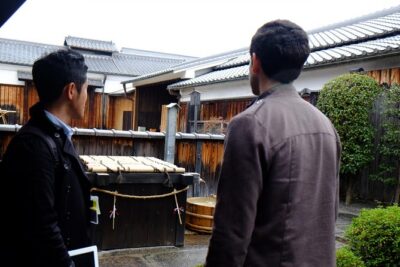
3-Hour Kyoto Insider Sake Brewery Tour with Tastings & Pairings
Read our review →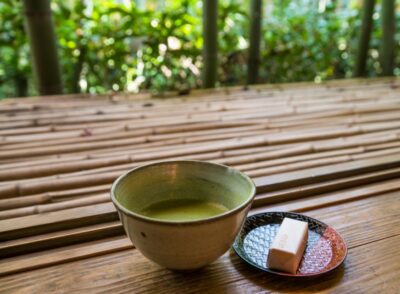
Arashiyama Bamboo, Temple, Monkeys, or Secret Sake Brewery
Read our review →
Insider Sake Brewery Tour with Sake and Food Pairing
Read our review →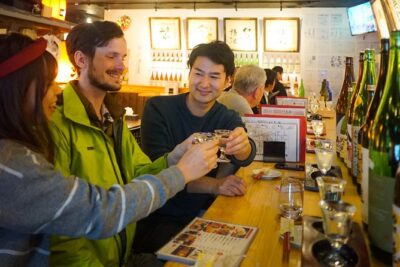
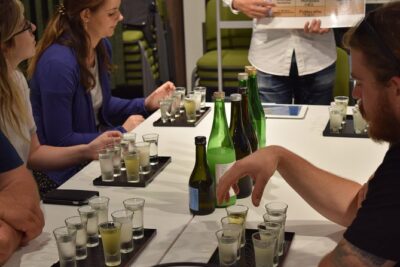
1.5-Hour Kyoto Insider Sake Experience with 7 Tastings & Pairings
Read our review →
Sake Tasting Masterclass in Shinjuku (8+ Varieties with a Pro)
Read our review →
Insider Sake Experience with 7 Tastings and Snacks
Read our review →
Private Tea Ceremony and Sake Tasting in Kyoto Samurai House
Read our review →Browse the lists this tour appears in