
Reviewed · WALKING TOURS
Osaka: Half-day Ultimate Highlights Guided Walking Tour
Osaka rewards curious walkers. This 5 to 7 hour tour links the city’s big sights with small lanes, old temples, food stops, and the merchant culture that shaped Osaka. I like the route’s sharp contrast between Osaka Castle and neon Dotonbori, and I especially like having guides such as Tim, Scott, and Andy explain the city with humor and practical advice.
The included Osaka-style lunch adds real value, especially if you want help ordering takoyaki and okonomiyaki. You also get two short train rides with a guide who can show you how to move around Osaka. The main drawback is the amount of walking, often around 15,000 steps, and Osaka Castle’s interior is not included on the group tour.
- Osaka Castle grounds first: Learn how the castle fits into Japan’s samurai-era unification without spending tour time in a long museum line.
- A full food-and-shopping route: Walk Shinsaibashi, Dotonbori, Hozenji Yokocho, Kuromon Market, and Doguyasuji.
- A guide-led introduction to Osaka: English-speaking expat guides bring more than 20 years of local experience and plenty of humor.
- Two short public-transit rides: The guide helps you handle Osaka’s train system instead of keeping you on a bus.
- A proper taste of Osaka: Lunch includes local street food and a drink at a local restaurant.
- A strong first-day choice: The tour suits first-time visitors who want history, food, nightlife districts, and practical orientation in one outing.
In This Review
- Osaka Castle Grounds Begin the Day
- Shinsaibashi Shows Osaka’s Shopping Habit
- Namba, Ebisu Bridge, and the Neon Heart of Osaka
- Lunch Makes the Food Stops More Useful
- Hozenji Yokocho Keeps Old Osaka Alive
- Kuromon Market Is Osaka’s Kitchen
- Nipponbashi and Shinsekai Finish the Route
- The Guides Are the Main Value
- Walking Distance, Group Size, and Price
- Who Will Get the Most From This Osaka Tour
- Should You Book the Osaka Highlights Walk?
- FAQ
- How long does the Osaka highlights tour last?
- Where does the group tour meet?
- Is the meeting point at JR Osaka Station?
- Is hotel pickup available?
- Is Osaka Castle admission included?
- Are train fares included?
- What food is included?
- Can the tour accommodate vegan or gluten-free diets?
- Does the tour operate in bad weather?
- Is WhatsApp required?
Osaka Castle Grounds Begin the Day
The usual group meeting point is in front of the 7-11 kiosk inside JR Osakajokoen Station, just outside the ticket gates. This is JR Osakajokoen Station on the Osaka Loop Line, not JR Osaka Station, so check your route carefully and arrive 15 minutes early.
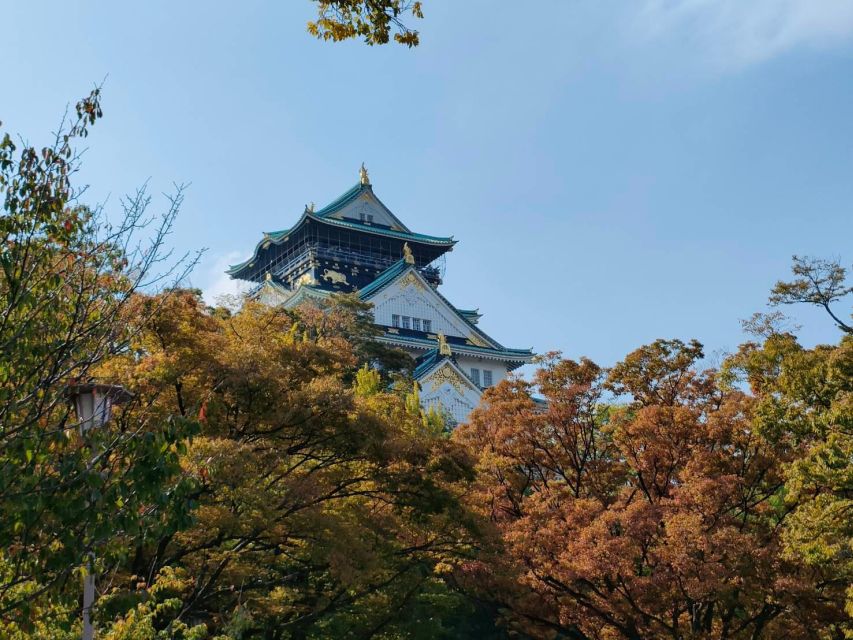
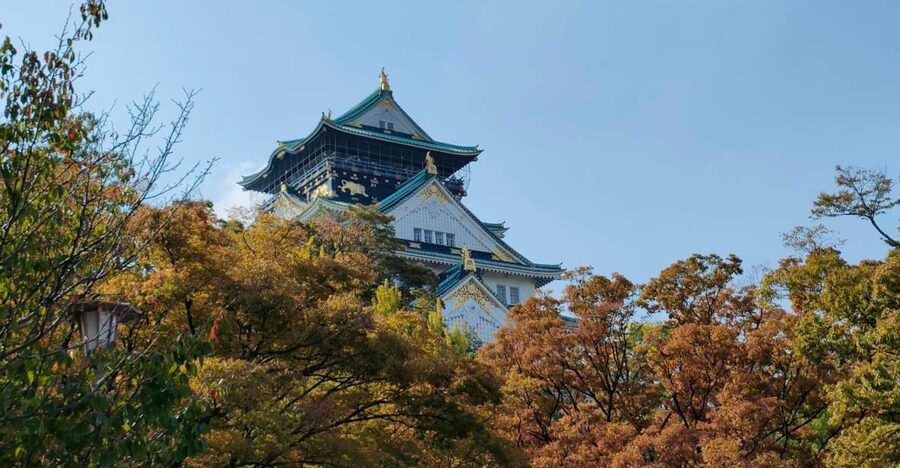
Osaka Castle gets about 75 minutes. That is enough time to walk through the grounds, see the castle exterior, and hear why the site mattered during the sixteenth-century struggle to unify Japan. The guide turns the setting into a story about samurai power, political ambition, and Osaka’s place in the Kansai region.
I think this is a smart way to handle the castle on a city highlights tour. The interior can take extra time, and group tours do not include entry into Osaka Castle. If seeing the museum and observation areas inside the castle is important to you, return on your own later.
The grounds also provide a calmer start before the dense streets of Namba. Wear shoes that can handle paving, station corridors, market floors, and a long day on foot. The tour runs rain or shine, so a wet-weather plan matters.
Shinsaibashi Shows Osaka’s Shopping Habit
After Osaka Castle, you take a train for about 15 minutes toward the central shopping districts. Train fares are not included, with the supplied fare information listing ¥240 and ¥190 for the two rides.
Shinsaibashi-suji is a covered shopping street stretching about 600 metres. Its importance reaches back roughly 400 years, and the tour uses it to explain Osaka’s long connection with trade and retail. Hundreds of shops line the arcade, giving you a clear look at how old commercial habits continue in modern Japan.
This stop is less about ticking off a single landmark and more about understanding how Osaka works. You see a city built around buying, selling, eating, and socializing. The covered arcade is also useful in poor weather, though the crowds and shopfronts can make the walk feel busy.
The guide’s role matters here. Andy has been praised for tailoring explanations to group interests, while Tim has a reputation for mixing historical facts with jokes. That style helps keep a shopping street from becoming a long list of storefronts.
More Walking Tours in Osaka
- Osaka: Hotspots & Hidden Gems Walking Tour Private or Group
★ 4.9 · 1,300 reviews - Osaka Local Foodie Walking Tour in Dotonbori and Shinsekai
★ 5.0 · 985 reviews - Osaka Bar Hopping Night Walking Tour in Namba (3 bars, 6 tastes)
★ 5.0 · 958 reviews
Namba, Ebisu Bridge, and the Neon Heart of Osaka
The tour spends about an hour around Namba before a 30-minute lunch break. Namba is one of the best places to see Osaka’s modern face, with shopping, food, signs, and narrow side streets packed into a small area.
At Ebisu Bridge, you reach one of Osaka’s best-known meeting points. The bridge dates back to the 1600s, when it was made of wood, and today it sits beside the famous Glico Man sign. You will have time to take the standard photo, but the guide also explains why this crossing has become such a social center.
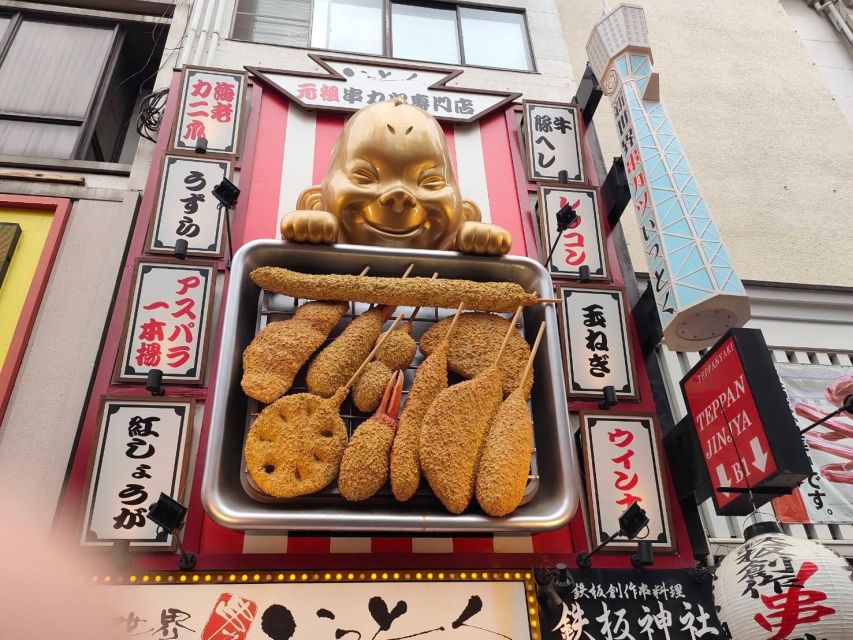
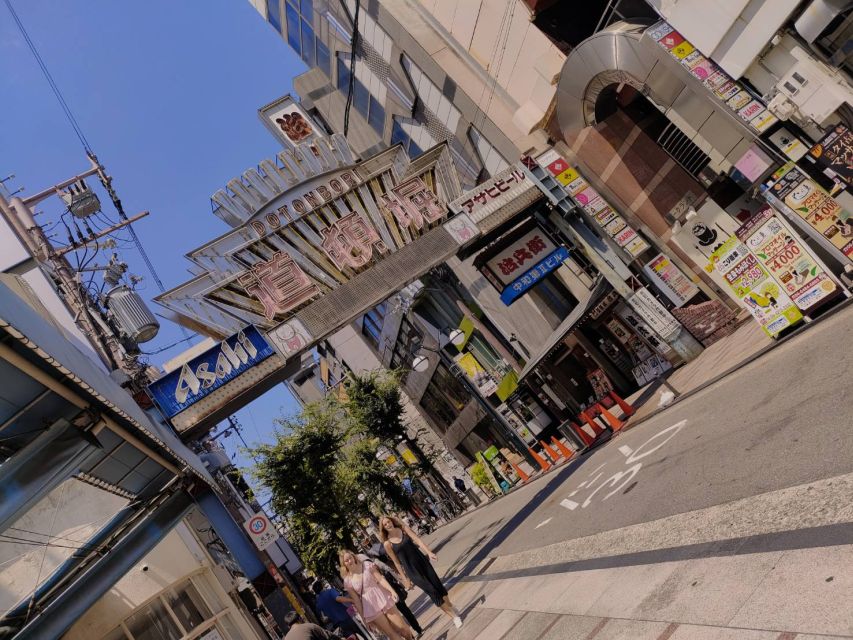
Dotonbori follows with about 30 minutes of guided walking. The canal, giant signs, restaurants, bars, and street-food stalls create the famous Osaka scene. It can feel loud and crowded, especially around the Glico Man area, but that is part of the point. Dotonbori is not a quiet historic quarter. It is Osaka turned up to full volume.
I like seeing Dotonbori after the more measured castle visit. You get the city’s old political story first, then its present-day appetite for entertainment and food. The guide can also point out where to return later if you want more time for eating or nightlife.
Lunch Makes the Food Stops More Useful
Lunch is included at a local restaurant, with Osaka-style street food and a drink. The food described in the tour includes takoyaki, the familiar octopus-filled balls, and okonomiyaki, a savory cabbage pancake commonly associated with Osaka.
This is not just a meal break. It gives you a chance to ask how to eat local dishes and decide what you want to try later at the markets. Several guides have helped guests order, recommended specific stalls, and adjusted orders for ordinary preferences.
There is an important limitation. Vegan and gluten-free diets are not supported, so you should not book this expecting a fully suitable meal for either requirement. If you have other food concerns, use WhatsApp before the tour and ask what can be accommodated.
The lunch break lasts about 30 minutes, so it is practical rather than leisurely. I see that as a fair trade on a route covering so much of Osaka. You eat, rest, and keep moving instead of losing an hour and a half to a sit-down meal.
Hozenji Yokocho Keeps Old Osaka Alive

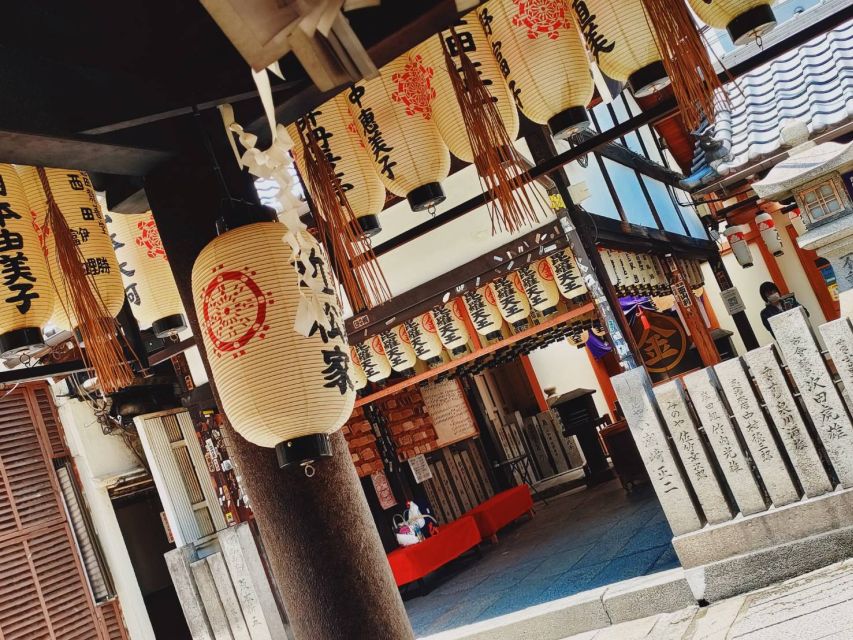
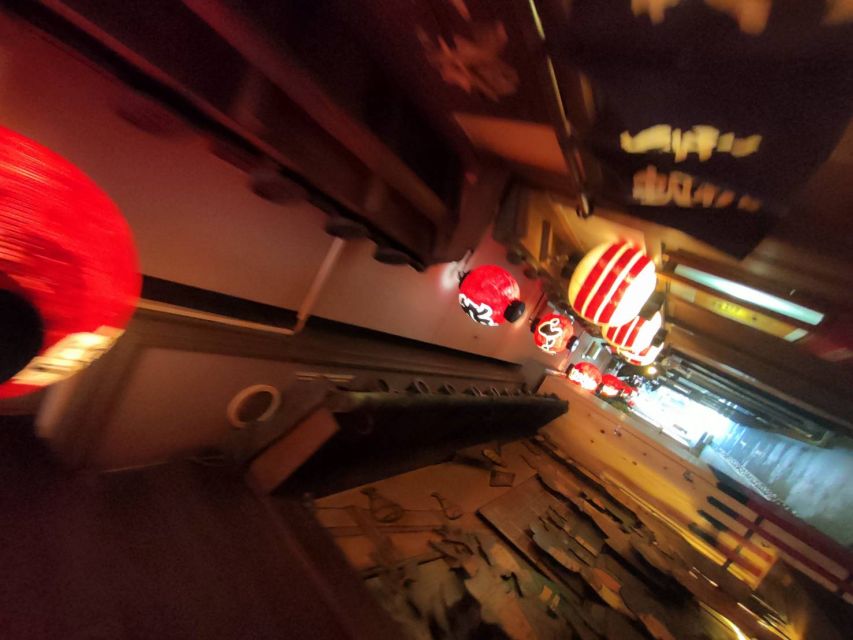
From Dotonbori, the route turns into Hozenji Yokocho. This narrow alley has lanterns, cobblestones, and a much quieter mood than the canal district nearby. It is a short walk, about 20 minutes, but it may be one of the most memorable parts of the day because the change happens so quickly.
At the end of the lanes, Hozenji Temple offers a small Buddhist sanctuary dating from the seventeenth century. The temple gives you a pause from the signs, music, and crowds of Dotonbori.
This stop explains the tour’s central idea: Osaka’s past has not disappeared. It survives in a side lane, a temple, an old market, or a shopping tradition, often only a few minutes from the city’s most modern districts.
More Walking Tours in Japan:
- Kyoto Geisha Walking Tour: Gion District & Hidden Gems
★ 4.7 · 3,273 reviews - Tokyo Tsukiji Fish Market Food and Culture Walking Tour
★ 5.0 · 3,184 reviews - Kyoto: Gion Magical Night Walking Tour with Geisha Trivia
★ 4.9 · 2,393 reviews - Tokyo: Imperial Palace and Shogun Historical Walking Tour
★ 5.0 · 2,251 reviews
Kuromon Market Is Osaka’s Kitchen

Kuromon Ichiba Market receives about 30 minutes of guided time. The covered market has served Osaka for more than 200 years and is known for seafood, meat, and produce. You may see large crab legs, tuna, sashimi, and other ingredients being prepared for customers.
I consider this one of the tour’s strongest stops for food lovers. A market can be confusing when you first arrive, especially when stalls offer unfamiliar cuts, seafood, and ready-to-eat portions. A guide can explain what you are seeing and direct you toward a worthwhile sample.
Thirty minutes will not let you explore every aisle. That is the tradeoff. You get a useful introduction, then you can return later if Kuromon becomes a priority. The market can also be expensive by local shopping-market standards in its most tourist-oriented sections, so check prices before ordering large seafood portions.
The route also includes Doguyasuji, a specialist street known for wholesalers and shops selling cutlery, crockery, kitchen tools, and restaurant supplies. It gives you another view of Osaka’s food culture, this time through the equipment and businesses that support the city’s kitchens.
Nipponbashi and Shinsekai Finish the Route
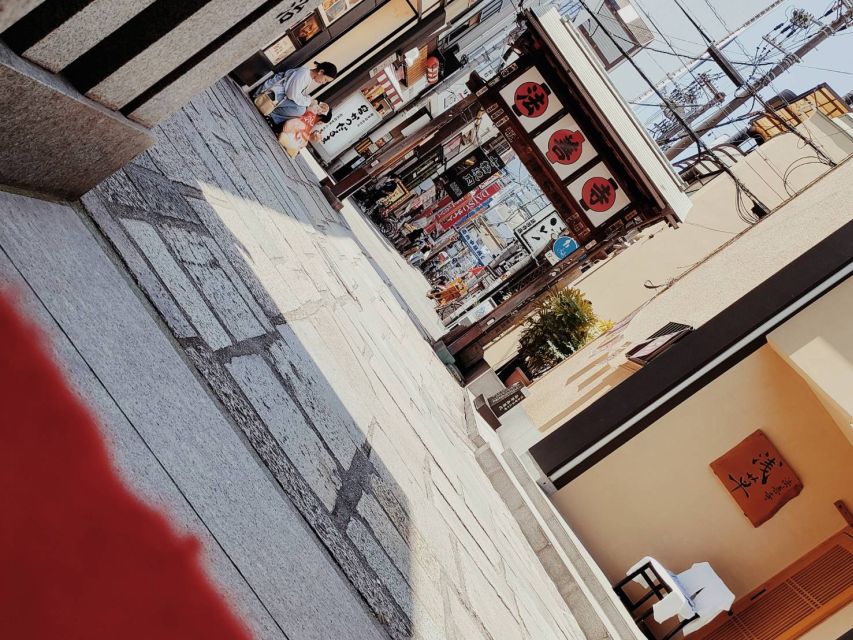
The tour moves again by subway for about five minutes before reaching Shinsekai. The itinerary also brings you through Osaka’s electronics, camera, computer, game, anime, and pop-culture district, often compared with Tokyo’s Akihabara.
This section is useful if you want more than the standard Dotonbori picture of Osaka. You see the city’s interest in gadgets, entertainment, specialist shopping, and restaurant culture all in one broad route. The exact amount of time spent in each side area can depend on the guide and the group’s pace.
Shinsekai gets about 20 minutes and provides a final change of mood. Developed before World War II, the district is associated with Tsutenkaku Tower and a retro atmosphere. Its neon signs and older visual style offer a glimpse of Osaka that feels different from the polished shopping arcades and canal lights.
The tour ends at Dobutsuen-Mae Station. That is practical because you finish near Shinsekai and can continue exploring the area, return to your accommodation, or use the subway network from there. Your guide can also help make sure you understand how to get home.
The Guides Are the Main Value
The route is good, but the guide determines how much you get from it. The company uses English-speaking bilingual expat guides, with more than 20 years of experience mentioned in the tour information. Names that appear in the guide team include Tim, Scott, Andy, Anna, and others.
Tim’s approach combines Japanese history with jokes and clear instructions. He has also been praised for keeping the group together in crowded streets and helping people understand which side of the sidewalk to use. Scott is known for local tips, photos, calm pacing, and stories about places that are easy to miss.
Andy has been particularly helpful for guests who want cultural context and assistance with trains. He is also able to shape parts of the day around group interests, which is valuable on a small private booking.
The guides are not simply escorting you from one landmark to another. They explain how Osaka differs from Tokyo and Kyoto, answer questions about Japanese culture, suggest food, and help you function after the tour ends. That practical instruction can be worth more than another monument on the schedule.
Walking Distance, Group Size, and Price
At $61 per person, the tour is reasonably priced for a 5 to 7 hour guided day that includes lunch. You also get a local guide, historical interpretation, two short train rides with assistance, and a structured route through several major districts.
You still pay the two train fares, and attraction tickets are not included. Osaka Castle entry is not part of the group tour, so budget for a separate visit if you want the interior.
The small-group and private options improve the value for people who want to ask questions or adjust the pace. A small group also makes it easier to hear the guide in crowded areas. Exact group size depends on the option you select, so confirm it before booking.
This is a walking tour, not a gentle sightseeing stroll. The route can reach roughly 15,000 steps, though the guide usually builds in breaks and sets a sensible pace. It is not suitable for people with mobility impairments or for pregnant women, and large bags or luggage are not allowed.
Who Will Get the Most From This Osaka Tour
I would choose this tour for a first visit, especially if you have only one full day in Osaka or are making a short trip from Kyoto. It gives you the castle, central shopping streets, major food districts, a temple lane, the old market, electronics shopping, and Shinsekai without forcing you to plan several separate outings.
Food lovers will appreciate the lunch and market guidance. History fans will like the castle explanation and the way the guide connects Osaka’s merchant past with present-day shopping and dining. Solo visitors and couples may also enjoy the social side of a small group.
You should skip it if you want long, unhurried time inside Osaka Castle, extended shopping, or a slow meal. The schedule covers a lot, so each stop is an introduction rather than a full visit.
Book at least one day before you need the tour if you want the option of free cancellation up to 24 hours ahead. You also need WhatsApp, since the operator requires it for tour updates and information.
Should You Book the Osaka Highlights Walk?
Book it if you want a guided orientation to Osaka that mixes history, food, local streets, and transport practice. The route is broad, the lunch is useful, and the strongest guides add humor and personal insight that a self-guided walk may not provide.
Think twice if your walking ability is limited or if Osaka Castle’s interior is your main goal. For most first-time visitors who want to understand how the castle, markets, neon districts, temples, and merchant traditions fit together, $61 is a fair price for a very full day.
FAQ
How long does the Osaka highlights tour last?
The tour lasts approximately 5 to 7 hours. The exact duration and starting time depend on the selected option and availability.
Where does the group tour meet?
Group tours meet at JR Osakajokoen Station on the JR Osaka Loop Line. Meet in front of the 7-11 kiosk inside the station building, just outside the ticket gates.
Is the meeting point at JR Osaka Station?
No. JR Osakajokoen Station is different from JR Osaka Station, so check the station name carefully before setting out.
Is hotel pickup available?
Hotel pickup is available for private tours only. Group tours use the agreed meeting point at JR Osakajokoen Station.
Is Osaka Castle admission included?
No. The tour includes a guided walk through the castle grounds, but entry into Osaka Castle is not included on group tours.
Are train fares included?
No. The two short train rides require separate payment. The listed fares are ¥240 and ¥190.
What food is included?
The tour includes Osaka-style street food with a drink at a local restaurant. Examples include takoyaki and okonomiyaki.
Can the tour accommodate vegan or gluten-free diets?
Vegan and gluten-free diets are not accommodated according to the tour information.
Does the tour operate in bad weather?
Yes. The tour runs rain or shine, so bring suitable clothing and wear comfortable shoes.
Is WhatsApp required?
Yes. WhatsApp is mandatory for receiving tour information and updates. You should install it before the tour and use it to contact the operator in an emergency.
Just added in Japan
- Yokosuka: Boat Trip to an Uninhabited Island★ 5.0 · 16 reviews
- Yokosuka : Scenic Hidden Gem Hike and Naval Port Cruise★ 5.0 · 13 reviews
- Very popular in Harajuku♡Animal petting zoo★ 4.6 · 39 reviews
- Yokohama Port: Private Customizable Tour with Transfer★ 5.0 · 19 reviews
- Yokohama Private Tour with a Local: Highlights & Hidden Gems★ 4.4 · 13 reviews
- Yokohama Half Day Tour with a Local Expert Guide★ 4.0 · 20 reviews
- Yokohama Full Day Tour with a Local Expert Guide★ 4.3 · 23 reviews
- Kamakura: Private Guided Walking Tour with Local Guide★ 4.8 · 60 reviews
Walking Tours, compared.
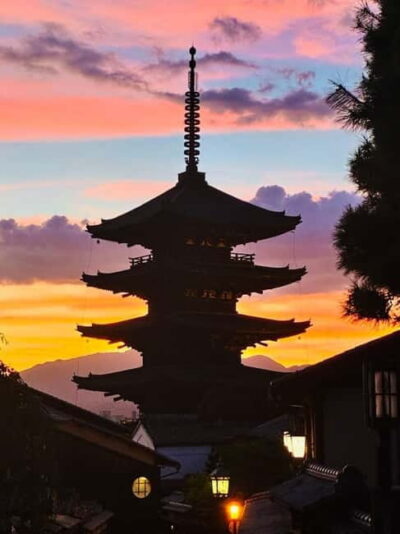
Kyoto Geisha Walking Tour: Gion District & Hidden Gems
Read our review →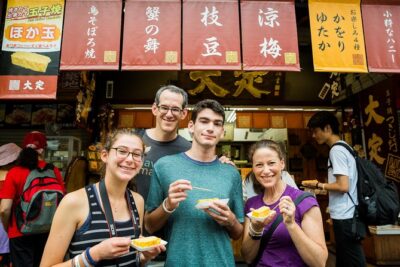
Tokyo Tsukiji Fish Market Food and Culture Walking Tour
Read our review →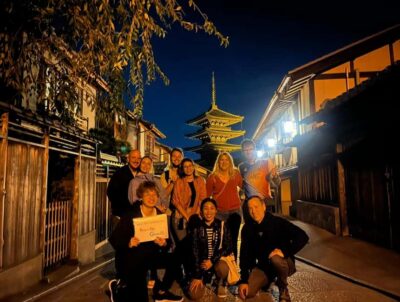
Gion Magical Night Walking Tour with Geisha Trivia
Read our review →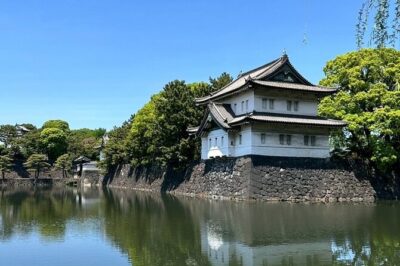
Imperial Palace and Shogun Historical Walking Tour
Read our review →
Gion Geisha District Walking Tour – Stories of Geisha
Read our review →
Shinjuku Local Bar and Izakaya Guided Walking Tour
Read our review →
Browse the lists this tour appears in