
Reviewed · TEA CEREMONIES
Osaka: Japanese Traditional Sweets Making and Tea Ceremony
A little sweetness makes Japan’s tea culture easier to understand. This 95-minute Osaka class combines seasonal nerikiri making with a hands-on matcha session, giving you something to do, taste, and take away from the lesson. I like the use of bean paste from long-established Kyoto shops, and I like that you make two sweets rather than simply watching a demonstration. The $18 price is also unusually friendly for a guided cultural activity.
The main consideration is language. The instructor is Japanese, and English help is provided as much as possible, but you should request English translation in advance. The class is held upstairs in a building without an elevator, and the tea portion may be more casual than a formal ceremony, with one participant noting that they learned about the customs but did not perform every step themselves.
In This Review
- Key details before you book
- Making nerikiri from Kyoto bean paste
- The kinton nerikiri adds a second challenge
- Matcha grinding brings the tea lesson to life
- Why the sweet and bitter pairing works
- Instruction, English support, and class atmosphere
- Getting to the Higobashi meeting point
- Is $18 a good price for 95 minutes?
- Who will enjoy this Osaka activity?
- Practical tips for a smoother visit
- Should you book the Japanese sweets and tea class?
- FAQ
- Where does the Japanese sweets and tea experience take place?
- How long does the experience last?
- How many Japanese sweets will I make?
- What kind of matcha is used?
- Is the activity available in English?
- Are the sweets included in the price?
- Is a tea ceremony certificate included?
- Is the venue accessible by elevator?
- What happens if I arrive late?
Key details before you book
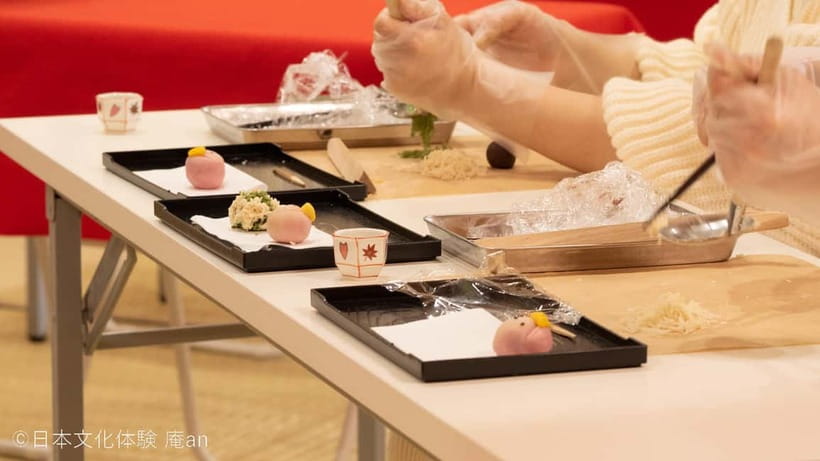
- Two seasonal sweets: You shape a flower-style nerikiri and a kinton nerikiri, with designs matched to the time of year.
- Kyoto bean paste: The white and red bean paste comes from long-established Kyoto producers, giving the class a more thoughtful food focus than a basic craft workshop.
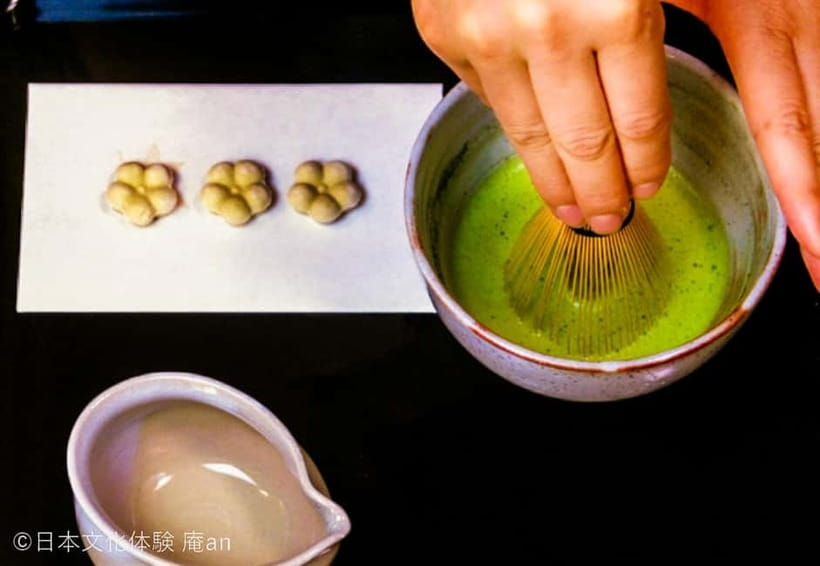
- Uji matcha experience: You see matcha ground into powder, prepare your own tea, and drink it with the sweets you made.
- Central Osaka location: Higobashi Station is only a one-minute walk away, while Osaka Station is about 15 minutes on foot.
- Friendly instruction: Guides including Maiko, Jun, and Mihiko have been praised for patience, humor, and clear English support.
- Budget-friendly pricing: At $18 per person, this is a low-cost way to add a calm Japanese cultural activity to an Osaka day.
Making nerikiri from Kyoto bean paste
The class begins with an explanation of Japanese traditional sweets, known as wagashi. You then start with the base ingredient, white bean paste, and learn how color changes its appearance before shaping it into something seasonal.
Nerikiri is not an everyday snack in the same way as a packaged biscuit. It is a refined sweet often formed into flowers, fruit, leaves, or other images connected to the season. The point is not only flavor. Shape, color, and presentation all matter, which makes the activity part cooking lesson and part small-scale art project.
Your first sweet is a flower-shaped nerikiri. You color the bean paste, work it into the right form, and use the supplied tools to create the details. The process calls for patience rather than kitchen speed. If your flower looks a little lopsided, that is part of the charm. You made it yourself, and the fine shaping gives you a better sense of the care behind Japanese confectionery.
The ingredients matter here. The workshop uses white and red bean paste made by long-established shops in Kyoto. That does not turn the class into a full wagashi apprenticeship, but it does mean you are working with a product chosen for quality rather than with a generic sweet filling.
More Tea Ceremonies in Osaka
- Osaka: Tea Ceremony Experience
★ 4.9 · 1,426 reviews - Tea Ceremony Experience in Osaka Doutonbori
★ 5.0 · 754 reviews - Matcha Making Class in Osaka with Authentic Japanese Sweets Set
★ 5.0 · 509 reviews
The kinton nerikiri adds a second challenge
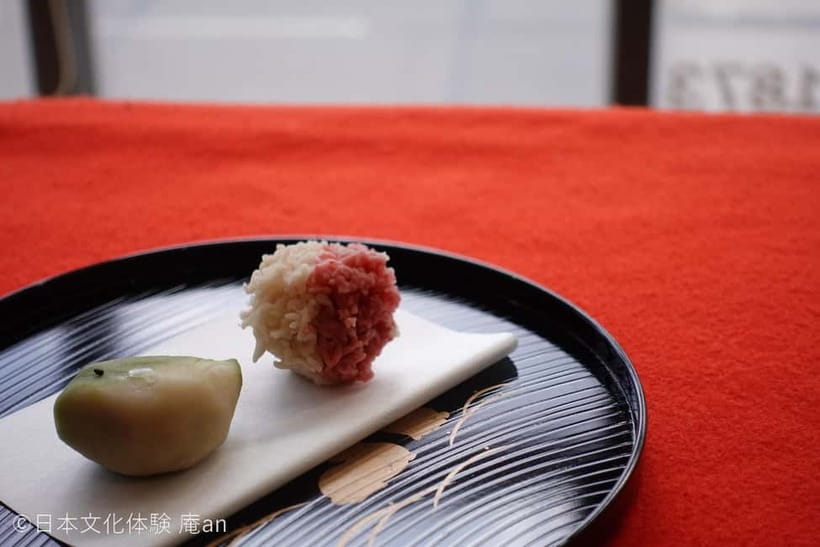
After the flower-shaped sweet, you make a kinton nerikiri. Kinton is recognizable by its fine, strand-like appearance, which gives the second sweet a different look and texture from the first.
Making two types is a good choice. One sweet introduces you to coloring and basic shaping, while the next asks you to handle the paste in another way. You get a clearer sense of how much precision goes into a small wagashi sweet, even though the class remains accessible to beginners.
The designs change with the season. That is important in Japanese food culture, where ingredients and decoration often reflect the time of year. The exact shapes are not specified ahead of time, so you should expect a seasonal design rather than a fixed menu. The class is therefore likely to look different in spring, summer, autumn, or winter.
The first 55 minutes are devoted to the sweets, followed by a short break. That timing gives you enough room to work without turning the activity into a rushed assembly line. Families can take part too. Children under two who sit on a parent’s lap are free, and two children aged 10 and 12 were able to enjoy the activity with their parent.
Matcha grinding brings the tea lesson to life
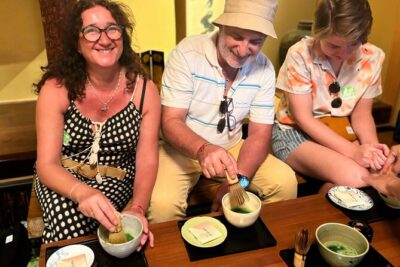
After the sweets, the focus shifts to tea. The class uses single-origin Uji matcha, and you see a demonstration of how matcha is ground into powder. This is one of the more interesting parts for anyone who has only encountered matcha as a sweet flavor in cafés or desserts.
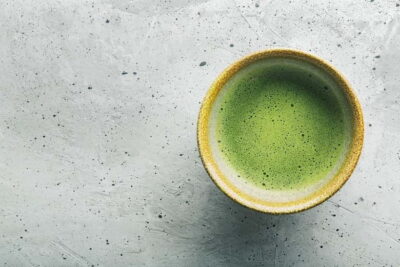
Matcha is made by grinding tea leaves into a fine powder, then whisking that powder with water rather than steeping and removing the leaves. Seeing the grinding process helps explain why the drink has such a distinct color, texture, and taste.
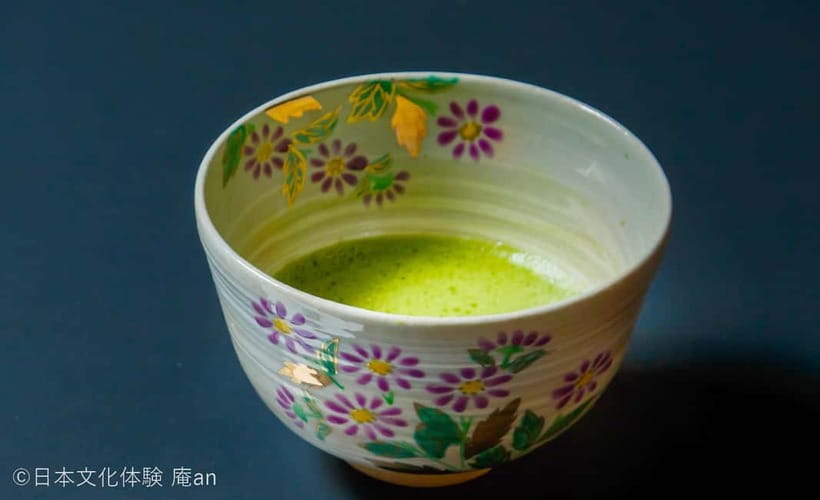
The lesson then covers tea preparation and basic tea ceremony customs. You prepare your own matcha and learn how to drink it properly and express appreciation in a Japanese setting. The precise level of participation can vary, so do not book this expecting a long, formal ceremony with every traditional movement demonstrated in full.
One private-class participant described the tea section as a calm, casual ceremony. The instructor explained the traditions and answered questions, but the participant did not practice every part of the ceremony. I see that as useful information rather than a fault. This is best understood as an introduction to tea culture paired with food making, not a formal study of chanoyu.
Why the sweet and bitter pairing works
You finish by eating the two sweets you prepared with your matcha. The bean paste is sweet, while Uji matcha has a more earthy and bitter character. That contrast is central to the experience. The sweet gives the tea balance, and the tea keeps the confection from feeling overly sugary.
This final tasting also gives the earlier work a purpose. You are not simply making decorative objects for a photograph. You get to see how wagashi is meant to be enjoyed alongside tea, with the flavors working together.
There is a picture-taking period before the experience ends, followed by eating and drinking time. The full schedule runs from the start of the class at 0 minutes to departure at 95 minutes:
- 0 to 55 minutes: Introduction to wagashi, then flower-shaped nerikiri and kinton nerikiri
- 55 to 65 minutes: Break
- 65 to 85 minutes: Tea explanation, matcha grinding demonstration, and tea ceremony experience
- 85 to 95 minutes: Photos, then eating and drinking
The schedule is compact but sensible. You spend most of the class making something, then use the last part to connect it with tea.
More Tea Ceremonies in Japan:
- Kyoto: Tea Ceremony in a Traditional Tea House in Kiyomizu
★ 4.9 · 3,519 reviews - Kyoto: Tea Ceremony Ju-An at Jotokuji Temple
★ 4.9 · 3,207 reviews - Kyoto: 45-Minute Tea Ceremony Lesson Experience
★ 4.3 · 2,378 reviews - World Heritage Kyoto & Nara Uji Authentic Matcha Experience
★ 5.0 · 1,573 reviews
Instruction, English support, and class atmosphere
The strongest part of this activity is the teaching. Several instructors have been praised for being patient, cheerful, and willing to explain each step carefully. Maiko has been described as enthusiastic and able to explain the process in both Japanese and English. Jun was praised for patient explanations, while Mihiko received positive feedback for moving between the two languages even while still developing her English teaching experience.
Those names may not tell you who will lead your particular session, so treat them as examples of the teaching style rather than a guaranteed roster. The important point is that the class has handled language differences with flexibility.
English translation is not automatically guaranteed in every detail. The listed language is Japanese, and the operator says English will be provided as much as possible. If you need English instruction, contact the organizer before booking or soon after making your reservation. One person who booked the night before still received clear English help, but advance notice is the safer plan.
One participant had trouble finding the building and described it as a gray building that Google Maps did not identify clearly. The meeting point is near Higobashi Station, but I would still allow extra time, especially for a morning session. The class will not wait for late arrivals, and a missed activity does not come with reimbursement for transport costs.
Getting to the Higobashi meeting point
The location is convenient for a day in central Osaka. The nearest option is Exit 10 of Osaka Metro’s Yotsubashi Line at Higobashi Station, about a one-minute walk away.
Other routes are also practical:
- Watanabebashi Station on the Keihan Nakanoshima Line: about five minutes from Exit 7
- Yodoyabashi Station on the Osaka Metro and Keihan lines: about seven minutes from Exit 10
- Kitashinchi Station on the JR Tozai Line: about 10 minutes from Exit 11-5
- Osaka Station: about 15 minutes from the South Central Gate
If you drive, use nearby coin-operated parking. Parking is not included, so public transportation is the easier choice.
The building has no elevator. You need to use stairs to reach the activity space, which may be important for anyone with mobility concerns or for families carrying a stroller.
Is $18 a good price for 95 minutes?
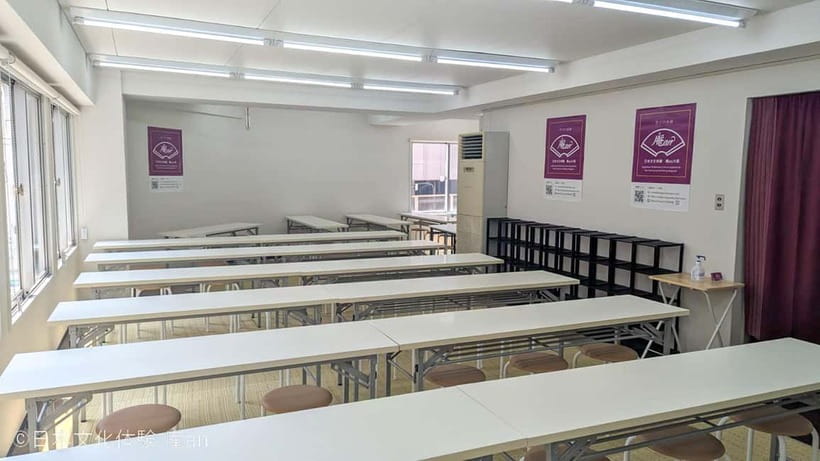
Yes, for most people. At $18, you receive instruction, the required tools, two sweets, matcha preparation, and a guided introduction to tea customs. You are also using higher-quality ingredients from Kyoto and Uji rather than simply observing a low-cost demonstration.
The value comes from the combination. A short tea lesson alone might leave you with little to do, while a sweets workshop without cultural context could feel like a craft session. Here, you make the food, see the matcha being ground, prepare the tea, and taste both together.
There are two small extra costs. A take-out box for the sweets costs 100 yen, and an experience completion certificate costs 300 yen. Neither is required. If you want to carry the sweets safely, the box is a sensible add-on, but the certificate is mainly for those who like a souvenir of participation.
The operator also offers reserve-now, pay-later booking and free cancellation up to 24 hours before the start time. Those policies help if your Osaka schedule is still changing, but they do not remove the need to arrive on time.
Who will enjoy this Osaka activity?
I would recommend it most strongly to first-time visitors who want a manageable introduction to Japanese food culture. You do not need previous tea experience or special cooking skills, and the activity gives you something more memorable than simply buying matcha sweets in a shop.
It also suits:
- Couples looking for a quiet activity between sightseeing stops
- Families with older children who enjoy making and tasting food
- Visitors interested in Japanese customs but not ready for a long formal ceremony
- Anyone staying near Osaka, Higobashi, Nakanoshima, or Kitashinchi
- Budget-conscious visitors seeking a low-cost cultural experience
- People who want a seasonal activity that changes with the time of year
You may want to choose something else if you need a fully English-led class, cannot manage stairs, or want a strictly formal tea ceremony. You should also remember that the schedule is fixed, and late arrivals cannot be accommodated.
Practical tips for a smoother visit
Contact the organizer about English support before the day of the class. Even if your guide speaks good English, the request helps the staff plan the session and reduces confusion during the shaping steps.
Arrive early and use the station directions carefully. Higobashi is close, but one participant lost time searching for the building. Save the Google Maps location and keep the address or coordinates available on your phone.
Do not worry about artistic perfection. Nerikiri is delicate by design, and the process rewards careful hands more than speed. Listen closely during the coloring and shaping demonstrations, then take your time.
Bring a little extra money if you want the take-out box or certificate. The box costs 100 yen, and the certificate costs 300 yen. The main activity already includes the tools you need.
If you are traveling with children, the class can work well for them, especially if they are old enough to follow shaping instructions. Very young children who sit on a parent’s lap are free only under the stated age condition, children under two.
Should you book the Japanese sweets and tea class?
Book it if you want a short, affordable, hands-on culture class with a friendly teaching style. The combination of two seasonal nerikiri, Kyoto bean paste, Uji matcha, and a central Osaka location gives you a lot for $18.
I would be especially comfortable recommending it to couples, families with school-age children, and visitors who want a gentle break from Osaka’s busy streets. Just request English help ahead of time, allow extra time to find the building, and understand that the tea portion is an introduction rather than a full formal ceremony.
FAQ
Where does the Japanese sweets and tea experience take place?
It takes place in central Osaka, near Higobashi Station on the Osaka Metro Yotsubashi Line. The venue is a one-minute walk from Exit 10.
How long does the experience last?
The full activity lasts 95 minutes. The sweets portion takes about 55 minutes, followed by a 10-minute break and a tea section that begins at about the 65-minute mark.
How many Japanese sweets will I make?
You will make two sweets. The class includes a flower-shaped nerikiri and a kinton nerikiri, with designs matched to the season.
What kind of matcha is used?
The class uses single-origin Uji matcha. You will also see a demonstration of matcha being ground into powder.
Is the activity available in English?
The instructor is Japanese, and English translation is provided as much as possible. If you would like English support, contact the organizer in advance.
Are the sweets included in the price?
Yes. The experience includes the sweets you make, along with the guided activity and required tools. A take-out box costs an additional 100 yen.
Is a tea ceremony certificate included?
No. An experience completion certificate is available for an additional 300 yen.
Is the venue accessible by elevator?
No. The building does not have an elevator, and you need to use stairs to reach the activity space.
What happens if I arrive late?
The activity will not be held for delayed arrivals. Transport expenses will not be reimbursed if you miss the experience because of a cancellation or delay.
More Dessert Tours in Japan
- Matcha Making Class in Tokyo with Authentic Japanese Sweets Set
★ 5.0 · 744 reviews - Tokyo: Matcha Making Experience with Mochi Sweets in Asakusa
★ 4.9 · 388 reviews - Kyoto: Japanese Traditional Sweets Making and Tea Ceremony
★ 4.4 · 314 reviews - Osaka: Matcha Making Experience with Japanese Sweets
★ 5.0 · 146 reviews
Just added in Japan
- A One-of-a-Kind Sushi Experience in a Special Place of Japan★ 5.0 · 15 reviews
- Tokyo Cute Bento Cooking Class – Make a Kawaii Character Lunchbox★ 5.0 · 126 reviews
- Japanese Home Cooking Class & Walk in Todoroki Temple Tokyo★ 5.0 · 88 reviews
- Japan Tokyo Tower Observatory Deck E-Ticket★ 4.0 · 34 reviews
- Catch a Baseball Game in Tokyo with a Local – Tickets Included★ 5.0 · 24 reviews
- Tokyo Private Day Tour by Car with English speaking Driver Guide★ 4.0 · 29 reviews
- Japan Classic 10 Day – One Life Adventures★ 5.0 · 129 reviews
- JDM Experience with Fast&Furious RX-7 (English speaking Driver)★ 5.0 · 57 reviews
Tea Ceremonies, compared.
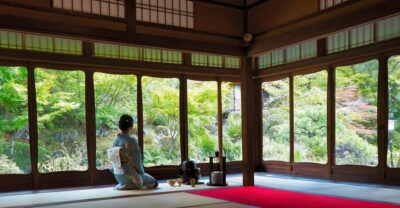
Tea Ceremony in a Traditional Tea House in Kiyomizu
Read our review →
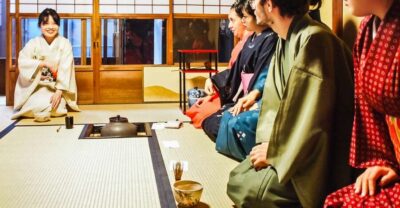
World Heritage Kyoto & Nara Uji Authentic Matcha Experience
Read our review →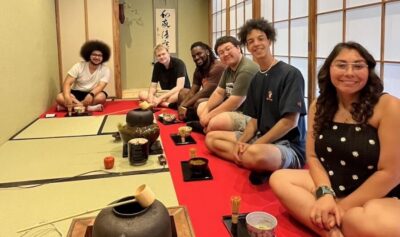
Browse the lists this tour appears in