
Reviewed · TEA CEREMONIES
Kyoto: Japanese Traditional Sweets Making and Tea Ceremony
Small classes can reveal a quieter side of Kyoto. This 95-minute activity combines hands-on nerikiri sweets making with a simple introduction to Japanese tea etiquette, giving you something to do with your hands rather than only something to photograph. I especially like the use of bean paste from long-established Kyoto shops and the chance to make two sweets shaped for the season. The main point to consider is that this is an introductory tea lesson, not a long, formal tea ceremony.
I also like the low $18 price and the easy location, just one minute from Gojo Station. English support is often added when needed, but the instructor is officially Japanese-speaking, and a few participants found the English explanations less detailed than the Japanese ones. If you are on time, patient, and happy to learn by watching as well as listening, this is a friendly and useful Kyoto activity.
In This Review
- Key points to know before booking
- What happens during the 95-minute class
- Why nerikiri is more than a pretty dessert
- The matcha lesson and what tea ceremony means here
- Instruction, language, and group atmosphere
- How much value do you get for $18?
- Location near Gojo Station
- Is it suitable for children?
- What could be improved
- Who should book this Kyoto activity?
- Practical details before you go
- FAQ
- How long does the sweets and tea experience last?
- How much does the activity cost?
- Where is the meeting point?
- How many sweets will I make?
- What kind of sweets will I make?
- Is the tea ceremony conducted in English?
- Is a take-out box included?
- Can I cancel for a full refund?
- Should you book it?
Key points to know before booking
- Two seasonal nerikiri sweets: Color and shape white bean paste into Japanese sweets inspired by seasonal flowers or fruit.
- Kyoto-made ingredients: The white and red bean paste comes from long-established Kyoto shops, rather than being a generic packaged filling.
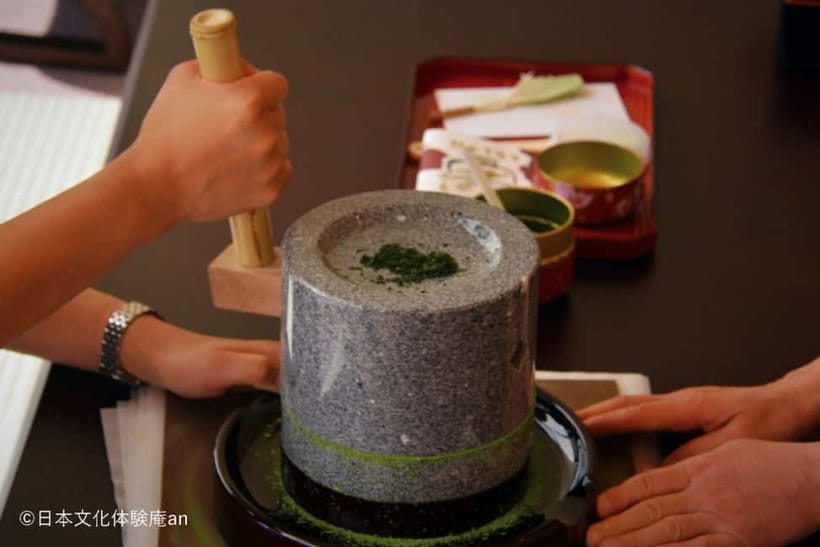
- Uji matcha preparation: You make your own matcha and enjoy it with the sweets you prepared.
- Good value at $18: The price covers both the sweets class and tea experience, with no expensive meal or shopping stop attached.
- English help is available: The class is conducted in Japanese, but instructors have often explained steps in English or demonstrated them clearly.
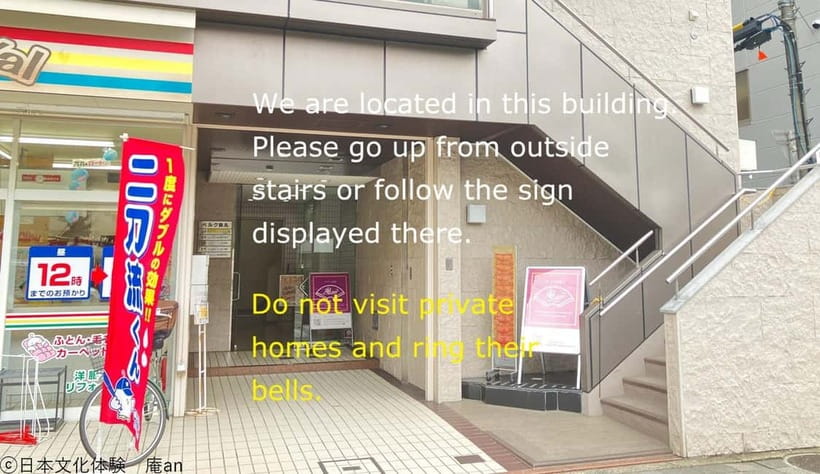
- Central Gojo location: The venue is one minute from Exit 1 of Gojo Station, though you need to use stairs because the building has no elevator.
What happens during the 95-minute class
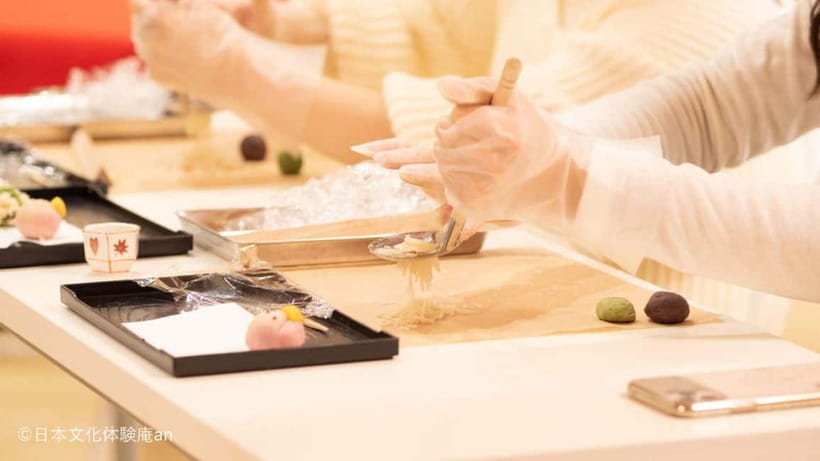
The experience begins with the sweets. You work with prepared white bean paste, and sometimes red bean paste, rather than making the paste from raw beans. That is worth knowing because this is a shaping and coloring class, not a full lesson in traditional confectionery production.
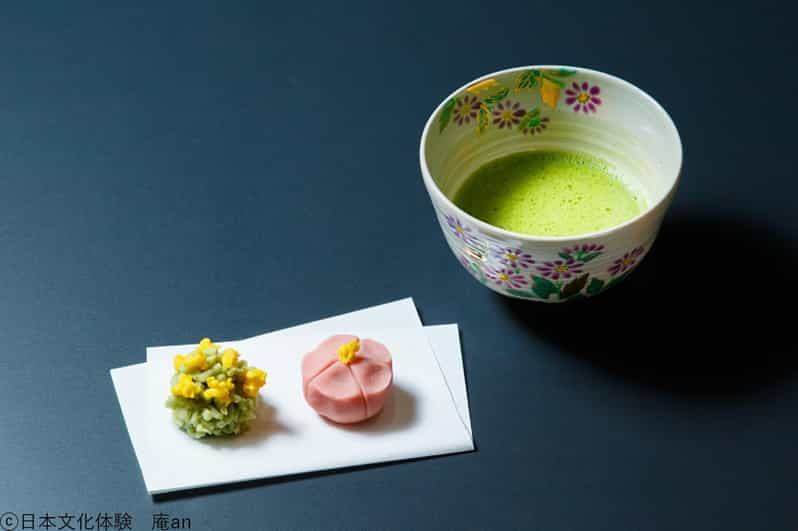
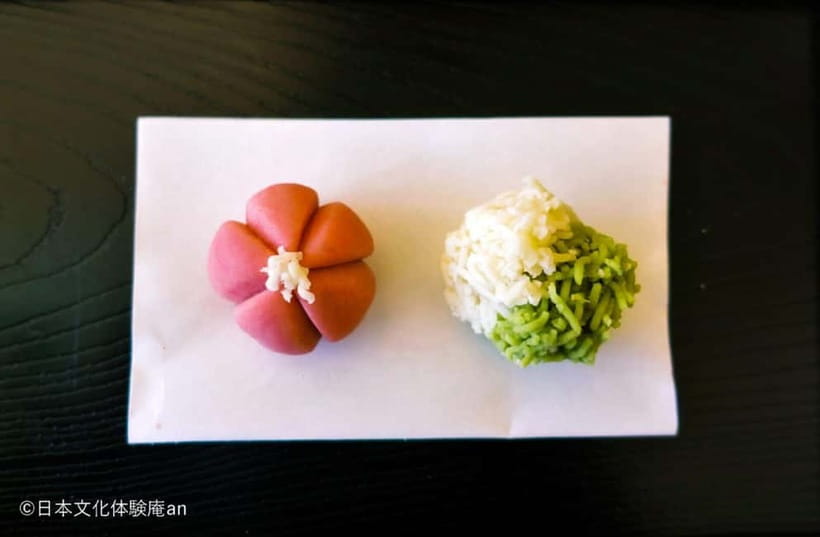
You begin by coloring the white bean paste. The seasonal theme changes, so your finished sweets may suggest flowers, fruit, or another design linked to the time of year. Autumn-themed sweets, for example, were used in one session. The seasonal change gives the activity a nice Kyoto touch without making it too difficult for first-time cooks.
The work is hands-on but not physically demanding. You divide, color, and shape the paste by following the instructor’s demonstration. The pieces can be fiddly, and making a neat flower or fruit takes more care than you might expect. That small struggle is part of the fun. Your sweets do not need to look perfect to taste good.
The class produces two sweets. That is enough to give you a sense of the method without turning the session into a long production line. I like this balance, especially for families and for anyone fitting the activity between sightseeing stops.
More Tea Ceremonies in Kyoto
- Kyoto: Tea Ceremony in a Traditional Tea House in Kiyomizu
★ 4.9 · 3,519 reviews - Kyoto: Tea Ceremony Ju-An at Jotokuji Temple
★ 4.9 · 3,207 reviews - Kyoto: 45-Minute Tea Ceremony Lesson Experience
★ 4.3 · 2,378 reviews
Why nerikiri is more than a pretty dessert
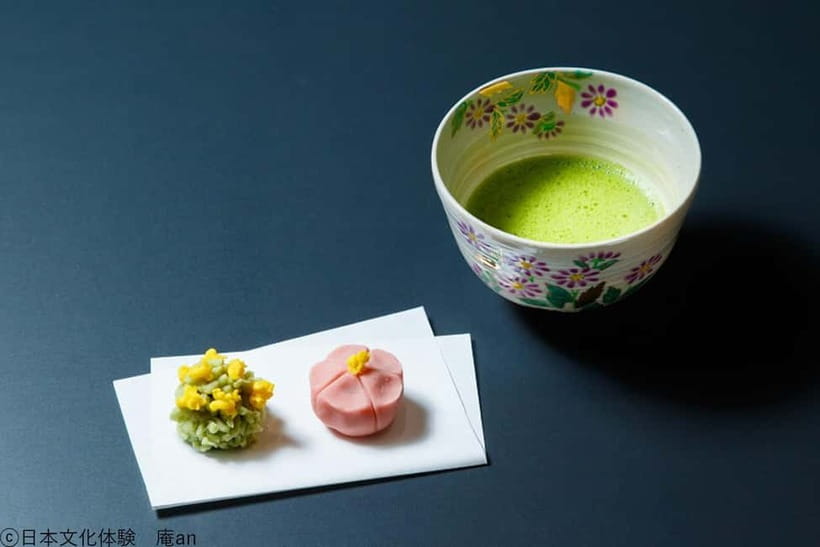
Nerikiri is considered a high-grade Japanese sweet, often served alongside matcha. Its soft white bean paste can be shaped into delicate seasonal forms, so appearance matters almost as much as flavor. The sweet is designed to complement bitter tea, not compete with it.
The ingredient choice adds value. Using white and red bean paste supplied by established Kyoto shops connects the activity to the city’s confectionery culture. You are not simply molding an anonymous sugar mixture into a flower. You are working with the same basic type of ingredient used in a long-standing Japanese sweets tradition.
The taste may not suit everyone. If you dislike red bean paste or lightly sweet bean-based desserts, you may find the flavor unfamiliar. The sweets are not chocolate cake or a Western pastry. Their appeal comes from a smooth texture, gentle sweetness, and careful presentation.
I would recommend thinking of nerikiri as both food and seasonal design. The class makes more sense when you pay attention to how shape, color, and season work together. It is a small lesson in Japanese taste, where a sweet can reflect the time of year.
The matcha lesson and what tea ceremony means here
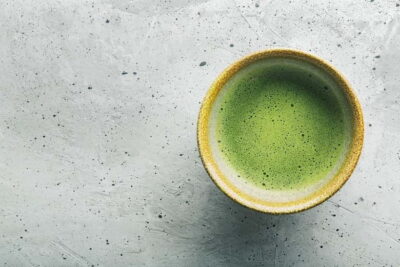
After the sweets are ready, you prepare Uji matcha. The class uses single-origin matcha, and the tea is served with the sweets you have just made. This pairing is the heart of the experience: the sweetness of the bean paste softens the matcha’s bitterness, while the tea keeps the dessert from feeling heavy.
The tea portion covers basic preparation and etiquette. You learn how to prepare the matcha and how to handle the cup, including the customary way to turn it before drinking. The instructor also explains some of the manners connected with drinking tea.
It is important to set your expectations correctly. The experience is described as a tea ceremony, but several parts of the class function more like a practical lesson on preparing and drinking matcha. The tea segment can be fairly quick. One participant found the tea had gone cold after a long etiquette explanation, while others enjoyed the information and the relaxed pace.
If you are hoping for an extended, highly formal ceremony with a quiet ritual setting, choose a specialist tea ceremony instead. If you want to learn the basic steps and drink matcha with sweets you made yourself, this class is a better match.
The tea lesson also gives you something you can repeat at home. The process is simple enough to remember, and the experience provides a practical way to understand why matcha is traditionally served with wagashi, or Japanese sweets.
Instruction, language, and group atmosphere
The official activity language is Japanese. English translation is provided as much as possible, and the quality depends on the instructor and the group. Several instructors have used Japanese and English together, while others have relied more heavily on demonstration.
That mixed language setup is not necessarily a problem. The shaping steps are visual, and the instructor demonstrates each part before you try it. Still, if you want detailed explanations about matcha cultivation, tea production, or confectionery technique, English may be limited during parts of the session.
Some participants received very clear English guidance. One instructor adjusted quickly when she noticed that visitors did not speak Japanese. Another teacher kept the group moving at a pace that allowed everyone to follow. A few participants found the English guidance weaker or less detailed than the Japanese explanation.
I would contact the provider in advance if English instruction is especially important to you. The supplied information says English can be added on request, which is a useful step for visitors who need more than visual demonstration.
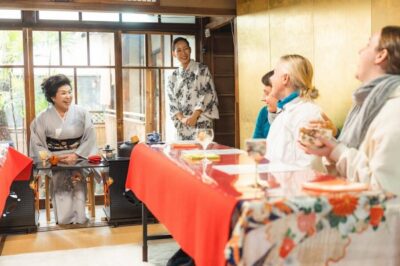
The atmosphere can also vary with the day’s bookings. One session included a group of roughly a dozen Japanese junior high students alongside an overseas couple. That gave the class a more local feel and made it less like a private tourist performance. On the other hand, a larger group can make it harder to hear.
There have also been occasions when another class was taking place in the same room. Noise during the tea portion made it difficult for some people to hear the instructor. The venue appears to handle different groups in the same general setting, so do not assume you will receive a silent, private tea room.
A completely different kind of day out:
- PERFECT KYOTO 1-Day Bus Tour
★ 5.0 · 13,518 reviews - [Kyoto & Nara Day Tour] Sagano Scenic Railway & Nara Park & Fushimi Inari Taisha Thousand Torii Gates & Togetsukyo Bridge & Bamboo Grove & Kimono Forest (Departing from Osaka)
★ 4.9 · 10,942 reviews - Kyoto: Fushimi Inari, Kinkakuji, Bamboo Grove 1 Day Bus Tour
★ 4.8 · 4,316 reviews - Kyoto: Gion Make Your Own Chopsticks with Engraving Option
★ 5.0 · 3,465 reviews
How much value do you get for $18?
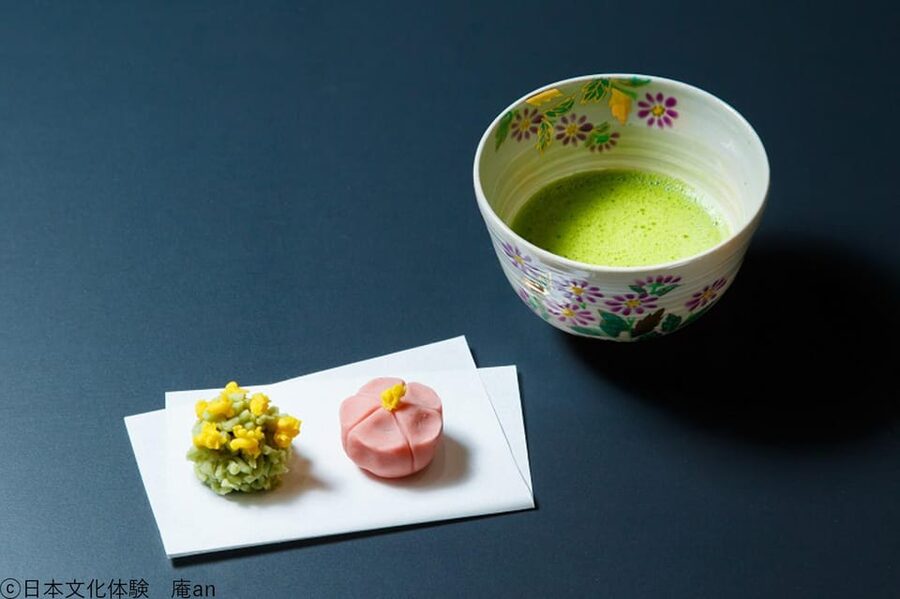
At $18 per person, this is one of the easier Kyoto activities to justify. You receive two prepared sweets, a hands-on lesson, matcha preparation, and time to eat the results. You also get cultural context without committing half a day or paying for a formal dining experience.
The value comes from participation. You are not paying only to watch an instructor make sweets. You color and shape the paste yourself, then prepare your own tea. That makes the activity more memorable than simply ordering a wagashi set at a café.
There are two small extra charges. A take-out box costs 100 JPY, and an experience completion certificate costs 300 JPY. Neither is required. I would add the box only if you want to carry your sweets away rather than eat them with the matcha.
The class is also a good rainy-day choice. You get an air-conditioned indoor activity in summer and a calm place to sit during wet weather. It is not a grand attraction, but it fills a spare hour with something connected to Kyoto’s food culture.
Location near Gojo Station
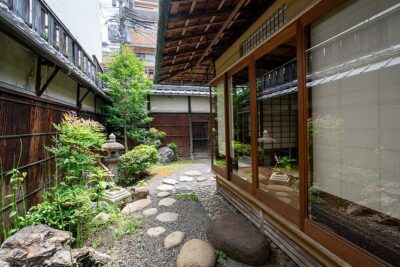
The meeting point is one minute from Exit 1 of the Subway Karasuma Line’s Gojo Station. The entrance faces the main street, Gojo-dori, which makes the venue relatively easy to find once you are at street level.
That central location matters because you can pair the class with sightseeing in central Kyoto. You do not need to build a long cross-city journey around a 95-minute activity. Still, allow enough time to locate the entrance and reach the correct room.
Arrive early. The class will not be held for late arrivals, and the provider says delays are not accommodated. A late start can also make the instructor rush the sweets lesson or shorten your time with the tea.
The building has no elevator, and you need to use stairs to reach the venue. The activity is listed as wheelchair accessible, but the stair information deserves clarification before booking if you use a wheelchair or have difficulty with stairs. Contact the provider directly so you know how accessibility is handled at the specific venue.
Is it suitable for children?
The activity works well for children who can follow a demonstration and handle soft paste carefully. A 10-year-old and a 14-year-old were able to manage the amount of time and challenge comfortably. Another family particularly enjoyed making the sweets with children.
It is not a loud, high-energy attraction. The pace is fairly gentle, and the creative work requires some concentration. Younger children may need help with shaping, especially when the seasonal design has several small details.
Children under two who sit on a parent’s lap are free. Non-participants cannot enter, so everyone else in your group should be included in the booking. The optional helper fee is not needed unless the provider specifically requires it for your situation, and one participant noted that it was unnecessary without a child needing assistance.
What could be improved
The biggest weakness is consistency in communication. Some instructors speak enough English to explain the class comfortably, while others provide only basic English alongside Japanese. You can usually copy the demonstration, but the cultural explanation may be thinner than expected.
The room can also become noisy when another group leaves or when a separate class runs nearby. A microphone headset and a screen showing the instructor’s hands would make the shaping steps easier to follow, especially for people seated farther away.
Timing is another point to watch. Most sessions seem to allow enough time for the preparation, but one participant arrived to a disorganized start and felt rushed throughout the activity. Since late arrivals are not held for, punctuality is important on both sides.
Finally, do not book this expecting a private or highly ceremonial tea setting. The tea experience teaches etiquette and preparation, but it may be brief and conducted in a shared classroom. That is not a deal breaker for me at this price, but it is a real difference between this activity and a formal tea ceremony in a traditional tea house.
Who should book this Kyoto activity?
I would recommend it to you if you want a short, affordable cultural activity with something to eat at the end. It suits first-time visitors, families with school-age children, food-focused travelers, and anyone who wants a break from temples and shopping.
It is especially useful if you like learning by doing. Coloring and shaping the sweets gives you a clear task, and preparing matcha gives the second half a natural purpose. You leave with a better sense of how Japanese sweets and tea are meant to work together.
You may want another option if you need fluent English throughout, cannot use stairs, or want a formal tea ceremony with a long, quiet ritual. You should also skip it if red bean paste is not to your taste.
For most visitors, the price makes the limitations easy to accept. The instructor friendliness, seasonal designs, Kyoto-sourced paste, and simple matcha lesson offer a lot for 95 minutes. Book it for a hands-on introduction, not for an elaborate ceremony.
Practical details before you go
- The price is $18 per person.
- The activity lasts 95 minutes.
- Operation hours are 10:00 to 17:00. Reservations received after 17:00 are processed the next day.
- The meeting point is one minute from Exit 1 of Gojo Station on the Karasuma Line.
- The entrance faces Gojo-dori.
- Japanese is the official language, with English translation provided as much as possible.
- A sweets take-out box costs 100 JPY.
- A completion certificate costs 300 JPY.
- Cancel at least 24 hours ahead for a full refund.
- Reserve now and pay later is available.
- The provider will not hold the activity for late arrivals.
- Non-participants cannot enter.
- The provider is B.B.Advisors Inc. AN KYOTO.
FAQ
How long does the sweets and tea experience last?
The experience lasts 95 minutes.
How much does the activity cost?
The listed price is $18 per person.
Where is the meeting point?
The venue is one minute from Exit 1 of Gojo Station on Kyoto’s Subway Karasuma Line. The entrance faces Gojo-dori.
How many sweets will I make?
You will make two Japanese traditional sweets, with designs that match the season.
What kind of sweets will I make?
You will make nerikiri, a high-grade Japanese sweet shaped from colored white bean paste. Red bean paste may also be used.
Is the tea ceremony conducted in English?
Japanese is the official language. English translation is provided as much as possible, and you can contact the provider to request English support.
Is a take-out box included?
No. A sweets take-out box costs 100 JPY.
Can I cancel for a full refund?
Yes. You can cancel up to 24 hours in advance for a full refund. Late cancellations may incur a fee, so check the applicable policy before changing your plans.
Should you book it?
Book this experience if you want a low-cost, hands-on taste of Kyoto culture and are comfortable with a Japanese-led class supported by demonstrations and some English. The seasonal sweets and Uji matcha make it more memorable than a basic cooking lesson, while the central Gojo location keeps the logistics simple.
Skip it if your priority is a formal tea ceremony, a fully English-speaking instructor, or a private room. For everyone else, arriving on time and treating the tea portion as an introduction rather than a grand ritual should lead to a pleasant and very good-value hour and a half.
More Dessert Tours in Kyoto
- Kyoto Wagashi(Japanese sweets) Cooking Class near Fushimiinari
★ 5.0 · 60 reviews - Kyoto: Wagashi (Japanese sweets) Cooking near Fushimiinari
★ 5.0 · 40 reviews - Kyoto: Traditional Tea Ceremony with Matcha & Sweets in Gion
★ 4.9 · 27 reviews - Japanese Traditional Sweets ”Nerikiri” making
★ 4.3 · 17 reviews
Just added in Kyoto
- The “Golden Route” and Ancient Japan by DIAMIR Erlebnisreisen – 14-Day Tour★ 2.0 · 2 reviews
- Japan: Castles & Cuisine by G Adventures – 6-Day Kyoto to Osaka Tour★ 4.5 · 4 reviews
- Cycle Japan by Explore! – 13-Day Kyoto to Tokyo Tour★ 4.7 · 12 reviews
- Cycle Japan by Intrepid Travel – 11-Day Kyoto to Tokyo Tour★ 4.8 · 2 reviews
- Classic Japan by Intrepid Travel – 11-Day Kyoto to Tokyo Tour★ 4.4 · 14 reviews
- Ancient & Modern Japan 14-Day Tour by Exodus Adventure Travels★ 4.4 · 40 reviews
- 5 Day Cultural Adventure of Kyoto, Nara & Osaka by Tourist Journey★ 2.5 · 2 reviews
- 12 Days Kinosaki Onsen Escape: A Journey Through Japan’s Timeless Towns by UME Travel★ 4.8 · 5 reviews
Tea Ceremonies, compared.
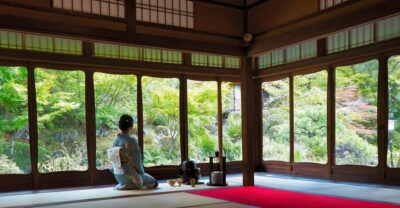
Tea Ceremony in a Traditional Tea House in Kiyomizu
Read our review →
World Heritage Kyoto & Nara Uji Authentic Matcha Experience
Read our review →
Browse the lists this tour appears in