
Reviewed · TEA CEREMONIES
Kyoto: Traditional Tea Ceremony with Matcha & Sweets in Gion
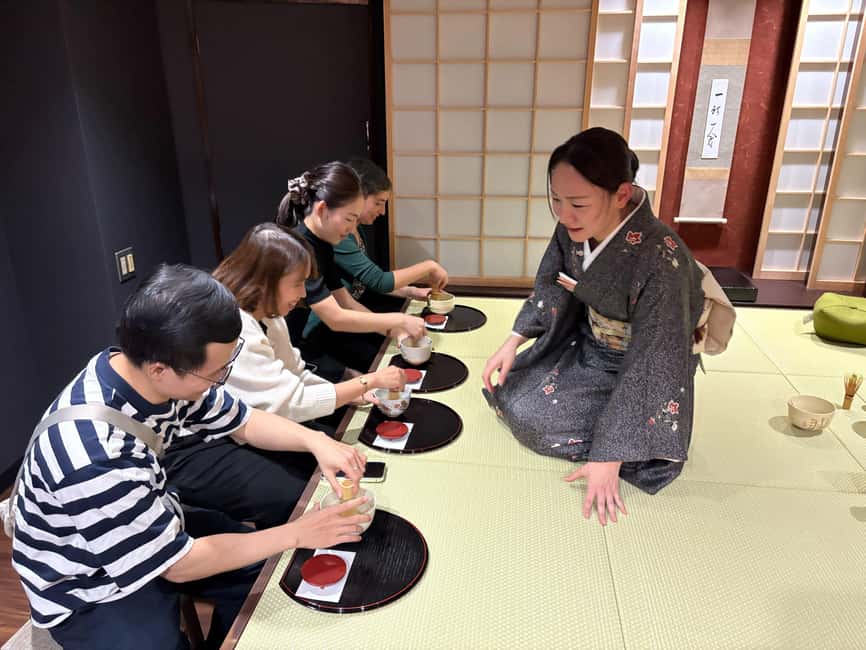
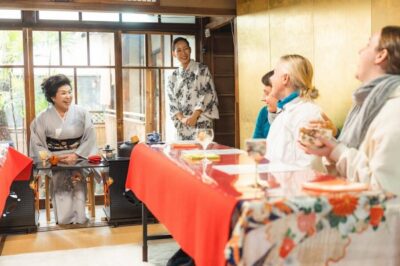
Tea in Gion feels different. This one-hour to 150-minute experience puts you in a quiet, elegant setting near Kyoto’s historic geisha district, where you can watch a tea master work before making your own bowl of matcha. I especially like the chair seating, which makes the ceremony far easier for anyone who cannot sit comfortably on tatami, and the friendly tone that keeps the tradition from feeling stiff.
I also like that the session goes beyond whisking green powder. You taste Japanese sweets chosen by the tea master, hear how tea connects with Zen, and leave with a simple recipe for making matcha at home. The main consideration is that the meeting point can vary by booking option, and the experience may last anywhere from one hour to 150 minutes, so check your selected time carefully.
At $22 per person, this is a modest way to add cultural depth to a day in Gion. It will not replace a long, highly formal tea-school ceremony, but it offers a comfortable first look at the practice, with enough hands-on time to make the price feel fair.
In This Review
- Key details to know before booking
- A calm introduction to tea in Gion
- Watching the tea master work
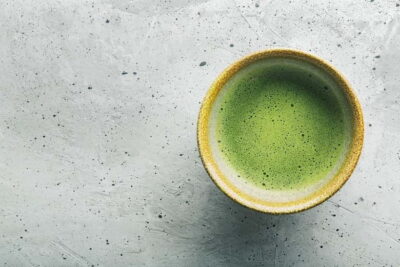
- Making your own matcha bowl
- Sweets chosen for the tea
- Why chair seating makes a real difference
- An easygoing lesson, not a solemn test
- Timing, meeting points, and the kimono option
- Is $22 a good value?
- Who will enjoy this experience most?
- Should you book this Gion tea ceremony?
- FAQ
- Where does the tea ceremony take place?
- How long does the experience last?
- Is the tea ceremony conducted in English?
- Do I have to sit on the floor?
- Is matcha included?
- Are Japanese sweets included?
- Can young children take part?
- What happens with the kimono option?
Key details to know before booking
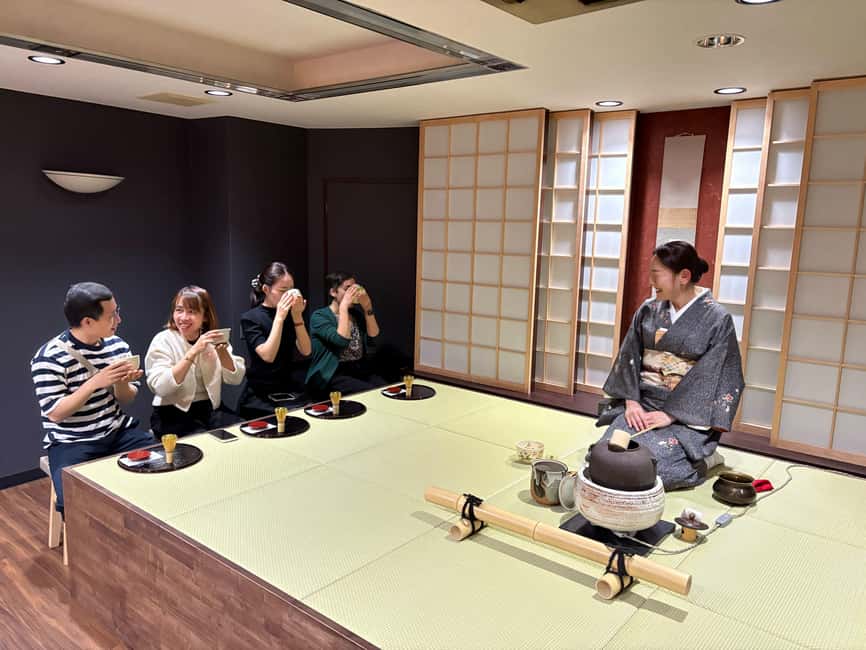
- Chair seating instead of floor seating: You can enjoy the ceremony without kneeling or sitting on tatami.
- A tea master demonstrates first: You watch the careful movements up close before trying to prepare your own matcha.
- Traditional sweets are part of the lesson: The sweets are selected by the tea master and paired with the tea.
- Matcha comes from a family-run local farm: You use a special tea powder sourced directly from the farm.
- The mood is welcoming, not severe: The teaching is designed to be casual and easy to follow.
- A kimono option changes the schedule: Your kimono start time determines your fixed tea ceremony time.
A calm introduction to tea in Gion
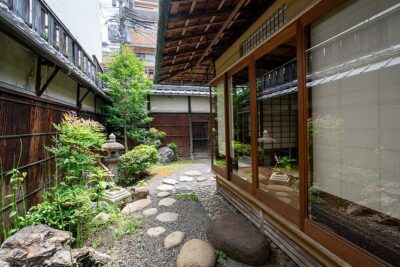
Gion is one of Kyoto’s most atmospheric areas, known for traditional wooden buildings and old entertainment streets. This experience gives you a reason to pause there rather than simply walk through taking photographs.
Inside, the focus shifts from the noise and movement of the district to the quiet rhythm of tea preparation. You learn about the history of tea in Japan and the tea ceremony’s connection with Zen philosophy. That background matters because the ceremony is not only about drinking matcha. The gestures, tools, pauses, and attention to the present moment all form part of the practice.
I appreciate that the experience does not expect you to arrive with special knowledge. The instructions are in English, and the approach is meant to make the customs clear rather than leave you guessing about every movement. You can ask questions as the session develops, then speak directly with the tea master during the final Q&A.
The tone is a good fit if you want cultural context without a long lecture. You hear enough to understand why the ritual matters, then put that information to use with your own bowl of tea.
More Tea Ceremonies in Kyoto
- Kyoto: Tea Ceremony in a Traditional Tea House in Kiyomizu
★ 4.9 · 3,519 reviews - Kyoto: Tea Ceremony Ju-An at Jotokuji Temple
★ 4.9 · 3,207 reviews - Kyoto: 45-Minute Tea Ceremony Lesson Experience
★ 4.3 · 2,378 reviews
Watching the tea master work
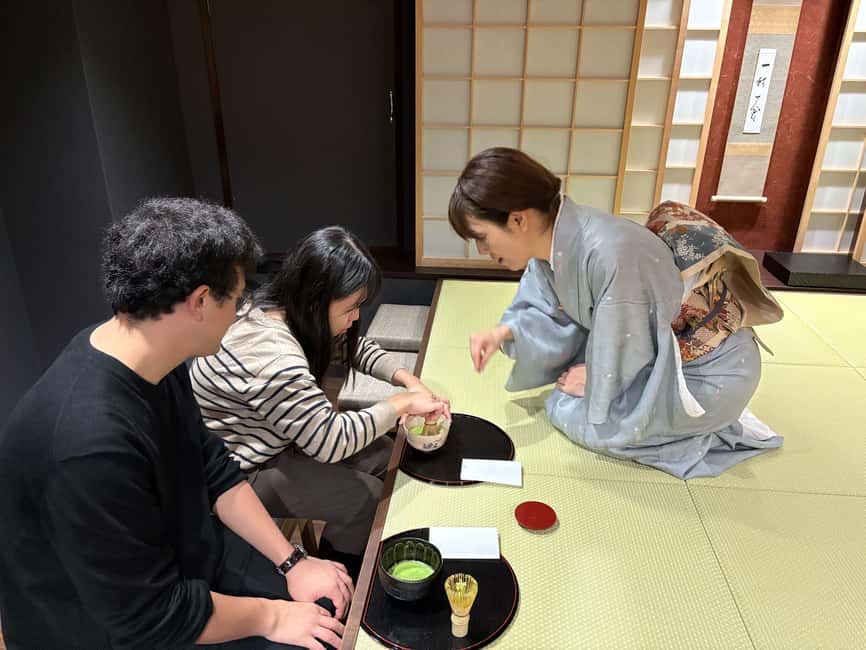
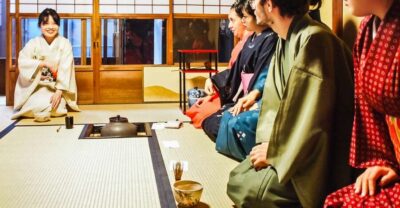
The first part centers on a demonstration. You watch an authentic tea ceremony performed at close range, with attention given to the subtle movements and refined technique.
That observation is more useful than it may sound. Matcha preparation can look simple from a distance: add powder, pour in water, whisk. In practice, the ceremony gives meaning to each step. The tea master shows how the bowl is handled, how the tea is mixed, and how the sequence creates a sense of calm and order.
You are not simply asked to copy a recipe without context. The demonstration lets you see the difference between everyday preparation and the formal art that grew around tea in Japan. It also gives you time to settle into the setting before taking your turn.
This is where the experience feels most traditional. The setting is described as elegant and quiet, and the ceremony preserves the visual grace of the practice even while making it easier for modern visitors to join.
Do not expect an elaborate performance lasting an entire afternoon. The attraction is the close explanation and the chance to see the technique clearly. If you already know Japanese tea ceremony customs well, this first section may feel introductory. For most first-time participants, that is exactly the point.
Making your own matcha bowl
The hands-on section follows the demonstration. You receive guidance on making your own matcha with tea sourced from a family-run local farm.
I like this part because it turns a cultural lesson into a skill you can repeat. Instead of watching someone else prepare tea and then leaving with only photographs, you learn a simple method for preparing matcha in daily life. The recipe is practical enough to use after your Kyoto visit.
You also get a chance to notice how much the result depends on the mixing. One recent participant described learning how to properly mix quality matcha into bubbles, which is a useful reminder that the whisking technique is central to the drink’s texture. The aim is not to produce a professional tea-school performance. It is to help you understand the basic process and gain confidence with the tools.
The activity should suit families and mixed-age groups, with one important limit. Infants and toddlers are free, but they do not receive their own matcha to prepare. If they want to try, they must use a parent or guardian’s cup. Since matcha contains a significant amount of caffeine, it is not recommended for children under five.
For older children, the chair seating and informal instruction may make this easier than a strict floor-based ceremony. Still, you should decide in advance if your child is likely to enjoy a quiet activity that includes listening, watching, and careful handling of a bowl.
Sweets chosen for the tea
Traditional Japanese sweets are served during the experience. They are selected by the tea master and come from long-established confectioners.
The sweets are not just an extra snack. In a tea setting, they help balance matcha’s strong, grassy taste and give you another way to understand Japanese food culture. Their careful presentation also shows how tea ceremony treats are meant to be considered as part of the whole occasion.
The supplied information does not specify the exact sweets served on your date, so you should not book expecting one particular confection. That is normal for a seasonal tea experience. The selection may vary, but you can expect traditional Japanese sweets chosen to accompany the tea.
This part adds value to the $22 cost. You are receiving a drink, a cultural explanation, a demonstration, a practical lesson, and a sweet tasting in one compact visit. It is a better deal than an activity that only offers a cup of matcha with no explanation.
A completely different kind of day out:
- PERFECT KYOTO 1-Day Bus Tour
★ 5.0 · 13,518 reviews - [Kyoto & Nara Day Tour] Sagano Scenic Railway & Nara Park & Fushimi Inari Taisha Thousand Torii Gates & Togetsukyo Bridge & Bamboo Grove & Kimono Forest (Departing from Osaka)
★ 4.9 · 10,942 reviews - Kyoto: Fushimi Inari, Kinkakuji, Bamboo Grove 1 Day Bus Tour
★ 4.8 · 4,316 reviews - Kyoto: Gion Make Your Own Chopsticks with Engraving Option
★ 5.0 · 3,465 reviews
Why chair seating makes a real difference
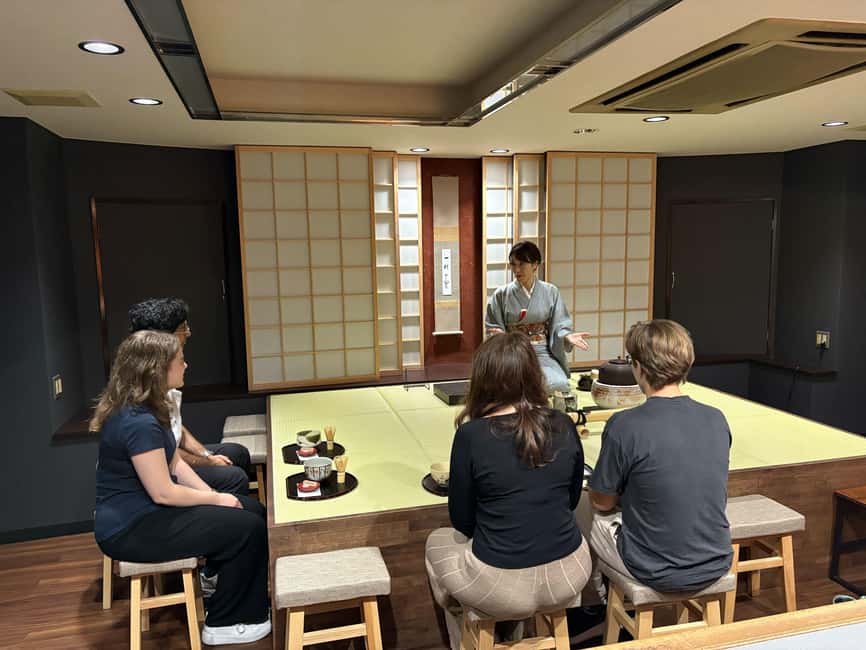
Many tea ceremonies use tatami and require you to sit on the floor for a long period. That can be uncomfortable for anyone with limited mobility, stiff knees, or little experience with floor sitting.
Here, the ceremony is conducted with chairs. You still see the formal movements and hear about the tradition, but you do not have to trade comfort for cultural access. I consider this one of the strongest reasons to choose this particular format.
The chairs also make the session approachable for people who may feel nervous about breaking an unwritten rule. You can focus on listening and observing rather than wondering how long you must kneel or how to stand without disrupting the room.
There is a tradeoff. A chair-seated ceremony is not identical to a traditional tatami experience. If your main goal is to experience the strictest possible form of tea ceremony, this relaxed setup may feel less formal. If your goal is to understand and enjoy the practice, the comfort is a sensible choice.
An easygoing lesson, not a solemn test
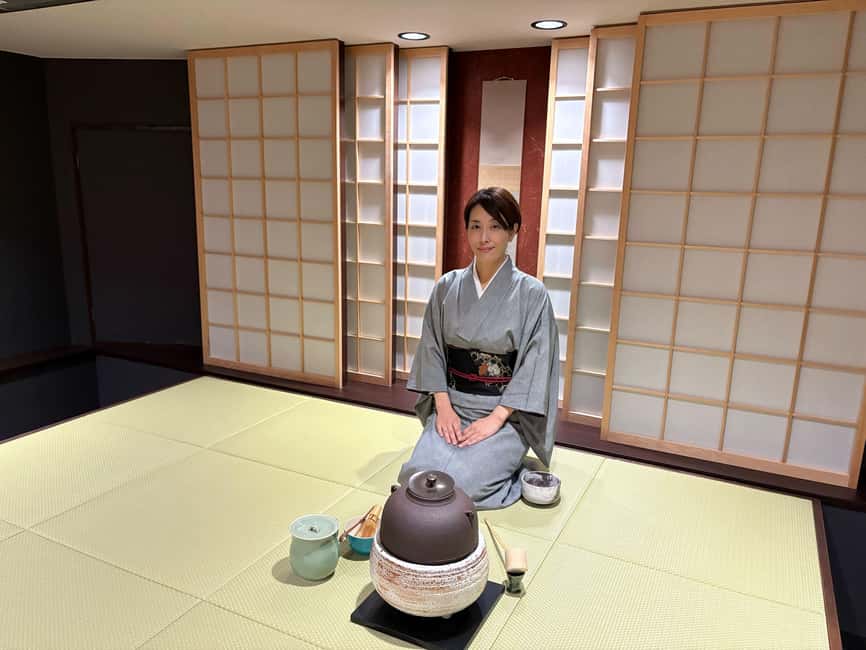
The organizers present the experience as casual and friendly. That distinction is important because tea ceremony can seem intimidating from the outside.
You will learn about etiquette and technique, but you are not expected to know the correct behavior before arriving. The teacher explains the process, demonstrates it, and guides you through your own preparation. This reduces the worry that you might make a mistake in front of everyone.
One participant praised the host as approachable, hospitable, passionate, and well informed. Another singled out Mai for explaining both the history and the way the ceremony is performed. Those comments point to the human side of the experience: the quality of the teaching matters as much as the room, the bowls, or the matcha.
The English instruction is a practical benefit for international visitors. The final Q&A gives you a chance to ask about tea, ceremony customs, or anything that was unclear during the demonstration. If you are curious about why the bowl is handled in a certain way or how matcha fits into Japanese life, save those questions for the end.
Timing, meeting points, and the kimono option
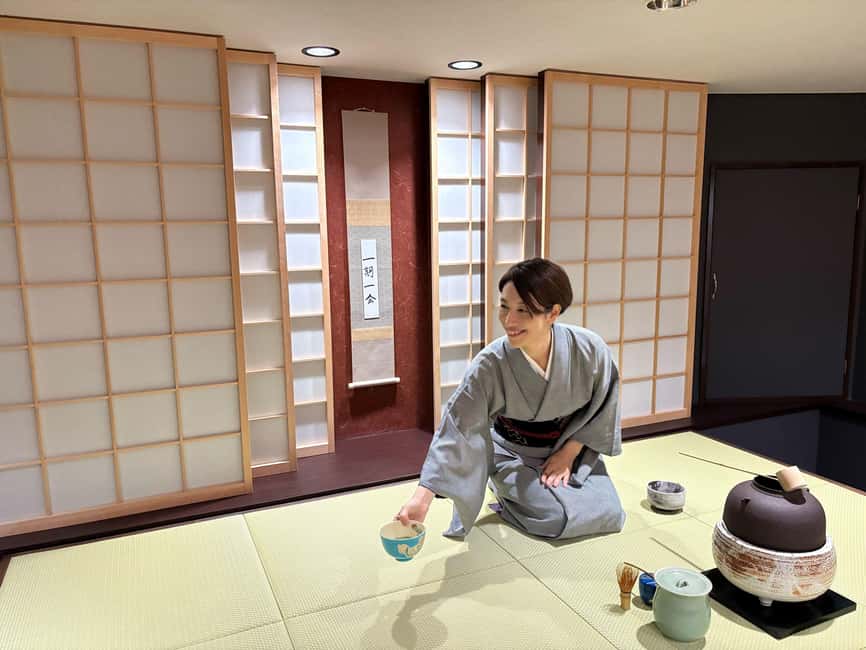
The standard experience lasts between one hour and 150 minutes, depending on the option you choose. Starting times vary, so check availability before planning lunch, a temple visit, or an evening reservation.
The meeting point may also differ by option. Do not assume that every booking begins at the same place. Read the location details attached to your selected time and package.
The kimono option requires extra planning. You first go to the Kimono Rental Wargo Gion store, change into your kimono, and then walk to the tea ceremony meeting point on your own. You are asked to arrive 10 minutes before the ceremony, and the rental store is only a few minutes from the meeting point.
The tea time is fixed according to the kimono start time:
- An 11:00 kimono start connects to the 12:30 tea ceremony.
- A 12:00 kimono start connects to the 14:00 tea ceremony.
- A 14:00 kimono start connects to the 15:30 tea ceremony.
Afterward, the kimono must be returned by 5:30 p.m. This package can make for attractive photographs in Gion, but it also gives you less freedom to change your plans during the day. Build in enough time for changing, walking, the ceremony, and returning the outfit.
If you are booking only the tea ceremony, the schedule should be simpler. Even then, confirm the exact meeting point and arrival time because the location can vary.
Is $22 a good value?
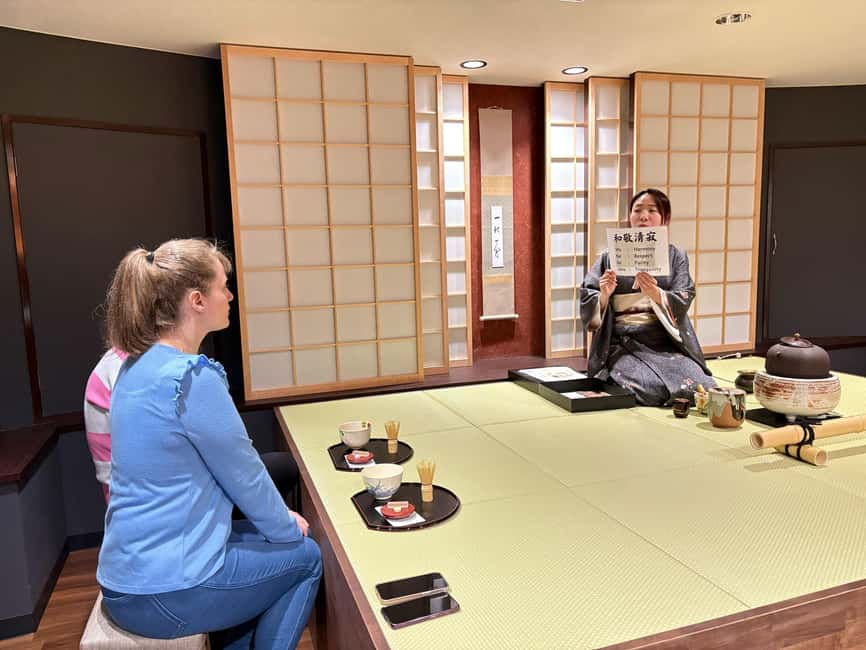
At $22 per person, the cost is reasonable for a short Kyoto cultural activity. The value comes from the combination of teaching and participation.
You receive matcha made with powder from a local tea farm, instruction from a tea master, traditional sweets, a demonstration, a history lesson, a Q&A, and a recipe to take home. Many low-cost cultural activities give you a taste but little understanding. This one gives you something to do and something to remember.
The price is especially fair if you want a gentle introduction rather than an expensive, formal ceremony. It is also useful when your Kyoto schedule is crowded. A one-hour option can fit between sightseeing stops, while the longer version gives you more time for questions and practice.
The limits are clear. This is not a full-day tea study, and the relaxed format may not satisfy someone seeking strict ceremony rules or advanced instruction. The food offering is also limited to traditional sweets and matcha, so you should not treat it as a meal.
Still, for a first encounter with the art, the price is hard to fault. The activity has a 4.9 rating from 27 reviews, and the most praised qualities are consistent: the host’s warmth, clear explanations, and peaceful atmosphere. Mai is specifically praised for making the history and method easy to understand.
Who will enjoy this experience most?
I would recommend it to first-time visitors to Kyoto, couples, solo visitors, families with older children, and anyone who wants a cultural activity without a strict dress code or floor seating.
It works particularly well for people who enjoy learning by doing. You watch the tea master, listen to the explanation, prepare matcha yourself, taste a sweet, and ask questions. That sequence gives the hour a clear purpose.
It is also a good choice if you want a quieter break in Gion. After walking through Kyoto’s busy sightseeing areas, sitting down with tea can reset your pace.
You may want another type of ceremony if you already have serious experience with Japanese tea schools or want a highly formal setting. The friendly tone is a strength for most people, but it also means the session is designed for access and enjoyment rather than strict ceremony training.
Should you book this Gion tea ceremony?
Book it if you want an affordable, English-language introduction to matcha with comfortable seating, traditional sweets, and real hands-on practice. The tea master demonstration gives the experience cultural weight, while the relaxed teaching makes it easy to enjoy without fear of getting etiquette wrong.
Choose the kimono option only if you are happy with fixed times and the extra return deadline. For the simplest plan, select the tea ceremony on its own, confirm the meeting point, and allow enough time for the session length listed with your booking.
At $22, this is a strong pick for curious visitors who want more than a quick cup of green tea. You leave with a better sense of why the ceremony matters, a taste of carefully prepared matcha, and a simple way to bring a little Kyoto ritual into your everyday routine.
FAQ
Where does the tea ceremony take place?
It takes place in Kyoto’s historic Gion district on Honshu, Japan. The exact meeting point may vary depending on the option you book.
How long does the experience last?
The duration ranges from one hour to 150 minutes. Check the available starting times and the length shown for your selected option.
Is the tea ceremony conducted in English?
Yes. The instructor language is English.
Do I have to sit on the floor?
No. The ceremony uses chairs rather than floor seating, making it easier for people who are uncomfortable sitting on tatami or have limited mobility.
Is matcha included?
Yes. You receive a matcha drink made with powder sourced from a local tea farm, and you receive guidance on preparing your own bowl.
Are Japanese sweets included?
Yes. Traditional Japanese sweets selected by the tea master are included.
Can young children take part?
Infants and toddlers are free, but they must use a parent or guardian’s cup if they want to try preparing tea. They do not receive their own matcha to make. Matcha is not recommended for children under five because it contains caffeine.
What happens with the kimono option?
You go first to the Kimono Rental Wargo Gion store, change into your kimono, and walk to the tea ceremony meeting point. The ceremony time is fixed according to your kimono start time, and the kimono must be returned by 5:30 p.m.
More Dessert Tours in Kyoto
- Kyoto: Japanese Traditional Sweets Making and Tea Ceremony
★ 4.4 · 314 reviews - Kyoto Wagashi(Japanese sweets) Cooking Class near Fushimiinari
★ 5.0 · 60 reviews - Kyoto: Wagashi (Japanese sweets) Cooking near Fushimiinari
★ 5.0 · 40 reviews - Japanese Traditional Sweets ”Nerikiri” making
★ 4.3 · 17 reviews
Just added in Kyoto
- The “Golden Route” and Ancient Japan by DIAMIR Erlebnisreisen – 14-Day Tour★ 2.0 · 2 reviews
- Japan: Castles & Cuisine by G Adventures – 6-Day Kyoto to Osaka Tour★ 4.5 · 4 reviews
- Cycle Japan by Explore! – 13-Day Kyoto to Tokyo Tour★ 4.7 · 12 reviews
- Cycle Japan by Intrepid Travel – 11-Day Kyoto to Tokyo Tour★ 4.8 · 2 reviews
- Classic Japan by Intrepid Travel – 11-Day Kyoto to Tokyo Tour★ 4.4 · 14 reviews
- Ancient & Modern Japan 14-Day Tour by Exodus Adventure Travels★ 4.4 · 40 reviews
- 5 Day Cultural Adventure of Kyoto, Nara & Osaka by Tourist Journey★ 2.5 · 2 reviews
- 12 Days Kinosaki Onsen Escape: A Journey Through Japan’s Timeless Towns by UME Travel★ 4.8 · 5 reviews
Tea Ceremonies, compared.
Tea Ceremony in a Traditional Tea House in Kiyomizu
Read our review →
World Heritage Kyoto & Nara Uji Authentic Matcha Experience
Read our review →
Browse the lists this tour appears in