Reviewed · SHOW
Show Tickets at Non-Verbal Theatre GEAR
Kyoto after dark has another kind of magic. GEAR gives you a 90-minute, wordless theatre show filled with break dancing, mime, juggling, magic, bold lighting, projection mapping, and a color-changing LED costume. I like that no Japanese is needed to follow the action, and I like the small theatre, where you sit close to the performers. The main caution is sensory: loud sound, strong light, and a fully dark scene are part of the production.
This is a welcome break from temples and shrines, especially when Kyoto’s usual sights have closed for the day. At $47.57 per person, it is not a cheap add-on, but the polished production and highly trained cast make it a fair splurge for an evening of unusual Japanese entertainment. Families should also check the age rules before booking.
In This Review
- GEAR at a glance
- Why GEAR makes sense after Kyoto’s temples close
- What happens inside the GEAR Theatre
- Projection mapping, LED costume, and old-meets-new stagecraft
- A clear choice for mixed-language groups
- The 90-minute length and the $47.57 price
- Finding the venue in Kyoto
- Lights, sound, and total darkness
- Cancellation and weather rules
- Who will enjoy GEAR most
- Should you book the GEAR theatre show?
- FAQ
- How long is the GEAR theatre performance?
- Is GEAR performed in Japanese?
- What skills are featured in the show?
- Where is the GEAR Theatre located?
- Can children attend GEAR?
- Do children need an adult?
- Is the theatre accessible by elevator?
- Can I cancel for a refund?
GEAR at a glance
- A 90-minute wordless story: The show uses movement, music, expression, and stage effects instead of spoken dialogue, making it easy to follow across language barriers.
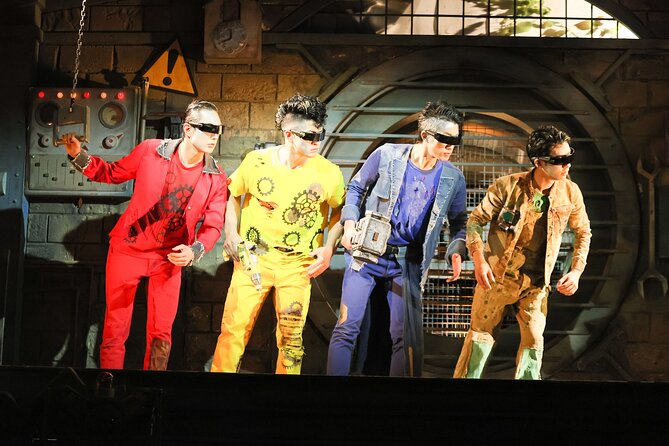
- Five specialist performers: The cast brings together skills associated with break dancing, mime, juggling, magic, and other professional disciplines.
- A tiny theatre with close views: The compact black-box setting puts you near the action, and the available seating is described as good throughout the room.
- Technology meets traditional theatre: Projection mapping, bold sound, color-changing LED clothing, and stage methods inspired partly by Kabuki create the show’s unusual look.
- A useful evening plan in central Kyoto: GEAR is near public transportation and gives you something to do after many temples and shrines have shut.
- Important family and access notes: Children under four are normally not admitted, the theatre requires stairs to the third or fourth floor, and the performance includes total darkness.
Why GEAR makes sense after Kyoto’s temples close
Kyoto can feel wonderfully full during the day, then suddenly quiet once the major temples and shrines close. GEAR fills that gap without asking you to sit through a Japanese-language play or understand a complicated cultural lecture. You simply watch the story unfold through bodies, light, sound, costume, and visual comedy.
That makes the show particularly useful for a mixed group. One person might love dance, another might prefer magic, and someone else might be drawn to the visual design. The production keeps shifting between these forms, so you are unlikely to spend the whole 90 minutes waiting for one favorite act to return.
The setting is a future world, and the story centers on different gears connecting and working together. You do not need a detailed explanation before the curtain to appreciate the theme. The idea is communicated through the performers and the machinery of the stage, with different personalities and skills joining into one larger performance.
I also like the cultural balance. This is not a traditional Kabuki performance, nor is it a standard Western musical. It borrows stage ideas associated with Kabuki and pairs them with digital effects, contemporary dance, mime, and circus-style skill. That combination gives you something recognizably Japanese in spirit without presenting a museum piece.
A few more options to weigh up in Kyoto
- Kyoto Sumo Show with Experience & Photo, 2 Drinks Included
★ 5.0 · 941 reviews - Kyoto: Sumo Experience (with Live Show & Audience Challenge)
★ 5.0 · 519 reviews - Kyoto Gion Cultural Walk & Geisha Show with Dining Options
★ 5.0 · 518 reviews
What happens inside the GEAR Theatre
The theatre itself is part of the appeal. It is a small black-box space, not a vast auditorium where performers disappear into the distance. The close setting lets you see facial expressions, quick hand movements, costume changes, and the precision behind the tricks.
That closeness also means the show can feel active even during quieter moments. A mime performer does not have to rely on a large gesture for the back row. A juggler’s timing is easier to appreciate when you are close enough to see the control involved. The trade-off is that a small room can make sound and lighting feel more intense, so this is not ideal for someone who is very sensitive to sensory stimulation.
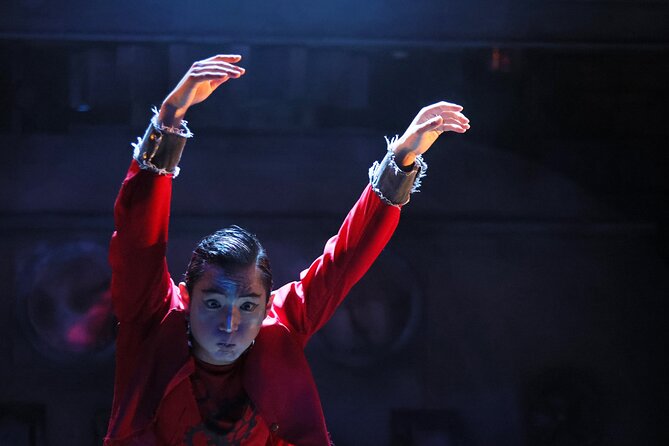
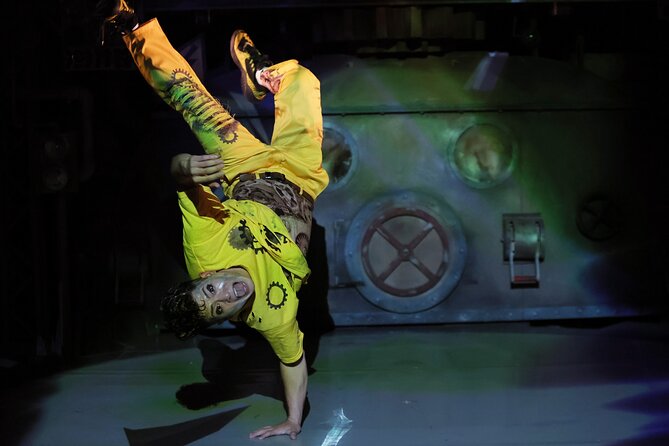
The cast of five carries the show through several distinct skills. Break dancing gives the production speed and physical force. Mime supplies much of the storytelling, especially for viewers who do not speak Japanese. Juggling adds suspense and rhythm, while magic brings surprise and comic timing.
The performers are not simply presenting separate acts one after another. The point is how these different talents fit together. A dance sequence may lead into a visual joke, a trick may become part of the story, and the lighting may change the meaning of a simple movement. That structure helps the production feel like theatre rather than a collection of unrelated specialty acts.
Projection mapping, LED costume, and old-meets-new stagecraft
GEAR’s strongest visual element is its use of technology. Projection mapping changes the appearance of the set, while sound and lighting help create the future setting. The LED clothing is especially eye-catching because its color can change through remote control.
These effects are not just decoration. They help the audience understand shifts in mood and action without dialogue. A change of color can signal a new moment, and a projected image can make a modest stage feel much larger or stranger than it really is.
The production also uses techniques connected with Japanese stage tradition. That mix of old and new is one of the more interesting reasons to see the show. You are not being asked to choose between historical Japan and modern Japan. Instead, the performance places traditional theatrical ideas beside digital design, physical comedy, and contemporary stage movement.
Several parts of the production may appeal to children, but adults should not assume this is only a children’s show. The visual jokes are easy to enjoy, while the performance skill gives older viewers plenty to appreciate. The show’s story about connection and harmony can also read differently depending on your age and mood.
A clear choice for mixed-language groups
If you worry that a Japanese theatre performance will be difficult to follow, GEAR removes the biggest barrier: spoken language. It is explicitly non-verbal, and the performers do not switch into Japanese dialogue during the show.
That does not mean every plot point will be explained in a literal way. You follow the characters through expression, action, music, stage images, and recurring visual ideas. If you prefer a play with a detailed spoken story, this may feel too open-ended. If you enjoy theatre that communicates through movement, it is a strong fit.
I would especially consider GEAR for families with older children, couples, friends, and groups with several nationalities. The show allows everyone to share the same performance without translation. It is also a good option for a return visit to Kyoto, when you may want something beyond the usual temple circuit.
The venue welcomes children of any age at the matinee on the first and third Saturday of each month. At other times, children under four cannot enter for security reasons. Lower primary-school children must be accompanied by an adult, with a limit of two children per adult. If you plan to bring a preschool-aged child, contact the GEAR ticket office so the staff can arrange suitable seating.
A completely different kind of day out:
- PERFECT KYOTO 1-Day Bus Tour
★ 5.0 · 13,518 reviews - [Kyoto & Nara Day Tour] Sagano Scenic Railway & Nara Park & Fushimi Inari Taisha Thousand Torii Gates & Togetsukyo Bridge & Bamboo Grove & Kimono Forest (Departing from Osaka)
★ 4.9 · 10,942 reviews - Kyoto: Fushimi Inari, Kinkakuji, Bamboo Grove 1 Day Bus Tour
★ 4.8 · 4,316 reviews - Kyoto: Tea Ceremony in a Traditional Tea House in Kiyomizu
★ 4.9 · 3,519 reviews
The 90-minute length and the $47.57 price
At about an hour and a half, GEAR is long enough to feel like a proper evening performance but short enough to fit around dinner or another Kyoto plan. The pace is described as quick, so you should not expect long pauses between the dance, mime, juggling, magic, and visual sequences.
The $47.57 price places this above a casual street show or small local attraction. I think the value comes from the combination of a professional cast, a purpose-built theatrical production, and technology that would be difficult to reproduce in a simple stage act. You are paying for a complete performance, not just one specialty.
Still, the price will make more sense if you enjoy live theatre. If you mainly want a low-cost activity or prefer outdoor sightseeing, you may find the ticket expensive. If you want a polished, weather-independent evening plan with no language barrier, the cost is easier to justify.
The performance has been booked more than five times in the past week, and the activity is listed with a 98 percent recommendation rate and a 4.9 rating from 133 reviews. Those figures do not guarantee that you will love every story choice, but they do reflect unusually strong approval for a theatre ticket.
Finding the venue in Kyoto
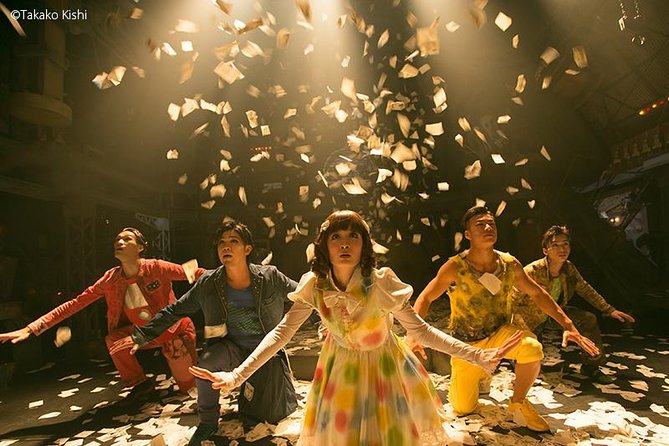
The ticket redemption point is GEAR, Non-Verbal Theatre, at 56 Benkeiishicho, 1928 Building, third floor, Nakagyo Ward, Kyoto 604-8082. The venue is near public transportation, which makes it practical for an evening plan.
Pay attention to the building and floor information. The theatre is not described as a large, obvious landmark, and the room is located on the third or fourth floor depending on the access route. You need to use stairs because there is no elevator.
That stair access matters for anyone who walks with a cane or has difficulty climbing. Contact the theatre before booking if that applies to you. The venue asks people who use a walking stick to make an inquiry in advance rather than arriving and discovering that the stairs are a problem.
The activity has a maximum of 10 travelers per booking. That means your booked group should remain small, although the theatre itself is a performance venue and not limited to only 10 people in total. The small room is one reason the show feels close and personal.
Lights, sound, and total darkness
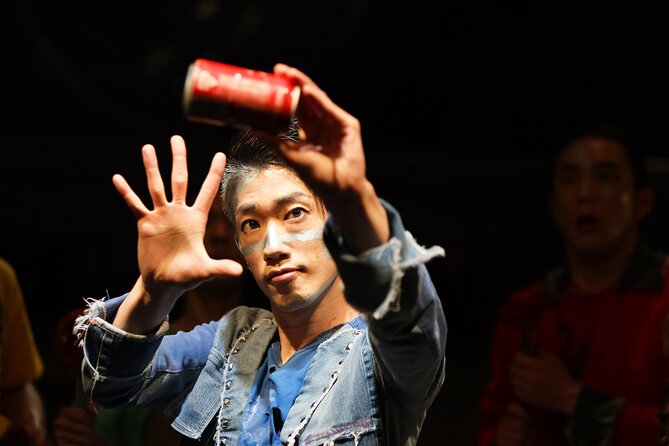
GEAR uses strong lights and loud sounds as part of its design. You may also encounter a completely dark scene. It lasts only for part of the performance, but it can be upsetting for someone who feels anxious in dark places.
I would treat the sensory information as a real planning point, not a minor footnote. The same lighting and sound that make the show exciting may be tiring for someone with sensory sensitivities. You know your own comfort level best, so consider contacting the theatre before booking if you have concerns.
The show’s visual energy is one of its most praised features. Bold colors, digital scenery, sound effects, and costume technology give the small room a surprisingly large theatrical feel. But the production cannot provide that effect without brightness, volume, and sudden changes in atmosphere.
Cancellation and weather rules
Free cancellation is available if you cancel at least 24 hours before the local start time. Cancel within 24 hours, or request changes during that period, and you will not receive a refund.
The activity also requires good weather under its stated policy. If poor weather causes cancellation, you will be offered another date or a full refund. Since this is an indoor theatre show, check the exact cancellation terms at booking and keep the 24-hour deadline in mind.
Who will enjoy GEAR most
I would choose GEAR if you want:
- An evening activity after temple and shrine hours
- A show that works without Japanese language skills
- Close-up theatre in a small room
- A mix of dance, mime, juggling, magic, and visual comedy
- A modern performance with Japanese stage influences
- Something suitable for a family with children old enough to follow the age rules
- A shared activity for a group with different language backgrounds
I would pause before booking if you dislike loud music, powerful lighting, sudden visual changes, or darkness. I would also think twice if stairs are difficult for you, since there is no elevator to the theatre floors.
The show is less suitable if you want a traditional Japanese performance with spoken explanation, historical costuming, or a guide describing cultural details. GEAR offers a modern stage story instead. Its Japanese character comes from the blend of theatrical tradition and new technology, not from a formal lesson about Kyoto’s past.
Should you book the GEAR theatre show?
Yes, if you want one unusual evening in Kyoto and are comfortable with the sensory effects. GEAR is especially easy to recommend for mixed-language groups, families with eligible children, and anyone who has spent several days visiting temples and wants a sharp change of pace.
The strongest reasons to book are the wordless format, the close seating, and the sheer range of performer skills. You get dance, mime, juggling, magic, sound, projection mapping, and LED costume design in one compact production. At $47.57, it is a splurge, but the 90-minute length and professional staging make it a reasonable one for a memorable night.
I would skip it only if the accessibility or sensory warnings apply to you, or if your idea of Japanese theatre is strictly traditional. For everyone else, GEAR offers a playful, polished way to see another side of Kyoto, one that begins after the temple gates close.
FAQ
How long is the GEAR theatre performance?
The performance lasts approximately 1 hour and 30 minutes.
Is GEAR performed in Japanese?
GEAR is a non-verbal performance. The actors do not use spoken Japanese during the show, so you can follow it without knowing the language.
What skills are featured in the show?
The performance includes break dancing, mime, juggling, magic, and other professional performance skills. It also uses projection mapping, LED costume effects, sound, and lighting.
Where is the GEAR Theatre located?
The ticket redemption point is GEAR, Non-Verbal Theatre, at 56 Benkeiishicho, 1928 Building, third floor, Nakagyo Ward, Kyoto 604-8082.
Can children attend GEAR?
Children under four are normally not admitted for security reasons. On the matinee held every first and third Saturday of the month, children of any age are welcome.
Do children need an adult?
Lower primary-school children must be accompanied by an adult. The stated limit is up to two children per adult.
Is the theatre accessible by elevator?
No. There is no elevator, and you must use stairs to reach the third or fourth floor. Anyone who walks with a cane should contact the GEAR ticket office before booking.
Can I cancel for a refund?
You can receive a full refund if you cancel at least 24 hours before the experience start time. Cancellations or changes made less than 24 hours in advance are not refunded. If poor weather causes the activity to be canceled, you will be offered another date or a full refund.
Just added in Kyoto
- The “Golden Route” and Ancient Japan by DIAMIR Erlebnisreisen – 14-Day Tour★ 2.0 · 2 reviews
- Japan: Castles & Cuisine by G Adventures – 6-Day Kyoto to Osaka Tour★ 4.5 · 4 reviews
- Cycle Japan by Explore! – 13-Day Kyoto to Tokyo Tour★ 4.7 · 12 reviews
- Cycle Japan by Intrepid Travel – 11-Day Kyoto to Tokyo Tour★ 4.8 · 2 reviews
- Classic Japan by Intrepid Travel – 11-Day Kyoto to Tokyo Tour★ 4.4 · 14 reviews
- Ancient & Modern Japan 14-Day Tour by Exodus Adventure Travels★ 4.4 · 40 reviews
- 5 Day Cultural Adventure of Kyoto, Nara & Osaka by Tourist Journey★ 2.5 · 2 reviews
- 12 Days Kinosaki Onsen Escape: A Journey Through Japan’s Timeless Towns by UME Travel★ 4.8 · 5 reviews
Show, compared.

Mt Fuji & Hakone Cruise, Drum Show Bullet Train 1 Day from Tokyo
Read our review →
Sumo Show Experience with Chicken Hot Pot and a Photo
Read our review →
Tokyo Shinjuku Sumo Show & Experience with Photo
Read our review →
Asakusa Sumo Club Sumo Show Admission with Chankonabe in Tokyo
Read our review →