
Reviewed · COOKING CLASSES
Small-Group Wagyu Beef and 7 Japanese Dishes Tokyo Cooking Class
Japanese food is easier than it looks. This three-hour Cooking Sun Tokyo class gives you a practical way to understand it, starting with dashi and moving through seven dishes, vegetables, traditional seasonings, and tender Wagyu beef. I like the maximum eight-person group, since you get direct help instead of watching from the back. I also like that recipes, ingredients, an apron, and a towel are included.
The main drawback is the location. The studio at 18-39 Shinanomachi can be difficult to spot, especially if you arrive in a hurry. The class is also not nonstop cooking: some components are prepared by the instructors, so you may spend more time chopping, mixing, and assembling than making every dish entirely from scratch.
In This Review
- Quick takeaways from the Tokyo kitchen
- Why this class works for understanding Japanese food
- Starting with dashi and Japanese seasonings
- Making seven dishes in about three hours
- The Wagyu beef centerpiece
- What the instructors add to the morning
- Sitting down for the finished meal
- Finding Cooking Sun Tokyo in Shinanomachi
- Is $72.96 a fair price?
- Who will enjoy this class most?
- Practical advice before you book
- Should you book the Cooking Sun Tokyo class?
- FAQ
- How long does the cooking class last?
- What time does the class start?
- Where does the class meet?
- How many people can join the class?
- Is the class taught in English?
- Are vegetarian options available?
- What is included in the price?
Quick takeaways from the Tokyo kitchen
- Dashi comes first: You begin with the basic Japanese stock used throughout the meal, then learn how common seasonings fit together.
- Wagyu is the main event: The class includes tender Japanese beef as part of a full meal rather than serving it as a standalone tasting.
- Up to eight people: The small format allows instructors to give feedback and keep you involved.
- Seven or eight dishes: The exact description varies between seven dishes and up to eight, but the meal covers several courses from appetizers through dessert.
- English-speaking local instructors: Aya, Hidemi, Kaori, Megumi, and Yoko are among the instructors praised for clear, friendly guidance.
- A useful home-cooking lesson: You leave with recipes and techniques you can use outside Japan, not just photographs of a pretty lunch.
Why this class works for understanding Japanese food
Japanese cooking can look simple on the plate, yet small details do much of the work. A clear broth, a careful cut, a balanced dressing, or a familiar seasoning can change the whole dish. This class gives you a way to see those details in action.
The lesson begins with dashi, the basic soup stock used in Japanese cooking. That is a smart starting point. Instead of treating dashi as an invisible ingredient, the instructor explains how it is made and why it matters. You then use it in other parts of the meal, which helps connect the separate recipes.
You also learn about staple Japanese seasonings and ingredients. The instructors explain how they are used, share recipe tips, and offer background on the food. The teaching is designed for English speakers, and the class has earned strong praise for clear explanations that make Japanese cooking approachable even if you do little cooking at home.
The food has a home-style focus, though the class is described as kaiseki ryouri, or haute Japanese cuisine. That means you should expect attention to presentation, cutting, balance, and several courses. You should not expect a formal restaurant meal prepared entirely by you from start to finish.
More Cooking Classes in Tokyo
- Sushi Making Tokyo Roll and Authentic Japanese Sushi Class
★ 5.0 · 3,971 reviews - Tokyo: Roll and Authentic Sushi Making Class in Asakusa
★ 4.9 · 1,957 reviews - Tokyo Shinjuku Chopsticks Making Class
★ 5.0 · 1,763 reviews
Starting with dashi and Japanese seasonings
The opening section focuses on dashi, the foundation of the meal. The instructor explains the process and introduces seasonings that appear again in later dishes. This gives the class a useful structure: you are not simply making unrelated recipes, but learning how one basic preparation supports several others.
That lesson has value at home. If you buy Japanese ingredients but are unsure how to use them, the class gives you a working context. You can ask questions as you cook, rather than trying to decode a recipe alone after returning home.
The instructors also explain classic and modern recipes, unusual Japanese ingredients, and presentation. Their short talks keep the cooking moving, and several people specifically praised the balance between explanation and practice. The setting is described as clean, relaxed, and homey, which suits a lesson built around shared food rather than a formal culinary school atmosphere.
Making seven dishes in about three hours
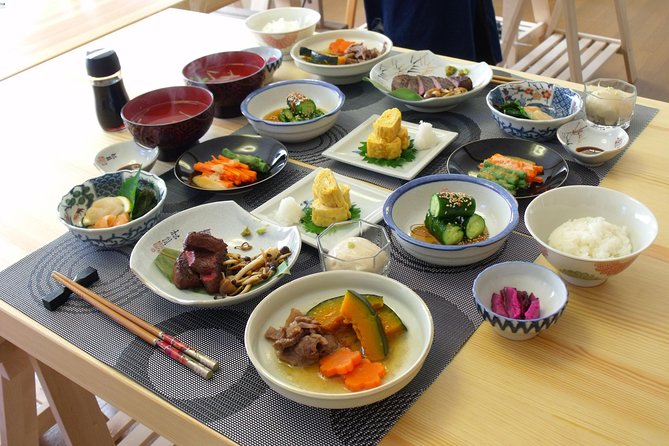
After dashi, you work through a full-course meal that may include seven dishes, or up to eight depending on the class menu. The description covers everything from appetizers to dessert, with Japanese vegetables, traditional seasonings, and Wagyu beef included in the spread.
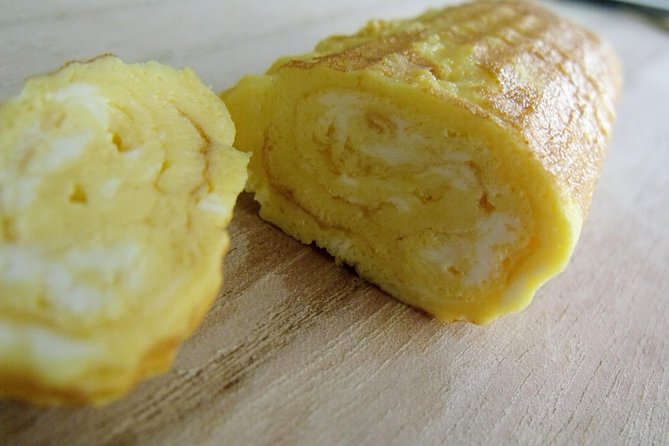
The range is one of the best reasons to book. You are exposed to several methods and textures in a single morning. Some tasks involve careful chopping, mixing dressings, preparing vegetables, and learning presentation. Other moments involve more direct cooking, such as cooking an egg and searing a lotus root stuffed with minced chicken that has been prepared ahead of time.
That last detail matters. If you want every ingredient weighed, cut, and cooked entirely by you, this may feel less hands-on than expected. Some food, including miso soup, rice, potatoes, and prepared components, is handled by the staff. You still take part in the meal, but the class is designed to fit many dishes into a short session.
For most people, that trade-off makes sense. Three hours is enough time to learn a broad set of techniques without turning the morning into a demanding professional kitchen shift. You get a clear look at Japanese home cooking, while the instructors keep the pace manageable.
The Wagyu beef centerpiece
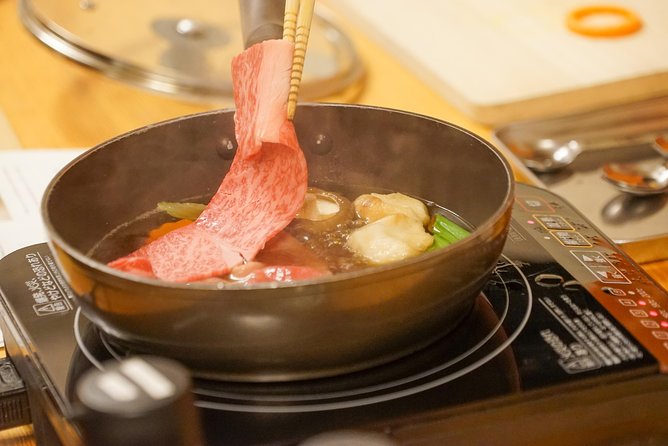
Wagyu is the best-known ingredient in the class, and you use it as the main dish in the meal. The beef is described as tender and beautiful, and sukiyaki is specifically praised as a favorite dish. That makes this class a better choice for someone who wants to cook and eat Wagyu, not simply order it at a restaurant.
Sukiyaki also fits the lesson well because it shows how Japanese cooking can combine quality ingredients with a straightforward preparation. The beef is not presented in isolation. It forms part of a larger meal with vegetables, broth-based elements, seasonings, and other dishes.
You should keep your expectations sensible. The price is $72.96 per person, so this is not a private Wagyu tasting with a large portion of premium beef. The value comes from combining the beef with instruction, multiple dishes, recipes, ingredients, and a meal. If the beef itself is your only priority, a restaurant may offer a more focused experience. If you want food, technique, and cultural context together, the class makes a stronger case.
A completely different kind of day out:
- Tokyo Disney Resort – Tokyo Disneyland & Tokyo DisneySea Park Tickets
★ 4.8 · 99,488 reviews - SHIBUYA SKY Ticket
★ 4.7 · 46,509 reviews - JR Whole Japan Rail Pass
★ 4.8 · 29,150 reviews - Mt Fuji and Hakone 1-Day Bus Tour Return by Bullet Train
★ 5.0 · 26,383 reviews
What the instructors add to the morning
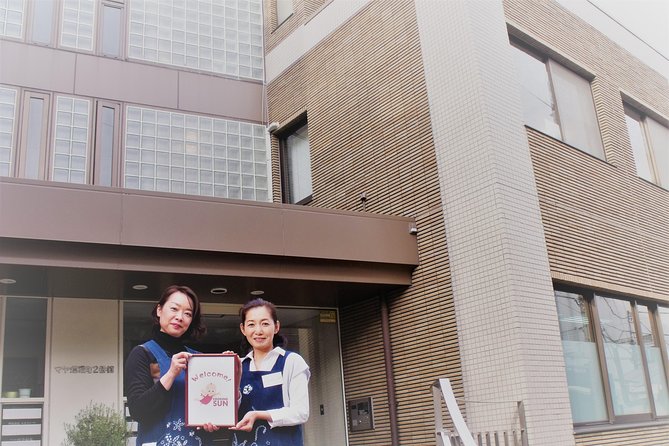
The instructors are English-speaking locals, and their role is central to the experience. Aya and Hidemi are praised for being excellent teachers, while Kaori, Megumi, and Yoko are also noted for patience, kindness, and clear instruction. The names may vary by session, but the teaching style is consistently described as friendly and helpful.
That matters in a cooking class. Japanese recipes often depend on small judgments, such as how finely to cut an ingredient, how to mix a dressing, or how to present a dish. A written recipe can tell you what to do, but an instructor can show you what the result should look like.
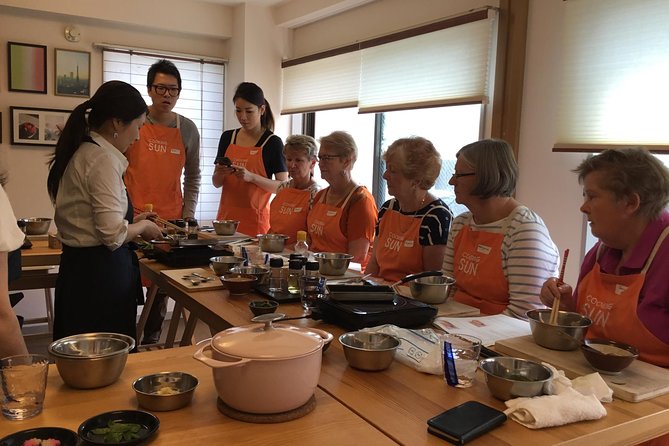
The small group helps here. With no more than eight people, you are not simply standing around while one person demonstrates. The instructors can correct your technique, answer questions, and keep the class moving. A two-instructor setup has also been praised for creating a good ratio of help to participants.
The tone is casual rather than intimidating. People with very little cooking experience can follow along, while more confident cooks can ask about ingredients, methods, and ways to adapt the recipes at home.
Sitting down for the finished meal
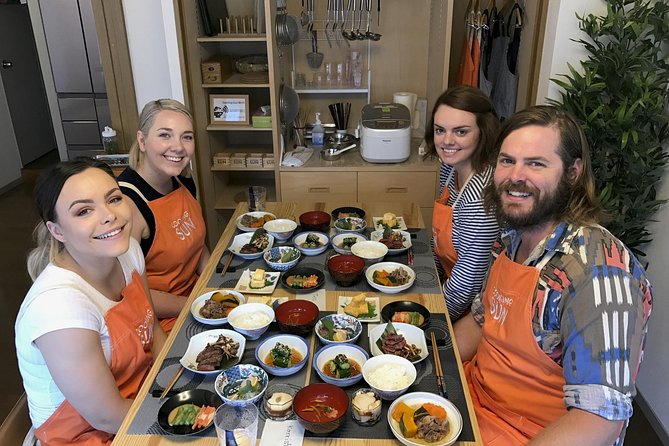
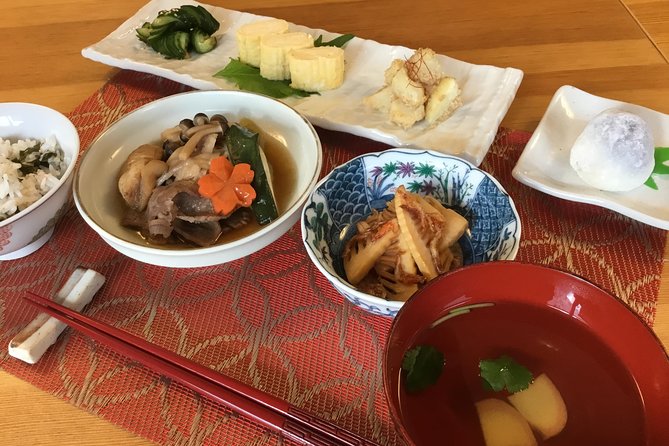
Once the cooking is complete, you sit down and eat what the group has prepared. The meal is accompanied by sake and green tea, adding a traditional touch to the final part of the class. The moment is marked by Itadakimasu, the customary expression said before eating.
This shared meal is more than a reward for finishing the recipes. It lets you compare the dishes, notice how the seasonings work together, and see the effect of presentation. You also get a chance to talk with the instructors and other people in the class.
The class is especially useful if you want to understand dishes that do not always appear on a restaurant menu. One appeal is the focus on Japanese home cooking, including familiar ingredients and preparations that can be difficult to identify when you only eat out.
Do note that one person hoped for a small cup of sake with lunch, while the experience information says sake and green tea accompany the meal. The safest approach is to treat the drinks as part of the stated experience, but avoid expecting a large sake tasting.
Finding Cooking Sun Tokyo in Shinanomachi
The meeting point is Cooking Sun Tokyo at 18-39 Shinanomachi, Shinjuku City, Tokyo 160-0016. The class begins at 9:30 a.m. and finishes back at the same meeting point, with no hotel pickup or drop-off.
The location is near public transportation, but the building can be tricky to find. This is the one practical issue that comes up repeatedly in the feedback. Give yourself extra time, use Google Maps carefully, and do not assume the studio will be obvious from the street.
The surrounding area can be a pleasant part of the morning. One account describes a quiet setting with trees and a large park nearby. That makes the walk to the class calmer than you might expect in central Tokyo, but it also means you should not cut your arrival time too close.
The mobile ticket is convenient, and booking confirmation is provided at the time of booking. You will receive an apron and towel, while ingredients and cooking supplies are supplied in the studio.
Is $72.96 a fair price?
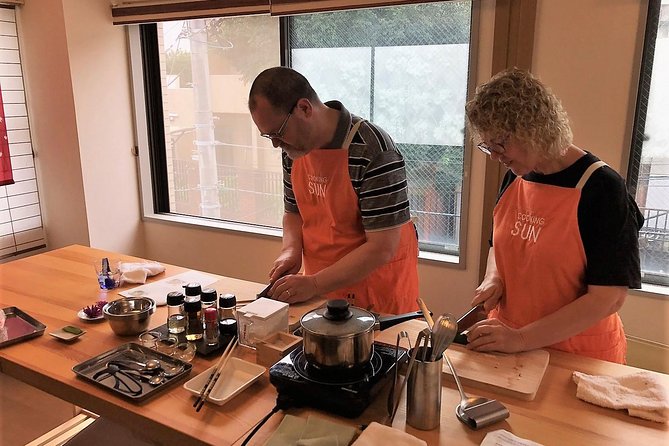
At $72.96 per person, the class offers solid value for a three-hour activity. The price covers an English-speaking local instructor, all ingredients and equipment, apron and towel rental, recipes, the cooking lesson, and the final meal with Wagyu beef, sake, and green tea.
The strongest value comes from the number of dishes. You are not paying for a single recipe or a short demonstration. You work through a broad Japanese menu and leave with several recipes to try at home.
The price is less compelling if you want a fully hands-on professional cooking session. Since some ingredients and dishes are prepared in advance, you will not personally complete every step. Still, that preparation is partly what allows the class to include so many dishes within three hours.
For a family, couple, or solo visitor interested in food, the cost is reasonable. The meal itself is only part of what you are buying. You are also paying for explanations, ingredient guidance, instructor feedback, and a structured introduction to Japanese cooking.
Who will enjoy this class most?
I would recommend it to first-time visitors who want more than restaurant meals, home cooks looking for Japanese recipes, and families seeking an activity that works for different skill levels. The relaxed teaching style means you do not need to arrive with culinary experience.
It also suits people who enjoy learning through food. The class connects ingredients, cooking methods, presentation, and eating in one compact session. You get enough variety to keep the morning interesting without committing to a full-day culinary program.
Vegetarian cooking can be accommodated if you request it when booking. You should also provide any specific dietary requirements in advance. The supplied information does not promise that every allergy or restriction can be handled, so clear communication before the class is important.
This is less suited to someone who wants a private class, a quiet tasting, or a highly technical chef-led session. The group is small, but it is still a shared activity. The menu also includes meat and Wagyu beef unless you arrange a suitable option beforehand.
Practical advice before you book
Arrive early. The location issue is minor once you know about it, but frustrating if you are searching for the entrance at 9:29 a.m. Check the address carefully and allow time for the final walk from public transportation.
Wear clothing that is comfortable for cooking. An apron and towel are provided, but you will be preparing food, moving around the kitchen, and handling several ingredients.
Come ready to participate, but do not expect to prepare every part alone. You will chop, mix, cook selected items, learn techniques, and help assemble a substantial meal. The staff may handle some longer or more involved preparations to keep the schedule on track.
Ask questions. The instructors are there to explain ingredients, cooking methods, and ways to repeat the recipes at home. If you are interested in dashi, sukiyaki, Japanese vegetables, or knife work, say so early.
The cancellation terms are straightforward: cancel at least 24 hours before the 9:30 a.m. start time for a full refund. Changes or cancellations inside that window are not accepted and are not refunded.
Should you book the Cooking Sun Tokyo class?
Book it if you want a friendly, compact introduction to Japanese cooking with a real meal at the end. The small class size, English instruction, Wagyu beef, dashi lesson, recipes, and broad menu give you plenty for the price.
Go in expecting a guided group class, not a private chef experience. Some food will be prepared ahead of time, and the building can take effort to locate. Those are fair compromises for a three-hour class that teaches several dishes and lets you eat the results.
For a food-focused morning in Tokyo, this is an easy recommendation. Just plan the route carefully, mention dietary needs in advance, and bring an appetite for sukiyaki, Japanese seasonings, and a useful set of recipes to take home.
FAQ
How long does the cooking class last?
The class lasts approximately three hours.
What time does the class start?
The class starts at 9:30 a.m.
Where does the class meet?
It meets at Cooking Sun Tokyo, 18-39 Shinanomachi, Shinjuku City, Tokyo 160-0016, Japan.
How many people can join the class?
The class has a maximum of eight people.
Is the class taught in English?
Yes. The local instructors speak English and provide instructions in English.
Are vegetarian options available?
Yes. A vegetarian option is available, but you must request it when booking.
What is included in the price?
The price includes the local cooking instructor, recipes, ingredients, cooking supplies, an apron, and a towel. Hotel pickup and drop-off are not included.
Just added in Tokyo
- Very popular in Harajuku♡Animal petting zoo★ 4.6 · 39 reviews
- Yokohama Port: Private Customizable Tour with Transfer★ 5.0 · 19 reviews
- Wagyu & Sake 8 Course Tasting Dinner in Shinjuku★ 4.9 · 20 reviews
- Warner Bros. Studio Tour Tokyo – The Making of Harry Potter★ 4.8 · 181 reviews
- Yanaka District: Historical Walking Tour in Tokyo’s Old Town★ 4.8 · 117 reviews
- Tokyo: Classic Tsukiji Food Tour★ 4.9 · 78 reviews
- Tokyo: Tsukiji Fish Market Tour with 6 Stops & Seafood Lunch★ 4.5 · 165 reviews
- Tokyo Wagyu & Sake Pairing Tasting Experience with Local Flavors★ 5.0 · 108 reviews
Cooking Classes, compared.
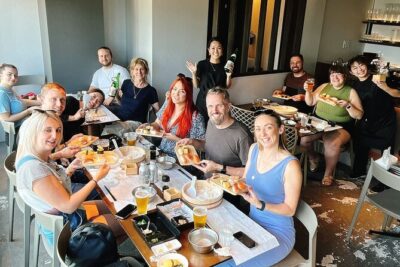
Sushi Making Tokyo Roll and Authentic Japanese Sushi Class
Read our review →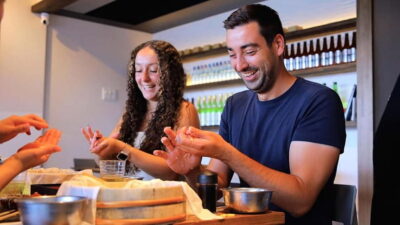
Roll and Authentic Sushi Making Class in Asakusa
Read our review →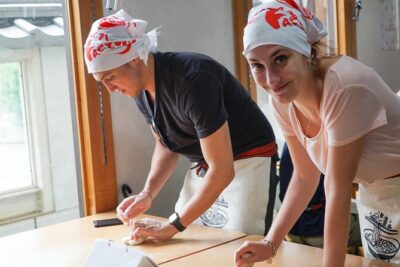
Ramen Cooking Class at Ramen Factory in Kyoto
Read our review →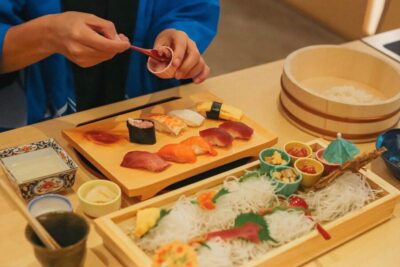
Sushi Making Class in a Happi Coat near a Famous Spot
Read our review →
Sushi Making Osaka Roll and Authentic Japanese Sushi Class
Read our review →
Tokyo Sushi Making Class in Tsukiji with Professional Chef
Read our review →
Ramen & Gyoza Cooking Class in Tokyo with Local Supermarket Visit
Read our review →Browse the lists this tour appears in