
Reviewed · CYCLING AND E-BIKE TOURS
Start from Kyoto Station: Early Morning E-Bike Tour with Kyotoite
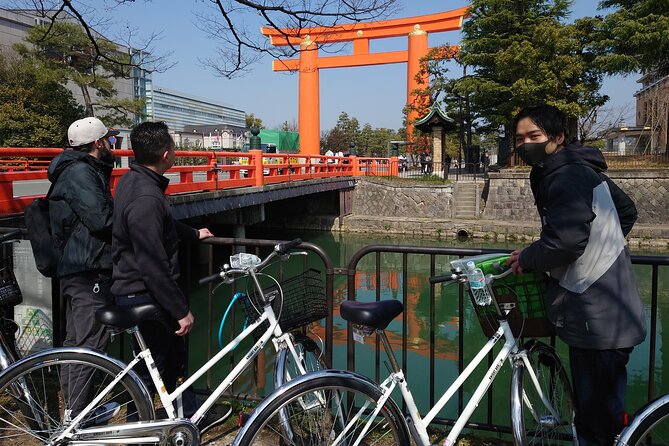
Kyoto is best before the city wakes up. This three-and-a-half-hour e-bike tour turns an early start into a smart sightseeing plan, linking Fushimi Inari, Sanjusangendo, Gion, Nanzen-ji, Heian Shrine, and the Kamogawa River without making you wrestle with subway crowds. I especially like the small maximum group of six and the way guides such as Aki, Sato, and Ryuto add local context, photos, and useful food advice along the way.
I also like that the bikes, helmets, water, raincoat, and insurance are included, so you can arrive at Kyoto Station and get moving. The main consideration is the physical side: the ride is described as manageable, but some hills appear along the route, and the early schedule may not suit anyone who prefers a slow breakfast.
In This Review
- Key points to know before booking
- Why an early e-bike ride works in Kyoto
- Starting at Kyoto Station and heading toward Fushimi Inari
- Sanjusangendo and its 1,001 Kannon figures
- Miyagawa-cho, Tatsumi Bridge, and old Gion lanes
- Nanzen-ji, one of Kyoto’s major Zen temples
- Heian Shrine and Kyoto’s capital story
- Returning along the Kamogawa River
- What the $84.92 price includes
- The bikes, hills, weather, and pace
- Who will get the most from this tour
- Booking advice and final verdict
- FAQ
- Where does the Kyoto e-bike tour start?
- Where does the tour finish?
- How long does the experience last?
- How many people can join the tour?
- Is the e-bike included in the price?
- Is bottled water provided?
- Does the tour include rain protection?
- What sights does the route visit?
Key points to know before booking
- Starts near Kyoto Station: Meet at Kyoto ECO Trip Flagship shop, 58 Higashikujo Muromachi, a practical base for an early ride.
- Visits six distinct areas: You see Fushimi Inari, Sanjusangendo, Miyagawa-cho, Tatsumi Bridge, Gion, Nanzen-ji, and Heian Shrine.
- Small-group format: No more than six people means easier questions, closer contact with the guide, and less chance of losing the group.
- Local guides add value: Aki is praised for family photos, while Ryuto is noted for explaining Shinto, Buddhism, and Kyoto’s past in clear English.
- About 3 hours 30 minutes: The stated time includes riding between stops, with the tour ending back at the starting shop.
- Good value for active sightseeing: At $84.92 per person, the price includes the e-bike and essentials, not food or entry fees.
Why an early e-bike ride works in Kyoto
Kyoto’s famous sights can become hard work later in the day. Streets fill, buses slow down, and the narrow lanes around Gion leave little room for wandering groups. Starting early gives you a calmer ride and lets you cover several areas before the busiest hours.
The bicycle is the real advantage here. You are not simply being taken from one attraction to the next. You travel along the connecting streets, follow parts of the Shirakawa and Kamogawa rivers, and see how Kyoto’s major sights fit together. That sense of place is difficult to get from a subway map.
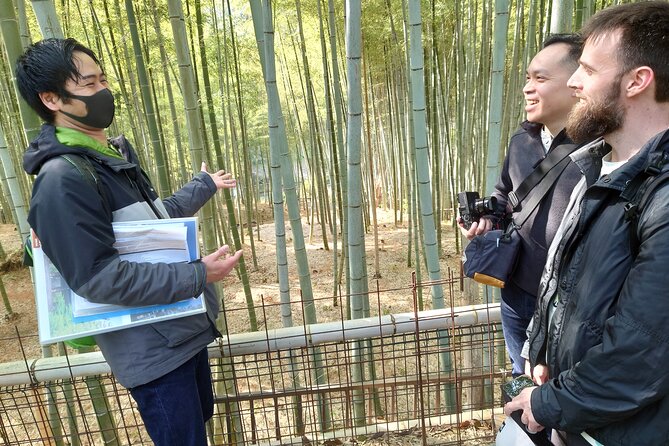
The tour is also small by design. With a maximum of six people, your guide can adjust explanations, help with directions, and keep an eye on the group. Guides have included Aki, Sato, and Ryuto. Aki has been praised for taking family photos, Sato for offering food suggestions after the ride, and Ryuto for his English and explanations of Shinto, Buddhism, and Kyoto’s development.
You should still treat this as an active tour, not a sightseeing bus with occasional photo stops. The route includes hills, and you need to be comfortable riding for several hours. The e-bike assistance should make the distance easier, but it does not remove the need to pedal, balance, and pay attention in city traffic.
More Bike Tours in Kyoto
- Bike Tour Exploring North Kyoto plus Lunch
★ 5.0 · 1,087 reviews - Arashiyama Bamboo Forest & Hidden Gems Bike Tour (Early Bird)
★ 5.0 · 613 reviews - 5 Top Highlights of Kyoto Full Day Bike Tour (E-bike option)
★ 5.0 · 511 reviews
Starting at Kyoto Station and heading toward Fushimi Inari
The meeting point is the Kyoto ECO Trip Flagship shop at 58 Higashikujo Muromachi in Minami Ward. It is close to Kyoto Station, which makes the location useful if you are staying near the station or arriving by train.
After the equipment handoff, the ride to Fushimi Inari takes about 20 minutes. That opening stretch gives you time to settle onto the bicycle before reaching the first major stop. Helmets, bicycles, bottled water, rain protection, and liability insurance are included.
Fushimi Inari-taisha is one of Kyoto’s essential sights, famous for its long rows of orange torii gates. The tour allows about 50 minutes here, enough to see the shrine area and take in the gates without trying to walk the entire mountain route.
The timing is a major benefit. Fushimi Inari becomes crowded, especially around the most photographed gates. An early arrival gives you a better chance of seeing the lower shrine area with room to move. Still, 50 minutes is not enough for every trail, so you should think of this as a focused visit rather than a full exploration of Mount Inari.
Sanjusangendo and its 1,001 Kannon figures
From Fushimi Inari, the ride to Sanjusangendo takes about 15 minutes. This temple is known for its hall containing 1,001 statues of Kannon, the Buddhist figure associated with mercy.
The stop adds a different kind of interest to the morning. Fushimi Inari is defined by its repeated gates and outdoor paths. Sanjusangendo gives you a quiet indoor setting and a powerful display of religious art. The contrast helps you understand that Kyoto’s religious sites are not all variations on the same theme.
The schedule allows time to pass through the temple area, though the information provided does not give a separate visit length for this stop. You should follow the guide’s timing and remember that the tour is built around several locations, not a long stay at each one.
Because the tour includes no snacks, this is a good point to keep your water handy. Bottled water is supplied, but food is not. If you need a morning meal, plan it before meeting the group or after returning to the station area.
Miyagawa-cho, Tatsumi Bridge, and old Gion lanes
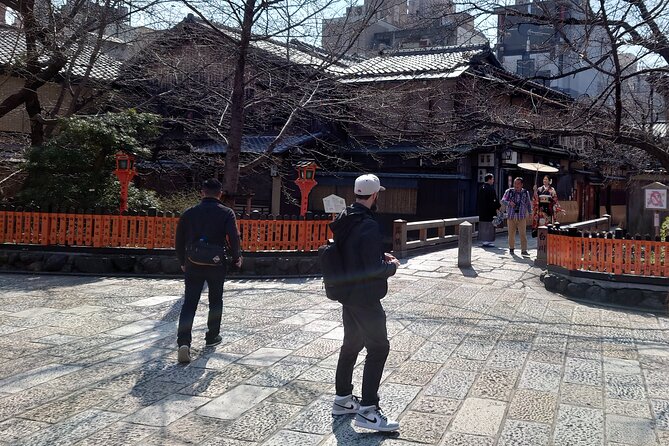
After Sanjusangendo, the group follows the Shirakawa River toward Miyagawa-cho and Tatsumi Bridge. The ride takes about 10 minutes, followed by a route through old backstreets leading into Gion.
This is one of the most appealing parts of the experience. Kyoto’s famous geisha district is easy to reduce to a few postcard views, but the bicycle route gives you a sense of the quieter streets behind the main visitor paths. You can see how small bridges, waterways, wooden buildings, and narrow lanes shape the district.
The route is also planned to avoid as much pedestrian traffic as possible, according to the experience details. That matters in Gion, where walking groups can clog the lanes and make cycling uncomfortable. You should still ride carefully and follow your guide closely. The narrow streets are part of the charm, but they demand patience.
The route through the Gion area takes about 20 minutes. That is enough for an overview and some photographs, not an extended cultural tour. A guide can explain what you are seeing, but the tour does not promise access to private buildings or encounters with geisha. Treat Gion as a street-level visit, not a staged performance.
A completely different kind of day out:
- PERFECT KYOTO 1-Day Bus Tour
★ 5.0 · 13,518 reviews - [Kyoto & Nara Day Tour] Sagano Scenic Railway & Nara Park & Fushimi Inari Taisha Thousand Torii Gates & Togetsukyo Bridge & Bamboo Grove & Kimono Forest (Departing from Osaka)
★ 4.9 · 10,942 reviews - Kyoto: Fushimi Inari, Kinkakuji, Bamboo Grove 1 Day Bus Tour
★ 4.8 · 4,316 reviews - Kyoto: Tea Ceremony in a Traditional Tea House in Kiyomizu
★ 4.9 · 3,519 reviews
Nanzen-ji, one of Kyoto’s major Zen temples
From Gion, it is about 15 minutes by bicycle to Nanzen-ji. The temple visit lasts around 20 minutes and brings you closer to central Kyoto.
Nanzen-ji is one of the most important Zen temples in Japan. Its grounds offer a strong change of pace after the urban streets of Gion. The stop is short, but it gives your guide a chance to explain Zen Buddhism and the role of the temple in Kyoto’s religious life.
The experience details do not specify which parts of the temple complex you enter or whether every building is visited. You should expect a concise guided stop rather than a full temple tour. That is not necessarily a flaw. The route covers a lot of ground, and a shorter visit keeps the bicycle circuit moving.
The ride itself adds value here. Instead of taking a taxi between Gion and Nanzen-ji, you pass through Kyoto under your own power. The changing streets help you see the city as a connected place, not a string of isolated attractions.
Heian Shrine and Kyoto’s capital story
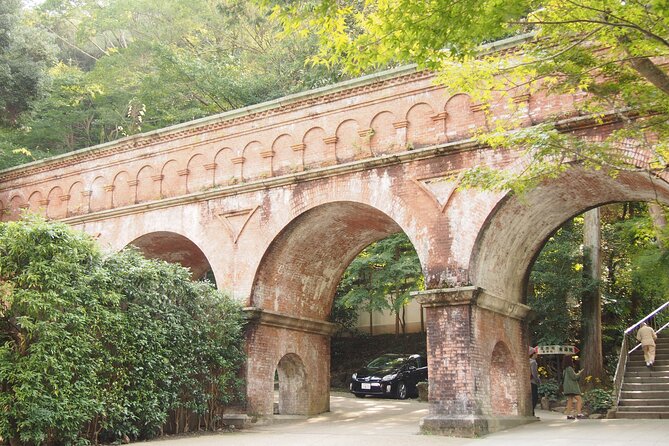
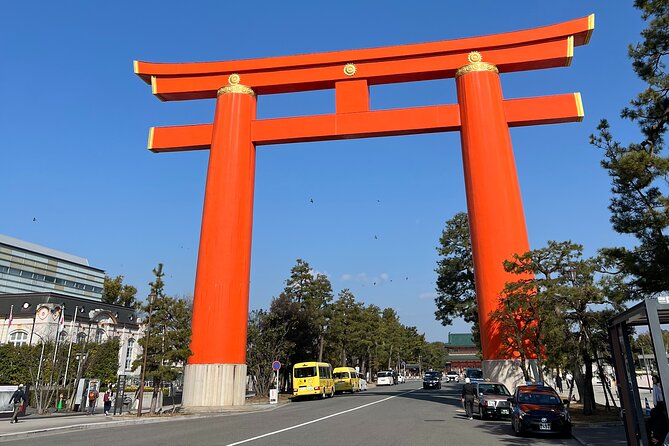
It takes about 10 minutes to ride from Nanzen-ji to Heian-Jingu Shrine. The final major stop lasts around 20 minutes.
Heian Shrine is presented as a symbol of Kyoto’s role as Japan’s capital about 800 years ago. Its large shrine setting gives the tour a broad historical finish after the more intimate lanes of Gion and the quieter grounds of Nanzen-ji.
The shrine is a good final landmark because it helps tie together the morning’s themes: Shinto at Fushimi Inari and Heian Shrine, Buddhism at Sanjusangendo and Nanzen-ji, and everyday city life in Gion. If you ask questions, guides such as Ryuto have been praised for explaining the differences between Shinto and Buddhism in an accessible way.
Again, the stop is brief. You will get an introduction and time to look around, but not a full study of the shrine complex. If Heian Shrine is high on your personal list, you may want to return later for a longer visit.
Returning along the Kamogawa River
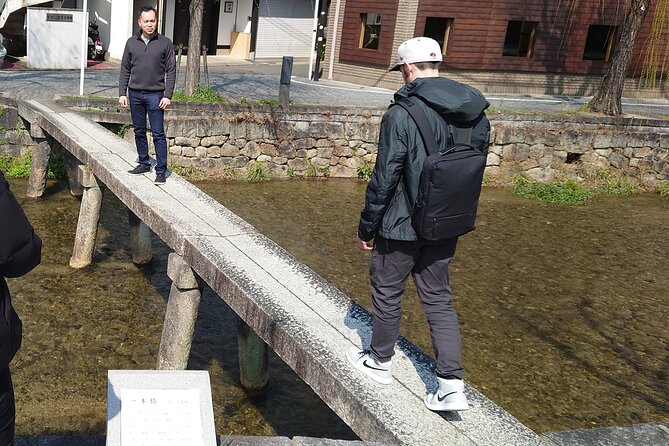
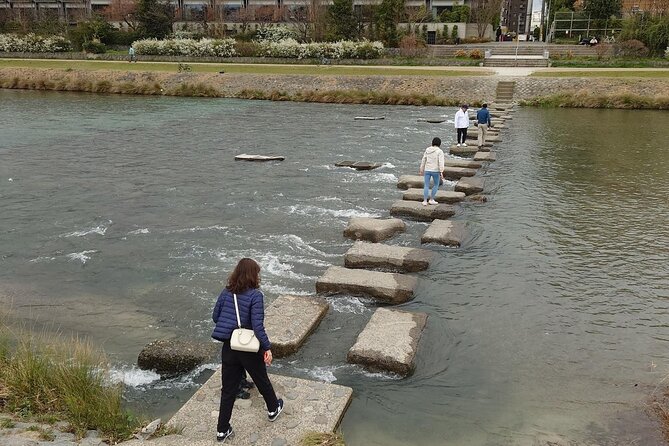
The ride back to the starting shop follows the Kamogawa River, Kyoto’s best-known river. The trip from Heian Shrine to the shop takes about 20 minutes, with roughly 10 minutes of riding listed before the final return section.
This closing stretch is a pleasant way to finish. River routes often feel less pressured than central streets, and the return gives you a final view of Kyoto beyond its famous temples. You end where you started, which is convenient if you have a train to catch or want to continue exploring from Kyoto Station.
The overall duration is approximately three hours and 30 minutes, including riding time. One account describes the ride lasting almost four and a half hours, so it is wise to leave some flexibility in your morning. That extra time may reflect questions, photos, weather, or the guide’s pace, but you should not schedule a tight appointment immediately afterward.
What the $84.92 price includes
At $84.92 per person, this is not the cheapest way to see Kyoto. The value comes from the combination of transport, equipment, a small group, and a guide who knows how to link the sights efficiently.
You do not need to find an e-bike rental shop, compare bicycle types, arrange insurance, or work out a route through unfamiliar streets. The bicycle and helmet are included, along with bottled water, a raincoat, and liability insurance. Those inclusions remove several small costs and practical worries.
The price does not include snacks. Entry is shown as free for Fushimi Inari, Nanzen-ji, and Heian Shrine, while the information provided does not list a separate admission charge for Sanjusangendo. You should still plan your own food before or after the tour.
For a family or small group, the price can make sense because the guide’s attention is shared among no more than six people. The family group with three teenagers found the activity especially memorable, and the teens called it their favorite Kyoto experience. That is a strong sign that the tour can work for mixed-age groups who want more movement than a standard walking tour.
The bikes, hills, weather, and pace
The bicycles are described as traditional-style e-bikes that are not too bulky. That is useful in Kyoto, where narrow streets and close pedestrian traffic can make a large bicycle awkward.
The ride is not described as especially strenuous, but hills are part of the route. You should be comfortable cycling and willing to pedal for several hours. If you rarely ride a bicycle, ask yourself if the time on the saddle will add to your enjoyment or become a chore.
Weather also matters. Rain protection is included, and one tour group finished in light rain while still enjoying the outing. Even so, an early morning ride can feel different depending on the season. Dress for movement and bring any personal layers you may need, since the provided equipment is limited to the listed items.
A small group helps with pace. You are less likely to wait for a large crowd at every corner, and the guide can respond to questions. On the other hand, you will need to stay with the group and follow the planned route. This is not a free-riding session where you choose every street and stop.
Who will get the most from this tour
I would recommend this experience to you if you want to see a lot of Kyoto in one morning and enjoy being outdoors. It is particularly useful for first-time visitors who want an overview before deciding which temples or districts deserve a longer return visit.
Families with teenagers should consider it seriously. The route provides variety, the e-bikes reduce some of the effort, and the guides can keep the morning from feeling like a long sequence of temple interiors. Couples and small groups who prefer a personal guide will also benefit from the six-person limit.
The tour suits curious visitors who like asking questions. Ryuto has been praised for handling many questions about Shinto, Buddhism, and Kyoto’s past, while Sato has helped with food recommendations after the ride. Aki’s photo-taking is another practical touch for families who want pictures of the whole group.
You may want to skip it if you dislike bicycles, need a slow start, or want extended time inside each temple. It is also not the best choice for a packed day with a firm appointment after 11:00 AM, since the actual finish can run longer than the stated schedule.
Booking advice and final verdict
The activity is booked about 15 days ahead on average, so you should reserve early if your Kyoto dates are fixed. Confirmation is provided at booking, the ticket is mobile, and free cancellation is available up to 24 hours before the start time. Changes or cancellations inside that window are not accepted for a refund.
The schedule changes by season. From January 1 through February 28, the listed Monday hours are 8:30 AM to noon. From March 1 through June 30, the tour runs Monday through Sunday from 7:30 AM to 11:00 AM. Check the time shown for your date before arranging breakfast or other plans.
Book this tour if you want efficient, active sightseeing with local guidance. The best reasons are the early start, compact group, included e-bike, and route through both major sights and quieter city streets. Skip it if cycling is not comfortable for you or if Fushimi Inari, Nanzen-ji, and Heian Shrine each deserve a long, unhurried visit. For most active first-time visitors, $84.92 is a fair price for a useful Kyoto orientation that covers more ground than walking alone.
FAQ
Where does the Kyoto e-bike tour start?
It starts at Rental Bicycle KYOTO ECO TRIP Flagship shop, 58 Higashikujo Muromachi, Minami Ward, Kyoto, 601-8001, Japan, near Kyoto Station.
Where does the tour finish?
The tour ends back at the same meeting point.
How long does the experience last?
The scheduled duration is approximately 3 hours and 30 minutes, including travel time between stops.
How many people can join the tour?
The group has a maximum of six participants.
Is the e-bike included in the price?
Yes. Bicycle use and a helmet are included.
Is bottled water provided?
Yes. Bottled water is included, but snacks are not.
Does the tour include rain protection?
Yes. A raincoat is included among the supplied equipment.
What sights does the route visit?
The route includes Fushimi Inari-taisha Shrine, Sanjusangendo Temple, Miyagawa-cho, Tatsumi Bridge, Gion, Nanzen-ji Temple, Heian Shrine, and a return ride along the Kamogawa River.
Just added in Kyoto
- The “Golden Route” and Ancient Japan by DIAMIR Erlebnisreisen – 14-Day Tour★ 2.0 · 2 reviews
- Japan: Castles & Cuisine by G Adventures – 6-Day Kyoto to Osaka Tour★ 4.5 · 4 reviews
- Cycle Japan by Explore! – 13-Day Kyoto to Tokyo Tour★ 4.7 · 12 reviews
- Cycle Japan by Intrepid Travel – 11-Day Kyoto to Tokyo Tour★ 4.8 · 2 reviews
- Classic Japan by Intrepid Travel – 11-Day Kyoto to Tokyo Tour★ 4.4 · 14 reviews
- Ancient & Modern Japan 14-Day Tour by Exodus Adventure Travels★ 4.4 · 40 reviews
- 5 Day Cultural Adventure of Kyoto, Nara & Osaka by Tourist Journey★ 2.5 · 2 reviews
- 12 Days Kinosaki Onsen Escape: A Journey Through Japan’s Timeless Towns by UME Travel★ 4.8 · 5 reviews
Cycling and E-Bike Tours, compared.
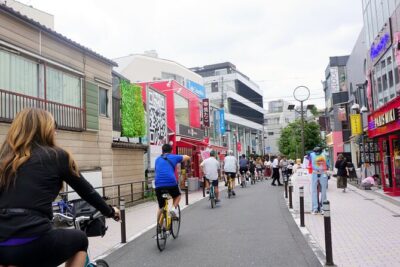
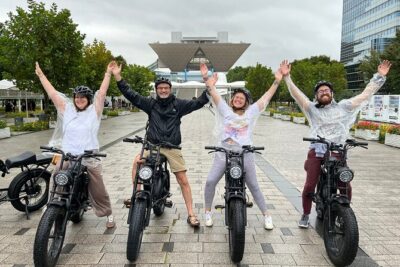
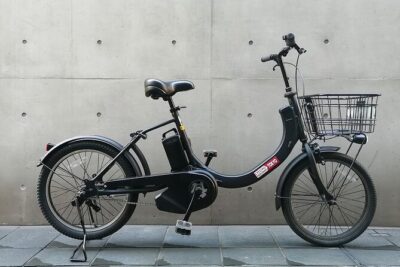
3h Tokyo E-Bike Tour: Hidden Gems, and Local Life with guide
Read our review →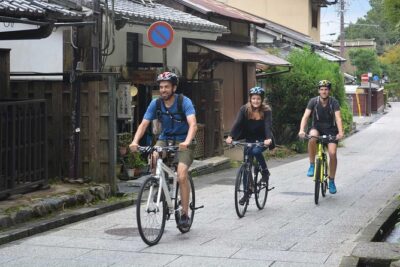
Arashiyama Bamboo Forest & Hidden Gems Bike Tour (Early Bird)
Read our review →
5 Top Highlights of Kyoto Full Day Bike Tour (E-bike option)
Read our review →

Hiroshima 2hr Peace Cycling Tour with Local Guide
Read our review →Browse the lists this tour appears in