
Reviewed · COOKING CLASSES
Sushi Making Experience Luxury Course in Nara
Roll up your sleeves. This 90-minute Nara class takes you through the full sushi process, from seasoning shari, or sushi rice, to shaping nigiri with sushi-grade fish. I especially like the freshly grated wasabi and the chance to wear a chosen rental garment, two details that make this feel like a cultural activity rather than a quick cooking demonstration.
I also like the personal help built into the lesson. The instructors guide beginners through each movement, and the class includes a certificate and souvenir photography. The main consideration is the price: at $115.96 per person, this is not a cheap meal, and the included food is limited to eight pieces of premium sushi.
In This Review
- Key things to know before booking
- What this Nara sushi class actually offers
- Starting with shari, the foundation of every piece
- Grating fresh wasabi and choosing your toppings
- Handling sushi-grade fish and shaping nigiri
- Traditional clothing and the cultural side of the lesson
- The graduation ceremony and what you take home
- Is $115.96 good value?
- Getting there and handling the practical details
- Dietary needs, allergies, and ingredient changes
- Who will enjoy this experience most?
- My booking advice for a Nara day
- Should you book the Nara luxury sushi course?
- FAQ
- How long does the sushi-making experience last?
- Where does the class start?
- Where does the activity end?
- How many pieces of sushi are included?
- Are drinks included?
- Can I request vegetarian or vegan food?
- Can the class handle allergies or gluten-free requests?
- What happens if I arrive late?
- Can I cancel for a full refund?
Key things to know before booking
- You make sushi from the rice up: The lesson begins with shari, so you learn the part that gives sushi its balance and texture.
- Fresh wasabi is grated by hand: The aroma and sharper flavor offer a clear contrast to prepared wasabi.
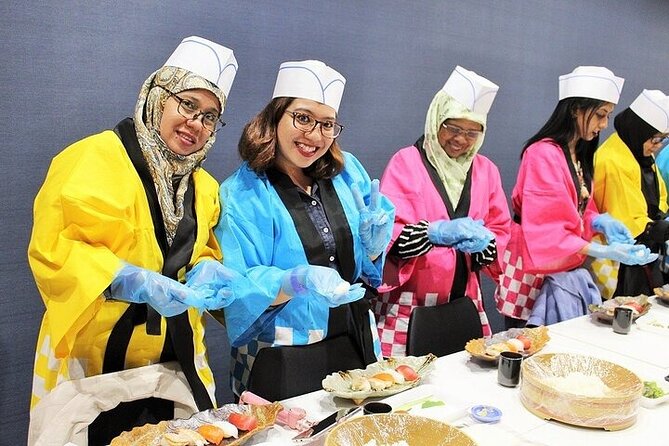
- You wear a traditional-style outfit: Several rental clothing options are available, adding a visual and cultural touch to the class.
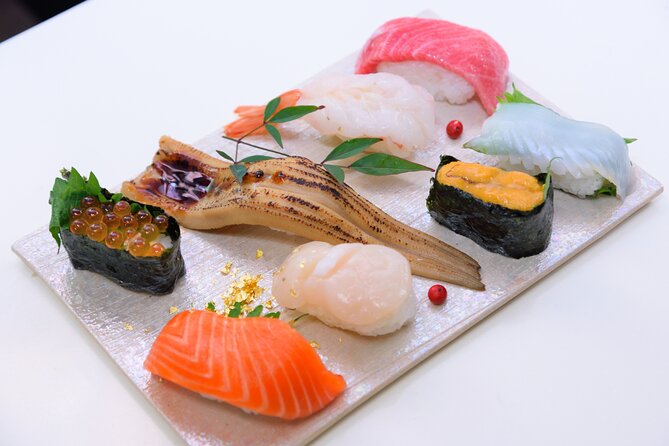
- Eight pieces of premium sushi are included: You prepare and eat the sushi you make, but drinks and other Japanese dishes cost extra or are not included.
- You finish with a certificate: The graduation moment gives the short class a clear sense of completion.
- Dietary requests are possible: Vegetarian, vegan, Muslim-friendly, allergy-friendly, non-raw, and gluten-free options are available if arranged in advance.
What this Nara sushi class actually offers
This is a hands-on sushi lesson at Umemori Sushi School, located at 221 Hokkejicho in Nara. The scheduled activity lasts about one hour and 30 minutes, and it ends at the same place where you begin.
The appeal is simple: you are not only watching someone shape sushi. You prepare the rice, grate wasabi, work with sushi-grade seafood, choose toppings, and form the finished pieces yourself. That sequence gives you a better sense of how much care goes into a food that can look deceptively simple.
I like the way the class includes the less glamorous parts of sushi-making. Beginners often think sushi starts with fish and ends with rice, but the rice needs careful seasoning and handling. Learning to prepare shari first helps you understand why the final bite depends on more than the topping.
The class also brings in Japanese food culture. You learn some of the meaning behind sushi and the actions involved in making it, rather than simply copying a recipe. One review specifically praised learning Japanese words and actions while wearing traditional clothing, and that combination should appeal to you if you want an activity with a cultural element.
More Cooking Classes in Nara:
- Sushi Making Tokyo Roll and Authentic Japanese Sushi Class
★ 5.0 · 3,971 reviews - Tokyo: Roll and Authentic Sushi Making Class in Asakusa
★ 4.9 · 1,957 reviews - Ramen Cooking Class at Ramen Factory in Kyoto
★ 5.0 · 1,937 reviews
Starting with shari, the foundation of every piece
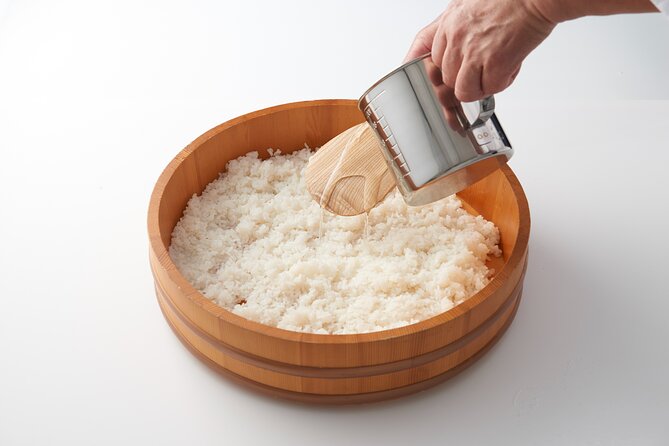
The first stage is making shari, the seasoned rice used for sushi. This is an important part of the lesson because rice is not a filler. Its temperature, seasoning, texture, and shape affect the whole piece.
You receive instruction on how to prepare the rice correctly before moving on. The goal is not just to make something edible during class. You learn a method you can repeat at home, which gives the session more value than a one-time tasting.
The lesson is suitable for beginners, so you do not need previous kitchen experience. One review described the activity as accessible to anyone, including people with different levels of cooking skill. That is useful to know if your sushi-making background consists only of ordering from a restaurant menu.
The class is also a good fit for couples, solo visitors, and groups. The work is divided into clear steps, so you always have something practical to do instead of standing at the edge of a demonstration.
Grating fresh wasabi and choosing your toppings
Next comes the wasabi. Rather than relying only on a tube or prepared paste, you grate fresh wasabi and notice its aroma as you work. This small step is one of the class’s most distinctive features because it connects the lesson to the ingredients themselves.
You can also choose from toppings such as green onion and ginger. Ingredients may change with the season, so the exact selection is not fixed. That is worth keeping in mind if you have your heart set on a particular fish or garnish.
This part of the class should be fun for families and first-time cooks because it gives you choices without requiring advanced technique. You are not simply following a fixed plate. You can make decisions about the toppings you prefer, within the options available that day.
The included meal is eight pieces of premium sushi. The wording suggests a tasting-sized portion rather than a full lunch, so plan accordingly. Drinks are not included, and neither are other Japanese foods such as tempura, tofu, or pork shabu-shabu.
Handling sushi-grade fish and shaping nigiri
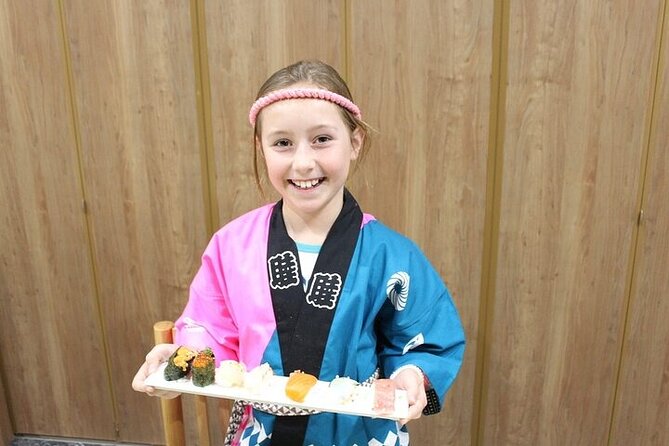
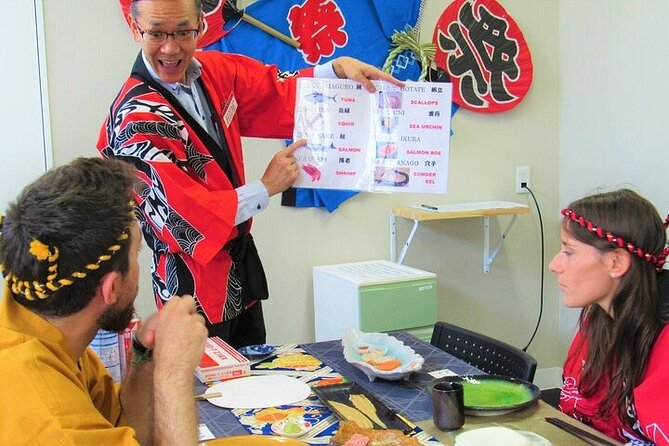
The fish preparation stage is where the lesson becomes more technical. You learn how to cut fresh sushi-grade seafood before shaping the pieces. The instructors guide you through the process, with help adjusted to your level.
Cutting fish for sushi requires more care than slicing an ordinary fillet. The direction, thickness, and size influence how the fish feels when you eat it. Even if you never repeat the cutting technique at home, learning the reason for the steps can change how you appreciate sushi in Japan.
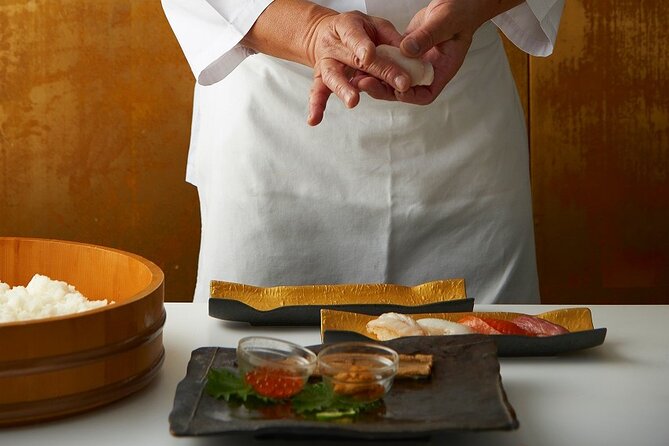
Then you shape the sushi. Nigiri may look like a small oval of rice with fish on top, but getting the rice to hold together without crushing it takes practice. The class gives you a chance to try the movement under instruction, which is more useful than simply watching an expert produce perfect pieces.
The available review comments point to clear English guidance. One person noted that the teachers spoke enough English to answer questions and guide the class. That does not promise a fully English-language lecture for every minute, but it does suggest that English-speaking participants can ask for help and follow the main process.
A few more options to weigh up in Nara
- World Heritage Kyoto & Nara Uji Authentic Matcha Experience
★ 5.0 · 1,573 reviews - Nara Half Day Trip Walking Tour (Private Option Available)
★ 5.0 · 937 reviews - Nara Early Morning Tour (Kyoto or Osaka Departure Available)
★ 5.0 · 676 reviews - Osaka: Nara and Uji Day Trip with Deer Park and Hot Spring
★ 4.4 · 302 reviews
Traditional clothing and the cultural side of the lesson
The rental clothing adds something you do not get from a standard cooking class. You can choose from several garments and wear one during the activity, creating a more distinctly Japanese setting.
I would treat this as part of the atmosphere rather than the main reason to book. The heart of the class is still the food, but the clothing makes the experience more memorable and gives the souvenir photographs a stronger sense of place.
The cultural lesson also covers the significance of sushi in Japan. That context matters because sushi is tied to technique, presentation, seasonality, and respect for ingredients. You may leave with a better understanding of why a small plate can require so much preparation.
This is especially useful if you have already seen major temples and shrines in Nara and want a different kind of local activity. You are still learning about Japan, but through food and everyday craft rather than architecture.
The graduation ceremony and what you take home
After you complete the sushi-making steps, the class ends with a graduation ceremony. You receive a certificate of completion, and souvenir photography is included.
The ceremony may sound playful, but it gives the short session a proper finish. You get a clear record of what you learned, and the photographs help preserve the clothing, food, and group setting. If you are planning a special occasion in Nara, this final touch could make the class feel more substantial.
The practical reward is the set of skills. You learn how to prepare sushi rice, grate fresh wasabi, cut sushi-grade fish, and form sushi. Recipes and techniques can be used at home, although you will need access to suitable ingredients and tools if you want to recreate the full meal.
The school also provides authentic tools during the lesson. That matters because sushi-making depends on handling as much as ingredients. Using the right equipment gives you a better feel for the process than assembling everything with ordinary kitchen tools.
Is $115.96 good value?
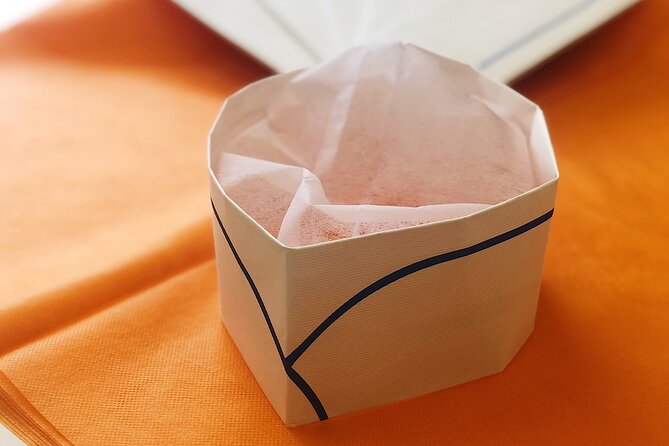
At $115.96 per person, this course is priced as a special activity rather than a casual meal. The cost includes instruction, eight pieces of premium sushi, rental clothing, selected toppings, a certificate, and souvenir photography.
I think the value depends on what you want from the outing. If your goal is simply to eat sushi, you can spend less at a restaurant. If you want a guided cultural activity with food, practical instruction, dress-up elements, and a keepsake, the price is easier to justify.
The 90-minute length is also a factor. You receive a focused lesson, but this is not an all-day cooking school. The limited duration works well in a Nara itinerary, especially if you want to fit in temples, museums, or other sights on the same day.
The food portion is modest. Eight pieces may satisfy some people, but not everyone, and extra drinks or dishes are not part of the package. I would avoid booking this as your only meal plan for the day if you have a large appetite.
The activity is booked, on average, about 40 days ahead. That suggests you should reserve early if your Nara schedule is fixed, especially during busy travel periods. Free cancellation is available until 24 hours before the start time, which gives you some flexibility.
Getting there and handling the practical details
The meeting point is 221 Hokkejicho, Nara, postal code 630-8001. It is near public transportation, and the directions provided are described as helpful. Still, I would allow time to find the exact entrance, change clothing, and settle in before the start.
Late arrival is a serious issue here because the class has multiple stages and other people may be present. If you are delayed by up to 15 minutes, contact the emergency number, +81-742-34-5789. Arriving more than 30 minutes late is treated as a cancellation, with no refund, and a shorter delay may mean missing part of the lesson.
The activity takes place in a building without an elevator. Staff can help you use the stairs, but you should mention any mobility concern before booking or contact the provider in advance. Service animals are allowed.
The booking information describes the instruction as suitable for small groups, but it also lists a maximum of 200 participants. Those details do not fully explain the exact class size, so I would confirm the expected group arrangement if personal attention is your top priority.
Dietary needs, allergies, and ingredient changes
The school offers options for vegetarians, vegans, and Muslims. It can also accommodate allergies, non-raw preferences, and gluten-free needs. You must inform the provider before the class, rather than waiting until you arrive.
This is an important point for a sushi lesson because raw seafood, soy, gluten, and other ingredients may be part of the normal process. Advance notice gives the instructors time to prepare a suitable alternative.
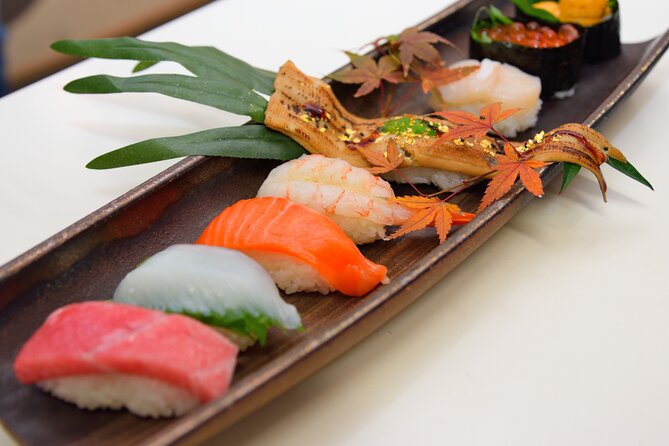
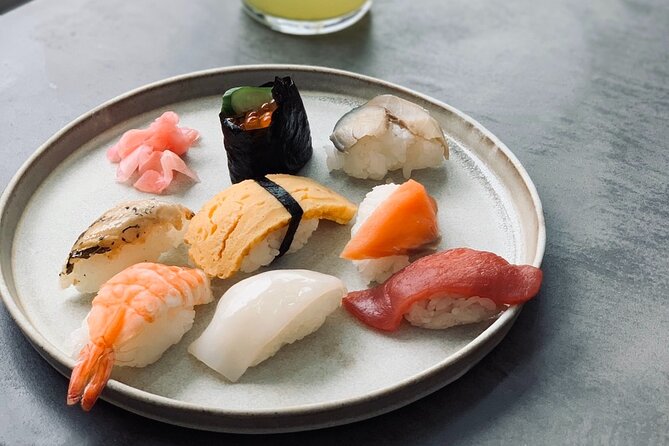
Toppings can vary by season, so the food shown in promotional photos may not be exactly what you receive. The inclusion of green onion, ginger, and other choices gives you some control, but the exact fish and garnishes are not guaranteed.
Drinks are not included. Other Japanese foods, specifically tempura, tofu, and pork shabu-shabu, are also outside the package, as are optional menu items.
Who will enjoy this experience most?
I would recommend this class to first-time sushi makers who want clear guidance and a finished result within a short session. You do not need strong cooking skills, and the step-by-step format makes the activity approachable.
It also suits people who want more than a food sample. The clothing, Japanese words and actions, fresh wasabi, graduation ceremony, and certificate all add cultural interest.
Families and mixed-skill groups should find the format manageable because the instructors provide help at different levels. Couples may enjoy the shared task and souvenir photographs, while solo participants can join a group activity without needing to organize one themselves.
You may want to skip it if you are looking for a full meal, a long professional cooking course, or a low-cost food activity. The price is high for eight pieces of sushi, and the 90-minute schedule leaves little room for a slow, relaxed workshop.
My booking advice for a Nara day
Book this on a day when you can reach Hokkejicho early. Nara is easy to enjoy at a gentle pace, but a late start or a tight connection can create needless stress, and this class has limited tolerance for delays.
Tell the provider about dietary needs when you reserve. Also consider your appetite. If you expect a large lunch, plan another meal before or after the class because the included sushi is a tasting portion.
You should also decide if the clothing and photos matter to you. They are part of the experience’s appeal, but not every visitor wants a dress-up element. If you prefer a quiet technical lesson, the cultural presentation may feel more elaborate than necessary.
Should you book the Nara luxury sushi course?
Book it if you want a short, well-structured Japanese food activity that combines practical skills with cultural touches. The strongest reasons are the full process, fresh wasabi, guided fish preparation, traditional clothing, and certificate at the end.
I would be more cautious if your main concern is value per bite. At $115.96, the course costs much more than a simple sushi lunch, and only eight pieces are included. You are paying for instruction, tools, clothing, photographs, and the chance to make the food yourself.
For a first sushi class in Japan, though, the package makes sense. The lessons are friendly to beginners, English guidance is available, dietary requests can be arranged, and the 90-minute format fits neatly into a day in Nara. Reserve at least 24 hours ahead if plans change, and book early if your dates are firm.
FAQ
How long does the sushi-making experience last?
The activity lasts approximately one hour and 30 minutes.
Where does the class start?
The meeting point is 221 Hokkejicho, Nara, 630-8001, Japan.
Where does the activity end?
The class ends back at the same meeting point.
How many pieces of sushi are included?
The package includes eight pieces of premium sushi.
Are drinks included?
No. Drinks are not included in the price.
Can I request vegetarian or vegan food?
Yes. Vegetarian, vegan, and Muslim-friendly options are available if you inform the provider before the class.
Can the class handle allergies or gluten-free requests?
Yes. Allergy-friendly, non-raw, gluten-free, and other options are available with advance notice.
What happens if I arrive late?
If you are delayed by up to 15 minutes, contact the organizer at +81-742-34-5789. Arrivals more than 30 minutes late are treated as cancellations, and refunds are not issued for late arrival.
Can I cancel for a full refund?
Yes. You can cancel up to 24 hours before the local start time for a full refund. Cancellations or changes made less than 24 hours before the activity are not refunded or accepted.
Just added in Nara
- Hammer a Pattern on Your Ring Workshop★ 5.0 · 57 reviews
- All must-sees in 3 hours – Nara Park Classic Tour! From JR Nara!★ 5.0 · 108 reviews
- Nara Private Tour: Flexible Pickup from Kyoto, Osaka, or Nara★ 5.0 · 17 reviews
- Private Nara Tour and Sake Tasting (Departing from Kyoto/Nara)★ 5.0 · 40 reviews
- Nara Highlight Walking Tour with Furoshiki Experience with Lunch★ 5.0 · 73 reviews
- Nara Sake Tasting Tour at Local Brewerie(tasting fee included)★ 5.0 · 12 reviews
- Nara World Heritage PRIVATE TOUR★ 4.5 · 15 reviews
- Nara – Highlights Bike Tour★ 4.5 · 89 reviews
Cooking Classes, compared.
Sushi Making Tokyo Roll and Authentic Japanese Sushi Class
Read our review →
Roll and Authentic Sushi Making Class in Asakusa
Read our review →
Ramen Cooking Class at Ramen Factory in Kyoto
Read our review →
Sushi Making Class in a Happi Coat near a Famous Spot
Read our review →
Sushi Making Osaka Roll and Authentic Japanese Sushi Class
Read our review →
Tokyo Sushi Making Class in Tsukiji with Professional Chef
Read our review →
Ramen & Gyoza Cooking Class in Tokyo with Local Supermarket Visit
Read our review →Browse the lists this tour appears in