
Reviewed · CYCLING AND E-BIKE TOURS
Tokyo Deep Inside Cycle Tour~3 Hours E Bike Tour around Tokyo
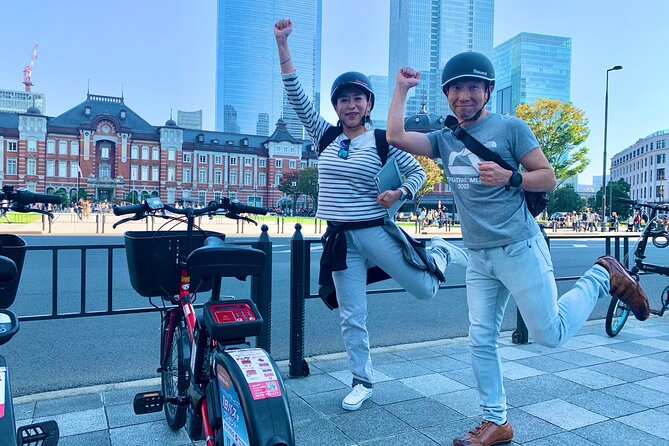
Tokyo rewards a closer look. This three-hour e-bike tour links Tokyo Station, Kanda, Akihabara, old castle grounds, shrines, and the Imperial Palace in one well-planned ride. You get the city’s major contrasts without spending the day underground or walking until your feet revolt.
I like the small group size, capped at four people, and the way the route moves through both famous sights and ordinary neighborhood streets. I also like the electric assistance. It lets you cover about 6.8 miles, or more than 10 kilometers, with much less effort than a regular bicycle. The main consideration is that the tour follows city streets, and the pace may slow if another rider is new to cycling.
You pay $83.23 per person for about three hours, including the e-bike, helmet, bicycle insurance, and a taiyaki snack. That is a fair price if you want a guide, historical context, and a broad look at central Tokyo in one afternoon. You should bring your own drink, arrive early, and remember that riders under 145 centimeters tall cannot participate.
In This Review
- Key Points Before You Book
- Why This Route Works So Well in Tokyo
- Starting at Tokyo Station at 1:00 pm
- Kanda Bridge Gate and the Old Commoners’ Town
- Akihabara and Kanda Shrine Tell Different Tokyo Stories
- Hijiribashi Bridge and a Taiyaki Pause
- Jimbocho’s Book District and Yasukuni Shrine
- Kitanomaru Park and the Imperial Palace
- Returning the Bikes at Marunouchi Building
- What the $83.23 Price Really Buys You
- Cycling, Safety, and Group Pace
- Rain Plans and Booking Details
- Who Should Book This Tokyo Ride?
- Should You Book the Tokyo Deep Inside Cycle Tour?
- FAQ
- How long does the Tokyo Deep Inside Cycle Tour last?
- What time does the tour begin?
- Where does the tour meet?
- Where does the tour finish?
- How many people can join the tour?
- Can I make the tour private?
- Is bicycle equipment included?
- Is food included?
- Are drinks included?
- What happens if it rains?
- Is there a height requirement?
- Can I cancel for a refund?
Key Points Before You Book
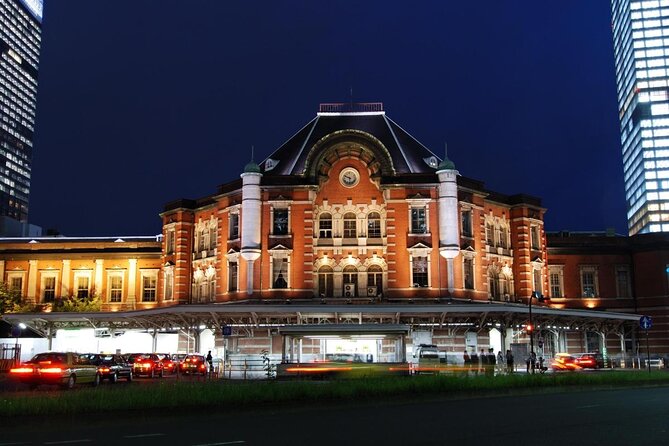
- A compact route with a wide range: Ride from Tokyo Station and Kanda to Akihabara, Kanda Shrine, Jimbocho, Yasukuni Shrine, Kitanomaru Park, and the Imperial Palace.
- Electric help without a workout: The bikes suit riders of different experience levels and are useful after several days of walking.
- A maximum of four people: The small shared group makes it easier to hear the guide and ask questions. Booking four people turns the outing into a private tour.
- One traditional snack included: At Kanda Daruma, you choose taiyaki filled with red bean paste or cream.
- A strong history theme: The guide explains how Edo changed into modern Tokyo, with stops tied to samurai rule, festivals, religion, postwar rebuilding, and the Imperial family.
- Weather affects the plan: Rain may lead to a walking route using the subway, a different date, or a full refund.
Why This Route Works So Well in Tokyo
Tokyo can be hard to read at street level. The city is huge, districts change character within a few blocks, and the most interesting details are often found between the headline sights. An e-bike gives you a useful middle ground: faster than walking, more personal than a train, and easier than a standard bicycle.
The route also has a clear story. You begin at Tokyo Station, where modern business Tokyo meets the former grounds of Edo. From there, the ride moves through Kanda and Akihabara, then toward old castle territory and the Imperial Palace. The stops are not random photo opportunities. Each one helps explain a different choice Tokyo made as it changed over time.
A three-hour tour cannot offer a full lesson in Japanese history. It can, however, give you a framework for the rest of your stay. After seeing Kanda’s older streets, you may look at Tokyo’s polished office districts differently. After hearing about Edo Castle, the Imperial Palace grounds will feel less like an isolated royal site and more like part of the city’s long political story.
More Bike Tours in Tokyo
- Tokyo Great Cycling Tour
★ 5.0 · 811 reviews - Tokyo Top Highlights 3h Guided E-bike Tour
★ 5.0 · 714 reviews - 3h Tokyo E-Bike Tour: Hidden Gems, and Local Life with guide
★ 5.0 · 670 reviews
Starting at Tokyo Station at 1:00 pm
You meet at the JTB Marunouchi Store in the Marunouchi Eiraku Building, close to Tokyo Station. The location is practical, with access from the Marunouchi South Exit and direct connections to Tokyo Station on the Marunouchi Line and Nijubashimae Station on the Chiyoda Line.
The opening stop lasts about 15 minutes. Here, the guide sets up the main theme by explaining how land that was once open fields became the Tokyo cityscape you see today. This is a useful beginning because Tokyo’s modern appearance can hide the decisions and changes that shaped it.
The afternoon start time works well for anyone who wants a morning at a museum, market, or neighborhood café. It also means you should not treat the tour as a flexible drop-in activity. If you arrive late without advance notice, the tour can be canceled with no refund, so allow extra time for finding the meeting point inside the station area.
Kanda Bridge Gate and the Old Commoners’ Town
The remains of the Kanda Bridge Gate stone wall offer an early connection to Edo. The stop focuses on the town that developed along the Nihonbashi River, along with traditional festivals and the origin of the area’s name.
This is the sort of stop that works better with a guide than on your own. A stone wall may not demand much time by itself, but its location opens a window onto how Edo was organized and how waterways supported the city. You get context instead of simply passing another old structure.
The ride then reaches Kanda Matsuya, where the mood shifts from grand city planning to neighborhood tradition. Kanda is presented as a place where common people’s culture remains visible, with narrow lanes and older businesses offering a contrast to nearby skyscrapers.
The itinerary describes this portion almost like a treasure hunt through small alleys. That sounds appealing, but remember that city cycling requires attention. You will need to follow the guide, watch traffic, and avoid treating the ride like a casual sightseeing stroll.
Akihabara and Kanda Shrine Tell Different Tokyo Stories
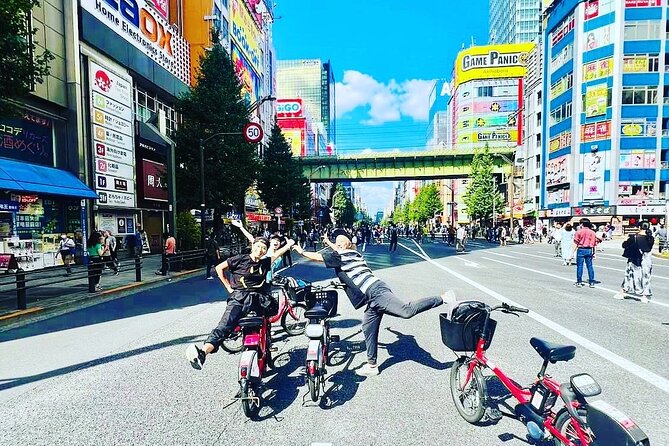
Akihabara receives about 15 minutes, and the stop looks at how the district changed with the times. Its postwar beginnings in a black market area eventually led to the electronics and pop-culture district known around the world today.
You do not get a long shopping session here. The value is in seeing Akihabara as part of Tokyo’s postwar story rather than only as a place for electronics, games, or anime. The tour’s broader point is that Tokyo repeatedly adapts to new needs while older districts retain their identity.
Kanda Shrine provides a longer stop, about 35 minutes. It was the chief Shinto shrine of Edo, and the guide discusses the Edo period, the shrine’s role, and the Kanda Festival. There is also time for a stop at a souvenir shop on the grounds.
This is one of the route’s strongest sections. You get religious culture, local festival traditions, and a sense of how a shrine functions within the city. The stop is not just a quick look at a gate followed by a bicycle ride. You have enough time to listen, look around, and use the facilities if needed.
Guides named Micky, Kumiko, and Tussie have led this experience. The available feedback gives particular praise to the guides’ friendly manner, safety awareness, and ability to explain history without overwhelming people. You should still expect each guide to have a slightly different personality and rhythm.
A completely different kind of day out:
- Tokyo Disney Resort – Tokyo Disneyland & Tokyo DisneySea Park Tickets
★ 4.8 · 99,488 reviews - SHIBUYA SKY Ticket
★ 4.7 · 46,509 reviews - JR Whole Japan Rail Pass
★ 4.8 · 29,150 reviews - Mt Fuji and Hakone 1-Day Bus Tour Return by Bullet Train
★ 5.0 · 26,383 reviews
Hijiribashi Bridge and a Taiyaki Pause
At Hijiribashi Bridge, you look down toward Ochanomizu Station and learn about the area as a student town. This stop connects with the previous one at Akihabara: one district grew through business and technical ambition, while Ochanomizu developed around education and students.
The stop lasts about 10 minutes, so the guide keeps the explanation focused. It is also a chance to pause after riding through several districts and take in a different angle on Tokyo’s dense urban layout.
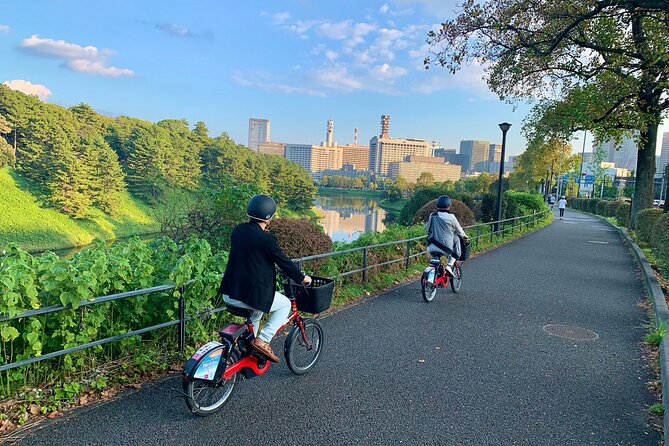
Soon after comes Kanda Daruma, where the tour includes a taiyaki break. You choose either anko, a sweet red bean filling, or cream. Taiyaki is a fish-shaped Japanese cake, and this small snack adds a pleasant local touch to an otherwise active afternoon.
I like this inclusion because it does more than prevent hunger. Food gives the schedule a natural pause, and a familiar Japanese treat helps connect the cultural explanation to something you can actually taste. If you have dietary restrictions, the supplied details do not specify alternative fillings, so ask the operator before booking.
Jimbocho’s Book District and Yasukuni Shrine
The bicycles pass through Kanda Jimbocho, an antiquarian bookstore district described as one of the largest in the world. There is no planned stay here, but the riding time is about 10 minutes.
You should think of this as a moving view rather than a shopping stop. If used bookstores are a major interest, the quick pass may leave you wanting more time. That is one tradeoff of the tour’s broad route: you see many areas, but you do not get long independent visits in each one.
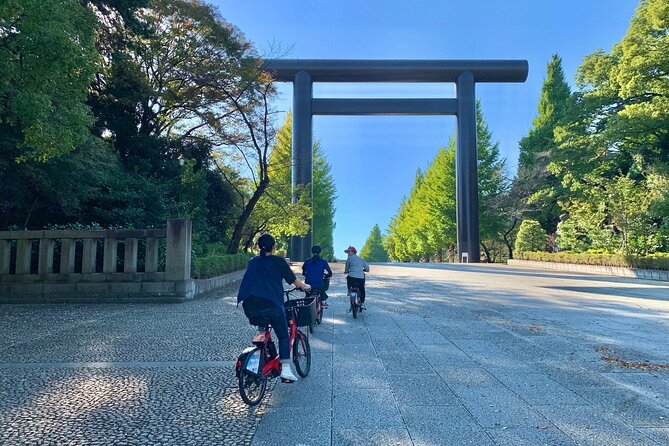
Yasukuni Shrine follows, with time to ride beneath its large torii gate and experience the greenery of the shrine grounds. The planned stop is brief, about five minutes, with another five minutes of travel time and a restroom break.
The shrine has a complicated place in modern Japanese history, but the supplied tour details emphasize Edo culture, nature, and the physical setting. If you want an extended discussion of the shrine’s modern political meaning, ask the guide directly and be aware that the schedule may limit the conversation.
Kitanomaru Park and the Imperial Palace
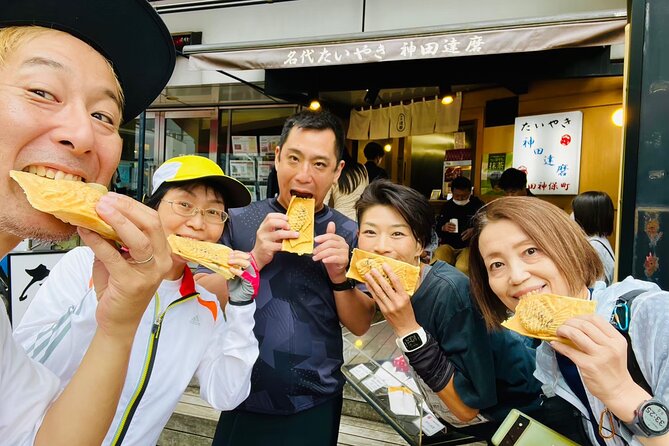
The route continues through Kitanomaru Park, once the northern section of Edo Castle. The bicycle passes the Nippon Budokan and other buildings, with about five minutes allowed for this section.
The park provides a change from tightly packed streets. You will still be on a structured route, not taking a long park walk, but the greenery and former castle grounds help connect Tokyo’s present-day public spaces to its earlier fortifications.
The Imperial Palace stop lasts roughly 15 minutes. The guide explains that the palace occupies the former site of Edo Castle and raises practical historical questions: why this location became the Imperial Palace, and why Japanese society moved away from the visual world of samurai rule.
This is where the tour’s main theme comes together. You have already seen old town culture, postwar change, religious tradition, and student and business districts. At the palace, those threads meet in the political transformation from Edo to modern Japan.
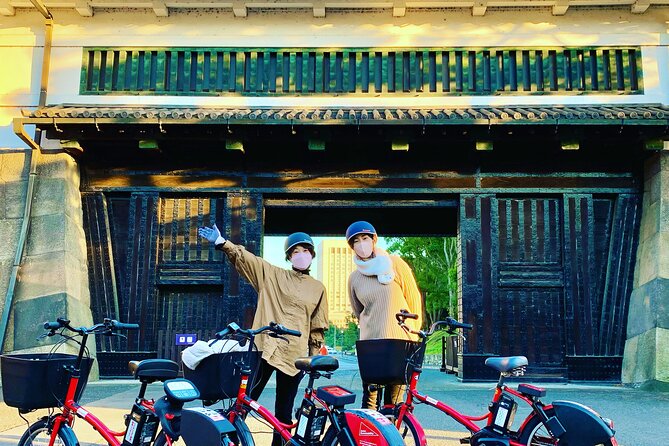
You then pass through Sakuradamon Gate, described as the largest gate of the Imperial Palace, and ride around the outer palace area. The travel time is about 10 minutes. You should expect exterior views and historical explanation, not entry into the palace buildings.
Returning the Bikes at Marunouchi Building
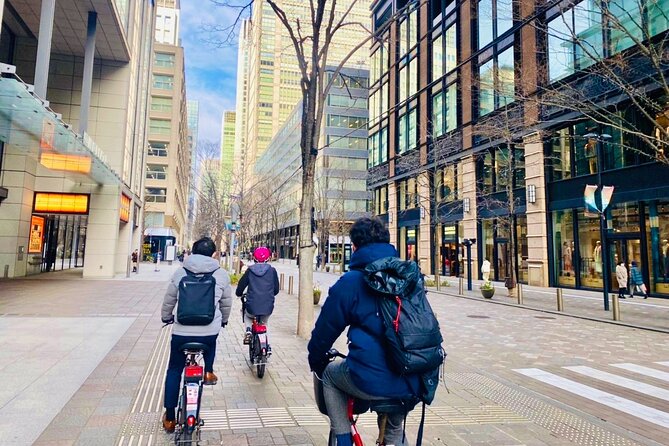
The bicycles are returned at the Marunouchi Building, close to Tokyo Station. The tour then includes a short visit to an art exhibition in the building, centered on the theme of time and memory.
That final indoor stop is a thoughtful way to end. Instead of simply handing back the bike and sending you off, the schedule gives you one more connection between Tokyo’s past and present. It also provides a quiet change after several hours of street riding.
The finish is convenient for the rest of your day. You can continue around Marunouchi, return to your hotel by train, or make a dinner plan near Tokyo Station without crossing the city again.
What the $83.23 Price Really Buys You
At $83.23, this is not the cheapest way to see Tokyo. You could use trains and walk between many of these places for less money. The question is what you value.
You are paying for the e-bike, helmet, bicycle accident insurance, guide service, route planning, snack, and the ability to connect districts that would otherwise take more planning. The group limit of four matters, too. A large bus tour cannot reach the same narrow streets, and a self-guided ride would require you to manage navigation, traffic, and historical research at the same time.
The value is strongest early in your visit, when you want an overview of central Tokyo. It can also be worthwhile late in a trip, after you have walked 15,000 steps a day and want to keep sightseeing without another long march. One rider with a recent knee replacement reported feeling safe and capable, with the guide taking care around both riders and local pedestrians. That is encouraging, though you should judge your own mobility and cycling comfort honestly.
Cycling, Safety, and Group Pace
The e-bikes are designed for riders of different experience levels, and the electric assistance reduces the effort needed on the route. You still need basic control, balance, and awareness around city streets. An e-bike makes hills and distance easier, but it does not remove the need to ride safely.
The tour is shared unless you book four places. With up to four people, the guide can keep the group together and respond to questions more easily than on a large organized ride. The pace may be adjusted if someone in the group, especially a child, is not accustomed to cycling.
That flexibility is good for safety, but it also means the experience may not feel fast or athletic. If you want a hard workout, this is not the right product. If you want to see more of Tokyo while keeping exertion modest, it fits well.
Riders must be at least 145 centimeters tall. Bicycle insurance is included, and helmets are provided. Bring water because bottled water is not included. Wear practical clothing and shoes that feel secure on a bicycle, although the operator does not provide a detailed dress code.
Rain Plans and Booking Details
The tour begins at 1:00 pm and lasts about three hours, though the timetable can change during the day. Weather matters. If rain makes cycling unsafe, you may be offered another date, a refund, or a rain-day walking route that uses the subway.
The walking alternative still covers major areas such as Tokyo Station, a historic shrine, Jimbocho’s secondhand book district, and a large park on the former Edo Castle site. That gives you a useful fallback, but it will not provide the same street-level freedom as the bicycles.
You can cancel for a full refund up to 24 hours before the start time. Cancellations or changes made inside that period are not refunded or accepted. Since the tour is often booked about 23 days ahead, reserving early is sensible if your Tokyo schedule is fixed, but leave room for weather if possible.
Who Should Book This Tokyo Ride?
I would recommend it to you if you want:
- A guided introduction to central Tokyo
- A small group rather than a coach-sized outing
- History explained at real locations
- A way to reduce walking without giving up outdoor sightseeing
- A route that mixes famous sites with less obvious districts
- A gentle cultural experience with a traditional snack
It is especially useful for couples, families with eligible riders, and older adults who can cycle but do not want a strenuous day. The small group also suits anyone who prefers to ask questions rather than listen from the back of a crowd.
I would be more cautious if you dislike riding in urban traffic, need extensive time at each sight, or want to browse Jimbocho’s bookstores and Akihabara’s shops in depth. This is a guided overview, not a shopping tour or a private palace visit.
Should You Book the Tokyo Deep Inside Cycle Tour?
Book it if you want to cover a lot of central Tokyo with moderate effort and a clear historical thread. The strongest features are the four-person maximum, the friendly guide style, the useful e-bike assistance, and the route’s mix of Edo sites, postwar districts, shrines, parks, and the Imperial Palace.
Skip it if you would rather set your own pace or spend an hour in one neighborhood. Also consider the weather policy, the 145-centimeter height limit, and the need to arrive on time.
For most visitors with three free afternoon hours, this is a smart way to connect old and new Tokyo. The taiyaki is a nice bonus, but the real value is seeing how separate districts fit together.
FAQ
How long does the Tokyo Deep Inside Cycle Tour last?
The tour lasts approximately three hours.
What time does the tour begin?
The scheduled start time is 1:00 pm.
Where does the tour meet?
The meeting point is the JTB Marunouchi Store in the Marunouchi Eiraku Building, near Tokyo Station.
Where does the tour finish?
The tour finishes at the Marunouchi Building after the bicycles are returned and the group visits an art exhibition.
How many people can join the tour?
The tour has a maximum of four participants.
Can I make the tour private?
Yes. Booking four people automatically makes the tour private.
Is bicycle equipment included?
Yes. The bicycle, helmet, and bicycle accident insurance are included.
Is food included?
Yes. A taiyaki snack is included, with a choice of red bean paste or cream filling.
Are drinks included?
No. Bottled water is not included, so bring your own beverages.
What happens if it rains?
If rain prevents the cycling tour from operating, you may choose a rain-day walking route, change to another date, or receive a refund.
Is there a height requirement?
Yes. Participants under 145 centimeters tall are not permitted to join.
Can I cancel for a refund?
You can receive a full refund if you cancel at least 24 hours before the tour begins. Cancellations made less than 24 hours before the start time are not refunded.
Just added in Tokyo
- Tokyo The Izakaya tour★ 5.0 · 131 reviews
- The Best Family-Friendly Tokyo Tour with Government Licensed Guide★ 5.0 · 28 reviews
- Highlights & Hidden Gems of the Shibuya District Private Tour★ 5.0 · 48 reviews
- Tattoo-friendly open-air Onsen & drink★ 5.0 · 25 reviews
- Tokyo Traditional Tea Ceremony with a Japanese Tea Master★ 5.0 · 40 reviews
- Taisho Sushi Making Class in Tokyo★ 5.0 · 89 reviews
- Baseball Professional • Yomiuri Giants★ 4.5 · 13 reviews
- Sushi Making in Tokyo at a Michelin-Listed Restaurant★ 5.0 · 40 reviews
Cycling and E-Bike Tours, compared.
3h Tokyo E-Bike Tour: Hidden Gems, and Local Life with guide
Read our review →
Arashiyama Bamboo Forest & Hidden Gems Bike Tour (Early Bird)
Read our review →
5 Top Highlights of Kyoto Full Day Bike Tour (E-bike option)
Read our review →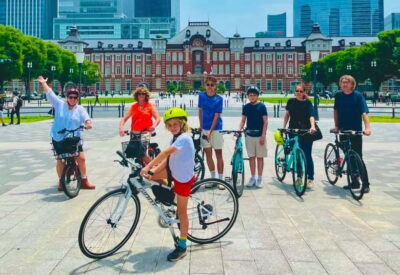

Hiroshima 2hr Peace Cycling Tour with Local Guide
Read our review →Browse the lists this tour appears in