
Reviewed · COOKING CLASSES
Tokyo Washoku 4-hour Cooking Class: From Market to Table
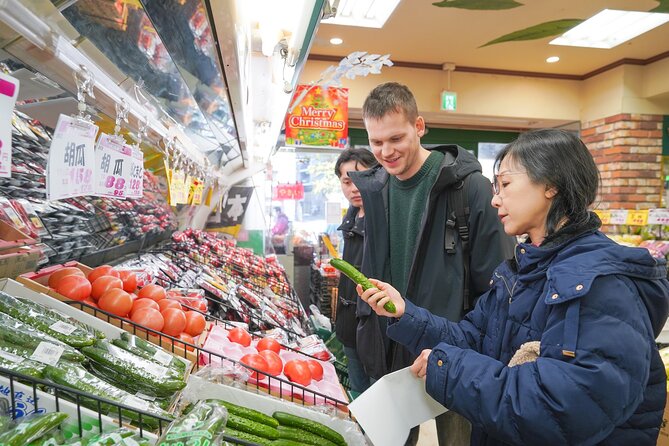
Start with a supermarket, not a kitchen. This four-hour Tokyo class gives you a practical look at Japanese food, from choosing ingredients near Iriya Station to preparing makisushi, miso soup, dashimaki tamago, and grilled eggplant. I like the market visit because it turns an ordinary shop into a useful food lesson. I also like that you do the cooking yourself, then sit down to eat what you made with possible beer or sake pairings.
The guides are the heart of the experience. April encouraged each person through the cooking, Yuri supplied recipes for home, and instructors such as Masai, Alice, Minnie, Mihori, Taka, Suzy, and Nigiri were praised for patience, clear instruction, and warm conversation. The main drawback is the strict start time: arriving more than five minutes late without contacting the operator can mean missing the class without a refund.
In This Review
- Key points to know before booking
- Meeting at 10 a.m. near Iriya Station
- The supermarket is part of the lesson
- Walking from ingredients to the cooking studio
- Rolling sushi and building a Japanese meal
- Nasu dengaku and the value of cooking from scratch
- Guides who make the class personal
- Eating together with sake or beer
- What the $79.59 price delivers
- Who should book this Tokyo cooking class?
- What to do after the class near Kappabashi
- Booking, timing, and cancellation advice
- FAQ
- Where does the cooking class start?
- What time does the class begin?
- How long does the experience last?
- What dishes will I prepare?
- Is the class suitable for vegetarians and vegans?
- Can I notify the operator about allergies?
- What happens if I cannot eat eggs?
- How many people can join the class?
- Can I visit Kappabashi Dougu Street after the class?
- Should you book it?
Key points to know before booking
- The supermarket visit comes first: You learn how to select Japanese vegetables, meat, and other ingredients before cooking.
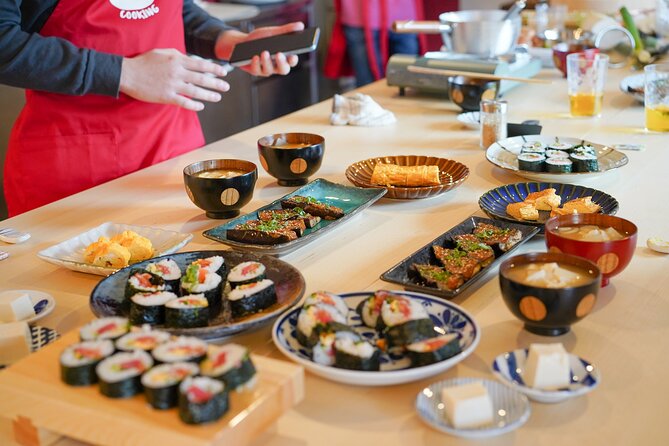
- You prepare four Japanese dishes: The menu includes makisushi, miso soup, dashimaki tamago, and nasu dengaku.
- The class is genuinely hands-on: You practice knife skills, ingredient preparation, and traditional cooking methods.
- The group stays small: The maximum is seven people, allowing time for questions and individual help.
- Sake and beer may accompany the meal: Pairings add a relaxed social touch to the cooking lesson.
- Recipes go home with you: The dishes are designed to be made again after your trip.
Meeting at 10 a.m. near Iriya Station
The class starts at 10:00 a.m. at the FamilyMart at 2-chōme-1-10 Shitaya, Taito City, Tokyo 110-0004. It is near public transportation, but Tokyo stations and streets can still take time to navigate, especially if you are carrying luggage or following a first-day jet-lagged brain.
I would arrive early. The operator is clear about punctuality, and the five-minute grace limit is not generous. If you miss the group, you cannot join later, reschedule, or receive a refund. That firm rule makes sense for a small class that moves from a shop to a studio, but it also means you should allow extra time for finding the FamilyMart.
The mobile ticket is useful for a morning activity. You receive confirmation when booking, so you can keep the meeting details on your phone. Still, save the address and start time before leaving your hotel. A screenshot is wise if your mobile connection is unreliable.
More Cooking Classes in Tokyo
- Sushi Making Tokyo Roll and Authentic Japanese Sushi Class
★ 5.0 · 3,971 reviews - Tokyo: Roll and Authentic Sushi Making Class in Asakusa
★ 4.9 · 1,957 reviews - Tokyo Shinjuku Chopsticks Making Class
★ 5.0 · 1,763 reviews
The supermarket is part of the lesson
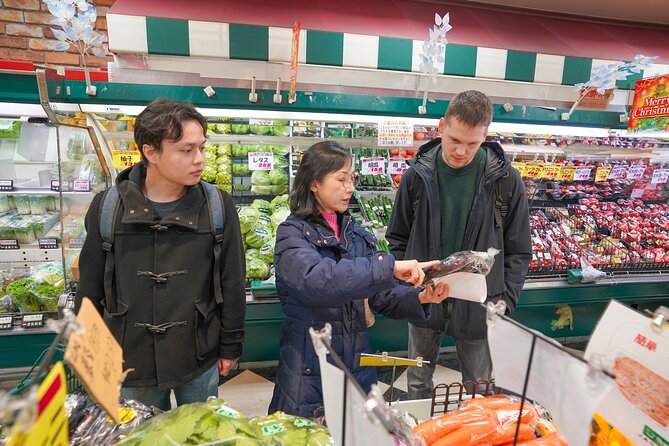
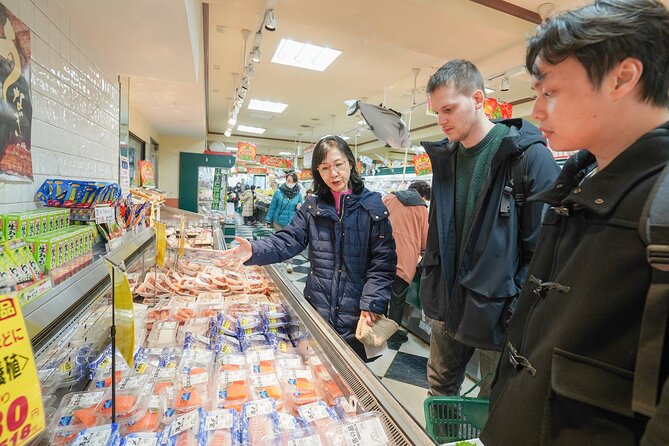
The first stop is a local supermarket near Iriya Station. This is not just a quick ingredient pickup. Your guide explains how to choose Japanese food products and points out vegetables, meat, seasonings, and other items that may look unfamiliar.
I like this part because it teaches you how Japanese food works outside a restaurant. A sushi meal can seem simple once it reaches your table, but the supermarket shows the choices behind it. You learn to pay attention to freshness, cuts, packaging, and the ingredients used in everyday home cooking.
The market also gives you a chance to ask practical questions. You can ask about Japanese vegetables, cooking ingredients, and daily life in Tokyo. One class member described learning about Japanese vegetables and meat while shopping, which is exactly the kind of useful detail you can miss on a standard food tour.
The shopping stop has a second benefit: it makes the dishes easier to recreate. You see the products before they are measured and prepared. That connection matters if you hope to cook Japanese food at home instead of simply taking photos and moving on.
This is still a group activity, so the pace will not be fully yours. The guide needs to keep everyone together and get the ingredients to the cooking studio on schedule. If you prefer a long, unhurried market tour, this may feel brief. If you want a focused introduction to Japanese ingredients, it is a good use of the opening part of the morning.
Walking from ingredients to the cooking studio
After shopping, you head to a dedicated cooking studio. The studio was described as spacious and well set up, giving the group room to work and eat together. With a maximum of seven people, the setting should feel more manageable than a large demonstration class.
The change of setting helps the experience make sense. You begin with the products, then carry that knowledge into preparation. It is a simple progression, but it gives the class a clear purpose: understand the ingredients, learn the methods, and enjoy the finished meal.
Your guide leads the work and answers questions along the way. The teaching style appears to be friendly and patient, with several instructors praised for explaining each step in detail. Suzy, for example, was noted for clear English, patience, and a personable manner. That matters in a cooking class, where a small language misunderstanding can turn a neat omelet into scrambled eggs.
You should expect instruction rather than a formal chef school. The point is to learn approachable techniques and enjoy making the food. You will not need to arrive as an experienced cook. The class is suited to beginners, curious eaters, families with teenagers, and anyone who wants a direct connection with Japanese cuisine.
Rolling sushi and building a Japanese meal
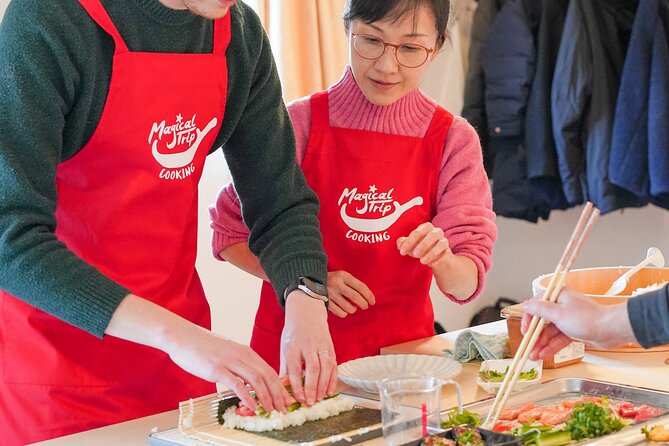
The menu includes makisushi, or rolled sushi. This is one of the most recognizable dishes in the class, but the value comes from making it by hand. You learn how to prepare and assemble the roll rather than simply receiving one at a restaurant.
Sushi rolling rewards careful preparation. The class gives you a chance to work through the process with a guide nearby. If your first roll looks a little loose or uneven, that is part of the fun. You get to eat the evidence.
Miso soup is another central dish. Several people praised the finished food, with one person calling the miso soup the best they had ever had. That may be personal taste, but it points to an important benefit of the class: you learn how small preparation choices can produce a satisfying home-style result.
The menu also includes dashimaki tamago, a rolled Japanese omelet. This dish requires attention and a steady hand. It is a useful lesson in technique because the finished shape depends on timing, heat, and repeated rolling.
If you cannot eat eggs, your food selection is reduced from four types to three. That is a specific limitation worth noting before booking. Vegan and vegetarian arrangements are welcome if you provide the request at least one day in advance, but the operator cannot guarantee an allergy-free kitchen or promise substitutions at every stage.
More Markets and Food Halls in Tokyo
- Tokyo Tsukiji Fish Market Food and Culture Walking Tour
★ 5.0 · 3,184 reviews - Tokyo: Tsukiji Fish Market Food and Walking tour
★ 5.0 · 1,724 reviews - Senkyaku Banrai Toyosu Manyo Club Onsen Experience in Tokyo
★ 4.7 · 1,690 reviews - Tokyo: Tsukiji Fish Market Guided Walking Tour
★ 4.9 · 1,397 reviews
Nasu dengaku and the value of cooking from scratch
Nasu dengaku, described here as grilled eggplant skewers, adds a vegetable dish to the meal. It gives the class a useful balance instead of making the session only about sushi and omelets.
Preparing several dishes from scratch also gives you a better feel for Japanese home cooking. You move between cutting, seasoning, cooking, and assembling. The meal becomes more than a single recipe. It shows how different dishes can come together on one table.
The guide teaches traditional Japanese knife and cooking techniques as you work. You should expect to practice rather than watch from the edge of the room. That hands-on time is one of the strongest reasons to choose this class over a food tasting.
The pace may be active. Four dishes, shopping, cooking, eating, and questions all fit into roughly four hours. You will have guidance, but the class is not designed for long pauses between every step. It works best if you are happy to participate and keep moving.
Guides who make the class personal
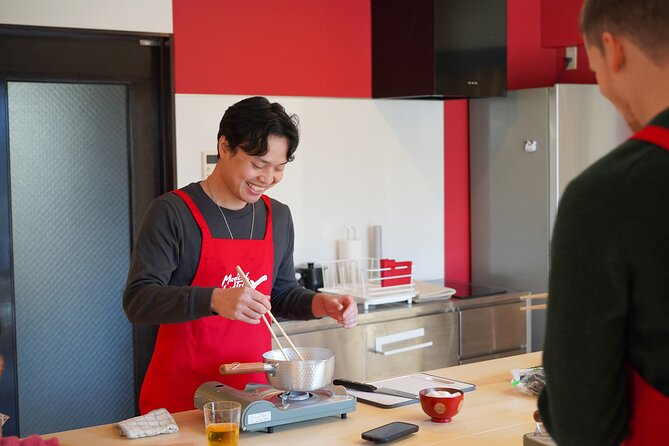
The instructors receive the most consistent praise. April was described as encouraging at every stage, while Yuri explained the dishes in detail and provided recipes to use at home. Masai was praised for patience and for making useful comparisons with life in the West.
Alice was appreciated for her cheerful manner and stories shared during cooking and eating. Minnie received praise for clear directions, and Mihori was noted for combining strong instruction with light conversation. Taka was described as a good guide for both the market and meal preparation. Nigiri helped explain ingredients and used recipes that were tasty but not overly complicated.
Names matter here because the guide shapes the class. You are not simply following printed instructions. You can ask questions about food, Tokyo life, and cooking choices as you go. The tone sounds social without losing the practical teaching.
English ability may vary by guide, but Suzy was specifically praised for excellent English. The broader pattern is clear: the instructors aim to explain, encourage, and keep the atmosphere relaxed. That is especially helpful if you are nervous about cooking in front of other people.
Eating together with sake or beer
Once the cooking is finished, you sit down and eat the meal with the group. The food is not prepared only for display. You make it, serve it, and taste the results together.
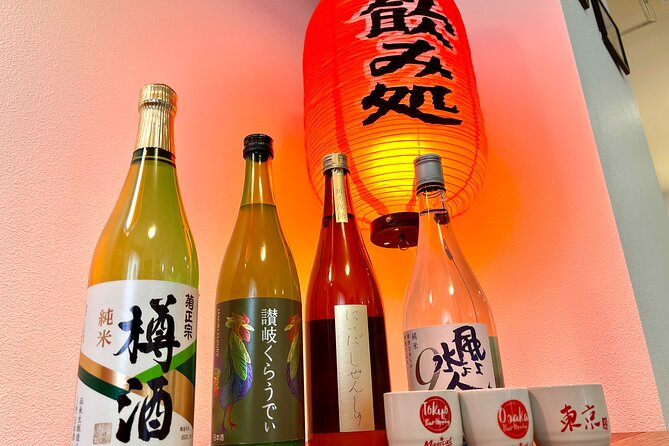
Beer and sake tasting may be part of the meal, with drink pairings adding a pleasant social note. You can experiment with different sake or other drink combinations as you eat. This makes the final portion feel like a shared Japanese meal rather than a class that ends when the stove is turned off.
Alcohol pairings are not the main reason to book, and the useful part of the experience remains the cooking. Still, they add context. Japanese food is often enjoyed with carefully chosen drinks, and tasting the pairing gives you another way to think about flavor.
The shared table is also where the class becomes more social. People come from different countries, and the cooking gives everyone something to talk about. One person particularly enjoyed the mix of international classmates, laughs, and good food. If you like meeting people while you learn, this format should suit you.
What the $79.59 price delivers
At $79.59 per person, this is not the cheapest way to eat Japanese food in Tokyo. You can buy a meal for much less, and a supermarket visit costs nothing. The comparison misses the point, though.
You are paying for about four hours of instruction, a guided shopping trip, ingredients, use of a cooking studio, several dishes, a shared meal, recipes, and access to a local guide. The class also gives you techniques you can repeat at home. For someone who values participation and practical learning, the price is reasonable.
The value is strongest if you plan to cook Japanese food again. Recipes for makisushi, miso soup, dashimaki tamago, and nasu dengaku turn the class into a souvenir you can use. If you only want to eat and avoid kitchen work, a restaurant meal will be better value.
The small group helps justify the cost. A maximum of seven people gives the guide a better chance to correct knife technique, answer questions, and help with the omelet or sushi rolling. The exact group may include other participants, so this is not necessarily a private class.
Who should book this Tokyo cooking class?
I would recommend it to first-time visitors who want an active introduction to Japanese food. It is also a good fit for couples, families with teenagers, solo participants who enjoy meeting people, and home cooks looking for recipes they can use after returning home.
It suits curious beginners better than serious culinary students. You receive instruction in traditional methods, but the class is built around approachable home cooking rather than advanced professional training.
The class may not suit you if you dislike strict schedules, group activities, alcohol tastings, or hands-on kitchen work. It may also be a poor fit for complex allergies, since the cooking takes place in kitchens that cannot guarantee an allergy-free environment and substitutions may not always be possible.
Tell the operator about vegan, vegetarian, or allergy needs at least one day ahead. Same-day requests cannot be accommodated. Japan can also be very hot or cold, with summer highs listed as high as 40°C and winter lows as low as -5°C, so dress for the season during the supermarket walk.
What to do after the class near Kappabashi
The activity ends at the cooking studio. Afterward, you can visit Kappabashi Dougu Street on your own. That is a fitting follow-up for anyone who enjoyed the lesson and wants to browse Japanese kitchen tools.
The street visit is not part of the four-hour class, so plan it separately. You can use the cooking experience as a guide while looking at knives, cookware, tableware, and other kitchen goods. Just remember that the class does not include an organized Kappabashi visit or return transport.
Booking, timing, and cancellation advice
Free cancellation is available if you cancel at least 24 hours before the local start time. Changes made less than 24 hours ahead are not accepted, and a late cancellation or no-show receives no refund.
Free date and time changes are available up to 24 hours before the class. If poor weather causes the operator to cancel, you are offered another date or a full refund. Since the activity includes walking between the meeting point, supermarket, and studio, checking the forecast is sensible.
FAQ
Where does the cooking class start?
It starts at the FamilyMart at 2-chōme-1-10 Shitaya, Taito City, Tokyo 110-0004, Japan, near Iriya Station.
What time does the class begin?
The start time is 10:00 a.m.
How long does the experience last?
The activity lasts approximately four hours.
What dishes will I prepare?
The class includes makisushi, miso soup, dashimaki tamago, and nasu dengaku, described as grilled eggplant skewers.
Is the class suitable for vegetarians and vegans?
Yes. Vegan and vegetarian participants are welcome if the operator receives the request at least one day before the class.
Can I notify the operator about allergies?
Yes, but you must provide allergy information at least one day in advance. The operator cannot guarantee an allergy-free kitchen, and substitutions may not be possible at every stage.
What happens if I cannot eat eggs?
Your food selection is reduced from four types to three.
How many people can join the class?
The maximum group size is seven people, although other participants may join you.
Can I visit Kappabashi Dougu Street after the class?
Yes. You may visit Kappabashi Dougu Street on your own after the cooking activity ends at the studio.
Should you book it?
Book this class if you want to do more than sample Japanese food. The supermarket lesson, hands-on cooking, small group, friendly guides, recipes, and shared meal give you a useful four-hour introduction to everyday Japanese cuisine.
I would skip it if you want a private experience, have difficult dietary restrictions, or cannot reliably reach the meeting point by 10:00 a.m. For most curious eaters, though, the $79.59 fee buys more than lunch. It gives you a set of skills, a few recipes, and a better understanding of what you are seeing on Japanese supermarket shelves.
Just added in Tokyo
- A One-of-a-Kind Sushi Experience in a Special Place of Japan★ 5.0 · 15 reviews
- Tokyo Cute Bento Cooking Class – Make a Kawaii Character Lunchbox★ 5.0 · 126 reviews
- Japanese Home Cooking Class & Walk in Todoroki Temple Tokyo★ 5.0 · 88 reviews
- Japan Tokyo Tower Observatory Deck E-Ticket★ 4.0 · 34 reviews
- Catch a Baseball Game in Tokyo with a Local – Tickets Included★ 5.0 · 24 reviews
- JDM Experience with Fast&Furious RX-7 (English speaking Driver)★ 5.0 · 57 reviews
- Tokyo Private Day Tour by Car with English speaking Driver Guide★ 4.0 · 29 reviews
- Japan Classic 10 Day – One Life Adventures★ 5.0 · 129 reviews
Cooking Classes, compared.
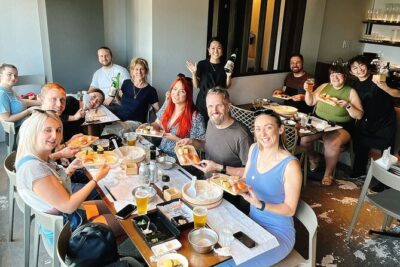
Sushi Making Tokyo Roll and Authentic Japanese Sushi Class
Read our review →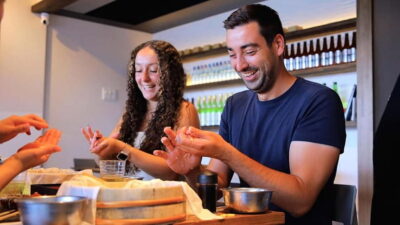
Roll and Authentic Sushi Making Class in Asakusa
Read our review →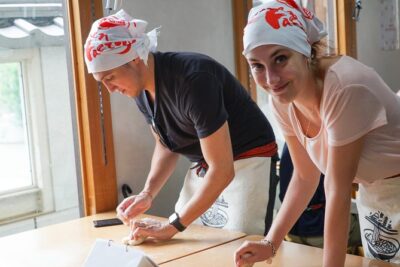
Ramen Cooking Class at Ramen Factory in Kyoto
Read our review →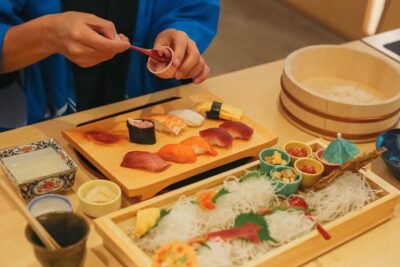
Sushi Making Class in a Happi Coat near a Famous Spot
Read our review →
Sushi Making Osaka Roll and Authentic Japanese Sushi Class
Read our review →
Tokyo Sushi Making Class in Tsukiji with Professional Chef
Read our review →
Ramen & Gyoza Cooking Class in Tokyo with Local Supermarket Visit
Read our review →Browse the lists this tour appears in