
Reviewed · TEA CEREMONIES
Tokyo: Matcha Tasting and Making Experience
Matcha is more than a green drink. This 90-minute class gives you a close look at how Japanese matcha is grown, made, judged, and prepared, all in a small English-language setting in Asakusa. You taste matcha from several Japanese tea-growing areas, then whisk your own bowl with a bamboo tea whisk.
I especially like the access to a former Kyoto tea farmer, who brings six years of hands-on growing experience to the lesson. I also like the format: you compare several teas before choosing one to prepare yourself. The main consideration is the tasting count, since the headline says 10 matchas while the detailed session description specifies eight, including six ceremonial-grade teas and two products sold as matcha but not technically defined as matcha.
The host, Chisei, has been praised for explaining tea clearly and with practical skill. At $63 per person, this is not a quick café stop, but the small group, guided tasting, preparation lesson, lattes, sweets, and tea education make it a reasonable choice for anyone who wants more than a photogenic green cup.
In This Review
- Key Points About the Matcha Class
- Why This Tokyo Tea Class Is Worth Your Time
- Meeting a Former Kyoto Tea Farmer
- The Welcome Drink and Tea Story
- Comparing Matcha From Five Production Areas
- Making Your Own Bowl With a Bamboo Whisk
- Matcha Lattes, Hojicha, and Sweets
- Price, Group Size, and Overall Value
- Who Should Book This Experience
- Practical Details Before You Go
- Should You Book the Tokyo Matcha Class?
- FAQ
- Where does the matcha experience take place?
- How long does the class last?
- How many people can join the class?
- Is the experience taught in English?
- What drinks and food are included?
- Can I cancel the booking for a refund?
Key Points About the Matcha Class
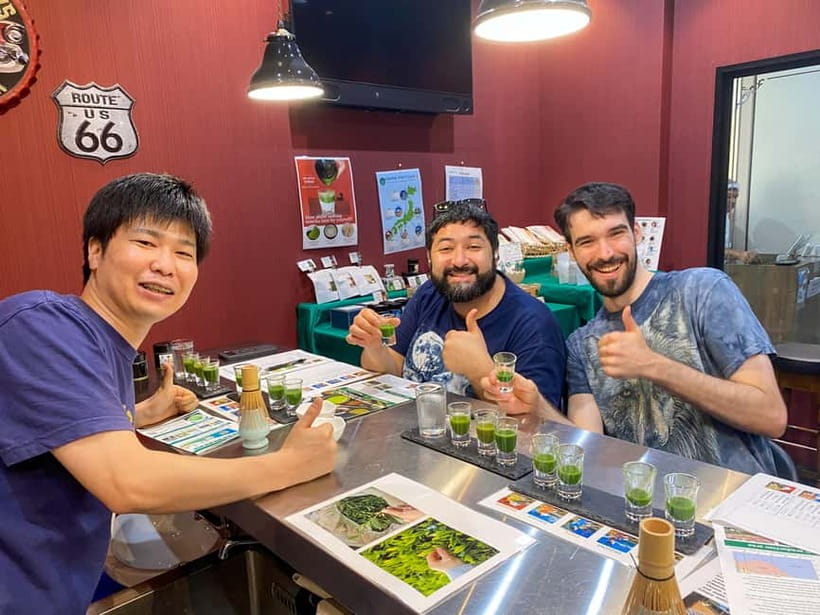
- Taste tea from five Japanese production areas: The comparison lets you notice differences in color, fragrance, and flavor instead of treating all matcha as the same.
- Learn from a former tea farmer: Your instructor has six years of tea-growing experience in Kyoto and explains cultivation, production, and the meaning of matcha.
- Whisk your own usucha: You select a favorite tea and prepare a traditional thin matcha using a bamboo whisk.
- Try matcha beyond the teacup: The class ends with a matcha latte, hojicha latte, and matcha sweets.
- Keep the group intimate: The class is limited to five participants, which suits a hands-on lesson.
- Meet at a central Asakusa hotel café: The venue is on the second floor of Henn na Hotel Asakusa Tawaramachi, above a FamilyMart.
Why This Tokyo Tea Class Is Worth Your Time
Tokyo has no shortage of matcha desserts, matcha soft serve, and bright green drinks. Those are fun, but they rarely explain what you are tasting. This class gives you a useful vocabulary and a point of comparison.
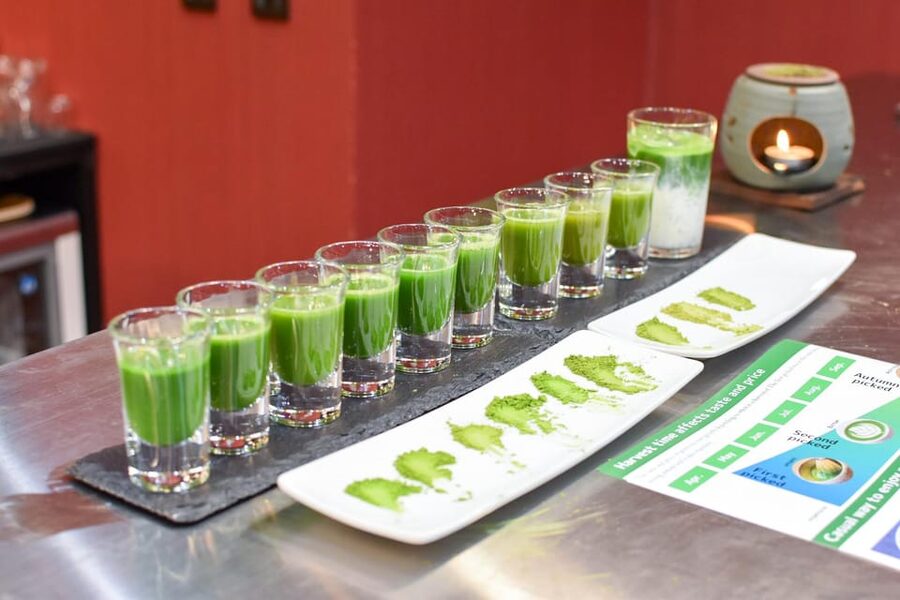
You do not simply receive one bowl of tea and a short explanation. You look at several powders, taste them in sequence, and consider their color, fragrance, and flavor. That comparison is the heart of the experience. A single cup can taste pleasant, but several cups help you understand why one matcha may seem sweet, grassy, bitter, creamy, or more fragrant than another.
The lesson also separates matcha as a product from matcha as a tradition. Six of the teas are described as ceremonial grade. Two others are sold around the world as matcha but are not technically defined as matcha. That distinction gives the class a useful edge. You are not being asked to believe that every green powder is equal.
I like this approach because it makes the subject less mysterious. You can taste first, listen to the explanation, then taste again with a better idea of what you are noticing.
More Tea Ceremonies in Tokyo
- Matcha Making Class in Tokyo with Authentic Japanese Sweets Set
★ 5.0 · 744 reviews - Tokyo: Traditional Tea Ceremony with a Tea Master
★ 5.0 · 528 reviews - Tokyo: Matcha Making Experience with Mochi Sweets in Asakusa
★ 4.9 · 388 reviews
Meeting a Former Kyoto Tea Farmer
The instructor is a former tea farmer who grew tea in Kyoto for six years. That matters. A person who has worked with tea plants can explain cultivation in practical terms, not just repeat a café script.
The session covers the definition of matcha, production methods, cultivation, and the history of the drink. The lesson is designed for ordinary visitors, so you do not need previous tea knowledge. English is the teaching language, and the small group limit of five should give you a better chance to ask questions or see the preparation closely.
Chisei has been praised for combining practical skill with a friendly teaching style. One particularly useful quality is the careful explanation and demonstration of the subject. This is important in a hands-on activity, since the class is not only about learning facts. You also need to see how matcha is actually prepared.
The experience provider asks participants not to bring commercial inquiries into the class. If you are researching matcha for a business, café, or product project, you should contact the provider before booking. This is a lesson for general visitors, not a trade consultation.
The Welcome Drink and Tea Story
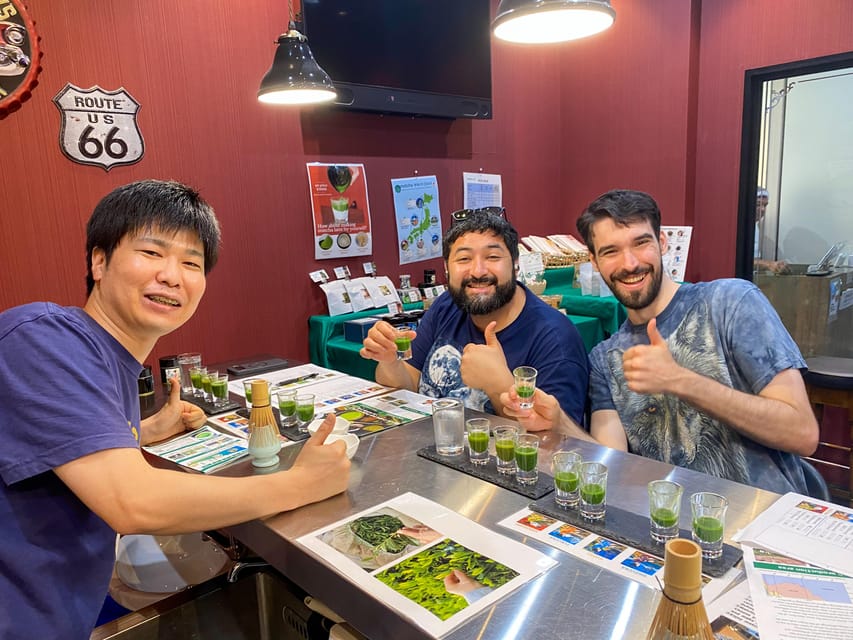
The session begins at the café with a welcome drink. While you have it, the instructor explains the background of the matcha you will taste.
This opening gives the tasting some context before the cups arrive. You learn what matcha means, how it is cultivated, and how its production developed. That short introduction is useful because the later tasting is not random. You have a framework for thinking about where the tea comes from and how it reaches the bowl.
The welcome drink also makes the first few minutes relaxed. You are not immediately handed a whisk and told to perform a traditional technique. Instead, you begin with an explanation and a drink, then move into comparison.
The venue is a café on the second floor of Henn na Hotel Asakusa Tawaramachi. There is a FamilyMart on the first floor. You enter the hotel, then go upstairs to the experience space. Since transportation is not included, allow time to find the hotel and reach the second floor before the start time.
Comparing Matcha From Five Production Areas
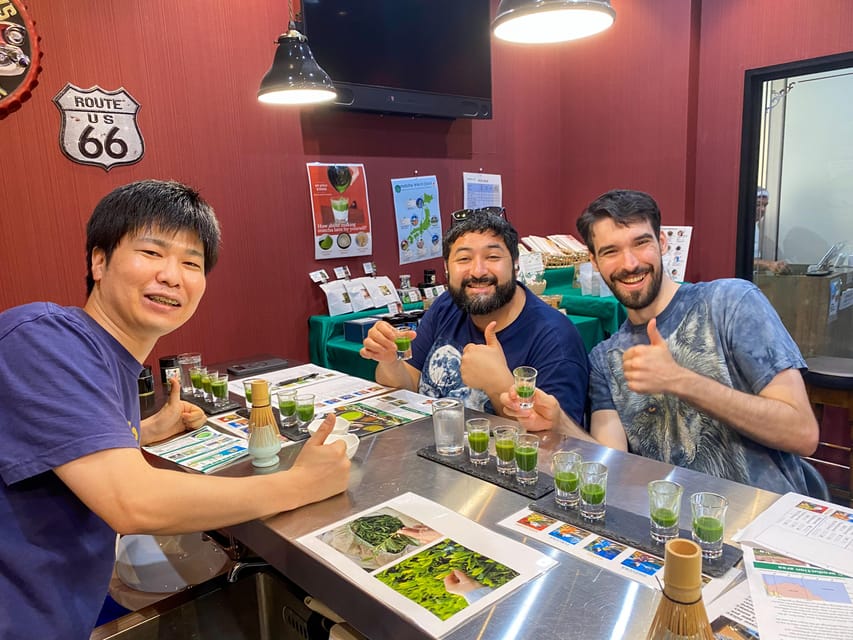
The tasting covers five representative tea-producing areas in Japan. Small portions are served so you can compare several kinds without becoming overwhelmed by the amount of tea.
The stated session details describe eight types: six ceremonial-grade matchas and two products sold as matcha internationally, though they are not defined as matcha. The general summary describes 10 different matchas. This is the one point I would clarify before booking if the exact number matters to you. The fixed promise is a comparison across five production areas, with several matchas served in small portions.
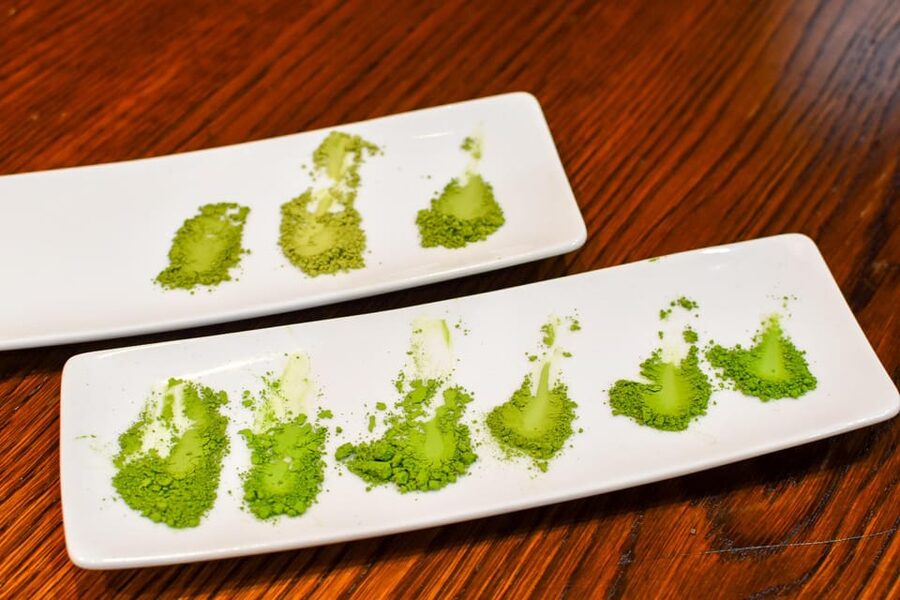
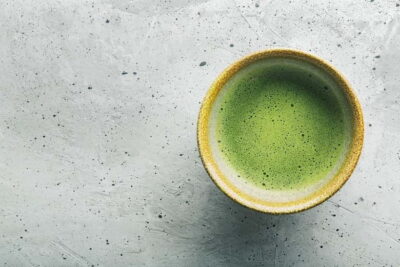
The order of the tasting is sensible. First, you look at the color. Then the tea is prepared and served so you can consider its fragrance and taste. This slows you down in a good way. Matcha is often consumed quickly, especially in a latte, but the class asks you to pay attention before adding milk or sugar.
A comparison like this can help you understand your own preference. You might favor a tea with a softer taste, a stronger fragrance, or a particular balance of bitterness and sweetness. You do not have to accept the instructor’s favorite. You get to decide which matcha you prefer.
The tasting is also a good fit if your experience with matcha has mostly been sweetened drinks. Here, you first encounter the tea in small portions, without the latte format getting in the way. That makes the later milk drinks easier to understand.
A completely different kind of day out:
- Tokyo Disney Resort – Tokyo Disneyland & Tokyo DisneySea Park Tickets
★ 4.8 · 99,488 reviews - SHIBUYA SKY Ticket
★ 4.7 · 46,509 reviews - JR Whole Japan Rail Pass
★ 4.8 · 29,150 reviews - Mt Fuji and Hakone 1-Day Bus Tour Return by Bullet Train
★ 5.0 · 26,383 reviews
Making Your Own Bowl With a Bamboo Whisk
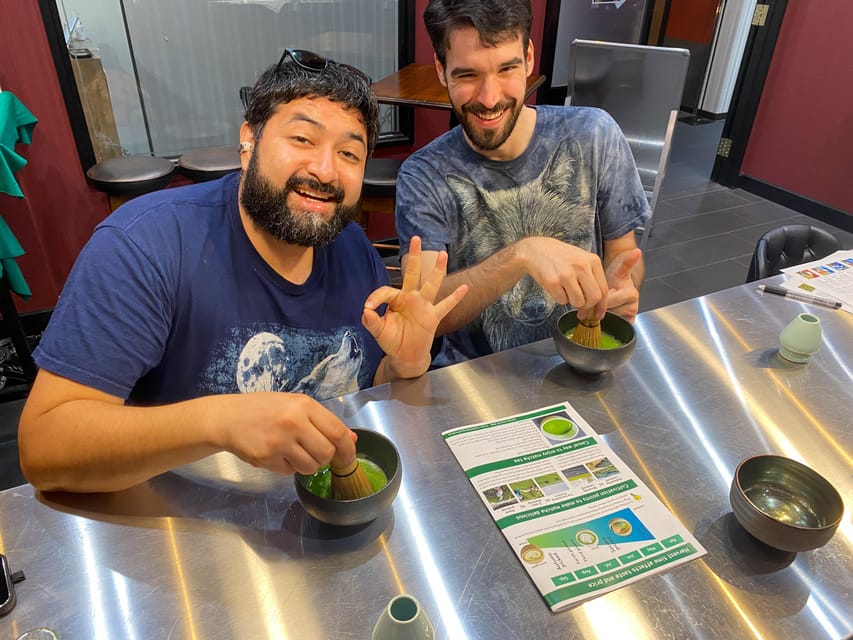
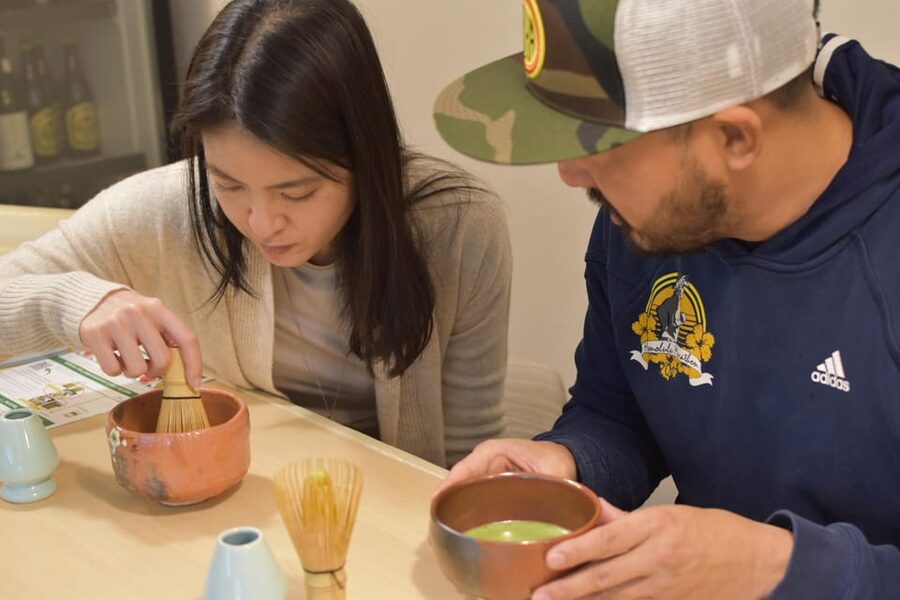
After tasting the options, you choose the matcha you like best and prepare it yourself. The final preparation is usucha, the thinner style of matcha commonly associated with a bowl of whisked tea.
You use a bamboo tea whisk, known as a chasen. The practical value of this part is clear: you leave with a method you can repeat at home. The class does not end with a demonstration that only the instructor can perform. You get to handle the whisk and make your own drink.
For many people, this will be the most memorable part. Tasting can sharpen your palate, but whisking turns the lesson into a skill. You have to work with the tea rather than simply receive it.
The experience is still beginner-friendly. It is designed for general visitors, and the instructor demonstrates the process. You should not feel that you need to know the formal rules of tea ceremony. This is a matcha-making class, not a full tea ceremony.
That distinction is worth noting. If you want an elaborate ceremony with formal movements, historic architecture, or traditional dress, this is not presented as that type of activity. If you want to understand the drink and learn a useful preparation method, the format is more direct.
Matcha Lattes, Hojicha, and Sweets
The final food and drink portion moves from traditional preparation to everyday Japanese café culture. You enjoy a matcha latte, a hojicha latte, and matcha sweets.
The matcha latte uses an original blend designed to work well with milk. This is a smart ending because it shows how matcha changes when combined with a creamy ingredient. After tasting plain matcha, you can notice the difference between the tea’s natural character and the smoother latte style.
Hojicha latte gives you another point of comparison. Hojicha is roasted Japanese green tea, so it offers a different profile from matcha. The information provided does not specify the exact sweets served, but they are included as part of the closing portion.
I like that the class does not insist on one correct way to enjoy tea. You can taste ceremonial-grade matcha, prepare usucha, then enjoy a modern latte. That range reflects how tea appears in Japan today, from careful preparation to casual café drinks.
The sweets and lattes also make the class easier for people in a mixed group. One person may be fascinated by cultivation and production, while another may simply love matcha desserts. Both can find something worthwhile in the final part.
Price, Group Size, and Overall Value
The price is $63 per person for 90 minutes. That is more than you would spend on one matcha drink, but you are paying for a lesson, multiple tastings, guided preparation, and several finishing items.
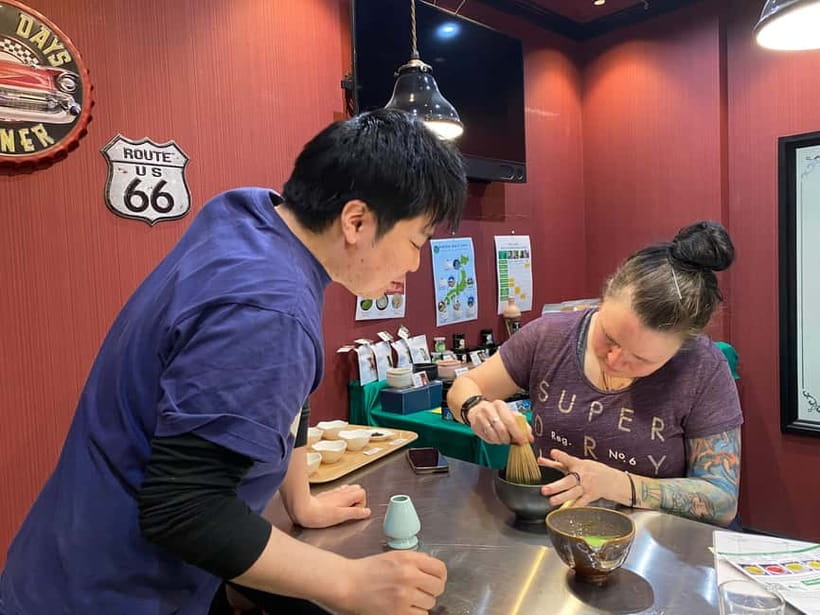
The group limit is five participants. For this type of class, that is a meaningful advantage. A large group can turn a whisking lesson into a demonstration at the front of the room. With five people or fewer, you should have more room to follow the technique and ask questions.
The value depends on what you want from your Tokyo food experiences. If you only want to drink a matcha latte, spend less at a café. If you want to understand why matcha differs by production area and learn how to whisk it at home, the price makes more sense.
The instructor’s farming background also adds value. You are not getting only a generic introduction to Japanese tea. You are hearing from someone with direct experience growing tea in Kyoto, then tasting several examples in a structured way.
A 4.9 rating from 21 bookings suggests strong satisfaction, and the most consistent praise centers on the instructor’s expertise, detailed explanations, and clear demonstrations. The strongest reason to book is therefore the teaching, not just the drinks.
Who Should Book This Experience
I would recommend this class to you if you fit one or more of these descriptions:
- You enjoy Japanese food and want to understand an ingredient beyond its appearance.
- You have tried matcha lattes but have not tasted several plain matchas side by side.
- You want a small-group activity in English.
- You would like to learn a preparation method you can repeat at home.
- You are interested in tea cultivation, production, and regional differences.
- You want a calm indoor activity in the Asakusa area.
It is also a good choice for couples or friends with different levels of tea interest. One person can focus on the farming and production lesson, while the other enjoys the hands-on preparation and sweets.
I would think twice if you dislike bitter or grassy tea, though the latte and sweets provide gentler options. I would also skip it if you want a formal tea ceremony rather than an educational tasting and café-style class.
The class is not designed for commercial research. If your goal involves buying tea for a business, developing products, or making professional inquiries, contact the provider in advance rather than treating this as a standard sightseeing session.
Practical Details Before You Go
The class lasts 90 minutes, so it fits neatly into a Tokyo day. You will need to arrange your own transportation to Henn na Hotel Asakusa Tawaramachi. Look for the FamilyMart on the first floor, enter the hotel, and go to the second floor.
The instructor speaks English. The experience is limited to five participants, which is helpful for seeing the demonstration and preparing your own tea.
You can reserve now and pay later, and cancellation is free up to 24 hours before the start time for a full refund. Starting times vary, so check availability for your date.
One small planning note: the provided details use both eight and 10 as the number of matchas. The detailed order explains eight types, while the headline promises 10. If you are booking mainly for the exact tasting count, confirm this point before paying.
Should You Book the Tokyo Matcha Class?
Book it if you want a real lesson rather than another green dessert. The combination of five production areas, a former Kyoto tea farmer, hands-on whisking, and matcha and hojicha lattes gives the 90 minutes a clear purpose.
At $63, it is best value for curious eaters, tea beginners, and anyone who wants to keep using matcha after returning home. The only notable concern is the unclear eight-versus-10 tasting count. Set that detail aside, and this is a focused, friendly way to understand one of Japan’s most famous drinks.
FAQ
Where does the matcha experience take place?
It takes place at a café inside Henn na Hotel Asakusa Tawaramachi in Tokyo. The café is on the second floor, and a FamilyMart is located on the first floor.
How long does the class last?
The experience lasts 90 minutes.
How many people can join the class?
The group is limited to five participants.
Is the experience taught in English?
Yes. English is the listed teaching language.
What drinks and food are included?
You receive a welcome drink, matcha tastings, a matcha latte, a hojicha latte, and matcha sweets.
Can I cancel the booking for a refund?
Yes. You can cancel up to 24 hours in advance for a full refund. You can also reserve now and pay later.
Just added in Tokyo
- A One-of-a-Kind Sushi Experience in a Special Place of Japan★ 5.0 · 15 reviews
- Tokyo Cute Bento Cooking Class – Make a Kawaii Character Lunchbox★ 5.0 · 126 reviews
- Japanese Home Cooking Class & Walk in Todoroki Temple Tokyo★ 5.0 · 88 reviews
- Japan Tokyo Tower Observatory Deck E-Ticket★ 4.0 · 34 reviews
- Catch a Baseball Game in Tokyo with a Local – Tickets Included★ 5.0 · 24 reviews
- JDM Experience with Fast&Furious RX-7 (English speaking Driver)★ 5.0 · 57 reviews
- Tokyo Private Day Tour by Car with English speaking Driver Guide★ 4.0 · 29 reviews
- Japan Classic 10 Day – One Life Adventures★ 5.0 · 129 reviews
Tea Ceremonies, compared.
Tea Ceremony in a Traditional Tea House in Kiyomizu
Read our review →
World Heritage Kyoto & Nara Uji Authentic Matcha Experience
Read our review →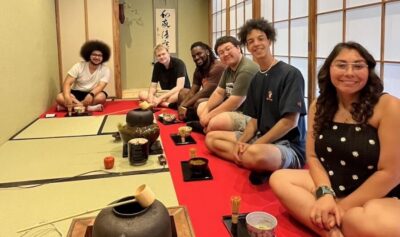
Browse the lists this tour appears in