
Reviewed · COOKING CLASSES
Tokyo: Tsukiji Fish Market Sushi Making Class with Pro Chef
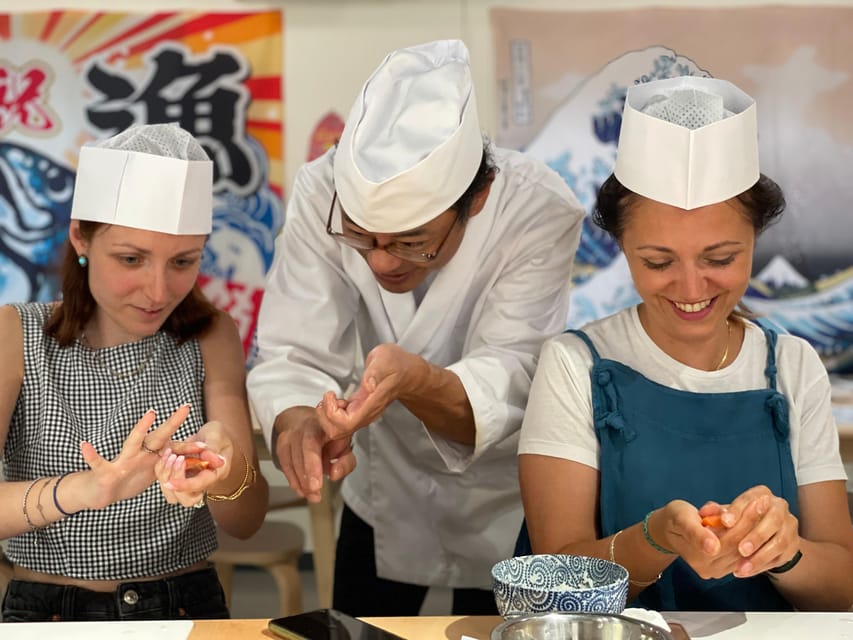
Your sushi lesson starts with a fish. In Tsukiji, you learn from a professional sushi master, use ingredients sourced from the market, and practice both nigiri and maki. I especially like the small-group, hands-on teaching and the chance to watch a fish being prepared before you touch your own knife. The added sushi, dashi soup, and green tea also make the $63 price feel fair.
The main drawback is practical: the classroom sits on the third floor of a traditional building with stairs only. You should also allow extra time, since some sessions may run past the scheduled finish. Dietary choices are limited, too, especially for vegans and vegetarians.
In This Review
- Key points at a glance
- Why Tsukiji is the right place for a sushi lesson
- Watching a sushi master prepare the fish
- Learning the difference between nigiri and maki
- The tools make the lesson feel more real
- Eating your sushi with the chef’s version
- How much time should you set aside?
- Group size and the quality of the teaching
- Is $63 a good value?
- Who should book this class?
- Booking tips for a smoother visit
- Should you book the Tsukiji sushi class?
- FAQ
- How long does the sushi-making class last?
- What sushi will I make?
- Do I get to eat the sushi I make?
- Is food and drink included?
- Is the class taught in English?
- Is a market tour included?
- Can vegetarians or vegans attend?
- Is the classroom wheelchair accessible?
Key points at a glance
- Fish preparation comes first: Watch a sushi master break down fish and explain the Japanese knives used for sushi.
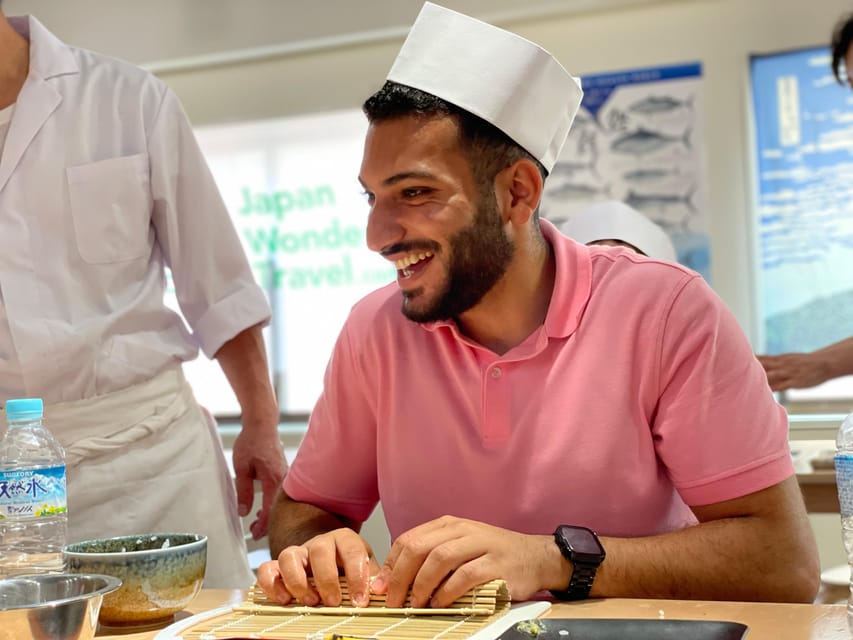
- You make five kinds of sushi: The class includes four different nigiri pieces and one maki roll.
- Tsukiji is part of the experience: The classroom sits in the middle of the outer fish market, with some booking options adding a market walk.
- English help is built in: An English-speaking host interprets the chef’s instructions and keeps the class easy to follow.
- You eat the results: Your sushi is served with extra pieces prepared by the master, dashi soup, and green tea.
- It works well for families: Children from age four can attend, though the class requires quiet attention and stair access.
Why Tsukiji is the right place for a sushi lesson
Tsukiji is a traditional sushi town, and that setting gives this class more purpose than a cooking lesson in a generic studio. The classroom is inside a Japanese-style building in the center of the outer fish market. You are not simply learning a recipe. You are learning sushi in the neighborhood where fish, knives, rice, and careful preparation have long been part of daily work.
The old wholesale market moved to Toyosu, but Tsukiji’s outer market remains a popular place for seafood shops, small restaurants, food stalls, and kitchenware stores. This class uses that connection well. The ingredients and utensils come from local Tsukiji shops, so the setting feels tied to the food on your plate.
You should check the meeting point for your chosen option, because it can vary. If your booking includes a market walk, guides such as Tack, Shoko, Sean, or Tadashi may show you different seafood and food shops before the cooking begins. Some sessions also include nearby shrines and explanations of Japanese religious customs. That added walk can make the class feel like a broader Tsukiji visit, but the sushi lesson itself remains the main event.
More Cooking Classes in Tokyo
- Sushi Making Tokyo Roll and Authentic Japanese Sushi Class
★ 5.0 · 3,971 reviews - Tokyo: Roll and Authentic Sushi Making Class in Asakusa
★ 4.9 · 1,957 reviews - Tokyo Shinjuku Chopsticks Making Class
★ 5.0 · 1,763 reviews
Watching a sushi master prepare the fish
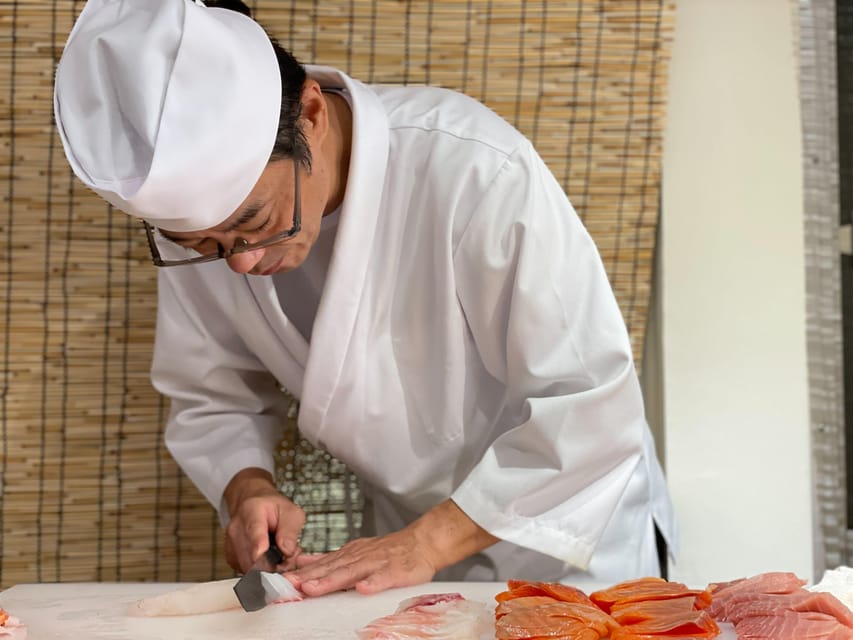
The class begins with a fish disassembly demonstration. This is one of the strongest parts of the experience because it shows the work that usually disappears behind a restaurant counter.
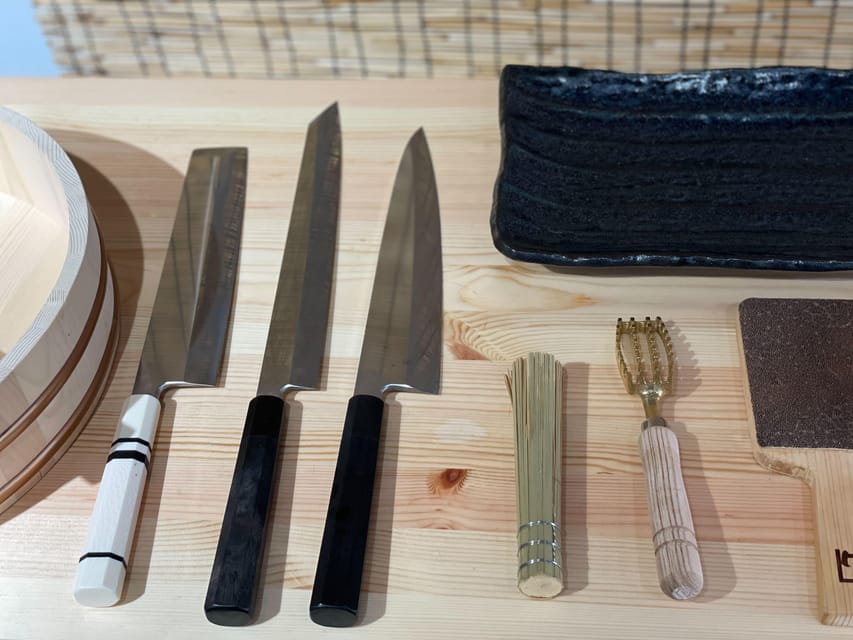
The chef explains how fish is prepared for sushi and sashimi, including the steps needed before it can be sliced or placed on rice. You also learn about Japanese knives and why the tools matter. The demonstration gives you a better sense of why sushi preparation takes years to master. It is not just a matter of putting raw fish on rice.
Names of the chefs vary by session. Tanaka, Kana, Kate, Koro, Ike, and other sushi masters have led classes. The common thread is a professional chef who demonstrates the movements first, then lets you try them with guidance. You should not expect to become a restaurant-level sushi chef in 90 minutes, but you will leave with a clearer understanding of the precision involved.
This section is also useful if you are unsure about raw fish. One participant who normally avoids it found the fresh ingredients and careful preparation reassuring. The class does not promise to change your taste, but seeing how the fish is handled can make the food feel less mysterious.
Learning the difference between nigiri and maki
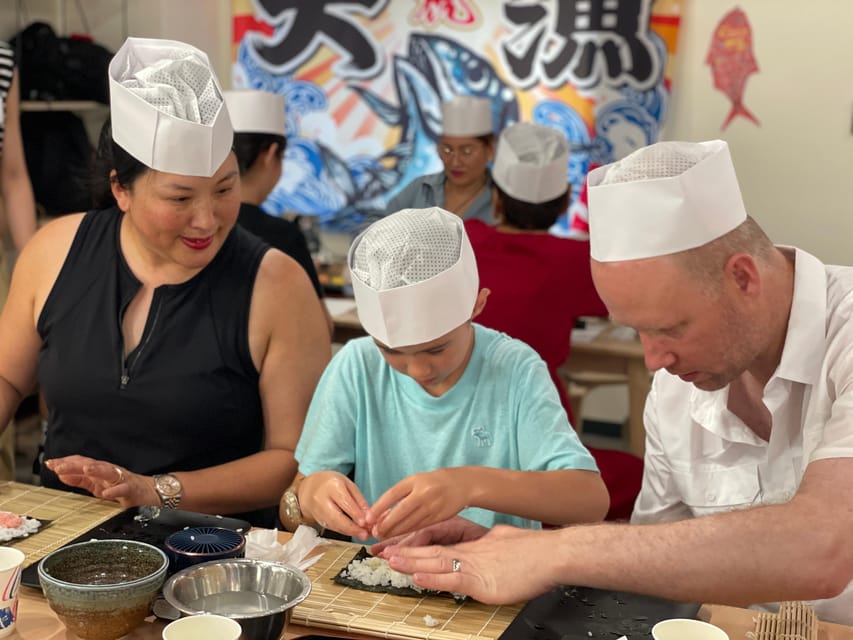
After the demonstration, the chef explains what sushi is and how each type is made. The lesson covers nigiri, the hand-formed rice topped with fish, and maki, the rolled sushi wrapped in seaweed.
You make four different nigiri pieces and one maki sushi. The number is generous for a short class, especially because you also receive sushi prepared by the chef. You get repeated practice with shaping rice, placing toppings, and arranging the finished pieces.
The host helps translate and clarify each step. That matters because sushi technique depends on small movements. The pressure used to shape rice, the amount of topping, and the way you hold the seaweed can all affect the result. English-speaking hosts including Yuko, AJ, Satoko, Micky, and Ike have been praised for patient explanations and easy conversation.
The class is designed for beginners. You do not need previous cooking experience, and the instructors demonstrate the technique before asking you to copy it. Still, you should pay attention. One useful point from the family feedback is that children do best when they can stay quiet, listen, and follow instructions.
The tools make the lesson feel more real
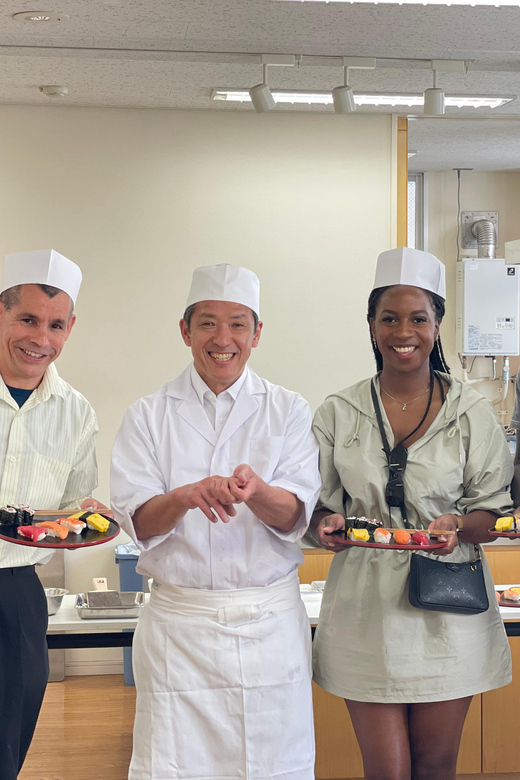
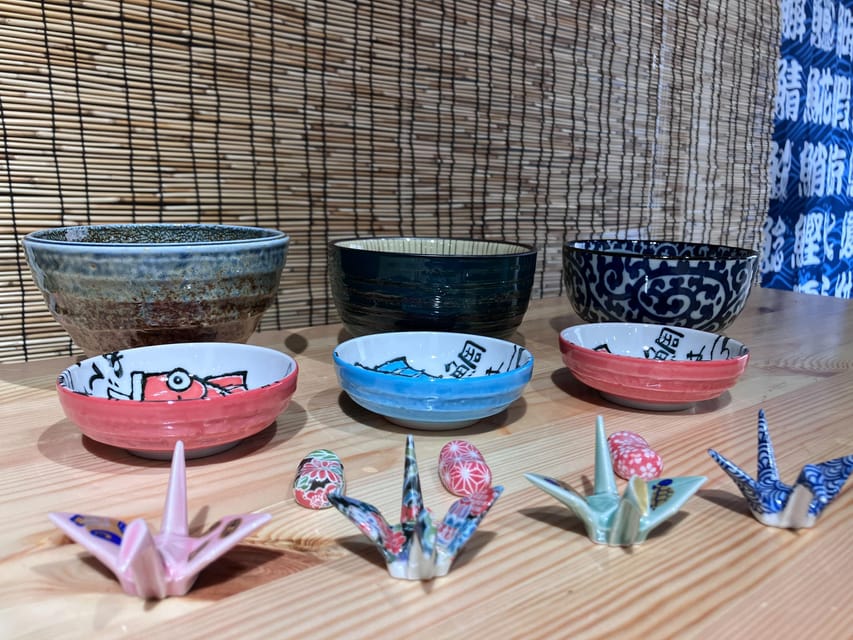
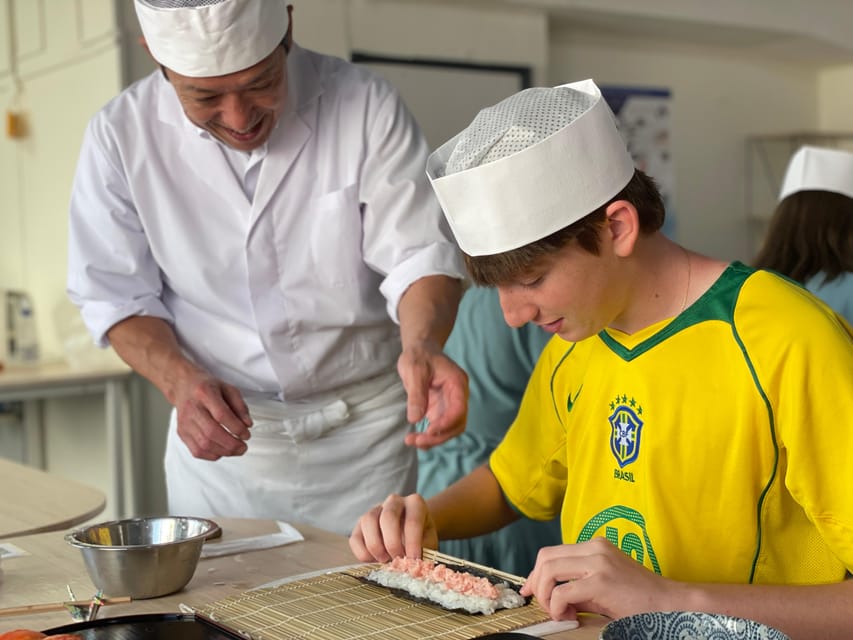
A nice detail here is the use of proper sushi utensils and tableware. These are sourced from local shops rather than being simplified classroom substitutes. That gives you a better feel for how sushi is handled and presented in Japan.
You also receive a hat for the activity. It is a small touch, but it helps mark the session as a working kitchen lesson rather than a casual food tasting.
The tools do not turn the class into professional training. You are still working in a short, friendly workshop. But using the right equipment helps you understand the rhythm of the task. Sushi is shaped, wiped, sliced, and served with purpose. Even your finished pieces will look better when you use the tools correctly.
I also like that the chef remains involved while you work. The class is not a demonstration where you sit back and watch someone else cook. You get feedback, ask questions, and adjust your technique as you go.
More Markets and Food Halls in Tokyo
- Tokyo Tsukiji Fish Market Food and Culture Walking Tour
★ 5.0 · 3,184 reviews - Tokyo: Tsukiji Fish Market Food and Walking tour
★ 5.0 · 1,724 reviews - Senkyaku Banrai Toyosu Manyo Club Onsen Experience in Tokyo
★ 4.7 · 1,690 reviews - Tokyo: Tsukiji Fish Market Guided Walking Tour
★ 4.9 · 1,397 reviews
Eating your sushi with the chef’s version
The best moment comes after the work. You sit down and eat the sushi you made, along with additional pieces prepared by the sushi master.
This comparison is valuable. Your pieces may taste fresh and satisfying, but the chef’s sushi shows what years of practice can do. The master prepares sushi quickly and neatly, including wasabi handled with expert care. Watching those final pieces being made gives you a useful benchmark without taking away from your own accomplishment.
The food includes four different nigiri and one maki sushi that you make yourself. Tea and traditional dashi soup are also provided. The soup and green tea make the meal feel more complete, and they fit the Japanese setting better than a standard soft drink would.
The ingredients are described as fresh and sourced from Tsukiji. The exact fish can vary, so you should not book this expecting a particular species. If you have an allergy, tell the operator when you reserve. Allergy requests may be possible, but they cannot guarantee every request.
The class does not accommodate vegan, vegetarian, halal, kosher, or gluten-free diets as a standard matter. One past gluten-free participant received helpful accommodation, but that should be treated as an exception that must be arranged in advance, not as a promise.
How much time should you set aside?
The advertised duration ranges from 90 minutes to four hours, depending on the option you choose. A basic sushi workshop can take about an hour and a half. A longer choice may add a guided market walk, food explanations, or nearby cultural stops.
This difference matters when planning your day. The class is located conveniently in Tsukiji, but you should not schedule a museum reservation or train departure immediately afterward. The activity may finish later than planned, and the operator asks you to mention any fixed appointment in advance.
A morning booking pairs naturally with Tsukiji’s food shops and restaurants. You can explore the outer market before or after the lesson, though market guidance is not included in every option. If you want a proper introduction to the area, select the option that includes the walk rather than assuming every booking comes with one.
The market and classroom serve different purposes. The walk gives you local food context. The class gives you focused instruction. If you mainly want to make sushi, the 90-minute format may be enough. If you want a fuller Tsukiji outing, allow up to four hours.
Group size and the quality of the teaching
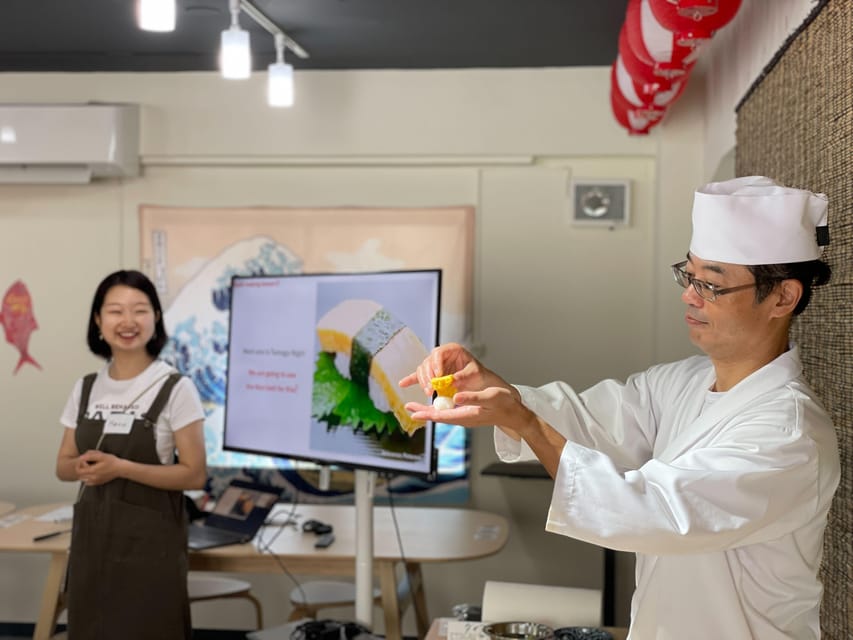
Small groups are a real advantage here. A session with about six people allows you to hear the instructions, ask questions, and get help without waiting too long. Groups of one to four also work well, especially for families, couples, and friends who want a shared activity.
The mood is friendly rather than formal. Guides and assistants help with translation, preparation, and individual questions. Several instructors have been praised for warmth and patience, including Yuko, AJ, Shoko, Micky, and Ike. Chef Kate has also received repeated praise for clear explanations and an engaging teaching style.
Because the staff changes, you should not book solely to meet one named guide. The precise team depends on the date. The useful point is that the format includes both an English-speaking host and a sushi professional, so you are not left trying to understand a Japanese-only lesson.
Children can attend from age four, and families with children around nine to thirteen have enjoyed the activity. The knives and raw ingredients mean adults should pay attention to children throughout. The class is family-friendly, but it is not a free-play activity.
Is $63 a good value?
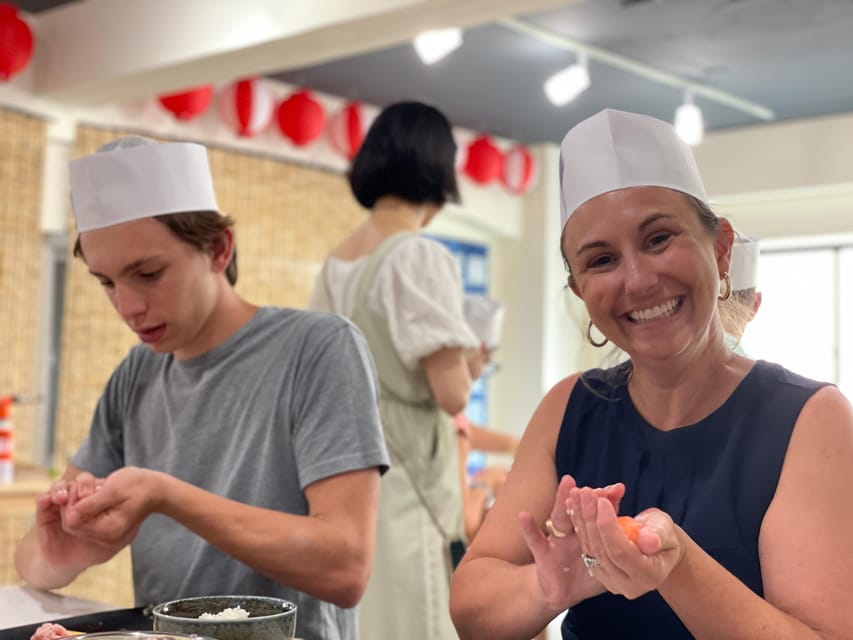
At $63 per person, this is not the cheapest way to eat sushi in Tokyo. You can buy excellent sushi for less, especially if your only goal is lunch.
The price makes more sense when you count what is included. You receive an English-led workshop, professional instruction, fresh ingredients, proper tools, five pieces of sushi you make yourself, extra sushi from the chef, tea, soup, and a cultural setting in Tsukiji. Some options also add a guided market experience.
I consider that a solid value for someone who wants to learn rather than simply eat. You also take away skills you can use at home. Several people left feeling ready to try making sushi again, which gives the class value beyond the meal itself.
The value is weaker if you dislike seafood, need a strict special diet, or already have advanced sushi-making skills. This is a beginner introduction, not a professional certification course. You are paying for access to a chef, a well-organized activity, and a memorable meal in one of Tokyo’s best-known food districts.
Who should book this class?
I would recommend it to first-time sushi makers, food-focused visitors, couples, families with older children, and anyone who wants more context than a restaurant meal provides. It also suits people who like practical activities. You learn by doing, not by watching a long lecture.
It is a particularly good choice for a mixed group. A serious sushi fan can ask about knives and preparation, while a beginner can simply follow the steps and enjoy the meal. The English-speaking host helps keep both types of participant involved.
You should think twice if stairs are difficult. The third-floor classroom has no elevator, and the experience is not suitable for wheelchair users or people with mobility impairments. Children under four cannot attend.
You should also avoid booking if you need vegan or vegetarian food. The operator cannot accommodate those diets, along with halal and kosher requests. If you have an allergy, write to the provider before booking and wait for confirmation.
Booking tips for a smoother visit
Wear comfortable clothes that allow you to work at a table. Arrive with enough time to find the meeting point, since it can change by option. If you are adding a market walk, give yourself room to look around rather than racing straight to another appointment.
Tell the operator about allergies when you reserve. Do not assume a dietary request will be possible just because an ingredient can be removed. Raw fish, rice, seaweed, wasabi, soup, and other components may all matter.
For a family booking, explain the knife work and ask children to listen closely. For a couple or small group, choose a session that matches your preferred pace. The activity can be booked alone or with friends, family, or a partner.
Free cancellation is available up to 24 hours before the activity for a full refund, and you can reserve now and pay later. Those terms help if your Tokyo schedule is still changing, but they do not remove the need to check the meeting point and duration of your selected option.
Should you book the Tsukiji sushi class?
Yes, if you want a hands-on food experience with a real sense of place. The combination of a fish preparation demonstration, beginner-friendly instruction, fresh Tsukiji ingredients, and a meal you make yourself gives the class more substance than a quick cooking photo opportunity.
I would choose the longer market option if this is your first visit to Tsukiji and you want local food explanations. I would choose the shorter workshop if you already plan to explore the market independently and mainly want the sushi lesson.
Skip it if you need guaranteed vegetarian, vegan, halal, kosher, or gluten-free food, or if stairs are a problem. For everyone else, the 4.9 rating from 506 bookings reflects what the format does well: friendly English guidance, a skilled chef, small-group attention, and sushi that is both educational and delicious.
FAQ
How long does the sushi-making class last?
The duration ranges from 90 minutes to four hours, depending on the option booked. Check the available starting times and the details of your chosen option.
What sushi will I make?
You will make four different nigiri sushi pieces and one maki sushi.
Do I get to eat the sushi I make?
Yes. The sushi you prepare is included, along with additional sushi made by the sushi master.
Is food and drink included?
Tea and soup are included. Extra food and drinks are not included.
Is the class taught in English?
Yes. An English-speaking host helps interpret and guide you throughout the session.
Is a market tour included?
Market guidance depends on the option booked. The classroom is in the center of Tsukiji’s outer fish market, but you should select a market-walk option if you want guided exploration.
Can vegetarians or vegans attend?
The activity is not suitable for vegans or vegetarians. Halal, kosher, and gluten-free requests are also not routinely accommodated, though allergy-related requests may be considered if reported at booking.
Is the classroom wheelchair accessible?
No. The classroom is on the third floor of a traditional building with stairs only. The activity is not suitable for wheelchair users or people with mobility impairments.
Just added in Tokyo
- A One-of-a-Kind Sushi Experience in a Special Place of Japan★ 5.0 · 15 reviews
- Tokyo Cute Bento Cooking Class – Make a Kawaii Character Lunchbox★ 5.0 · 126 reviews
- Japanese Home Cooking Class & Walk in Todoroki Temple Tokyo★ 5.0 · 88 reviews
- Japan Tokyo Tower Observatory Deck E-Ticket★ 4.0 · 34 reviews
- Catch a Baseball Game in Tokyo with a Local – Tickets Included★ 5.0 · 24 reviews
- Japan Classic 10 Day – One Life Adventures★ 5.0 · 129 reviews
- JDM Experience with Fast&Furious RX-7 (English speaking Driver)★ 5.0 · 57 reviews
- Tokyo Private Day Tour by Car with English speaking Driver Guide★ 4.0 · 29 reviews
Cooking Classes, compared.
Sushi Making Tokyo Roll and Authentic Japanese Sushi Class
Read our review →
Roll and Authentic Sushi Making Class in Asakusa
Read our review →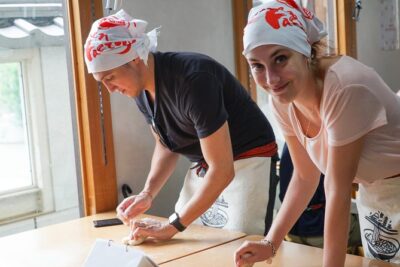
Ramen Cooking Class at Ramen Factory in Kyoto
Read our review →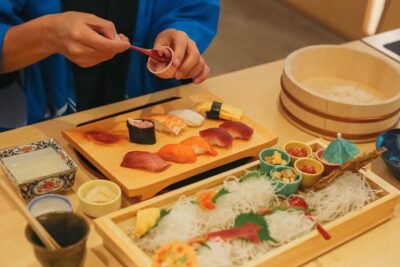
Sushi Making Class in a Happi Coat near a Famous Spot
Read our review →
Sushi Making Osaka Roll and Authentic Japanese Sushi Class
Read our review →
Tokyo Sushi Making Class in Tsukiji with Professional Chef
Read our review →
Ramen & Gyoza Cooking Class in Tokyo with Local Supermarket Visit
Read our review →Browse the lists this tour appears in