Reviewed · SHOW
Traditional Japanese Music show & Experience Tour in Kyoto
Hear Kyoto differently. This one-hour experience pairs a live Japanese music concert with hands-on instrument practice, giving you more than a seat in an audience. You watch performers play, then pick up instruments yourself with guidance from the organizers.
I especially like the small-group format, limited to 12 people, and the chance to try instruments that can seem distant or difficult in a formal concert. The price, $46.24 per person, also feels fair for a compact cultural activity. The main drawback is the short schedule: only 25 minutes of music and 25 minutes of playing may leave you wanting more.
In This Review
- Key Points Before You Book
- What This Kyoto Music Experience Actually Offers
- The First 25 Minutes: A Close Look at Japanese Instruments
- The Next 25 Minutes: Pick Up a Shamisen, Koto, or Drum
- The Final 10 Minutes: Photos With Instruments and Performers
- Why the Small Group Makes a Difference
- Is $46.24 a Fair Price?
- Who Should Book This Experience?
- Practical Timing and Location Advice
- How This Fits Into a Kyoto Itinerary
- Final Verdict: Book It for Participation, Not Length
- FAQ
- How long does the traditional Japanese music experience last?
- What time does the activity begin?
- Which days is the activity available?
- Where does the activity meet?
- Which traditional instruments can I try?
- Do I need musical experience?
- How many people can join the activity?
- What is the minimum number of participants?
- Is transportation included?
- Can I cancel for a full refund?
Key Points Before You Book
- You hear live traditional music first: The opening 25-minute concert may include shamisen, koto, wadaiko, singing, and regional folk music.
- You play the instruments yourself: No previous musical skill is needed, and guidance is provided during the practice session.
- The group is capped at 12 people: This gives the session a more personal feel than a large stage show.
- The full experience lasts about one hour: The final 10 minutes are set aside for photos with the performers and instruments.
- The price is $46.24 per person: That is a reasonable rate for a concert, instruction, instrument use, and photo time in central Kyoto.
- It runs at 11:00 a.m. on selected weekdays: Sessions are offered Monday, Tuesday, Thursday, and Friday.
What This Kyoto Music Experience Actually Offers
Traditional Japanese music can be hard to approach on your own. You may see instruments in museums or hear them briefly at a cultural performance, but it is not always clear how they work or why they sound the way they do.
This activity removes that distance. You sit close enough to watch the performers’ hands, hear the texture of each instrument, and then receive a chance to handle one yourself. That change from listening to playing is the main reason I find the experience worthwhile.
The program takes place at 5f, 306 Higashidaimonjichō, in Nakagyo Ward. It begins and ends at the same location, which keeps the arrangement simple. The venue is near public transportation, but private transportation is not included, so you will need to make your own way there.
The activity requires at least two participants to operate. It can accept a maximum of 12 people, so the session is not private, but it should remain small enough for direct help.
A few more options to weigh up in Kyoto
- Kyoto Sumo Show with Experience & Photo, 2 Drinks Included
★ 5.0 · 941 reviews - Kyoto: Sumo Experience (with Live Show & Audience Challenge)
★ 5.0 · 519 reviews - Kyoto Gion Cultural Walk & Geisha Show with Dining Options
★ 5.0 · 518 reviews
The First 25 Minutes: A Close Look at Japanese Instruments
The concert opens the experience. For roughly 25 minutes, you watch performers play traditional Japanese instruments and may hear singing as part of the presentation.
The instruments named for this activity include:
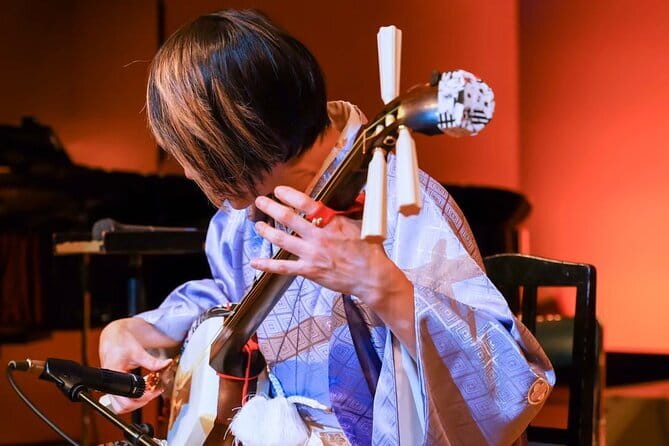
- Shamisen: A three-stringed Japanese lute with a sharp, expressive sound.
- Koto: A long stringed instrument often described as a Japanese harp.
- Wadaiko: A Japanese drum that brings a strong physical pulse to the music.
The exact concert content changes by day. That is useful if you are spending several days in Kyoto and want to return for a different program, but it also means you cannot know the precise selection before arriving.
One especially appealing detail is the mix of instrumental playing and songs. The performance is not just a technical demonstration. You may hear the performers sing, play folk music from different parts of Japan, and invite the audience to join in certain songs.
That participation helps break down the formality of a traditional concert. You are still watching trained performers, but you are not expected to sit silently for the entire hour. The result should feel more welcoming for people who know little about Japanese music.
The concert portion is also where the small group matters. With no more than 12 participants, you have a better chance of seeing how the instruments are handled. For the koto and shamisen in particular, watching finger placement and the movement of the hands can tell you more than a distant stage performance.
Still, set your expectations correctly. Twenty-five minutes is enough for an introduction, not a full evening concert. If you want a long formal performance, this is not the right choice. If you want a focused introduction before trying the instruments, the length works well.
The Next 25 Minutes: Pick Up a Shamisen, Koto, or Drum
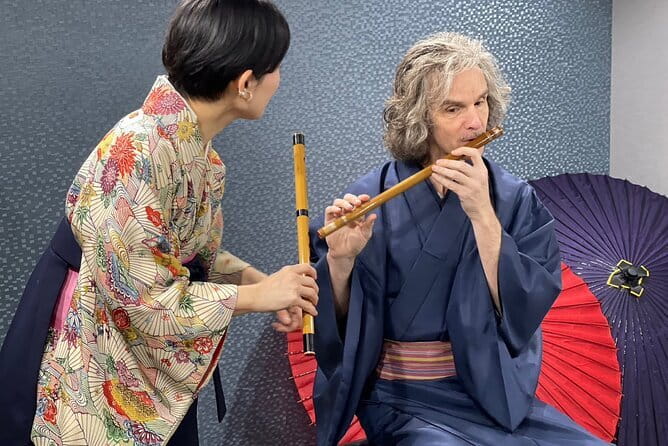
After the concert, the activity becomes hands-on. You get to try traditional instruments with help from the organizers, and you can select the instruments that interest you most.
That choice is important. A person drawn to strings can focus on the shamisen or koto, while someone who prefers rhythm may enjoy the wadaiko. The information does not promise that every participant will spend equal time on every instrument, so you should think of this as a guided sampling session rather than a full lesson in all three.
You do not need musical experience. That matters because traditional instruments can look intimidating, especially when a performer handles them with speed and precision. The point is not to produce a polished performance. The point is to feel how the instrument responds and understand a little of the technique behind the sound.
The session has a relaxed tone. One participant described the combination of demonstration and personal playing as successful, while also admitting that the result sounded lopsided. The organizers responded with patience, which is exactly what you need in this kind of activity. Your first attempt may be uneven, and that is part of the fun.
I like this feature because it turns Japanese culture into something physical. You feel the strings, test the surface of the drum, and learn that the sound depends on touch, timing, and control. Even a short attempt can make the concert more meaningful because you have tried to create a similar sound yourself.
The activity may also include participation during a song. That gives you a chance to contribute as part of a group rather than perform alone. If you are shy, the group setting should make the experience less stressful.
The tradeoff is time. The playing session lasts about 25 minutes, and the exact amount of instruction each person receives may depend on the group. With two participants, you may receive more individual attention. With a full group of 12, you should expect a shared session.
The Final 10 Minutes: Photos With Instruments and Performers
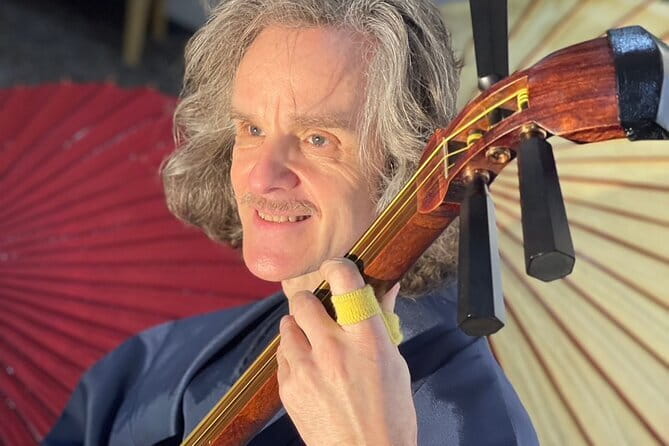
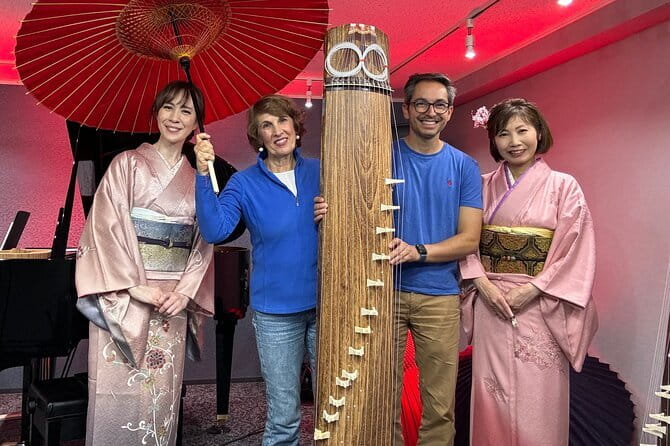
The last 10 minutes are reserved for photographs. You can take pictures with the instruments and performers, creating a useful reminder of the activity.
This is a small part of the program, but it gives the hour a clear ending. You do not simply leave after the playing session. Instead, you have time to capture the instruments up close and pose with the people who led the music.
Do not treat the photo time as a separate sightseeing stop. It is part of the in-venue experience, and the total duration remains about 60 minutes. If you want detailed portraits or many different combinations, the available time may pass quickly.
A completely different kind of day out:
- PERFECT KYOTO 1-Day Bus Tour
★ 5.0 · 13,518 reviews - [Kyoto & Nara Day Tour] Sagano Scenic Railway & Nara Park & Fushimi Inari Taisha Thousand Torii Gates & Togetsukyo Bridge & Bamboo Grove & Kimono Forest (Departing from Osaka)
★ 4.9 · 10,942 reviews - Kyoto: Fushimi Inari, Kinkakuji, Bamboo Grove 1 Day Bus Tour
★ 4.8 · 4,316 reviews - Kyoto: Tea Ceremony in a Traditional Tea House in Kiyomizu
★ 4.9 · 3,519 reviews
Why the Small Group Makes a Difference
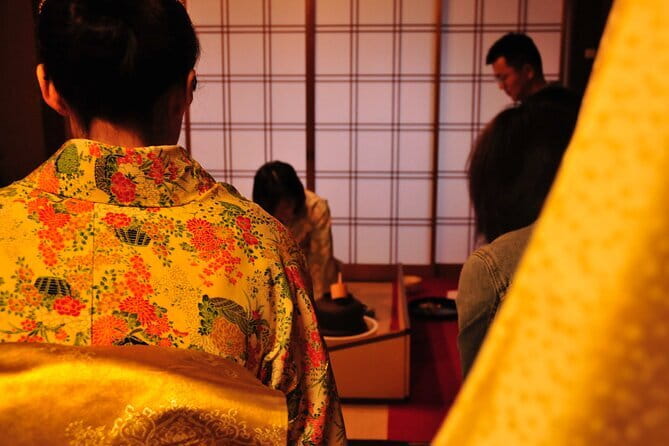
The maximum group size is 12 people. That is not the same as a private lesson, but it is small enough to support a personal exchange.
A large performance can show you what traditional instruments sound like. A small group session lets you ask for help, watch a demonstration at close range, and take your turn without disappearing in a crowd.
The format is particularly useful for families, couples, and adults who want a gentle introduction to Japanese culture. It also suits people who may not normally book a concert because they are unsure how much they will understand.
The group size can affect the value. If only two people attend, the instruction may feel very personal. If the session reaches its limit, you should expect more waiting and less time with each instrument. The organizers’ patient approach helps, but the 25-minute practice window remains fixed.
Is $46.24 a Fair Price?
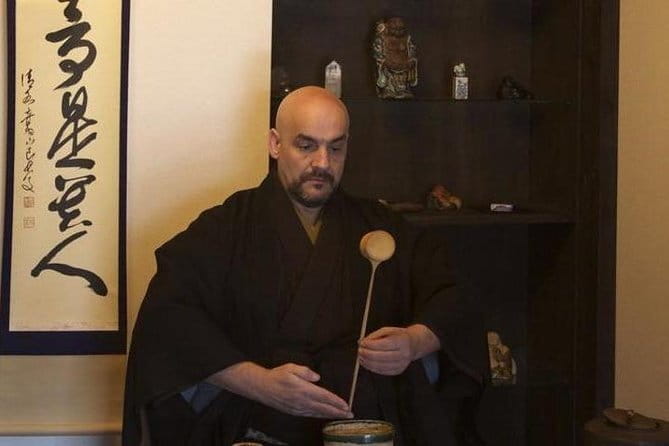
At $46.24 per person, this is not the cheapest cultural activity you will find in Kyoto. However, the price includes more than a performance ticket.
You receive a live concert, use of a Japanese musical instrument, instruction during the practice session, and photo time with the performers. Private transportation is not included, but the meeting point is near public transportation, so getting there should be manageable if you are already exploring central Kyoto.
For value, compare this with what you want from the hour. If you only want to hear traditional Japanese music, a longer concert may offer more music for your money. If you want to handle the instruments and receive guidance, this format gives you something a standard concert cannot.
I consider the price reasonable for a short, focused introduction. The strongest value comes from the active portion, not the length. You are paying for access and participation, not just 25 minutes of stage time.
Who Should Book This Experience?
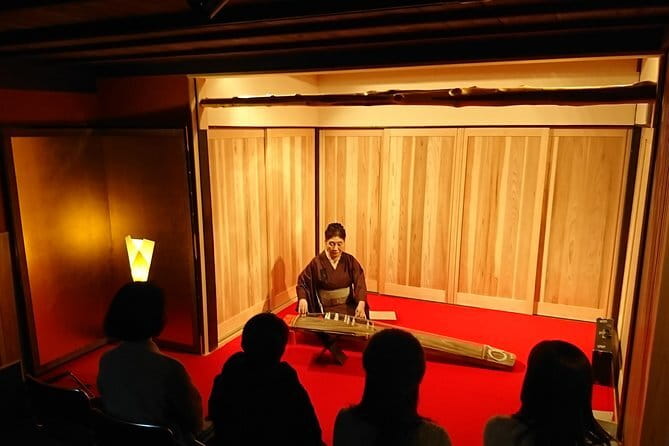
I would recommend it to you if you want a cultural activity that is easy to fit into a busy Kyoto itinerary. The morning start leaves much of the day free, and the one-hour length avoids the commitment of a half-day tour.
It is also a good choice if you want an activity that works across age groups. The information says most people can participate, and service animals are allowed. No musical background is required.
You may like it especially if you:
- Want to understand Japanese culture through music rather than a museum display.
- Prefer active experiences to watching a performance from start to finish.
- Are curious about the shamisen, koto, or wadaiko.
- Want a small group rather than a large commercial show.
- Need a short morning activity near public transportation.
- Enjoy taking photographs as part of a cultural visit.
I would be more cautious if you want an advanced music lesson, a long concert, or a guaranteed chance to master several instruments. The session is an introduction, and the schedule is tightly timed.
Practical Timing and Location Advice
The start time is 11:00 a.m. on Monday, Tuesday, Thursday, and Friday. There are no listed sessions on Wednesday, Saturday, or Sunday, so check your Kyoto plans before booking.
The meeting point is on the fifth floor at 306 Higashidaimonjichō, Nakagyo Ward, Kyoto 604-8043. Since the activity begins and ends there, you do not need to arrange a transfer at the end.
A mobile ticket is provided, and confirmation arrives at booking. I would keep the address and booking details easy to access on your phone, especially since the meeting point is identified by a floor number.
The activity can be canceled free of charge up to 24 hours before the local start time for a full refund. Changes or cancellations made less than 24 hours before the start are not accepted for a refund. Because two participants are required, the activity may be canceled if the minimum is not reached. In that case, you are offered another date or experience, or a full refund.
How This Fits Into a Kyoto Itinerary
The morning schedule makes this easy to combine with other plans. You can attend the 11:00 a.m. session, finish around noon, and continue sightseeing afterward.
Because the activity does not include private transportation, leave enough time to reach the building on your own. The location is near public transportation, but the information provided does not specify the nearest station or exact walking time, so check your route before the day of the experience.
This is also a useful choice for a first day in Kyoto if you want an early cultural introduction. You will hear several instruments, learn how they are used, and gain a better sense of Japanese performance traditions before visiting other cultural sites.
If you are staying in Kyoto for several days, the changing concert content may make a second visit appealing. The program does not promise the same songs or instruments each day, so returning could offer a different musical sample. You would need to book each session separately.
Final Verdict: Book It for Participation, Not Length
You should book this experience if you want to do more than watch Japanese music. The strongest features are the close concert setting, the chance to play traditional instruments, and the patient guidance during the hands-on portion.
At $46.24, the hour offers fair value for a compact cultural activity, especially when you consider the instrument use and photo time. Just remember that the concert and lesson are both brief, the group may include up to 12 people, and the exact music changes by day.
For a long, formal concert, choose something else. For a friendly first encounter with shamisen, koto, wadaiko, Japanese songs, and musical traditions, this is a smart Kyoto booking.
FAQ
How long does the traditional Japanese music experience last?
The full activity lasts approximately 60 minutes. It includes a 25-minute concert, a 25-minute instrument experience, and 10 minutes for photographs.
What time does the activity begin?
The activity starts at 11:00 a.m.
Which days is the activity available?
It is offered on Monday, Tuesday, Thursday, and Friday.
Where does the activity meet?
The meeting point is 5f, 306 Higashidaimonjichō, Nakagyo Ward, Kyoto, 604-8043, Japan.
Which traditional instruments can I try?
The listed instruments include shamisen, koto, and wadaiko, along with other traditional Japanese instruments.
Do I need musical experience?
No prior experience is required. Expert guidance is provided during the hands-on instrument session.
How many people can join the activity?
The activity has a maximum of 12 participants.
What is the minimum number of participants?
At least two participants are required for the activity to operate.
Is transportation included?
Private transportation is not included. The meeting point is near public transportation.
Can I cancel for a full refund?
Yes. You can cancel at least 24 hours before the local start time for a full refund. Cancellations or changes made less than 24 hours before the start are not refunded.
Just added in Kyoto
- The “Golden Route” and Ancient Japan by DIAMIR Erlebnisreisen – 14-Day Tour★ 2.0 · 2 reviews
- Japan: Castles & Cuisine by G Adventures – 6-Day Kyoto to Osaka Tour★ 4.5 · 4 reviews
- Cycle Japan by Explore! – 13-Day Kyoto to Tokyo Tour★ 4.7 · 12 reviews
- Cycle Japan by Intrepid Travel – 11-Day Kyoto to Tokyo Tour★ 4.8 · 2 reviews
- Classic Japan by Intrepid Travel – 11-Day Kyoto to Tokyo Tour★ 4.4 · 14 reviews
- Ancient & Modern Japan 14-Day Tour by Exodus Adventure Travels★ 4.4 · 40 reviews
- 5 Day Cultural Adventure of Kyoto, Nara & Osaka by Tourist Journey★ 2.5 · 2 reviews
- 12 Days Kinosaki Onsen Escape: A Journey Through Japan’s Timeless Towns by UME Travel★ 4.8 · 5 reviews
Show, compared.

Mt Fuji & Hakone Cruise, Drum Show Bullet Train 1 Day from Tokyo
Read our review →
Sumo Show Experience with Chicken Hot Pot and a Photo
Read our review →
Tokyo Shinjuku Sumo Show & Experience with Photo
Read our review →
Asakusa Sumo Club Sumo Show Admission with Chankonabe in Tokyo
Read our review →