
Reviewed · COOKING CLASSES
Authentic SUSHI Course Cooking Class
Sushi is better when you make it yourself. This Osaka class turns dinner into a hands-on lesson in nigiri, gunkan-maki, and rolled sushi, with miso soup, tamagoyaki, and yakitori added to the plate. I like the way you learn each dish from scratch, and I like that instructors such as Fumi explain the food’s background while keeping the class friendly and relaxed. The main caution is that the recipe handout may not cover every step in enough detail for a beginner cooking alone at home.
This is a small-group experience at a restaurant in Kitahorie, Osaka, lasting about two and a half hours. It costs $99.08 per person, which is fair if you want both instruction and a full meal, but less attractive if you only want a quick sushi demonstration. The class begins at 5:30 pm, and children must attend with an adult.
In This Review
- Key points at a glance
- What this Osaka cooking class is really like
- Starting with rice, the part sushi beginners often underestimate
- Three types of sushi, with enough practice to feel useful
- Dashi and miso soup add depth to the lesson
- Yakitori brings a hot, savory finish
- The meal you make is part of the value
- How the instructors shape the experience
- Group size, timing, and who should book
- Is $99.08 a fair price?
- Small drawbacks to keep in mind
- Should you book this Osaka sushi class?
- FAQ
- Where does the sushi cooking class meet?
- What time does the class start?
- How long does the cooking class last?
- Does the activity end at the meeting point?
- What sushi will I make?
- What other dishes are included?
- Are ingredients included in the price?
- Can children join the class?
- What is the cancellation policy?
Key points at a glance
- Make your own sushi rice: You season and prepare rice in your own wooden tub with a rice paddle.
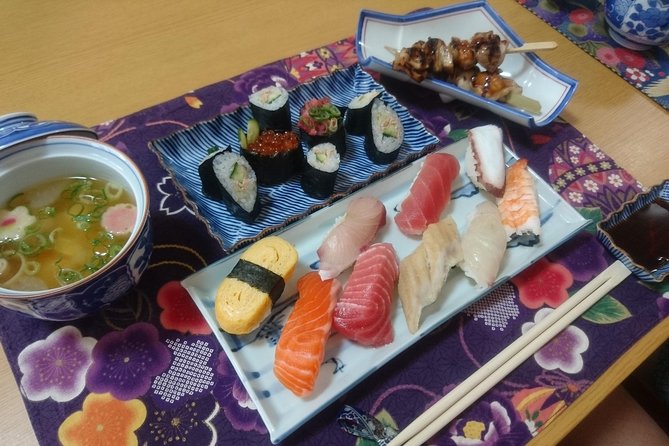
- Learn three sushi styles: The menu includes nine nigiri sushi, two gunkan-maki, and one rolled sushi.
- Cook a full Japanese meal: You also prepare dashi-based miso soup, tamagoyaki, and chicken yakitori.
- Friendly, patient teaching: Fumi and her assistants are praised for involving everyone and explaining each stage clearly.
- A filling evening activity: You eat the food you prepare, along with a complimentary seasonal dessert.
- Small class setting: The experience is described as having no more than 14 participants, while the additional booking details specify a maximum of 8, so confirm the current group limit when booking.
What this Osaka cooking class is really like
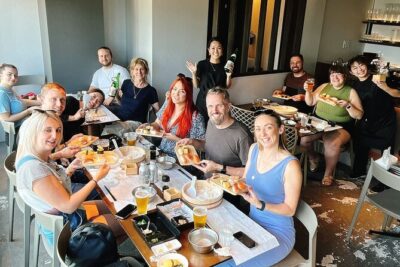
This is not a watch-and-copy demonstration where you sit at the back and take a few notes. You put on an apron, handle the ingredients, shape the sushi, cook the soup, and skewer the chicken yourself.
That matters because sushi can look simple until you try to control the rice, seaweed, filling, and shape at the same time. The instructor breaks the process into manageable pieces. You get repeated practice rather than one quick turn at a communal station.
The class takes place at Banix Kitahorie, listed at 3-chōme 6-2, Systema Gallery, Kitahorie, Nishi Ward, Osaka 550-0014. It is near public transportation, and the activity ends where it starts. You receive a mobile ticket, but confirmation is subject to availability and is sent within 48 hours of booking.
The setting suits an evening in Osaka. You begin at 5:30 pm, cook through the lesson, and finish with dinner. You will need to allow the full two hours and 30 minutes rather than treating this as a short stop between sightseeing plans.
More Cooking Classes in Osaka
- Sushi Making Osaka Roll and Authentic Japanese Sushi Class
★ 5.0 · 1,220 reviews - Matcha Making Class in Osaka with Authentic Japanese Sweets Set
★ 5.0 · 509 reviews - Osaka Sushi Making Experience
★ 5.0 · 400 reviews
Starting with rice, the part sushi beginners often underestimate
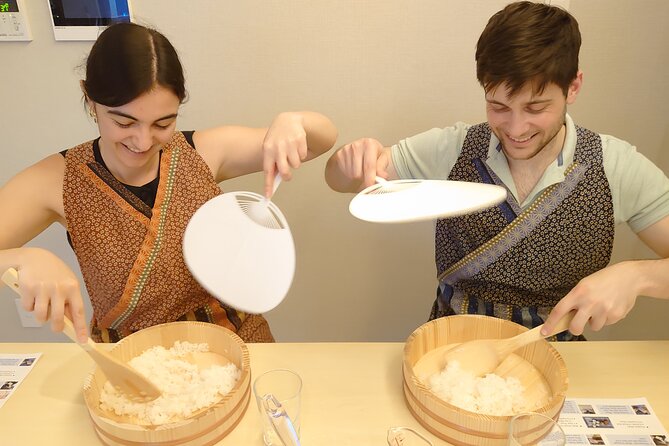
The class begins with sushi rice. Each participant receives a wooden tub and paddle, allowing you to make and season your own rice separately.
This is one of the strongest parts of the experience. Rice is the base of nearly every sushi style you prepare, so learning how to handle it gives you a useful skill rather than just a finished plate. You can see how much care goes into texture and seasoning before any fish or toppings are added.
The hands-on format also helps if you plan to cook Japanese food at home. You are not simply told what sushi rice should feel like. You work with it directly and learn through the process.
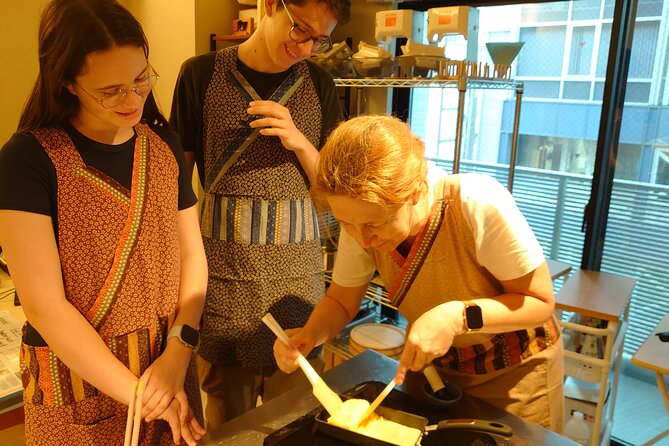
The lesson then moves to egg sushi. You use a rectangular frying pan to make rolled eggs, or tamagoyaki, which are built in layers and shaped as they cook. This is a small but revealing technique. The pan helps create the familiar shape, but timing and careful rolling still matter.
If you have never used a Japanese rectangular pan, this may be the most fiddly part of the class. That is exactly why patient instruction helps. Fumi is repeatedly praised for watching each person closely, giving encouragement, and helping participants finish with a good result.
Three types of sushi, with enough practice to feel useful
The sushi portion includes three forms:
- Nine pieces of nigiri sushi
- Two pieces of gunkan-maki
- One rolled sushi
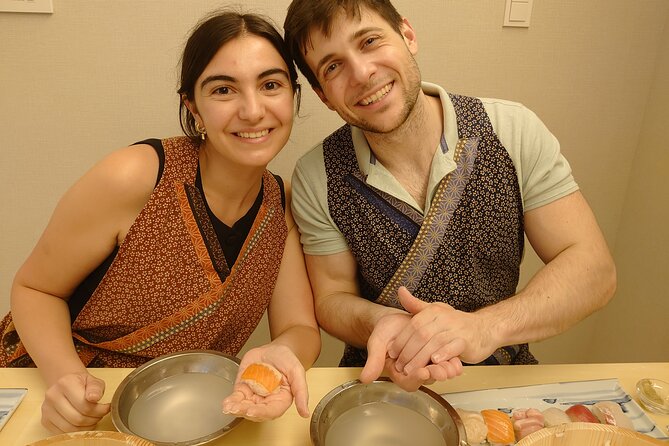
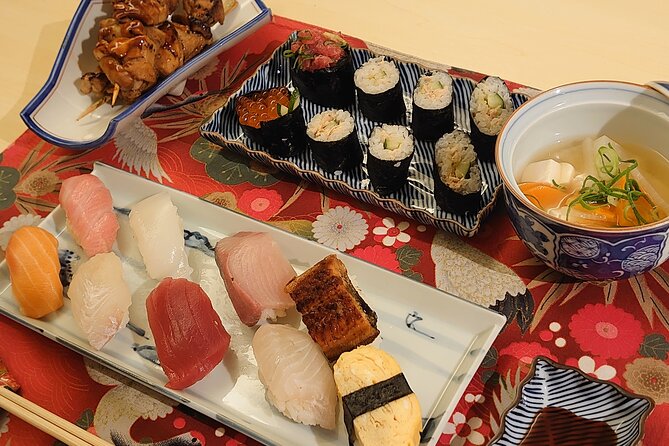
Nigiri gives you practice shaping rice by hand and placing the topping neatly. The nine-piece portion is generous for a lesson, since you have several chances to improve your technique instead of making only one piece for display.
Gunkan-maki introduces a different shape. Its seaweed wrap forms a small vessel around the rice and topping, so you learn how sushi can be assembled in more than one way.
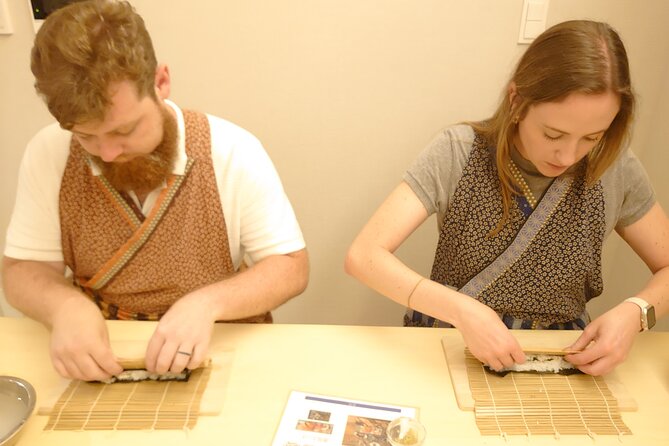
The rolled sushi brings another skill: controlling the seaweed and rice as you roll. The instructor demonstrates how to build and close the roll, then helps you create your own.
You should not expect restaurant-chef precision after one class. Sushi takes practice, and the experience does not promise professional certification or advanced knife work. What you do get is a practical foundation, enough to understand the main steps and try the meal again at home.
One particularly useful detail is that the rice is prepared individually. That makes it easier to notice your own texture and seasoning, although it also means the class may feel more like a practical workshop than a polished show.
Dashi and miso soup add depth to the lesson
The class also teaches traditional Japanese broth, known as dashi, before you make miso soup with tofu and specially shaped vegetables.
This is more valuable than simply opening a packet of instant soup. Dashi is central to Japanese cooking, and the lesson introduces the savory taste often linked with bonito and umami. One participant specifically appreciated learning about ingredients and ideas such as bonito and umami, topics that may be unfamiliar if Japanese cooking is new to you.
The vegetables are cut into decorative shapes, giving the soup a festive look. It is a small detail, but it shows how Japanese home cooking can combine simple ingredients with careful presentation.
You make the soup from scratch, including the broth, tofu, and vegetables. The result is part of the meal you sit down to eat at the end. If you already cook Japanese food, this section may be basic. If you mainly know miso soup from restaurants, it gives you a clear starting point for making it yourself.
More Cooking Classes in Japan:
- Sushi Making Tokyo Roll and Authentic Japanese Sushi Class
★ 5.0 · 3,971 reviews - Tokyo: Roll and Authentic Sushi Making Class in Asakusa
★ 4.9 · 1,957 reviews - Ramen Cooking Class at Ramen Factory in Kyoto
★ 5.0 · 1,937 reviews - Tokyo Shinjuku Chopsticks Making Class
★ 5.0 · 1,763 reviews
Yakitori brings a hot, savory finish
The final major dish is chicken yakitori. You skewer the chicken, prepare it for cooking, and make the dish as part of the class.
This adds a welcome change of pace after the careful shaping of sushi. Sushi requires cool, precise handling. Yakitori is more direct and hearty, and it helps turn the class into a complete meal rather than a narrow lesson about raw fish and rice.
The menu description calls it yakitori chicken, while one participant referred to chicken satay and another described it as teppanyaki chicken. The consistent point is that you prepare chicken on skewers as part of the Japanese meal. If exact cuts, sauces, or cooking equipment matter to you, ask the provider for the current menu details before booking.
The chicken also makes the class more suitable for mixed groups. Someone who is less excited by sushi still has miso soup, egg, and grilled chicken to enjoy.
The meal you make is part of the value
At the end, you arrange the dishes with chopsticks and sit down to eat. The class uses the Japanese mealtime expression itadakimasu before the meal, adding a simple cultural touch without turning the evening into a formal ceremony.
You receive a complimentary seasonal dessert afterward. Some participants found the meal extremely filling, which is important when judging the $99.08 price. You are paying for instruction, ingredients, equipment, an organized activity, dinner, and dessert, not just a plate of sushi.
The food is described as fresh and delicious, and the satisfaction comes from eating something you made through a series of separate steps. That sense of achievement is a real part of the experience. You finish with a meal that includes sushi, soup, egg, chicken, and sweets rather than a small sample.
The dessert may also be useful if you are flying shortly afterward. One participant enjoyed taking it along for the journey home. That is not a guaranteed feature beyond the complimentary seasonal dessert, but it suggests the final treat is more than a token bite.
How the instructors shape the experience
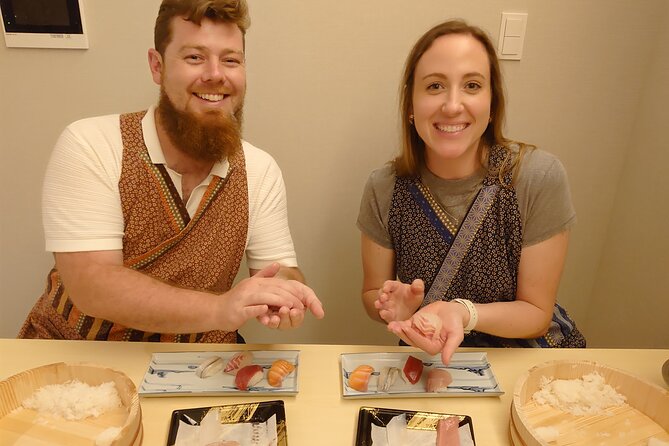
The class depends heavily on the instructor, and this is where Fumi receives the strongest praise. She is described as patient, funny, polite, encouraging, and attentive to each person in the group.
That combination is important in a cooking class. You need clear steps, but you also need help when the rice sticks, the omelet folds unevenly, or the sushi roll comes loose. Fumi is praised for making everyone feel involved, including solo participants and families with teenagers.
The teaching also goes beyond mechanics. You learn some cultural background about the dishes and ingredients, including the role of dashi and umami. That gives the food context without requiring a long lecture.
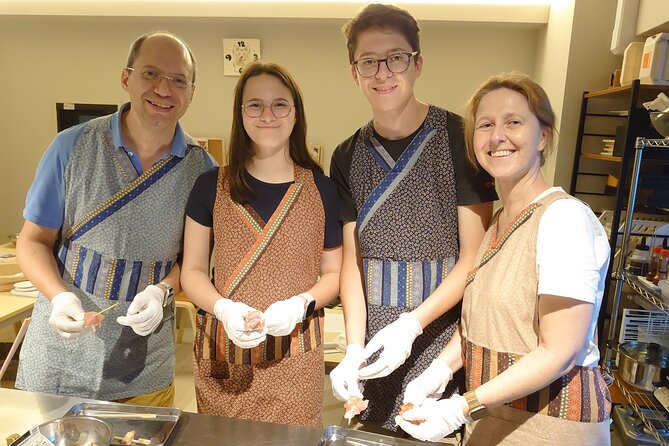
The class has worked well for a family of four with two teenagers, and it has also suited someone attending alone. A solo booking may feel less predictable than joining with friends, but the small-group format and active tasks give you plenty to do.
The provider is Sakura Cook. Fumi may lead the class, and Sakura is also named as an instructor. Assistants may help with the lesson, so the exact teaching team can vary.
Group size, timing, and who should book
The experience is described as small-group, with a maximum of 14 people in the main description. The additional information gives a maximum of 8 travelers, so there is a discrepancy worth checking before you pay. Either limit is far more manageable than a large demonstration, but a group of 8 would offer more personal attention.
The 5:30 pm start makes this a natural evening plan. You can schedule sightseeing earlier, then head to Kitahorie for dinner and the class. Since it lasts about two and a half hours, expect to finish around 8 pm if the session runs close to its stated length.
I would recommend it most for:
- First-time sushi makers
- Families with older children or teenagers
- Couples and friends seeking a shared activity
- Solo visitors who want a structured evening
- Anyone interested in Japanese home cooking, not just sushi presentation
It is less suitable if you want a quick, highly polished food show, or if you need a class designed around advanced sushi-chef techniques. The focus is on learning a broad menu and enjoying the results.
Children must be accompanied by an adult. You should also provide any dietary requirements when booking. The available details do not promise that every dietary request can be met, so do not wait until the class begins to raise an allergy or restriction.
Is $99.08 a fair price?
At $99.08 per person, this is not a bargain snack activity. It is a full evening experience, and the value depends on how much you want to participate.
The price makes more sense because the class includes all ingredients, cooking instruction, a substantial handmade meal, and dessert. You also learn several dishes instead of spending the full session on sushi alone. The skills are reusable, especially the sushi rice, rolled egg, dashi, miso soup, and maki techniques.
The price is harder to justify if you mainly want to eat excellent sushi. Osaka has many places to do that without a class. Here, the point is to spend time learning, making mistakes, improving, and then eating your work.
The advance booking pattern also matters. This class is booked an average of 63 days ahead, suggesting that you should not leave it until the last part of your Osaka stay if your schedule is tight. Free cancellation is available up to 24 hours before the start time for a full refund. Changes or cancellations inside that 24-hour window are not accepted for a refund.
Small drawbacks to keep in mind
The main weakness is the recipe material. One participant found the recipes a little light, with some steps not fully explained. If you want a detailed cookbook to recreate every dish without further research, you may need to take your own notes during the lesson.
The class also covers a lot in 150 minutes. You make sushi rice, three sushi styles, rolled egg, dashi, miso soup, shaped vegetables, tofu, and yakitori. That variety is a strength, but it means you should expect a busy session rather than slow, detailed training in one technique.
The group-size information is not fully consistent. The overview says 14, while the additional booking details say 8. Ask for the current maximum if personal attention is a major reason you are booking.
Finally, the meeting-point name and address are worth checking carefully. The listed location is Banix Kitahorie, Systema Gallery, in Kitahorie. Use the confirmation details and mobile ticket rather than relying on a general map search.
Should you book this Osaka sushi class?
Book it if you want to do more than eat sushi in Osaka. You will make a varied Japanese meal, learn useful basics, and get a filling dinner with dessert at the end. The warm teaching style associated with Fumi is a major reason this experience suits beginners, families, and solo participants.
I would especially choose it early in an Osaka visit, so you can try making the dishes again later or at home. Skip it if your main goal is advanced sushi technique, a quiet restaurant meal, or a short activity with no cooking involved.
For most first-time visitors who enjoy food and hands-on experiences, this is a strong use of an evening. The price is reasonable when you count the instruction and meal together, and the class gives you something more lasting than another dinner reservation: the confidence to try Japanese cooking yourself.
FAQ
Where does the sushi cooking class meet?
The class meets at Banix Kitahorie, listed at Systema Gallery, 3-chōme 6-2, Kitahorie, Nishi Ward, Osaka 550-0014, Japan.
What time does the class start?
The stated start time is 5:30 pm.
How long does the cooking class last?
The activity lasts approximately two hours and 30 minutes.
Does the activity end at the meeting point?
Yes. The experience ends back at the same meeting point.
What sushi will I make?
You will make nine nigiri sushi, two gunkan-maki, and one rolled sushi.
What other dishes are included?
You will prepare sushi rice, rolled egg for egg sushi, dashi, miso soup with tofu and shaped vegetables, and chicken yakitori. A seasonal dessert is also included.
Are ingredients included in the price?
Yes. All ingredients needed for the activity are included.
Can children join the class?
Yes, but children must be accompanied by an adult.
What is the cancellation policy?
You can cancel at least 24 hours before the local start time for a full refund. Cancellations or changes made less than 24 hours before the start time are not accepted for a refund.
Just added in Japan
- A One-of-a-Kind Sushi Experience in a Special Place of Japan★ 5.0 · 15 reviews
- Tokyo Cute Bento Cooking Class – Make a Kawaii Character Lunchbox★ 5.0 · 126 reviews
- Japanese Home Cooking Class & Walk in Todoroki Temple Tokyo★ 5.0 · 88 reviews
- Japan Tokyo Tower Observatory Deck E-Ticket★ 4.0 · 34 reviews
- Catch a Baseball Game in Tokyo with a Local – Tickets Included★ 5.0 · 24 reviews
- JDM Experience with Fast&Furious RX-7 (English speaking Driver)★ 5.0 · 57 reviews
- Tokyo Private Day Tour by Car with English speaking Driver Guide★ 4.0 · 29 reviews
- Japan Classic 10 Day – One Life Adventures★ 5.0 · 129 reviews
Cooking Classes, compared.
Sushi Making Tokyo Roll and Authentic Japanese Sushi Class
Read our review →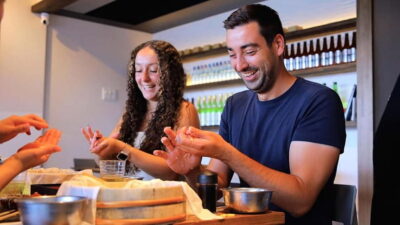
Roll and Authentic Sushi Making Class in Asakusa
Read our review →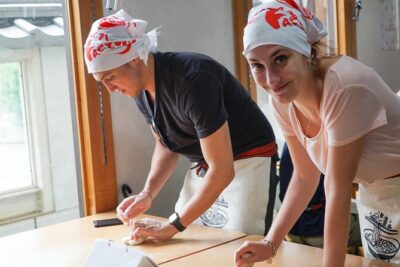
Ramen Cooking Class at Ramen Factory in Kyoto
Read our review →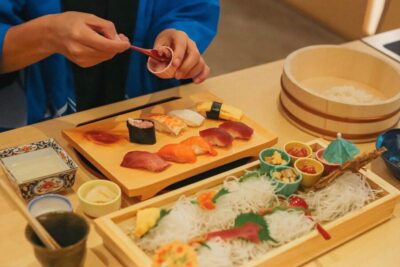
Sushi Making Class in a Happi Coat near a Famous Spot
Read our review →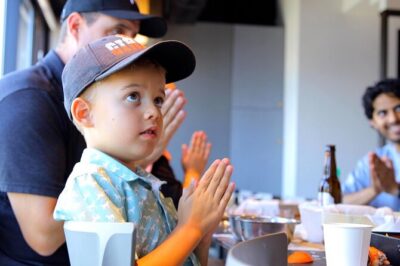
Sushi Making Osaka Roll and Authentic Japanese Sushi Class
Read our review →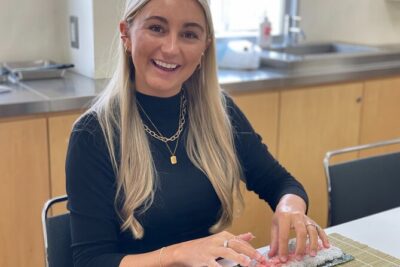
Tokyo Sushi Making Class in Tsukiji with Professional Chef
Read our review →
Ramen & Gyoza Cooking Class in Tokyo with Local Supermarket Visit
Read our review →Browse the lists this tour appears in