
Reviewed · WORKSHOPS
Calligraphy & Digital Art Workshop in Kyoto
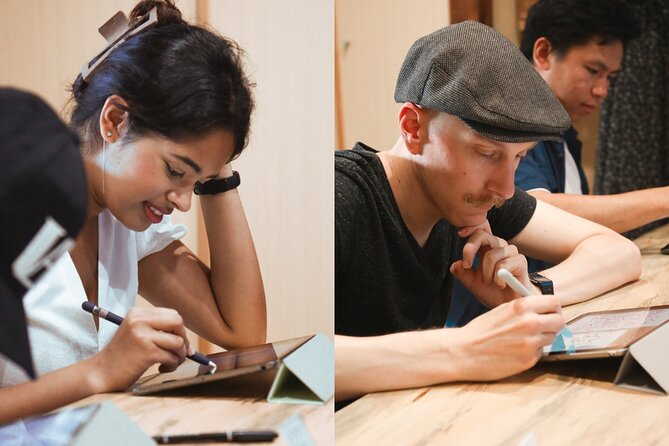
Brushes meet pixels in this Kyoto art class. Studio Aya combines traditional calligraphy and ink painting with digital art on an iPad, giving you a hands-on look at two very different sides of Japanese creativity. I like the thoughtful format: you begin with brushwork on paper, then use the same ideas to create digital art.
I also like the relaxed pace, with Japanese tea and snacks served during the break. The main consideration is time. At about 90 minutes, this is a friendly introduction rather than a full art course, and the ¥72 price in the supplied listing, about $72, may feel high if you want only traditional calligraphy.
In This Review
- Key points to know before booking
- What makes this Kyoto workshop different
- The first 30 minutes: brush, ink, and Japanese letterforms
- The tea break: a useful pause at the halfway point
- The next 30 minutes: creating digital calligraphy on an iPad
- The final 15 minutes: questions and a chance to clarify
- Why the private format matters
- Who will get the most from the $72 price
- Timing, location, and practical planning
- The strongest reasons to choose Studio Aya
- Should you book this Kyoto art workshop?
- FAQ
- Where does the calligraphy and digital art workshop take place?
- What time does the workshop start?
- How long does the experience last?
- Is an iPad provided?
- Are tea and snacks included?
- Is the activity private?
- Can I cancel for a full refund?
Key points to know before booking
- Two art forms in one class: You practice traditional calligraphy or suibokuga, Japanese ink painting, then make related artwork on an iPad.
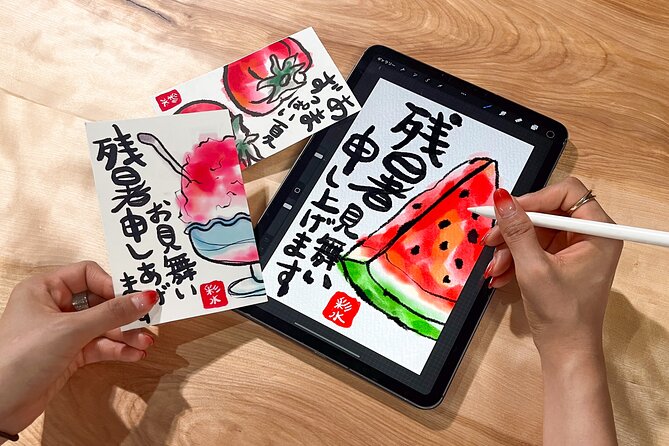
- Etegami adds a personal touch: You learn Japanese picture letters and create a digital postcard-style artwork.
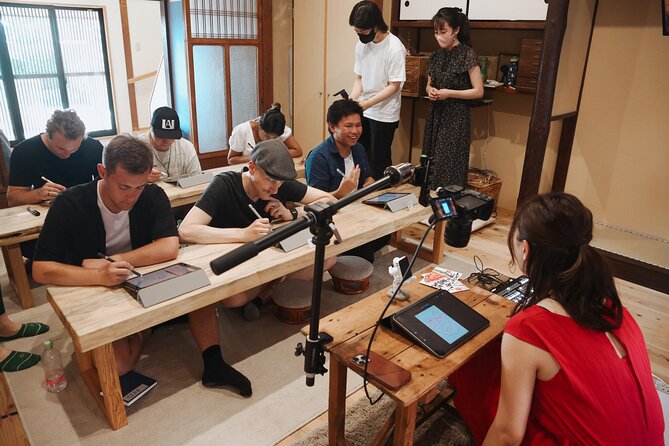
- A small private setting: Only your group participates, which can make it easier to ask questions and get help.
- Tea and snacks are included: The 15-minute break gives you a cultural pause instead of a simple classroom stop.
- Led by digital artist Ami: Ami studied digital art in the United Kingdom and runs the YouTube channel amity_sensei, which has more than 340,000 subscribers.
- Convenient afternoon timing: The workshop begins at 3 pm and ends back at the Kyoto meeting point after roughly an hour and a half.
What makes this Kyoto workshop different
Many Japanese art classes ask you to choose between old and new. This one puts both on the table. You start with the physical feel of a brush, ink, and paper, then switch to an iPad and see how those marks can become a finished digital design.
That contrast gives the class its purpose. You are not simply learning how to copy a few kanji. You are seeing how line, spacing, balance, and personal expression work in both a traditional and modern setting.
The workshop takes place at Studio Aya, connected with iPadmate kids47 in Kyoto’s Kamigyo Ward. It is led by Ami and her team of professional artists and creators. Ami’s background is particularly relevant here. She studied digital art in the UK, runs the amity_sensei YouTube channel, and founded iPadmate kids in 2020 to help children develop creative skills with an iPad.
That background helps explain the unusual pairing. This is not a standard calligraphy lesson with a tablet added at the end. The digital part is a central feature of the class.
A few more options to weigh up in Kyoto
- PERFECT KYOTO 1-Day Bus Tour
★ 5.0 · 13,518 reviews - [Kyoto & Nara Day Tour] Sagano Scenic Railway & Nara Park & Fushimi Inari Taisha Thousand Torii Gates & Togetsukyo Bridge & Bamboo Grove & Kimono Forest (Departing from Osaka)
★ 4.9 · 10,942 reviews - Kyoto: Fushimi Inari, Kinkakuji, Bamboo Grove 1 Day Bus Tour
★ 4.8 · 4,316 reviews
The first 30 minutes: brush, ink, and Japanese letterforms
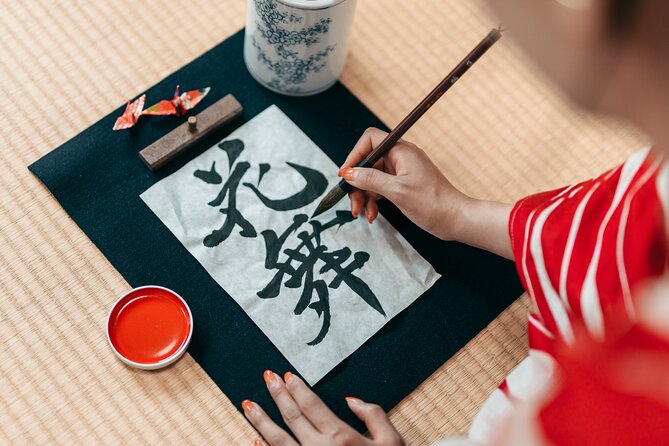
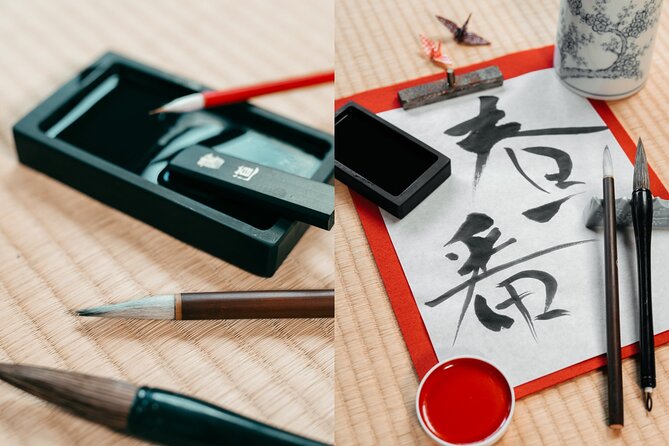
The workshop opens with greetings and an introduction to traditional calligraphy or suibokuga. Suibokuga is Japanese ink painting, an art form that uses controlled brushwork, ink density, and empty space to create an image or impression with relatively few marks.
You will work with the basic feel of the brush and practice character strokes. The goal is not perfect handwriting. It is to understand how pressure, direction, and rhythm change the line.
The class also introduces the Zen approach connected with calligraphy. That does not mean you need prior knowledge of Zen or Japanese writing. It gives you a way to think about the activity: slow down, pay attention to each stroke, and accept that a single mark cannot always be corrected.
I like this opening because it gives the digital session a proper foundation. You first experience the materials in your hand. The iPad then becomes a second tool, not a replacement for the traditional work.
The class can focus on calligraphy or suibokuga, so the exact subject may depend on the session or your group. If you have a preference, ask about it when booking or at the start. The available information does not promise that every group will complete both traditional options.
The tea break: a useful pause at the halfway point
After about 30 minutes, you get a 15-minute break with free Japanese tea and snacks. This is a small detail, but it improves the rhythm of the class. Your hands and eyes get a rest before the move to digital work.
The break also keeps the workshop from feeling like a tight sequence of instructions. You can pause, look at your practice work, and reset before picking up the iPad.
I would not book this class expecting a full tea ceremony. The information only promises Japanese tea and snacks, not a formal ceremony or a detailed lesson in tea culture. Think of it as a welcoming refreshment break within an art class.
For families, this pause may be especially helpful. The class is suitable for most participants, and one family review described children enjoying the process of learning kanji, writing on paper and iPad, and making a postcard. The short break gives younger participants a natural change of pace.
The next 30 minutes: creating digital calligraphy on an iPad
The second art session moves to digital creation. An iPad is provided, so you do not need to bring your own device for the workshop. You will make calligraphy or suibokuga on the iPad, using digital tools to recreate some of the qualities of brush and ink.
This section is likely to appeal most to anyone curious about Japanese art but not ready to commit to a full traditional lesson. Digital tools make it easier to experiment, adjust, and try again. At the same time, the class connects your digital work to the brush strokes you practiced earlier.
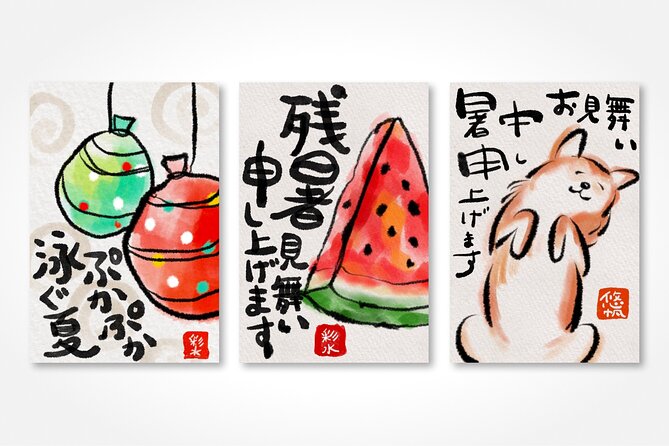
A central part of the digital session is etegami, Japanese picture letters. Etegami combines an image with hand-drawn writing, often in a simple postcard format. The charm is in the personal mark. The finished piece does not need to look mechanically perfect.
The activity has a nice travel connection. Instead of only buying a postcard in Kyoto, you create one yourself, using Japanese letters and your own visual choices. The supplied information does not say if you can print the final artwork or take home a physical version, so ask the instructors about that before you begin. You should know whether your finished piece remains digital or can be shared in another form.
The digital session is also where Ami’s teaching focus makes sense. Her work centers on creative uses of the iPad, and her school supports both children and adults. You are learning an art process, not simply tapping through a preset app.
A completely different kind of day out:
- Kyoto: Tea Ceremony in a Traditional Tea House in Kiyomizu
★ 4.9 · 3,519 reviews - Kyoto: Gion Make Your Own Chopsticks with Engraving Option
★ 5.0 · 3,465 reviews - Kyoto Nara Day Trip │ Kiyomizu-dera Temple + Fushimi Inari-taisha Shrine + Nara Park (Departing from Osaka/Kyoto)
★ 4.7 · 3,408 reviews - Kyoto Geisha Walking Tour: Gion District & Hidden Gems
★ 4.7 · 3,273 reviews
The final 15 minutes: questions and a chance to clarify
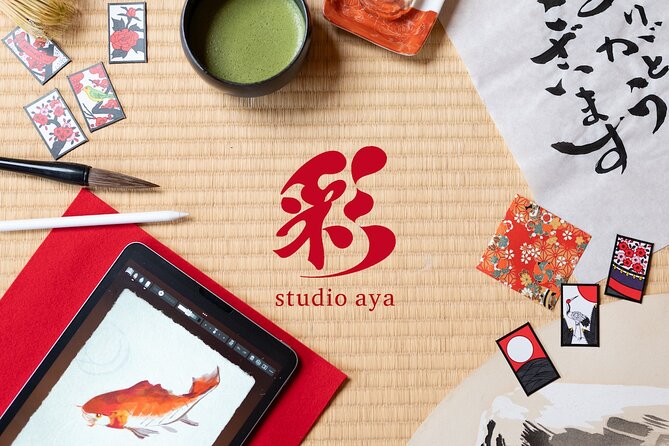
The class ends with about 15 minutes for questions and answers. This matters because the workshop covers several subjects in a short period: calligraphy, ink painting, kanji, etegami, and digital art.
You can use this time to ask about brush technique, the meaning or form of a character, or how to continue working with digital art after the class. The available details do not specify a take-home guide or follow-up materials, so treat the Q&A as your main chance to get practical advice directly from the instructors.
A private format helps here. Only your group participates, rather than a large mixed class. That can make it easier to ask a basic question or request help with a stroke without feeling rushed by a crowd.
The experience finishes at the same place where it begins. That simple arrangement is useful because you do not need to coordinate a second pickup point after the lesson.
Why the private format matters
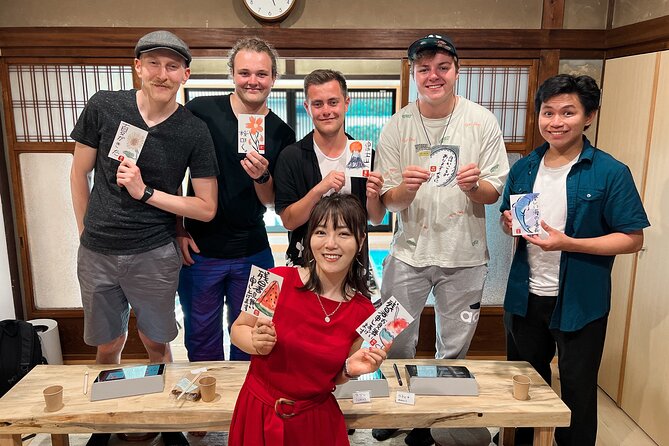
This is described as a private tour or activity, meaning only your group takes part. The benefit is not privacy in a luxurious sense. It is the chance to learn at a pace that fits your group.
A couple may want more time with etegami. A family may need instructions repeated for children. Friends might prefer to spend less time on formal explanation and more time making the digital postcard. The exact flexibility is not spelled out, so you should not assume the lesson can be redesigned completely, but a private group normally gives the instructors a better chance to respond to your needs.
The instructors are described as friendly and helpful in the supplied feedback. One couple particularly enjoyed the way the first half improved their brush strokes and explained the Zen approach to calligraphy. That combination of technique and meaning is one of the strongest reasons to choose this activity.
Who will get the most from the $72 price
At $72 per person, this is not the cheapest short activity in Kyoto. The class lasts about 90 minutes, so the price works best if you value instruction, equipment, and the unusual combination of art forms.
Your fee includes use of an iPad, Japanese tea, and snacks. You also get guidance from artists connected with Ami’s creative studio. Since transportation is not included, you will need to make your own way to Daikokuyacho in Kamigyo Ward.
I see the best value for three types of participants:
- First-time visitors to Japanese calligraphy: You get a low-pressure introduction without buying brushes, ink, paper, or an iPad.
- Families with children: The activity includes writing kanji, working on paper and screen, and making an etegami-style postcard. The mix helps keep the class from becoming repetitive.
- Digital artists and iPad users: You can see how traditional Japanese brush ideas translate into digital work, with guidance from a teacher known for iPad instruction.
The value is weaker if you want an advanced calligraphy lesson, a long cultural lecture, or a formal tea experience. It is also less suitable if you strongly dislike screen-based activities. The iPad is not a minor extra. Digital art occupies about 30 minutes of the schedule.
Timing, location, and practical planning
The workshop starts at 3 pm and lasts approximately 1.5 hours, including the break and Q&A. That timing leaves your morning and early afternoon open for other Kyoto plans. You could place it after sightseeing, though you will want to arrive at the meeting point with enough time to settle in.
The stated meeting point is iPadmate kids47, at Daikokuyacho, Kamigyo Ward, Kyoto, postal code 602-8055. The experience ends there as well. It is near public transportation, but private transportation is not included.
A mobile ticket is provided, and confirmation comes at booking. Service animals are allowed, and most participants can take part. The activity is private, but the available information does not give a maximum group size, so ask if that matters for your party.
The cancellation policy is generous if your plans may change. You can cancel up to 24 hours before the local start time for a full refund. Changes or cancellations made less than 24 hours before the start are not accepted for a refund.
The strongest reasons to choose Studio Aya
The most praised parts of this experience are clear. People especially value the friendly instruction, the traditional opening, and the move into digital artwork. The family appeal also comes through strongly, with children enjoying the chance to learn kanji and create work on both paper and an iPad.
I would choose this workshop because it gives you a finished creative task rather than only a demonstration. You practice strokes, learn about picture letters, and apply the ideas in a digital format.
I also like that the class does not treat tradition as something frozen in the past. The brush session introduces a Japanese art practice, while the iPad session shows how those ideas can continue in a current medium.
The main limitation is the compact schedule. Thirty minutes of traditional instruction is enough to get started, but not enough to build strong calligraphy skills. The same is true of the digital portion. You will get an introduction and a guided project, not mastery.
Should you book this Kyoto art workshop?
Book it if you want a personal, creative activity that links Japanese calligraphy with modern iPad art. It is especially well suited to couples, families, solo visitors who enjoy making things, and anyone curious about etegami.
Think twice if you want only traditional brushwork or if you expect a full cultural ceremony. At $72, the class earns its price through the private format, included iPad, artist-led instruction, tea, snacks, and the rare chance to try both paper and digital techniques in one sitting.
For most people, the best reason to book is simple: you leave with a better sense of how Japanese art can be quiet, playful, traditional, and digital at the same time.
FAQ
Where does the calligraphy and digital art workshop take place?
The meeting point is iPadmate kids47, Daikokuyacho, Kamigyo Ward, Kyoto, 602-8055, Japan. The activity ends back at the same meeting point.
What time does the workshop start?
The workshop starts at 3 pm.
How long does the experience last?
The workshop lasts approximately 1.5 hours, including a break and a question and answer period.
Is an iPad provided?
Yes. An iPad is included for the digital art session.
Are tea and snacks included?
Yes. Free Japanese tea and snacks are provided during the 15-minute break.
Is the activity private?
Yes. This is a private activity, so only your group participates.
Can I cancel for a full refund?
Yes. You can cancel at least 24 hours before the local start time for a full refund. Cancellations or changes made less than 24 hours before the start are not accepted for a refund.
Just added in Kyoto
- The “Golden Route” and Ancient Japan by DIAMIR Erlebnisreisen – 14-Day Tour★ 2.0 · 2 reviews
- Japan: Castles & Cuisine by G Adventures – 6-Day Kyoto to Osaka Tour★ 4.5 · 4 reviews
- Cycle Japan by Explore! – 13-Day Kyoto to Tokyo Tour★ 4.7 · 12 reviews
- Cycle Japan by Intrepid Travel – 11-Day Kyoto to Tokyo Tour★ 4.8 · 2 reviews
- Classic Japan by Intrepid Travel – 11-Day Kyoto to Tokyo Tour★ 4.4 · 14 reviews
- Ancient & Modern Japan 14-Day Tour by Exodus Adventure Travels★ 4.4 · 40 reviews
- 5 Day Cultural Adventure of Kyoto, Nara & Osaka by Tourist Journey★ 2.5 · 2 reviews
- 12 Days Kinosaki Onsen Escape: A Journey Through Japan’s Timeless Towns by UME Travel★ 4.8 · 5 reviews
Workshops, compared.

Sushi Making Tokyo Roll and Authentic Japanese Sushi Class
Read our review →
Gion Make Your Own Chopsticks with Engraving Option
Read our review →
Roll and Authentic Sushi Making Class in Asakusa
Read our review →
Ramen Cooking Class at Ramen Factory in Kyoto
Read our review →
Tokyo Asakusa Chopsticks Workshop: Make Your Own Pair
Read our review →
Ring Making Workshop : Vintage Japanese Coin Ring
Read our review →Browse the lists this tour appears in