
Reviewed · CASTLES AND HISTORIC SITES
Full Tokyo: Meiji Shrine, Imperial Palace, Asakusa & Skytree
Tokyo rewards careful planning, but this route does the homework for you. I like the way it links Meiji Shrine and Senso-ji with modern Tokyo icons such as Shibuya Crossing and Tokyo Skytree. I also like that train fares and Skytree admission are included, making the $39 price unusually practical for a full day.
The tradeoff is simple: this is an active seven-hour outing with many train rides and plenty of walking. You get a broad first look at Tokyo, not long, leisurely visits at every stop. The tour also ends at Skytree, so you must arrange your own way back.
In This Review
- Key things to know before booking
- Why this route works for a first day in Tokyo
- Meeting Hachiko and crossing Shibuya
- Meiji Shrine: quiet woods beside the city
- The Imperial Palace exterior in 30 minutes
- Akihabara, where Tokyo turns electric
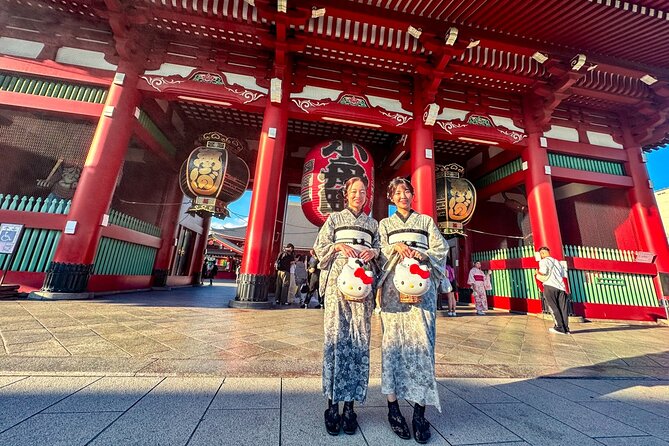
- Two hours in Asakusa and Senso-ji
- Tokyo Skytree finishes the day above the city
- What the $39 price really covers
- Walking, weather, and the right kind of energy
- Who should book this Tokyo tour?
- Final verdict: a smart overview with a busy pace
- FAQ
- Where does the tour begin?
- What time does the tour start?
- Where does the tour end?
- Is transportation back to the starting point included?
- Are train tickets included?
- Is Tokyo Skytree admission included?
- Is lunch included?
- Is the tour available in English?
- How much walking is involved?
- How many people can join the tour?
- Can I cancel for a full refund?
Key things to know before booking
- Start at Hachiko Statue at 8:00 a.m.: The meeting point puts you right beside Shibuya Crossing, one of Tokyo’s most famous city scenes.
- Four major areas in one day: You visit Meiji Shrine, the Imperial Palace exterior, Asakusa, and Tokyo Skytree, with views of Akihabara and Shibuya along the way.
- Train travel is part of the experience: Transfers between stops are covered, but you should expect a walking tour that uses public transportation rather than a sightseeing bus.
- Skytree admission is included: Your guide accompanies the group to the entrance and up to the observation deck before the tour ends.
- Lunch is optional: You can choose a meal add-on, or use your two hours in Asakusa for your own food and sightseeing plans.
- Best for first-time visitors: This works well when you want an organized overview before deciding which Tokyo districts deserve a longer return visit.
Why this route works for a first day in Tokyo
Tokyo can feel like several cities stitched together by rail lines. Shibuya is modern and youthful. Meiji Shrine is wooded and quiet. Asakusa feels tied to older religious traditions, while Skytree gives you a wide view of the huge city around you.
This tour connects those different sides without asking you to plan every transfer yourself. A bilingual guide leads the group in Spanish and English, explains the cultural background, and handles the route between stops. That can be especially useful on a first morning, when Tokyo’s train system may seem like a puzzle printed in very small type.
The group size can reach 20 people. That is small enough for a guide to remain useful, but not intimate. If you prefer private touring or long periods of silence at a shrine, this is not the right format. If you want direction, context, and a busy day of sightseeing, the structure makes sense.
Guides Francisco and Jorge have been praised for their warmth and ability to keep the tour enjoyable. One especially memorable guide brought graduate-level study in philosophy and Japanese religion to the explanations. That kind of background can turn a quick shrine visit into something more meaningful than a photo stop.
More Castles and Historic Sites in Tokyo
- Tokyo: Imperial Palace and Shogun Historical Walking Tour
★ 5.0 · 2,251 reviews - Tokyo Castle & Imperial PalaceーShogun Walking Tour
★ 4.7 · 1,068 reviews - Tokyo: Samurai Ninja Museum Guided tour and Experience
★ 4.6 · 1,010 reviews
Meeting Hachiko and crossing Shibuya
The day begins at the Hachiko statue in Shibuya at 8:00 a.m. This is a practical meeting point, though Shibuya Station is large and confusing. Give yourself extra time to find the statue, and keep the tour’s contact details available on your phone.
Hachiko is more than a convenient landmark. The famous dog became a symbol of loyalty after continuing to wait for his deceased owner at the station. The small statue is surrounded by one of Tokyo’s busiest urban zones, which gives the meeting place a distinctly Japanese contrast: a sentimental memorial in the middle of a roaring commercial district.
From there, you see Shibuya Crossing. The crossing is not a formal attraction with a ticket or entrance gate. Its appeal comes from the spectacle of people moving in several directions at once, surrounded by giant screens, shops, and elevated walkways.
You should think of this part as an introduction rather than a long visit. The group soon moves on toward Meiji Shrine, with the route taking roughly 40 minutes. Since the tour relies on trains and walking, the transfer itself is part of the day. Wear shoes you can comfortably use for hours.
Meiji Shrine: quiet woods beside the city
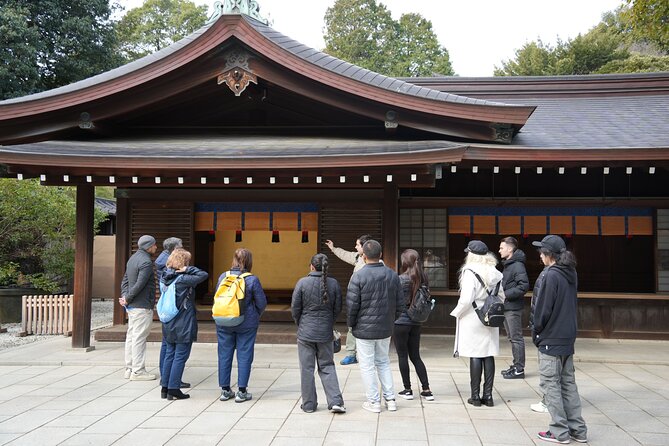
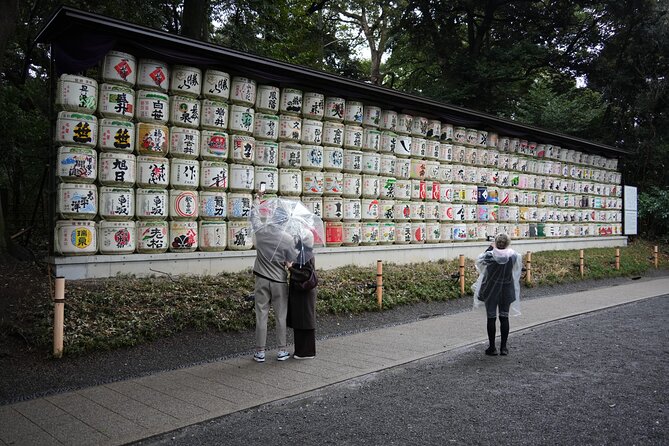
Meiji Jingu Shrine offers the sharpest change of mood on the route. After the bright streets of Shibuya, you enter a broad wooded setting surrounding one of Tokyo’s best-known Shinto sanctuaries.
The visit lasts about 1 hour and 10 minutes, and admission is free. That longer stop gives the guide time to explain Shinto customs, the role of shrine gates, and the meaning of the site without rushing you through a quick photograph.
The shrine is dedicated to Emperor Meiji and Empress Shoken, but the main value of the visit is the chance to observe how a religious site functions in modern Tokyo. You may see visitors making offerings, bowing, or taking part in traditional rituals. Your guide can help you understand what you are seeing and how to behave respectfully.
This is also where the guide’s skill matters most. A quick explanation of Japanese spirituality can easily become a list of facts. A thoughtful guide can instead show how Shinto ideas connect to purification, nature, gratitude, and everyday practice. The tour has received especially strong praise for cultural and religious explanations, so this stop may become the intellectual highlight of the morning.
Meiji Shrine is free, but do not mistake free admission for a short or minor visit. The walking paths and wooded setting require time. In winter, the open sections can feel cold, and one useful tip is to dress warmly because wind and low temperatures may make the day less comfortable than expected.
The Imperial Palace exterior in 30 minutes
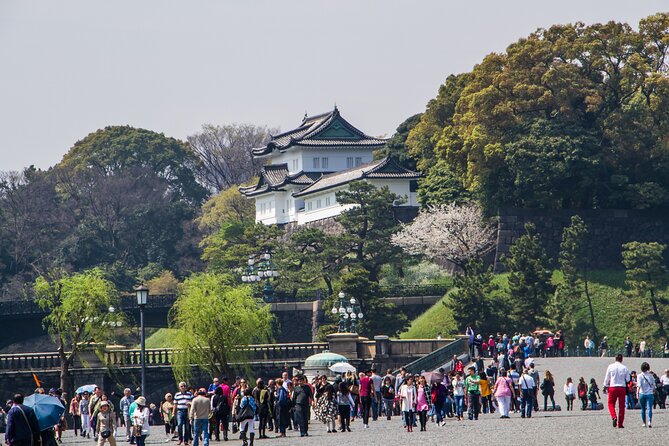
The next stop is the Imperial Palace, where you have about 30 minutes to admire and photograph the exterior of the Emperor’s official residence. Admission is not included because the palace itself is not part of the visit.
This short stop is best understood as a photo and orientation break. You will not tour the palace rooms or enter the residence. The appeal comes from the formal grounds, historic setting, and view of the palace exterior within central Tokyo.
Thirty minutes is enough for an introduction, especially on a day that already includes several major areas. It is not enough for a detailed exploration of the palace grounds. If the Imperial Palace is high on your personal list, plan to return on another day and check which areas are open before you go.
The brief timing also keeps the route moving. You are not spending half a day at one landmark while missing other parts of Tokyo. That balance is one reason this tour suits a first visit, though it will frustrate anyone hoping for a slow, specialist visit at each site.
More Temples and Shrines in Tokyo
- Tokyo: Meiji Shrine, Asakusa, Skytree Bus Tour and Cruise
★ 4.7 · 1,986 reviews - Tokyo: Asakusa Walking Tour with Sensoji Temple Visit
★ 4.8 · 1,583 reviews - Nikko: Kegon Falls, Lake Chuzenji & Toshogu Temple
★ 4.6 · 1,577 reviews - Tokyo: Nikko Toshogu Shrine and Kegon Waterfall Tour
★ 4.5 · 1,266 reviews
Akihabara, where Tokyo turns electric
The route also takes you through Akihabara, the district associated with electronics, anime, and Japanese pop culture. The supplied schedule does not assign a separate long stop here, so you should treat it as a guided look at the area rather than a full shopping visit.
Akihabara is useful because it shows another side of Tokyo. Shibuya gives you fashion, advertising, and crowds. Akihabara focuses on games, gadgets, anime, and the colorful visual style that has made the district famous around the world.
If you have a particular shop or product in mind, do not expect enough free time to hunt for it. The value here is seeing the district as part of a wider city tour and hearing the guide explain its place in Tokyo’s popular culture. You can return later if the area catches your interest.
The transition also reinforces the tour’s main purpose: giving you a city overview. In one day, you see religious landmarks, government architecture, old Tokyo, consumer culture, and a modern observation tower. It is a lot, but the contrasts are useful.
Two hours in Asakusa and Senso-ji
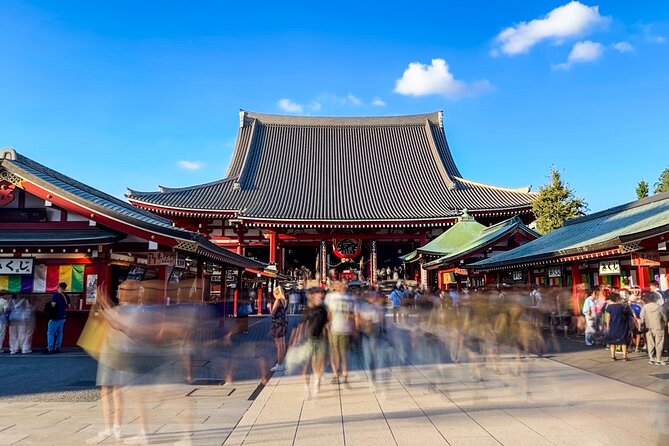
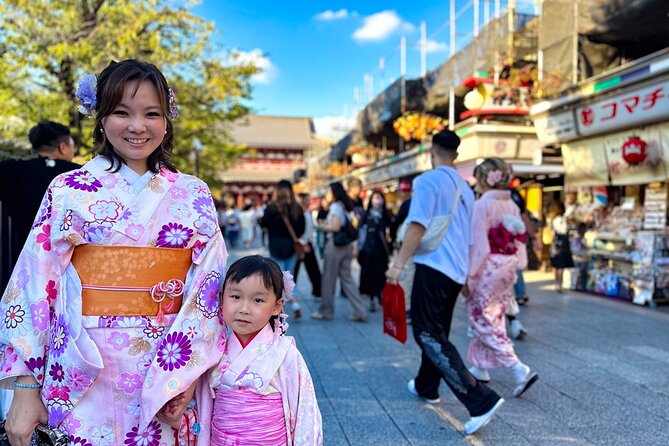
Asakusa receives the longest scheduled stop, about two hours. That is a sensible choice. This historic district offers both a major temple and enough surrounding streets for you to explore at your own pace.
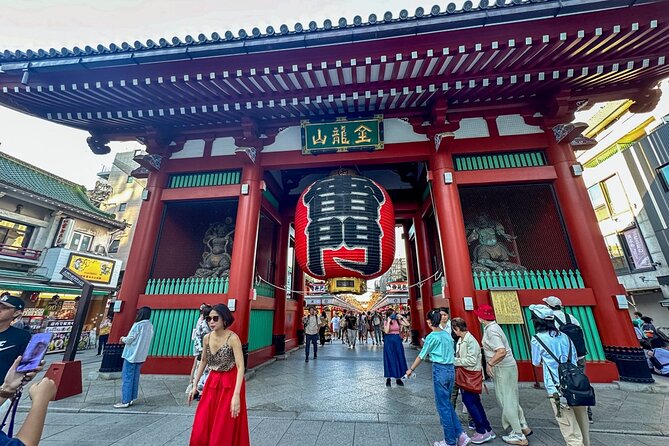
Senso-ji is Tokyo’s oldest temple and the center of the Asakusa visit. The approach includes the famous Nakamise shopping street, where you can browse traditional snacks, souvenirs, and small gifts. The temple grounds are free, and the area gives you more room to pause than the short Imperial Palace stop.
Your guide can explain the meaning of the temple buildings, religious customs, and the difference between a Buddhist temple and a Shinto shrine. That comparison is valuable after visiting Meiji Shrine earlier in the day. You are not simply collecting landmarks. You are seeing two important strands of Japanese religious life in close succession.
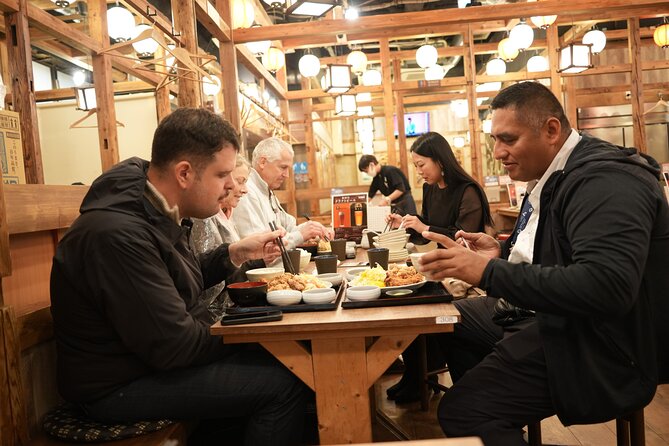
Two hours gives you choices. You can stay with the guide for explanations, take photographs, shop, or select the optional traditional lunch. If lunch is not included in your booking, you can use this break to make your own food choice instead.
Do not spend every minute shopping. The best use of Asakusa is a mix of temple time, street wandering, and food. At the same time, remember that the day is already physically demanding. A seated meal can be a smart decision, especially if you are traveling with children or anyone who tires easily.
Asakusa is also one of the places where the tour feels less rushed. You have enough time to notice details, not just follow a guide from gate to gate. That makes it a strong middle section after the morning’s faster movement through Shibuya, Meiji Shrine, and the palace area.
Tokyo Skytree finishes the day above the city
The final stop is Tokyo Skytree, one of the tallest structures in the world. Admission to the observation deck is included, which adds real value to the $39 cost.
You reach the entrance with the guide and ascend to the observation deck for panoramic views. The scheduled visit lasts about 30 minutes. That is enough to take in the scale of Tokyo, identify major areas from above, and take photographs, though it is not a long, unhurried tower visit.
Skytree works well as the final stop because it pulls the day’s separate neighborhoods into one view. You have spent hours moving through Tokyo at street level. From above, the city becomes easier to understand as a connected mass of districts, roads, rail lines, and buildings.
The tour ends at Skytree after the guide accompanies the group to the entrance. There is no bus back to Hachiko or to your hotel. Plan your return route before the tour begins, and allow some time after the official finish if you want to enjoy the tower area at your own pace.
This ending is both convenient and limiting. You finish at a major attraction with public transportation nearby, but you do not finish where you started. If you have evening plans in Shibuya, allow extra time for the return journey.
What the $39 price really covers
At $39 per person, the price is strong for a seven-hour guided route. You receive a bilingual guide, train tickets for transfers between the planned stops, and admission to Tokyo Skytree. Those included items matter because transport costs and a major observation deck ticket can otherwise push up the cost of a busy sightseeing day.
Lunch is available only if you select that option. Drinks are not included. The Imperial Palace admission is not included, though the visit is limited to the exterior and no palace entry is planned.
The value is highest if you want structure. You are paying not just for access, but for someone to organize the sequence, guide you through rail transfers, and explain the cultural meaning of the places you see. If you already know Tokyo well and are comfortable planning trains yourself, you may prefer an independent day.
The 99 percent recommendation rate and 4.9 rating point to a consistently well-received experience, but the practical limitations remain. This is not a luxury tour, a private tour, or a relaxed stroll. It is an efficient group outing with a full schedule.
Walking, weather, and the right kind of energy
Take the physical demands seriously. The route includes train stations, platform changes, shrine paths, temple grounds, shopping streets, and time on your feet at multiple landmarks. The tour requires a moderate fitness level, and several hours of walking can leave you tired before Skytree.
Wear sturdy, comfortable shoes. In winter, add a warm layer because wind and cold can be noticeable, especially in open areas. A small bottle of water is useful, though drinks are not included.
The train rides are not wasted time, but they do reduce the amount of quiet sightseeing time. You should enjoy the movement of the city and accept that this is a day of transitions. The reward is range. You see far more than you would by lingering at one neighborhood.
The group may include both Spanish-speaking and English-speaking participants. Guides such as Francisco have been praised for making sure both groups receive the explanations. Still, a bilingual tour can move at a slightly different rhythm from a single-language tour, so keep your expectations realistic.
Who should book this Tokyo tour?
I would choose this experience for a first-time visitor with limited time in Tokyo, especially someone who wants cultural sites and modern city highlights in one day. It is also a good fit if train navigation makes you uneasy or if you want a guide to explain Japanese religion, history, and local customs.
It suits solo visitors, couples, and families with older children who can manage a full day of walking. The optional lunch makes the food plan flexible, and the free time in Asakusa gives you a little breathing room.
I would not choose it for a traveler who wants deep exploration of one district, a private guide, or a slow photographic pace. The Imperial Palace visit is short, Akihabara is not given a long dedicated stop, and Skytree concludes the tour rather than returning you to Shibuya.
Free cancellation is available up to 24 hours before the 8:00 a.m. start time. Cancellations or changes made later are not accepted for a refund, so keep that deadline in mind when your Tokyo plans are still shifting.
Final verdict: a smart overview with a busy pace
Book this tour if you want to get your bearings quickly and see Tokyo’s major contrasts without planning every train transfer. The included Skytree ticket and rail fares make the price appealing, while the strongest guides add cultural context that you would miss on a self-guided checklist.
Skip it if you want a quiet day or already have Tokyo transport mastered. For most first-time visitors, though, the route offers a useful snapshot: Shibuya’s city energy, Meiji Shrine’s calm, the palace exterior, Akihabara’s pop culture, Asakusa’s temple traditions, and Tokyo from above. Just bring good shoes, warm clothing in winter, and a plan for getting home from Skytree.
FAQ
Where does the tour begin?
The tour begins at the Hachiko Statue, located at 2 Chome-1 Dogenzaka, Shibuya, Tokyo 150-0043, Japan.
What time does the tour start?
The start time is 8:00 a.m.
Where does the tour end?
The tour ends at Tokyo Skytree, located at 1-chōme-1-2 Oshiage, Sumida City, Tokyo 131-0045, Japan.
Is transportation back to the starting point included?
No. The guide accompanies the group to the entrance of Tokyo Skytree, but there is no return bus to Hachiko or the original meeting point.
Are train tickets included?
Yes. Train tickets for transfers between the planned stops are included.
Is Tokyo Skytree admission included?
Yes. Entrance to Tokyo Skytree is included, and the guide accompanies the group to the entrance and observation deck.
Is lunch included?
Lunch is included only if you choose the meal option when booking. Drinks are not included.
Is the tour available in English?
Yes. The tour includes a bilingual guide in English and Spanish.
How much walking is involved?
The tour requires a moderate level of physical fitness and includes substantial walking along with multiple train rides. Comfortable shoes are recommended.
How many people can join the tour?
The maximum group size is 20 people.
Can I cancel for a full refund?
Yes, if you cancel at least 24 hours before the local start time. Cancellations or changes made less than 24 hours before the start are not accepted for a refund.
Just added in Tokyo
- A One-of-a-Kind Sushi Experience in a Special Place of Japan★ 5.0 · 15 reviews
- Tokyo Cute Bento Cooking Class – Make a Kawaii Character Lunchbox★ 5.0 · 126 reviews
- Japanese Home Cooking Class & Walk in Todoroki Temple Tokyo★ 5.0 · 88 reviews
- Japan Tokyo Tower Observatory Deck E-Ticket★ 4.0 · 34 reviews
- Catch a Baseball Game in Tokyo with a Local – Tickets Included★ 5.0 · 24 reviews
- JDM Experience with Fast&Furious RX-7 (English speaking Driver)★ 5.0 · 57 reviews
- Tokyo Private Day Tour by Car with English speaking Driver Guide★ 4.0 · 29 reviews
- Japan Classic 10 Day – One Life Adventures★ 5.0 · 129 reviews
Castles and Historic Sites, compared.
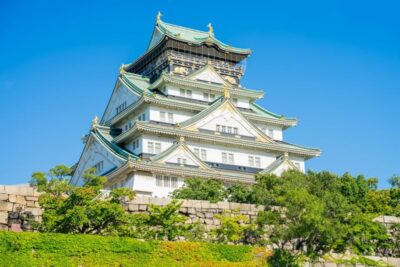
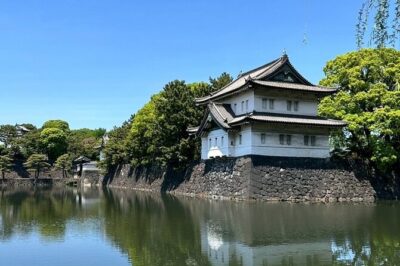
Imperial Palace and Shogun Historical Walking Tour
Read our review →
Tokyo Castle & Imperial PalaceーShogun Walking Tour
Read our review →
Nijo-jo Castle and Ninomaru Palace Guided Tour
Read our review →
Samurai Ninja Museum Guided tour and Experience
Read our review →Browse the lists this tour appears in