
Reviewed · WALKING TOURS
Gion Walking Tour by Night
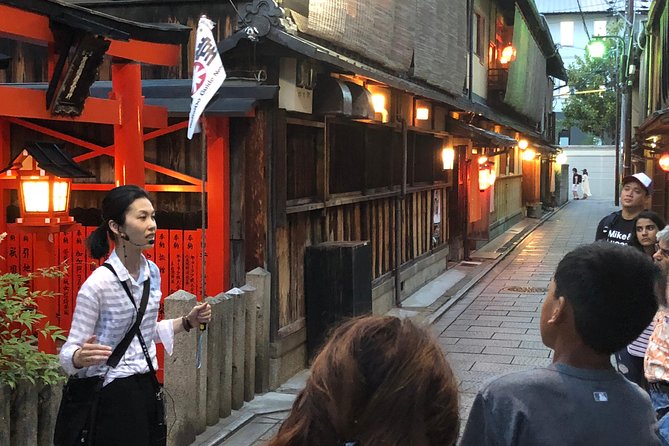
Gion comes alive after sunset. This two-hour walk pairs narrow lantern-lit lanes with clear explanations of geiko and maiko life, making the district easier to understand and much harder to get lost in. I especially like the riverside walk beside Shirakawa and the chance to see streets connected with Memoirs of a Geisha. The main drawback is group size: the standard outing can feel crowded, so you may want the small-group or private option.
I also like the useful cultural detail. Guides explain kimono, makeup, hairstyles, training, tea houses, and daily routines rather than simply pointing at pretty streets. Guides such as Mia, Mai, Mae, and Cheko have earned praise for lively storytelling and humor, but arrive early: reception begins at 5:00 pm, and the walk starts sharply at 5:30 pm.
In This Review
- Key points to know before you book
- Why Gion works best after dark
- Meeting at 178 Tokiwacho
- Walking beside Shirakawa
- Understanding geiko and maiko
- The possibility of seeing geiko or maiko
- Group size and the small-group choice
- Is $19.82 a fair price?
- What the two hours feel like
- Who will enjoy this Gion walk most
- Booking, weather, and cancellation details
- Should you book the Gion Walking Tour by Night?
- FAQ
- Where does the Gion night walking tour start?
- What time does the tour begin?
- How long does the tour last?
- Where does the tour finish?
- Is transportation included?
- Is the tour conducted in English?
- How many people can join the standard tour?
- Will I definitely see a geiko or maiko?
- What is the cancellation policy?
Key points to know before you book
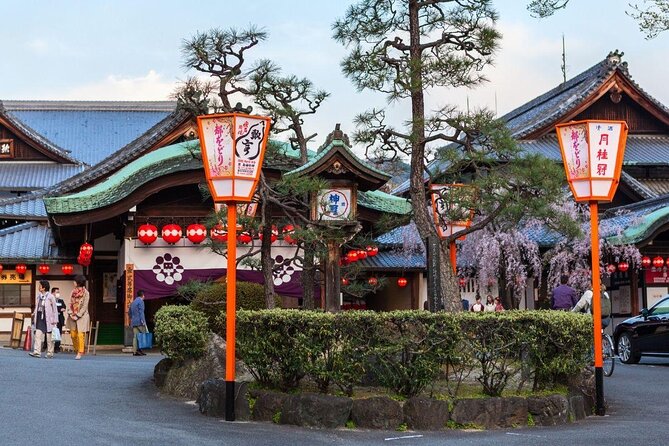
- Shirakawa riverside scenery: Walk beside the classic cobblestone lanes and stream featured in Memoirs of a Geisha.
- Clear geiko and maiko explanations: Learn the difference between the two terms, plus details about clothing, makeup, hairstyles, training, and work.
- Two-hour evening route: The tour begins at 5:30 pm and returns to the meeting point.
- Standard groups may be large: The advertised maximum is 20 people, while the booking information also refers to a 15-person limit per booking. A smaller group option is available.
- English-speaking local guide: Guides including Mia, Mai, Mae, and Cheko have been praised for strong English, humor, and local knowledge.
- Good value at $19.82: The fee covers a professional guide, while transport, hotel pickup, and drop-off are separate.
Why Gion works best after dark
Gion is Kyoto’s famous geisha district, but it is not a single attraction with a gate and a ticket booth. It is a working neighborhood of narrow lanes, traditional buildings, tea houses, restaurants, and riverside paths.
That makes a guided walk useful. The streets are easy to confuse, especially at night, and many spots have no large signs explaining what you are seeing. Your guide gives the area a shape and meaning. Instead of wandering past closed doors and wondering what happens inside, you learn how geiko and maiko fit into Gion’s traditional entertainment culture.
The timing is also well chosen. A 5:30 pm start gives you some remaining daylight at the beginning, followed by the soft evening atmosphere that makes Gion so appealing. The tour lasts about two hours, long enough to cover the district without turning a pleasant walk into an endurance test.
I would make this one of your first Kyoto activities if you want cultural background early in your visit. The guide can explain words and customs that will make later encounters with Kyoto’s traditional arts easier to understand.
More Walking Tours in Kyoto
- Kyoto Geisha Walking Tour: Gion District & Hidden Gems
★ 4.7 · 3,273 reviews - Kyoto: Gion Magical Night Walking Tour with Geisha Trivia
★ 4.9 · 2,393 reviews - Kyoto: Gion Geisha District Walking Tour – Stories of Geisha
★ 4.7 · 2,187 reviews
Meeting at 178 Tokiwacho
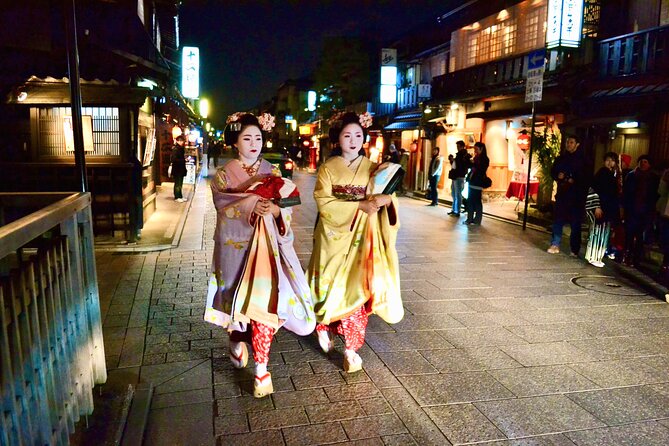
The listed starting point is 178 Tokiwachō, Higashiyama Ward, Kyoto, 605-0079. The group meets there, and the walk finishes back at the same location.
Reception starts at 5:00 pm, half an hour before departure. Use that window. The operator says the group cannot wait for late arrivals or respond to people who miss the start, and one booking problem resulted from confusion over an earlier 6:00 pm time. Check your confirmed start time carefully before setting out, and aim to be at the meeting point before 5:30 pm.
Transportation to and from the route is not included. The meeting point is near public transportation, but you still need to arrange your own way there and back. Hotel pickup and drop-off are not offered.
Wear comfortable shoes. The route uses streets and alleys rather than a coach, and the cobblestones make sensible footwear more important than fashionable footwear. The operator asks for a moderate level of physical fitness, and children must stay with an adult.
Walking beside Shirakawa
The route begins in Gion and leads into the district’s quieter lanes. One of the most attractive sections follows the Shirakawa stream, where the water, old-style streets, and traditional buildings create the picture many people associate with Kyoto at night.
This is also the part connected with Memoirs of a Geisha. The walk does not turn the film into the main subject, which is a good thing. The location is a doorway into the district, while the guide adds the real value by explaining what the streets represent and how Gion developed as a place of traditional entertainment.
You will stop several times while the guide points out details and shares local context. The pace is generally comfortable, though one participant found the route too fast and the explanations too general. That is a useful warning for anyone who prefers a slow, highly detailed walk. If you want to ask many questions or pause for photographs, a private tour may suit you better.
The route is less about entering buildings and more about reading the streets. You see the exterior setting, learn how the neighborhood works, and gain a better sense of why Gion feels different from ordinary shopping or restaurant districts.
Understanding geiko and maiko
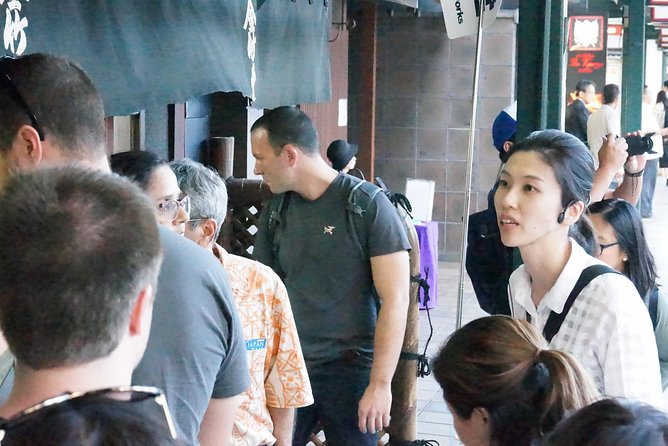
The most praised part of the experience is the guide’s explanation of geiko and maiko culture. In Kyoto, geiko is the local term for a professional entertainer often called geisha elsewhere in Japan. Maiko are apprentices in that tradition.
Your guide explains the visible differences, including kimono, hairstyles, and makeup. You also hear about traditional rules, education, daily routines, house mothers, and how tea houses operate. These details help you look beyond the costume. A maiko’s elaborate appearance is not simply a dress-up choice for a photograph. It reflects training, status, and the customs of the profession.
The guides also explain Japanese words and translate cultural ideas into plain English. That support matters because Gion can be easy to misunderstand if you rely only on appearances. A person in formal clothing may be heading to an evening engagement, and the district itself is not a stage set built for casual entertainment.
Several guides have been singled out for making serious subject matter enjoyable. Mia is often described as funny and clear, while Mai, Mae, and Cheko have also been praised for warmth and strong explanations. The individual guide can shape the evening, but the subject gives the walk plenty to discuss.
A completely different kind of day out:
- PERFECT KYOTO 1-Day Bus Tour
★ 5.0 · 13,518 reviews - [Kyoto & Nara Day Tour] Sagano Scenic Railway & Nara Park & Fushimi Inari Taisha Thousand Torii Gates & Togetsukyo Bridge & Bamboo Grove & Kimono Forest (Departing from Osaka)
★ 4.9 · 10,942 reviews - Kyoto: Fushimi Inari, Kinkakuji, Bamboo Grove 1 Day Bus Tour
★ 4.8 · 4,316 reviews - Kyoto: Tea Ceremony in a Traditional Tea House in Kiyomizu
★ 4.9 · 3,519 reviews
The possibility of seeing geiko or maiko
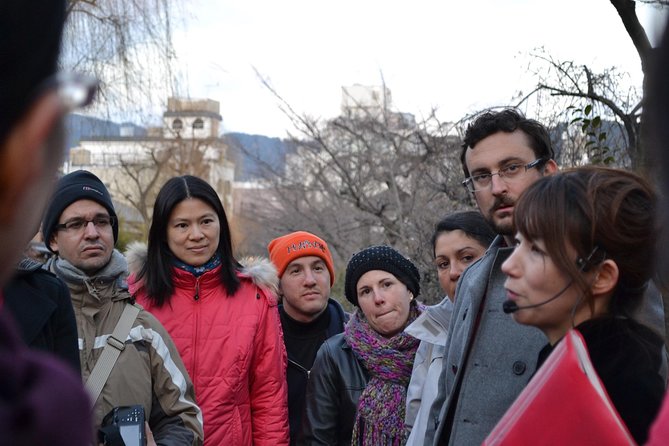
There is no guarantee that you will see a geiko or maiko. That point matters. The tour takes place in a real neighborhood, not a scheduled performance, so sightings depend on timing and chance.
Some groups have seen several women heading to evening parties, including both geiko and maiko. Guides may recognize people they know and explain what is happening, which adds context to a brief sighting. If you do see someone, remember that the person is going to work. Treat the moment as an observation, not a photo opportunity that gives you permission to block the lane or interrupt her.
The possibility of a sighting adds excitement, but I would not book this walk solely for that reason. The reliable part is the street tour and cultural explanation. A sighting is an extra benefit.
This is also where a good guide helps set the tone. The best explanations encourage respect for geiko and maiko rather than turning them into curiosities. That makes the walk more worthwhile and gives you a more accurate picture of Gion.
Group size and the small-group choice
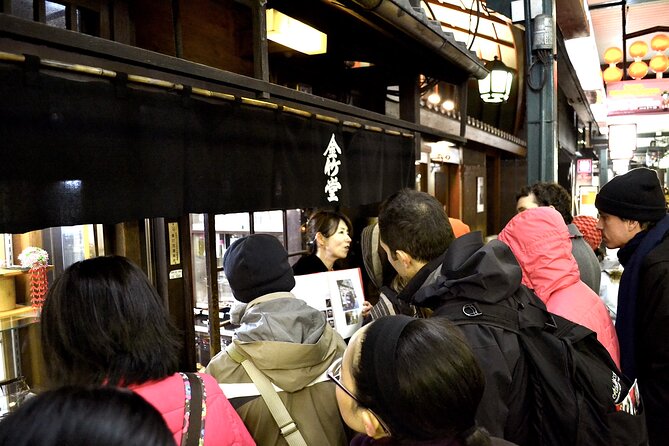
The ordinary tour can hold up to 20 people. The booking information also refers to a maximum of 15 passengers per booking, which creates some confusion. In practice, the standard group may be larger than 20, according to one experience, although staying close to the guide made the explanations audible.
A group of 10 or 12 can work well on narrow streets. You can hear the guide, ask a question, and move together without taking over the lane. A much larger group changes the feel. You may spend more time keeping up and less time studying a doorway or listening to a story.
The small-group option guarantees fewer than 12 people and costs more. That is a sensible upgrade if you care about sound, questions, photography pauses, or personal attention. The private tour goes further, with more time for a closer look at geisha culture.
For couples, families, or groups with mixed interests, the standard tour offers a reasonable introduction. For serious students of Japanese traditional arts, the small-group or private format is likely worth the extra cost.
Is $19.82 a fair price?
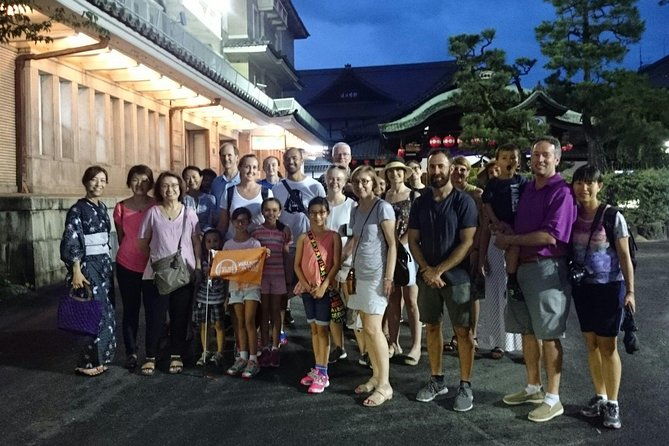
At $19.82 per person, this is an inexpensive way to add structure to an evening in Kyoto. The fee covers a professional English-speaking guide, and the walk lasts around two hours. You are paying for interpretation and local orientation, not admission to a performance or a meal.
I consider that good value if you would otherwise wander through Gion without understanding what you are seeing. The guide helps you find less obvious lanes, explains the district’s customs, and gives you background that a map cannot provide.
The value drops if you prefer to explore at your own pace. One participant felt that the walk could be done independently and found the route too quick and the explanations too broad. Gion is open to the public, so you can certainly visit without a guide.
The price also does not include transport. Add the cost and time of reaching Tokiwachō, then plan your evening around the return to the same meeting point. Group discounts are available, which can make the standard tour especially practical for families or friends traveling together.
What the two hours feel like
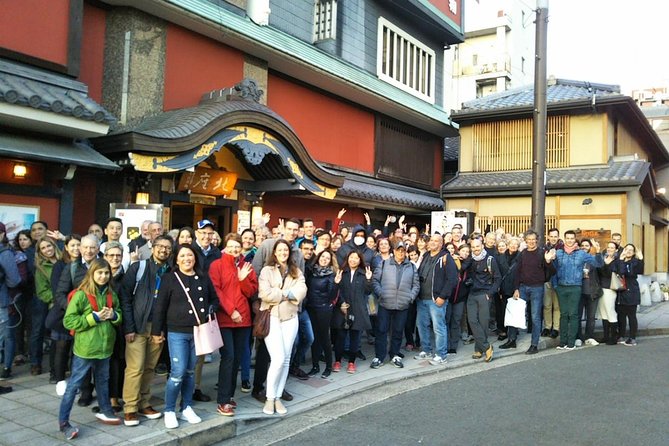
The tour is compact and focused. You meet the guide, join the group, and move through Gion’s traditional streets while the guide stops to explain the neighborhood and its residents.
The first part helps you get your bearings. The later sections focus more on geiko and maiko life, traditional clothing, beauty practices, rules, education, and tea house customs. The route also includes areas associated with Memoirs of a Geisha and the Shirakawa stream.
The walk is not described as a formal performance, and there is no admission ticket involved. That is part of its appeal. You spend the evening outside, looking at the setting and listening to a local guide rather than watching a staged presentation.
The return to the starting point makes planning easier. You do not have to work out a new pickup location after dark, though you still need to arrange your own onward transportation.
Who will enjoy this Gion walk most
I would recommend this tour to you if:
- You are visiting Gion for the first time.
- You want cultural context, not just attractive streets.
- You prefer explanations in English.
- You are curious about the difference between geiko and maiko.
- You want a short evening activity that fits around dinner.
- You feel uneasy navigating small, unmarked lanes after dark.
It is also a strong choice for a first night in Kyoto. The guide can give you basic vocabulary and etiquette that make the rest of your stay more rewarding.
I would hesitate if you dislike group walks, need frequent stops, or want an intensely detailed study of geisha culture. The standard group can be bigger than expected, and the two-hour format leaves limited room for long questions.
People with serious medical conditions should not book this activity. Children must be accompanied by an adult, and all participants should be comfortable with moderate walking.
Booking, weather, and cancellation details
You receive confirmation when you book. The experience requires good weather, so a cancellation caused by poor conditions results in an alternative date or a full refund.
You can cancel for a full refund up to 24 hours before the start time. Cancellations or changes made within 24 hours are not accepted and are not refunded.
The most important practical step is checking the start time. Reception begins at 5:00 pm, and the walk begins at 5:30 pm. Do not rely on an old message or an assumed 6:00 pm departure.
Should you book the Gion Walking Tour by Night?
Yes, if you want an affordable and well-organized introduction to Gion. The walk gives you the district’s most atmospheric streets, the Shirakawa setting, filming locations, and useful explanations of geiko and maiko culture. The guides are the heart of the experience, and Mia, Mai, Mae, and Cheko have each been praised for humor, warmth, and strong local insight.
Choose the small-group option if you want better access to the guide. Choose private if geisha culture is a major reason for your Kyoto visit. Otherwise, the $19.82 standard walk is a sensible buy, provided you arrive early, wear good shoes, and accept that a geiko or maiko sighting is never promised.
FAQ
Where does the Gion night walking tour start?
It starts at 178 Tokiwachō, Higashiyama Ward, Kyoto, 605-0079, Japan.
What time does the tour begin?
Reception starts at 5:00 pm, and the walking tour begins at 5:30 pm.
How long does the tour last?
The tour lasts approximately two hours.
Where does the tour finish?
The activity ends back at the meeting point.
Is transportation included?
No. Transportation to and from the attractions, hotel pickup, and hotel drop-off are not included.
Is the tour conducted in English?
Yes. The experience includes a professional, English-speaking guide.
How many people can join the standard tour?
The activity has a maximum of 20 travelers, while the booking information also refers to a maximum of 15 passengers per booking. A separate small-group option for fewer than 12 people is available.
Will I definitely see a geiko or maiko?
No. Sightings are possible but are not guaranteed.
What is the cancellation policy?
You can cancel at least 24 hours before the local start time for a full refund. Cancellations or changes made less than 24 hours before the start time are not accepted or refunded. If poor weather cancels the activity, you are offered another date or a full refund.
Just added in Kyoto
- The “Golden Route” and Ancient Japan by DIAMIR Erlebnisreisen – 14-Day Tour★ 2.0 · 2 reviews
- Japan: Castles & Cuisine by G Adventures – 6-Day Kyoto to Osaka Tour★ 4.5 · 4 reviews
- Cycle Japan by Explore! – 13-Day Kyoto to Tokyo Tour★ 4.7 · 12 reviews
- Cycle Japan by Intrepid Travel – 11-Day Kyoto to Tokyo Tour★ 4.8 · 2 reviews
- Classic Japan by Intrepid Travel – 11-Day Kyoto to Tokyo Tour★ 4.4 · 14 reviews
- Ancient & Modern Japan 14-Day Tour by Exodus Adventure Travels★ 4.4 · 40 reviews
- 5 Day Cultural Adventure of Kyoto, Nara & Osaka by Tourist Journey★ 2.5 · 2 reviews
- 12 Days Kinosaki Onsen Escape: A Journey Through Japan’s Timeless Towns by UME Travel★ 4.8 · 5 reviews
Walking Tours, compared.
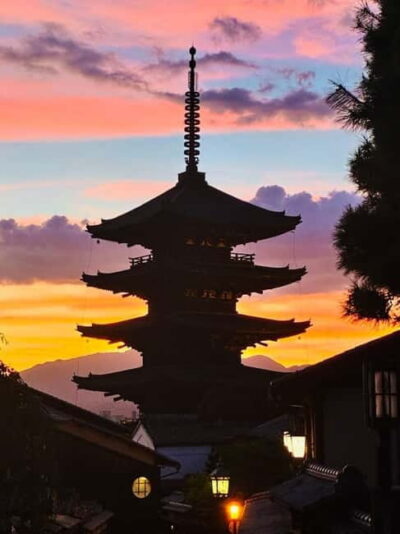
Kyoto Geisha Walking Tour: Gion District & Hidden Gems
Read our review →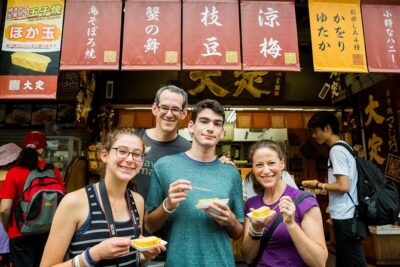
Tokyo Tsukiji Fish Market Food and Culture Walking Tour
Read our review →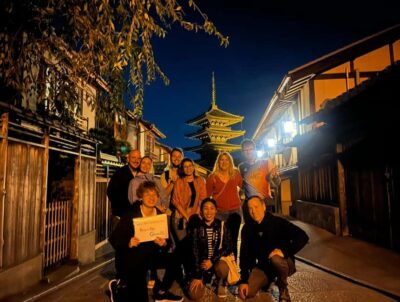
Gion Magical Night Walking Tour with Geisha Trivia
Read our review →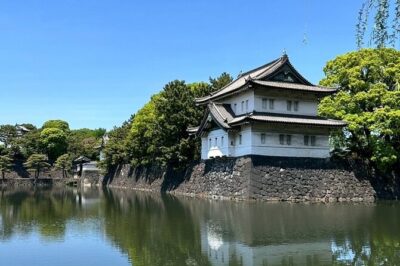
Imperial Palace and Shogun Historical Walking Tour
Read our review →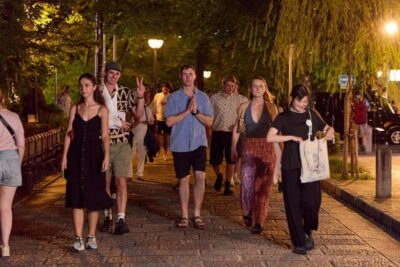
Gion Geisha District Walking Tour – Stories of Geisha
Read our review →

Shinjuku Local Bar and Izakaya Guided Walking Tour
Read our review →
Browse the lists this tour appears in