Reviewed · MARKETS AND FOOD HALLS
Golden Pavilion, Nijo Castle, & Nishiki Market Half day tour
Kyoto’s big three, packed into one morning. This private four-hour tour gives you a useful first look at Kinkaku-ji, Nijo Castle, and Nishiki Market, while guide Roberto explains the shogun, samurai, Edo-period politics, and Kyoto’s food culture in clear English or Spanish. I especially like the iPad explanations, which add pictures and visual context, and the chance to finish at Nishiki Market with practical suggestions for lunch and the rest of your Kyoto stay.
I also like the personal format. This is a private group with a Kyoto City Certified Tourist Guide, and Roberto can take photos throughout the morning. The main consideration is pace: you move by public bus, subway, and on foot, and you pay your own transportation and entrance fees. The route is manageable for an active person, but it is not a slow, lingering temple tour.
In This Review
- Five Useful Things to Know Before Booking
- Starting at Kyoto Station With Roberto
- Kinkaku-ji: Kyoto’s Golden Reflection
- Nijo Castle and the Shogun’s Political World
- Nishiki Market: Kyoto’s Kitchen at Lunchtime
- How the Four Hours Feel in Practice
- What the $90 Price Really Buys
- Who Will Enjoy This Tour Most
- A Better Morning Than Sightseeing Alone?
- Should You Book It?
- FAQ
- Where does the tour begin?
- How long does the tour last?
- Which languages are available?
- Are entrance fees included?
- Is transportation included?
- Where does the tour finish?
Five Useful Things to Know Before Booking
- The tour begins at 8:30 am at Kyoto Station, in front of the 7-Eleven by the Kyoto Tower side exit.
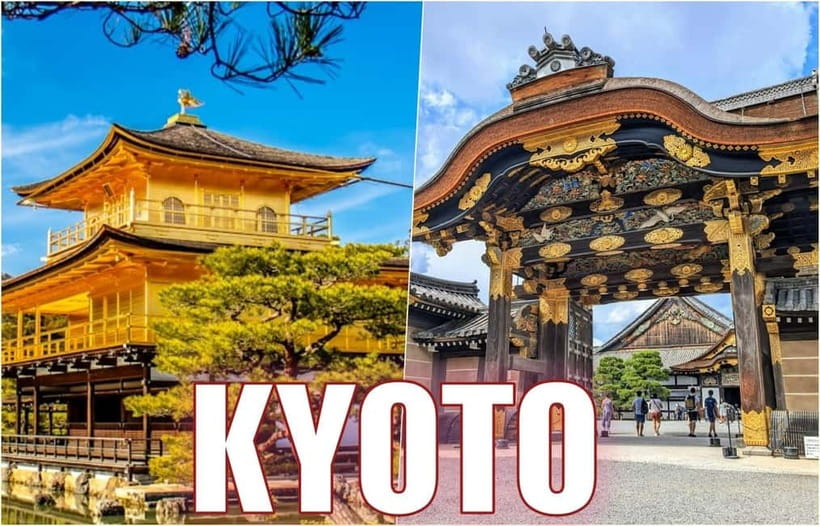
- Kinkaku-ji comes first, with about 90 minutes to see the famous gold-covered pavilion and temple grounds.
- Nijo Castle adds the political story, including the shogun, feudal lords, samurai, and Japan’s move toward modernization.
- The iPad is a real teaching tool, not just a map. Roberto uses images and explanations he created himself.
- You finish at Nishiki Market at about 12:30 pm, free to choose lunch from the market’s many food stalls and shops.
Starting at Kyoto Station With Roberto
Your morning begins at 8:30 am at the central entrance of JR Kyoto Station. Look for the 7-Eleven on the first floor, near the Kyoto Tower side exit. Roberto holds an iPad and a red card marked RBRT, making the meeting point easier to find in the station’s busy surroundings.
This starting point is practical because Kyoto Station is well connected, but allow yourself enough time to get oriented. Kyoto Station is large, and the instructions specifically direct you to the Kyoto Tower side. Arriving early also matters because the tour uses public transportation from the start.
Roberto is a Kyoto City Certified Tourist Guide, and the private-group setup gives the morning a more personal feel than a large coach outing. English and Spanish are available. One of the strongest features is the flexibility to ask questions about your own plans, not just the three scheduled stops. You can also request suggestions for places to visit on later days.
The tour includes the guide’s entrance fees and transportation costs, but not your own. Budget separately for the two paid sites and local transit. The stated entrance fees are 500 yen for Kinkaku-ji and 1,300 yen for Nijo Castle, or about 1,800 yen total. Food and drinks are also extra.
More Castles and Historic Sites in Kyoto
- Kyoto Samurai Experience
★ 5.0 · 1,294 reviews - Kyoto: Nijo-jo Castle and Ninomaru Palace Guided Tour
★ 4.7 · 1,020 reviews - Kyoto: Kendo and Samurai Experience with Uniform and Gear
★ 4.9 · 815 reviews
Kinkaku-ji: Kyoto’s Golden Reflection
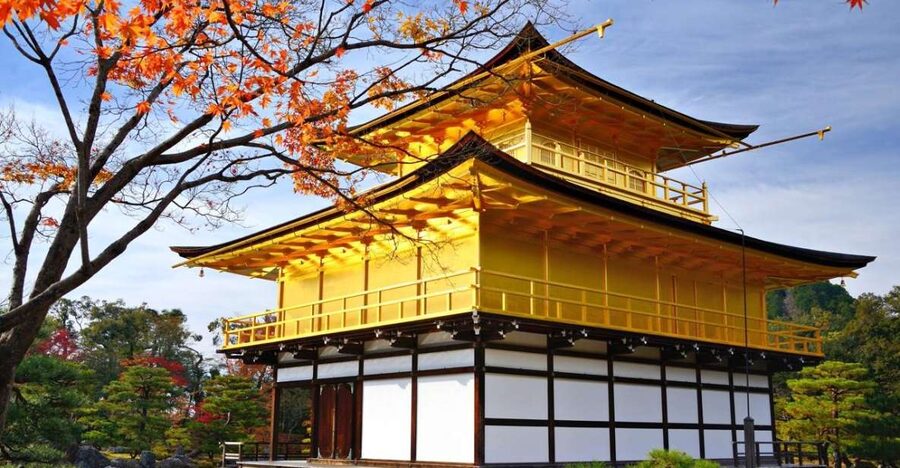
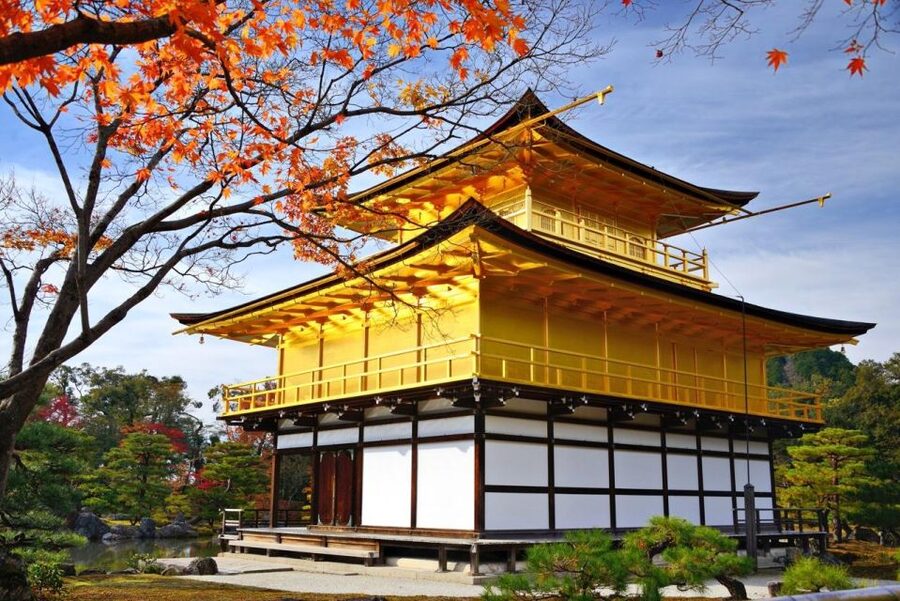
The first main stop is Kinkaku-ji, better known as the Golden Pavilion. It sits in northwest Kyoto and is one of the city’s most recognizable sights. The top two floors are covered in real gold leaf, which catches the light above the pond and gives the building its famous appearance.
The pavilion began as a villa for Ashikaga Yoshimitsu, a 14th-century shogun. After his death, it became a Zen Buddhist temple. That change from private residence to religious site opens the door to an important Kyoto theme: powerful rulers used architecture, gardens, and religious institutions to express status and belief.
The gold is not simply decoration. It represents wealth, authority, and devotion, and it helps explain why the building has remained such a strong symbol of Kyoto. Your guide can give this visual detail a wider setting, instead of leaving you with only a quick photograph from across the pond.
You spend about 90 minutes at Kinkaku-ji. That is enough time for the main view, the temple grounds, and explanations, but you should not expect a long, unhurried exploration of every corner. Kinkaku-ji is a major stop on Kyoto’s sightseeing circuit, so the grounds can feel busy, particularly at popular times of day.
The pavilion itself is the star. You do not enter the building, and photography is forbidden in some temple areas. Keep your camera ready for the pond view, but listen when Roberto asks you to put it away. A guide is especially useful here because the visit can otherwise become a quick stop for a familiar image.
The 35-minute bus ride from Kyoto Station is part of the morning’s tradeoff. You cover a lot of ground, but this is not a neighborhood stroll. Public bus travel gives you a sense of Kyoto’s size and daily movement, though traffic can affect the schedule.
Nijo Castle and the Shogun’s Political World
From Kinkaku-ji, the tour continues by subway toward Nijo Castle. This shift in setting is one of the best parts of the route. Kinkaku-ji presents the polished image of a powerful shogun, while Nijo Castle helps explain how that power worked.
Nijo Castle is another UNESCO World Heritage site, known for its Edo-period buildings, woodwork, gardens, and intricate design. The castle was connected with the Tokugawa shoguns, the military rulers who controlled Japan for much of the Edo period. Inside, the story centers on the relationship between the shogun, feudal lords, and samurai.
Roberto’s explanations focus on the struggles over control. That political background makes the castle more than a series of decorated rooms. You begin to understand why a military government needed ceremony, hierarchy, and carefully controlled access.
The most memorable detail is likely the nightingale floor. When you walk across certain sections, the floorboards chirp. This was an early security device, designed to alert occupants to movement. It is a small piece of engineering, but it makes the castle’s power structure feel surprisingly immediate. A residence built for authority also needed protection from unwanted visitors.
The castle also helps you understand the end of the samurai era and the beginning of Japan’s modernization. That transition can be hard to grasp from isolated sights. Here, the architecture and political story work together. You see an Edo-period world that eventually gave way to a modern state.
The planned visit lasts about 95 minutes. That is a useful amount of time for the major interiors and grounds, but the pace remains purposeful. Nijo Castle rewards careful listening, since the meaning is in the rooms, customs, and power relationships as much as in the buildings themselves.
The entrance fee is 1,300 yen per person. You should also wear comfortable shoes. The tour does not involve mountain climbing or very long stairways, but you will walk through temple and castle grounds, use stations, and move between stops.
Nishiki Market: Kyoto’s Kitchen at Lunchtime
After Nijo Castle, you take the subway and walk about 10 minutes to Nishiki Market. The tour ends at the market entrance around 12:30 pm, which is good timing for lunch.
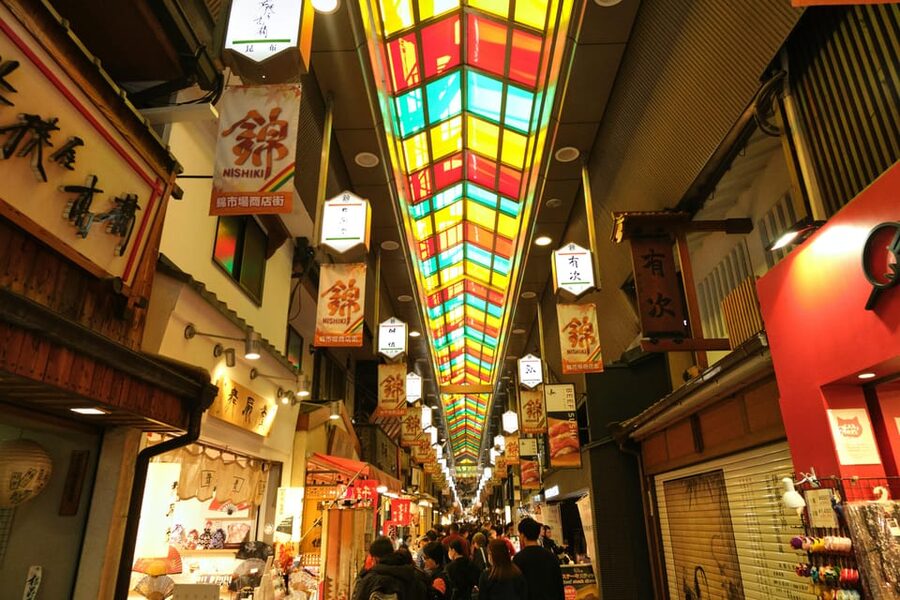
Nishiki Market runs along a narrow, five-block shopping street. More than one hundred shops and restaurants sell food and cooking-related goods, including seafood, produce, knives, and cookware. It is often called Kyoto’s Kitchen, and the name makes sense once you see how much of the market is devoted to eating and preparing food.
This is not a formal food tasting tour, so food and drinks are not included. That is actually useful for some people. You are not tied to a fixed menu or a limited number of samples. Roberto explains the origins of the market, then you can choose your own lunch from the available options.
The market can be lively and crowded, with narrow passageways and many tempting choices. It is best to keep your bag close and avoid stopping in the middle of the walkway. Large bags and baby strollers are not allowed on the tour, which is sensible in a compact market area.
Nishiki is also a good place to practice looking beyond the most obvious dishes. You might find fresh ingredients, local specialties, kitchen tools, and small shops that show how food fits into Kyoto life. The English explanations aimed at international visitors make the first visit less confusing, especially if you are unsure what a particular item is or how the market is arranged.
Ending here gives you a practical advantage. You can eat immediately, continue shopping, or use the market as a starting point for exploring central Kyoto. If you have another sightseeing day planned, this is a good time to ask Roberto for recommendations.
More Day Trips in Kyoto
- [Kyoto & Nara Day Tour] Sagano Scenic Railway & Nara Park & Fushimi Inari Taisha Thousand Torii Gates & Togetsukyo Bridge & Bamboo Grove & Kimono Forest (Departing from Osaka)
★ 4.9 · 10,942 reviews - Kyoto Nara Day Trip │ Kiyomizu-dera Temple + Fushimi Inari-taisha Shrine + Nara Park (Departing from Osaka/Kyoto)
★ 4.7 · 3,408 reviews - Day Trip to Amanohashidate & Ine no Funaya & Miyama Thatched Village in the Sea of Kyoto (Departure from Osaka or Kyoto)
★ 5.0 · 1,212 reviews - One-Day Tour of Kyoto’s Highlights from Osaka/Kyoto
★ 4.5 · 1,092 reviews
How the Four Hours Feel in Practice
The advertised schedule runs from 8:30 am to 12:30 pm. It includes a bus ride of about 35 minutes, a 90-minute Kinkaku-ji visit, a 20-minute subway transfer, a 95-minute Nijo Castle visit, another 15-minute subway ride, and a 10-minute walk to Nishiki Market.
That is a full morning. You are not simply being driven from one entrance to another. You board public transportation, walk through stations, and spend real time at each site. The route is still efficient, but delays or crowds can affect how leisurely each visit feels.
I would treat the times as a working plan rather than a promise that every stop will end at the exact minute. If you need a slow pace, frequent sitting breaks, or plenty of time for independent photography, a private half-day route like this may feel busy.
On the other hand, the route is well chosen for a first Kyoto morning. You get a major temple, a castle tied to political power, and a food market. Each stop answers a different question:
- What did elite religious and political culture look like?
- How did the shogun control Japan?
- What did everyday food and commerce look like in Kyoto?
The guide’s iPad helps connect those questions. Self-guided visits can leave you with attractive buildings but little sense of how they fit together. Visual explanations are useful if you learn better from maps, photos, and diagrams than from spoken description alone.
What the $90 Price Really Buys
At $90 per person, this is not the cheapest way to see the three locations. You still pay 1,800 yen in entrance fees, plus your own bus and subway fares, and you buy your own lunch.
The value comes from the private format and the guide’s time. You are paying to have the route organized, the transportation explained, and the history placed in context. You also avoid spending your first Kyoto morning working out how to connect three different areas of the city.
The photo help adds another practical touch. Roberto can take as many pictures of you as you wish, and past feedback also highlights a short video made after the tour. That is not the main reason to book, but it is a thoughtful extra for families, couples, and solo visitors who otherwise struggle to get good photographs.
This tour makes the most financial sense if you value personal explanations and want to ask questions. If you are comfortable navigating Kyoto by yourself and mainly want entrance access, you can visit these places more cheaply independently.
Who Will Enjoy This Tour Most
I would recommend this experience to first-time Kyoto visitors who want a strong historical frame for the rest of their trip. The guide’s recommendations can help you decide what to do next, and the morning introduces several themes that appear throughout Kyoto: Zen Buddhism, shogunal rule, samurai culture, food, and modernization.
It also suits couples, families with older children, and small private groups who prefer personal attention. The guide speaks English and Spanish, and the iPad can make complicated political or cultural details easier to follow.
You should be comfortable walking for several hours and using buses and trains. Comfortable shoes are essential. The tour is not suitable for wheelchair users, pregnant women, people with back problems, people with a low level of fitness, or anyone who has difficulty with the stated walking and transit requirements.
There is no mountain climbing or very long staircase, but that should not be confused with a low-effort outing. You will be on your feet, and you need to keep moving between scheduled stops.
The tour runs rain or shine. Bring suitable clothing and accept that some photographs may not be possible inside the temples. Large bags and baby strollers are not allowed.
A Better Morning Than Sightseeing Alone?
The strongest feature here is not any single monument. Kinkaku-ji is already famous, Nijo Castle is already impressive, and Nishiki Market is easy to find. The advantage is the connection between them.
Roberto’s role is to explain why a gold-covered villa, a military castle, and a food market belong in the same Kyoto morning. His personal style also matters. Feedback about the tour repeatedly praises his friendly, attentive manner, with comments in English and Spanish describing him as professional, accommodating, and fun. One French-language comment also singled out the final video as a welcome extra.
That personal attention is especially useful at Nijo Castle, where the political story can otherwise feel distant. It is also helpful at Nishiki Market, where the choices can seem endless if you arrive without context.
The drawback is the fixed pace and extra cost. You will not have unlimited time at any one location, and the tour is more expensive than taking local transit independently. Still, the combination of a certified guide, private group, visual explanations, photography help, and practical Kyoto advice gives the price a clear purpose.
Should You Book It?
Book this tour if you want to cover three major Kyoto sights in one organized morning and learn how they connect. It is particularly worthwhile for a first visit, a private group, or anyone who prefers a guide who can explain politics, architecture, food, and local customs in plain English or Spanish.
Skip it if you want a slow temple morning, dislike public transportation, or prefer to set your own pace. Also calculate the extra entrance and transit costs before booking.
For an active visitor who values context more than simply collecting photographs, this is a well-focused introduction to Kyoto. Meet Roberto early, wear comfortable shoes, keep your schedule flexible after noon, and save room for lunch at Nishiki Market.
FAQ
Where does the tour begin?
The tour begins at 8:30 am in front of the 7-Eleven at the JR Kyoto Station Central Entrance. Use the Kyoto Tower side exit. Roberto holds an iPad and a red card marked RBRT.
How long does the tour last?
The tour is scheduled to last four hours, from 8:30 am until about 12:30 pm.
Which languages are available?
The live guide is available in English and Spanish.
Are entrance fees included?
Your entrance fees are not included. Kinkaku-ji costs 500 yen, and Nijo Castle costs 1,300 yen. The guide’s own entrance fees are covered.
Is transportation included?
Your own transportation fees are not included. The route uses a public bus, subway, and walking. The guide’s transportation costs are covered.
Where does the tour finish?
The tour finishes at the entrance of Nishiki Market at about 12:30 pm. Roberto explains the market’s origins, and you can then choose your own lunch.
More Markets and Food Halls in Kyoto
- Nishiki Market Brunch Walking Tour (7 Tastings + Brunch)
★ 5.0 · 1,355 reviews - Kimono Tea Ceremony at Kyoto Maikoya, NISHIKI
★ 5.0 · 911 reviews - Kyoto Nishiki Market Food and Culture Walking Tour
★ 5.0 · 412 reviews - Kyoto: Nishiki Market Tea Ceremony with Koto Performance
★ 4.8 · 294 reviews
Just added in Kyoto
- The “Golden Route” and Ancient Japan by DIAMIR Erlebnisreisen – 14-Day Tour★ 2.0 · 2 reviews
- Japan: Castles & Cuisine by G Adventures – 6-Day Kyoto to Osaka Tour★ 4.5 · 4 reviews
- Cycle Japan by Explore! – 13-Day Kyoto to Tokyo Tour★ 4.7 · 12 reviews
- Cycle Japan by Intrepid Travel – 11-Day Kyoto to Tokyo Tour★ 4.8 · 2 reviews
- Classic Japan by Intrepid Travel – 11-Day Kyoto to Tokyo Tour★ 4.4 · 14 reviews
- Ancient & Modern Japan 14-Day Tour by Exodus Adventure Travels★ 4.4 · 40 reviews
- 5 Day Cultural Adventure of Kyoto, Nara & Osaka by Tourist Journey★ 2.5 · 2 reviews
- 12 Days Kinosaki Onsen Escape: A Journey Through Japan’s Timeless Towns by UME Travel★ 4.8 · 5 reviews
Markets and Food Halls, compared.
Tokyo Tsukiji Fish Market Food and Culture Walking Tour
Read our review →
Senkyaku Banrai Toyosu Manyo Club Onsen Experience in Tokyo
Read our review →
Nishiki Market Brunch Walking Tour (7 Tastings + Brunch)
Read our review →
Tokyo Sushi Making Class in Tsukiji with Professional Chef
Read our review →