
Reviewed · WALKING TOURS
Half Day Kyoto Sagano Bamboo Grove & Arashiyama Walking Tour
Kyoto’s bamboo grove is beautiful, but busy. This four-hour tour gives you a practical route through Sagano and Arashiyama, pairing the famous bamboo path with Tenryu-ji, Jojakko-ji, and a river boat ride. I especially like the English-speaking licensed guide and the way the tour handles train travel, temple admissions, and local navigation for you.
I also like the flexible ending at Kyoto Station. You can return with the group or remain in Arashiyama for the monkey park, lunch, shopping, or more temples. The main drawback is crowd control: the group can reach 25 people, and several reviews describe waiting for people who wandered away or getting less quiet time than expected in the bamboo grove.
In This Review
- Key points to know before booking
- What this half-day tour really covers
- The train from Kyoto Station to Saga-Arashiyama
- Jojakko-ji and the hills above Sagano
- Walking through the Sagano bamboo grove
- Tenryu-ji’s garden and Zen setting
- The yakatabune ride and Togetsukyo Bridge
- Why the guide matters, and when the group does not
- Staying in Arashiyama after the tour
- Walking demands, weather, and seasonal changes
- Who should book this Arashiyama tour?
- Should you book it?
- FAQ
- How long does the Kyoto Sagano Bamboo Grove and Arashiyama tour last?
- How far will I walk?
- Is transportation included?
- What is included in the admission price?
- Does the tour visit Jojakko-ji Temple all year?
- Can I stay in Arashiyama after the guided portion?
- What happens if the tour is canceled because too few people book?
Key points to know before booking
- The bamboo grove is only one part of a varied morning: You also visit two temples and cross Togetsukyo Bridge.
- A yakatabune boat ride gives your legs a break: The river views offer a calmer change after walking.
- The tour covers about 3 kilometers: Expect stairs at Jojakko-ji and a steady amount of walking.
- Your guide adds the most value: Guides such as Sachiko, Donna, June, and Michiharu have been praised for clear explanations and useful Kyoto advice.
- The group may be larger than expected: The maximum is 25 people, though some departures have been much smaller.
- You can keep exploring Arashiyama afterward: The tour ends at Kyoto Station, but you may choose to stay behind and make your own way back.
What this half-day tour really covers
The tour begins at the JTB Sunrise Tours Desk in the basement of Kyoto Avanti, near Kyoto Station. From there, you travel by public train to Saga-Arashiyama Station using non-reserved seats. During busy periods, you may need to stand, so do not count on a relaxed seat for the ride out.
The four-hour schedule is efficient. It combines public transportation, temple visits, the bamboo grove, the river area, and a return to central Kyoto without asking you to plan each connection yourself. That is the main reason to pay for the tour. You could reach Arashiyama independently, but the guide gives structure and cultural context while taking care of the route.
The advertised price is $79.26 per person. For a self-directed visitor, that is not the cheapest way to see Arashiyama. Train fares are modest, and the area is easy enough to explore with a map. Still, the cost includes the licensed English guide, admission fees, transportation costs connected with the tour, and the boat portion. If you value explanations and want several major sights organized into one morning, the price is reasonable.
More Walking Tours in Kyoto
- Kyoto Geisha Walking Tour: Gion District & Hidden Gems
★ 4.7 · 3,273 reviews - Kyoto: Gion Magical Night Walking Tour with Geisha Trivia
★ 4.9 · 2,393 reviews - Kyoto: Gion Geisha District Walking Tour – Stories of Geisha
★ 4.7 · 2,187 reviews
The train from Kyoto Station to Saga-Arashiyama
The first practical lesson arrives before the sightseeing begins: this is not a private coach tour. You ride local public transportation, and seats are not reserved. That keeps the experience connected to everyday Kyoto, but it also means the start can feel less polished during cherry blossom season, autumn foliage, or other busy periods.
A guide leads the group from the meeting point to the station and helps with navigation. This is especially useful if you are unfamiliar with Kyoto’s train system or are trying to make the most of a short stay. One important detail: if you already have a JR Pass, confirm how the included transportation is handled before booking. One person felt disappointed after using a pass without receiving a reduction in the tour price.
The group then begins its walk in Arashiyama and Sagano. The order can change because of congestion, road conditions, and crowd levels. That flexibility matters in a district where narrow paths and famous sights can become very slow at peak times.
Jojakko-ji and the hills above Sagano
Jojakko-ji is a strong opening stop because it provides more than a quick photo opportunity. The temple sits on the wooded slopes of Mt. Ogura and offers broad views toward Sagano and Kyoto. Its hillside setting also brings stairs, so comfortable shoes are not optional.
You have about 30 minutes here, enough to see the temple grounds, look for the Jizo statue, and find the pagoda among the maple trees. In autumn, this is one of the most attractive parts of the morning, with red, orange, and yellow foliage covering the hillside. The setting is also appealing in summer, though the tour changes its summer schedule to start earlier and avoid the strongest heat.
Jojakko-ji has literary and religious connections as well. The site is linked with the Tale of the Heike and the story of Empress Dowager Kenrei-mon-in, who is said to have lived here. The temple began as a nunnery, and its secluded position helps explain why it feels quieter than the main bamboo road.
The stop has two limitations. First, 30 minutes can feel brief if you want to linger. Second, during July through September 22, Jojakko-ji is replaced by Okochi Sanso Villa Garden. The tour information also notes that admission to Jojakko-ji is not included during July and September, so check the seasonal details for your date before you pay.
Walking through the Sagano bamboo grove
From Jojakko-ji, the group heads toward Tenryu-ji through the Sagano bamboo grove. The total route is about 3 kilometers, though the distance is broken into temple visits, scenic pauses, and the river crossing.
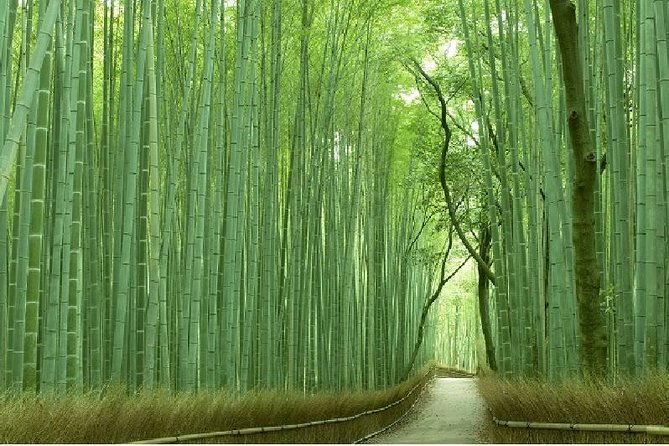
The bamboo path is the visual star of the tour. Tall green stalks rise on both sides, and the filtered light can feel remarkably calm. The famous section, however, is not a private forest trail. It is a popular public route, and large groups can make it difficult to enjoy the silence suggested by many photographs.
I would set realistic expectations. You may get beautiful views and excellent pictures, but you may also encounter crowds, especially during spring blossoms and fall foliage. One useful advantage of joining early is that the summer version begins earlier to avoid the heat and, indirectly, some of the busiest conditions.
The guide helps you understand the area instead of simply leading you through it. Sachiko was praised for combining clear explanations with personal stories. Donna was appreciated for giving useful guidance without filling every spare moment with a lecture. That balance matters here. The bamboo grove itself needs little explanation, but the surrounding temples, customs, and local stories give the walk more meaning.
One person felt the group spent only about 15 minutes in the grove and would have preferred more time. That is a fair criticism. If your main goal is quiet photography or a long, unhurried walk beneath the bamboo, an independent visit may suit you better. If your goal is to see the grove as one part of a wider Arashiyama morning, the pace works.
A completely different kind of day out:
- PERFECT KYOTO 1-Day Bus Tour
★ 5.0 · 13,518 reviews - [Kyoto & Nara Day Tour] Sagano Scenic Railway & Nara Park & Fushimi Inari Taisha Thousand Torii Gates & Togetsukyo Bridge & Bamboo Grove & Kimono Forest (Departing from Osaka)
★ 4.9 · 10,942 reviews - Kyoto: Fushimi Inari, Kinkakuji, Bamboo Grove 1 Day Bus Tour
★ 4.8 · 4,316 reviews - Kyoto: Tea Ceremony in a Traditional Tea House in Kiyomizu
★ 4.9 · 3,519 reviews
Tenryu-ji’s garden and Zen setting
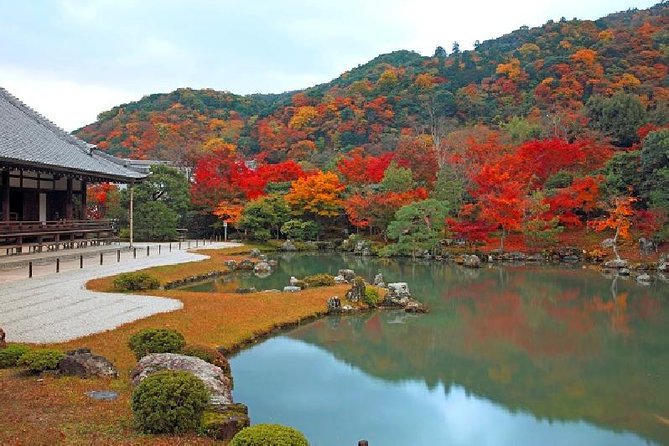
Tenryu-ji is the most substantial cultural stop. Founded in 1339 by Takauji of the Ashikaga Shogunate, it is one of the principal temples of the Rinzai Zen school and a World Heritage site.
The garden is the highlight. Its design has survived in its original form and uses the surrounding hills as part of the view. You see water, carefully arranged planting, temple buildings, and the wooded slopes beyond. This is where a guide can help you notice how Japanese gardens frame nature rather than trying to overpower it.
The scheduled visit lasts about 30 minutes. That is enough for a focused look, but it is not a long temple study. One dissatisfied participant felt the visit concentrated on the garden and did not offer enough time inside the temple buildings. Keep that in mind if you want a detailed architectural visit or a long period for quiet reflection.
Still, Tenryu-ji is a good inclusion because it adds substance to a route that could otherwise become a quick bamboo photo stop. The combination of Zen design, mountain views, and garden history gives the morning a stronger cultural center.
The yakatabune ride and Togetsukyo Bridge
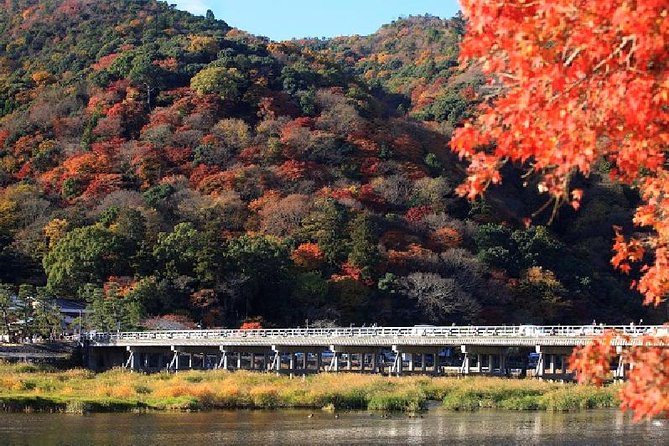
The final sightseeing section brings you to Togetsukyo Bridge, often translated as the Crossing Moon Bridge. The current 250-meter bridge is a 1934 reconstruction of an earlier bridge, and it offers views along the Hozu River toward the forested hills.
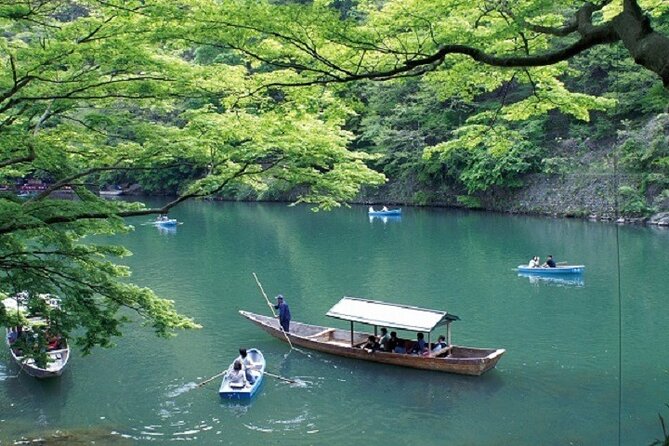
The boat ride is a welcome change of pace. After walking and climbing temple steps, sitting aboard a yakatabune gives you time to rest while looking back at Arashiyama from the water. One particularly positive account called the ride a pleasant chance to recover and enjoy the river views.
The boat portion also helps the tour feel less repetitive. You have walked through bamboo, visited gardens, and climbed a hillside temple. From the river, you see the same district from a different angle. In spring, the bridge area is known for cherry blossoms. In autumn, the colored leaves make this a strong seasonal stop.
The itinerary gives roughly 30 minutes at Togetsukyo Bridge, including the boat experience. As with the other stops, the timing may shift with congestion. You should not expect a private cruise or a long independent river outing. Think of it as a short scenic ride included in a wider walking route.
Why the guide matters, and when the group does not
The most praised part of this experience is the guiding. Several guides received warm comments for being friendly, clear, attentive, and helpful with practical suggestions. Michiharu, for example, was praised for explaining Arashiyama and Kyoto while also recommending places suited to individual interests. Sachiko helped with directions and lunch ideas when someone chose to continue to the monkey park.
That kind of help is valuable because Arashiyama offers more than the official stops. The tour can point you toward a second activity after the scheduled route, and the guide may help you decide how to spend the rest of your day.
The group size is less predictable. The maximum is 25, though some departures have had only three or around twelve people. A small group allows a better pace and easier questions. A full group can become unwieldy, especially when using public transit and walking through crowded areas.
There is also a practical risk of delays. If people fall behind or become separated, the guide may need to stop and gather everyone. One rainy departure reportedly became slow and disorganized, while another large group had little commentary through headsets and spent time waiting. That does not define every departure, but it is a real tradeoff for a group tour.
Staying in Arashiyama after the tour
The formal tour ends when you return to Kyoto Station, but you do not have to treat that as the end of your Arashiyama day. The guide may allow you to remain in the area, with the understanding that you return independently.
This option is one of the best features for flexible visitors. You can visit the monkey park, find lunch, browse the town, or see additional shrines and temples without being pulled back to the station. Several people valued this freedom, especially because the scheduled route finishes around early afternoon.
If you stay behind, listen carefully to the guide’s directions and confirm your route back. The tour provides a convenient group return, but independent continuation gives you more time in a district that deserves more than four hours.
This is also where the tour can work well as a first introduction. You get the basic route, hear local advice, and then choose your own pace afterward. The downside is that the tour does not provide a full day of exploration, so you need to plan the second half yourself.
Walking demands, weather, and seasonal changes
The stated walking distance is approximately 3 kilometers, and the pace is described as manageable. Yet distance alone does not tell the full story. Jojakko-ji includes stairs, and the route includes standing on public transportation, walking between sights, and moving through crowded paths.
Wear shoes suitable for walking and clothing suited to the weather. Rain can make the experience less pleasant, and wet conditions may slow the group. Summer departures begin earlier to avoid peak heat, and the itinerary changes to include Okochi Sanso Villa Garden instead of Jojakko-ji.
Autumn is likely the most visually rewarding season for the hillside temple and Togetsukyo area, while spring brings blossoms around the bridge and heavy crowds. The bamboo grove is attractive year-round, but you should not expect the same quiet mood shown in carefully timed photographs.
Children aged 0 to 5 can join free if they do not occupy a separate seat. Anyone under 18 needs written parental permission, and anyone under 15, or not yet enrolled in middle school, must be accompanied by a parent or guardian.
Who should book this Arashiyama tour?
I would choose this tour if you want a well-organized introduction to Arashiyama and prefer not to sort out the train, temple entrances, and route yourself. It is also a good match for solo visitors, first-time Kyoto visitors, and anyone who values cultural explanations more than maximum free time.
It suits people with moderate fitness who can walk 3 kilometers and handle stairs. The boat ride helps break up the walking, but this is not a seated sightseeing trip.
I would hesitate if you already know Arashiyama well, have a JR Pass and want the lowest possible cost, or care most about wandering alone. The area is accessible by public transportation, and independent visitors can spend more time at the bamboo grove, temple gardens, shops, and monkey park.
At $79.26, the tour earns its price through the guide, included admissions, transportation arrangements, and compact route. It is not a bargain for someone happy with a map and train app. It is a fair purchase for someone who wants a half-day framework and the chance to ask questions along the way.
Should you book it?
Book it if you want to see the bamboo grove, Tenryu-ji, Jojakko-ji or its seasonal replacement, and Togetsukyo Bridge in one efficient morning. The strongest reason to go is the guide, especially on a small departure. The best extra tip is to stay in Arashiyama afterward for the monkey park or lunch if your schedule allows.
Skip it if you want silence, slow photography, or complete control over your time. Crowds, non-reserved train seats, and a group that can reach 25 people are part of the deal. Free cancellation is available up to 24 hours before the start time, but the tour may be canceled if fewer than two adults are booked by four days before departure.
FAQ
How long does the Kyoto Sagano Bamboo Grove and Arashiyama tour last?
The tour lasts approximately four hours and ends at Kyoto Station.
How far will I walk?
The total walking distance is approximately 3 kilometers. You should also expect stairs, particularly around Jojakko-ji Temple.
Is transportation included?
Yes. Public transportation costs connected with the tour are included. The group uses non-reserved seats, so seating is not guaranteed and you may need to stand during busy periods.
What is included in the admission price?
The tour includes the licensed English guide interpreter fee, admission fees, and listed transportation costs.
Does the tour visit Jojakko-ji Temple all year?
No. From July through September 22, the itinerary changes, and Okochi Sanso Villa Garden replaces Jojakko-ji Temple. The tour information also notes a separate Jojakko-ji admission exception during July and September.
Can I stay in Arashiyama after the guided portion?
Yes. The tour ends at Kyoto Station, but you may choose to remain in Arashiyama and return independently. The guide can provide directions and suggestions.
What happens if the tour is canceled because too few people book?
If the minimum of two adult participants is not met by four days before the scheduled date, the tour may be canceled. You will then be offered another date or experience, or a full refund.
Just added in Kyoto
- The “Golden Route” and Ancient Japan by DIAMIR Erlebnisreisen – 14-Day Tour★ 2.0 · 2 reviews
- Japan: Castles & Cuisine by G Adventures – 6-Day Kyoto to Osaka Tour★ 4.5 · 4 reviews
- Cycle Japan by Explore! – 13-Day Kyoto to Tokyo Tour★ 4.7 · 12 reviews
- Cycle Japan by Intrepid Travel – 11-Day Kyoto to Tokyo Tour★ 4.8 · 2 reviews
- Classic Japan by Intrepid Travel – 11-Day Kyoto to Tokyo Tour★ 4.4 · 14 reviews
- Ancient & Modern Japan 14-Day Tour by Exodus Adventure Travels★ 4.4 · 40 reviews
- 5 Day Cultural Adventure of Kyoto, Nara & Osaka by Tourist Journey★ 2.5 · 2 reviews
- 12 Days Kinosaki Onsen Escape: A Journey Through Japan’s Timeless Towns by UME Travel★ 4.8 · 5 reviews
Walking Tours, compared.
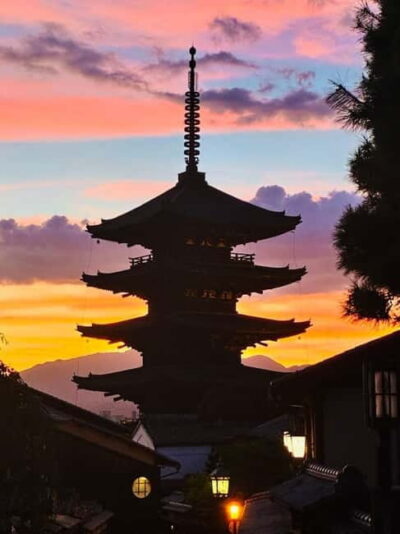
Kyoto Geisha Walking Tour: Gion District & Hidden Gems
Read our review →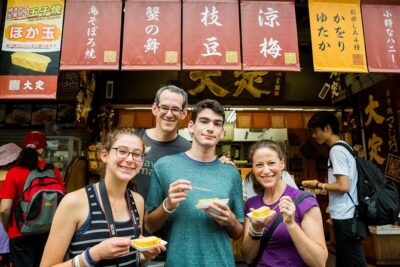
Tokyo Tsukiji Fish Market Food and Culture Walking Tour
Read our review →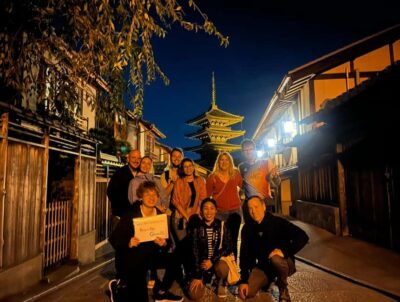
Gion Magical Night Walking Tour with Geisha Trivia
Read our review →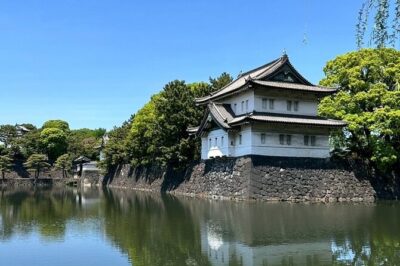
Imperial Palace and Shogun Historical Walking Tour
Read our review →
Gion Geisha District Walking Tour – Stories of Geisha
Read our review →
Shinjuku Local Bar and Izakaya Guided Walking Tour
Read our review →
Browse the lists this tour appears in