
Reviewed · WORKSHOPS
Hanakoushi cotton Scarf Class
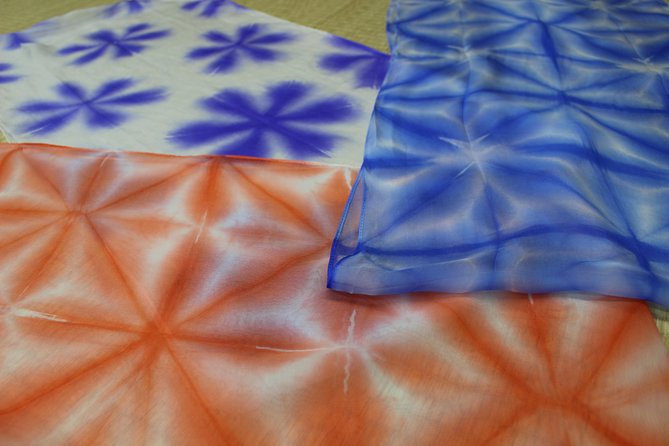
Small craft, lasting souvenir. The Kyoto Shibori Museum gives you a private, hands-on introduction to Japanese resist dyeing, and I like the way the class produces something useful rather than another forgettable trinket. I also like the calm, friendly instruction and the chance to see historic shibori pieces while your scarf dries. The main consideration is that the hands-on work is fairly simple, so anyone expecting a long, technical workshop may find the class too short.
For $43.35 per person, you receive the class, materials, instruction, and a finished scarf, along with time to look around the museum. The private format suits couples, families, and small groups who want to work at their own pace. Just note that the information describes the scarf as cotton, while several class comments refer to silk, and the method is called both hanakoushi and sekka shibori in the supplied details.
In This Review
- Key points at a glance
- What happens at the Kyoto Shibori Museum
- Hanakoushi and sekka shibori explained
- The museum gives the short class more meaning
- Why the private format matters
- Is $43.35 a fair price?
- Timing your visit in a Kyoto itinerary
- The main drawback: a simple craft in a short class
- Who will enjoy this Kyoto craft class?
- Booking and cancellation details
- Should you book the Hanakoushi scarf class?
- FAQ
- Where does the scarf class take place?
- How long does the class last?
- What size scarf will I make?
- Is the class private?
- What technique will I learn?
- Is the museum included in the visit?
- Can I cancel for a full refund?
Key points at a glance
- A private class for your group: You do not share the lesson with a large crowd, making it easier to follow the folding and dyeing instructions.
- A 175-by-50-centimeter scarf: The finished piece is a practical souvenir, not just a small sample of fabric.
- A simplified traditional craft: You learn the basic folding and dyeing process without spending hours tying tiny sections of cloth.
- A useful drying break: While the color sets, you can examine shibori works, tools, and samples in the museum.
- A good family and couple activity: Most people can participate, and the class is designed to be approachable.
- A flexible Kyoto stop: The museum is near public transportation at 135-5 Shikiamicho in Nakagyo Ward.
What happens at the Kyoto Shibori Museum
Your visit begins at the Kyoto Shibori Museum, where the class takes place. The museum is at 135-5 Shikiamicho, Nakagyo Ward, Kyoto 604-8261, and the activity ends at the same location.
The class is private, meaning only your party participates. That matters here because the work depends on seeing how the fabric is folded before it goes into the dye. A small group also gives you a better chance to ask for help and check your pattern before the color is applied.
The actual lesson usually lasts from 30 to 60 minutes. The class description also allows about 30 minutes for the dyed fabric to dry, so you should not treat this as a quick five-minute stop. The time spent at the museum during drying is part of what makes the visit feel like more than a simple craft table.
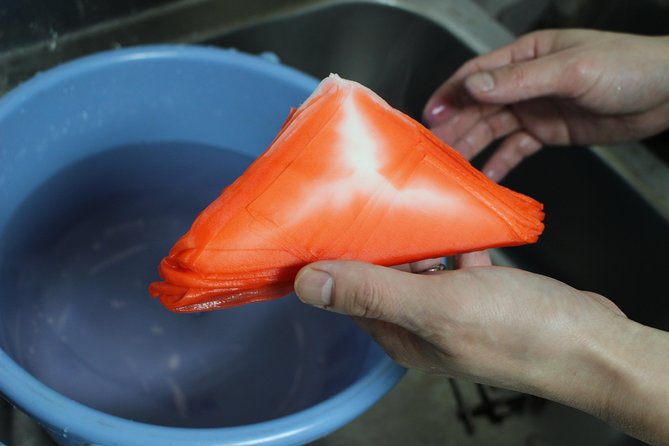
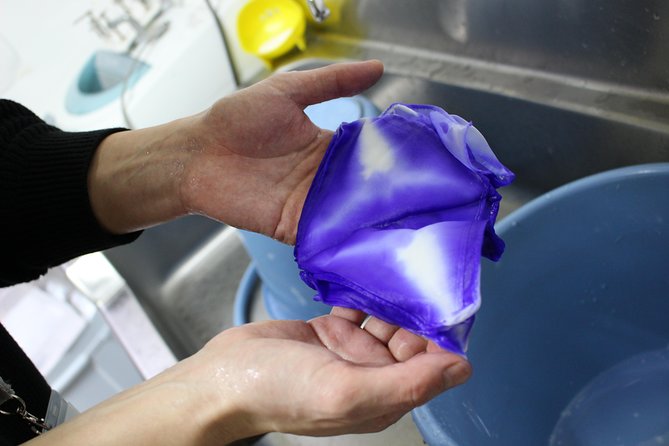
The process begins with color selection. You choose a favorite color, then learn how to fold the fabric in a particular way. Once folded, the scarf is dyed. The folding controls how the color reaches the cloth, creating the familiar resist-dye pattern.
This is not a blank-canvas art class. You are following a traditional method with a prepared format, which is good news if you want a reliable result. You do not need advanced sewing or art skills, and the instructions are designed for people who may be new to Japanese textile work.
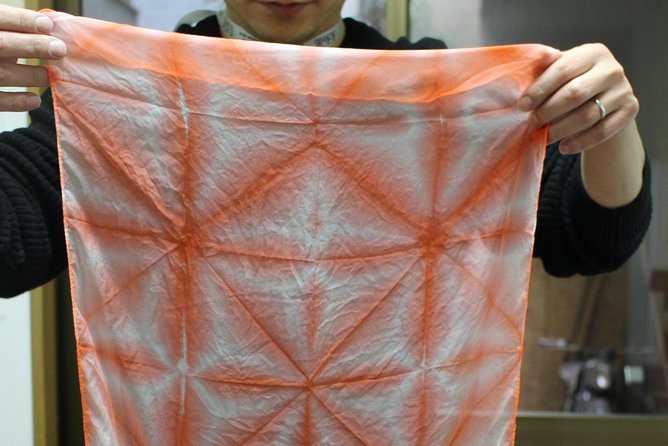
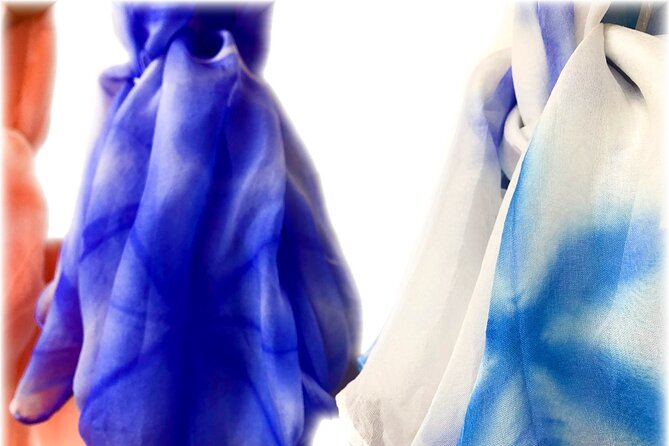
The finished scarf is described as approximately 70 inches by 17 inches, or 175 by 50 centimeters. That is a generous size for a souvenir. You can use it as a light wrap, display it at home, or give it as a Kyoto gift.
A few more options to weigh up in Kyoto
- PERFECT KYOTO 1-Day Bus Tour
★ 5.0 · 13,518 reviews - [Kyoto & Nara Day Tour] Sagano Scenic Railway & Nara Park & Fushimi Inari Taisha Thousand Torii Gates & Togetsukyo Bridge & Bamboo Grove & Kimono Forest (Departing from Osaka)
★ 4.9 · 10,942 reviews - Kyoto: Fushimi Inari, Kinkakuji, Bamboo Grove 1 Day Bus Tour
★ 4.8 · 4,316 reviews
Hanakoushi and sekka shibori explained
The supplied class information uses two names for the technique: hanakoushi shibori in the detailed description and sekka shibori in the overview and highlights. Both are presented as traditional shibori methods, but the wording is not fully consistent.
The practical point is simple: you will fold fabric, apply dye, and create a resist pattern. If the exact technique matters to you, ask the museum to confirm which method your session will use when you book.
Shibori works by keeping dye away from selected areas of fabric. Folding, binding, stitching, or clamping can create those protected areas. The result is revealed only after the fabric is opened, which gives the final step a small element of surprise.
One useful feature of this class is that the process has been adapted for a short visit. The fabric is prepared in a way that avoids hours of tying small sections. That makes the class accessible, but it also means you are learning an introduction rather than mastering the full craft.
I see that as a fair trade for a Kyoto itinerary. Traditional textile work can be slow and exacting. This workshop lets you understand the basic idea and take home a finished piece without giving up half a day.
The museum gives the short class more meaning
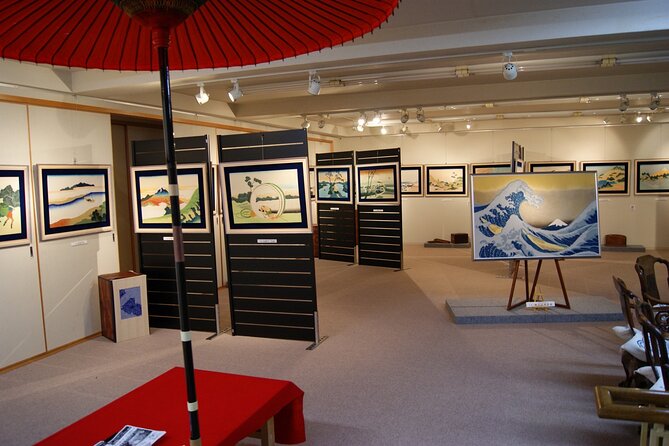
While your scarf dries for about 30 minutes, you can look through the museum. It is described as small, but it contains shibori artwork, tools, fabric samples, and explanatory material that help place your own scarf in context.
The museum also offers a historical video and show-and-tell material. These details are valuable because the class alone could feel brief. Seeing larger and more intricate examples shows how far professional shibori can go beyond the simplified tourist version.
I would make a point of looking closely at the tools and samples before deciding that the craft is easy. Your project may be straightforward, but the museum displays the careful work behind more advanced pieces. That contrast gives you a better respect for the skill involved.
The museum shop adds another part to the visit. It sells shibori fabrics, purses, clothing, souvenirs, and other handmade items. One family purchased a purse and a samue, a traditional Japanese work outfit, after the class. You do not need to buy anything, but the shop is useful if you want a finished piece made by an expert rather than another scarf made by you.
The shop also helps you compare your own work with professional shibori. Your scarf will be a personal souvenir, while the store items show the range of patterns and workmanship available at a higher level.
Why the private format matters
A private activity is especially helpful for families. Everyone can work together, and the instructor can repeat a step if someone misses it. The format also avoids the awkwardness of trying to keep up with a large group.
Couples may enjoy making matching or contrasting scarves. One person can choose a bold color while the other selects something quieter. Since the scarf is large, each person leaves with a substantial keepsake.
Solo participants can also benefit. One class was conducted with a single participant, who received personal guidance from Nina. Other class comments mention Yokahama-san and a welcoming staff, so the museum appears to have several instructors involved in the sessions.
The English support is another practical plus. English-speaking participants describe the staff as easy to understand, helpful, and patient. The material does not promise a particular language for every booking, so you should confirm any language need in advance, but the available feedback points to a comfortable experience for English speakers.
Most people can participate, according to the activity information. Still, the class involves folding fabric and handling dye, so anyone who needs specific physical accommodations should check with the provider before booking.
A completely different kind of day out:
- Kyoto: Tea Ceremony in a Traditional Tea House in Kiyomizu
★ 4.9 · 3,519 reviews - Kyoto: Gion Make Your Own Chopsticks with Engraving Option
★ 5.0 · 3,465 reviews - Kyoto Nara Day Trip │ Kiyomizu-dera Temple + Fushimi Inari-taisha Shrine + Nara Park (Departing from Osaka/Kyoto)
★ 4.7 · 3,408 reviews - Kyoto Geisha Walking Tour: Gion District & Hidden Gems
★ 4.7 · 3,273 reviews
Is $43.35 a fair price?
At $43.35 per person, this is not the cheapest way to obtain a scarf in Kyoto. You can buy a mass-produced textile for less. That comparison misses the main value, though.
You are paying for a private lesson, the material, instruction, the finished 175-by-50-centimeter scarf, and access to a museum with artwork and craft examples. You also get the story of how your souvenir was made. For a couple or family, the shared activity may be worth more than the object alone.
The value is strongest if you want a hands-on cultural stop. It is weaker if your only goal is shopping or if you prefer a long, difficult workshop with a high level of personal control.
The finished scarf should also be considered carefully. The main details identify it as cotton, while several comments describe the material as silk. Because fabric quality affects the price and care instructions, confirm the exact material before booking if that is important to you.
The average booking lead time is 23 days. That suggests you should plan ahead, particularly if you have a fixed Kyoto schedule or want a specific day. The mobile ticket makes the booking process convenient, and confirmation is provided at booking.
Timing your visit in a Kyoto itinerary
The museum is near public transportation, so it can fit into a day of sightseeing in central Kyoto. The activity begins and ends at the museum, with no transportation included beyond getting yourself to the meeting point.
Allow more than the advertised 30 minutes if you want to see the exhibits and shop. The lesson itself may take 30 to 60 minutes, and drying takes about another 30 minutes. The exact timing depends on the class, but I would avoid placing a tightly timed reservation immediately afterward.
The short format works well between larger sights. You can use it as a change of pace after temples, markets, or shopping streets. It gives your hands something to do and your mind a break from simply looking at one attraction after another.
Because the class is private, your party does not need to wait for a large group to finish. That is useful when traveling with children or when your day has several fixed appointments.
The main drawback: a simple craft in a short class
The most important limitation is the level of hands-on work. You choose a color, fold the fabric with guidance, and dye it. The process has been simplified so you do not spend hours tying many small fabric sections.
For many people, that is exactly right. You get a beautiful result without needing specialist skills. The class is easy to follow, and the staff can guide you through the process.
If you want to practice several shibori techniques, create a highly complex pattern, or learn the full professional process, this class may disappoint. The museum can show you intricate work, but your own project remains a short introductory exercise.
The museum itself is also small. That is not a serious problem if you see it as an extra part of the class, but it may feel limited if you expect a large cultural institution. I would plan this as a focused craft visit, not as a major all-day museum stop.
Who will enjoy this Kyoto craft class?
I would recommend the class to:
- Couples who want a shared souvenir
- Families looking for an easy cultural activity
- Solo visitors who prefer private instruction
- Anyone interested in Japanese textile arts
- Shoppers who want to understand shibori before buying it
- People who want a personal Kyoto gift rather than a standard souvenir
It is also a good choice for a first encounter with shibori. The teaching is approachable, the project is manageable, and the museum gives you enough background to see why the craft matters.
I would be more cautious if you are an experienced textile artist. You may find the class too brief and controlled. You might still enjoy the museum displays and shop, but the scarf-making portion is aimed at beginners.
Booking and cancellation details
You receive confirmation at the time of booking, and the experience uses a mobile ticket. The meeting point is the Kyoto Shibori Museum, and the activity returns there rather than taking you to another stop.
Free cancellation is available if you cancel at least 24 hours before the local start time. Cancellations or changes within 24 hours are not accepted and do not receive a refund.
Since the average booking is made 23 days ahead, I would reserve early if this is an important part of your Kyoto plan. Check the date, start time, scarf material, and technique wording before finalizing the booking.
Should you book the Hanakoushi scarf class?
Book it if you want a friendly, private introduction to shibori and a useful handmade souvenir. The strongest reasons are the patient instruction, the high-quality fabric described in the class material, the small-group setting, and the museum time while your scarf dries.
Do not book it expecting a long studio course. The craft is simplified, the museum is small, and the hands-on portion can be over quickly. I would also confirm whether your scarf is cotton or silk and whether your session uses hanakoushi or sekka shibori, since the descriptions use both terms.
For most people, $43.35 is a reasonable price for a private Kyoto activity that combines making, learning, and shopping. It gives you something to use at home and a better understanding of the work behind Japanese shibori.
FAQ
Where does the scarf class take place?
The class takes place at the Kyoto Shibori Museum, located at 135-5 Shikiamicho, Nakagyo Ward, Kyoto 604-8261, Japan.
How long does the class last?
Classes usually take 30 to 60 minutes. The dyed fabric needs about 30 minutes to dry, during which you can view the museum displays.
What size scarf will I make?
The scarf is approximately 70 inches by 17 inches, or 175 centimeters by 50 centimeters.
Is the class private?
Yes. Only your party participates in the activity.
What technique will I learn?
The information describes the class using both the hanakoushi shibori and sekka shibori names. You fold the fabric and dye it using the method taught during your session.
Is the museum included in the visit?
Yes. While the scarf dries, you can view shibori artwork, tools, samples, and explanatory material. The museum shop also sells shibori items and souvenirs.
Can I cancel for a full refund?
Yes, if you cancel at least 24 hours before the experience start time. Cancellations or changes made within 24 hours are not refunded.
Just added in Kyoto
- The “Golden Route” and Ancient Japan by DIAMIR Erlebnisreisen – 14-Day Tour★ 2.0 · 2 reviews
- Japan: Castles & Cuisine by G Adventures – 6-Day Kyoto to Osaka Tour★ 4.5 · 4 reviews
- Cycle Japan by Explore! – 13-Day Kyoto to Tokyo Tour★ 4.7 · 12 reviews
- Cycle Japan by Intrepid Travel – 11-Day Kyoto to Tokyo Tour★ 4.8 · 2 reviews
- Classic Japan by Intrepid Travel – 11-Day Kyoto to Tokyo Tour★ 4.4 · 14 reviews
- Ancient & Modern Japan 14-Day Tour by Exodus Adventure Travels★ 4.4 · 40 reviews
- 5 Day Cultural Adventure of Kyoto, Nara & Osaka by Tourist Journey★ 2.5 · 2 reviews
- 12 Days Kinosaki Onsen Escape: A Journey Through Japan’s Timeless Towns by UME Travel★ 4.8 · 5 reviews
Workshops, compared.

Sushi Making Tokyo Roll and Authentic Japanese Sushi Class
Read our review →
Gion Make Your Own Chopsticks with Engraving Option
Read our review →
Roll and Authentic Sushi Making Class in Asakusa
Read our review →
Ramen Cooking Class at Ramen Factory in Kyoto
Read our review →
Tokyo Asakusa Chopsticks Workshop: Make Your Own Pair
Read our review →
Ring Making Workshop : Vintage Japanese Coin Ring
Read our review →Browse the lists this tour appears in