
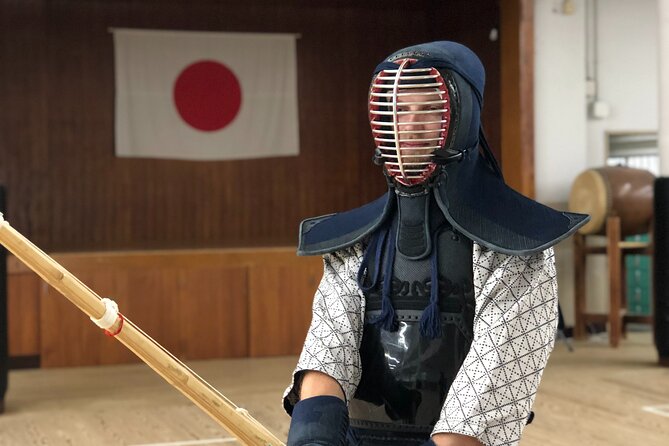
Reviewed · CASTLES AND HISTORIC SITES
Kendo and samurai experience in Kyoto
Samurai skills start with discipline. This two-hour class near Shugakuin Imperial Villa gives you a hands-on introduction to kendo, sword handling, and the customs behind Japan’s warrior tradition. I like the small-class setting and the patient instruction from teachers such as Taka, Kengo, and Hayato, who take time to explain posture, movement, and proper sword care. I also like that no martial arts background is needed.
The main caution is important: do not book this expecting tatami mat cutting. Older descriptions and some past sessions refer to tameshigiri, but a law change means the activity is no longer legally offered in the same way. The setting can also feel basic, and some participants have found the studio difficult to locate or felt the price was high for the amount of practice time.
In This Review
- Key points before you book
- A quieter Kyoto setting at Shugakuin
- What happens during the two-hour class
- Kendo practice is the strongest part
- Samurai clothing, armor, and photos
- The tatami cutting question
- How the two hours are spent
- Is $105.68 a fair price?
- Who will enjoy this class most?
- Practical details worth knowing
- Should you book the Kyoto kendo experience?
- FAQ
- How long is the kendo and samurai experience?
- Where does the experience take place?
- Do I need martial arts experience?
- Is tatami mat cutting included?
- How many people can join the class?
- Can I take photos and videos?
- What is the cancellation policy?
Key points before you book

- Practice kendo with bamboo, foam, and blunt replica swords, so beginners can learn safely.
- Expect a private or very small class when attendance is low, with a maximum group size of 15.
- Learn more than sword swings, including posture, drawing and returning a sword, traditional etiquette, and basic kendo movements.
- The class takes place in Shugakuin, a quieter part of Kyoto away from the central sightseeing crowds.
- Photo opportunities are part of the appeal, with training clothing, armor, swords, and instructor help with pictures and videos.
- Treat tatami cutting as unavailable, despite older promotional wording and some earlier experiences that included it.
A quieter Kyoto setting at Shugakuin
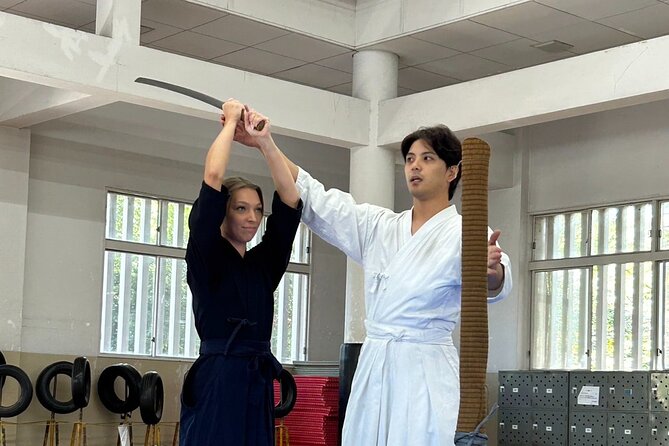
The meeting point is studio NIN, at 16 Shugakuin Daidōchō in Sakyo Ward. This is in the Shugakuin area of northern Kyoto, not in the central cluster around Gion, Nishiki Market, or Kyoto Station.
That location is both a strength and a weakness. I like the chance to leave the crowded sightseeing routes for a quieter neighborhood, especially if your Kyoto schedule already includes plenty of temples and shopping streets. One participant described the class as a pleasant break from the busy city, and that is a useful way to think about it.
The drawback is finding the studio. The address can be hard to spot, particularly if you arrive late or rely on asking people on the street. One person got lost because the studio is on the outskirts and the surrounding streets were quiet. Give yourself extra time and check your route before leaving.
The activity ends back at the meeting point. Shugakuin Imperial Villa is named in the itinerary, but the provided details do not describe a villa tour or admission. You should not assume that this experience includes entry to the imperial villa. The samurai class itself is the focus.
More Castles and Historic Sites in Kyoto
- Kyoto Samurai Experience
★ 5.0 · 1,294 reviews - Kyoto: Nijo-jo Castle and Ninomaru Palace Guided Tour
★ 4.7 · 1,020 reviews - Kyoto: Kendo and Samurai Experience with Uniform and Gear
★ 4.9 · 815 reviews
What happens during the two-hour class
The exact order may vary, but the class begins with an introduction to samurai culture and kendo. Your instructor explains the basic ideas behind the art, the names of the equipment, and the discipline expected when handling a sword.
This cultural context matters. A quick photo session with a katana can be fun, but it does not tell you much about Japanese martial traditions. Here, the aim is to connect the movements with etiquette, control, and respect. You learn that sword work is not simply about force or dramatic swings.
You then move through basic handling exercises. Training tools include bamboo practice swords, foam swords, and blunt replica blades. This mix allows the instructor to show you different forms of practice without placing a sharp weapon in the hands of a beginner.
Expect lessons on:
- Holding a sword correctly
- Basic posture and footwork
- Drawing and returning the sword
- Proper swinging technique
- Efficient cutting movement
- Basic kendo movements and rules
- The traditions surrounding the equipment
The instruction is designed for complete beginners. You do not need prior martial arts training, and the class is presented as low pressure. The best instructors adjust their pace, explain details clearly, and allow time for questions.
Kengo receives especially warm praise for his friendly manner and enthusiasm. Taka is also singled out as an excellent teacher, particularly for group classes that include both kendo and katana practice. Hayato has also led sessions that combine instruction with plenty of photographs.
English ability may vary by instructor. Some participants found communication easy, while another had to use Google Translate at times. That does not appear to prevent the class from working, but you should be ready for a few gestures, demonstrations, or translation checks.
Kendo practice is the strongest part
Kendo is not the same as simply learning to swing a samurai sword. It is a Japanese martial art with its own posture, rules, protective equipment, and disciplined movements. This class gives you a short introduction rather than full training, but it can still show you why technique matters more than brute strength.
The practice swords and foam equipment make the early exercises approachable. You can focus on stance, timing, and control without worrying about handling a sharp blade. Some sessions have included light sparring, which can add energy to the class, though you should not assume every group will follow the same sequence.
I would especially recommend this part to people who enjoy learning by doing. You are not just looking at armor in a museum or posing beside a replica. You are asked to stand correctly, move correctly, and repeat the basic actions until they feel more natural.
The class can be especially enjoyable for families, couples, and small groups with mixed levels of fitness. Most people can participate, and the activity does not require martial arts experience. Still, it is worth remembering that you are practicing a physical skill. Comfortable clothing and a willingness to follow instructions will make the session easier.
Samurai clothing, armor, and photos
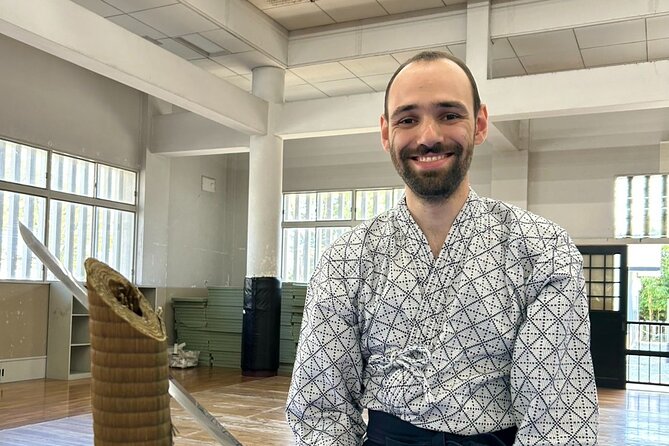
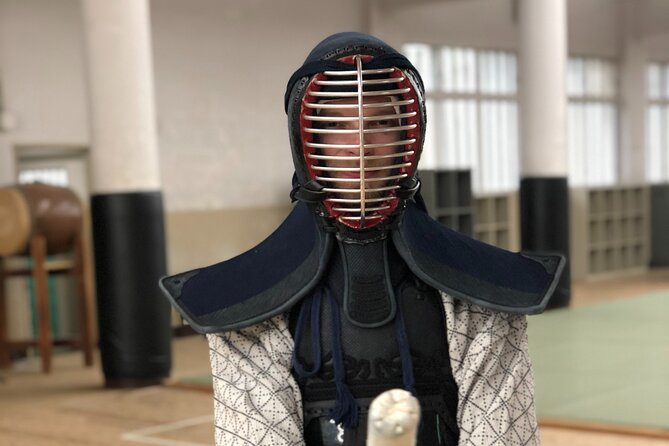
The visual side of the experience is a major reason to book. Depending on the session and equipment available, you may wear traditional training clothing or samurai attire and handle different swords under supervision.
Several participants enjoyed taking photographs and videos during the class. The instructors are willing to help with this, so you do not have to rely entirely on hurried self-timer shots. Kengo, in particular, has helped take photos and videos that capture the practice clearly.
Expect some variation in how much clothing and armor you actually wear. One disappointing session included only a look at a helmet rather than a full uniform. Other sessions included traditional kendo armor and samurai attire. Because the experience can differ by class, group, and current equipment, I would treat a full costume change as possible but not guaranteed.
This is a good example of why clear expectations matter. If your main goal is a polished costume photo, you may find the result uneven. If your goal is to learn basic sword handling and enjoy a few memorable pictures along the way, the activity makes more sense.
A completely different kind of day out:
- PERFECT KYOTO 1-Day Bus Tour
★ 5.0 · 13,518 reviews - [Kyoto & Nara Day Tour] Sagano Scenic Railway & Nara Park & Fushimi Inari Taisha Thousand Torii Gates & Togetsukyo Bridge & Bamboo Grove & Kimono Forest (Departing from Osaka)
★ 4.9 · 10,942 reviews - Kyoto: Fushimi Inari, Kinkakuji, Bamboo Grove 1 Day Bus Tour
★ 4.8 · 4,316 reviews - Kyoto: Tea Ceremony in a Traditional Tea House in Kiyomizu
★ 4.9 · 3,519 reviews
The tatami cutting question
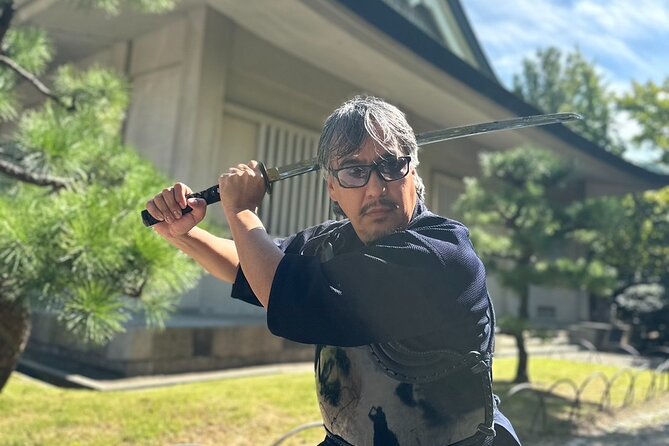
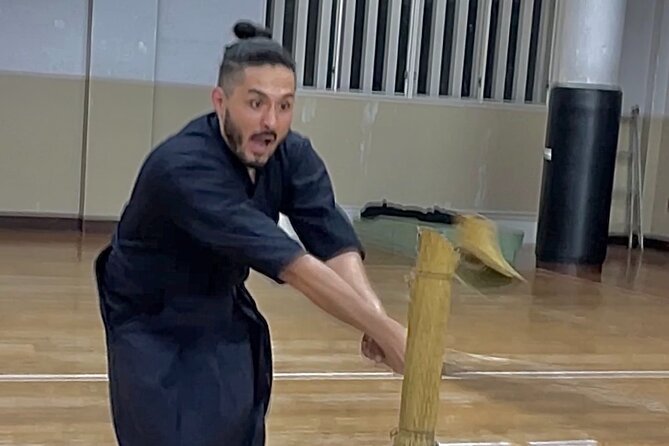
The most important update concerns tatami mat cutting. Older versions of the experience described a final sword-cutting demonstration or activity, and some past participants did cut a tatami mat with a katana. That explains why the feature still appears in some descriptions and why it remains a major part of the appeal.
However, a recent change in Japanese law means the operator is no longer allowed to offer tatami cutting legally in the advertised form. Several people attended expecting it and did not receive it. Some still rated the class highly because the kendo instruction and sword practice were enjoyable, while others felt misled and rated the experience much lower.
You should plan on no tatami cutting. If it is offered during your booking, consider it an unexpected change rather than something promised. This one adjustment makes a major difference to the value of the activity, since the advertised price is easier to justify when you receive a longer practical session with several techniques. Without it, the class depends heavily on the quality of the instruction and the amount of practice time.
How the two hours are spent
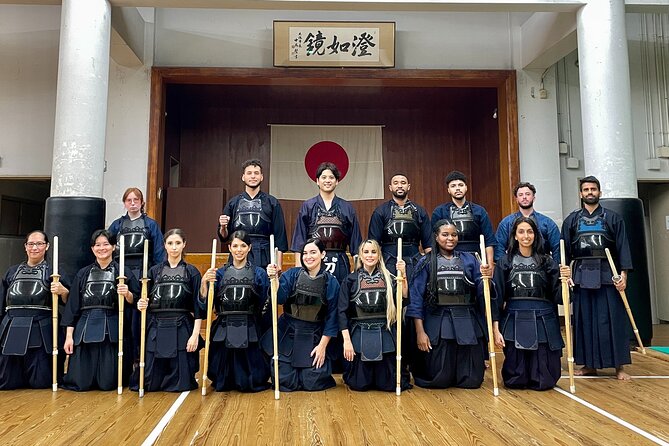
Two hours sounds generous for a beginner class, but the time includes introductions, changing clothes, explanations, sword handling, practice, questions, and photographs.
Some participants felt the class spent too much time on small talk, dressing, and pictures, leaving less time for technique. They wanted to learn more ways to cut or practice more fighting movements. Others appreciated the relaxed pace and the chance to ask questions without feeling rushed.
Your group size will shape the experience. The maximum is 15 people, but several bookings have ended up as private sessions because no other groups joined that time slot. A private class gives you more direct attention and makes it easier to ask questions. A larger group may feel more lively, but each person could receive less individual practice.
If you are booking with friends, this can be a strong choice. A five-person group once expected to share the class but ended up with a private session. That kind of arrangement can make the $105.68 price per person feel more reasonable, especially when the instructor can correct each person’s stance and help with photos.
Is $105.68 a fair price?
At $105.68 per person, this is not a cheap drop-in activity. The value comes from the personal instruction, the unusual subject, and the chance to handle training swords in a supervised setting.
I think the price is easier to defend when you receive a private class, several forms of practice, traditional clothing, and plenty of time with the instructor. It also compares favorably with a standard sightseeing stop if you want an activity that asks you to participate rather than simply look.
The price is harder to justify if your session has a full group, limited sword practice, little costume time, and no tatami cutting. One participant called the experience overpriced even while praising the instructor and the authenticity of the kendo lesson.
A fair way to judge it is to ask what you want from the class. If you want a serious but beginner-friendly introduction to kendo, $105.68 may be acceptable. If you mainly want a dramatic katana-cutting activity, you should choose something else or confirm the current program before paying.
Who will enjoy this class most?
I would suggest this experience to you if you:
- Want a hands-on cultural activity in Kyoto
- Have little or no martial arts experience
- Prefer a small class with direct teacher attention
- Enjoy learning technique and etiquette, not just posing
- Are traveling with friends or family
- Want a break from temples and central Kyoto crowds
- Like photography but can accept that costume options may vary
It may not suit you if your main goal is a guaranteed full samurai costume, an extensive combat lesson, or tatami cutting. It is also less appealing if you dislike physical instruction or expect a polished tourist attraction with a large, professional studio.
The instructors are generally praised for patience, humor, and personal attention. That human element makes a big difference. A good teacher can turn a short introduction into a memorable lesson, while a rushed or poorly communicated class may feel expensive.
Practical details worth knowing
The experience is about two hours and uses a mobile ticket. Confirmation is provided at booking, and the activity ends where it begins.
The meeting point is near public transportation, but the studio’s location can still be difficult to find. Plan your route carefully and leave extra time. One instructor attempted to contact a late participant, but arriving late can still reduce the time available for practice.
Service animals are allowed, and most people can take part. The maximum group size is 15. The activity requires a minimum number of participants, so a cancellation for insufficient numbers can result in another date or a full refund.
You can cancel for a full refund if you do so at least 24 hours before the local start time. Changes or cancellations made within 24 hours are not accepted for a refund. That deadline matters if your Kyoto plans depend on weather, train connections, or a tight sightseeing schedule.
Should you book the Kyoto kendo experience?
Book it if you want a friendly, practical introduction to kendo and samurai customs, especially in a private or small group. The instruction, photo opportunities, and quieter Shugakuin setting can make this one of the more memorable cultural activities in Kyoto.
Before booking, adjust your expectations. The studio may feel simple, the location requires care, English communication may vary, and full armor is not guaranteed. Most importantly, do not count on tatami mat cutting.
For the best value, book with friends, arrive early, and treat the class as a kendo lesson with samurai elements rather than a sword stunt. If that sounds good to you, this is a worthwhile way to spend two hours. If tatami cutting is the entire reason you are interested, skip it unless the provider confirms that the program has legally changed again.
FAQ
How long is the kendo and samurai experience?
The activity lasts approximately two hours.
Where does the experience take place?
It begins and ends at studio NIN, 16 Shugakuin Daidōchō, Sakyo Ward, Kyoto, 606-8037, Japan.
Do I need martial arts experience?
No. The class is designed for beginners, and no previous martial arts experience is needed.
Is tatami mat cutting included?
Tatami mat cutting is no longer legally offered in the advertised form because of a recent change in Japanese law. Some earlier sessions included it, but you should not expect it.
How many people can join the class?
The activity has a maximum of 15 participants. Some time slots may operate as private classes if no other people book.
Can I take photos and videos?
Yes. The instructor can help you take photos and videos during the experience.
What is the cancellation policy?
You can cancel at least 24 hours before the local start time for a full refund. Cancellations or changes made less than 24 hours before the start time are not refunded.
Just added in Kyoto
- The “Golden Route” and Ancient Japan by DIAMIR Erlebnisreisen – 14-Day Tour★ 2.0 · 2 reviews
- Japan: Castles & Cuisine by G Adventures – 6-Day Kyoto to Osaka Tour★ 4.5 · 4 reviews
- Cycle Japan by Explore! – 13-Day Kyoto to Tokyo Tour★ 4.7 · 12 reviews
- Cycle Japan by Intrepid Travel – 11-Day Kyoto to Tokyo Tour★ 4.8 · 2 reviews
- Classic Japan by Intrepid Travel – 11-Day Kyoto to Tokyo Tour★ 4.4 · 14 reviews
- Ancient & Modern Japan 14-Day Tour by Exodus Adventure Travels★ 4.4 · 40 reviews
- 5 Day Cultural Adventure of Kyoto, Nara & Osaka by Tourist Journey★ 2.5 · 2 reviews
- 12 Days Kinosaki Onsen Escape: A Journey Through Japan’s Timeless Towns by UME Travel★ 4.8 · 5 reviews
Castles and Historic Sites, compared.


Imperial Palace and Shogun Historical Walking Tour
Read our review →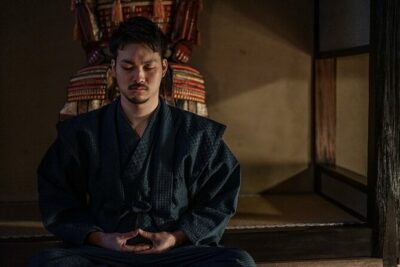
Tokyo Castle & Imperial PalaceーShogun Walking Tour
Read our review →
Nijo-jo Castle and Ninomaru Palace Guided Tour
Read our review →
Samurai Ninja Museum Guided tour and Experience
Read our review →Browse the lists this tour appears in