

Reviewed · WORKSHOPS
Kyo-arashi Shibori Scarf Class
A scarf can carry Kyoto home. At the Kyoto Shibori Museum, you fold silk, wrap it around a pipe, bind it, dye it, and then reveal a pattern you helped create. I like the hands-on process and the fact that your finished scarf is a useful souvenir, not another trinket. I also like the small class format, with instruction tailored to your group.
The main consideration is time. The class lasts about 30 to 60 minutes, but the dyeing process is hands-on and your final pattern depends partly on how you fold and bind the cloth. If you want a long craft workshop with several dye colors or advanced techniques, this may feel brief.
In This Review
- Key points at a glance
- What makes this Kyoto craft class worth your time
- Folding silk around the pipe
- Choosing color and revealing the pattern
- The museum and kimono add more than filler
- How much time should you set aside?
- Location and practical planning
- Is $50.30 a fair price?
- Who will enjoy making a shibori scarf?
- My practical verdict
- FAQ
- Where does the Kyo-arashi Shibori Scarf Class take place?
- How long does the scarf class last?
- What size scarf will I make?
- What is the kyo-arashi shibori method?
- Can I choose the scarf color?
- Is museum admission included?
- Can I try on a kimono?
- What is the minimum age?
- Is the activity private?
- Can I cancel for a full refund?
Key points at a glance

- A 70-inch silk scarf: You work with a substantial 180-by-44-centimeter scarf, large enough to wear rather than simply display.
- The kyo-arashi method: Folding, wrapping, binding, and compressing the fabric creates the scarf’s final pattern.
- Color choice is yours: You select a preferred dye color, so each finished scarf feels personal.
- Museum time is included: While the fabric dries, you can see the displays and try on a shibori kimono.
- Small, private setup: Only your group participates, and classes are usually individual.
- Helpful English instruction: The staff are praised for clear English and warm, attentive teaching. Nina is specifically thanked by name.
What makes this Kyoto craft class worth your time
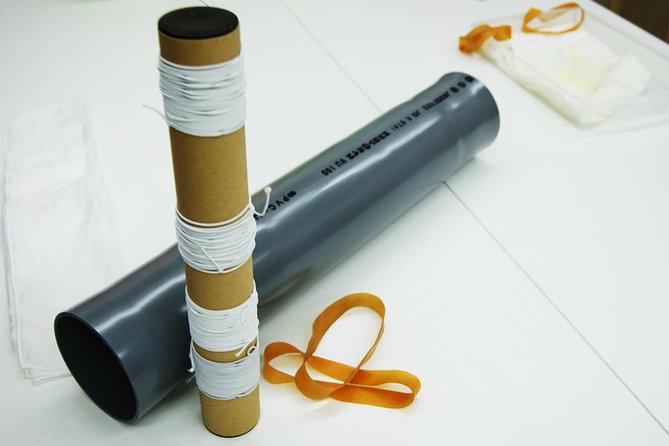
Kyoto offers no shortage of temples, gardens, and formal cultural visits. A shibori class gives you something different: a short session where you use your hands and leave with evidence of what you did.
Shibori is a Japanese resist-dyeing tradition. Parts of the cloth are folded, wrapped, tied, or compressed before dye touches the fabric. Those protected sections remain lighter, while the exposed areas take on color. The pattern is not simply printed onto the scarf. It comes from the pressure, folds, and binding you create.
That is the appeal of the kyo-arashi method. You are not asked to master a complicated textile craft in one sitting, but you do take part in the key steps. The result has an element of surprise. You can choose the color, but the exact design appears only when the fabric is opened.
I especially like that this is not just a demonstration. You make a 70-inch by 17-inch silk scarf, or about 180 by 44 centimeters. That size gives the souvenir real use. You can wear it, pack it, or give it as a thoughtful gift. It also makes the $50.30 price easier to justify than the cost of a quick souvenir shop purchase, especially since museum admission and the kimono opportunity are included.
A few more options to weigh up in Kyoto
- PERFECT KYOTO 1-Day Bus Tour
★ 5.0 · 13,518 reviews - [Kyoto & Nara Day Tour] Sagano Scenic Railway & Nara Park & Fushimi Inari Taisha Thousand Torii Gates & Togetsukyo Bridge & Bamboo Grove & Kimono Forest (Departing from Osaka)
★ 4.9 · 10,942 reviews - Kyoto: Fushimi Inari, Kinkakuji, Bamboo Grove 1 Day Bus Tour
★ 4.8 · 4,316 reviews
Folding silk around the pipe
Your class begins with the scarf and the basic folding method. The instructor shows you how to arrange the fabric in a particular way, then wrap it around a pipe.
This first step matters more than it may seem. The folds determine how the dye reaches the silk. The way the material gathers around the pipe helps form the repeated pattern associated with this style of shibori.
You then wind string around the pipe and push, or squish, the fabric toward the bottom. That binding keeps parts of the scarf protected from the dye. It is a simple action, but it takes care. If the cloth is not gathered as intended, the final design can change.
The staff guide you through the process rather than leaving you to guess. That is useful if you have never worked with fabric dye before. English-language instruction is available, and the teaching is described as attentive and accommodating. An instructor named Nina receives special thanks for helping make the process clear and enjoyable.
Because this is usually an individual class, you can focus on your own scarf. It is not a large production line where you watch a teacher work at the front of a room. The private format also suits families or couples who want to make something together without competing with a large group.
Choosing color and revealing the pattern

Once the scarf is folded, wrapped, and bound, you choose your preferred color. This is one of the most personal parts of the session. The material and technique are set, but the color gives the finished piece its mood.
The dyeing itself is followed by unwinding the string. You roll the scarf with a towel, press it, and then unfold the fabric to see the result. That reveal is the small payoff of the class. Before unfolding, you know the broad method and the color, but not the precise arrangement of lighter and darker areas.
You should approach this with the right expectation. The activity gives you guided control, not perfect control. Your scarf will be personal because you made the choices, but it may not look exactly like a sample or another person’s work. That uncertainty is part of the craft, and it also means the class is better suited to people who enjoy making something rather than demanding a flawless finished product.
The available information does not specify a full range of colors or whether more than one color can be used. You should therefore expect to choose from the options provided on the day, rather than plan a detailed multicolor design in advance.
The museum and kimono add more than filler

While your scarf dries, you can browse the Kyoto Shibori Museum. This is a smart use of the waiting period. You are not simply sitting around for the fabric to finish. You can look at shibori displays and gain a better sense of the craft beyond your one scarf.
The museum visit also gives context to the activity. Your scarf is a beginner piece made in a short session, while the displays show the wider range of patterns and textile work connected with shibori. Seeing those examples can help you understand how much planning and control the larger craft requires.
You also have the opportunity to try on a shibori kimono. This is a memorable extra for anyone interested in Japanese clothing and textile design. It adds a visual, cultural element to an otherwise practical workshop.
The kimono experience should be viewed as an opportunity, not a guaranteed full dressing service. The provided details do not state how long the try-on lasts, who helps with it, or whether photographs are included. Still, having the chance to see the museum and try on a shibori kimono makes the $50.30 fee more reasonable.
There is also a gift shop. If you like the scarf you make, you may want to compare it with other shibori items before leaving. The shop is especially useful if someone in your group prefers to browse rather than take part in the craft.
A completely different kind of day out:
- Kyoto: Tea Ceremony in a Traditional Tea House in Kiyomizu
★ 4.9 · 3,519 reviews - Kyoto: Gion Make Your Own Chopsticks with Engraving Option
★ 5.0 · 3,465 reviews - Kyoto Nara Day Trip │ Kiyomizu-dera Temple + Fushimi Inari-taisha Shrine + Nara Park (Departing from Osaka/Kyoto)
★ 4.7 · 3,408 reviews - Kyoto Geisha Walking Tour: Gion District & Hidden Gems
★ 4.7 · 3,273 reviews
How much time should you set aside?

The class itself takes about 30 to 60 minutes. That is short enough to fit between other Kyoto plans, but you should avoid scheduling it so tightly that you need to rush away immediately afterward.
The timing depends on the class and the drying process. Multiple start times are offered, which makes it easier to fit the activity into a day of sightseeing. Since the museum visit and kimono try-on take place while the scarf dries, your total time at the venue may be longer than the basic class estimate.
I would allow extra breathing room around the appointment. The official activity duration is approximate, and a craft process is not as predictable as entering a museum for a fixed visit. The meeting point is also the end point, so you return to the Kyoto Shibori Museum after completing the activity.
The class is booked an average of 23 days ahead. That does not guarantee that every date sells out, but it is a useful planning signal. If your Kyoto schedule is fixed, booking a few weeks ahead is sensible.
Location and practical planning
The meeting point is the Kyoto Shibori Museum at 135-5 Shikiamicho, Nakagyo Ward, Kyoto, postal code 604-8261. The venue is near public transportation, which is the simplest way to reach it.
Two car parking spaces and two bicycle parking spaces are available. That is helpful, but the small number means you should not count on parking being available when you arrive. Public transport is the safer plan if you are traveling at a busy time.
A mobile ticket is provided, and confirmation arrives when you book. Keep the ticket accessible on your phone. The activity is private, with only your group participating, which makes it a good match for people who prefer a calm class over a crowded workshop.
The minimum age is 12, and adult pricing applies to all ages. Some personal accounts describe children enjoying craft activities at the museum, but the stated minimum age for this scarf class is 12. If you are planning a family visit with younger children, confirm the age rule before paying.
Most people can participate. No special skill is required, and the instructions guide you through each step. The information provided does not give detailed accessibility specifications, so you should contact the museum directly if you need specific assistance.
Is $50.30 a fair price?
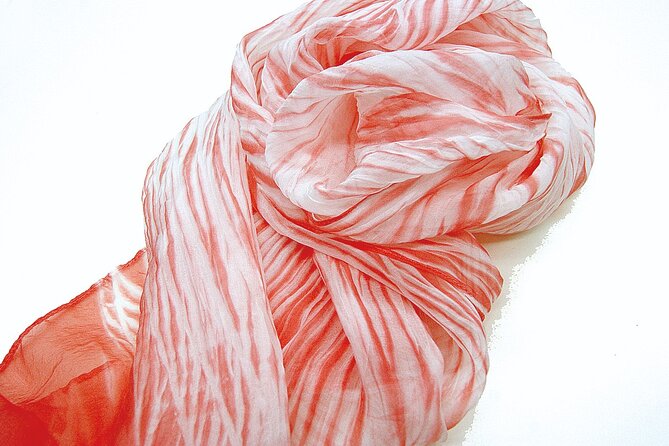
At $50.30 per person, this is not the cheapest way to spend half an hour in Kyoto. The value depends on what you want from the experience.
If you only want a small souvenir, a shop may cost less. If you want an activity that helps you understand a Japanese craft and gives you a wearable silk item, the price is more defensible. You are paying for the material, instruction, museum admission, and the chance to try on a kimono, not only for the finished scarf.
The private format adds value. You are not sharing the lesson with a large crowd, and the instructor can focus on your group. The scarf is also much larger and more useful than a tiny craft sample.
The short duration keeps the class practical for a busy Kyoto itinerary. You do not need to devote half a day to a textile lesson. The tradeoff is that the class cannot cover every shibori technique or give you a long period for experimentation.
I would call it good value for a first craft experience, especially if you appreciate objects with a story. I would be less enthusiastic if your main goal is to produce several scarves, work with many colors, or receive advanced textile training.
Who will enjoy making a shibori scarf?
This class is a strong choice if you want a personal souvenir and prefer making something to simply buying it. You will probably enjoy the process if you like small surprises, practical crafts, and cultural activities that do not require a full day.
It also works well for a couple, parent and older child, or small family group. The activity has enough structure to keep everyone involved, and the finished scarves can serve as matching or coordinated mementos without being identical.
Art-minded visitors should appreciate the mix of technique and uncertainty. You choose the color and handle the fabric, but the final pattern only becomes clear at the end. That gives the class a little drama without making it difficult.
This may not suit you if you dislike dye, fabric handling, or activities where the final result cannot be fully predicted. It may also feel too short if you want a serious course in Japanese textile arts.
My practical verdict
I like this experience because it connects Kyoto culture with something you can use after the trip. The scarf is not merely a keepsake handed to you at the end. You fold it, bind it, dye it, press it, and open it yourself.
The museum, kimono try-on, helpful English instruction, and private format make the visit feel fuller than the short class time suggests. The warm staff, including Nina, are a major part of its appeal. The main limits are the 30 to 60 minute duration, the stated minimum age of 12, and the fact that your control over the final design is not absolute.
Book it if you want a manageable, creative Kyoto activity with a personal result. Skip it if you want a long, advanced workshop or a guaranteed pattern with precise color control. For most visitors who value a useful souvenir and a pleasant hands-on hour, this is an easy activity to fit into a Kyoto day.
FAQ
Where does the Kyo-arashi Shibori Scarf Class take place?
The class takes place at the Kyoto Shibori Museum, 135-5 Shikiamicho, Nakagyo Ward, Kyoto, 604-8261, Japan.
How long does the scarf class last?
The class takes approximately 30 minutes to 1 hour. The exact timing can vary, and the scarf also needs time to dry.
What size scarf will I make?
You will dye a silk scarf measuring about 70 inches by 17 inches, or 180 centimeters by 44 centimeters.
What is the kyo-arashi shibori method?
The method involves folding the fabric, wrapping it around a pipe, winding string around it, compressing the fabric, and then dyeing it. You unwind and unfold the material to reveal the pattern.
Can I choose the scarf color?
Yes. You can choose a preferred color from the available options for the activity.
Is museum admission included?
Yes. Admission to the Kyoto Shibori Museum is included with the experience.
Can I try on a kimono?
Yes. The activity includes the opportunity to try on a shibori kimono while your scarf is drying.
What is the minimum age?
The minimum age is 12 years. Adult pricing applies to all ages.
Is the activity private?
Yes. Only your group participates in the activity, and classes are usually individual.
Can I cancel for a full refund?
Yes, if you cancel at least 24 hours before the experience start time. Cancellations made less than 24 hours before the start time are not refunded, and changes during that period are not accepted.
Just added in Kyoto
- The “Golden Route” and Ancient Japan by DIAMIR Erlebnisreisen – 14-Day Tour★ 2.0 · 2 reviews
- Japan: Castles & Cuisine by G Adventures – 6-Day Kyoto to Osaka Tour★ 4.5 · 4 reviews
- Cycle Japan by Explore! – 13-Day Kyoto to Tokyo Tour★ 4.7 · 12 reviews
- Cycle Japan by Intrepid Travel – 11-Day Kyoto to Tokyo Tour★ 4.8 · 2 reviews
- Classic Japan by Intrepid Travel – 11-Day Kyoto to Tokyo Tour★ 4.4 · 14 reviews
- Ancient & Modern Japan 14-Day Tour by Exodus Adventure Travels★ 4.4 · 40 reviews
- 5 Day Cultural Adventure of Kyoto, Nara & Osaka by Tourist Journey★ 2.5 · 2 reviews
- 12 Days Kinosaki Onsen Escape: A Journey Through Japan’s Timeless Towns by UME Travel★ 4.8 · 5 reviews
Workshops, compared.

Sushi Making Tokyo Roll and Authentic Japanese Sushi Class
Read our review →
Gion Make Your Own Chopsticks with Engraving Option
Read our review →
Roll and Authentic Sushi Making Class in Asakusa
Read our review →
Ramen Cooking Class at Ramen Factory in Kyoto
Read our review →
Tokyo Asakusa Chopsticks Workshop: Make Your Own Pair
Read our review →
Ring Making Workshop : Vintage Japanese Coin Ring
Read our review →Browse the lists this tour appears in