
Reviewed · CASTLES AND HISTORIC SITES
Kyoto 2 Hours Genuine Kendo / Samurai Experience In Japan
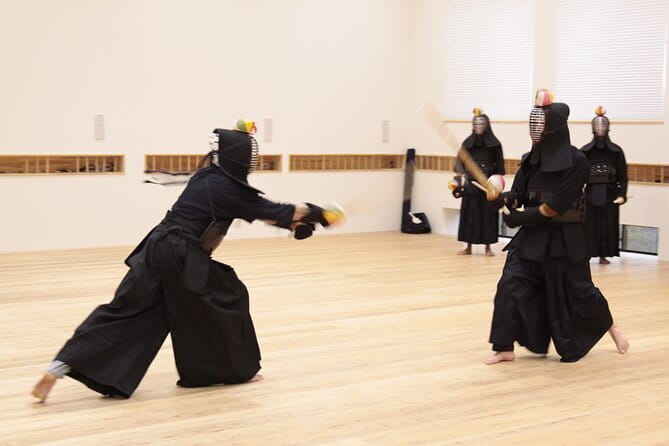
Step into Kyoto’s martial tradition. This two-hour kendo class gives you more than a quick bamboo-sword photo opportunity. You learn basic footwork, rules, etiquette, armor use, and striking under the guidance of experienced instructors, including Takahiro Hayashi.
I especially like the English-friendly instruction and the fact that equipment, water, and a towel are included. The meeting point at Hanazono Station is also simple, with the dojo less than five minutes away on foot. The main consideration is physical effort: kendo armor gets hot, and you should arrive with moderate fitness and a willingness to sweat.
The class costs $118.89 per person, which is not a bargain basement activity. Still, for a small taste of a serious Japanese martial art, direct instruction, rented equipment, and practice matches make it a fair value for the right person.
In This Review
- Key points to know before booking
- Why this Kyoto kendo class feels genuine
- Meeting at Hanazono Station at 10:00 am
- The opening lesson: bowing, rules, and kendo manners
- Warmup and footwork before the bamboo sword
- Putting on armor and learning the equipment
- Striking a dummy and learning basic technique
- The practice match is the memorable finish
- The teaching style and the human side
- What the $118.89 price includes
- Who should book this experience
- Practical tips for a smoother morning
- Is this Kyoto kendo experience worth booking?
- FAQ
- How long does the Kyoto kendo experience last?
- What time does the class begin?
- Where do I meet the instructor?
- How do I reach the dojo from the meeting point?
- Is kendo equipment included?
- Are water and a towel provided?
- Is hotel pickup included?
- Do I need to be physically fit?
- What happens if I need to cancel?
Key points to know before booking
- Meet at Hanazono Station at 10:00 am: The instructor meets you at the station and walks with you to the dojo.
- Learn more than sword strikes: The lesson covers bowing, manners, terminology, rules, footwork, and the cultural side of kendo.
- All equipment is supplied: You do not need to bring armor or a bamboo sword.
- Expect a proper workout: Warmups, protective gear, repeated movements, and practice bouts can leave you hot and tired.
- Takahiro Hayashi may lead your class: He is praised for his friendly manner, clear explanations, and energy.
- The experience ends where it begins: After roughly two hours, you return to the meeting point at Hanazono Station.
Why this Kyoto kendo class feels genuine
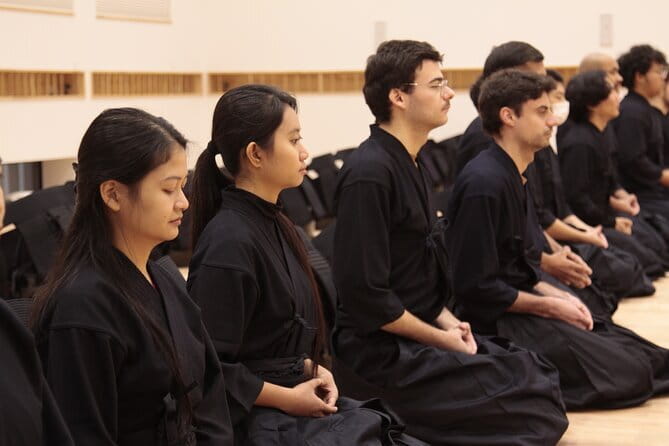
Kendo is often reduced to an image of two people shouting and striking bamboo swords. The real practice is more disciplined. Its name is commonly translated as the way of the sword, and the class presents it as a practice built around spirit, manners, and lifelong improvement.
That difference matters. You are not simply handed a sword and asked to swing at a target. The lesson introduces the conduct that frames kendo. Bowing, attention, foot placement, and respect for your practice partner are part of the activity, not decoration around it.
The instructors also explain the historical and cultural background of kendo. The information supplied for the class describes three central ideas: unifying your spirit, practicing manners, and treating kendo as a lifelong pursuit. You will not master those principles in two hours, of course, but you can see why kendo is more than a competitive game.
The teaching team has more than 40 years of kendo experience, and a seventh-dan master is involved. That gives the class a level of seriousness you will not get from a generic samurai-themed show. At the same time, the instructors are used to welcoming beginners and explaining the basic ideas in English.
More Castles and Historic Sites in Kyoto
- Kyoto Samurai Experience
★ 5.0 · 1,294 reviews - Kyoto: Nijo-jo Castle and Ninomaru Palace Guided Tour
★ 4.7 · 1,020 reviews - Kyoto: Kendo and Samurai Experience with Uniform and Gear
★ 4.9 · 815 reviews
Meeting at Hanazono Station at 10:00 am
Your morning begins at Hanazono Station in Kyoto’s Ukyo Ward. The exact meeting point is listed as Hanazonoteranouchicho, and the start time is 10:00 am.
The station meeting is a useful touch. Finding an unfamiliar dojo can be awkward, especially when you are trying to arrive on time in a new city. Your instructor meets you at the station and walks with you to the training space. The dojo is less than five minutes away, according to the practical directions provided for the class.
Hanazono is served by the San-In Line, also known as the Sagano Line in Kyoto. Check your route before leaving, since arriving late could mean missing the opening instructions or warmup. I would allow a little extra time for the train journey and station orientation.
The class ends back at the meeting point. That makes it easier to plan a later Kyoto activity, though you should leave yourself some breathing room if you have a timed reservation elsewhere.
The opening lesson: bowing, rules, and kendo manners
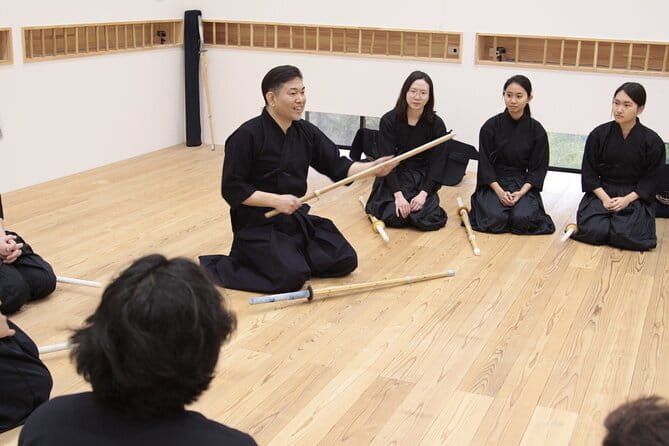
The class starts with an introduction to the basic rules and behavior of kendo. You learn how to bow and how to approach the practice with the right attitude before moving into physical techniques.
This opening can feel slower than the sword work, but it gives the rest of the lesson meaning. Kendo places strong emphasis on discipline and respect. Learning when and how to bow helps you understand that the dojo is not just a gym or a stage for martial-arts theatrics.
You also receive an introduction to kendo terms and basic techniques. English instruction is a major advantage here. Many kendo schools in Japan do not teach in English, so a first lesson can become a frustrating exercise in copying movements without knowing why you are doing them.
The instructors aim to break down the material in a clear way. That is especially helpful when you are learning several things at once: how to hold the shinai, how to stand, how to move your feet, and how to respond to instructions.
Warmup and footwork before the bamboo sword
After the introductory material, you should expect a warmup and basic movement practice. One of the most useful parts of the class is the progression from footwork to weapons work.
Kendo movement is not quite the same as ordinary walking or casual fencing. Your stance, balance, timing, and forward movement all matter. Beginners can easily focus only on the sword, but the footwork gives the strike its control and purpose.
The lesson builds these elements in stages. You start with simple movements, then work with a bamboo sword, and later practice against a dummy. This order makes the activity easier to follow because you are not asked to manage a full set of equipment and a live partner immediately.
You will probably repeat the same movement several times. That repetition is part of the point. Kendo is built on precision, and the first class is about getting a feel for the structure of the movements rather than looking polished.
A completely different kind of day out:
- PERFECT KYOTO 1-Day Bus Tour
★ 5.0 · 13,518 reviews - [Kyoto & Nara Day Tour] Sagano Scenic Railway & Nara Park & Fushimi Inari Taisha Thousand Torii Gates & Togetsukyo Bridge & Bamboo Grove & Kimono Forest (Departing from Osaka)
★ 4.9 · 10,942 reviews - Kyoto: Fushimi Inari, Kinkakuji, Bamboo Grove 1 Day Bus Tour
★ 4.8 · 4,316 reviews - Kyoto: Tea Ceremony in a Traditional Tea House in Kiyomizu
★ 4.9 · 3,519 reviews
Putting on armor and learning the equipment
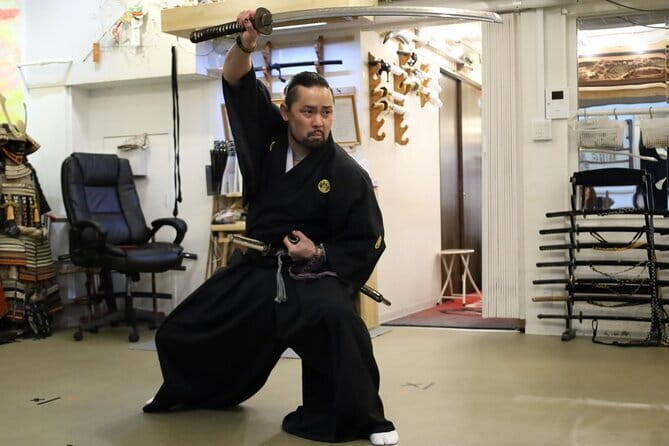
Equipment rental is included in the price. You receive the kendo gear needed for the class, including the protective armor used during practice.
For a first-time student, putting on armor is part of the cultural experience. It also changes the physical feel of the lesson. Once dressed, you have more weight and warmth around your body, and ordinary movements become more deliberate.
The class information warns indirectly through its practical advice that you can get hot. One person who took the class strongly recommended bringing a towel because the outfit becomes warm during practice. A free kendo towel and bottled water are provided, but bringing an extra towel is still sensible.
Wear comfortable clothing suitable for movement. The supplied information does not set out a detailed clothing rule, so follow the provider’s instructions after booking. You should also expect to remove anything that interferes with wearing the equipment safely.
The armor is not simply a costume. It allows you to take part in controlled practice with more confidence. You still need to listen closely and follow the instructor’s directions, but the protective gear makes the later exercises possible.
Striking a dummy and learning basic technique
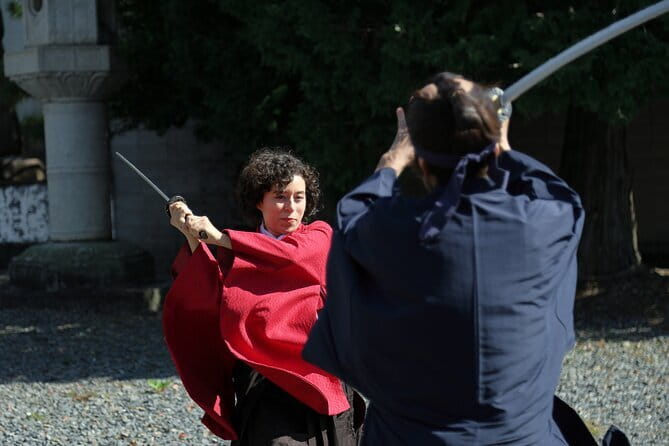
Once you have covered the fundamentals, you move toward practical striking exercises. The progression includes using the bamboo sword against a dummy, which gives you a fixed target before you work with another person.
This is a good teaching choice. A stationary target lets you concentrate on grip, distance, timing, and the basic striking motion. You can work on the movement without also trying to predict what a partner will do.
The instructors guide you through the exercise and help keep it safe. You are not expected to arrive with martial-arts training. The class is designed as an entry point, and the basic techniques are introduced step by step.
You should keep your expectations realistic. Two hours will not make you an accomplished kendoka. It can, however, give you a clear understanding of the discipline and a physical sense of how much control the sport demands.
The practice match is the memorable finish
For many people, the most exciting part comes when you use what you have learned in a practice bout. The class can include matches between participants, and you might have the chance to practice against the instructor.
That final stage makes the earlier footwork and rules feel useful. You now have to pay attention to distance, movement, timing, and the other person’s actions. It is still a beginner activity, but it has a real sense of challenge.
You should not treat the bout as a free-for-all. Kendo emphasizes control and manners, so the instructor sets the tone and keeps the activity safe. Follow directions carefully, especially if you are paired with someone who has a different height or fitness level.
The chance to face the instructor is a memorable possibility, not something I would promise for every class. One class participant had the opportunity to practice against the sensei and described it as the high point of the experience. Even if you only practice with another beginner, the match gives the session a satisfying finish.
The teaching style and the human side
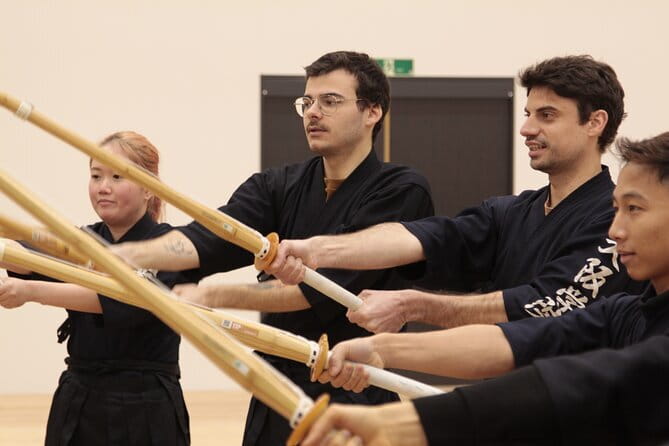
The instructors receive strong praise for being patient, friendly, and easy to follow. Takahiro Hayashi is specifically noted for his positive attitude and energy, and he has also helped participants take photos and videos during the experience.
That personal approach matters. Martial arts can feel intimidating when you are new, particularly when you are surrounded by unfamiliar equipment and formal customs. A welcoming instructor helps you relax enough to pay attention.
The teaching also suits families and mixed-experience groups. A husband and son described the class as one of the highlights of their Kyoto trip, while another participant found the instructor patient enough to make everyone comfortable with the bamboo swords.
The class can hold up to 30 people. That is a fairly large maximum for hands-on instruction, so the experience may feel more personal on a quieter date than on a full one. The published rating is 5 out of 5 from 57 reviews, with 100 percent recommending it, but the maximum group size is still worth keeping in mind if you prefer very small classes.
What the $118.89 price includes
At $118.89 per person, this is a premium two-hour activity. You are paying for instruction, access to a dojo, equipment rental, and a structured introduction to a Japanese martial art.
The package includes:
- All kendo equipment
- A free kendo towel
- Bottled water
- The guided two-hour lesson
Food is not included, and there is no hotel pickup or drop-off. You also pay for your own transport to Hanazono Station.
I think the price is reasonable if you want active cultural instruction rather than a passive demonstration. Equipment rental alone removes a practical hassle, and English-capable teaching is valuable when the subject has its own terminology and rules.
The value is weaker if you only want a quick samurai photo or a short theatrical performance. This experience asks you to listen, repeat movements, wear warm gear, and take part in a workout. You get more from it if you enjoy learning by doing.
Who should book this experience
I would recommend this class to you if you want a hands-on Kyoto activity with a strong cultural focus. It suits first-time kendo students, families with an interest in martial arts, and anyone who wants a break from temples and sightseeing.
You do not need to be an expert. The session begins with the basics and builds gradually. The key requirement is a moderate level of physical fitness and the ability to participate in a warm, active lesson.
It is also a good choice if English access matters. The instructor has experience teaching in English, which can make the difference between understanding the purpose of each movement and merely copying it.
I would be more cautious if you dislike formal instruction, have difficulty with physical activity, or want a relaxed cultural demonstration. Kendo involves manners, concentration, repeated movements, and practice combat. It is friendly, but it is not passive.
Practical tips for a smoother morning
Bring an extra towel if you have room. The included towel is useful, but the armor can become hot, and a second towel helps after the lesson.
Carry water even though a bottle is included. You may not need it, but staying hydrated is sensible during an active class.
Arrive early enough to find Hanazono Station and locate the meeting point without rushing. The instructor meets you there, which simplifies the final walk to the dojo, but the class starts at 10:00 am.
Use the free cancellation policy to protect your plans. You can cancel at least 24 hours before the local start time for a full refund. Cancellations or changes made within 24 hours are not accepted for a refund.
The experience uses a mobile ticket, and confirmation is provided when you book. It is near public transportation, but hotel transfers are not included.
Is this Kyoto kendo experience worth booking?
Yes, if you want to practice rather than watch. The combination of English guidance, authentic dojo instruction, supplied armor, cultural context, and a possible practice match gives you a memorable two hours with real substance.
I particularly like the careful progression from bowing and footwork to the dummy and then the bout. The friendly instruction from teachers such as Takahiro Hayashi also makes the experience approachable for complete beginners.
The drawbacks are clear: it costs $118.89, you must make your own way to Hanazono Station, and the armor can make the class hot and physically demanding. If those points suit your plans, book it. You will leave with more than a samurai-style snapshot. You will have a practical introduction to the discipline, manners, and effort behind kendo.
FAQ
How long does the Kyoto kendo experience last?
The experience lasts approximately two hours.
What time does the class begin?
The class begins at 10:00 am.
Where do I meet the instructor?
You meet at Hanazono Station in Kyoto’s Ukyo Ward, at Hanazonoteranouchicho, Kyoto, 616-8043, Japan.
How do I reach the dojo from the meeting point?
The instructor meets you at Hanazono Station and walks with you to the dojo. The walk takes less than five minutes.
Is kendo equipment included?
Yes. All kendo equipment is included in the experience price.
Are water and a towel provided?
Yes. Bottled water and a free kendo towel are provided.
Is hotel pickup included?
No. Hotel pickup and drop-off are not included.
Do I need to be physically fit?
You should have a moderate level of physical fitness. The class includes warmups, movement practice, protective armor, and practice exercises.
What happens if I need to cancel?
You can cancel at least 24 hours before the local start time for a full refund. Cancellations or changes made less than 24 hours before the start time are not accepted for a refund.
Just added in Kyoto
- The “Golden Route” and Ancient Japan by DIAMIR Erlebnisreisen – 14-Day Tour★ 2.0 · 2 reviews
- Japan: Castles & Cuisine by G Adventures – 6-Day Kyoto to Osaka Tour★ 4.5 · 4 reviews
- Cycle Japan by Explore! – 13-Day Kyoto to Tokyo Tour★ 4.7 · 12 reviews
- Cycle Japan by Intrepid Travel – 11-Day Kyoto to Tokyo Tour★ 4.8 · 2 reviews
- Classic Japan by Intrepid Travel – 11-Day Kyoto to Tokyo Tour★ 4.4 · 14 reviews
- Ancient & Modern Japan 14-Day Tour by Exodus Adventure Travels★ 4.4 · 40 reviews
- 5 Day Cultural Adventure of Kyoto, Nara & Osaka by Tourist Journey★ 2.5 · 2 reviews
- 12 Days Kinosaki Onsen Escape: A Journey Through Japan’s Timeless Towns by UME Travel★ 4.8 · 5 reviews
Castles and Historic Sites, compared.
Imperial Palace and Shogun Historical Walking Tour
Read our review →
Tokyo Castle & Imperial PalaceーShogun Walking Tour
Read our review →
Nijo-jo Castle and Ninomaru Palace Guided Tour
Read our review →
Samurai Ninja Museum Guided tour and Experience
Read our review →Browse the lists this tour appears in