
Reviewed · WORKSHOPS
Kyoto: Beginner Knife Sharpening & Handle Fitting Workshop
A sharp knife makes a better souvenir. This two-hour workshop at Japanese knife shop HIRAI gives you hands-on practice with Japanese whetstones, a choice of Santoku, Deba, or Yanagi knife, and a magnolia wood handle to fit yourself. I like that you leave with a useful knife rather than a disposable keepsake, and I like the patient, practical teaching from staff such as Julio and Tatsu. The main drawback is the fire used during handle fitting, which can leave your clothes smelling smoky.
The workshop costs $161 per person, including the knife, sharpening lesson, handle, uniform, apron, and engraving fee. That is a fair price if you value instruction and a personal souvenir, though it may feel high if you only want to buy a knife. The group is limited to three people, so you get plenty of correction and help.
In This Review
- Key Things to Know Before You Book
- Finding HIRAI Near Kyoto’s Nishiki Market
- The Opening Lesson: Japanese Knives and Their Place
- Learning to Sharpen With Japanese Whetstones
- Fitting the Magnolia Wood Handle
- Engraving and Taking Your Knife Home
- Is $161 Good Value?
- Who Will Enjoy This Two-Hour Class?
- Practical Clothing and Planning Tips
- The Main Strengths and Limitations
- Should You Book the HIRAI Workshop?
- FAQ
- How long does the Kyoto knife workshop last?
- How much does the experience cost?
- Which knife can I choose?
- Is the knife included in the price?
- Is the handle included?
- Can I have the knife engraved?
- Is the workshop available in English?
- How many people can join the class?
- What should I wear?
Key Things to Know Before You Book
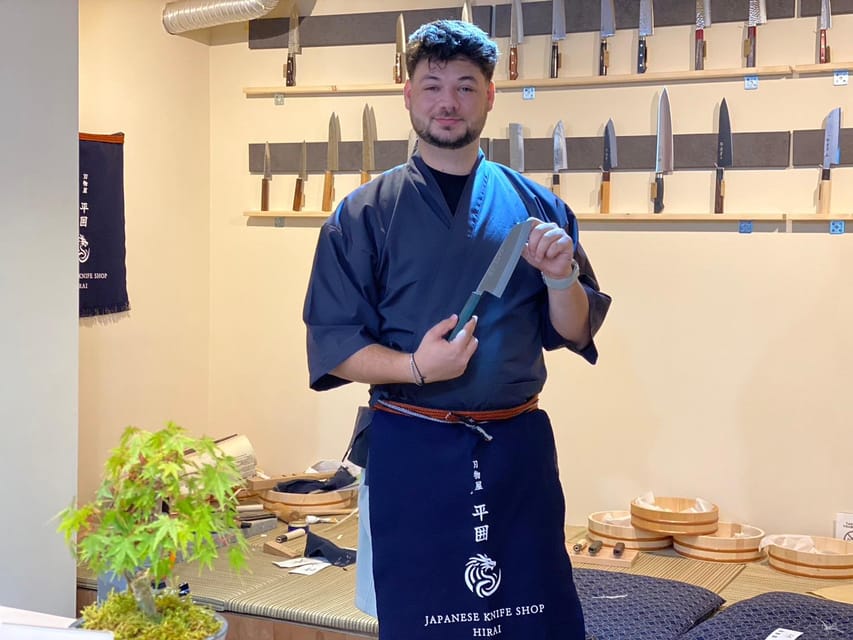
- You sharpen the knife yourself: The instructor demonstrates the method, then guides your hand as you work on your own blade.
- You fit a magnolia wood handle: Handle fitting is part of the main experience, not an optional extra.
- You choose from three knife types: Pick a Santoku, Deba, or Yanagi knife before starting.
- You take the finished knife home: The shop packages it for you at the end.
- English support is available: Instruction is offered in English and Japanese, with staff helping beginners follow each step.
- The workshop is genuinely small: A maximum of three participants makes it easier to ask questions and receive corrections.
Finding HIRAI Near Kyoto’s Nishiki Market
You go directly to the shop rather than meeting a guide at a station or hotel. Look for the building with the shop’s white storefront curtain. One useful warning is that the shop can be a little hard to spot in the busy Nishiki Market area, so allow time to find it.
Arrive five minutes early. That small cushion matters because this is a hands-on class with tools, protective clothing, and several stages to get ready. Arriving at the last second could make the opening explanation feel rushed.
The shop is in Kyoto, on Honshu, and the activity lasts two hours. Since the group is capped at three people, the atmosphere should feel more like a working lesson than a large tourist demonstration. You are expected to stay quiet enough to hear instructions, and smoking, alcohol, drugs, pets, and baby strollers are not allowed.
A few more options to weigh up in Kyoto
- PERFECT KYOTO 1-Day Bus Tour
★ 5.0 · 13,518 reviews - [Kyoto & Nara Day Tour] Sagano Scenic Railway & Nara Park & Fushimi Inari Taisha Thousand Torii Gates & Togetsukyo Bridge & Bamboo Grove & Kimono Forest (Departing from Osaka)
★ 4.9 · 10,942 reviews - Kyoto: Fushimi Inari, Kinkakuji, Bamboo Grove 1 Day Bus Tour
★ 4.8 · 4,316 reviews
The Opening Lesson: Japanese Knives and Their Place
The workshop begins with an explanation of Japanese knife history and how knives have been used in Japan. This gives the practical work some context. You are not simply rubbing steel on a stone without knowing why the blade is shaped or maintained in a particular way.
That introduction is short enough to keep the class moving. The main focus is still on making and caring for your knife, but the background helps you understand why Japanese knives are treated as tools that need regular attention rather than objects that stay sharp forever.
You choose one blade from the available Santoku, Deba, and Yanagi knives. The supplied information does not give a separate price or technical description for each style, so ask the instructor for help if you are unsure which suits you. If you already have a preference, make that choice in advance when booking or before the workshop begins.
The included knife is important when judging the price. You are not paying $161 for a lesson alone. You are receiving a knife, a handle, sharpening instruction, work clothing, and the chance to personalize the result.
Learning to Sharpen With Japanese Whetstones
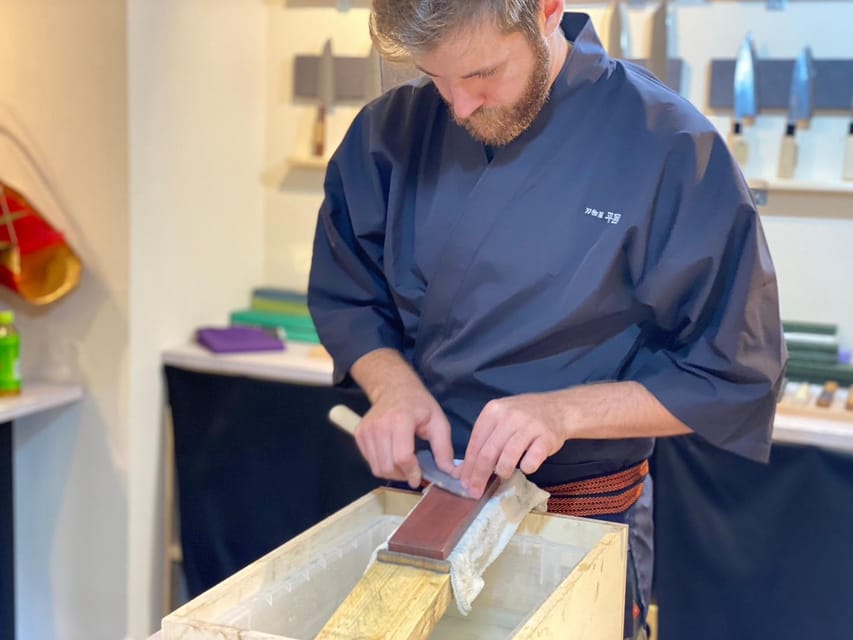
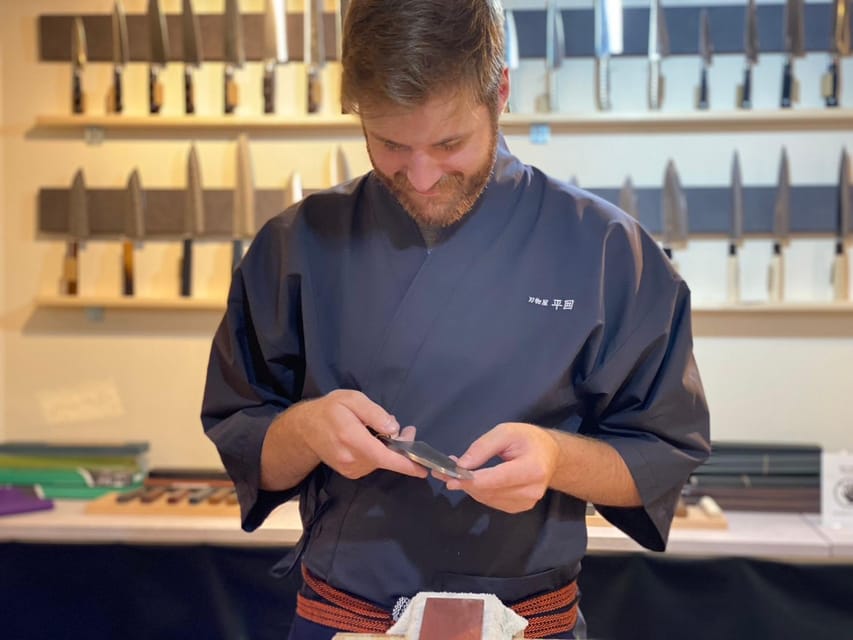
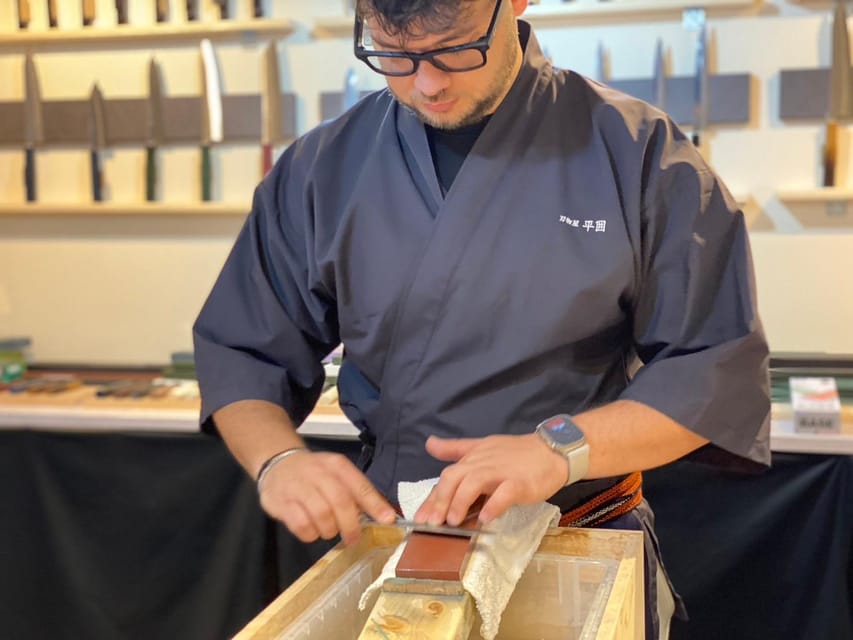
For many people, this is the most useful part of the class. Sharpening on a wet stone can seem intimidating when you are learning from videos. Here, the instructor first shows the basic method, then lets you practice on demonstration knives before moving to your own blade.
That order makes good sense. You get to understand the movement before worrying about the knife you will take home. The instructors watch your technique, offer corrections, and check your progress. Several people found that direct feedback gave them enough confidence to repeat the process at home.
The lesson is practical rather than showy. You learn by keeping your hands in the right position, controlling the blade, and repeating the motion under supervision. Beginners should expect to concentrate. This is not a class where you sit back and watch someone else produce a perfect edge.
The shop provides the whetstones used during the class. You do not receive a whetstone with the experience, and buying one is not included. That matters if you expect to continue sharpening immediately at home. You will gain the technique, but you may need to purchase your own equipment separately.
I would have liked a written reminder of the method, especially for a skill based on small angles and hand movements. Since no printed sharpening guide is listed, take mental notes and ask questions before leaving. The instructor’s corrections are valuable, so use the small group setting to make sure you understand the parts most likely to be forgotten.
The English instruction is a strong point. Julio is praised for being patient, clear, and encouraging, while other sessions have included Tatsu and Japanese instructors working with English support. The precise staffing can vary, but English and Japanese are the listed languages.
Fitting the Magnolia Wood Handle
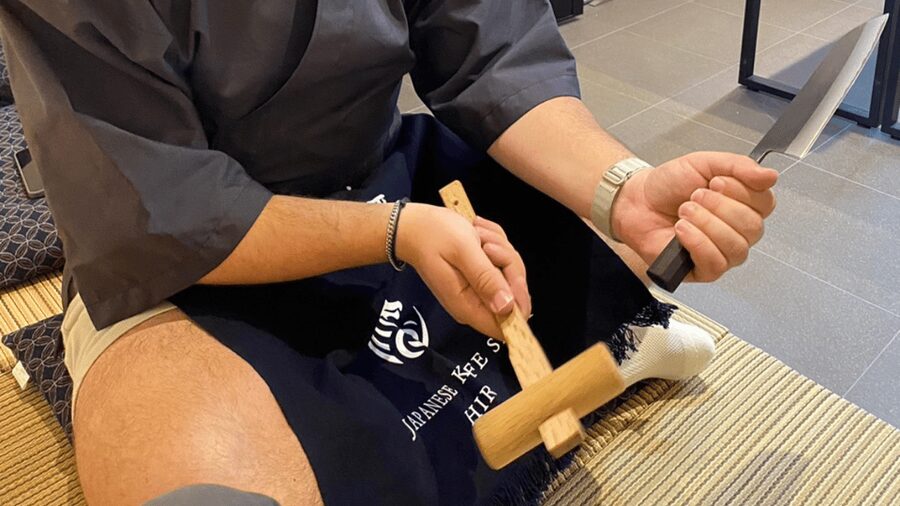
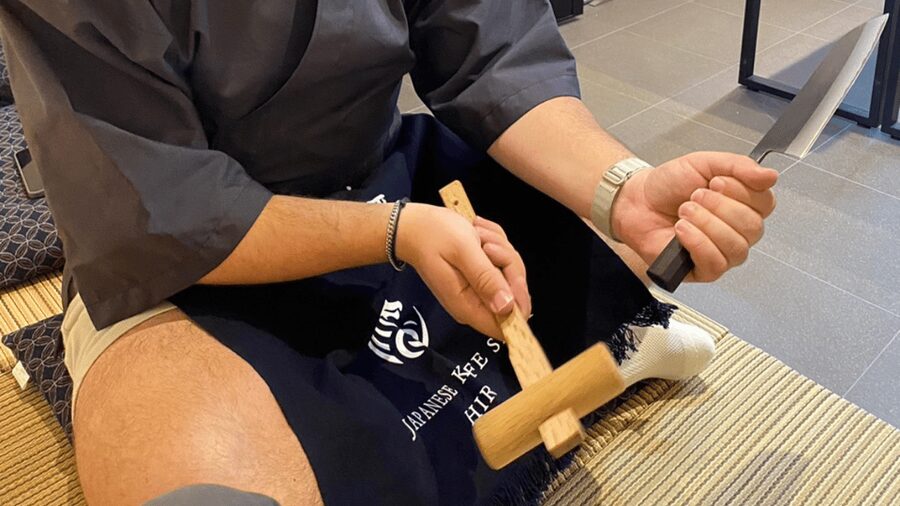
After sharpening, you move to the handle fitting section. The included handle is made from magnolia wood. You attach it with guidance from the staff, turning a plain blade into a knife that feels connected to your own work.
This is where the activity becomes more personal than a normal knife-buying visit. You selected the blade, sharpened it, and then helped fit the handle. The result is not merely a product chosen from a shelf. It carries the memory of the lesson and the care you put into making it ready for use.
The workshop uses fire during this stage. Smoke may come out, and your clothing can pick up the smell. Wear clothes you do not mind smelling smoky afterward. This is an important practical detail, especially if you have dinner plans or packed only delicate clothes for your Kyoto visit.
You can choose a different handle style if you pay an extra fee. The price depends on the handle you select. The standard magnolia handle is included, so you do not need to upgrade to complete the workshop. An upgrade can make sense if the handle is an important part of your purchase, but it is best treated as an optional personal choice rather than a required improvement.
The staff help with the fitting, so you are not expected to have prior woodworking or knife-making skills. Reviews consistently praise the patient guidance during this part. You still take part in the process, but experienced hands make sure the finished knife is properly assembled.
A completely different kind of day out:
- Kyoto: Tea Ceremony in a Traditional Tea House in Kiyomizu
★ 4.9 · 3,519 reviews - Kyoto: Gion Make Your Own Chopsticks with Engraving Option
★ 5.0 · 3,465 reviews - Kyoto Nara Day Trip │ Kiyomizu-dera Temple + Fushimi Inari-taisha Shrine + Nara Park (Departing from Osaka/Kyoto)
★ 4.7 · 3,408 reviews - Kyoto Geisha Walking Tour: Gion District & Hidden Gems
★ 4.7 · 3,273 reviews
Engraving and Taking Your Knife Home
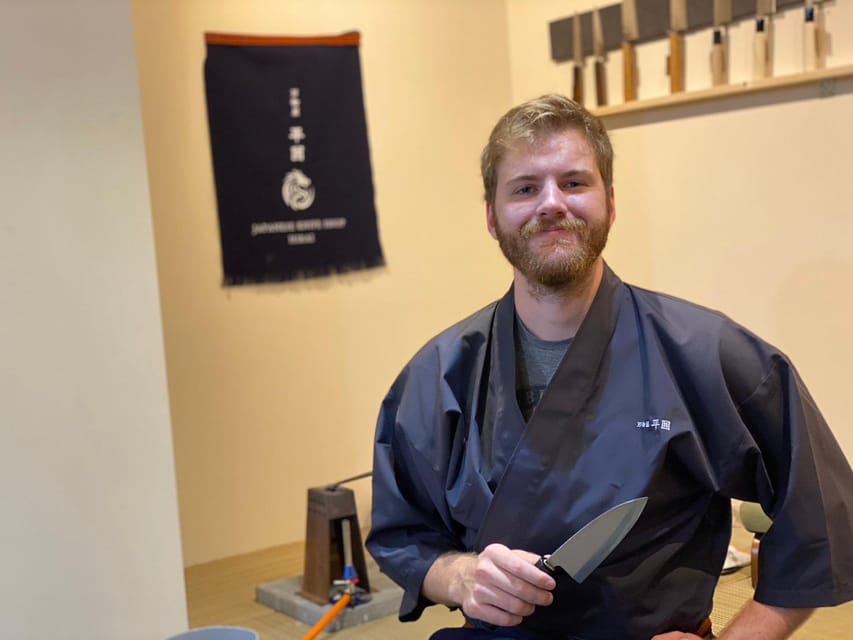
Engraving is available and included in the stated experience fee. You need to request it in advance and provide the characters you want, with a limit of four letters. This makes the knife more personal, but do not wait until the end to mention it.
At the close of the workshop, the shop packages your knife so you can take it home. The finished knife is the lasting value of the experience. You also leave with a basic understanding of sharpening and handle fitting, which gives the souvenir a practical purpose.
If you are flying home, remember that a knife belongs in checked luggage, not your cabin bag. The supplied details only confirm that the knife is packaged for you, so you should still check your airline and destination rules before travel.
The shop also sells additional knives. Buying another blade is not included in the $161 price, and any extra knife is a separate purchase. The experience does not require you to buy more, which is useful if you want to keep your spending under control. Several people appreciated being able to look at other knives without feeling pressured.
Is $161 Good Value?
The price needs to be judged against both the lesson and the included knife. If you simply want the cheapest kitchen knife, this is not the sensible option. You could spend less by buying a basic knife without two hours of instruction or handle work.
If you already want a Japanese knife and are curious about maintaining it, the calculation changes. The standard knife is included, along with a magnolia handle, sharpening practice, clothing, apron, and engraving. You also get a small class with direct feedback, rather than a crowded demonstration.
The value is strongest for someone who would otherwise buy a knife during a Kyoto visit. The class adds a skill and a story to the purchase. You are learning how to keep the blade in good condition, not just taking home something attractive.
Optional upgrades can increase the final cost. A different handle requires an additional fee, and extra knives are sold separately. I would decide on a maximum budget before arriving, then treat upgrades as extras rather than part of the promised value.
Who Will Enjoy This Two-Hour Class?
This workshop suits cooks, food lovers, craft fans, and anyone who likes souvenirs with a job to do. It is especially useful if you have always wanted to try a whetstone but lacked the confidence to begin alone.
It also works well for a parent and older teenager, friends, or a couple because the class is limited to three participants. You can compare your progress, but the small number still allows individual help.
You do not need previous sharpening experience. The class is designed for beginners, and the instructor demonstrates the process before you work on your own blade. You should, however, be ready to concentrate and follow careful instructions.
The experience is not suitable for children under 15, wheelchair users, or people over 80 according to the activity restrictions. The use of fire and the need to work at the shop’s stations are relevant considerations.
Practical Clothing and Planning Tips
Wear ordinary clothes that can tolerate smoke. An apron and Japanese working uniform are included, but the fire used for the handle may still affect what you wear underneath.
Arrive at least five minutes early and go straight to the shop. The white curtain is the key visual marker, but the Nishiki Market area can make finding the storefront less straightforward than expected.
Request engraving before the workshop and keep your chosen text to four letters. Also choose your preferred knife type, Santoku, Deba, or Yanagi, ahead of time if the booking process asks for it.
The activity has free cancellation up to 24 hours before the start time, and you can reserve now and pay later. That gives you some flexibility while arranging a Kyoto schedule, though you should still check the available starting times for your date.
The Main Strengths and Limitations
The strongest part is the teaching. Julio and the other instructors are repeatedly praised for being patient, precise, friendly, and easy to understand. That combination is important because sharpening is a physical skill, and a vague explanation will not help much.
The second major strength is the balance between instruction and making. You spend time learning, then finish with a knife that reflects your choices. The class does not stop at theory, and it does not reduce the craft to a quick souvenir purchase.
The main limitations are simple. The workshop lasts only two hours, so you will learn the basics rather than become a professional sharpener. You also need to buy your own whetstone later if you want to practice at home, and smoke may cling to your clothes during handle fitting.
The shop’s location can take a little patience to find. That is a minor issue, but arriving early solves much of it.
Should You Book the HIRAI Workshop?
I would book this if you want a useful Kyoto souvenir and a skill you can take home. The included knife makes the price easier to justify, while the small group and English guidance give beginners a fair chance to learn proper sharpening.
I would skip it if you only want to browse knives, dislike hands-on work, or have no room in your checked luggage for a blade. I would also avoid wearing anything special, since the handle-fitting fire can leave a smoky scent.
For cooks and curious first-timers, this is a strong choice. You leave with a Japanese knife, a fitted magnolia handle, a personalized engraving if requested, and enough instruction to care for the blade with more confidence. That is a far better souvenir than something that sits on a shelf.
FAQ
How long does the Kyoto knife workshop last?
The workshop lasts two hours.
How much does the experience cost?
The listed price is $161 per person.
Which knife can I choose?
You can choose one knife from the Santoku, Deba, and Yanagi options.
Is the knife included in the price?
Yes. The knife you sharpen during the workshop is included.
Is the handle included?
Yes. A magnolia tree handle is included. Other handle types cost extra, with the additional fee depending on your choice.
Can I have the knife engraved?
Yes. Engraving is included, but you must request it in advance and provide the characters. The limit is four letters.
Is the workshop available in English?
Yes. The listed languages are English and Japanese, and an English guide is available.
How many people can join the class?
The workshop is a small group experience limited to three participants.
What should I wear?
Wear clothes you do not mind smelling smoky because fire is used during the handle-fitting section. An apron and Japanese working uniform are included.
Just added in Kyoto
- The “Golden Route” and Ancient Japan by DIAMIR Erlebnisreisen – 14-Day Tour★ 2.0 · 2 reviews
- Japan: Castles & Cuisine by G Adventures – 6-Day Kyoto to Osaka Tour★ 4.5 · 4 reviews
- Cycle Japan by Explore! – 13-Day Kyoto to Tokyo Tour★ 4.7 · 12 reviews
- Cycle Japan by Intrepid Travel – 11-Day Kyoto to Tokyo Tour★ 4.8 · 2 reviews
- Classic Japan by Intrepid Travel – 11-Day Kyoto to Tokyo Tour★ 4.4 · 14 reviews
- Ancient & Modern Japan 14-Day Tour by Exodus Adventure Travels★ 4.4 · 40 reviews
- 5 Day Cultural Adventure of Kyoto, Nara & Osaka by Tourist Journey★ 2.5 · 2 reviews
- 12 Days Kinosaki Onsen Escape: A Journey Through Japan’s Timeless Towns by UME Travel★ 4.8 · 5 reviews
Workshops, compared.

Sushi Making Tokyo Roll and Authentic Japanese Sushi Class
Read our review →
Gion Make Your Own Chopsticks with Engraving Option
Read our review →
Roll and Authentic Sushi Making Class in Asakusa
Read our review →
Ramen Cooking Class at Ramen Factory in Kyoto
Read our review →
Tokyo Asakusa Chopsticks Workshop: Make Your Own Pair
Read our review →
Ring Making Workshop : Vintage Japanese Coin Ring
Read our review →Browse the lists this tour appears in