
Reviewed · WALKING TOURS
Kyoto Early Riser Golden One-Day Walking Tour
Kyoto rewards early starts. This private eight-hour tour links Fushimi Inari, Arashiyama, Ryoanji, Kinkakuji, and Nishiki Market in one carefully packed day. I like the personal guide service and the chance to use Kyoto’s trains, subway, buses, trolley, and taxi network rather than simply follow a coach around.
I also like the flexible feel. Guides such as Tomoko, Keiko, Satomi, Meg, and Kazuo have helped guests adjust the pace, find lunch, explain customs, and even take photos. The catch is simple: this is a walking-heavy day, and five major sights plus public transport leave little room for lingering.
For a first Kyoto visit, this is an efficient way to get your bearings. You see famous places, but a good guide can turn them from photo stops into living parts of Japanese culture. The value is strongest if you have only one full day in the city and would rather pay for expert help than spend that day studying routes and schedules.
In This Review
- Key points to know before booking
- Why this one-day route works in Kyoto
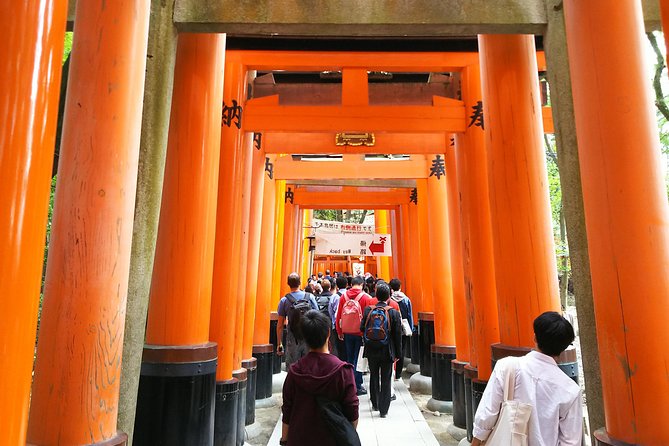
- Fushimi Inari’s red gates set the tone
- Arashiyama offers beauty, crowds, and a short window
- Ryoanji turns a small garden into a big question
- Kinkakuji delivers the day’s big visual moment
- Nishiki Market closes the day with flavor
- What your guide adds to the day
- Public transport makes the day more useful
- Is $119.30 per person a fair price?
- Who should book this Kyoto day?
- FAQ
- Where does the Kyoto walking tour start?
- Where does the tour end?
- How long does the tour last?
- Is this a private tour?
- What is included in the price?
- Is public transportation included?
- Are temple entrance fees included?
- Are meals included?
- Can I cancel for a full refund?
- Should you book it?
Key points to know before booking
- Early access to Kyoto’s big sights: Starting at Kyoto Station helps you reach Fushimi Inari before the day is fully underway.
- Five contrasting stops: You move from Shinto shrine gates to bamboo, Zen stones, a gilded temple, and a food market.
- Private attention: Only your group takes part, so your guide can answer questions and adjust breaks.
- Public transport is part of the lesson: Expect trains, subway, buses, trolley, or taxi rather than a private vehicle.
- Food guidance adds local flavor: Lunch is not included, but guides have recommended sushi bars, conveyor-belt sushi, and local restaurants.
- Plan for extra costs: The listed price is $119.30 per person, with public transport and temple entry charged separately.
Why this one-day route works in Kyoto
Kyoto is not a city where the famous sights sit in a neat line. Fushimi Inari is south of the center, Arashiyama is west, and the northwestern temples require another move across town. Nishiki Market sits in the central shopping area, making it a sensible final stop before returning to Kyoto Station.
That geography is the main reason to consider a guide. You are not just paying for facts at the temples. You are paying for someone who can organize the day, help with fares and transfers, and keep the route moving when Kyoto’s transport system feels unfamiliar.
The tour begins at Kyoto Station Building 901, Higashishiokoji-cho, in Shimogyo Ward. It ends back at the same meeting point. Since the day lasts about eight hours, an early start matters. One guide met a group at 8 in the morning, which is the kind of departure that gives you a better chance at calmer conditions at the first stop.
The pace is active but not meant to be a race. Several people enjoyed guides who offered rest stops, slowed down for knee problems, or found lifts and escalators when possible. Still, you should have moderate physical fitness and be ready to walk, stand, climb, and change vehicles.
More Walking Tours in Kyoto
- Kyoto Geisha Walking Tour: Gion District & Hidden Gems
★ 4.7 · 3,273 reviews - Kyoto: Gion Magical Night Walking Tour with Geisha Trivia
★ 4.9 · 2,393 reviews - Kyoto: Gion Geisha District Walking Tour – Stories of Geisha
★ 4.7 · 2,187 reviews
Fushimi Inari’s red gates set the tone
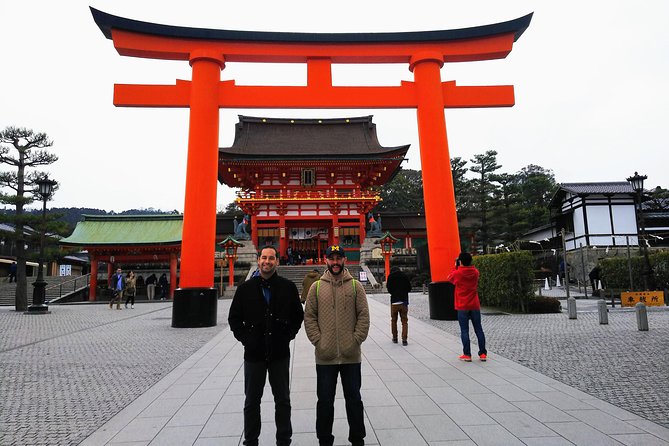
Your first major sight is Fushimi Inari-taisha Shrine, famous for its long tunnel of vermilion torii gates. Worshippers donated these gates in thanks for good fortune connected with the deity enshrined here. The result is one of Kyoto’s most recognizable scenes, but the place has more depth than a single photograph suggests.
The scheduled visit lasts about one hour, with no admission fee. That hour is enough to see the striking lower section and understand how the shrine works, but it is not a full hike through every gate up the mountain. If you want to climb much higher, ask your guide early, since the rest of the day already has a tight schedule.
This is one of the tour’s strongest early stops. The color is bold, the setting is memorable, and the guide can explain the meaning of the gates, shrine customs, and offerings. An early visit also makes practical sense. Fushimi Inari is a major Kyoto attraction, and the narrow paths become harder to enjoy when packed.
Wear shoes you can walk in for hours. Even if you do not make a long climb, the day includes enough pavement and temple grounds to make light footwear a poor choice.
Arashiyama offers beauty, crowds, and a short window
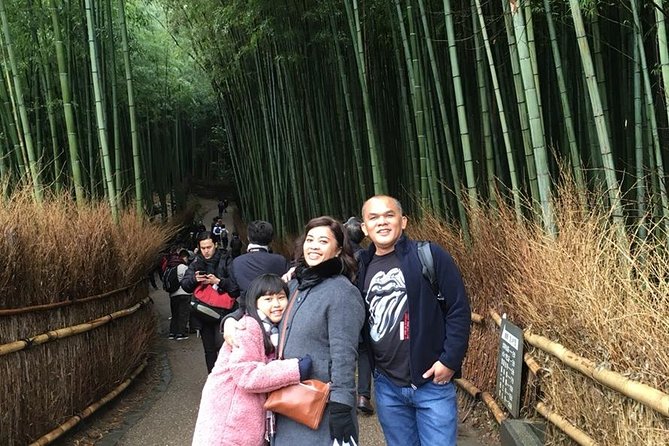
The Arashiyama portion lasts about one hour and ten minutes. You walk through the celebrated bamboo forest, where tall green stalks filter the sun and move with a soft creak in the wind. The setting can feel quiet and almost dreamlike, though the narrow path is also one of Kyoto’s busiest photo areas.
That contrast matters. The bamboo grove is worth seeing, but you should not expect guaranteed solitude. Your guide can help you focus on the atmosphere instead of spending the whole stop waiting for an empty path.
Arashiyama is more than bamboo, but this particular tour gives you a short visit rather than a full exploration of the district. You may feel ready for more time among the area’s temples, river views, or shops. On the other hand, the limited stop keeps the route moving and lets you reach several other essential sights in one day.
This is also a good moment to speak up about your pace. One guide was praised for making a full Kyoto day manageable in August heat by adding breaks. Another was thanked for looking after a parent and making sure the route worked safely. Those details show why a private guide can be useful here: you can ask for a slower walk without holding up a large group.
Ryoanji turns a small garden into a big question
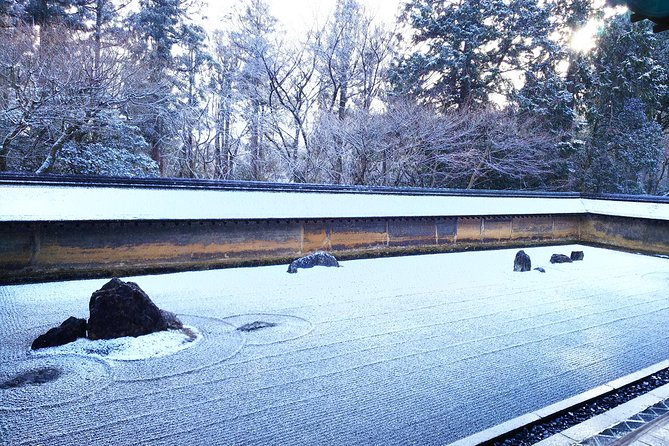
At Ryoanji Temple, you have about 50 minutes. Admission is not included, and the stated entrance fee is ¥1,100 per person. The temple is a UNESCO World Heritage Site and home to Kyoto’s famous Zen rock garden.
The garden is intentionally spare: rocks sit in white gravel, with no lush planting to distract you. Its simplicity invites questions rather than giving you a single clear message. A guide can explain the temple’s place in Zen practice and help you notice the design instead of treating it as a quick stop for a picture.
The drawback is time. Fifty minutes covers the garden and some temple grounds, but it does not allow a leisurely visit to every corner. The route also asks you to absorb several very different places in one day, so Ryoanji may reward a return visit if quiet gardens are your main interest.
Still, this stop provides an important change of mood. After the bold red gates and dramatic bamboo, the rock garden asks you to sit, look, and slow your mind for a few minutes. That balance gives the day more shape than a parade of famous views.
A completely different kind of day out:
- PERFECT KYOTO 1-Day Bus Tour
★ 5.0 · 13,518 reviews - [Kyoto & Nara Day Tour] Sagano Scenic Railway & Nara Park & Fushimi Inari Taisha Thousand Torii Gates & Togetsukyo Bridge & Bamboo Grove & Kimono Forest (Departing from Osaka)
★ 4.9 · 10,942 reviews - Kyoto: Fushimi Inari, Kinkakuji, Bamboo Grove 1 Day Bus Tour
★ 4.8 · 4,316 reviews - Kyoto: Tea Ceremony in a Traditional Tea House in Kiyomizu
★ 4.9 · 3,519 reviews
Kinkakuji delivers the day’s big visual moment
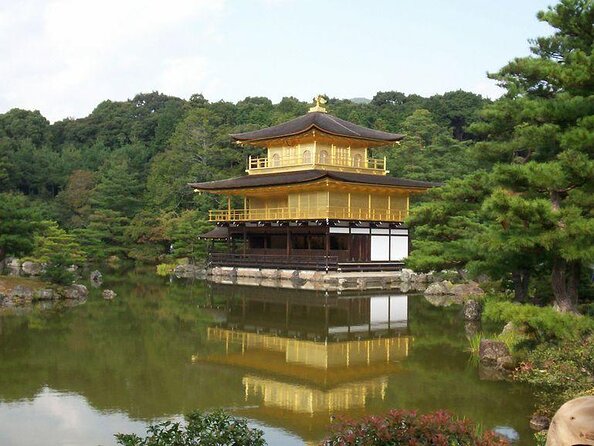
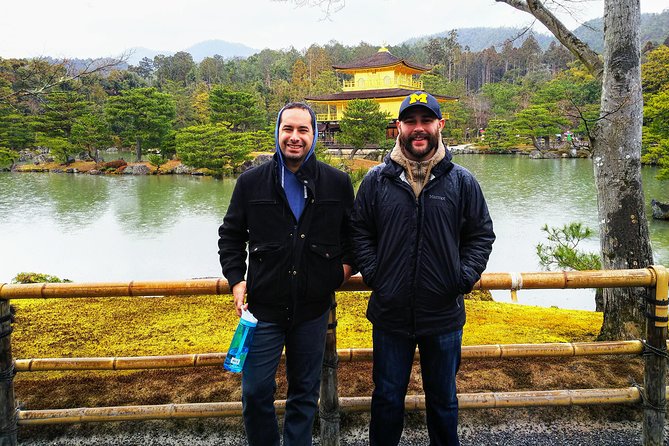
Kinkakuji Temple, often called the Golden Pavilion, is scheduled for another 50 minutes. Its gilded upper stories reflect beside the pond, creating one of Kyoto’s most familiar views. The temple is linked with Zen and samurai culture, and its fame is well deserved even though the grounds can be busy.
Admission is not included, so allow for a separate entrance payment. The tour information specifically lists the Ryoanji fee, but also identifies Kinkakuji admission as excluded. Confirm the current amount when booking or with your guide, since temple fees can change.
This is likely to be the day’s strongest photo stop. The pavilion gives you an immediate visual payoff, while the surrounding gardens prevent the visit from feeling like a single-building snapshot. You follow the marked route, see the pavilion from the main viewing area, and take in the grounds at a steady pace.
Do not expect to go inside the pavilion. The value here is the exterior view, the setting, and the historical explanation. Your guide can help place the building in Kyoto’s wider story, which makes the visit more rewarding than simply pointing a camera across the pond.
Nishiki Market closes the day with flavor
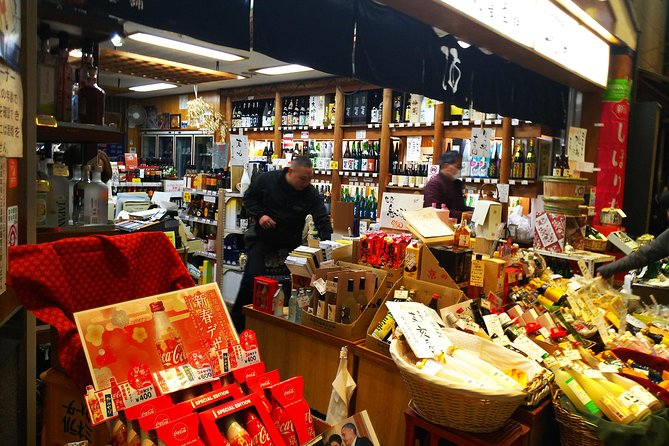
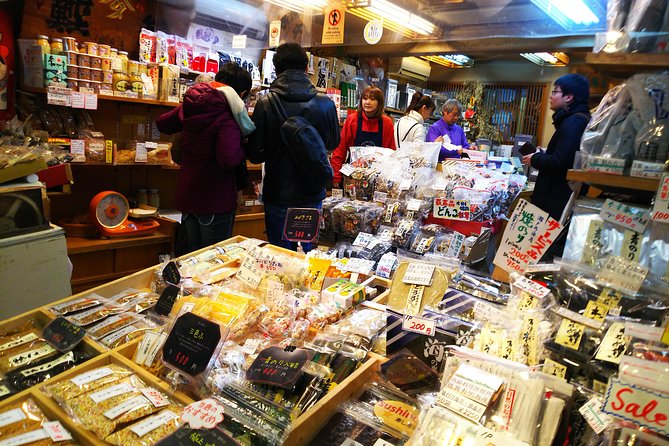
The final stop is Nishiki Market, a 390-meter covered shopping street with 126 shops. It has served Kyoto residents for about 400 years and is known for local produce, pickles, and other foods.
The planned visit lasts about 40 minutes. That is enough to sample a few items and get a sense of the market, but not enough for a slow meal and serious shopping. Lunch is not included, so ask your guide where to eat before the last part of the day.
This is where the tour can feel especially personal. Guides have recommended sushi bars, conveyor-belt sushi restaurants, and local places that visitors might not find easily on their own. One guide helped explain how a sushi bar worked, while another suggested both lunch and dinner spots. You should treat those recommendations as part of the tour’s practical value, not as a promise of a specific restaurant.
Nishiki also provides a useful look at daily Kyoto. The temples show the city’s spiritual and artistic side. The market shows what people buy, cook, preserve, and eat. You may find it crowded, and some shops have rules about eating while walking, so follow your guide’s lead and be respectful in the narrow passage.
What your guide adds to the day
The guide is the make-or-break part of this experience. The strongest guiding examples include clear historical explanations, humor, patience, transport help, local food advice, and a willingness to shape the day around the group.
Named guides who received especially warm praise include Sumiko Yoshikawa, Tomoko, Toshi, Hiro, Satomi, Masa, Chie, Hironori, Fujihara, Keiko, Kazuo, Tohru Shimigaki, Naoko, Meg, Michiko, Matsumoto, Yuka, and Nozomi-san. You may not be able to choose a particular person, so book this tour for the private format and local support rather than assuming one named guide will be available.
A good guide can explain mythology at a shrine, connect the rock garden to Zen ideas, translate during shopping, and show you how to use public transport in Japan. Several guides also took photos, arranged lunch suggestions, or helped with mobility concerns.
The private format means only your group participates. That gives you more freedom than a standard group tour, but you should still tell the guide what matters most. If food is a priority, say so. If you want extra time at gardens, mention it. If someone needs frequent rests, make that clear before the day begins.
Public transport makes the day more useful
Public transportation costs ¥1,670 per person and is not included. The route may use a combination of train, subway, bus, trolley, and taxi, depending on the guide’s plan and the conditions that day.
This adds a real-world benefit. You learn how to move around Kyoto instead of being carried between sights in a private vehicle. One guide helped a group feel comfortable traveling independently afterward, which is a valuable result if you have more days in Japan.
The tradeoff is time and effort. Transfers, waiting, stairs, and crowded vehicles can tire you out. A private car would be more restful, but it would also remove part of the local experience and cost structure. Keep some water handy, use comfortable shoes, and do not treat the eight-hour schedule as eight hours of sitting in comfort.
Meals are also separate. A guide may recommend lunch, but you pay for it yourself. That is useful because you can choose based on appetite and budget, yet you should not mistake the $119.30 tour price for the entire day’s cost.
Is $119.30 per person a fair price?
The price makes the most sense for a first visit, a family group, or anyone with only one full day in Kyoto. You get a private professional guide, a planned route through five major areas, and help with the city’s transport system. Compared with hiring a car or arranging separate private visits, the price can be reasonable.
It is less compelling if you already know Kyoto well, enjoy planning train and bus routes, or want long quiet visits at one or two temples. The itinerary is broad by design. You see a lot, but you do not linger everywhere.
Add ¥1,670 for public transport, ¥1,100 for Ryoanji, the Kinkakuji entrance fee, and your meals. Group discounts may be available, so the per-person value can improve for a larger private party. Confirmation is provided at booking, and free cancellation is available up to 24 hours before the start time. If poor weather cancels the tour, you are offered another date or a full refund.
Who should book this Kyoto day?
I would recommend it to first-time visitors who want the major Kyoto sights without spending hours building a route. It also suits families who want a private pace, couples who value local conversation, and older visitors who may need breaks or help with transport.
It is a good match for you if you enjoy asking questions. The best moments come from the guide’s explanations and practical help, not from racing through a checklist.
I would hesitate if you dislike walking, crowded attractions, public transit, or early starts. I would also think twice if your main goal is a slow photographic study of Arashiyama or Ryoanji. This tour gives you a strong first look, not a deep visit to every site.
FAQ
Where does the Kyoto walking tour start?
It starts at Kyoto Station Building 901, Higashishiokoji-cho, Shimogyo Ward, Kyoto, 600-8216, Japan.
Where does the tour end?
The activity ends back at the meeting point at Kyoto Station.
How long does the tour last?
The tour lasts approximately eight hours.
Is this a private tour?
Yes. Only your group participates in the activity.
What is included in the price?
A professional guide is included.
Is public transportation included?
No. Public transportation costs ¥1,670 per person and is paid separately.
Are temple entrance fees included?
No. Ryoanji admission is listed at ¥1,100 per person, and Kinkakuji admission is also not included.
Are meals included?
No. Meals are not included, though your guide may recommend or help arrange a lunch location.
Can I cancel for a full refund?
Yes, if you cancel at least 24 hours before the local start time. Cancellations or changes made less than 24 hours before the start time are not refunded or accepted. If poor weather cancels the experience, you can choose another date or receive a full refund.
Should you book it?
Book this tour if you have one full day, want Kyoto’s headline sights, and prefer a guide who can handle the route while you focus on the city. The private format, flexible breaks, transport coaching, and strong guide service make the price easier to justify.
Skip it if you want a slow, unhurried temple day or prefer to explore alone. For most first-time visitors, though, this is a practical way to see Fushimi Inari, Arashiyama, Ryoanji, Kinkakuji, and Nishiki Market without losing a day to route planning.
Just added in Kyoto
- The “Golden Route” and Ancient Japan by DIAMIR Erlebnisreisen – 14-Day Tour★ 2.0 · 2 reviews
- Japan: Castles & Cuisine by G Adventures – 6-Day Kyoto to Osaka Tour★ 4.5 · 4 reviews
- Cycle Japan by Explore! – 13-Day Kyoto to Tokyo Tour★ 4.7 · 12 reviews
- Cycle Japan by Intrepid Travel – 11-Day Kyoto to Tokyo Tour★ 4.8 · 2 reviews
- Classic Japan by Intrepid Travel – 11-Day Kyoto to Tokyo Tour★ 4.4 · 14 reviews
- Ancient & Modern Japan 14-Day Tour by Exodus Adventure Travels★ 4.4 · 40 reviews
- 5 Day Cultural Adventure of Kyoto, Nara & Osaka by Tourist Journey★ 2.5 · 2 reviews
- 12 Days Kinosaki Onsen Escape: A Journey Through Japan’s Timeless Towns by UME Travel★ 4.8 · 5 reviews
Walking Tours, compared.
Kyoto Geisha Walking Tour: Gion District & Hidden Gems
Read our review →
Tokyo Tsukiji Fish Market Food and Culture Walking Tour
Read our review →
Gion Magical Night Walking Tour with Geisha Trivia
Read our review →
Imperial Palace and Shogun Historical Walking Tour
Read our review →
Gion Geisha District Walking Tour – Stories of Geisha
Read our review →

Shinjuku Local Bar and Izakaya Guided Walking Tour
Read our review →
Browse the lists this tour appears in