
Reviewed · TEA CEREMONIES
Kyoto Fushimiinari:Wagashi Making & Small Group Tea Ceremony
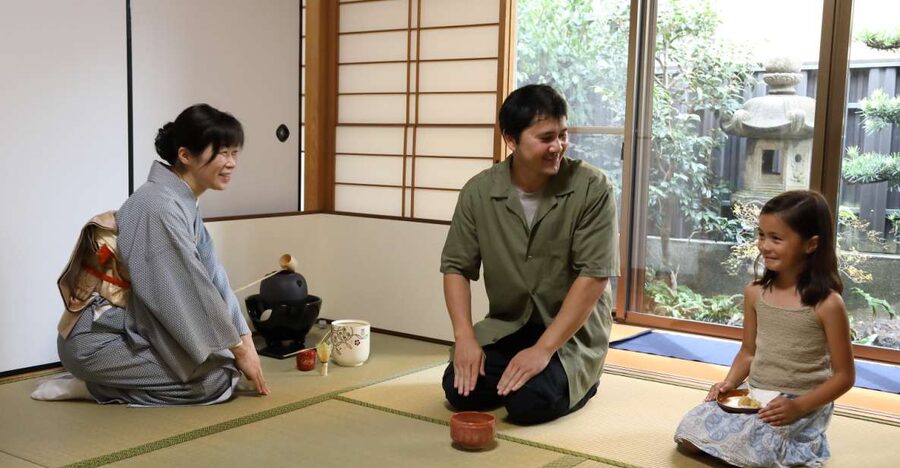
Matcha tastes better when you make it. This 75-minute Kyoto experience brings you into a local house with Japanese-style rooms and a small garden, then teaches you to shape a wagashi sweet and prepare your own bowl of matcha. I especially like the hands-on cooking class and the relaxed tea ceremony, where English-speaking instructors explain the meaning behind each step.
The small group, limited to six people, keeps the lesson personal. I also like that the ceremony is welcoming rather than stiff, so you can ask questions and take part at your own pace. The main consideration is the floor seating on tatami, although chairs and tables can be arranged if you request them ahead of time.
In This Review
- Key details worth knowing
- A quiet Kyoto break near Fushimi Inari
- Making wagashi instead of only eating it
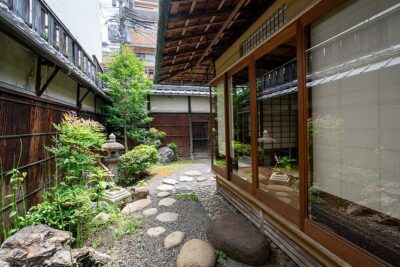
- Walking through the garden to the tea room
- Learning the meaning behind the tea ceremony
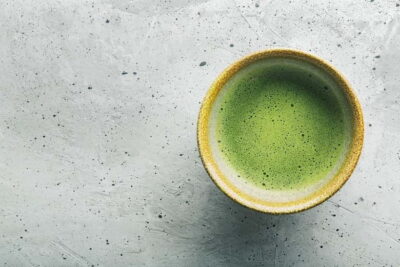
- Whisking your own bowl of matcha
- What the six-person limit adds
- Is $55 a fair price?
- Small practical matters that affect the experience
- Who should book this Kyoto activity?
- Should you book it?
- FAQ
- How long does the wagashi and tea ceremony experience last?
- How much does the experience cost?
- How many people are in each group?
- Is the instruction offered in English?
- How many bowls of matcha are included?
- Do I make Japanese sweets during the activity?
- Can I sit on a chair instead of the tatami floor?
- What should I bring, and what is not allowed?
Key details worth knowing
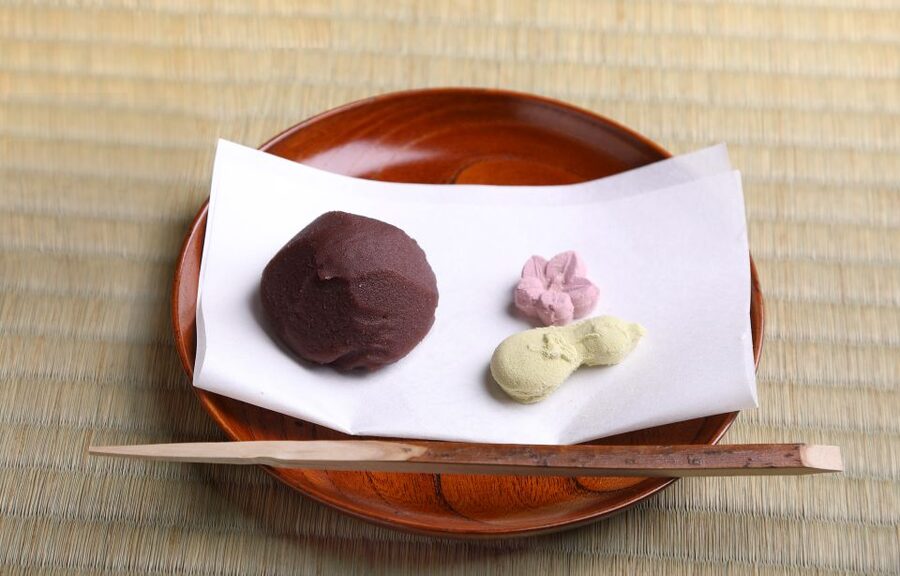
- You make wagashi by hand: This is a practical lesson, not a cooking demonstration from the sidelines. The seasonal sweet can differ from the pictures, and past classes have included mochi filled with red bean and white bean paste.
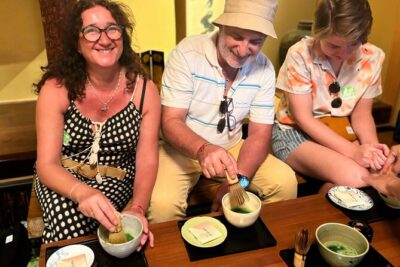
- You prepare one bowl of matcha yourself: The host first demonstrates the method, then hands you the bamboo whisk so you can make your own tea.
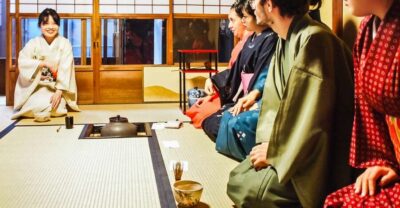
- The tea ceremony takes place in an authentic Japanese room: When weather allows, you walk through a tiny garden before entering the tatami room.
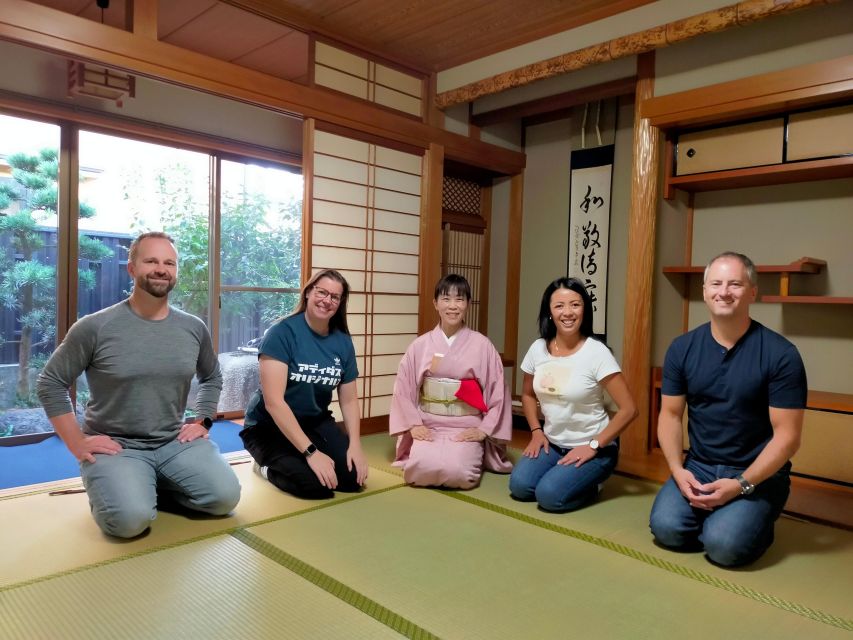
- The group is capped at six participants: That gives you room to ask questions and receive help with both the sweets and the tea.
- English instruction is clear and culturally focused: Instructors are licensed guide interpreters, and host Miho has been praised for her friendly explanations and strong English.
- The price is $55 per person: With two bowls of matcha, wagashi instruction, sweets, cultural explanation, and all fees included, it offers good value for a short Kyoto activity.
A quiet Kyoto break near Fushimi Inari
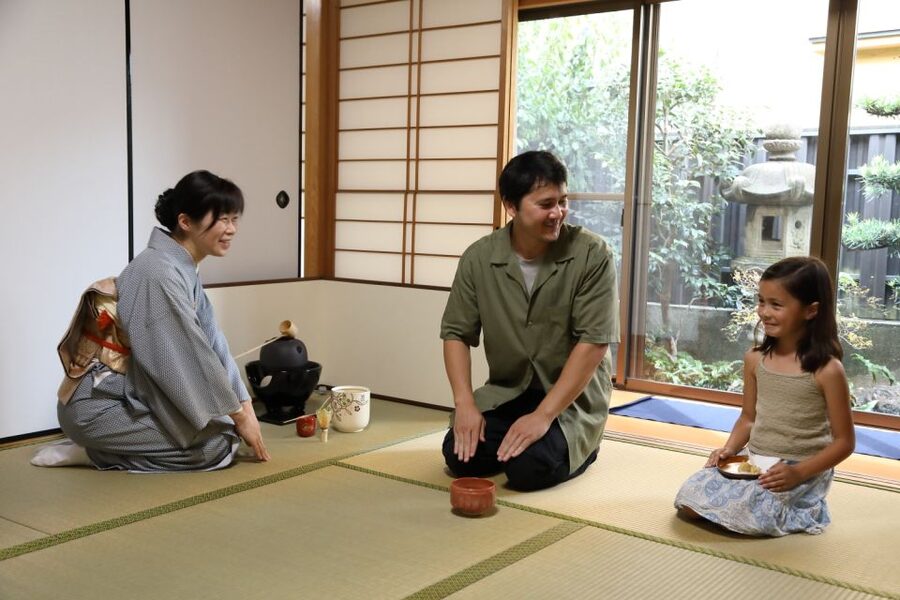
Fushimi Inari is famous for its long rows of red torii gates, but this experience gives you a very different side of the area. Instead of spending the whole visit outdoors, you enter a local home and settle into a slower rhythm. The Japanese-style rooms, garden view, and calm setting give the activity a clear sense of place.
That change of pace matters. Kyoto sightseeing can involve crowded paths, busy stations, and a lot of walking. Here, you remove your shoes, put on proper socks, and spend time learning with your hands and senses. The setting is not a large commercial kitchen or a staged performance space. It is a home with traditional rooms, a small garden, and a host who guides you through customs that can otherwise seem hard to understand.
I like the balance between explanation and participation. You are not expected to know how to sit, bow, hold a tea bowl, or eat wagashi before you arrive. The instructor explains the manners first, then lets you try them without turning the class into a test.
More Cooking Classes in Kyoto
- Ramen Cooking Class at Ramen Factory in Kyoto
★ 5.0 · 1,937 reviews - Sushi Making in Kyoto! Same-day bookings welcome!
★ 5.0 · 713 reviews - Kyoto: Ramen Cooking Class at a Ramen Factory with Souvenir
★ 4.9 · 532 reviews
Making wagashi instead of only eating it
The experience begins in the kitchen, where an English-speaking host shows you how to make one kind of wagashi, the delicate Japanese confection traditionally served with tea. The key point is that you do the work yourself. You are not simply watching someone make a perfect sweet while standing behind a counter.
The exact confection depends on the season. That is a useful detail rather than a disappointment, since wagashi often reflects the time of year through its shape, color, and ingredients. You may find a sweet different from the images used when you book. One class included mochi with red bean paste and white bean paste, and the combination was described as tasty as well as easy to follow.
The process gives you a better understanding of why wagashi belongs with matcha. The sweet is not just dessert. Its gentle sweetness prepares your palate for the tea, which has a sharper, grassy taste. After making your confection, you eat it during the tea portion, so the lesson connects preparation, presentation, and tasting.
The instructions appear designed for beginners. Previous participants found the steps easy to follow, and the hosts were described as demonstrative and helpful. That makes this a good pick if you enjoy food workshops but do not want a complicated cooking course. You will make one type of sweet, not a full menu, so set your expectations accordingly.
Food restrictions and allergies should be shared in advance. The provided details do not promise a specific substitute, so contact the operator before booking if you need changes.
Walking through the garden to the tea room
After the wagashi class, the host explains how to attend the ceremony and how to behave in a Japanese-style room. This short orientation is useful because tea ceremony etiquette can seem mysterious if you only see it from a distance. You learn what to do before the formal part begins, rather than copying others and hoping you got it right.
When the weather is dry, you walk through a tiny garden before entering the authentic Japanese room. That short path has a purpose. It separates the kitchen lesson from the tea ceremony and gives you a moment to slow down. If it rains, the outdoor walk may not happen, but the ceremony still takes place indoors.
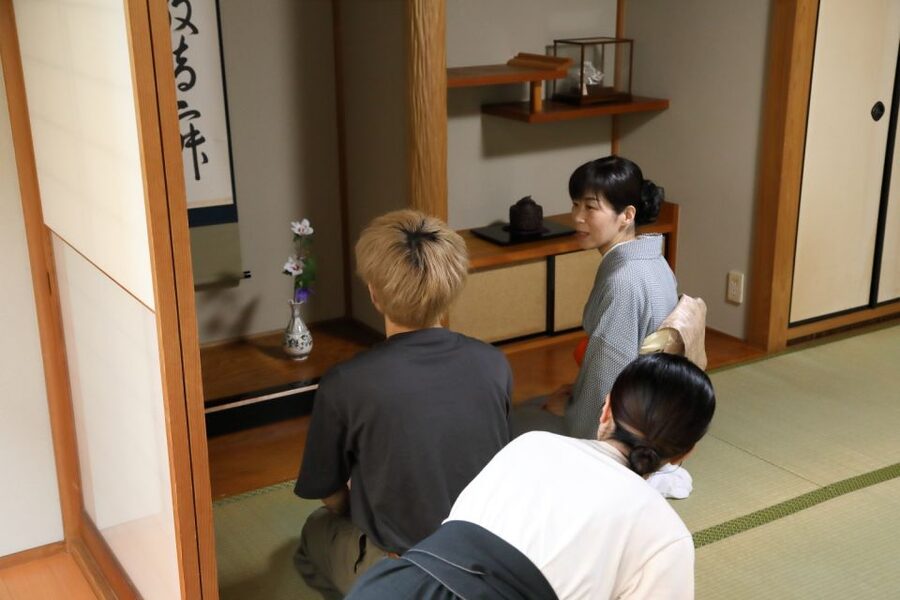
The room includes tatami flooring and an alcove with a hanging scroll. The instructor explains the scroll’s meaning as part of the session. This is one of the more valuable cultural details, because the room is not being used as a pretty backdrop alone. Its objects and layout have a role in the ceremony.
You should wear socks. Bare feet are not permitted, and socks are a basic sign of respect in a tatami room. Comfortable clothing is sensible, since you may sit on the floor for part of the 75 minutes.
Learning the meaning behind the tea ceremony
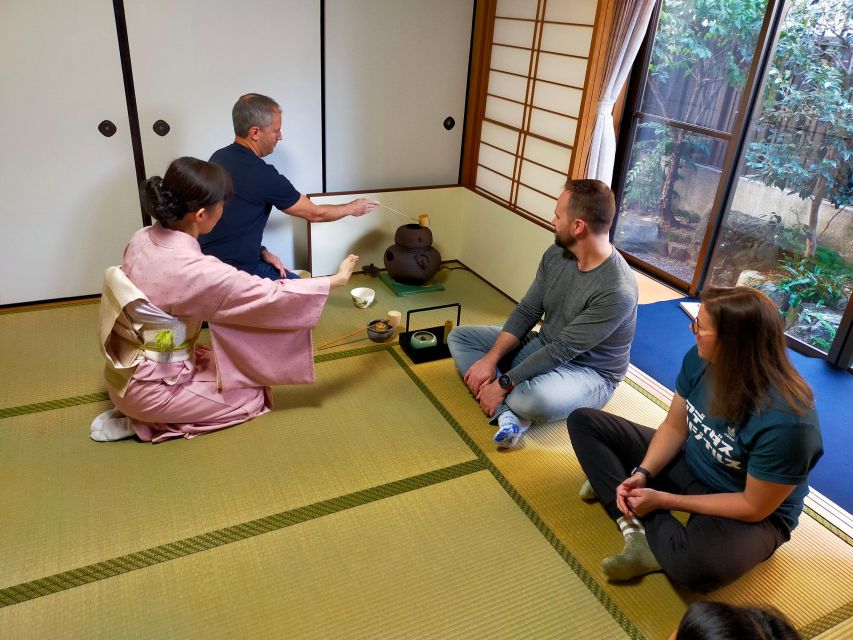
Once you are seated, the instructor covers the history of tea and the purpose of the ceremony. The explanation is aimed at helping you understand what you are seeing, not at making you memorize a long list of rules.
You also learn how to eat the sweet and how to drink matcha. The sequence matters: you savor the wagashi first, then drink the tea. The sweetness takes the edge off the matcha and lets you notice its flavor more clearly.
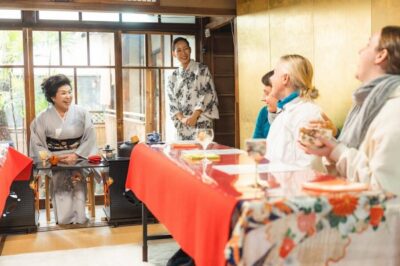
The ceremony is presented in a friendly way. One participant described it as informative but not too strict, with enough freedom for everyone to take part at a comfortable pace. I see that as a strong point for first-time visitors. You get the structure of the ritual without feeling that one wrong movement will spoil the experience.
The instructors are licensed guide interpreters, and the English explanations are a major part of the value. Tea ceremony has many small gestures that can be lost in translation. Clear guidance lets you focus on the details instead of guessing what they mean.
The atmosphere also leaves room for questions. Past participants specifically appreciated being able to ask about Japanese culture and the ceremony. If you want a photo-only experience, this may feel restrictive because flash photography and video recording are not allowed. Some parts may also be kept free from photography so everyone can focus on the moment.
More Tea Ceremonies in Kyoto
- Kyoto: Tea Ceremony in a Traditional Tea House in Kiyomizu
★ 4.9 · 3,519 reviews - Kyoto: Tea Ceremony Ju-An at Jotokuji Temple
★ 4.9 · 3,207 reviews - Kyoto: 45-Minute Tea Ceremony Lesson Experience
★ 4.3 · 2,378 reviews - Kyoto: Table-Style Tea Ceremony at a Kyo-Machiya
★ 4.9 · 1,211 reviews
Whisking your own bowl of matcha
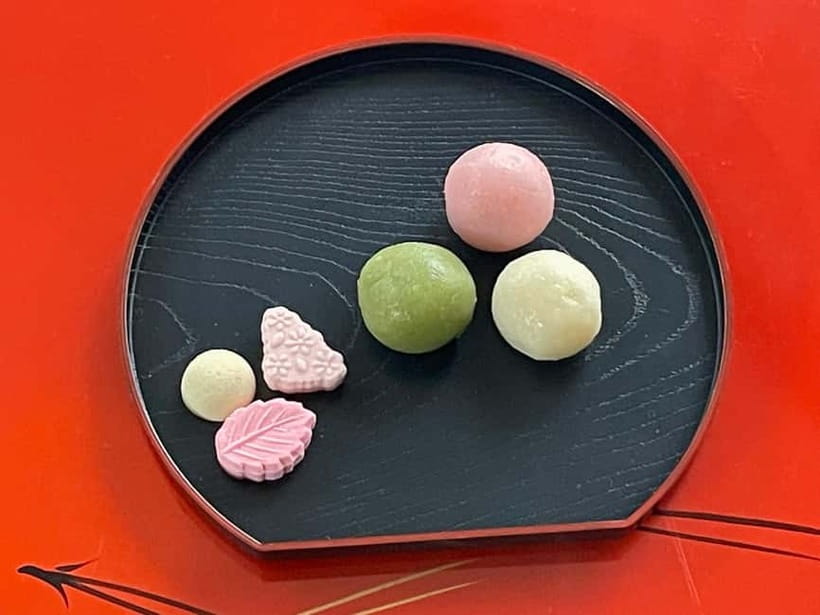
The host first demonstrates how to prepare matcha. You watch the movement of the bamboo whisk, then receive your own chance to make a bowl. This is the part that turns the experience into a useful souvenir rather than a pleasant hour that ends at the door.
Two bowls of matcha are included. One is prepared for you, and one is made by you. That comparison helps you notice the process and taste the result. You do not need to arrive with tea-making experience. The instructor explains the method and guides you through the steps.
You will not become a tea master in 75 minutes, and that is not the promise. Instead, you learn enough to prepare and serve matcha properly to friends or family at home. The bamboo whisk gives the activity a physical, memorable finish, and it helps you understand why the tea has its familiar frothy surface.
The tea itself was described as very fine, while the hosts were praised for being warm and ready to answer questions. That combination matters. A technically correct demonstration can feel cold, but a friendly host makes it easier to try the movements yourself.
What the six-person limit adds
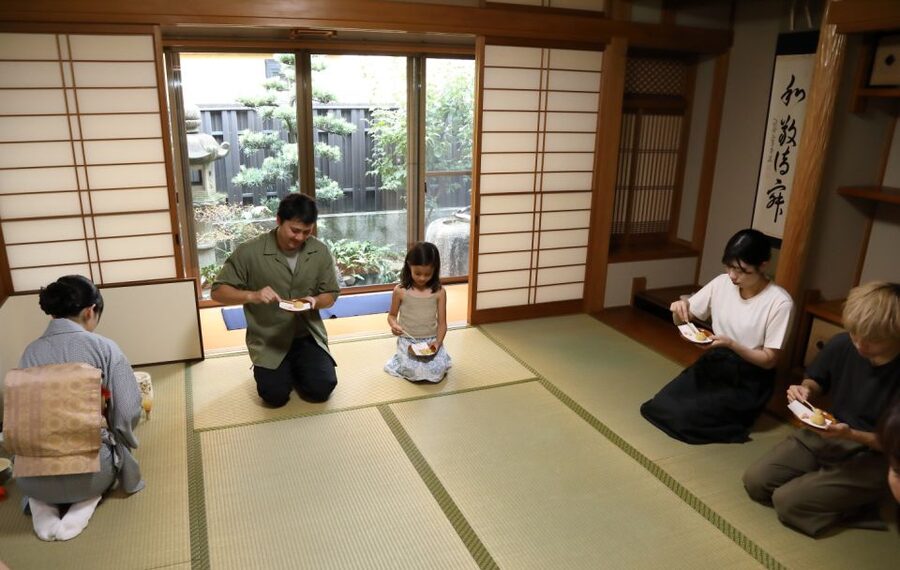
With only six participants, the class has a more personal feel than a large cultural show. You can see the wagashi demonstration, follow the tea preparation, and ask for help without waiting behind a crowd.
The small size also suits the tatami room. A tea ceremony needs quiet and order, and six people is small enough to preserve that mood. At the same time, you are not alone with the instructor, so you can watch how other beginners handle the sweets and whisk.
The group format works best if you enjoy a shared activity. If you want a private ceremony for your own party, the provided details do not say that a private booking is available. The activity is designed as a small group, not necessarily an exclusive one.
Children under eight are not suitable for this experience. The quiet setting, floor seating, and careful handling of tea equipment make the age restriction understandable. Wheelchair users are also not accommodated according to the activity information.
Is $55 a fair price?
At $55 per person, this is not the cheapest way to sample matcha in Kyoto. You are paying for more than a cup of tea, though. The price includes an English-speaking instructor, hands-on wagashi instruction, one traditional confection, two bowls of matcha, cultural explanations, and all taxes and fees.
The value is strongest if you want context and participation. A simple tea tasting may cost less, but it will not necessarily teach you how to make wagashi or whisk your own matcha. A longer cooking class may offer more food, but it may not include an authentic Japanese room, garden walk, or tea ceremony.
The 75-minute duration is also practical. It is long enough to cover both activities without taking half a day from Kyoto sightseeing. You can fit it into a busy itinerary, especially if you are already visiting the Fushimi Inari area. The schedule has set starting times, so check availability before planning the rest of your day.
Hotel pickup and drop-off are not included. Taxi arrangements are also your responsibility, and gratuity is not included. Those are minor costs to remember, but the activity itself has no extra entry fees or tax surprises listed.
Free cancellation is available up to 24 hours before the start time, and you can reserve now while paying later. That flexibility is useful when your Kyoto plans depend on weather or changing sightseeing times.
Small practical matters that affect the experience
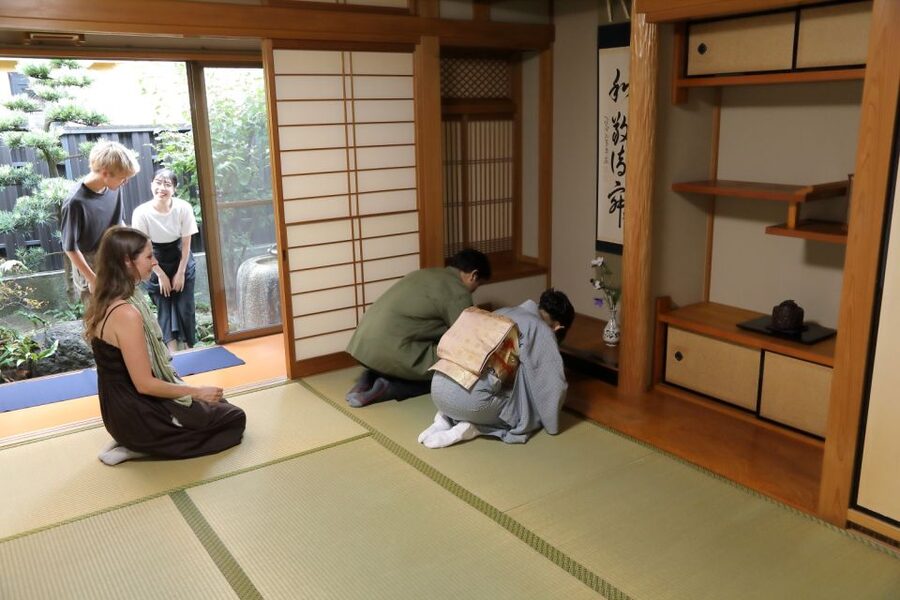
Wear socks, since bare feet are not allowed on the tatami. Flash photography and video recording are prohibited, and you may be asked to put your camera away during certain parts of the ceremony.
If sitting on the floor is difficult, request chairs and tables in advance. Do not wait until you arrive, since the room setup may need to be prepared before the session.
Weather affects the garden walk. In good weather, you walk through the small garden before entering the tea room. In rain, that portion may be shortened or skipped, but the indoor teaching remains the main part of the activity.
The wagashi changes with the seasons. If you have your heart set on a particular sweet shown in a photograph, ask before booking. Seasonal variation is part of the tradition, but knowing this prevents disappointment.
The strongest praise has centered on the hosts. Miho has been singled out for her excellent English and warm manner, while the tea master has been described as friendly and happy to answer questions. The welcoming tone seems to be a consistent part of the experience, not an accidental bonus.
Who should book this Kyoto activity?
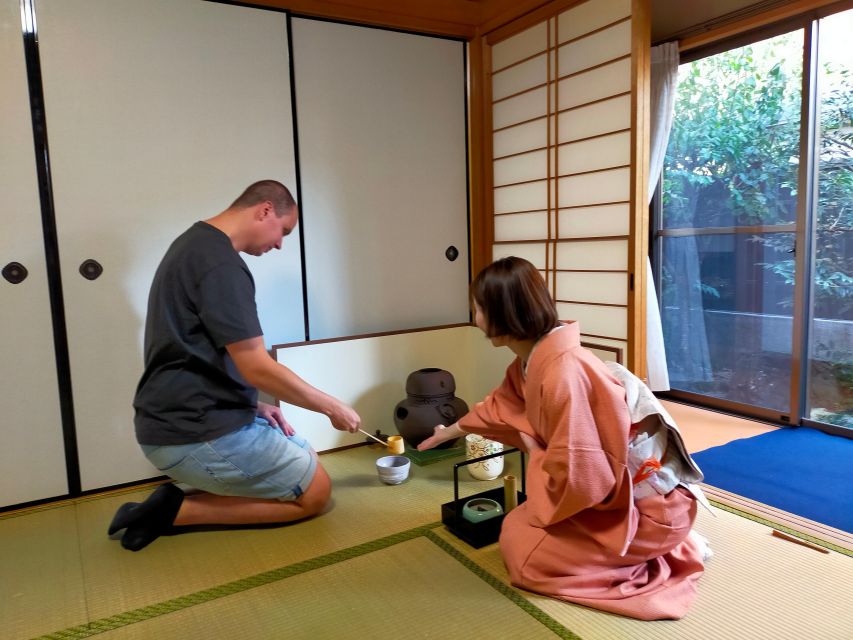
I would recommend it to first-time visitors who want a clear introduction to tea ceremony without a severe or overly formal atmosphere. It also suits couples, small groups of friends, and solo visitors who enjoy learning by doing.
Food lovers will get more from it than from a standard tea tasting because you make the wagashi yourself. The activity also works well for anyone looking for a quiet indoor break from sightseeing.
It may not suit you if you dislike floor seating, cannot wear socks, or want to film the whole session. It is also not designed for children under eight or wheelchair users. People with allergies or food restrictions should contact the operator before reserving.
Should you book it?
Book this if you want a short, friendly introduction to two connected parts of Japanese culture: wagashi and matcha. The small group, clear English instruction, authentic room, and chance to whisk your own tea give the $55 price solid value.
Skip it if you are seeking a full cooking course, a private ceremony, or a highly formal performance with no audience participation. For most visitors near Fushimi Inari, though, this is a thoughtful way to trade crowded sightseeing for a quiet lesson you can remember and repeat at home.
FAQ
How long does the wagashi and tea ceremony experience last?
The activity lasts 75 minutes.
How much does the experience cost?
The price is $55 per person.
How many people are in each group?
The activity is limited to six participants.
Is the instruction offered in English?
Yes. The instructors speak English, and the activity is led by English-speaking licensed guide interpreters.
How many bowls of matcha are included?
Two bowls are included. One is prepared for you, and you prepare the other yourself with a bamboo whisk.
Do I make Japanese sweets during the activity?
Yes. You take part in a hands-on lesson to make one kind of wagashi. The type may change with the season.
Can I sit on a chair instead of the tatami floor?
Chairs and tables are available for people who have difficulty sitting on the floor. You need to request this in advance.
What should I bring, and what is not allowed?
You should bring socks because bare feet are not permitted. Flash photography and video recording are not allowed. You may also be asked not to take photographs during certain parts of the session.
Just added in Kyoto
- The “Golden Route” and Ancient Japan by DIAMIR Erlebnisreisen – 14-Day Tour★ 2.0 · 2 reviews
- Japan: Castles & Cuisine by G Adventures – 6-Day Kyoto to Osaka Tour★ 4.5 · 4 reviews
- Cycle Japan by Explore! – 13-Day Kyoto to Tokyo Tour★ 4.7 · 12 reviews
- Cycle Japan by Intrepid Travel – 11-Day Kyoto to Tokyo Tour★ 4.8 · 2 reviews
- Classic Japan by Intrepid Travel – 11-Day Kyoto to Tokyo Tour★ 4.4 · 14 reviews
- Ancient & Modern Japan 14-Day Tour by Exodus Adventure Travels★ 4.4 · 40 reviews
- 5 Day Cultural Adventure of Kyoto, Nara & Osaka by Tourist Journey★ 2.5 · 2 reviews
- 12 Days Kinosaki Onsen Escape: A Journey Through Japan’s Timeless Towns by UME Travel★ 4.8 · 5 reviews
Tea Ceremonies, compared.
Tea Ceremony in a Traditional Tea House in Kiyomizu
Read our review →
World Heritage Kyoto & Nara Uji Authentic Matcha Experience
Read our review →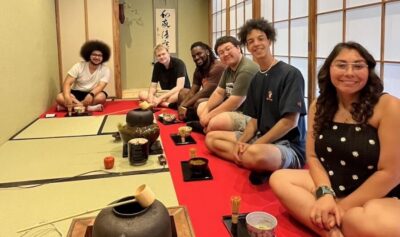
Browse the lists this tour appears in