
Reviewed · COOKING CLASSES
Sushi Making in Kyoto! Same-day bookings welcome!
Sushi is better when you make it yourself. This 90-minute class in Kyoto’s Kawaramachi district gives beginners, families, and couples a simple introduction to Japanese sushi, with English-speaking instructors guiding you through nigiri and rolls before you eat what you prepare. I like the patient staff and the fact that your finished sushi becomes your meal, rather than a cooking demonstration with nothing to show for it. I also like the small extras, including a possible sake tasting and a parting gift.
The main drawback is finding the room. The address is inside a shopping center, and the entrance can be easy to miss. A few people have spent far too long looking for it, while others found it by going upstairs beside the Skechers store. I would allow extra time and search Google Maps for Sushi Master Kyoto Kawaramachi, not just the street address.
In This Review
- Key Points Before You Book
- Finding Sushi Master Kyoto Kawaramachi
- The 90-Minute Course, From Introduction to Lunch
- Learning Sushi Rice, Nigiri, and Rolls
- Why the Instructors Make This Work
- Eating Your Sushi and Ordering Drinks
- Is $53.72 a Fair Price?
- Who Will Enjoy This Class Most?
- Practical Tips for a Smoother Visit
- Cancellation and Booking Details
- Final Verdict: A Good First Taste of Sushi Making
- FAQ
- How long does the sushi-making class last?
- What kinds of sushi will I make?
- Is the class taught in English?
- Is food included in the price?
- Are drinks included?
- Where does the class meet?
- Can children join the experience?
- What if I have an allergy or need vegetarian ingredients?
- Can I cancel for a refund?
Key Points Before You Book
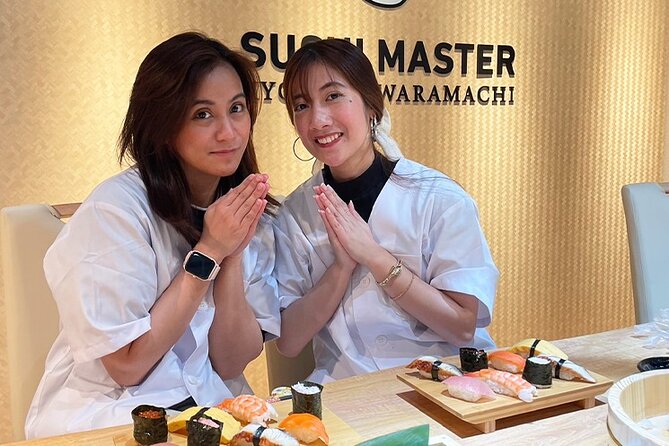
- You make and eat your own sushi: The course includes nigiri and rolls, with the prepared food serving as your meal.
- English instruction is built in: Friendly instructors explain the process and help first-time sushi makers at the table.
- The class is good for children: Families with children as young as six have enjoyed the gentle teaching and hands-on format.
- The location takes care: The room is on the second floor of a shopping center and may not be obvious from the street.
- The class is short and focused: Plan on about 90 minutes, including a sushi introduction, preparation, and eating time.
- The price is reasonable for a meal and activity: At $53.72 per person, you receive ingredients, instruction, sushi, and special gifts, though drinks cost extra.
Finding Sushi Master Kyoto Kawaramachi
The class meets at 4071 College Town Shino Koji Building, Sakuranocho, Nakagyo Ward, Kyoto 604-8035. That address is accurate, but it may not get you directly to a clear street-level storefront.
The practical trick is to search for Sushi Master Kyoto Kawaramachi on Google Maps. Once you are near the shopping center, look for the stairs beside the Skechers store and go up to the second floor. The room is tucked into the shopping area, so you should not assume that a restaurant sign will be obvious from the pavement.
I would arrive early, especially if this is your first visit to Kawaramachi. One person reported walking around for an hour while trying to locate the class. That is an avoidable way to begin a short experience.
Kawaramachi is a useful setting because it sits in one of Kyoto’s main visitor districts. You can fit the class around shopping, sightseeing, or a meal in central Kyoto. The tradeoff is that a popular commercial area can make a small indoor venue harder to spot.
More Cooking Classes in Kyoto
- Ramen Cooking Class at Ramen Factory in Kyoto
★ 5.0 · 1,937 reviews - Kyoto: Ramen Cooking Class at a Ramen Factory with Souvenir
★ 4.9 · 532 reviews - Kyoto: Ramen, Gyoza, and Onigiri Cooking Class
★ 5.0 · 445 reviews
The 90-Minute Course, From Introduction to Lunch
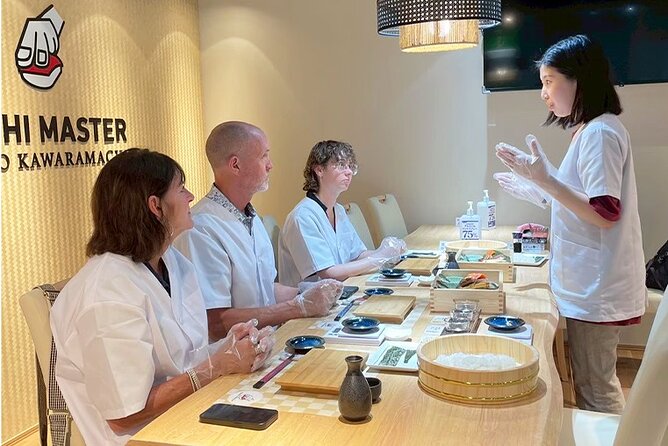
The class lasts about an hour and a half. It begins with a brief introduction to sushi and Japanese food culture. You learn how sushi developed and how the different forms differ, giving the activity a little more context than simply following a recipe.
The history portion may be presented partly through a video. That helps keep the class moving and gives everyone the same basic introduction, but it also means the cultural section is not a long lecture. If you want an in-depth lesson on Japanese cuisine, this will feel light.
Next comes the practical instruction. The advertised course covers nigiri and rolls, with a total of 10 pieces. The exact ingredients can change with availability, so you should not expect a fixed list of fish or toppings. Some class formats described in the feedback included three sushi styles and 12 pieces, so the number and selection may vary slightly.
That variation is worth understanding. You are signing up for a beginner-friendly sushi workshop, not a professional chef course with a strict restaurant syllabus. The goal is to learn basic shaping, rolling, and presentation, then enjoy the result.
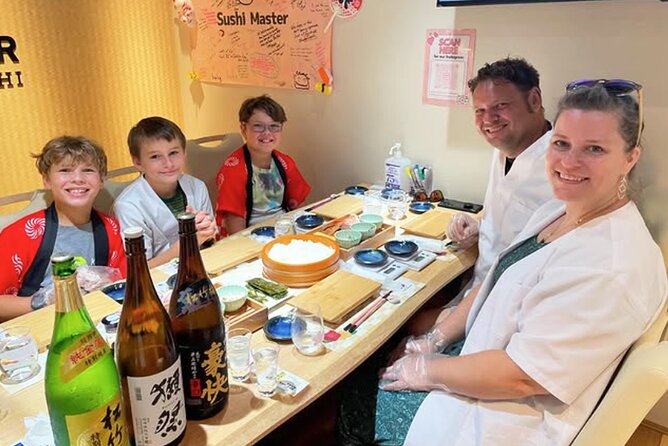
The instructors demonstrate each step before you try it. You work at your own place, and staff members circulate to offer help. The strongest praise goes to their patience and warmth. Families with children said the instructors paid close attention to the younger participants, while adults appreciated the clear English explanations.
At the end, you eat the sushi you made. That changes the feel of the activity. You are not making a pretend sample that gets taken away for a chef to finish. Your hands-on work becomes lunch or a substantial snack, depending on your appetite.
Learning Sushi Rice, Nigiri, and Rolls
Sushi rice is the foundation of the dish, and the experience promises an explanation of how to make it properly. You should expect an introduction to the basic idea of seasoned rice and how it is handled, though the amount of detail may not satisfy someone hoping to learn the full cooking process from raw rice onward.
This is one area where expectations matter. Some people wanted more instruction on preparing the rice and cutting the fish. The class is designed for fun and first attempts, so it does not appear to include a full lesson in knife skills, fish preparation, or professional sushi technique.
The nigiri portion lets you practice shaping rice and placing a topping on it. This is harder than it looks. Too much pressure makes the rice dense, while too little makes it fall apart. A patient instructor can make the difference, particularly if you have never handled sushi rice before.
The roll section is likely the most immediately enjoyable part for families. You assemble the ingredients, roll the sushi, and cut it into pieces. Children can see a clear result from their work, and adults get a few practical tips they can try again at home.
Some people choose temari sushi instead, according to the class feedback. That suggests the precise sushi styles may depend on the session or available course option. If a particular style matters to you, ask before booking rather than assuming every class follows exactly the same menu.
Why the Instructors Make This Work
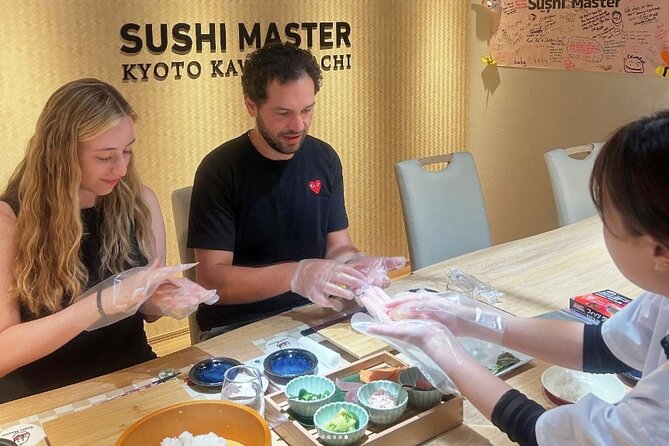
The staff are the strongest reason to choose this activity. Names mentioned in the feedback include Kioko and Rio, and the instructors are repeatedly described as friendly, patient, helpful, and engaging.
That matters more here than it would at a standard restaurant. Sushi-making requires several small movements, and a rushed explanation can leave beginners with sticky rice in the wrong places. The instructors appear used to first-timers and help without making mistakes feel embarrassing.
The English support is another practical benefit. You do not need to know Japanese cooking terms to follow along. The teaching is intended for an international audience, and the class can include people from several countries at once.
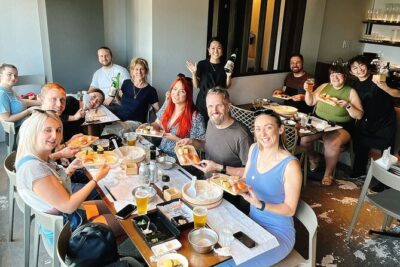
The atmosphere also suits mixed-age groups. Families with children aged six, eight, nine, and eleven described the activity as a highlight. The staff made younger children feel included rather than treating them as passengers while adults did the work.
That said, the maximum group size is 30 people. A class of that size can feel lively, but it may not always feel intimate. The experience has also been described as a small class on some occasions, so the actual room atmosphere may depend on the date and turnout.
A completely different kind of day out:
- PERFECT KYOTO 1-Day Bus Tour
★ 5.0 · 13,518 reviews - [Kyoto & Nara Day Tour] Sagano Scenic Railway & Nara Park & Fushimi Inari Taisha Thousand Torii Gates & Togetsukyo Bridge & Bamboo Grove & Kimono Forest (Departing from Osaka)
★ 4.9 · 10,942 reviews - Kyoto: Fushimi Inari, Kinkakuji, Bamboo Grove 1 Day Bus Tour
★ 4.8 · 4,316 reviews - Kyoto: Tea Ceremony in a Traditional Tea House in Kiyomizu
★ 4.9 · 3,519 reviews
Eating Your Sushi and Ordering Drinks
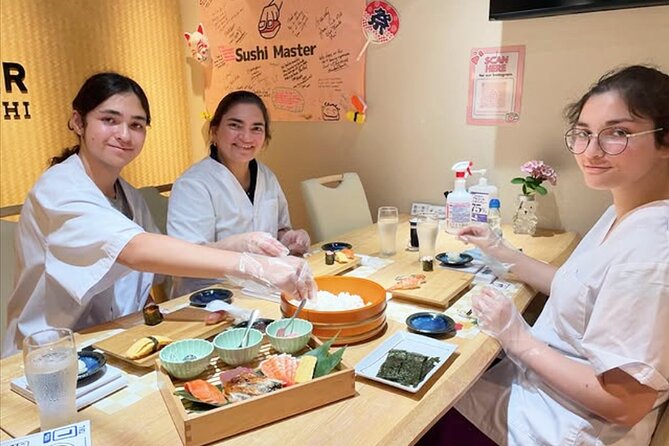
The food you prepare is included in the price. That makes the final eating period more than a photo opportunity. You sit down with the pieces you made and taste the results, which gives the class a satisfying finish.
Several families found the portions suitable for lunch, while another person advised coming hungry because you eat what you make. The exact amount depends on the course format, but the advertised 10 pieces should make this more substantial than a tiny sample.
Drinks are not included. You can order soft drinks and alcohol during the class, including sake. A sake flight or sampler can be a fun addition if you want to compare styles with your sushi.
Keep an eye on the bill. One person felt the drinks were expensive for their quality. You do not need to buy them to enjoy the class, so treat sake as an optional extra rather than part of the value calculation.
Children may enjoy the Japanese soda with a marble in the bottle. It adds a playful touch, but it is still an extra purchase.
The class also includes special gifts. Some participants received a Sushi Master Certificate, and others appreciated small parting gifts. These are modest touches, but they give children and first-time cooks a pleasant souvenir of the activity.
Is $53.72 a Fair Price?
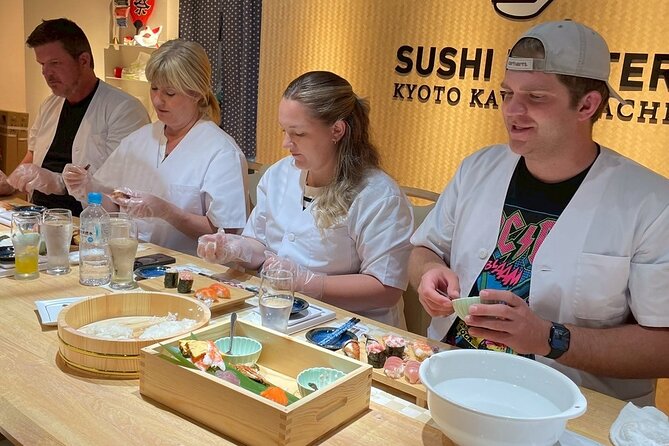
At $53.72 per person, the cost is not bargain-basement, but it is fair if you value both the activity and the meal. You receive sushi ingredients, English-speaking instruction, the sushi you make, and special gifts. The 90-minute format also fits neatly into a busy Kyoto day.
The value is strongest for families and couples who want an organized experience. You are paying for guidance, a central location, a meal, and a shared memory. If you only want to eat excellent sushi, a restaurant may offer better food for less money. If you want to learn a few basic techniques and have a structured activity, the price makes more sense.
The class is also useful on a rainy or very hot day. It gives you an indoor plan without taking up half a day. You can combine it with nearby shopping or sightseeing before and after.
The value drops if you expect chef-level training. You will not leave with a full professional course in rice preparation, fish cutting, or sushi restaurant technique. Think of it as a cheerful introduction, not culinary school.
Who Will Enjoy This Class Most?
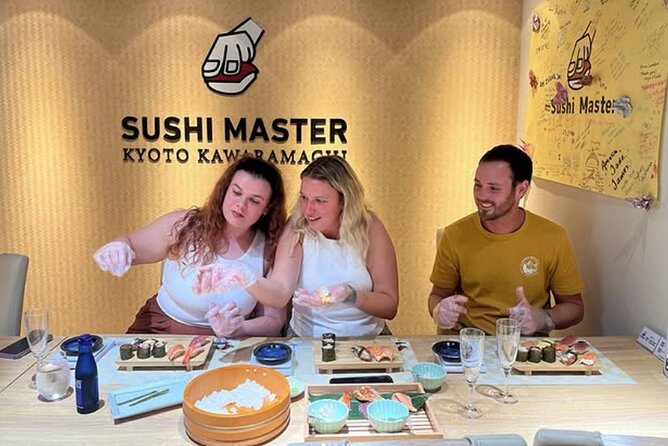
I would recommend it most strongly to:
- Families looking for a hands-on activity that works for children
- Couples who want something more memorable than another restaurant meal
- First-time sushi makers
- Food lovers who enjoy learning through doing
- Visitors seeking an indoor activity in central Kyoto
- People who want to meet other international participants in a relaxed setting
Children appear to get special attention from the staff, which is a real advantage. The activity has enough structure to keep them busy, and the final meal gives them a clear reward.
It is less suitable if you already make sushi regularly or want technical instruction. A cook or chef may find the course more about having fun than sharpening advanced skills. It is also not ideal if you dislike group activities or want a quiet, private meal.
If you have allergies or follow a vegetarian diet, notify the operator in advance in the Special Requirements section. Ingredients may vary, but you should not leave dietary needs until the day of the class.
Practical Tips for a Smoother Visit
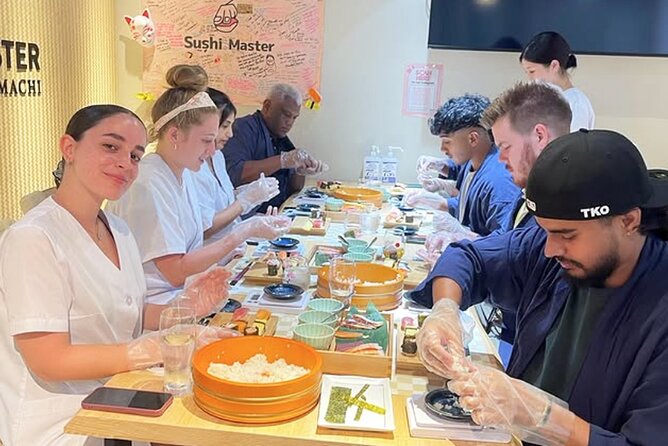
Book with the location problem in mind. Save the Google Maps search for Sushi Master Kyoto Kawaramachi, and check the route before you leave. Arriving early gives you time to find the second-floor room without cutting into your class.
Wear something comfortable for working with rice and ingredients. The activity is hands-on, so you will be preparing food rather than sitting through a demonstration.
Do not buy a separate lunch immediately before class. You will eat the sushi you make, and the portion can be lunch-sized.
Decide in advance if sake is important to you. It is available for an additional charge, but drinks are not part of the advertised price. If you are visiting with children, Japanese soda offers a nonalcoholic option.
Expect the ingredients and exact sushi count to vary. The main course is advertised as nigiri and roll sushi, 10 pieces, while some sessions have included three styles and 12 pieces. That flexibility reflects ingredient availability and class setup.
Finally, allow for a little noise and group energy. The maximum size is 30 people, and the appeal of the class is its social, friendly format. If you want a private lesson, confirm the arrangement before paying.
Cancellation and Booking Details
Confirmation is provided at booking, and same-day bookings are welcome when space remains. The ticket is mobile, so you can show it from your phone.
Free cancellation is available if you cancel at least 24 hours before the start time. Cancellations made less than 24 hours before the experience, along with late changes, are not refunded. The cut-off follows Kyoto local time.
The class returns to the same meeting point where it begins. Hotel pickup and drop-off are not included, so you need to make your own way to the Kawaramachi location.
Final Verdict: A Good First Taste of Sushi Making
I would book this class if you want a friendly, uncomplicated introduction to sushi in central Kyoto. The English-speaking instructors, hands-on format, child-friendly teaching, and included meal give it broad appeal.
I would not book it expecting a serious technical course. The history and demonstrations are fairly light, and the instruction on rice preparation or fish cutting may not go as far as an experienced cook hopes. Drinks can also add to the bill.
For most visitors, the best reason to choose it is the combination of making food and eating it immediately. Add the patient staff, possible sake tasting, and small certificate or gift, and you have a pleasant 90-minute activity that works especially well for families and first-time sushi makers. Just find the building before the clock starts.
FAQ
How long does the sushi-making class last?
The experience lasts approximately 90 minutes, including an introduction to sushi and Japanese food culture, hands-on preparation, and time to eat your sushi.
What kinds of sushi will I make?
The advertised course includes nigiri and rolls, with 10 pieces in total. Sushi styles and ingredients can vary depending on availability and the class format.
Is the class taught in English?
Yes. English-speaking instructors lead the class and provide hands-on help.
Is food included in the price?
Yes. Ingredients and the sushi you make are included. You eat your finished sushi during the experience.
Are drinks included?
No. Soft drinks and alcoholic drinks, including sake, can be ordered separately during the class.
Where does the class meet?
It meets at 4071 College Town Shino Koji Building, Sakuranocho, Nakagyo Ward, Kyoto 604-8035. Search Google Maps for Sushi Master Kyoto Kawaramachi and look for the second-floor room near the stairs beside the Skechers store.
Can children join the experience?
Yes. The class is suitable for families, and children from about six years old have enjoyed the hands-on activity.
What if I have an allergy or need vegetarian ingredients?
Tell the operator in advance in the Special Requirements section when booking. Ingredients may change depending on availability.
Can I cancel for a refund?
Yes, if you cancel at least 24 hours before the experience start time. Cancellations and changes made less than 24 hours before the start time are not accepted for a refund.
Just added in Kyoto
- The “Golden Route” and Ancient Japan by DIAMIR Erlebnisreisen – 14-Day Tour★ 2.0 · 2 reviews
- Japan: Castles & Cuisine by G Adventures – 6-Day Kyoto to Osaka Tour★ 4.5 · 4 reviews
- Cycle Japan by Explore! – 13-Day Kyoto to Tokyo Tour★ 4.7 · 12 reviews
- Cycle Japan by Intrepid Travel – 11-Day Kyoto to Tokyo Tour★ 4.8 · 2 reviews
- Classic Japan by Intrepid Travel – 11-Day Kyoto to Tokyo Tour★ 4.4 · 14 reviews
- Ancient & Modern Japan 14-Day Tour by Exodus Adventure Travels★ 4.4 · 40 reviews
- 5 Day Cultural Adventure of Kyoto, Nara & Osaka by Tourist Journey★ 2.5 · 2 reviews
- 12 Days Kinosaki Onsen Escape: A Journey Through Japan’s Timeless Towns by UME Travel★ 4.8 · 5 reviews
Cooking Classes, compared.
Sushi Making Tokyo Roll and Authentic Japanese Sushi Class
Read our review →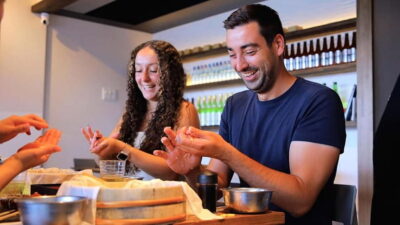
Roll and Authentic Sushi Making Class in Asakusa
Read our review →
Ramen Cooking Class at Ramen Factory in Kyoto
Read our review →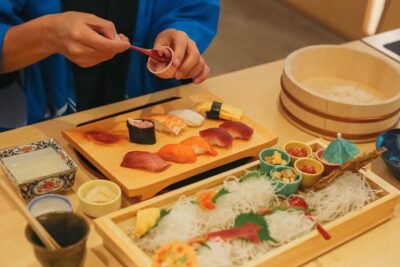
Sushi Making Class in a Happi Coat near a Famous Spot
Read our review →
Sushi Making Osaka Roll and Authentic Japanese Sushi Class
Read our review →
Tokyo Sushi Making Class in Tsukiji with Professional Chef
Read our review →
Ramen & Gyoza Cooking Class in Tokyo with Local Supermarket Visit
Read our review →Browse the lists this tour appears in