
Reviewed · COOKING CLASSES
Kyoto: Ramen, Gyoza, and Onigiri Cooking Class
Ramen is easier than it looks. This Kyoto cooking class turns three Japanese staples into a practical lunch, with simple broth recipes you can repeat at home and patient English-speaking instructors who keep the pace moving. I like the small maximum of eight, and I like that you eat the food you prepare rather than watching a demonstration and leaving hungry.
The main consideration is dietary flexibility. The class cannot accommodate vegan, pescatarian, gluten-free, or other special diets, and the vegetarian menu only replaces pork with tofu. You also need to be at least 13 and able to cook independently, so this is not a drop-in activity for younger children who need hands-on help.
In This Review
- Key points to know before booking
- A practical Kyoto food class in 90 minutes
- Starting with ramen broth, not noodles
- Gyoza: filling, folding, and the satisfying seal
- Shaping onigiri by hand
- Eating everything you make
- Why the instructors matter
- Price, timing, and who gets good value
- Important limits on age and diet
- Should you book this Kyoto cooking class?
- FAQ
- Where is the ramen, gyoza, and onigiri cooking class held?
- What is the easiest taxi landmark?
- How long does the cooking class last?
- What dishes do you make?
- Are the instructors English-speaking?
- How many people can join?
- Is food included in the price?
- Are recipes provided?
- Can vegans or people with gluten intolerance join?
- What is the vegetarian menu?
- What age is suitable for the class?
- What should I wear or bring?
- Can I cancel the booking?
Key points to know before booking
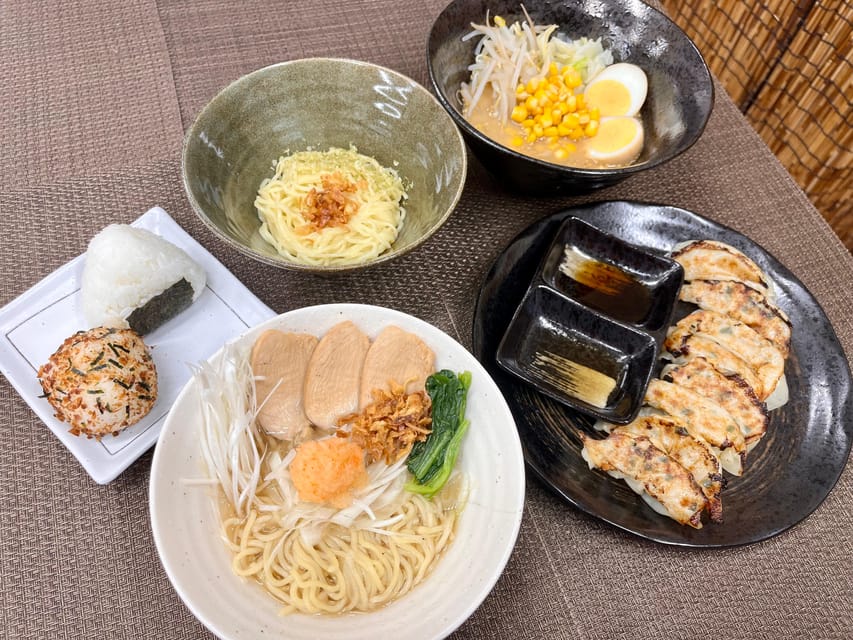
- Two ramen styles in one class: Prepare both miso ramen and shoyu, or soy sauce, ramen with straightforward toppings.
- Broth is the real lesson: You learn how to build flavorful soup from ingredients available in an ordinary supermarket.
- Gyoza wrapping gets proper attention: You practice the filling, fold, seal, and pan-frying method rather than simply eating prepared dumplings.
- Onigiri adds a useful Japanese snack: Shape seasoned rice balls by hand, a skill you can use for quick lunches at home.
- Small English-speaking groups: The class is limited to eight, with instructors available to correct technique and answer questions.
- Come hungry: The food portion is generous for a 90-minute session, and coffee and tea are included.
A practical Kyoto food class in 90 minutes
The class takes place in central Kyoto, at the basement level of the Life Building. The room is one street away from the main road, so it is worth checking Google Maps before you set out. If you use a taxi, the recommended landmark is the Family Mart at Sanjo Keihan, followed by a walk of about two minutes. Search for Manryo cooking class rather than relying only on the building name.
Once inside, you work with an English-speaking team. Nori is one of the instructors who receives frequent praise for his humor, clear explanations, and easy teaching style. Other named instructors include Kairi, Minori, Aoi, Ayuna, Riho, Mia, and Kiara. The exact team can vary, but the pattern is consistent: a lead teacher explains the process while assistants help at the cooking stations.
That setup matters. You are not left trying to follow a fast demonstration from the back of a crowded room. The small class format gives you a chance to ask about ingredients, cooking methods, Japanese food customs, and even practical subjects such as choosing a Japanese knife.
The session is quick and organized. Ingredients are prepared in advance, and much of the work involves measuring, combining, shaping, and cooking rather than starting every dish from raw produce. That is useful for a first class because you get through several dishes without wasting time. It also means this is not a professional chef course or a slow market-to-table workshop.
More Cooking Classes in Kyoto
- Ramen Cooking Class at Ramen Factory in Kyoto
★ 5.0 · 1,937 reviews - Sushi Making in Kyoto! Same-day bookings welcome!
★ 5.0 · 713 reviews - Kyoto: Ramen Cooking Class at a Ramen Factory with Souvenir
★ 4.9 · 532 reviews
Starting with ramen broth, not noodles
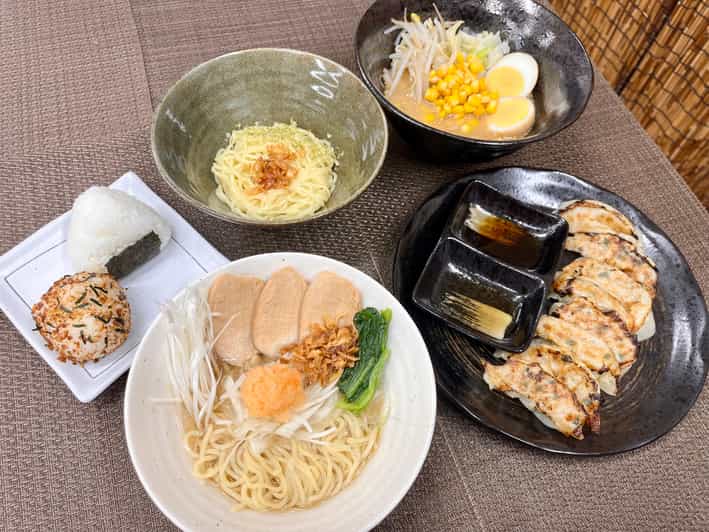
The most useful part of the class is the broth lesson. You do not make ramen noodles here. Instead, you use noodles that can usually be bought near home and focus on the soup, which is harder to reproduce without a method.
The class covers two broths: miso and shoyu. The ingredient list includes chicken stock powder, oyster sauce, sesame oil, soy sauce, garlic, ginger, lard, mirin, black pepper, miso, butter, fish powder, chili oil, salt, and pepper. You do not need to use every item in the same bowl, but the list shows how the class builds flavor through several small additions rather than one mysterious restaurant ingredient.
The lesson is especially helpful if you enjoy ramen but have assumed the soup requires an all-day kitchen project. Here, the method is designed for a home cook. You learn how seasonings work together and how the broth should carry the main flavor while the toppings remain fairly mild.
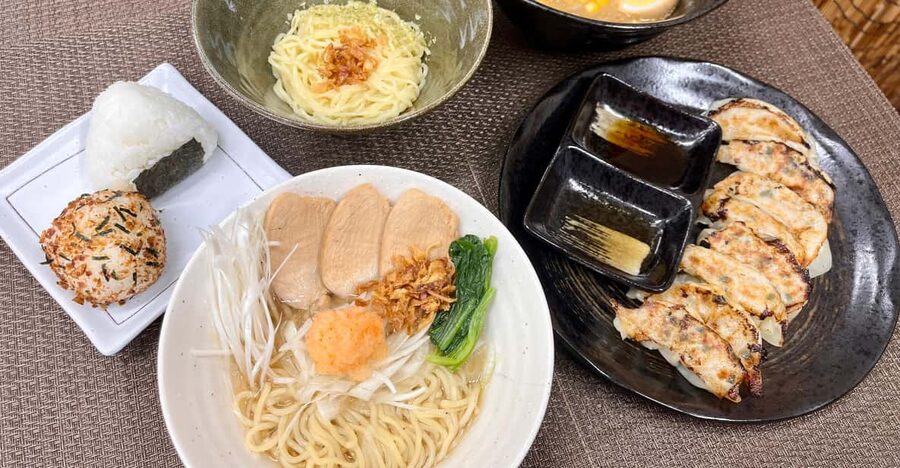
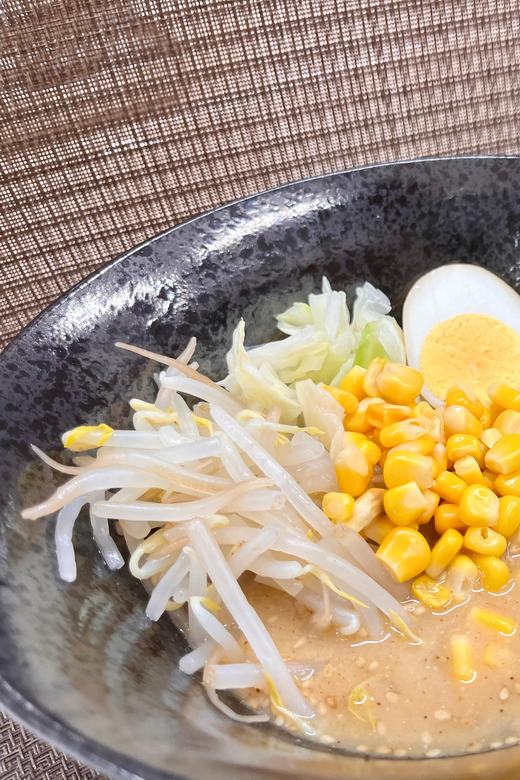
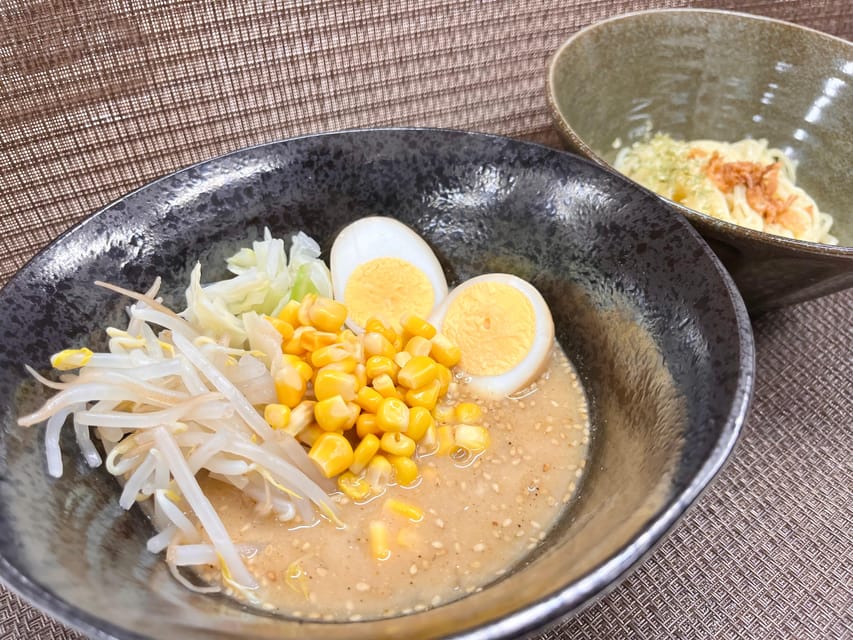
The miso ramen comes with boiled egg, bean sprouts, green onions, and sweet corn. The shoyu ramen uses chicken, bamboo shoots, and green vegetables. These are familiar, restrained toppings. They do not overpower the soup, which helps you understand an important point: a bowl of ramen is not simply noodles piled with every topping available.
I like this focus because it gives you something you can use after the trip. A recipe for noodles would be less practical for many home kitchens. Learning how to make a good broth from accessible seasonings has a better chance of becoming part of your regular cooking.
The tradeoff is that the class will not satisfy someone looking to make ramen entirely from scratch. If your dream is to knead noodles, stretch them, or prepare a long-simmered stock from bones, this is the wrong format. It is a short, usable broth class with ramen as the finished dish.
Gyoza: filling, folding, and the satisfying seal
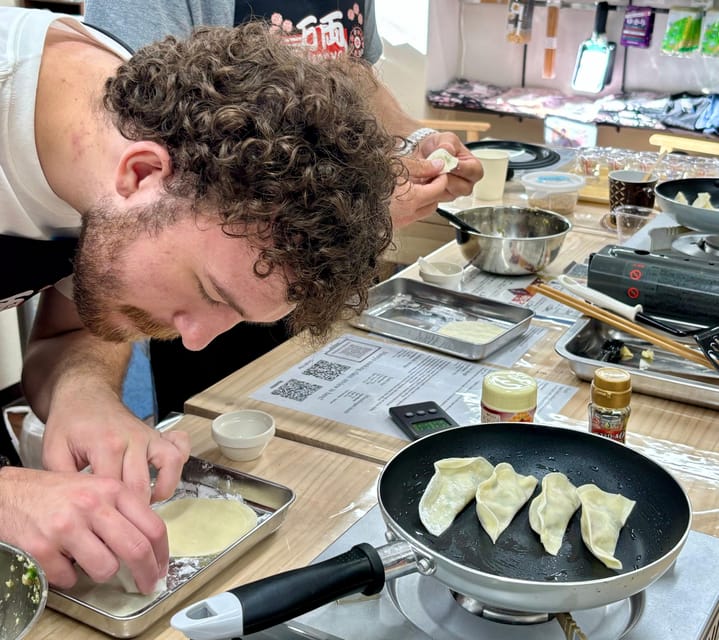
Next comes gyoza, the Japanese pan-fried dumpling. This is the most hands-on part of the class, and the wrapping technique gives you a clear skill to practice at home.
The filling combines ground pork, cabbage, onion, chives, garlic, ginger, and seasonings such as soy sauce, sesame oil, cooking sake, and pepper. The balance is the point. Too much meat can make the dumpling heavy, while too much vegetable can leave it loose or watery. The class shows how the ingredients work together before you start filling wrappers.
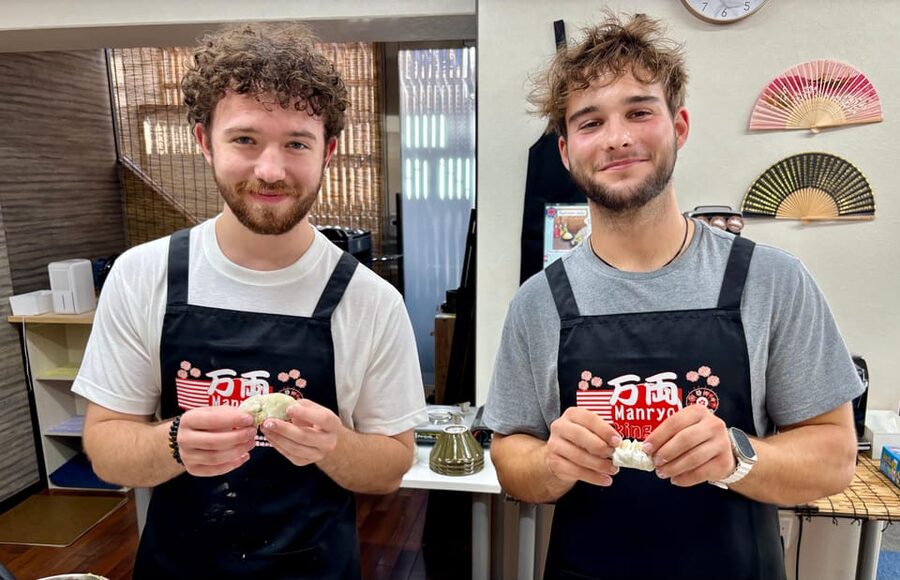
Then you fold. Your first dumpling may look more like a small envelope than a restaurant gyoza, and that is fine. The instructors guide you toward a neat shape and a firm seal so the filling stays inside during cooking. With a maximum of eight people, there is a reasonable chance of getting individual help rather than simply copying a distant demonstration.
The cooking stage is rewarding because the result has different textures: a browned underside, a soft wrapper, and a juicy center. The class makes the process feel manageable, but you should understand that the pre-portioned ingredients keep things moving. You are learning a reliable home method, not spending an hour developing a filling from scratch.
The vegetarian menu replaces pork with tofu, but it is not vegan or fully free of animal products. Other ingredients remain the same, so you must check the menu carefully if you avoid fish, oyster sauce, lard, or other ingredients. The provider states that no special diets beyond the two listed menus can be accommodated.
Shaping onigiri by hand
Onigiri are Japanese rice balls made for snacks, lunch, picnics, and easy packed meals. They are less complicated than ramen or gyoza, but they add a useful everyday dish to the session.
You learn how to shape the rice neatly and keep the ball together. This sounds simple, but the right pressure and shape make a difference. A well-formed onigiri is easy to hold and less likely to fall apart when you eat it.
The class presents onigiri as a practical alternative to a sandwich. That is one reason this part works well for families and home cooks. You leave with a technique that does not require special equipment or elaborate cooking. The exact fillings are described as varied, so the class gives you a sense of how flexible rice balls can be.
Onigiri also breaks up the heavier dishes. After broth, noodles, and dumplings, a small rice ball gives the meal another texture and style. You learn three recognizable Japanese foods in one sitting rather than taking a class devoted to a single dish.
A completely different kind of day out:
- PERFECT KYOTO 1-Day Bus Tour
★ 5.0 · 13,518 reviews - [Kyoto & Nara Day Tour] Sagano Scenic Railway & Nara Park & Fushimi Inari Taisha Thousand Torii Gates & Togetsukyo Bridge & Bamboo Grove & Kimono Forest (Departing from Osaka)
★ 4.9 · 10,942 reviews - Kyoto: Fushimi Inari, Kinkakuji, Bamboo Grove 1 Day Bus Tour
★ 4.8 · 4,316 reviews - Kyoto: Tea Ceremony in a Traditional Tea House in Kiyomizu
★ 4.9 · 3,519 reviews
Eating everything you make
The meal at the end is not an afterthought. You eat the ramen, gyoza, and onigiri prepared during the class, with free coffee and tea available. The portions are often described as generous, so arriving after a large breakfast may be a mistake.
The food is served as the reward for the work, but it also lets you judge the methods immediately. You can taste the difference between miso and shoyu broth, compare the gyoza filling with the seasoning in the onigiri, and see how mild toppings support a stronger soup.
Some sessions move very quickly. One account describes completing two ramen types, gyoza, and onigiri in about an hour, leaving the remaining time for eating and conversation. That pace is part of the appeal, especially if you have only a short window in Kyoto, but it can feel brisk if you prefer a slow, relaxed cooking lesson.
The staff may also offer beer for purchase after the meal. That is optional and not part of the listed inclusions. The important point is that you get a full meal from the class fee, not just samples.
Why the instructors matter
Food classes live or die by the teaching, and this one receives strong praise for its staff. Nori is described as funny, encouraging, and informative, while the supporting instructors help without hovering. Clear English is a real advantage when the class involves small measurements, filling quantities, and folding steps.
The team also adds brief cultural context and explains the origins of the dishes and ingredient differences. This is not a long lecture on Japanese food history. Instead, you get useful information at the moment it helps, such as why ramen toppings stay simple or how gyoza fits into home cooking.
The organized stations are another strength. Ingredients are prepared and portioned, which reduces confusion and lets you focus on technique. Some people may prefer to chop and measure every ingredient themselves, but most first-time participants will appreciate getting to the enjoyable parts quickly.
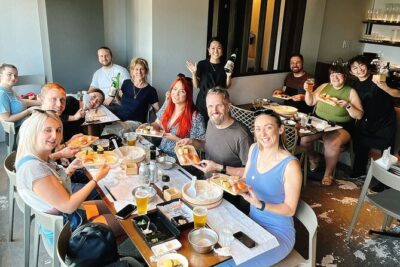
The setting can become especially personal when the class is not full. A small booking has sometimes resulted in a private or near-private lesson, with time for questions about cooking and Japanese kitchen tools. You cannot count on that arrangement, but the eight-person limit keeps the normal class from feeling unwieldy.
Price, timing, and who gets good value
At $90 per person, this is not the cheapest meal in Kyoto. It becomes better value when you count the instruction, ingredients, equipment, recipes, English guidance, and the substantial meal at the end.
I would compare it with the cost of a restaurant meal only with caution. You are paying for three dishes and a lesson you can repeat at home, not just for food. The included ramen and gyoza recipes make the class more useful after your trip, particularly if you already cook or want to host a gyoza night for friends.
The 90-minute length works well as a late-morning lunch activity or an afternoon-to-dinner stop. It is short enough to fit around sightseeing, yet long enough to cover several dishes. You should arrive about 10 minutes early, especially because the classroom is down a side street and can be easy to miss.
Comfortable clothing and shoes are sensible. Hotel pickup and drop-off are not included, so you must make your own way to the Life Building.
This class suits couples, families with teenagers, and small groups of friends. It also works for solo visitors, who may find themselves in a small shared group or, depending on bookings, a more private lesson. It is less suitable if you want a quiet, slow-paced culinary seminar or if your diet requires careful substitutions.
Important limits on age and diet
The minimum age deserves close attention. The activity is listed as unsuitable for children under 12, while the participation rules say guests must be 13 and able to cook without staff help. I would treat 13 as the practical minimum and not assume that a younger child can join simply because an adult is present.
The class offers two menu choices:
- Regular menu
- Vegetarian menu, with pork replaced by tofu
The vegetarian menu is limited. It does not mean vegan, pescatarian, gluten-free, or allergy-specific cooking. The provider says it cannot accommodate those diets or other special requests, so contact the operator before booking if you have any concern.
Wheelchair users and people with recent surgeries are also listed as unsuitable for this activity. The classroom is in a basement location, and the supplied information does not give further accessibility details.
There is also a strict reservation rule: make only one reservation per group. Duplicate bookings under the same name can be canceled, and people who are not participating are not allowed into the classroom. If you book for five, only those five participants may enter.
Should you book this Kyoto cooking class?
I would book it if you want an active food experience that teaches useful techniques rather than just presenting a meal. The strongest reasons are the practical ramen broth lesson, the repeated gyoza practice, the friendly English instruction, and the amount of food packed into 90 minutes.
I would skip it if you need vegan, pescatarian, gluten-free, or customized cooking. I would also choose another class if making noodles from scratch is essential to your idea of ramen.
For most eligible participants, $90 buys a well-organized lesson, a filling meal, recipes to take home, and a pleasant way to spend part of a Kyoto day. Arrive early, come hungry, and expect a brisk pace. If you can cook independently and enjoy Japanese comfort food, this is an easy class to recommend.
FAQ
Where is the ramen, gyoza, and onigiri cooking class held?
The classroom is at B1 of the Life Building in Kyoto. It is one street away from the main road. Search for Manryo cooking class on Google Maps.
What is the easiest taxi landmark?
If you arrive by taxi, get off in front of the Family Mart at Sanjo Keihan. The classroom is about a two-minute walk from there.
How long does the cooking class last?
The class lasts 90 minutes.
What dishes do you make?
You make miso ramen, shoyu ramen, gyoza, and onigiri. The class focuses on ramen broth rather than making noodles.
Are the instructors English-speaking?
Yes. The class is taught in English by English-speaking instructors.
How many people can join?
The class is limited to eight participants.
Is food included in the price?
Yes. You eat the food prepared during the class. Ingredients and cooking equipment are also included, along with coffee and tea.
Are recipes provided?
Recipes for ramen and gyoza are provided. The information supplied does not specifically confirm a separate printed recipe for onigiri.
Can vegans or people with gluten intolerance join?
No. Vegan, pescatarian, gluten-free, and other special diets cannot be accommodated.
What is the vegetarian menu?
The vegetarian menu replaces pork with tofu. Other ingredients remain the same, so it is not a vegan menu.
What age is suitable for the class?
Participants must be at least 13 and able to cook independently without staff assistance. Children under 12 are listed as unsuitable.
What should I wear or bring?
Bring comfortable shoes and wear comfortable clothes.
Can I cancel the booking?
You can cancel up to 24 hours in advance for a full refund. Reserve-now, pay-later booking is also available.
Just added in Kyoto
- The “Golden Route” and Ancient Japan by DIAMIR Erlebnisreisen – 14-Day Tour★ 2.0 · 2 reviews
- Japan: Castles & Cuisine by G Adventures – 6-Day Kyoto to Osaka Tour★ 4.5 · 4 reviews
- Cycle Japan by Explore! – 13-Day Kyoto to Tokyo Tour★ 4.7 · 12 reviews
- Cycle Japan by Intrepid Travel – 11-Day Kyoto to Tokyo Tour★ 4.8 · 2 reviews
- Classic Japan by Intrepid Travel – 11-Day Kyoto to Tokyo Tour★ 4.4 · 14 reviews
- Ancient & Modern Japan 14-Day Tour by Exodus Adventure Travels★ 4.4 · 40 reviews
- 5 Day Cultural Adventure of Kyoto, Nara & Osaka by Tourist Journey★ 2.5 · 2 reviews
- 12 Days Kinosaki Onsen Escape: A Journey Through Japan’s Timeless Towns by UME Travel★ 4.8 · 5 reviews
Cooking Classes, compared.
Sushi Making Tokyo Roll and Authentic Japanese Sushi Class
Read our review →
Roll and Authentic Sushi Making Class in Asakusa
Read our review →
Ramen Cooking Class at Ramen Factory in Kyoto
Read our review →
Sushi Making Class in a Happi Coat near a Famous Spot
Read our review →
Sushi Making Osaka Roll and Authentic Japanese Sushi Class
Read our review →
Tokyo Sushi Making Class in Tsukiji with Professional Chef
Read our review →
Ramen & Gyoza Cooking Class in Tokyo with Local Supermarket Visit
Read our review →Browse the lists this tour appears in