
Reviewed · KIMONO AND CULTURAL DRESS
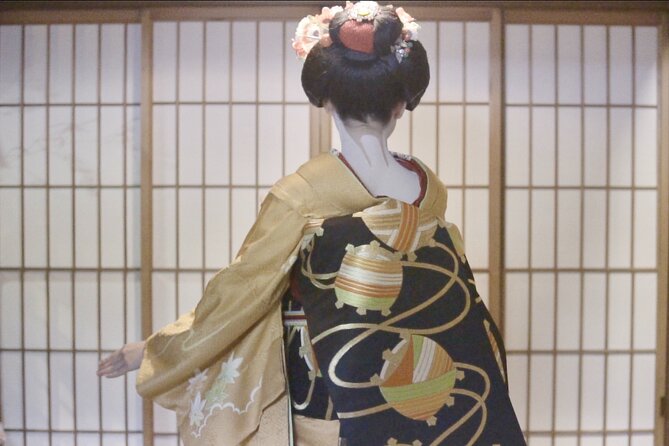
Kyoto Geisha Show Cultural Hour with an apprentice geisha, Maiko
Some Kyoto moments cannot be found on a map. This 90-minute cultural experience gives you a rare chance to meet a maiko, an apprentice geisha, hear about her training and daily life, and watch traditional dances in a small setting. Since chance sightings of maiko and geiko have become less common, the guaranteed performance is a real advantage.
I especially like the direct question-and-answer session and the English-speaking guide who translates throughout the meeting. I also like the small maximum group of 14, which makes the encounter feel more personal than a large theater show. The main consideration is the price, $105.42 per person, and the strict no-refund policy if you cancel.
In This Review
- Key Points Before You Book
- Why This Maiko Meeting Matters in Kyoto
- Meeting Near Honmachi and Entering the Geisha World
- The Traditional Tea House Setting
- The Q&A With a Maiko
- The Dance Performance: One or Two Traditional Songs
- A Party Game and Photographs
- What the $105.42 Price Buys You
- The Guides Make a Big Difference
- Who Will Enjoy This Most
- Timing, Booking, and the Main Drawback
- My Verdict: Book It If You Want Conversation, Not Just a Show
- FAQ
- How long does the Kyoto maiko experience last?
- What is included in the price?
- Is tea or coffee included?
- How many people can join the experience?
- Is the experience conducted in English?
- Can I cancel or change my booking?
Key Points Before You Book
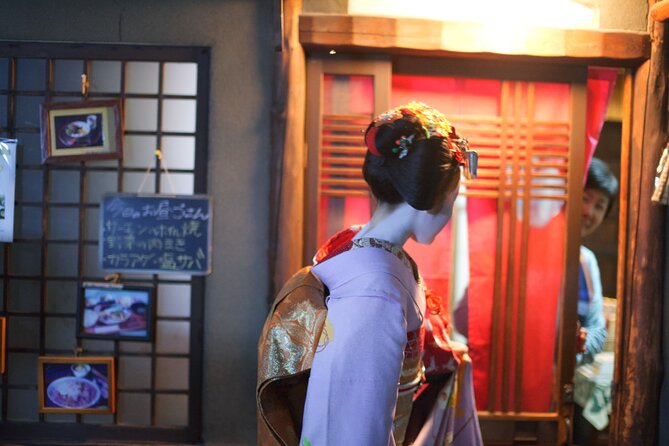
- You meet a real maiko: The experience centers on a face-to-face conversation with an apprentice geisha, not just a stage performance.
- Translation is included: An English-speaking guide explains the conversation, customs, training, and answers to your questions.
- The dance is brief but special: Expect one or two traditional songs and dances rather than a full evening performance.
- The group stays small: The maximum group size is 14 people, a useful limit for a personal cultural meeting.
- The guide adds valuable context: Guides including Ken, Kenny, and Saya have helped explain geisha districts, schools, agencies, etiquette, and training.
- It is best for curious visitors: You get far more from this experience if you want to ask questions and understand the tradition, not simply take photographs.
Why This Maiko Meeting Matters in Kyoto
Kyoto’s geisha tradition is often reduced to painted faces, elaborate kimono, and quick photographs in Gion. Those images show only the surface. This experience gives you time to learn how a maiko trains, works, and lives within a highly formal artistic tradition.
You are not simply watching a performer from a distant seat. The central feature is a meeting with an apprentice geisha, followed by conversation and dance. The guide translates, so you can ask about subjects that are difficult to understand from a street encounter, including training routines, customs, performance work, and daily life.
That direct exchange is the strongest reason to book. A dance alone might be beautiful but brief. A conversation helps you understand the concentration, discipline, and social rules behind it.
The format also avoids one common Kyoto problem: trying to see geisha activity on the street. You might spend an evening in a geisha district and see nothing, or see someone only for a few seconds. Here, the meeting is arranged in advance, and the performance is part of the plan.
More Kimono Experiences in Kyoto
- [Kyoto & Nara Day Tour] Sagano Scenic Railway & Nara Park & Fushimi Inari Taisha Thousand Torii Gates & Togetsukyo Bridge & Bamboo Grove & Kimono Forest (Departing from Osaka)
★ 4.9 · 10,942 reviews - Kyoto Geisha Walking Tour: Gion District & Hidden Gems
★ 4.7 · 3,273 reviews - Kyoto: Gion Magical Night Walking Tour with Geisha Trivia
★ 4.9 · 2,393 reviews
Meeting Near Honmachi and Entering the Geisha World
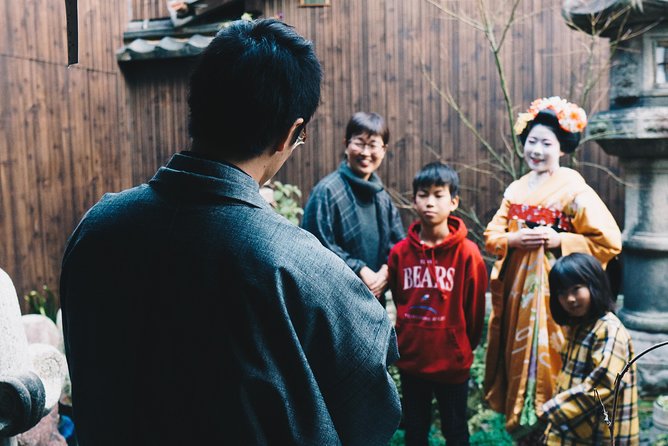
The meeting point is at 5-chōme-182 Honmachi in Kyoto, near public transportation. The guide meets you near a shrine and leads you toward the venue. This short introduction matters because it gives you a little context before the formal meeting begins.
The walk may include explanations about the local geisha district, theaters, agencies, schools, and the houses where geiko entertain clients. It is not presented as a long neighborhood tour, but it helps you understand that the performance belongs to a working cultural system, not a costume display created for tourists.
Guides have been praised for making this part easy to follow. Ken, Kenny, and Saya are names associated with especially warm and helpful hosting. Ken has helped visitors find the meeting point when the address proved difficult, while Saya has been described as calm and supportive during translation.
You should still allow enough time to reach the shrine meeting point. The address can be confusing, and you do not want to arrive rushed for a timed cultural appointment.
The Traditional Tea House Setting
After the introduction, you walk a short distance to a tea house or small theater. The setting is described as cozy and attractive, which suits this experience better than a large modern auditorium.
The smaller room changes the mood. You are close enough to notice the details of the maiko’s appearance, movements, and formal manner. You also have a better chance to hear the explanations and take part in the question session without shouting across a crowded hall.
The experience lasts about one hour and 30 minutes, although the advertised show and meeting are described as a one-hour cultural hour. That extra time allows for the walk, introduction, conversation, performance, and photographs.
Tea or coffee is not included in the stated price. Some descriptions of the visit mention enjoying tea, but you should not book this expecting drinks to be part of the package. Consider them an optional part of the setting rather than a guaranteed inclusion.
The Q&A With a Maiko
The conversation is the heart of the experience. The maiko answers questions about her life, training, skills, customs, and work, with the English-speaking guide translating for the group.
This arrangement removes one of the biggest barriers in a traditional cultural meeting. You do not need Japanese to ask a thoughtful question, and you are not left guessing at the meaning of a polite exchange.
I would prepare a few questions before you arrive. Ask about the training required to become a maiko, the daily routine, the difference between maiko and geiko, the demands of performance, or the customs of the geisha houses. The more specific your questions, the more useful the conversation is likely to be.
The tone is formal but friendly. The guide’s job is not only to translate words, but also to help you understand when a question is appropriate and how the meeting works. Several guides have been praised for balancing respect for the maiko with a relaxed atmosphere for the group.
That balance is important. This is a living tradition with rules and professional expectations. You are being welcomed into a formal setting, not attending a comedy show or casual meet-and-greet. A good guide helps you feel comfortable without making the occasion feel careless.
A completely different kind of day out:
- PERFECT KYOTO 1-Day Bus Tour
★ 5.0 · 13,518 reviews - Kyoto: Fushimi Inari, Kinkakuji, Bamboo Grove 1 Day Bus Tour
★ 4.8 · 4,316 reviews - Kyoto: Tea Ceremony in a Traditional Tea House in Kiyomizu
★ 4.9 · 3,519 reviews - Kyoto: Gion Make Your Own Chopsticks with Engraving Option
★ 5.0 · 3,465 reviews
The Dance Performance: One or Two Traditional Songs
After the conversation, the maiko performs one or two traditional songs and dances. The performance is not long, but it is the part most likely to stay with you.
Maiko dance with controlled, deliberate movements. A small turn of the head, a careful hand gesture, or the handling of a fan can carry more weight than a large stage movement. In an intimate room, you can pay attention to these details rather than simply watching a figure from far away.
You should set your expectations correctly. This is not a full evening of several performers, live musicians, and a long program. It is a short cultural show built around one maiko, her dance, and the conversation that explains her work.
That limited length is also a strength. You receive a focused introduction without giving up half a day of sightseeing. You can schedule it around temples, shopping, or an evening meal.
Some sessions include two dances, and the music and choreography may feel unfamiliar at first. The guide’s explanations help place the performance in context, so you can appreciate the restraint and precision instead of expecting a Western-style stage show.
A Party Game and Photographs
The interaction may include a traditional party game taught by the maiko. This gives the meeting a lighter moment after the more formal questions and performance.
A game also shows a different side of the tradition. You are not only watching an expert perform. You are sharing a small social activity, with the guide helping explain the rules and etiquette.
Photographs may be taken at the end of the meeting. This is a useful chance to record the occasion, but it should not be the main purpose of the visit. The most valuable part is the exchange and the performance. Be respectful about when and how you use your camera, and follow the guide’s instructions.
Because the group can include up to 14 people, the number of photographs and individual question time may depend on the size of your session. The small-group limit is helpful, but it does not mean a private appointment for every booking.
What the $105.42 Price Buys You

At $105.42 per person, this is not a budget activity. You are paying for access to a rare cultural meeting, the performance, an English-speaking guide, translation, and the organization needed to bring the group into a formal setting.
The value depends on what you want from Kyoto. If you only want to see a dance, a cheaper public performance may be enough. If you want to ask questions and understand the person behind the costume, this experience offers something more difficult to arrange independently.
I consider the price easier to justify because the group is capped at 14 people and the meeting is not limited to a distant stage view. The guide’s local explanations add real value, especially for anyone unfamiliar with the difference between geisha, geiko, and maiko.
The experience has received a 5 out of 5 rating from 25 ratings, with 100 percent recommending it. That strong record fits the format: the performance is distinctive, the meeting is unusual, and the translation removes much of the uncertainty.
Still, do not book it simply because it sounds exclusive. The experience is best value for people who care about cultural explanation, respectful conversation, and traditional arts. If your interest is mainly in photographing a maiko, you may find the cost harder to justify.
The Guides Make a Big Difference

The guide can shape the entire visit. Ken has been praised for explaining the geisha districts, theater format, agencies, training, and customs in a clear way. Kenny has also been described as friendly and helpful during the question session.
Saya has been singled out for her gentle manner and careful support while introducing the maiko. That matters because the formal setting can feel unfamiliar when you first arrive.
The best part of the guiding is the interpretation between two cultures. You receive a translation of the maiko’s words, but you also get help understanding the setting, the order of events, and the meaning behind what you see.
A guide can also help prevent awkward moments. You are less likely to interrupt at the wrong time, ask a poorly phrased question, or misunderstand a custom. This is one reason I would choose a guided meeting over trying to arrange an informal encounter on your own.
Who Will Enjoy This Most
I would recommend this experience to:
- First-time visitors to Kyoto who want more than temple sightseeing
- People interested in Japanese dance, music, etiquette, and traditional arts
- Couples looking for a distinctive cultural activity
- Families with older children who can take part in a formal question session
- Visitors who value small groups and personal explanation
- Anyone who has wondered how geisha and maiko training works beyond the street image
It may be less suitable if you want a fast, casual attraction with lots of movement. The experience asks you to listen, observe, and show respect. It also may not suit anyone expecting a large-scale theatrical production.
Most people can participate, and the venue is near public transportation. The group maximum is 14, but the exact feel will depend on how many people attend your scheduled session.
Timing, Booking, and the Main Drawback
The experience is booked an average of 44 days in advance, so I would plan ahead if your Kyoto dates are fixed. A mobile ticket is available, and confirmation is received at booking.
The cancellation terms are strict. The experience is non-refundable and cannot be changed for any reason if you cancel or request an amendment. The operator may offer another date or a full refund if poor weather causes cancellation, or if the minimum number of participants is not reached.
That policy makes travel insurance or a careful itinerary worthwhile, especially during a complicated Japan trip. Do not place this booking on the same day as an activity you cannot easily move.
Weather matters because the experience requires good conditions. The tour provider also requires a minimum number of participants, so rare cancellations are possible. If that happens, you are offered another date or experience, or a full refund.
My Verdict: Book It If You Want Conversation, Not Just a Show
I would book this Kyoto maiko experience if I wanted a close look at a living tradition, especially because the guide translates the Q&A and explains the setting before the performance.
The strongest features are the personal meeting, the chance to ask about daily life and training, and the short but beautiful dance presentation. Ken, Kenny, and Saya have helped make the event welcoming while keeping the tone respectful.
The price is high for 90 minutes, and tea or coffee is not included. The no-refund rule also demands careful planning. But for someone who values direct cultural contact, this is one of the more memorable ways to spend an hour and a half in Kyoto.
Book it if you want to understand what you are seeing. Skip it if you only want a cheap stage show or a quick photograph.
FAQ
How long does the Kyoto maiko experience last?
The experience lasts approximately one hour and 30 minutes. It includes the meeting, translation, question-and-answer session, and a performance of one or two traditional songs.
What is included in the price?
The price includes the one-hour geisha show and meeting, the Q&A session, the maiko performance, and an English-speaking guide.
Is tea or coffee included?
No. Coffee and tea are not included in the stated inclusions.
How many people can join the experience?
The activity has a maximum group size of 14 people.
Is the experience conducted in English?
An English-speaking guide translates for you during the meeting, so there is no stated language barrier for English-speaking participants.
Can I cancel or change my booking?
The experience is non-refundable and cannot be changed for any reason. If the provider cancels because of poor weather or because the minimum number of participants is not reached, you may be offered another date or experience, or a full refund.
More Show in Kyoto
- Kyoto Sumo Show with Experience & Photo, 2 Drinks Included
★ 5.0 · 941 reviews - Kyoto: Sumo Experience (with Live Show & Audience Challenge)
★ 5.0 · 519 reviews - Kyoto Gion Cultural Walk & Geisha Show with Dining Options
★ 5.0 · 518 reviews - Kyoto Gion Cultural Walk & Geisha Show with Dining Options
★ 5.0 · 483 reviews
Just added in Kyoto
- The “Golden Route” and Ancient Japan by DIAMIR Erlebnisreisen – 14-Day Tour★ 2.0 · 2 reviews
- Japan: Castles & Cuisine by G Adventures – 6-Day Kyoto to Osaka Tour★ 4.5 · 4 reviews
- Cycle Japan by Explore! – 13-Day Kyoto to Tokyo Tour★ 4.7 · 12 reviews
- Cycle Japan by Intrepid Travel – 11-Day Kyoto to Tokyo Tour★ 4.8 · 2 reviews
- Classic Japan by Intrepid Travel – 11-Day Kyoto to Tokyo Tour★ 4.4 · 14 reviews
- Ancient & Modern Japan 14-Day Tour by Exodus Adventure Travels★ 4.4 · 40 reviews
- 5 Day Cultural Adventure of Kyoto, Nara & Osaka by Tourist Journey★ 2.5 · 2 reviews
- 12 Days Kinosaki Onsen Escape: A Journey Through Japan’s Timeless Towns by UME Travel★ 4.8 · 5 reviews
Kimono and Cultural Dress, compared.

Tokyo Asakusa Kimono&Yukata Rental at Kimono Miyabi Asakusa Station
Read our review →
Kyoto Geisha Walking Tour: Gion District & Hidden Gems
Read our review →
Gion Magical Night Walking Tour with Geisha Trivia
Read our review →
Gion Geisha District Walking Tour – Stories of Geisha
Read our review →
Best of Kyoto: Gion, Geisha, Pagodas & Cobblestones
Read our review →
Kyoto Kimono Rental Experience (Optional Exquisite Hair Styling/Japanese Makeup/Photography) (Ookini Kiyomizu-dera Main Store)
Read our review →Browse the lists this tour appears in