
Reviewed · WALKING TOURS
Kyoto Gion Early Morning Walking Tour
Kyoto is best before breakfast. This three-hour walk gives you an early start through Gion’s old lanes, then links Kiyomizu-dera, Sannenzaka, Yasaka-no-To, and Yasaka Shrine before the day reaches full speed. I like the peaceful setting and the chance to see Kyoto’s wooden streets with fewer people in the frame. I also like the small group, capped at 12, since guides such as Hiro, Caleb, and Vincent can answer questions instead of simply marching ahead.
The main trade-off is simple: you must get up early, and the timing cannot guarantee empty temples. One person found Kiyomizu-dera already crowded by arrival and wished the tour began an hour earlier. Still, at $49.42 per person, the guided route offers solid value if you want context, navigation, and a well-planned morning rather than a quick string of photo stops.
In This Review
- Quick take: what makes this walk worthwhile
- Why the early start matters in Gion
- Gion Shirakawa and Hanamikoji Street
- Kiyomizu-dera after the first hour
- Stone lanes through Sannenzaka and Ninenzaka
- Yasaka-no-To and the final shrine
- The guides are a major part of the value
- Is $49.42 a fair price?
- What to know before you book
- Who should take this Kyoto morning walk?
- Should you book the Gion Early Morning Walking Tour?
- FAQ
- How long does the Kyoto Gion Early Morning Walking Tour last?
- What sights are included?
- Is Kiyomizu-dera admission included?
- How large is the tour group?
- Where does the tour begin?
- Where does the tour end?
- Is hotel pickup provided?
Quick take: what makes this walk worthwhile
- Gion before the crowds: Begin among the Shirakawa River, willow trees, and traditional machiya houses while the district is quiet.
- Six classic Kyoto stops: The route covers Gion Shirakawa, Hanamikoji Street, Kiyomizu-dera, Sannenzaka and Ninenzaka, Yasaka-no-To, and Yasaka Shrine.
- Small-group attention: With no more than 12 people, you have a better chance to ask about customs, architecture, and local history.
- Strong guide feedback: Hiro is praised for his historical detail and humor, while Caleb is noted for his enthusiasm and warm manner. Vincent is especially good at taking time with questions.
- A serious walking morning: Expect about three hours on foot, with slopes, stone lanes, temple grounds, and enough steps to get your day moving.
- Clear extra cost: Kiyomizu-dera admission is not included and costs ¥500 per person. Hotel pickup is also not included.
Why the early start matters in Gion
Gion changes by the hour. In the morning, the district’s traditional streets have room to breathe. Later, the same lanes can fill with tour groups and people hoping to photograph the area’s wooden facades.
The tour begins at the Statue of Izumo-no-Okuni in Kawabatacho, in Kyoto’s Higashiyama Ward. From there, you set out with an English-speaking guide and let someone else handle the route. That matters in Gion, where a short turn can take you away from the main sights and into streets that are less useful for a first visit.
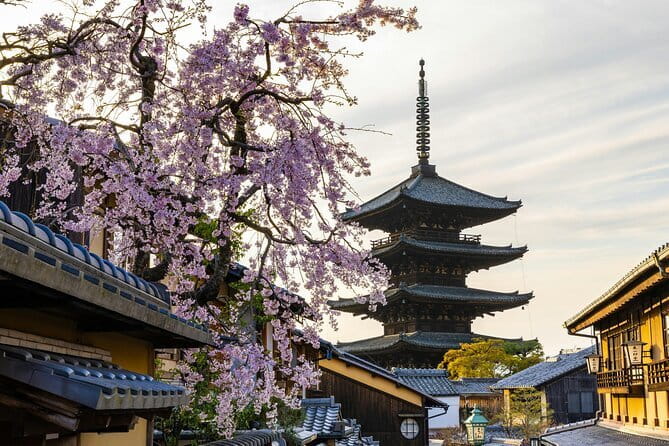
I especially like the opening stretch along Gion Shirakawa. The Shirakawa River, weeping willows, and machiya houses provide a calmer introduction than beginning at a packed temple gate. You get a feel for Kyoto as a lived-in historic city, not just a checklist of famous buildings.
The early hour also helps with photographs. You may find clear views along the water and less competition on the street. The tour does not promise solitude, and Kyoto’s popular sights can become busy sooner than expected, but starting early gives you better odds.
More Walking Tours in Kyoto
- Kyoto Geisha Walking Tour: Gion District & Hidden Gems
★ 4.7 · 3,273 reviews - Kyoto: Gion Magical Night Walking Tour with Geisha Trivia
★ 4.9 · 2,393 reviews - Kyoto: Gion Geisha District Walking Tour – Stories of Geisha
★ 4.7 · 2,187 reviews
Gion Shirakawa and Hanamikoji Street
The first stop, Gion Shirakawa, lasts about 15 minutes. That is brief, but enough for an introduction to the riverfront setting and the old wooden buildings. The focus here is atmosphere and orientation rather than a long historical lecture.
Next comes Hanamikoji Street, with about 20 minutes to explore. This is one of Gion’s best-known lanes, lined with wooden machiya houses and traditional teahouses called ochaya. It is closely connected with Kyoto’s geisha and maiko culture.
This is a place where a guide adds real value. A quiet street can look simple until someone explains how the district functions and why its architecture matters. The guide also helps you enjoy the area respectfully. You should not treat Gion as a stage set or assume that every person in traditional dress is available for photographs.
The short time at both Gion stops keeps the morning moving toward the temples. If you want a slow photographic study of every lane, this tour may feel brisk. If you want a useful first look before exploring Gion independently, the pace makes sense.
Kiyomizu-dera after the first hour
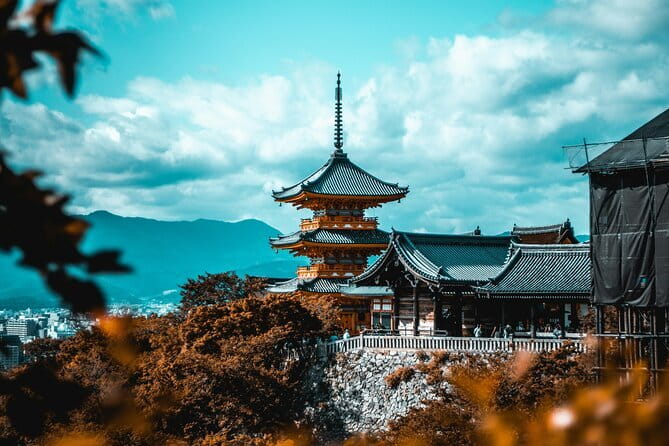
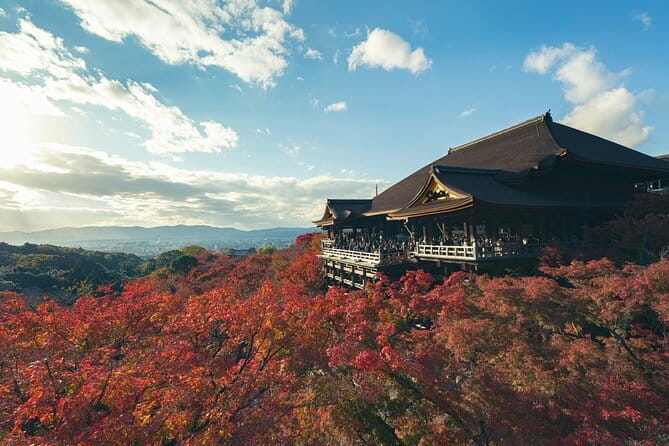
Kiyomizu-dera receives the longest stop, about one hour. This is the tour’s major temple visit and the point where the early start faces its biggest test.
The temple is famous for its wooden stage and elevated views over Kyoto. Seasonal scenery adds to the appeal, with cherry blossoms in spring and colorful foliage in autumn. The setting is one of Kyoto’s essential sights, but its popularity means crowds can arrive quickly.
The admission fee is ¥500 per person and is not part of the tour price. Keep that extra charge in mind when comparing the total cost with a self-guided morning. The fee is modest, but it is still better to know about it before you arrive.
A full hour gives you time to see more than the approach to the main hall. Your guide can explain the temple’s spiritual role and point out details you might pass without noticing. Hiro is particularly praised for placing Japanese history in a wider world context, while Caleb is described as a passionate history fan who keeps the experience friendly.
The timing deserves an honest note. This tour aims to reach Kyoto’s major sights before the afternoon crowds, not to promise an empty Kiyomizu-dera. One account specifically found the temple swarming by the time the group arrived and suggested starting an hour earlier. If crowd avoidance is your top priority, ask about the exact start time before booking and set your expectations accordingly.
Stone lanes through Sannenzaka and Ninenzaka

After Kiyomizu-dera, the route continues through Sannenzaka and Ninenzaka for about 30 minutes. These stone-paved lanes are among Kyoto’s most recognizable streets, with traditional townhouses and small shops leading toward the temple district.
This section works well after the formal temple visit. You move from sacred architecture into historic streets where the details are smaller: tiled roofs, timber fronts, shop signs, and carefully maintained facades. The lanes are photogenic, but they can also be crowded and uneven, so comfortable shoes matter.
The half-hour stop is enough for a guided walk and a few photographs, but not for serious shopping. If you see something you want to buy, note the location and return later. The tour ends back at the starting point, so you may have another chance to revisit part of the area if your plans allow.
Expect to get your steps in. One person specifically described the walk as a good way to start the day physically. The route joins several sights that are close enough to connect on foot but far enough apart to make a guided plan useful.
A completely different kind of day out:
- PERFECT KYOTO 1-Day Bus Tour
★ 5.0 · 13,518 reviews - [Kyoto & Nara Day Tour] Sagano Scenic Railway & Nara Park & Fushimi Inari Taisha Thousand Torii Gates & Togetsukyo Bridge & Bamboo Grove & Kimono Forest (Departing from Osaka)
★ 4.9 · 10,942 reviews - Kyoto: Fushimi Inari, Kinkakuji, Bamboo Grove 1 Day Bus Tour
★ 4.8 · 4,316 reviews - Kyoto: Tea Ceremony in a Traditional Tea House in Kiyomizu
★ 4.9 · 3,519 reviews
Yasaka-no-To and the final shrine
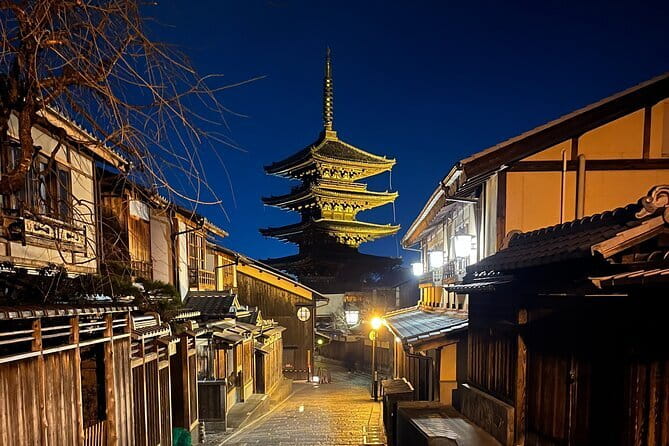
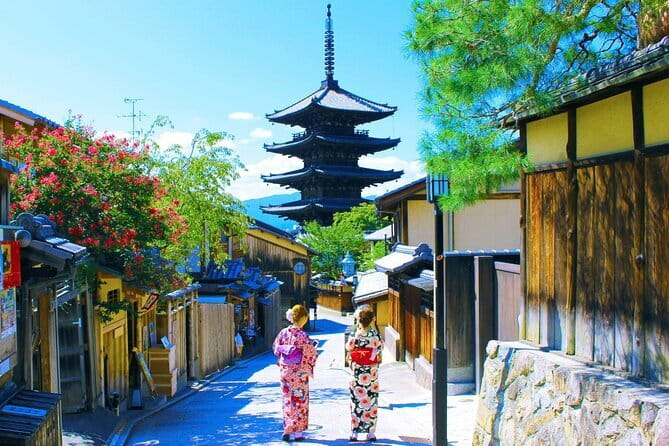
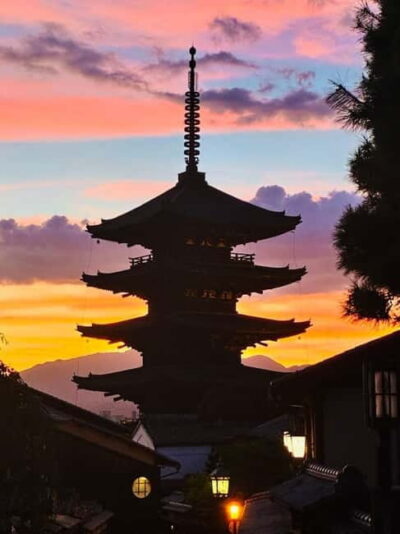
Yasaka-no-To, also called Yasaka Pagoda, receives about 10 minutes. The pagoda is a strong visual marker in the old Higashiyama streets, and the morning light can make it easier to photograph without a dense crowd around it.
Ten minutes is a photo stop, not a full visit inside a pagoda. The value comes from the view, the surrounding streets, and the guide’s explanation of where this landmark fits within Kyoto’s historic center. You should not expect a long exploration here.
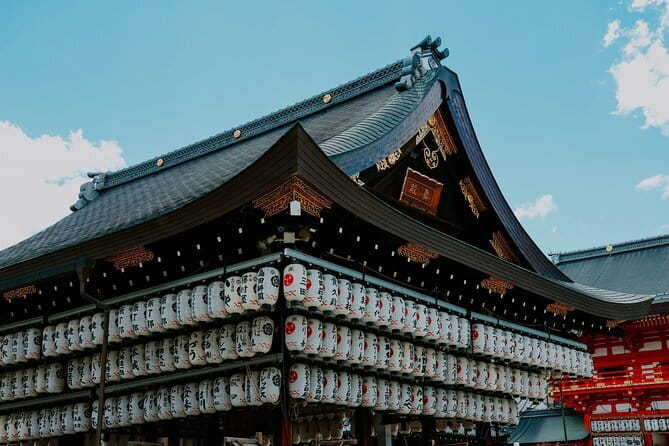
The final stop is Yasaka Shrine, with about 30 minutes. This is one of Kyoto’s major Shinto shrines, known for its vermilion gate and lantern-lit dance stage. The shrine offers a useful contrast with Kiyomizu-dera. Instead of ending with another temple, the tour closes with a Shinto site and a chance to see a different side of Japanese religious tradition.
Ending at Yasaka Shrine also makes the route feel complete. You begin beside Gion’s river and traditional houses, pass through the temple district, and finish at a major shrine associated with Kyoto’s long public and religious life.
The tour then ends back at the original meeting point. Since there is no hotel pickup, you must make your own way to the Statue of Izumo-no-Okuni at the start. The meeting location is near public transportation, which helps, but your booking confirmation should be checked carefully for the exact meeting instructions.
The guides are a major part of the value
The sights are famous, so the guide’s performance determines how much you gain beyond a morning walk. The strongest feedback centers on Hiro, Caleb, and Vincent.
Hiro is praised for his command of English, historical detail, humor, and ability to connect Japanese history with a broader world view. That combination matters at places such as Kiyomizu-dera, where facts alone can turn into a dry lecture. His style appears to suit people who want substance without losing the pleasure of walking.
Caleb is described as friendly, enthusiastic, and passionate about history. He also helped make the early start worthwhile by adding information about Gion, the geisha district, shrines, and the pagoda. A coffee stop at Here was also enjoyed after or during the morning, though you should not assume coffee is included in the tour price.
Vincent receives praise for taking time to explain things and answering questions, even when they went beyond the planned subject. That is useful in Kyoto, where you may suddenly want to ask about a shrine ritual, a building style, or something you have seen elsewhere in Japan.
Guide quality can vary from one departure to another, so you should not book solely because of one name. Still, the repeated praise for the guides’ English, warmth, historical ability, and willingness to answer questions is one of the tour’s best signs.
Is $49.42 a fair price?
At $49.42, this is not the cheapest way to walk through Gion. You can visit the streets and shrines independently, and several stops do not charge admission. Kiyomizu-dera adds only ¥500, so the basic sightseeing cost is low.
The price pays for more than entry tickets. It covers an English-speaking guide, route planning, three hours of walking, historical explanation, and the convenience of moving between six major stops without checking maps every few minutes. For a first morning in Kyoto, that can be worth the money.
The small group strengthens the value. A maximum of 12 is not a private tour, but it is far more manageable than a large coach group. You have a better chance to hear the guide and ask questions. If your group is already confident with Kyoto’s history and public transportation, you may prefer to explore on your own and spend the money on food or another admission.
The tour is best value for a first-time visitor who wants structure. It is less useful for someone who already knows Gion well or wants to linger at one temple for hours.
What to know before you book
Plan around the morning start. The whole point is to reach major sights before the heaviest crowds, so sleeping late defeats the purpose. Check the start time, allow enough time to reach Kawabatacho, and arrive ready to walk.
Wear shoes suited to stone streets and temple approaches. The route covers several districts and includes enough walking to make comfort more important than fashion. You should also allow room in your day after the tour if you want to return to Sannenzaka, Ninenzaka, or Kiyomizu-dera for shopping and slower photographs.
The mobile ticket is convenient, and confirmation is provided at booking. Hotel pickup is not included. Most people can take part, but the tour’s three-hour walking format may not suit anyone who needs frequent rest or finds uneven streets difficult.
Cancellation is flexible if your plans change early. You can receive a full refund by canceling at least 24 hours before the local start time. Changes or cancellations inside that window are not accepted for a refund.
Who should take this Kyoto morning walk?
I would choose this tour for a first visit to Kyoto, especially if you want to understand what you are seeing rather than simply collect photographs. It is also a good fit if you are staying near central Kyoto and want a strong orientation to Gion and Higashiyama.
History-minded visitors should look closely at the guide options, since Hiro, Caleb, and Vincent have each received especially warm praise for different strengths. Families and couples may also appreciate the small group, provided everyone is comfortable with an early start and a fairly active walk.
I would think twice if you dislike scheduled routes or want long, quiet visits at each site. The tour gives you a broad introduction, not hours of free time. The crowd problem at Kiyomizu-dera can also remain, despite the early start.
Should you book the Gion Early Morning Walking Tour?
Book it if you want a well-organized first look at Kyoto’s most famous eastern sights, with a guide to explain the history and keep you moving. The early timing, six-stop route, small group, and strong praise for Hiro, Caleb, and Vincent make the $49.42 fee reasonable for many visitors.
Skip it if you already know Gion, prefer to set your own pace, or cannot comfortably walk for three hours. If your main goal is an empty Kiyomizu-dera, confirm the start time and understand that the temple may still be busy. For everyone else, this is a smart way to put Kyoto’s essential sights into one focused morning.
FAQ
How long does the Kyoto Gion Early Morning Walking Tour last?
The tour lasts approximately three hours.
What sights are included?
The route includes Gion Shirakawa, Hanamikoji Street, Kiyomizu-dera Temple, Sannenzaka and Ninenzaka, Yasaka-no-To, and Yasaka Shrine.
Is Kiyomizu-dera admission included?
No. Kiyomizu-dera admission costs ¥500 per person and is paid separately.
How large is the tour group?
The tour has a maximum of 12 travelers.
Where does the tour begin?
It begins at the Statue of Izumo-no-Okuni in Kawabatacho, Higashiyama Ward, Kyoto.
Where does the tour end?
The activity ends back at the original meeting point.
Is hotel pickup provided?
No. Hotel pickup is not included, so you must make your own way to the meeting point.
Just added in Kyoto
- The “Golden Route” and Ancient Japan by DIAMIR Erlebnisreisen – 14-Day Tour★ 2.0 · 2 reviews
- Japan: Castles & Cuisine by G Adventures – 6-Day Kyoto to Osaka Tour★ 4.5 · 4 reviews
- Cycle Japan by Explore! – 13-Day Kyoto to Tokyo Tour★ 4.7 · 12 reviews
- Cycle Japan by Intrepid Travel – 11-Day Kyoto to Tokyo Tour★ 4.8 · 2 reviews
- Classic Japan by Intrepid Travel – 11-Day Kyoto to Tokyo Tour★ 4.4 · 14 reviews
- Ancient & Modern Japan 14-Day Tour by Exodus Adventure Travels★ 4.4 · 40 reviews
- 5 Day Cultural Adventure of Kyoto, Nara & Osaka by Tourist Journey★ 2.5 · 2 reviews
- 12 Days Kinosaki Onsen Escape: A Journey Through Japan’s Timeless Towns by UME Travel★ 4.8 · 5 reviews
Walking Tours, compared.
Kyoto Geisha Walking Tour: Gion District & Hidden Gems
Read our review →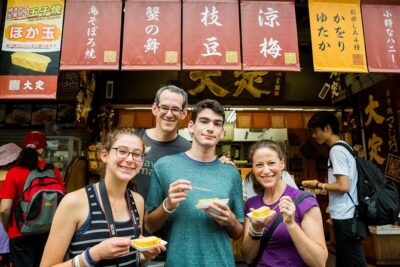
Tokyo Tsukiji Fish Market Food and Culture Walking Tour
Read our review →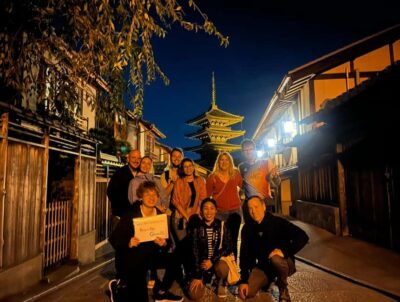
Gion Magical Night Walking Tour with Geisha Trivia
Read our review →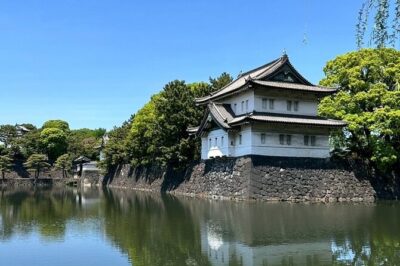
Imperial Palace and Shogun Historical Walking Tour
Read our review →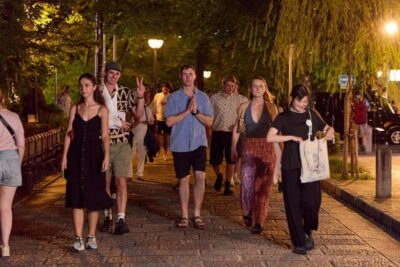
Gion Geisha District Walking Tour – Stories of Geisha
Read our review →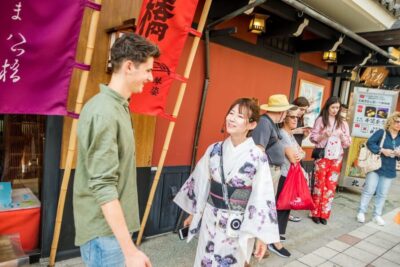

Shinjuku Local Bar and Izakaya Guided Walking Tour
Read our review →
Browse the lists this tour appears in