
Reviewed · WALKING TOURS
Kyoto: Gion Magical Night Walking Tour
Gion feels different after sunset. This 1-hour-40-minute walk brings you through Kyoto’s famous geisha quarter when the streets are calmer, with stops at lantern-lit shrines, old lanes, pagodas, and less obvious corners. I especially like the small-group format and the way guides such as Karen, Ricky, May, Hina, Pam, and Sho have added local stories rather than simply pointing out buildings. The main drawback is the amount of walking, including slopes and stairs, and the tour may feel brisk if you want long temple visits.
I also like the price: $29.60 per person is fair for a compact cultural introduction to Gion, especially if you are seeing the district for the first time. Just keep your expectations in check. This is a guided street walk, not an evening inside a geisha house, and spotting a maiko or geiko is possible but never guaranteed.
In This Review
- Key points to know before you book
- Why Gion works so well at night
- Starting on Gionmachi Minamigawa
- Yasui-Konpiragu and Kyoto’s relationship traditions
- Sannenzaka, Ninenzaka, and the Yasaka Pagoda view
- The memorial with the large Kannon statue
- The 400-year-old temple garden and bamboo grove
- Yasaka Shrine and the end of the walk
- What the guides add to the walk
- Is $29.60 good value?
- Practical details that affect your experience
- Who should book the Gion night walk?
- Should you book it?
- FAQ
- How long does the Kyoto Gion Magical Night Walking Tour last?
- What is the price of the tour?
- Where does the tour begin?
- Where does the tour finish?
- How large is the group?
- Will I definitely see a maiko or geiko?
- Is the tour suitable for people who do not like stairs or hills?
- Can I cancel for a full refund?
Key points to know before you book
- Quiet nighttime route: Gion’s lanes, shrines, and pagodas take on a calmer mood after the daytime crowds thin out.
- Small group of up to 10 people: The experience is advertised as a maximum of eight in one description, with additional information allowing up to 10, so expect a small group rather than a private tour.
- Geisha culture explained with care: The guide covers maiko and geiko life, etiquette, and their place in Kyoto society.
- Several major sights in a short time: The route includes Gionmachi Minamigawa, Yasui-Konpiragu, Sannenzaka and Ninenzaka, Yasaka Shrine, and additional temple or memorial stops.
- Good photo conditions: Lanterns, pagodas, shrine gates, and quiet streets offer better evening atmosphere than a busy daytime stroll.
- Walking shoes matter: Hills, stairs, and roughly 100 minutes on foot make comfort more important than looking elegant.
Why Gion works so well at night
Gion is often treated like an outdoor museum of wooden townhouses and geisha traditions. During the day, that can be hard to appreciate. Tour groups fill the lanes, people stop suddenly for photos, and the narrow streets lose some of their old-town mood.
This walk is timed for the evening, when the district becomes quieter and the lights begin to do the decorating. Several stops are beautifully illuminated by street lamps and shrine lanterns. A little rain may even reduce the number of people around, though the tour can be canceled in poor weather.
I like this timing because the tour is not trying to force a grand daytime sightseeing schedule into a short walk. Instead, it uses the nighttime setting to show you a softer side of Gion. The atmosphere is one of the main reasons to book.
The tour begins at Minamiza Theater, beside the east end of Shijo Bridge. You finish at 625 Gionmachi Kitagawa, so this is a point-to-point walk rather than a loop back to the theater. That matters when planning dinner, a train connection, or your next stop.
More Walking Tours in Kyoto
- Kyoto Geisha Walking Tour: Gion District & Hidden Gems
★ 4.7 · 3,273 reviews - Kyoto: Gion Magical Night Walking Tour with Geisha Trivia
★ 4.9 · 2,393 reviews - Kyoto: Gion Geisha District Walking Tour – Stories of Geisha
★ 4.7 · 2,187 reviews
Starting on Gionmachi Minamigawa
The first stop is Gionmachi Minamigawa, one of Kyoto’s best-known streets. This is where the tour starts to explain how Gion functions, not just how it looks.
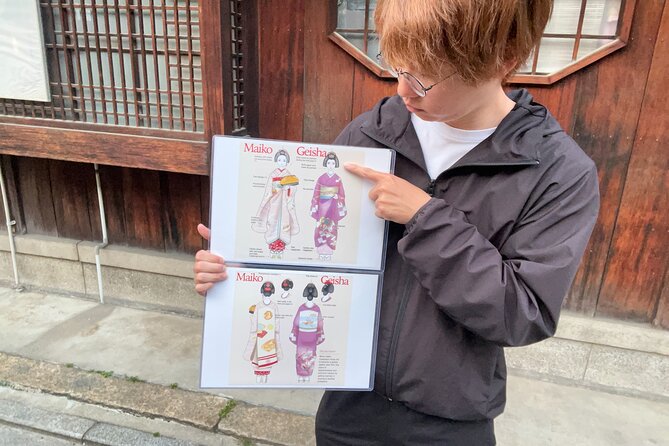
The street is associated with traditional entertainment houses, tea houses, and the geisha world. Your guide discusses the difference between a maiko and a geiko, along with the customs surrounding them. Guides have also explained how these women fit into Kyoto society in both earlier times and today.
You might see a maiko or geiko here, but treat that as luck, not the purpose of the tour. If one passes by, the useful advice is simple: smile, say Konnichiwa, and let her continue. Do not block the lane, chase her, touch her, or photograph her without permission. A small-group walk is helpful here because it is less intrusive than joining a large crowd around a working neighborhood.
The strongest guides add something personal. One guide shared family connections to the geisha world, including photographs and stories about a great-great-grandmother who had been a geisha. Another guide, Sho, brought a strong local connection and clear affection for Kyoto. Those personal details can turn a general explanation into something you remember.
Yasui-Konpiragu and Kyoto’s relationship traditions
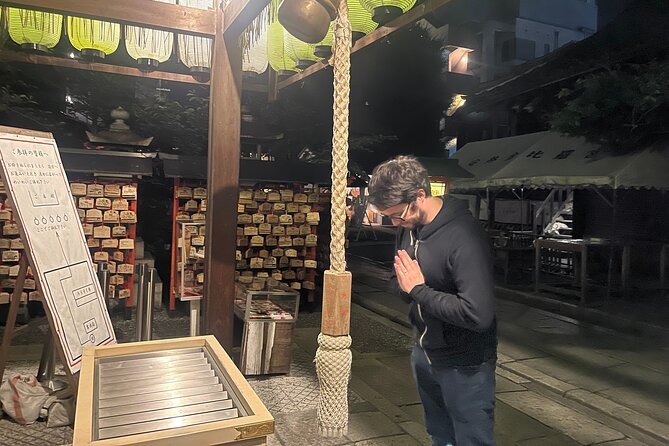
The next stop, Yasui-Konpiragu, offers a different window into local belief. This shrine is associated with ending harmful relationships and strengthening good ones. Its appeal is practical and personal, not just architectural.
The shrine is said to help people cut ties with bad relationships while reinforcing healthy bonds between couples. That makes it an easy place to understand, even if you know little about Japanese religious customs. Your guide can explain how people use the shrine and why it matters in everyday life.
Expect about 10 minutes here. That is enough for an explanation, a look around, and photographs, but not a long religious visit. If you prefer to read every sign or pray at length, you may want to return independently.
This stop also helps prevent the tour from becoming only a geisha lesson. Gion is a living neighborhood shaped by shrines, private hopes, local customs, and ordinary routines. The best part of the walk is the connection between those pieces.
Sannenzaka, Ninenzaka, and the Yasaka Pagoda view
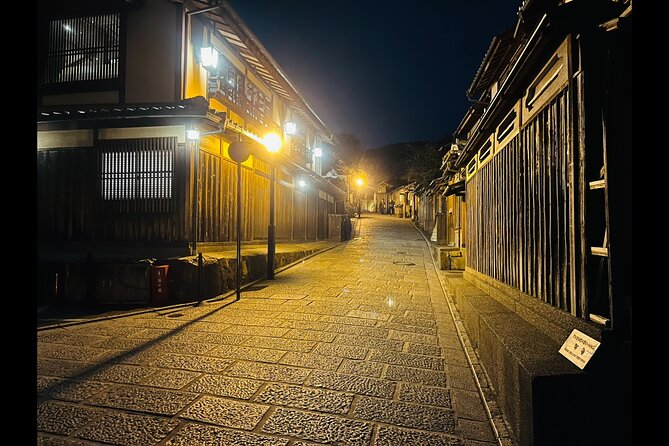
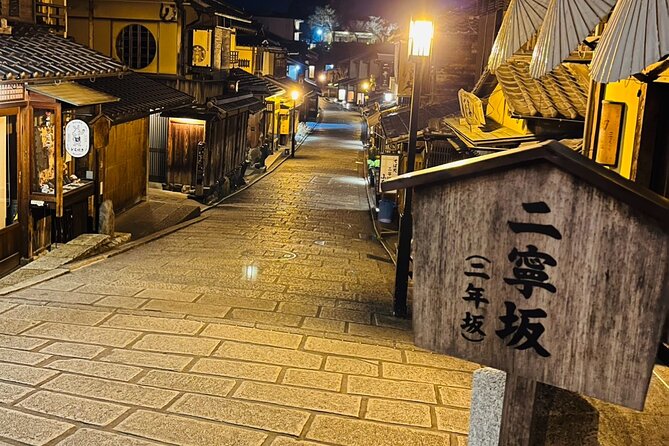
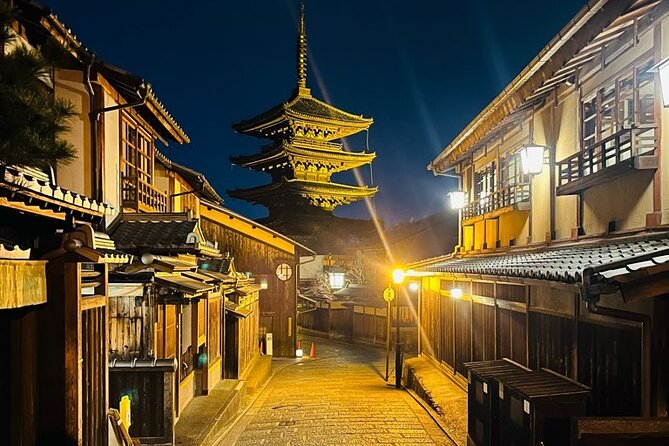
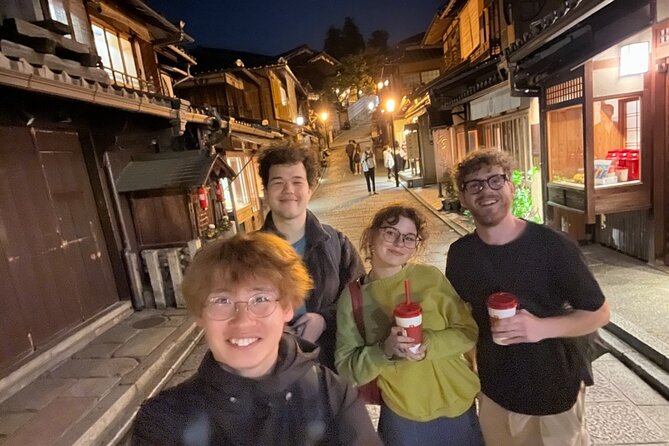
The Sannenzaka and Ninenzaka area brings the classic Kyoto scenery. These sloping lanes lead toward Kiyomizu-dera and preserve a traditional townscape of wooden buildings, tiled roofs, shops, and narrow streets.
Yasaka Pagoda is the visual star here. It is especially popular in photographs, and its shape gives you a strong sense of old Kyoto even when the surrounding area is busy. At night, the pagoda and nearby streets can feel calmer and more atmospheric than they do under the midday sun.
This is also where you should pay attention to your footing. The route includes slopes and stairs, and one review specifically described the uphill walking as worthwhile but noticeable. Wear shoes with good support. This is not the time for footwear chosen only to match your dinner outfit.
The 20-minute stop is long enough to enjoy the townscape and take pictures. It is not enough for a full visit to Kiyomizu-dera, and temple admission is not part of the stated tour. Think of this section as an introduction to the approach roads and surrounding neighborhood, not a temple tour.
A completely different kind of day out:
- PERFECT KYOTO 1-Day Bus Tour
★ 5.0 · 13,518 reviews - [Kyoto & Nara Day Tour] Sagano Scenic Railway & Nara Park & Fushimi Inari Taisha Thousand Torii Gates & Togetsukyo Bridge & Bamboo Grove & Kimono Forest (Departing from Osaka)
★ 4.9 · 10,942 reviews - Kyoto: Fushimi Inari, Kinkakuji, Bamboo Grove 1 Day Bus Tour
★ 4.8 · 4,316 reviews - Kyoto: Tea Ceremony in a Traditional Tea House in Kiyomizu
★ 4.9 · 3,519 reviews
The memorial with the large Kannon statue
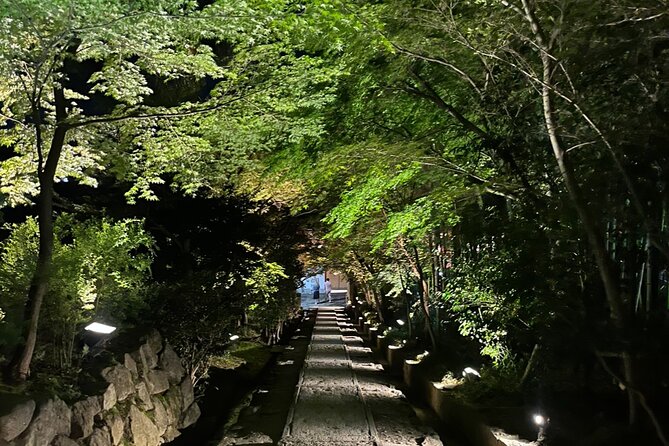
The route also includes a memorial built in 1955 for the repose of those killed in World War II. Its most striking feature is a very large statue of Kannon.
This stop adds a serious note to the walk. Gion and eastern Kyoto are not only postcard scenery and entertainment history. Religious sites here also reflect grief, remembrance, and the way communities honor the dead.
The supplied details do not give the stop a name or a fixed visit length, so you should expect a brief explanatory visit rather than a long guided exploration. Still, it is a useful contrast with the more cheerful streets and illuminated shrines.
The 400-year-old temple garden and bamboo grove
Another stop is a temple founded about 400 years ago by the wife of a shogun to mourn her husband. The grounds include a garden, a 400-year-old tea ceremony house, and a bamboo grove.
This sounds like one of the more peaceful sections of the walk. Gardens are often best seen in quiet conditions, and the nighttime setting can make the bamboo and old buildings feel removed from the noise of the main streets. The tea house also gives the guide a natural opening to explain tea culture and the care placed on traditional spaces.
The information provided does not identify this temple by name or state whether the tour enters every building. I would not book the experience expecting a full garden visit or a tea ceremony. Instead, consider it a short cultural stop along the walking route.
Yasaka Shrine and the end of the walk
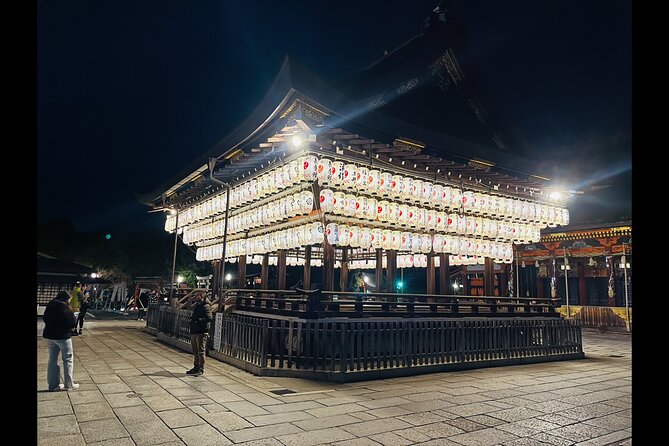
Yasaka Shrine is the final named stop. It is the head shrine of roughly 2,300 related shrines across Japan and is widely known in Kyoto as Gion-san.
The shrine is linked with protection from bad luck, good fortune, and beauty. At night, its lanterns and gates make a strong closing scene. The stop is scheduled for about 10 minutes, which gives you time to listen, look around, and take photographs.
I like ending here because the shrine brings together several ideas from the tour: local religion, Gion’s identity, seasonal customs, and the continuing role of old institutions in modern Kyoto. You finish in Gionmachi Kitagawa, a convenient place to continue exploring on your own.
Remember that this is a short stop, not a full shrine visit. If you want to spend time at every gate, prayer area, or sign, return later when you can set your own pace.
What the guides add to the walk
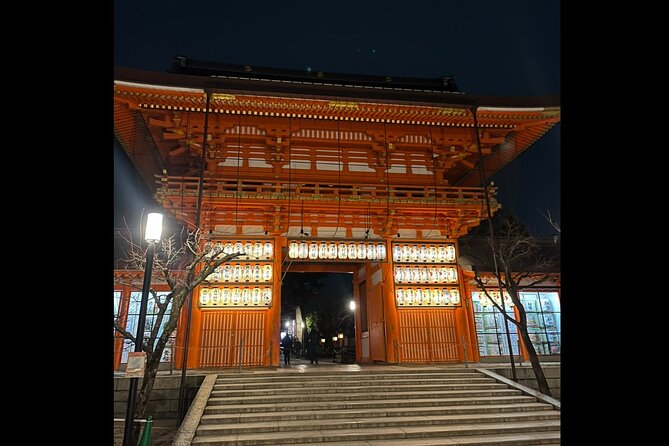
The quality of a short walking tour depends heavily on the guide. Here, the guide names praised most often include Karen, Ricky, May, Hina, Pam, and Sho.
Karen has been especially effective with cultural explanations, questions, and family groups. She has also been described as patient with children and able to keep a gentle pace. Ricky brought strong historical and cultural background, including explanations of maiko and geiko life in past and present Kyoto.
May has been praised for enthusiasm and useful information about Gion. Hina offered personal family insights and an engaging presentation. Pam handled the route well and added interesting details at several stops.
Sho has received positive comments for local knowledge, warmth, and passion for Kyoto. One note pointed out that English was still developing, so a question was not always answered perfectly. That is worth considering if you need highly detailed English explanations, although the overall impression was still positive.
The guides do not all offer the same style. Some focus on facts and religious customs, while others rely more on stories and personal connections. That variation is normal for a guide-led tour, but the consistent strengths are friendliness, enthusiasm, and the chance to ask questions in a small group.
Is $29.60 good value?
At $29.60, this is a reasonably priced introduction to Gion. You are paying for a guide who connects the sights, explains local customs, and gets you to several areas you might otherwise pass without understanding.
The value is strongest if this is your first visit to Kyoto or your first evening in Gion. A self-guided walk can show you the same streets, but it will not necessarily explain why Yasui-Konpiragu is associated with relationships, how maiko and geiko differ, or why Yasaka Shrine matters beyond its attractive gates.
The price is less compelling if you already know Gion well and prefer to explore alone. The tour does not include a meal, tea ceremony, geisha performance, or stated temple admissions. It is a compact walking introduction, not a full evening program.
A group of up to 10 is small enough for conversation, though the exact cap appears in the information as both eight and 10. If you want a private experience, this is not advertised as private. If you want a manageable group without the feel of a large procession, it should fit well.
Practical details that affect your experience
The mobile ticket makes arrival simple, but meeting-point accuracy matters. Go to Minamiza Theater, at the east end of Shijo Bridge, and allow enough time to find the stated meeting area. One booking problem involved a person missing the group after communication failed, while the tour itself went ahead at the correct location, so do not rely on last-minute messages for basic directions.
The walk lasts approximately 1 hour and 40 minutes. One person expected only an hour and was surprised by the longer route, so plan for the full duration. The pace includes regular stops, but you will still be on your feet for most of the experience.
Most people can take part, and service animals are allowed. The route is not suitable for anyone uncomfortable with slopes or stairs. Comfortable walking shoes, a small umbrella in uncertain weather, and a phone with enough battery for evening photos are sensible choices.
Free cancellation is available up to 24 hours before the start time for a full refund. Cancellations or changes made within 24 hours are not refunded, and poor weather or too few bookings can lead to a rescheduled tour or full refund.
Who should book the Gion night walk?
I would choose this tour for a first-time Kyoto visitor who wants an easy introduction to Gion without spending half a day in a museum. It also suits couples, families with older children, and anyone who wants cultural context before returning to the district alone.
It is a good match for photographers who like lanterns, pagodas, shrine gates, and quiet streets. It also suits people curious about geisha culture but unsure how to approach the subject respectfully.
I would think twice if you have limited mobility, dislike walking uphill, or want a long, unhurried visit at each shrine. You should also skip it if your main goal is a guaranteed maiko sighting. The tour can increase your chances by taking you through the right district at a useful time, but no ethical guide can promise that a working performer will appear.
Should you book it?
Book it if you want a short, affordable cultural walk with strong evening atmosphere and a small group. The route covers several important corners of eastern Kyoto, and the best guides make Gion feel like a living neighborhood rather than a stage set.
Skip it if you want a private tour, a sit-down cultural performance, or extended time inside temples and gardens. For most first visits, though, $29.60 is a fair price for getting your bearings, learning the basics of maiko and geiko culture, and seeing Gion after the daytime rush has eased.
FAQ
How long does the Kyoto Gion Magical Night Walking Tour last?
The tour lasts approximately 1 hour and 40 minutes.
What is the price of the tour?
The listed price is $29.60 per person.
Where does the tour begin?
The meeting point is Minamiza Theater in Kyoto, at the east end of Shijo Bridge in Gion.
Where does the tour finish?
The walk ends at 625 Gionmachi Kitagawa in Kyoto’s Higashiyama Ward.
How large is the group?
The tour is described as a small-group experience, with a maximum listed as eight in one description and 10 in the additional information.
Will I definitely see a maiko or geiko?
No. You may see a maiko or geiko if you are lucky, but sightings are not guaranteed.
Is the tour suitable for people who do not like stairs or hills?
No. The route includes slopes and stairs, so it is not recommended if you are uncomfortable with this type of walking.
Can I cancel for a full refund?
Yes. You can cancel at least 24 hours before the start time for a full refund. Cancellations within 24 hours are not refunded.
Just added in Kyoto
- The “Golden Route” and Ancient Japan by DIAMIR Erlebnisreisen – 14-Day Tour★ 2.0 · 2 reviews
- Japan: Castles & Cuisine by G Adventures – 6-Day Kyoto to Osaka Tour★ 4.5 · 4 reviews
- Cycle Japan by Explore! – 13-Day Kyoto to Tokyo Tour★ 4.7 · 12 reviews
- Cycle Japan by Intrepid Travel – 11-Day Kyoto to Tokyo Tour★ 4.8 · 2 reviews
- Classic Japan by Intrepid Travel – 11-Day Kyoto to Tokyo Tour★ 4.4 · 14 reviews
- Ancient & Modern Japan 14-Day Tour by Exodus Adventure Travels★ 4.4 · 40 reviews
- 5 Day Cultural Adventure of Kyoto, Nara & Osaka by Tourist Journey★ 2.5 · 2 reviews
- 12 Days Kinosaki Onsen Escape: A Journey Through Japan’s Timeless Towns by UME Travel★ 4.8 · 5 reviews
Walking Tours, compared.
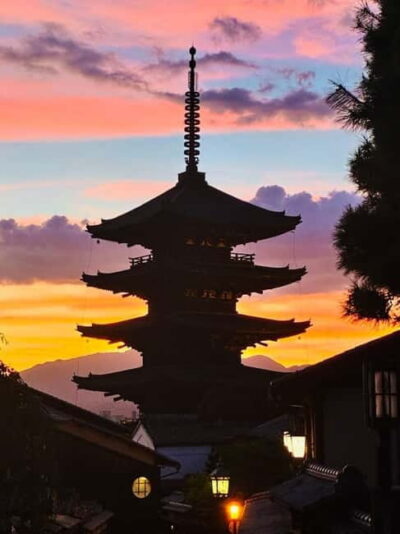
Kyoto Geisha Walking Tour: Gion District & Hidden Gems
Read our review →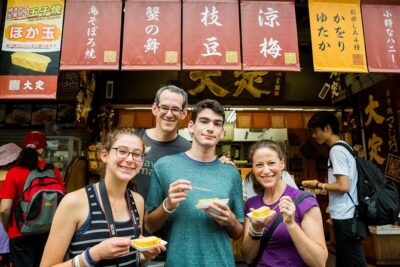
Tokyo Tsukiji Fish Market Food and Culture Walking Tour
Read our review →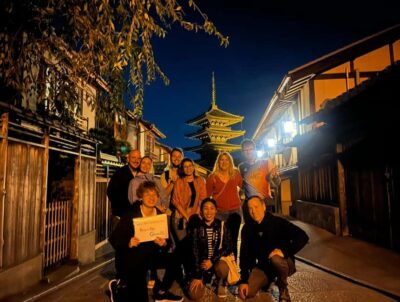
Gion Magical Night Walking Tour with Geisha Trivia
Read our review →
Imperial Palace and Shogun Historical Walking Tour
Read our review →
Gion Geisha District Walking Tour – Stories of Geisha
Read our review →

Shinjuku Local Bar and Izakaya Guided Walking Tour
Read our review →
Browse the lists this tour appears in