
Reviewed · WALKING TOURS
Kyoto: Gion Walking Tour
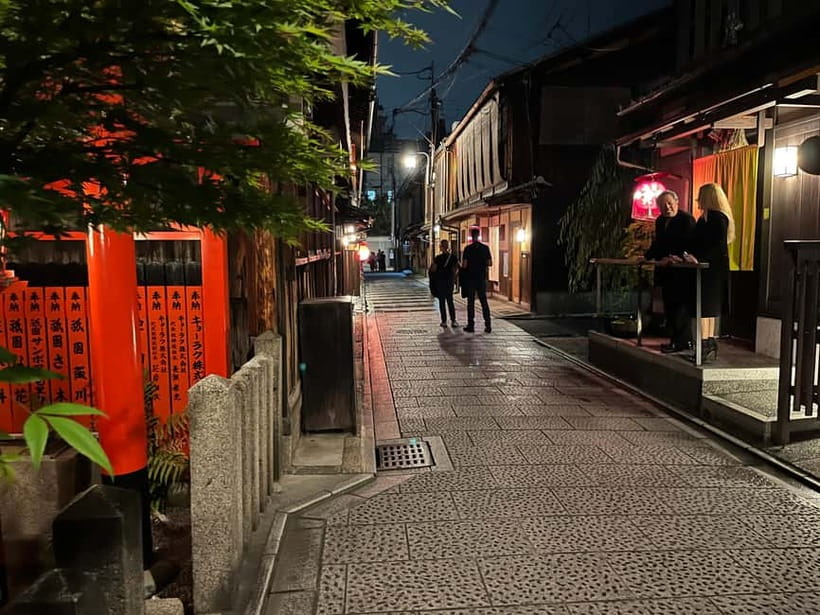
Gion rewards anyone who slows down. This two-hour walk makes Kyoto’s famous entertainment district easier to understand, not just photograph, and I especially like the small group of six and the way guides Jose and Saskia turn questions into part of the tour. I also like that the route reaches Pontocho, Gion-Kobu, and Gion-Higashi instead of stopping at the best-known streets. The main consideration is that Hanamikoji-Dori is not included, and a Maiko or Geiko sighting is never promised.
At $35 per person, this is a fair buy for a focused introduction to Kyoto’s old neighborhoods, especially if you want context before exploring on your own. You walk about 3.3 kilometers, so comfortable shoes matter, and the tour is more about stories, architecture, customs, and daily life than ticking off major temple interiors.
In This Review
- Key points at a glance
- Why this Gion walk is more than a Geisha hunt
- Meeting at Shijo-Kawaramachi
- Pontocho Alley and the Kamo River
- Gion-Kobu and the wooden streets of Shinbashi
- Tatsumi Shrine and Tatsumi Bridge
- Gion-Higashi and the wider district
- Yasaka Shrine and the origin of Gion
- What the guides add to the experience
- How good is the $35 value?
- Who should book this walk?
- Should you book the Gion Walking Tour?
- FAQ
- How long does the Gion Walking Tour last?
- How far do you walk?
- What areas are included?
- Is Hanamikoji-Dori included?
- Will I see a Maiko or Geiko?
- How many people can join the tour?
- Which languages are available?
- Where does the tour meet?
- What should I bring?
- Can I cancel the tour?
Key points at a glance
- Three hanamachi in two hours: See Pontocho, Gion-Kobu, and Gion-Higashi, three of Kyoto’s five traditional Geisha districts.
- A very small group: With a maximum of six participants, you can hear the guide clearly and ask plenty of questions.
- Personal stories from life in Japan: Jose and Saskia add practical observations about Japanese culture and everyday life.
- Details you could easily miss: Traditional wooden Machiya houses, small shrines, statues, bridges, lanes, and older neighborhood features receive careful attention.
- Yasaka Shrine and the Gion Festival: If time allows, the route reaches the former Gion Shrine, the source of the district’s name.
- Several languages: Tours are offered in English, Spanish, Dutch, and French.
Why this Gion walk is more than a Geisha hunt
Gion is often reduced to one idea: Geisha in elegant dress moving through a narrow lane. That picture is part of the district, but it is only a small piece of what you see here.
This tour places Gion within Kyoto’s wider story. You learn how the district developed, why the hanamachi matter, and how Maiko and Geiko training, work, and routines fit into traditional entertainment culture. The guide also points out how old buildings, streets, waterways, shrines, and bridges connect to the city’s past.
I like this approach because it gives you a better way to look at Gion after the tour ends. A wooden facade becomes more than a pretty backdrop. A small shrine is no longer just another place to pass. You begin to notice how the neighborhood works.
The guides also welcome questions about Japan beyond Gion. You can ask about customs, food, modern life, Japanese history, or something you noticed earlier in your trip. Several guides use an iPad with old photographs, maps, and other visual material, which helps show how Kyoto has changed over time.
More Walking Tours in Kyoto
- Kyoto Geisha Walking Tour: Gion District & Hidden Gems
★ 4.7 · 3,273 reviews - Kyoto: Gion Magical Night Walking Tour with Geisha Trivia
★ 4.9 · 2,393 reviews - Kyoto: Gion Geisha District Walking Tour – Stories of Geisha
★ 4.7 · 2,187 reviews
Meeting at Shijo-Kawaramachi
The meeting point is in front of the Disney Store at Kyoto Shijo-Kawaramachi. There is only one Disney Store in Kyoto, and the guide waits seated nearby with an iPad showing the Get Your Guide image and the tour name.
This is a practical meeting place in central Kyoto, but give yourself enough time to find it. The area can be busy, and the guide may not be standing with a large sign or waving from a distance. Look for the iPad rather than expecting a traditional tour flag.
The walk lasts two hours and covers roughly two miles. That is manageable for most people, but the route includes ordinary city streets, bridges, alleys, and historic neighborhoods. You should bring water, wear comfortable shoes, and pack sun protection. A hat, sunscreen, and an umbrella are sensible choices, since the tour runs outdoors.
Pontocho Alley and the Kamo River
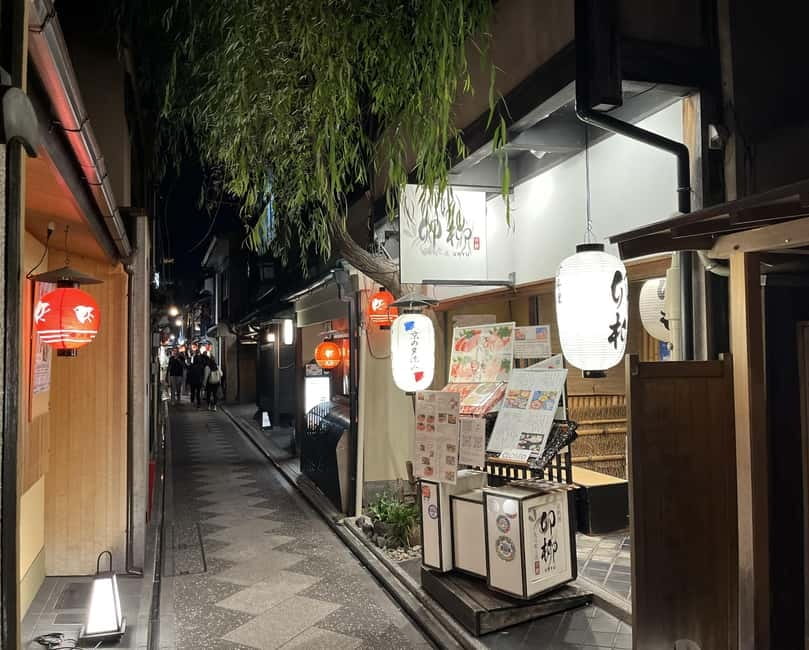
The first stretch takes you through Pontocho Alley, one of Kyoto’s best-known traditional entertainment areas. It is a narrow corridor lined with restaurants and buildings connected with the city’s evening dining and performance culture.
Pontocho is useful as an opening stop because it shows how Kyoto’s entertainment districts are arranged. You are not simply walking through an old street. You are seeing a place where food, music, performance, hospitality, and traditional arts have long overlapped.
The route then reaches Pontocho Kaburenjo, associated with performances by artists from the Pontocho district. The stop helps explain the structure of a hanamachi and the importance of dance and stage performances within Geiko and Maiko culture.
You also walk beside the Kamo River, with stops connected to the Yagi-san and Kita-san statues. These details are easy to overlook without a guide. The route does not rely only on large monuments, which is one of its strengths. You get a sense of how local memory is preserved in small public features.
At Sanjo Ohashi, the historic bridge provides another useful piece of context. Bridges in Kyoto are not just crossings. They connect major districts and help explain how people moved through the city. From here, the tour continues along Yamato Dori toward Gion.
Gion-Kobu and the wooden streets of Shinbashi
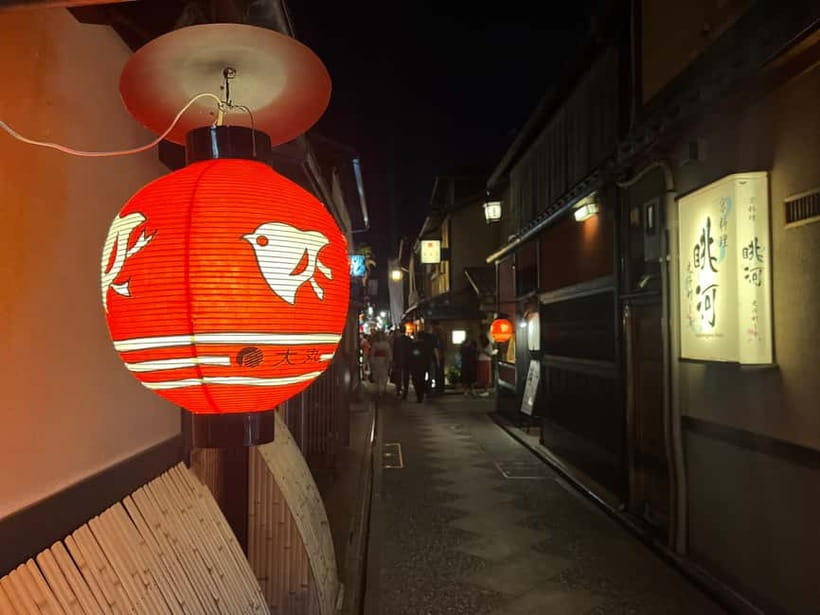
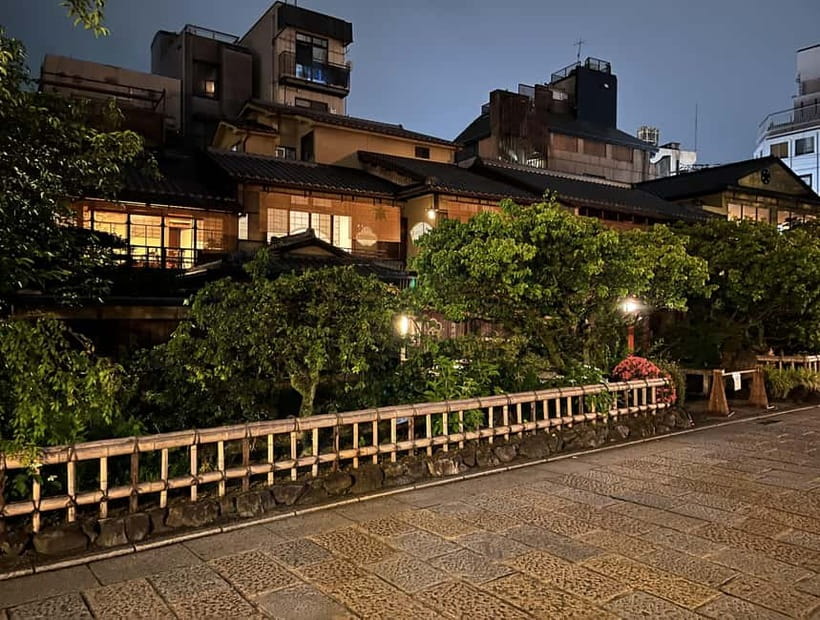
Gion-Kobu is one of Kyoto’s traditional hanamachi, and the route includes Gion-Shinbashi Dori and Gion Shirakawa. This is the part of the walk many people picture when they imagine old Kyoto: timber buildings, narrow lanes, water, and carefully preserved streets.
The guide explains the national historic preservation status of parts of the neighborhood and points out features of the traditional Machiya houses. These homes and businesses were built for a very different way of urban life, with narrow fronts, long interior plots, and design choices shaped by the street.
You will hear about the hanamachi system and the lives of Maiko and Geiko. The language matters. A Maiko is an apprentice, while a Geiko is a professional entertainer in Kyoto. The tour looks at their training, work, practices, and routines rather than treating them as decorative figures for photographs.
That distinction is important. Gion is a living neighborhood, not an open-air stage set. You should listen carefully, avoid blocking lanes, and treat anyone you see with courtesy. The guide can explain what you are looking at, but the tour does not guarantee a sighting.
The small group size makes a real difference here. In narrow streets, six people are much easier to keep together than a large crowd. You can hear the explanation without waiting for a long line of people to gather, and the guide can use photos or an iPad without losing everyone in the lane.
A completely different kind of day out:
- PERFECT KYOTO 1-Day Bus Tour
★ 5.0 · 13,518 reviews - [Kyoto & Nara Day Tour] Sagano Scenic Railway & Nara Park & Fushimi Inari Taisha Thousand Torii Gates & Togetsukyo Bridge & Bamboo Grove & Kimono Forest (Departing from Osaka)
★ 4.9 · 10,942 reviews - Kyoto: Fushimi Inari, Kinkakuji, Bamboo Grove 1 Day Bus Tour
★ 4.8 · 4,316 reviews - Kyoto: Tea Ceremony in a Traditional Tea House in Kiyomizu
★ 4.9 · 3,519 reviews
Tatsumi Shrine and Tatsumi Bridge
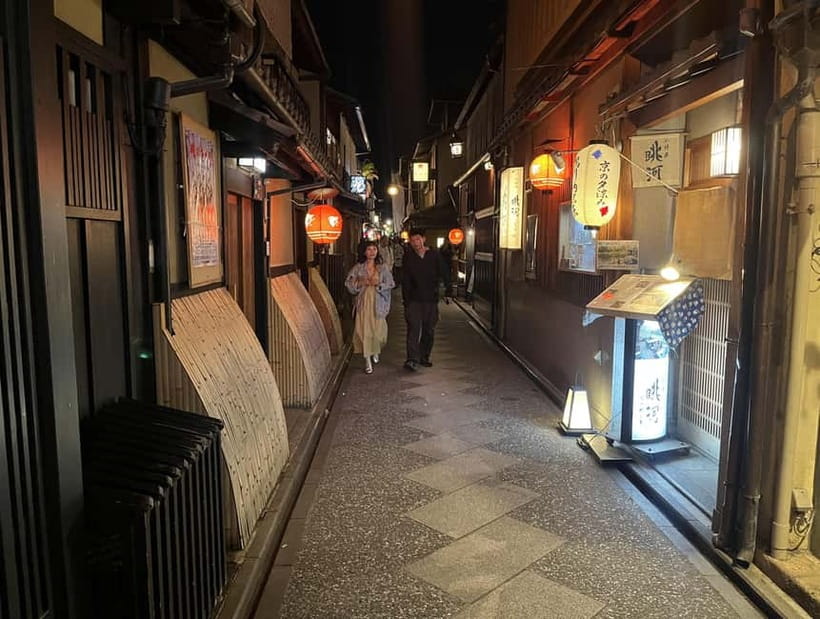
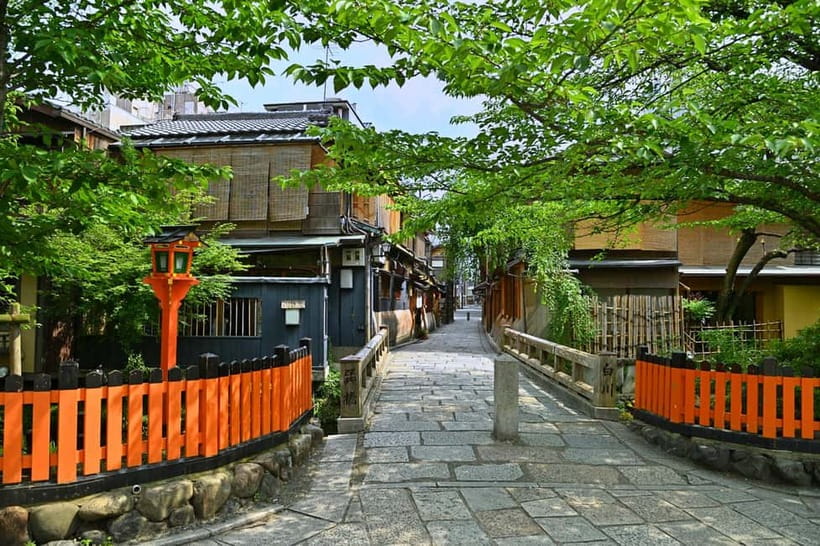
The route continues to Tatsumi Jinja and Tatsumi Bridge, two small but meaningful stops within Gion-Kobu. The appeal is not scale. These places reward attention to setting and local tradition.
Tatsumi Shrine gives the guide another chance to discuss the relationship between neighborhood life and religious practice. Tatsumi Bridge adds a picturesque crossing and helps you understand how the waterways and lanes shape the district.
This is also where the tour’s pace seems especially well judged. Guides stop often for short explanations rather than delivering one long speech while walking. That format lets you look around, ask a question, and then move on before the information becomes tiring.
Several people who took the walk with Jose or Saskia praised this conversational rhythm. The guides are described as warm, energetic, and willing to answer repeated questions without losing patience. That makes the experience a good fit if you prefer a discussion to a memorized lecture.
Gion-Higashi and the wider district
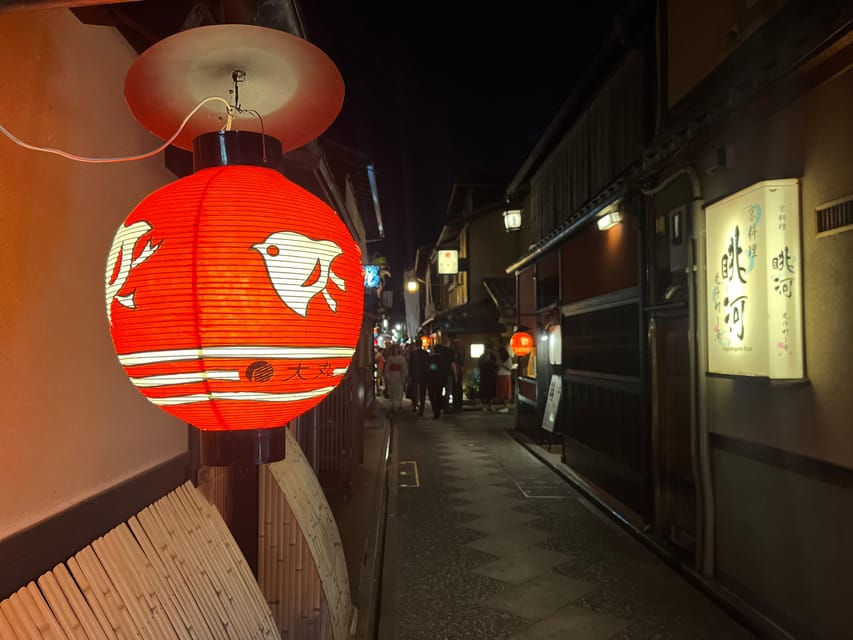
Gion-Higashi is the third hanamachi on the route. Seeing three districts in one walk gives you a broader view of Kyoto’s traditional entertainment quarters and prevents Gion from being treated as one uniform area.
The guide explains how the different hanamachi relate to one another and how the Maiko and Geiko world operates within them. You also get more observations about architecture, local customs, and the way historic neighborhoods function alongside present-day Kyoto.
This section is especially valuable for people who have already wandered through Gion and felt they were seeing only attractive streets. With a guide, familiar places can look completely different. Small signs, building details, side lanes, and neighborhood boundaries begin to make sense.
The route does not include Hanamikoji-Dori. That is worth noting before you book, since many visitors expect the main tourist street to be the center of every Gion walk. Here, the focus is on a wider selection of historic areas rather than that single famous road.
Yasaka Shrine and the origin of Gion
If time allows, the tour visits Yasaka Shrine, formerly known as Gion Shrine. The district takes its name from this shrine, whose connection with Gion reaches back more than 1,100 years.
Yasaka Shrine gives the walk a larger religious and historical frame. It is not only a pretty shrine stop. It helps explain why the surrounding district developed as it did and how religious institutions shaped Kyoto’s neighborhoods.
The guide may also explain the Gion Festival, one of Japan’s three most important and famous festivals. The festival’s origins are tied to the same long history associated with Gion and Yasaka Shrine.
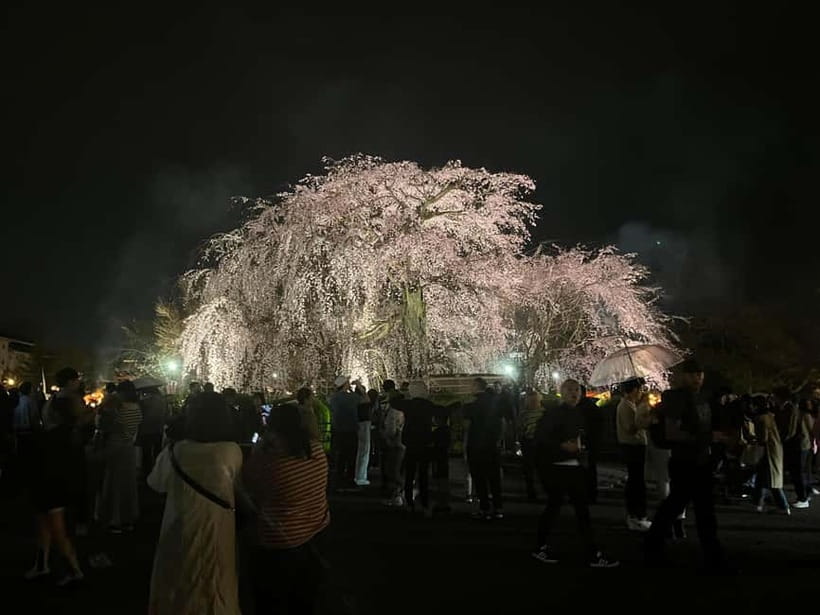
Timing affects this part of the route. The tour description says the shrine visit happens if time allows, so you should not treat it as an absolute guarantee. The route may also change during cherry blossom season, generally from late March into early April, to include attractive blossom viewing points around Gion.
Some morning and midday departures, specifically the 9:45 and 12:30 tours, can include a free visit to the Gion Gallery if you want to extend your time. That is an optional extra rather than part of the basic two-hour promise.
What the guides add to the experience
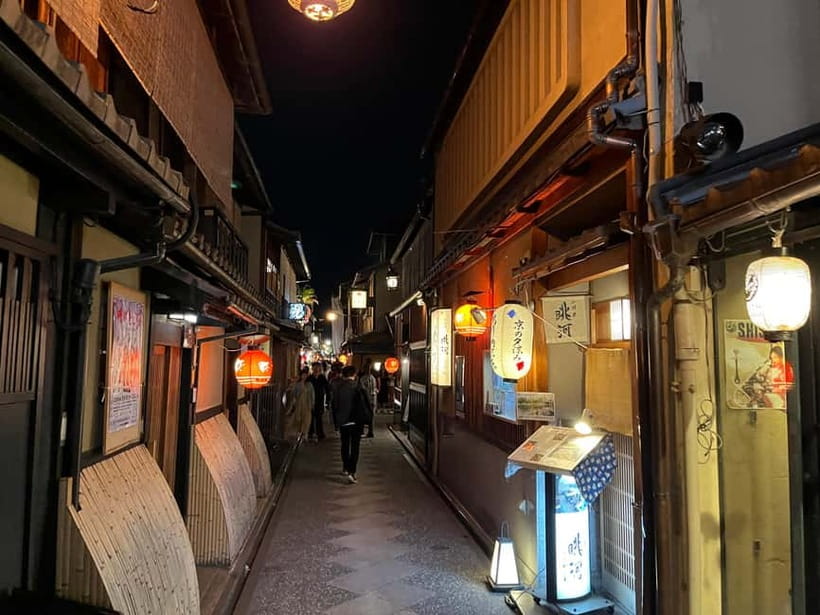
The strongest part of this walk is the guide-led conversation. Jose is repeatedly praised for his enthusiasm, clear English, preparation, and ability to connect historical details with modern life. Saskia receives similar praise for her energy, careful explanations, and Dutch-language guiding.
Both guides have lived in Japan for years and share personal observations about daily life. That does not replace local history, but it gives the tour a useful second layer. You can ask what a custom looks like today, not just how it worked in the past.
You may also get recommendations for food after the tour. Jose has suggested ramen and other lunch or dinner options to people finishing the walk, though restaurant recommendations are an extra kindness, not a formal part of the experience.
The guides also use humor and memorable comparisons. One tour included a playful explanation of what Geisha clans and football teams have in common. That sort of image can make an unfamiliar social system easier to remember.
The tone is enthusiastic, but the best moments seem to come from the back-and-forth. If you arrive with questions about Japan, this is the kind of tour where you can ask them. If you prefer silence and quick photo stops, you may find the amount of explanation more than you want.
How good is the $35 value?
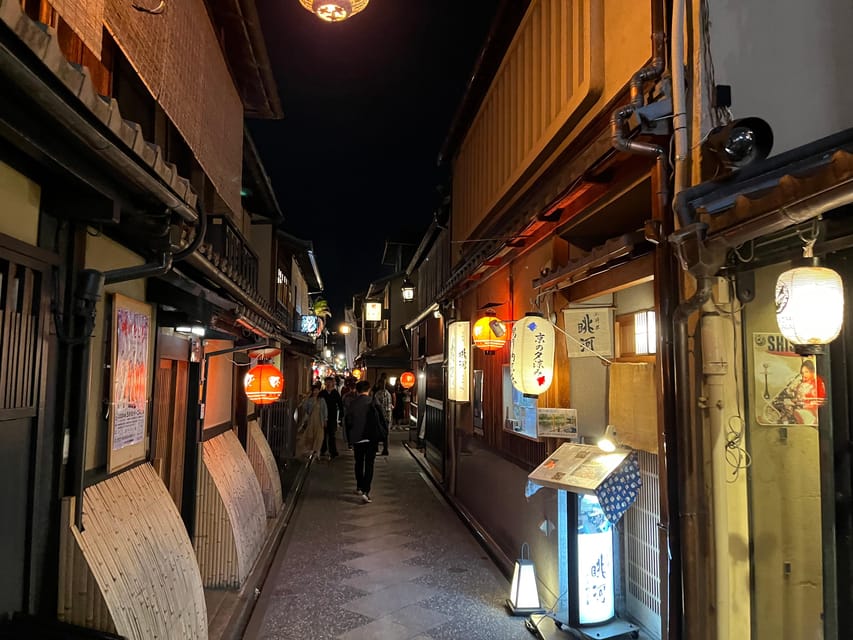
At $35 per person, the tour costs more than simply walking through Gion on your own, but the comparison is not quite fair. You are paying for two hours of organized interpretation, a maximum group size of six, multilingual options, and access to details that are easy to miss.
For a first visit to Kyoto, I think the price is reasonable. You are covering three hanamachi, river and bridge areas, historic streets, small shrines, and possibly Yasaka Shrine. The route also helps you plan later visits, since you will know which areas deserve another look.
The value is strongest for couples, families, and small groups who like to ask questions. Families can keep the pace manageable, and the stories help younger visitors connect buildings and customs to real people. People staying only briefly in Kyoto can use the walk as a quick orientation to central historic areas.
It is less useful if you want entry to major temples, a food tasting, a Geisha performance, or a guaranteed Maiko sighting. No amenities are provided, and this is a walking and explanation tour rather than a package with snacks, transportation, or admissions.
The cancellation terms add useful flexibility: you can cancel up to 24 hours ahead for a full refund, and you can reserve while paying later. Check the available start times when booking, since the tour is offered at set times rather than running continuously.
Who should book this walk?
I would choose this tour if you want to understand Gion instead of simply passing through it. It suits first-time visitors, repeat visitors who missed the small details, and anyone curious about Maiko and Geiko culture without wanting a formal stage show.
It is also a strong pick for people who value small groups. With only six places, the guide can adjust the discussion to your interests. You can ask about a shrine, a roofline, a festival, or daily life in Japan and receive an answer while the detail is still in front of you.
The route is not difficult, but you should be ready to walk 3.3 kilometers outdoors. Bring water and dress for the weather. During cherry blossom season, expect a slightly changed route, with the goal of showing attractive blossoms around Gion.
Should you book the Gion Walking Tour?
Book it if you want a friendly, question-friendly introduction to Gion, especially if you care about history, architecture, and the real structure behind Kyoto’s Geisha districts. The praise for Jose and Saskia is consistent: their energy, preparation, personal stories, and ability to explain small details are the main reason this tour earns its price.
Skip it if you mainly want Hanamikoji-Dori, temple interiors, food, or a guaranteed Maiko or Geiko sighting. For everyone else, this is a practical two-hour start to Kyoto that can change how you see the district for the rest of your trip.
FAQ
How long does the Gion Walking Tour last?
The tour lasts two hours.
How far do you walk?
The route covers about 3.3 kilometers, or roughly two miles.
What areas are included?
The route includes Pontocho, Gion-Kobu, and Gion-Higashi, along with areas such as Pontocho Alley, Gion-Shinbashi Dori, Gion Shirakawa, Tatsumi Shrine, Tatsumi Bridge, Yamato Dori, and Yasaka Shrine if time allows.
Is Hanamikoji-Dori included?
No. Hanamikoji-Dori is not included in the itinerary.
Will I see a Maiko or Geiko?
A Maiko or Geiko sighting cannot be guaranteed.
How many people can join the tour?
The small group is limited to six participants.
Which languages are available?
The live guide languages are English, Spanish, Dutch, and French.
Where does the tour meet?
The meeting point is in front of the Disney Store at Kyoto Shijo-Kawaramachi. The guide waits with an iPad showing the Get Your Guide image and the tour name.
What should I bring?
Bring comfortable shoes, water, sunscreen, a sun hat, and an umbrella.
Can I cancel the tour?
Yes. You can cancel up to 24 hours in advance for a full refund. You can also reserve now and pay later.
Just added in Kyoto
- The “Golden Route” and Ancient Japan by DIAMIR Erlebnisreisen – 14-Day Tour★ 2.0 · 2 reviews
- Japan: Castles & Cuisine by G Adventures – 6-Day Kyoto to Osaka Tour★ 4.5 · 4 reviews
- Cycle Japan by Explore! – 13-Day Kyoto to Tokyo Tour★ 4.7 · 12 reviews
- Cycle Japan by Intrepid Travel – 11-Day Kyoto to Tokyo Tour★ 4.8 · 2 reviews
- Classic Japan by Intrepid Travel – 11-Day Kyoto to Tokyo Tour★ 4.4 · 14 reviews
- Ancient & Modern Japan 14-Day Tour by Exodus Adventure Travels★ 4.4 · 40 reviews
- 5 Day Cultural Adventure of Kyoto, Nara & Osaka by Tourist Journey★ 2.5 · 2 reviews
- 12 Days Kinosaki Onsen Escape: A Journey Through Japan’s Timeless Towns by UME Travel★ 4.8 · 5 reviews
Walking Tours, compared.
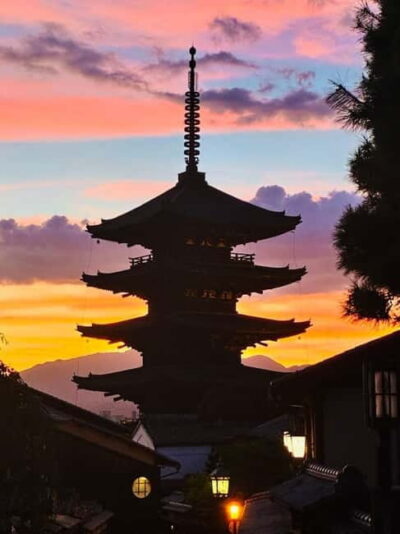
Kyoto Geisha Walking Tour: Gion District & Hidden Gems
Read our review →
Tokyo Tsukiji Fish Market Food and Culture Walking Tour
Read our review →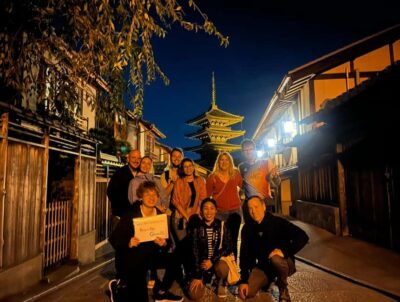
Gion Magical Night Walking Tour with Geisha Trivia
Read our review →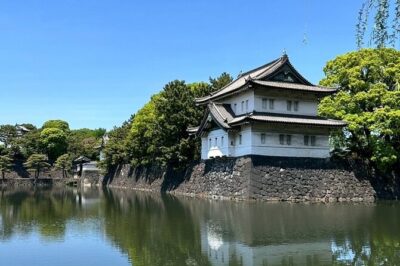
Imperial Palace and Shogun Historical Walking Tour
Read our review →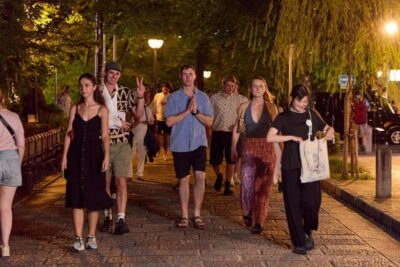
Gion Geisha District Walking Tour – Stories of Geisha
Read our review →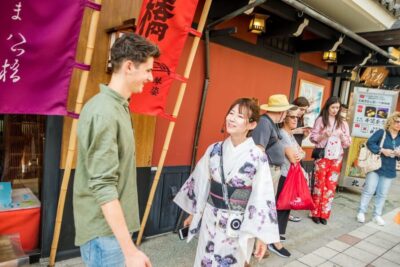

Shinjuku Local Bar and Izakaya Guided Walking Tour
Read our review →
Browse the lists this tour appears in