
Reviewed · WORKSHOPS
Kyoto: Hands-on Takoyaki and Okonomiyaki Cooking (1 Hour)
Come hungry, leave with two Japanese classics.
This one-hour Kyoto class gives you a useful taste of everyday Kansai cooking, not just a demonstration from across the room. I like the hands-on format, where you actually prepare and cook both okonomiyaki and takoyaki, and I like the small groups of up to six, which leave room for questions and personal help. The main consideration is the short schedule: one hour is enough for a focused cooking session, but not for a long cultural lecture or a slow, elaborate meal.
The location also works well in a busy Kyoto day. You can reach it in about 10 minutes on foot from Shijo Station or Karasuma Station, and it is roughly a 15-minute walk from Nishiki Market. The class costs $56 per person, which is fair if you value active participation and a meal, though a quick restaurant stop would cost less.
In This Review
- Five Things to Know Before You Book
- What You Actually Cook in the One-Hour Class
- The Arrival Near Shijo and Karasuma
- How the Cooking Session Flows
- Making Okonomiyaki, Japan’s Savory Pancake
- Turning Takoyaki Without the Pressure
- The Value of a $56 Cooking Experience
- Dietary Options and Group Size
- Who Will Enjoy This Most
- Planning It Around Nishiki Market
- What the Feedback Tells You
- Should You Book This Kyoto Cooking Class?
- FAQ
- How long does the cooking experience last?
- What dishes do I make?
- Is the class suitable for beginners?
- What languages are available?
- How many people can join the class?
- Where does the class meet?
- How do I reach the location?
- Can the class accommodate dietary restrictions?
Five Things to Know Before You Book
- You cook two dishes in one hour: The class covers both okonomiyaki and takoyaki, using related ingredients and cooking methods.
- The setting is small and casual: A maximum of six participants makes it easier to ask questions and get help at the griddle.
- Dietary needs can be handled: Gluten-free, vegan, halal-friendly, and allergy-free ingredients are available when requested at booking.
- The address is easy to fit into a Kyoto itinerary: It is about 10 minutes from Shijo or Karasuma stations and about 15 minutes from Nishiki Market on foot.
- Instruction is available in English and Japanese: The December 2025 update says experienced instructors now lead or supervise every class.
- The class ends with your own meal: Ingredient costs, lunch or dinner food, an apron, and cooking utensils are included.
What You Actually Cook in the One-Hour Class
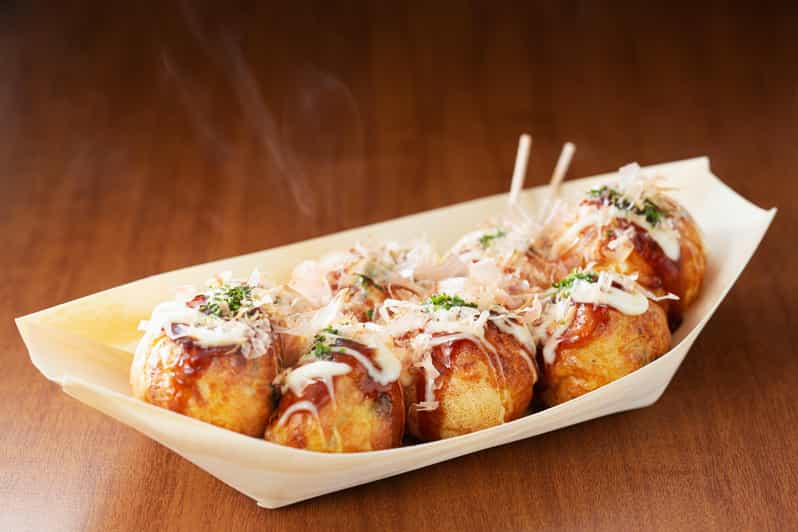
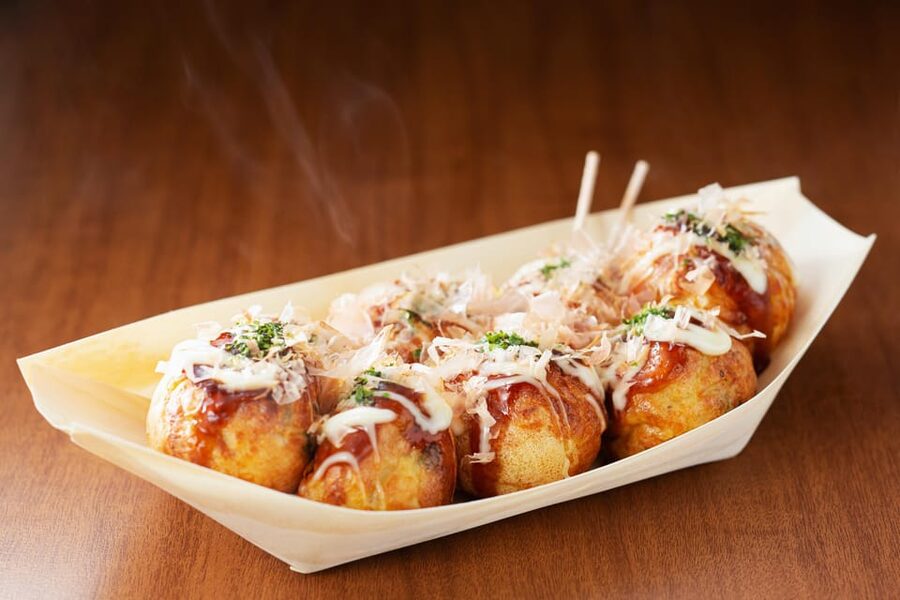
The appeal here is simple: you make two of Japan’s best-known casual foods instead of watching somebody else do it.
Okonomiyaki is a savory pancake made from a batter and other ingredients, then cooked on a hot surface and finished with toppings. Takoyaki are small, round batter-based bites traditionally made with octopus. Both foods are closely tied to Osaka and the wider Kansai region, which makes this a fitting cooking activity for a Kyoto visit.
You prepare the dishes yourself, at your own pace, with the instructor nearby to offer guidance and answer questions. That is important for first-time cooks. You do not need to arrive knowing how to handle the equipment or how these dishes are assembled.
The recipes also make practical sense together. They use similar ingredients and cooking methods, but the finished foods feel quite different. Okonomiyaki is broad and filling. Takoyaki are smaller, round, and more fiddly to cook. In one compact session, you get a useful comparison between two familiar Japanese comfort foods.
The class is not built around a long history talk. You may hear that okonomiyaki has been enjoyed since the Taisho era, from 1912 to 1926, while takoyaki became popular during the Showa era, from 1926 to 1989. But the main lesson comes through your hands: mixing, cooking, adjusting, and eating.
A few more options to weigh up in Kyoto
- PERFECT KYOTO 1-Day Bus Tour
★ 5.0 · 13,518 reviews - [Kyoto & Nara Day Tour] Sagano Scenic Railway & Nara Park & Fushimi Inari Taisha Thousand Torii Gates & Togetsukyo Bridge & Bamboo Grove & Kimono Forest (Departing from Osaka)
★ 4.9 · 10,942 reviews - Kyoto: Fushimi Inari, Kinkakuji, Bamboo Grove 1 Day Bus Tour
★ 4.8 · 4,316 reviews
The Arrival Near Shijo and Karasuma
Getting there should be straightforward, though you need to pay attention to the final directions.
The venue is about a 10-minute walk from either Shijo Station or Karasuma Station. From JR Kyoto Station, plan on about 15 minutes by train or bus, followed by a short walk. If you are already near Nishiki Market, the class is approximately 15 minutes away on foot.
At the building, take the elevator to the third floor and press the doorbell for room 302. That final instruction matters in Kyoto, where small venues can be located inside ordinary buildings rather than in a shopfront with a large sign.
I would allow a few extra minutes for finding the building and reaching the third floor. This is especially sensible if you are arriving with children, carrying shopping bags from Nishiki Market, or trying to make a fixed dinner reservation afterward.
The class has set starting times, so check the available slot before planning the rest of your day. With only one hour of cooking, it can fit neatly between sightseeing stops, but arriving late would cut into an already short activity.
How the Cooking Session Flows
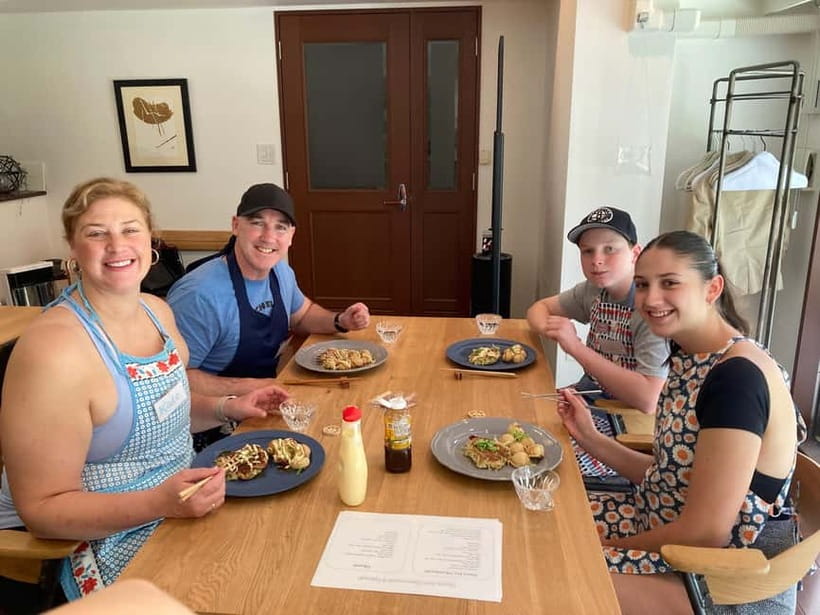
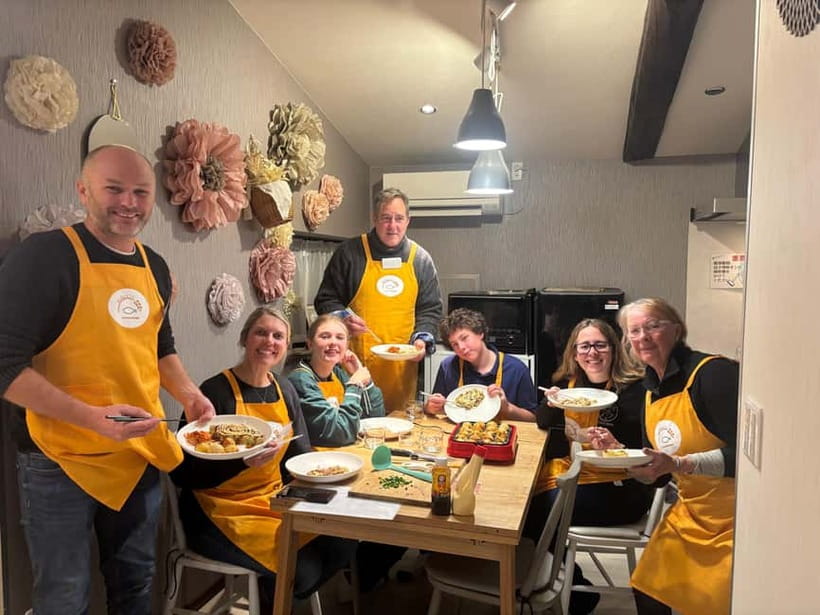
The format is informal and active. You put on a rented apron, use the provided utensils, and begin working with the ingredients. The instructor supports the process rather than turning the hour into a formal cooking lecture.
That approach suits you if you learn by doing. Instead of trying to remember a long list of instructions, you can ask about each step as it comes up. The instructor can share tips, answer questions, and help you keep the cooking moving.
A private class for two received especially strong praise for its friendly atmosphere and open conversation about Japan. Another small class had only two participants, which allowed more direct interaction with the hosts and more discussion about Japanese food culture. The published capacity is six, so your level of individual attention may depend on how many people book your time.
The recent operating update is worth noting. As of December 2025, all sessions are led or supervised by experienced instructors, and the class flow has been refined to fit the one-hour limit. That change addresses the main weakness raised in one earlier account, where the host arrived late, preparation was not finished, and the cooking felt rushed.
That criticism should not be ignored. A one-hour class needs good timing, and an unprepared start would take away a large part of the value. The newer supervision policy is designed to make the experience more orderly, but I would still arrive on time and keep expectations realistic. This is a short, friendly workshop, not a full culinary course.
Making Okonomiyaki, Japan’s Savory Pancake
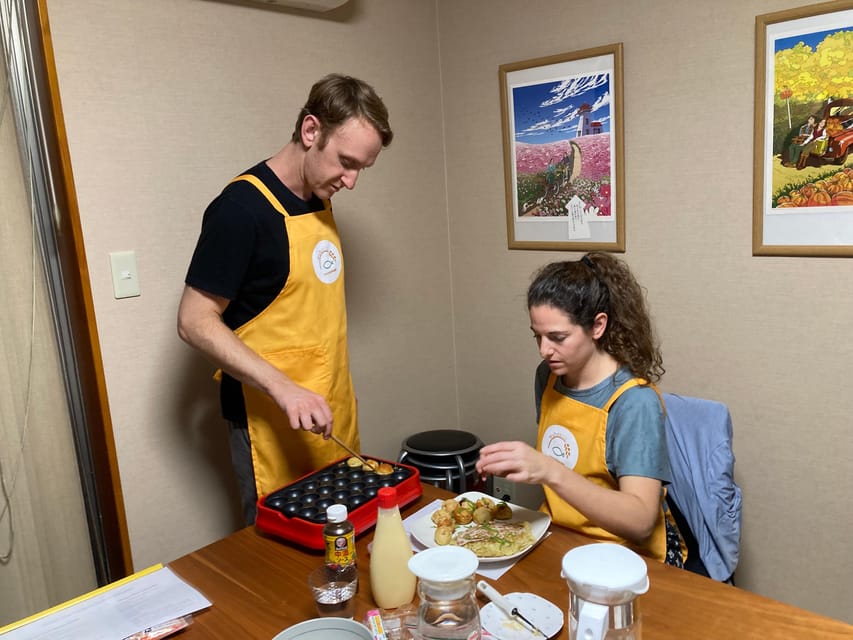
Okonomiyaki gives you the more forgiving part of the lesson.
You work with a batter and savory ingredients, then cook the mixture on a hot surface. The instructor can guide you through the basic method and help you understand the texture and timing. Since you eat the finished dish soon after cooking, you get an immediate sense of how the ingredients come together.
This is also where the class offers more than a meal. Okonomiyaki is easy to recognize in restaurants, but preparing it yourself gives you a better idea of why it is such a popular everyday food. It is filling, flexible, and built around a simple cooking method that you can try again at home.
The dish is associated particularly strongly with Kansai, making it a good match for Kyoto. You are not simply making a generic Japanese recipe. You are working with a food tradition that belongs to the region you are visiting.
If you have dietary restrictions, tell the provider when you book. Gluten-free, vegan, halal-friendly, and allergy-free ingredients can be prepared, but the kitchen needs advance notice. Do not wait until you arrive and assume substitutions will be possible on the spot.
A completely different kind of day out:
- Kyoto: Tea Ceremony in a Traditional Tea House in Kiyomizu
★ 4.9 · 3,519 reviews - Kyoto: Gion Make Your Own Chopsticks with Engraving Option
★ 5.0 · 3,465 reviews - Kyoto Nara Day Trip │ Kiyomizu-dera Temple + Fushimi Inari-taisha Shrine + Nara Park (Departing from Osaka/Kyoto)
★ 4.7 · 3,408 reviews - Kyoto Geisha Walking Tour: Gion District & Hidden Gems
★ 4.7 · 3,273 reviews
Turning Takoyaki Without the Pressure
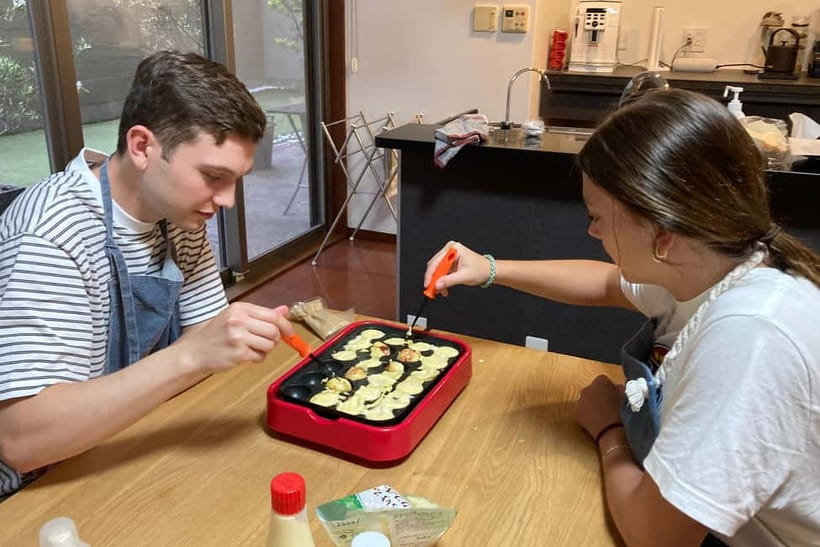
Takoyaki is the more playful challenge.
The batter is cooked in small round spaces, and the pieces must be shaped and turned as they cook. The process can feel awkward at first, especially if you have never used a takoyaki pan. That is exactly why doing it with an instructor nearby is more useful than simply eating takoyaki from a street stall.
The goal is not perfect restaurant presentation. The value comes from learning how the dish changes as it cooks and getting a feel for the turning technique. You can work at your own pace, with support when you need it.
The two recipes also make a smart pairing for a one-hour class. They share some basic ingredients and methods, so you do not spend the whole session learning unrelated preparations. At the same time, the different shapes and textures keep the activity from feeling repetitive.
Once both dishes are cooked, you sit down and eat what you made. That final meal is included in the price. It also gives the class a satisfying finish, particularly if you schedule it around lunch or dinner.
The Value of a $56 Cooking Experience
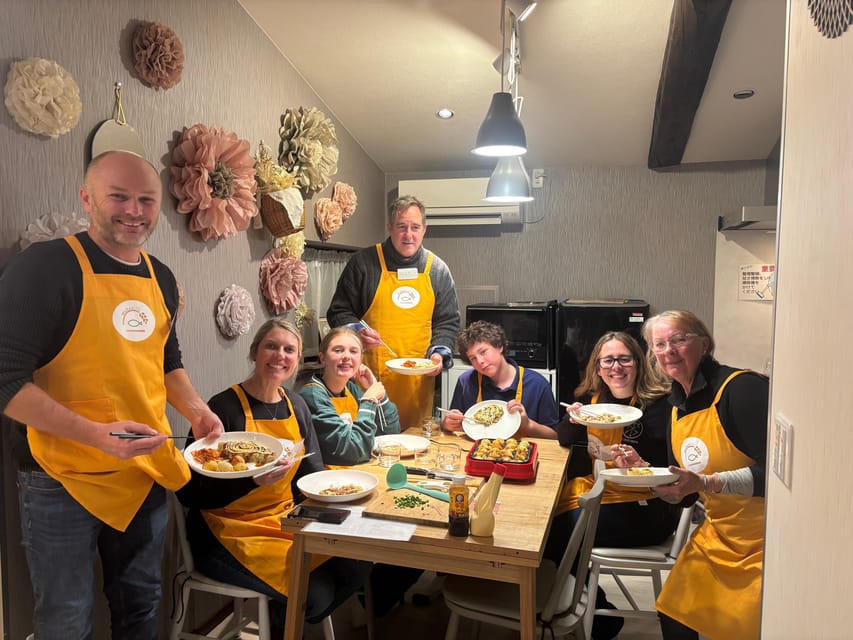
At $56 per person, this is more expensive than ordering okonomiyaki and takoyaki at a casual restaurant. If your only goal is to eat these foods, you can spend less and finish faster.
The price makes more sense if you want an activity as well as a meal. You are paying for one hour of instruction, ingredients, cooking space, an apron, utensils, and the chance to prepare both dishes. A small group also gives the experience more personal contact than a large demonstration.
I see the strongest value for first-time visitors to Japan, couples, families, and anyone who wants an easy food activity between major sights. You do not need a full afternoon free, and you do not need prior cooking skills.
The value is weaker for anyone seeking advanced technique. The class is beginner-friendly and compact. It will introduce you to the basics, but it is unlikely to cover restaurant-level detail, regional variations, or a large number of recipes.
The meal matters, too. Since you eat what you prepare, the class does not feel like paying for a lesson and then buying lunch separately. Still, appetite alone should not be your reason to book. A restaurant offers faster service and more consistent presentation.
Dietary Options and Group Size
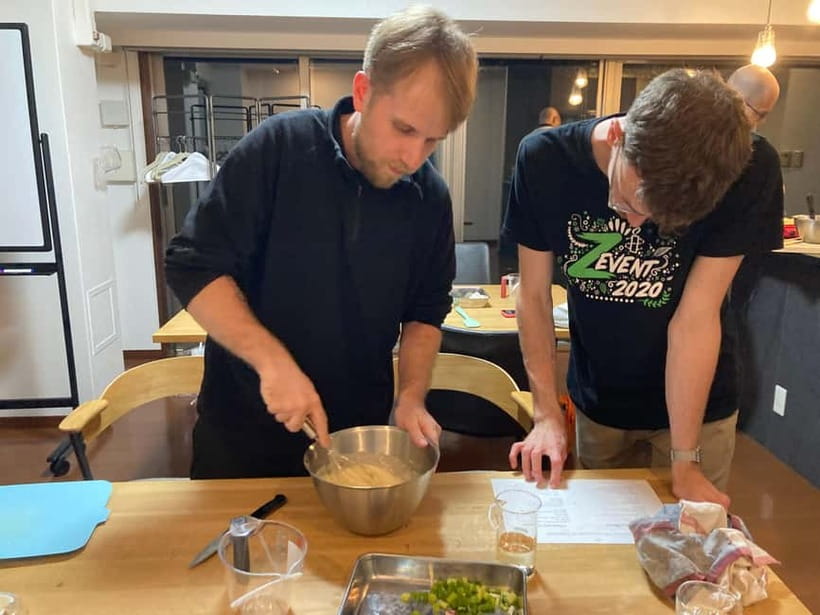
The dietary flexibility is one of the most useful features here.
Gluten-free, vegan, halal-friendly, and allergy-free ingredients are available, provided you state your needs when booking. This can make a cooking activity possible for people who often have to skip shared food experiences.
You should be clear about every restriction before arrival. The information specifically asks for dietary needs at the time of booking so the ingredients can be adjusted. Ingredient changes may affect what you cook, but the class remains focused on the same two dishes.
The group limit is six. That is small enough to keep the room personal without requiring a private booking. If your time has only two participants, you can expect more direct conversation and help. With a full group, you will still have an instructor who can answer questions, but each person may receive less one-on-one attention.
English and Japanese are the available teaching languages. English-speaking participants can take part without needing Japanese, while Japanese speakers may find the bilingual setting comfortable.
Who Will Enjoy This Most
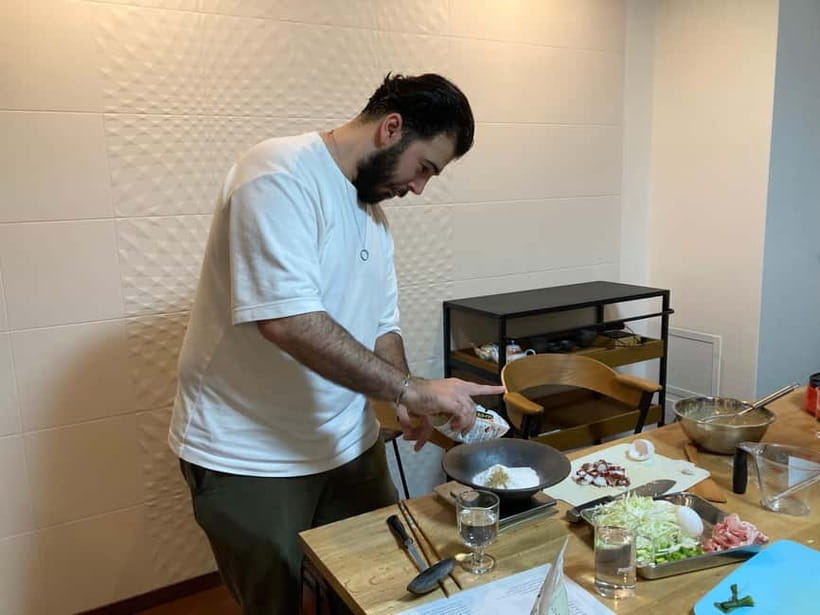
I would recommend this class to you if you want a short, low-pressure way to connect with Japanese food.
It is especially suitable for:
- First-time visitors who want more than sightseeing photos
- Couples looking for a shared activity
- Families who prefer doing something together
- People with limited time in Kyoto
- Beginner cooks
- Anyone interested in Kansai comfort food
- Diners who need gluten-free, vegan, halal-friendly, or allergy-aware ingredients
It may not suit you if you want a long lesson with several courses, detailed culinary theory, or a professional kitchen setting. The atmosphere is casual, and the class is designed to keep moving within one hour.
I also would not book it as the centerpiece of your entire food education in Japan. Think of it as a practical introduction. You learn enough to understand the dishes, enjoy the process, and perhaps try making them again at home.
Planning It Around Nishiki Market
The location gives you an easy itinerary choice.
You could visit Nishiki Market first, then walk about 15 minutes to the class. That pairing lets you see Japanese ingredients and food stalls before making two Kansai favorites yourself. Keep in mind that a market visit can make you less hungry, so plan your tasting stops with some restraint.
You could also schedule the class after sightseeing around Shijo and Karasuma. The nearby stations make it simple to continue across central Kyoto afterward.
Because the activity lasts only one hour, it does not require the planning commitment of a half-day cooking course. I would still leave a cushion around it. The directions include a walk, an elevator ride, and a room entrance rather than a clearly marked street shop, so a rushed arrival could be stressful.
What the Feedback Tells You
The strongest pattern is personal attention and a friendly atmosphere.
Marie was praised as kind, cheerful, and enjoyable to work with. One couple appreciated learning how locals prepare these foods at home and having guides who welcomed questions about Japan. Another small group valued the chance to talk about Japanese food culture while cooking.
Several short accounts describe the experience as enjoyable and well handled, including praise for personal attention. That matches the basic design of the class: a small group, direct participation, and time to eat together afterward.
The one clear caution concerns preparation and timing. An October 2025 session was described as improvised, with a late host, unfinished setup, recipe notes consulted during the class, and cleaning that began before the participants had left. That is a serious concern in a one-hour experience.
The December 2025 update says experienced instructors now lead or supervise all classes, with a refined flow for the limited time. I would treat that as an important improvement, while still recognizing that the price depends on the session being organized and on time.
Should You Book This Kyoto Cooking Class?
Book it if you want to make your own food, not simply eat it, and if one hour is the right size for your schedule. The combination of okonomiyaki and takoyaki gives you two classic Japanese dishes, while the small group and friendly instruction keep the activity approachable.
The $56 price is reasonable for a cooking lesson plus lunch or dinner, especially if you value personal attention and need dietary adjustments. It is not the cheapest way to eat, and it is not an advanced course.
My practical advice is to tell the provider about dietary needs at booking, arrive early enough to find room 302, and choose a time that leaves breathing room afterward. For a first visit to Japan, this is a pleasant way to turn familiar food into a hands-on memory. For serious cooks, it may feel too brief.
FAQ
How long does the cooking experience last?
The experience lasts one hour.
What dishes do I make?
You make okonomiyaki and takoyaki, two popular Japanese comfort foods associated especially with the Kansai region.
Is the class suitable for beginners?
Yes. The class is designed to be casual and beginner-friendly, with instructor support while you prepare and cook the dishes.
What languages are available?
Instruction is available in English and Japanese.
How many people can join the class?
The small group is limited to six participants.
Where does the class meet?
Take the elevator to the third floor and press the doorbell for room 302.
How do I reach the location?
The venue is about a 10-minute walk from Shijo Station or Karasuma Station. From JR Kyoto Station, it takes about 15 minutes by train or bus, followed by a short walk. It is also about a 15-minute walk from Nishiki Market.
Can the class accommodate dietary restrictions?
Yes. Gluten-free, vegan, halal-friendly, and allergy-free ingredients are available. You must provide this information when booking so the ingredients can be prepared accordingly.
Just added in Kyoto
- The “Golden Route” and Ancient Japan by DIAMIR Erlebnisreisen – 14-Day Tour★ 2.0 · 2 reviews
- Japan: Castles & Cuisine by G Adventures – 6-Day Kyoto to Osaka Tour★ 4.5 · 4 reviews
- Cycle Japan by Explore! – 13-Day Kyoto to Tokyo Tour★ 4.7 · 12 reviews
- Cycle Japan by Intrepid Travel – 11-Day Kyoto to Tokyo Tour★ 4.8 · 2 reviews
- Classic Japan by Intrepid Travel – 11-Day Kyoto to Tokyo Tour★ 4.4 · 14 reviews
- Ancient & Modern Japan 14-Day Tour by Exodus Adventure Travels★ 4.4 · 40 reviews
- 5 Day Cultural Adventure of Kyoto, Nara & Osaka by Tourist Journey★ 2.5 · 2 reviews
- 12 Days Kinosaki Onsen Escape: A Journey Through Japan’s Timeless Towns by UME Travel★ 4.8 · 5 reviews
Workshops, compared.
Sushi Making Tokyo Roll and Authentic Japanese Sushi Class
Read our review →
Gion Make Your Own Chopsticks with Engraving Option
Read our review →
Roll and Authentic Sushi Making Class in Asakusa
Read our review →
Ramen Cooking Class at Ramen Factory in Kyoto
Read our review →
Tokyo Asakusa Chopsticks Workshop: Make Your Own Pair
Read our review →
Ring Making Workshop : Vintage Japanese Coin Ring
Read our review →Browse the lists this tour appears in