
Reviewed · WORKSHOPS
Kyoto: Japanese Archery Workshop with Experienced Instructor
The bow is taller than you expect. Kyoto’s one-hour Kyudo workshop offers a rare look at Japanese archery as a disciplined martial art, not a quick target-shooting game. I like the small groups of four and the chance to learn directly from Master Yamaguchi, an instructor with more than 50 years of practice and a sixth-grade Kyudo teaching rank. I also like the calm pace, with attention given to posture, breathing, grip, and the meaning behind each movement.
The main consideration is communication. The instructor teaches in Japanese, although an assistant provides English interpretation and materials. That arrangement works well, but you should be ready to learn partly through demonstration, gestures, and repetition. The hands-on guidance can also include physical corrections to your stance and bow hold, so mention any preference in advance.
In This Review
- Key points before you book
- Why Kyudo feels different from ordinary archery
- Meeting Master Yamaguchi in a four-person studio
- The first lesson: posture, bow hold, and respect
- Shooting arrows without rushing the process
- The cultural side: calm, discipline, and the meaning of movement
- Location and arrival advice in central Kyoto
- Is $38 a fair price for one hour?
- Who will enjoy this workshop most?
- Practical details for a smoother visit
- Should you book the Kyoto Kyudo workshop?
- FAQ
- How long does the Kyudo workshop last?
- How much does the experience cost?
- Is the Kyudo equipment included?
- Does the instructor speak English?
- How many people can join the group?
- Where does the workshop meet?
- How do I reach the meeting point?
- What should I wear?
Key points before you book
- Master Yamaguchi’s experience: You learn from a senior Kyudo teacher with decades of practice and teaching.
- A four-person limit: The small group gives you time to try the movements and receive individual help.
- More than archery: The session explains Kyudo’s spiritual and cultural side, including its links to focus, calm, and discipline.
- English support is available: The instructor speaks Japanese, while an assistant translates and helps explain the lesson.
- The equipment is provided: You use the bows, arrows, and other Kyudo equipment needed for the class.
- Wear easy-moving clothes: The studio asks you to dress comfortably and allows participants only because space is limited.
Why Kyudo feels different from ordinary archery
Kyudo is Japanese archery, but calling it simply a sport misses the point. The bow is part of a formal practice built around posture, controlled movement, concentration, and respect. You are not just trying to send an arrow toward a target. You are learning how the body, breath, and mind work together.
That difference becomes clear early in the session. The movements have a set order, and several people compare the opening steps to a martial arts form. You may feel that you are learning a short sequence before you are learning to shoot. That is useful context because beginners often expect to pick up a bow and fire immediately.
You will still handle the bow and shoot during the workshop. The difference is that each shot sits inside a larger method. The instructor pays attention to your feet, shoulders, hands, and release rather than treating the target as the only measure of success.
I like this approach for a first introduction to Japanese culture. It gives you something physical to do, but also asks you to slow down. One participant described the practice as both Zen-like and fun, which captures the mood better than calling it an action activity.
A few more options to weigh up in Kyoto
- PERFECT KYOTO 1-Day Bus Tour
★ 5.0 · 13,518 reviews - [Kyoto & Nara Day Tour] Sagano Scenic Railway & Nara Park & Fushimi Inari Taisha Thousand Torii Gates & Togetsukyo Bridge & Bamboo Grove & Kimono Forest (Departing from Osaka)
★ 4.9 · 10,942 reviews - Kyoto: Fushimi Inari, Kinkakuji, Bamboo Grove 1 Day Bus Tour
★ 4.8 · 4,316 reviews
Meeting Master Yamaguchi in a four-person studio
The session takes place at からくり弓道体験場, a Kyudo experience studio in Kyoto. The group limit is four participants, an important detail at a workshop where the teacher needs to watch each person’s form.
Master Yamaguchi is the main reason this class has such weight. The supplied information describes more than 50 years of Kyudo practice and a Kyudo Kyoshi sixth-grade teaching rank. Some class descriptions also refer to his 30 or 60-plus years of experience, so the exact wording varies, but the practical point is clear: you are learning from a highly seasoned instructor.
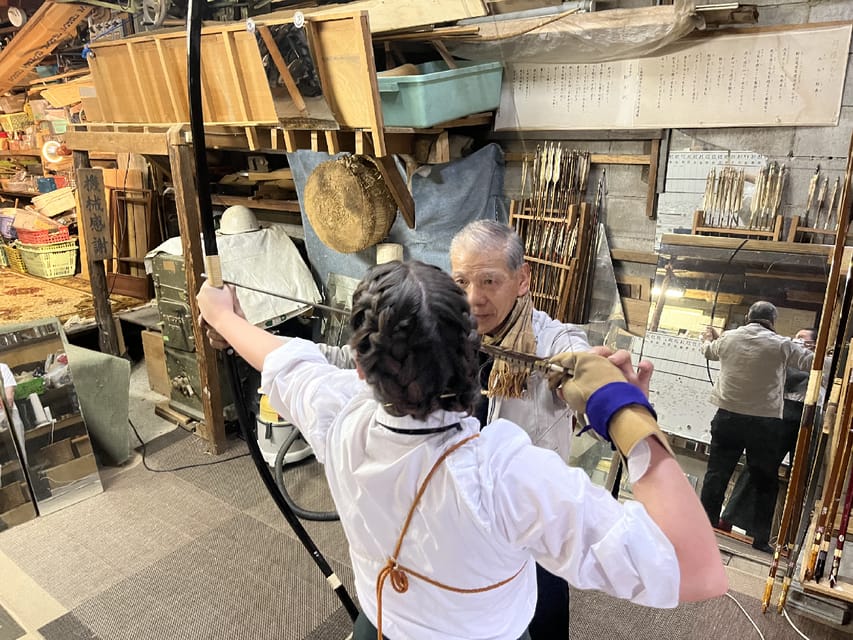
His teaching style is patient, direct, and hands-on. He demonstrates each motion, then helps you copy it. Several participants found him encouraging and attentive, and one particularly useful detail is that he keeps working with beginners even when the bow feels difficult.
An assistant or student interpreter helps bridge the language gap. The assistant explains the history, cultural ideas, and spiritual reasons behind the movements, while Master Yamaguchi shows the physical technique. You should not expect a long English lecture from the instructor himself, but you should expect active help throughout the lesson.
The format also creates a warm, personal atmosphere. With only a few people in the room, you are not lost in a large demonstration. You get time to try, make mistakes, adjust your stance, and try again.
The first lesson: posture, bow hold, and respect
Your hour begins with an introduction to Kyudo and its tools. English materials help explain the practice, while the instructor uses demonstrations to show how the equipment is held and how the body should be positioned.
The first challenge is the stance. Kyudo asks you to place your feet and align your body in a particular way before raising the bow. This can feel formal compared with casual archery, but the structure is the lesson. A correct shot starts well before the arrow leaves the string.
You will also learn the proper bow hold and the basic sequence of movements. The instructor may physically guide your stance or adjust your bow hand. This hands-on method is useful for beginners because a small change in shoulder position or grip can affect the entire motion. If you prefer not to receive physical guidance, tell the provider in advance.
The bow itself may surprise you. One participant noted that it felt heavier than European bows, while another pointed out that the bows are much taller than expected. That is worth knowing if you have limited upper-body strength. The experience is beginner-friendly, but the equipment is not a toy, and drawing the bow takes effort.
A child as young as seven successfully used a smaller bow during one session. That suggests the class can work for families, but you should still consider each child’s strength, attention span, and comfort with a formal lesson. Teenagers aged 12 and 15 also managed well in one family group.
Shooting arrows without rushing the process
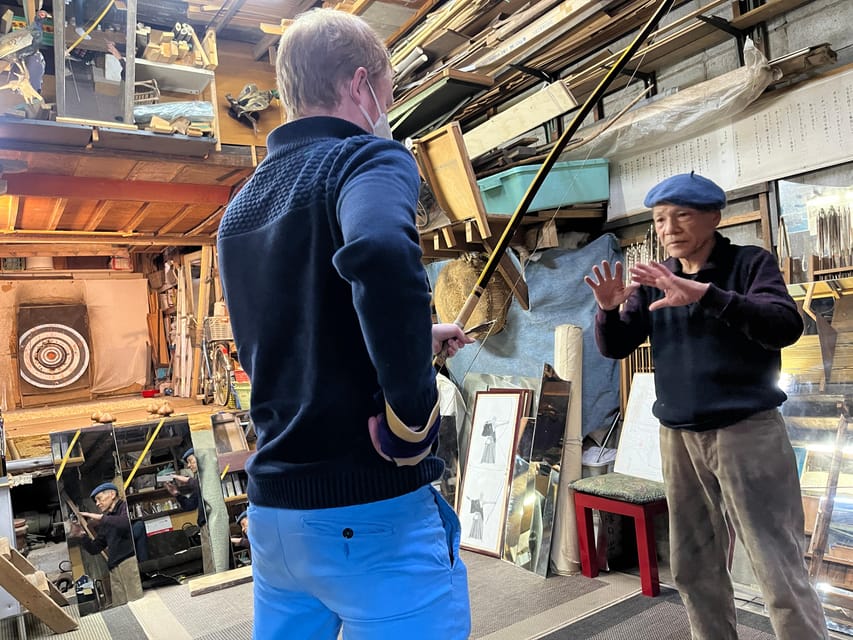
Once you understand the basic form, you begin shooting. The class does not require you to arrive with archery experience. The teacher and assistant guide you through the motions, and you get chances to repeat the process.
This is the part where patience matters. The technique can feel awkward at first because the bow is large, the sequence is unfamiliar, and the release requires control. One participant described the practice as extremely difficult but appreciated the sensei’s patience. That is a fair warning: success may take effort, and your first arrows may not behave as planned.
Still, the workshop gives you a satisfying sense of progress. You may begin by worrying about where to put your feet, then gradually focus on the draw and release. Several participants were pleased to hit the target at least once. You should treat that as a bonus rather than the purpose of the session.
The target gives the lesson a clear finish, but the real value lies in understanding the process. Even if your aim is inconsistent, you leave with a better sense of why Kyudo takes years to master. The contrast between a one-hour introduction and Master Yamaguchi’s decades of practice is part of the experience.
I also like that the lesson avoids turning Kyudo into a theatrical performance. You get to try the bow yourself, not just watch a costumed demonstration. That makes the session feel local and personal.
A completely different kind of day out:
- Kyoto: Tea Ceremony in a Traditional Tea House in Kiyomizu
★ 4.9 · 3,519 reviews - Kyoto: Gion Make Your Own Chopsticks with Engraving Option
★ 5.0 · 3,465 reviews - Kyoto Nara Day Trip │ Kiyomizu-dera Temple + Fushimi Inari-taisha Shrine + Nara Park (Departing from Osaka/Kyoto)
★ 4.7 · 3,408 reviews - Kyoto Geisha Walking Tour: Gion District & Hidden Gems
★ 4.7 · 3,273 reviews
The cultural side: calm, discipline, and the meaning of movement
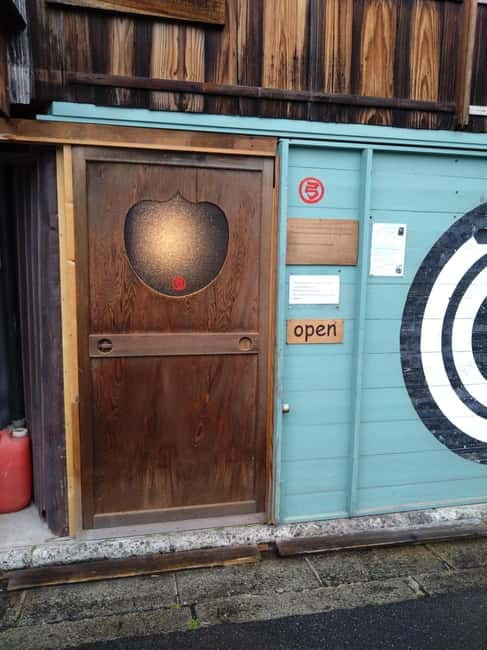
The assistant’s explanations add a layer that you would miss from a simple archery lesson. You learn about Kyudo’s history and the peaceful ideas linked to the practice. The movements are not random instructions. They express a way of approaching concentration, balance, and self-control.
The quiet quality of the workshop is a strong point. One participant called it relaxing, while another preferred its Zen character to a more predictable, cliché version of Japanese culture. That distinction matters. Kyoto offers many polished cultural activities, but this one connects you with a living practice through a teacher who has spent his life studying it.
The class also shows why Kyudo is often treated as a martial art. The opening movements have a formal rhythm, much like a kata. You learn to prepare, raise, draw, and release with care. Even in a short workshop, that order gives the activity a sense of ceremony.
English support makes the cultural material accessible, but this is not a fully English-led experience. You may need to watch closely and ask questions as they arise. The instructor is described as friendly and good at teaching, so do not hesitate to ask the assistant to clarify anything you do not understand.
Location and arrival advice in central Kyoto
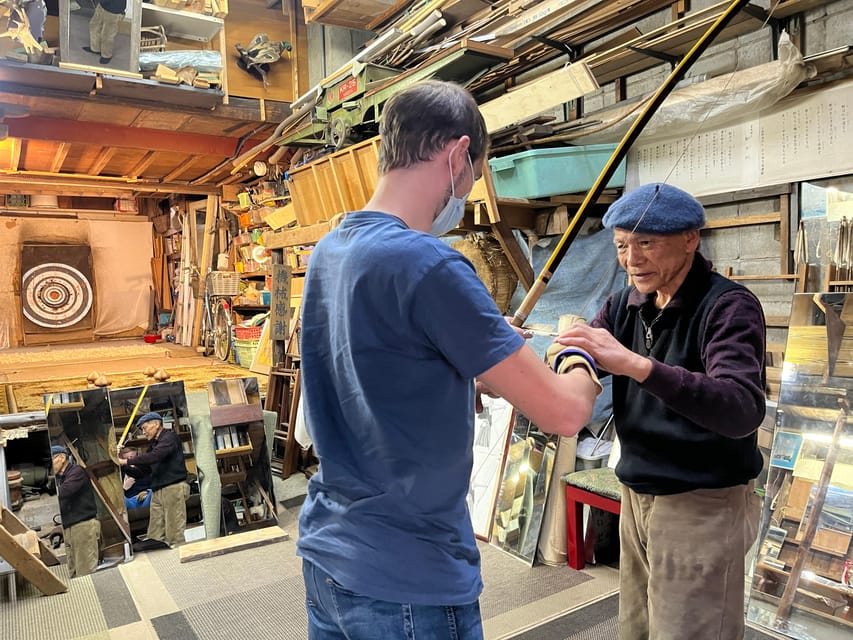
The studio is about a 10-minute walk from JR Tambaguchi, Hankyu Omiya, or Randen Shijo-Omiya station. That makes the class fairly easy to combine with other time in central Kyoto, though you should allow enough time to find the correct entrance.
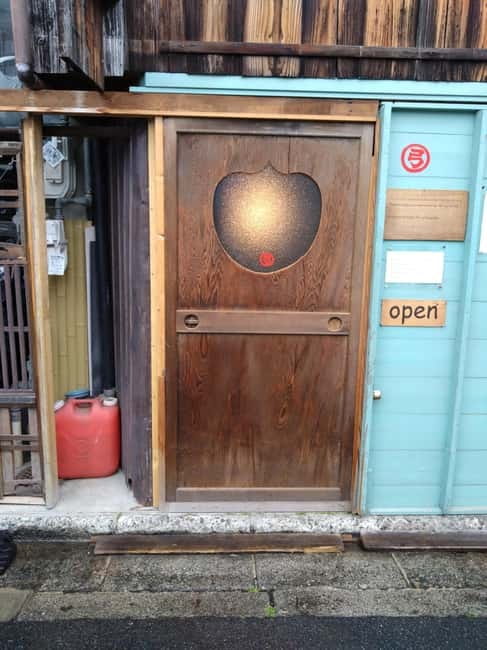
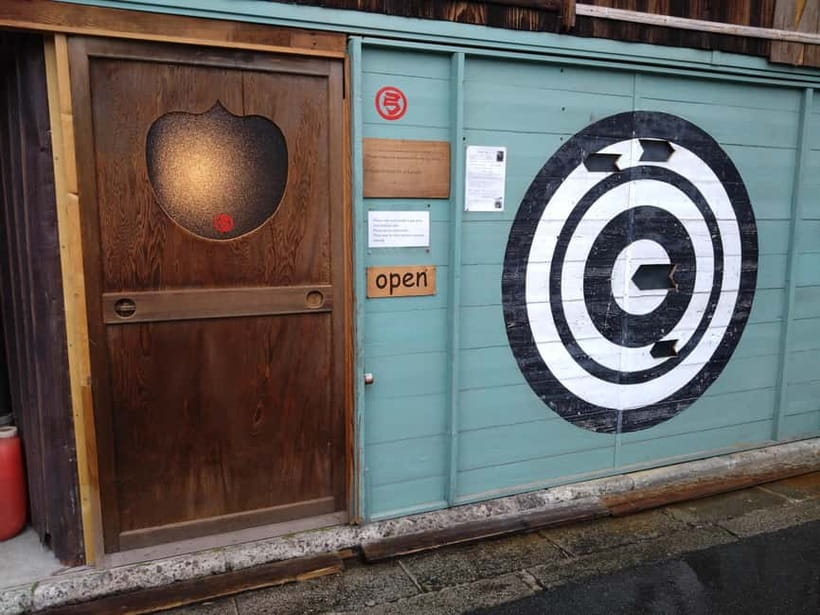
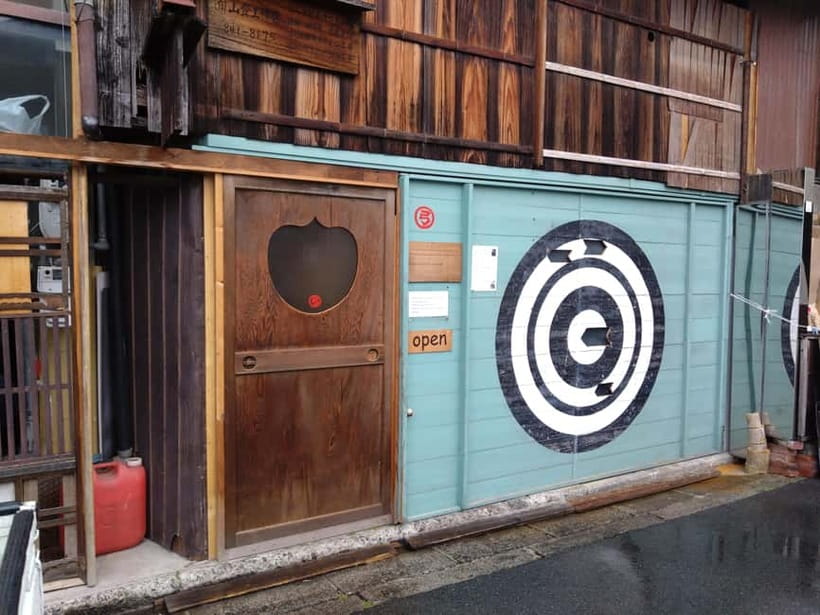
The entrance is on the side of the building, opposite a small parking lot. There are no doorbells, and the instructions specifically say not to enter through other doors or ring doorbells. This is not the moment to improvise at the front entrance.
For Google Maps, search using the Japanese name からくり弓道体験場 or the phrase Kyudo Experience Kyoto. Compare the result with the address supplied when you book. If you take a taxi, tell the driver Mibugawa-street and Takatsuji-street rather than relying only on the address.
That arrival detail may sound minor, but it can save you an unnecessary scramble before a one-hour appointment. Kyoto’s streets and building entrances can be less obvious than a visitor expects.
Is $38 a fair price for one hour?
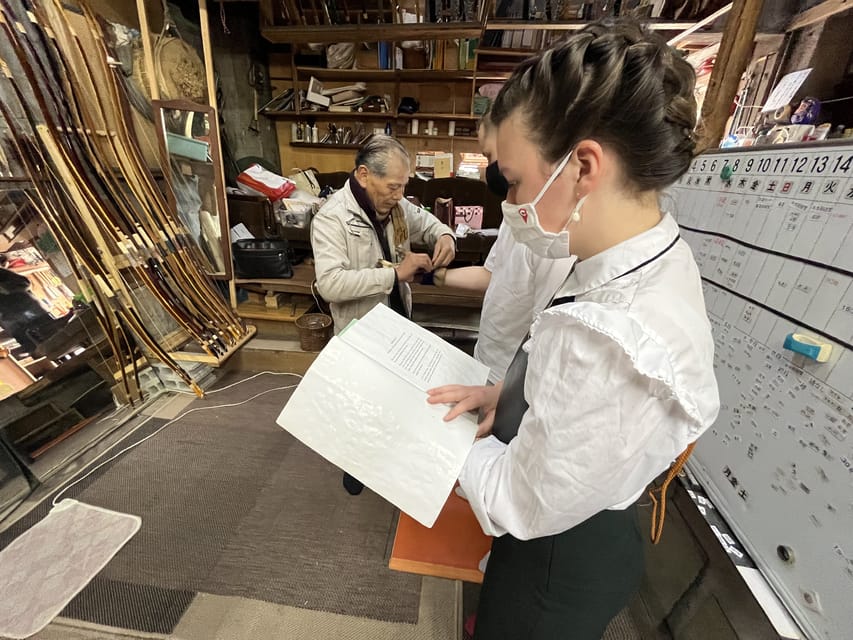
At $38 per person, this is good value if you want personal instruction rather than a quick photo opportunity. The fee includes the Kyudo lesson, an experienced instructor, and all required equipment. You do not need to rent a bow or bring special gear.
The small group improves the value. A cheaper large-group demonstration might give you a general explanation, but four people allow the instructor to watch your form and give repeated corrections. That individual attention is especially useful because Kyudo is hard to understand from words alone.
The one-hour length is both a strength and a limit. It fits neatly into a busy Kyoto schedule and gives you a focused introduction without taking half a day. At the same time, you will only sample a practice that normally requires long study. If you want a full course in Kyudo, this will feel short. If you want a meaningful first meeting with the art, the timing works well.
The price does not include hotel pickup or drop-off, but the station access makes that unnecessary for most people staying in Kyoto. You pay for instruction and use of the equipment, not transport or a long sightseeing route.
Who will enjoy this workshop most?
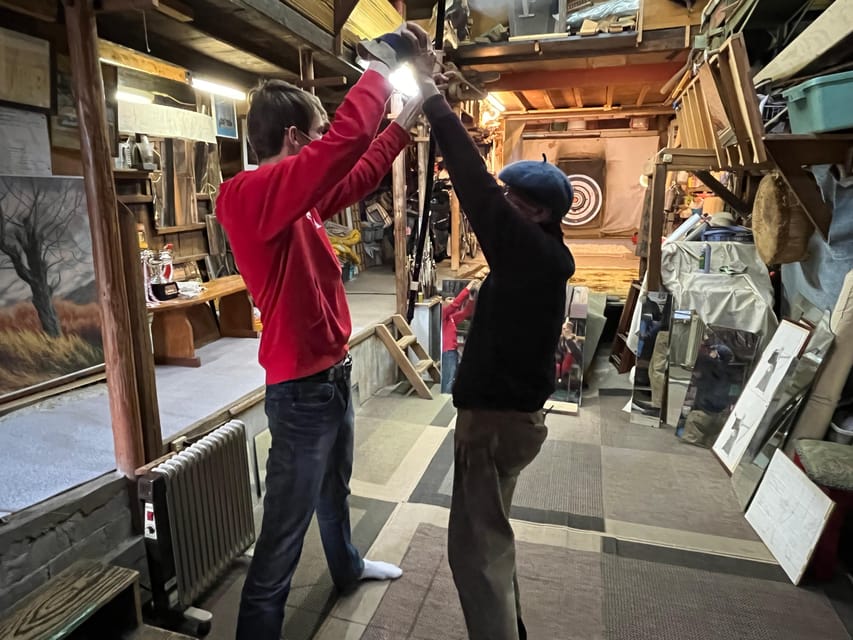
I would recommend this experience to anyone who wants a quieter, less predictable cultural activity in Kyoto. It suits adults, couples, families with older children, and solo visitors who enjoy learning a skill from a real teacher.
It is especially good for you if you:
- Like martial arts, traditional crafts, or Japanese culture
- Prefer hands-on activities to passive sightseeing
- Want a small group instead of a crowded class
- Are comfortable learning through demonstration and translation
- Can wear comfortable clothing and move freely
- Do not mind that hitting the target is not guaranteed
You may want to choose another activity if you need fluent English instruction from the main teacher, dislike hands-on corrections, or want a fast-paced archery session with lots of shooting. Kyudo is deliberate. The quiet rhythm is part of its appeal, not a flaw to be fixed.
The class is also not designed for nonparticipants to sit and watch. Because the studio has limited space, only booked participants should attend. That matters for families who might otherwise expect a parent or friend to wait inside.
Practical details for a smoother visit
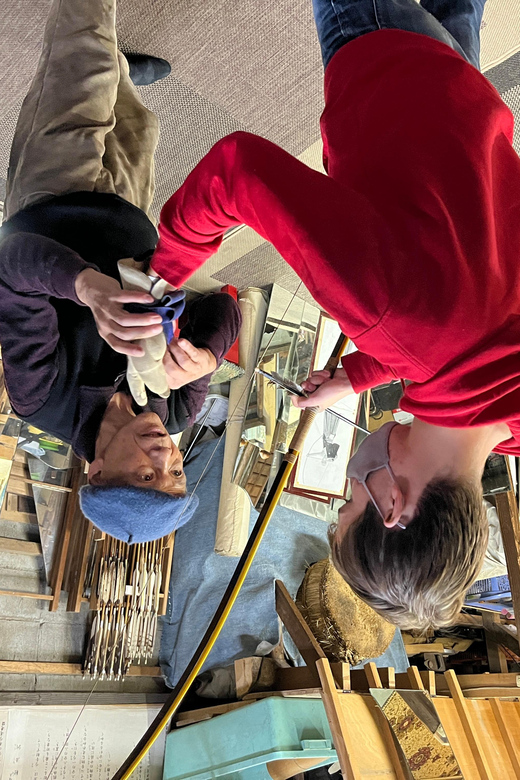
Wear loose, comfortable clothes that allow you to move your arms and legs freely. The provided information does not require special footwear or equipment, so you can keep your preparation simple.
Ask questions during the lesson. The assistant can help translate, and the teacher is described as friendly and willing to explain. You will get more from the hour if you speak up when a movement or cultural point is unclear.
Keep your expectations realistic. You might hit the target, as several participants did, but the workshop is not a test of athletic skill. The best result is leaving with a feel for the discipline and a new respect for how much control the practice demands.
Booking is flexible, with free cancellation up to 24 hours before the activity and a reserve-now, pay-later option. Check the available start times when choosing your date, since the total session lasts one hour.
Should you book the Kyoto Kyudo workshop?
Yes, if you want an authentic, personal introduction to Japanese archery. The combination of Master Yamaguchi’s long experience, a four-person group, provided equipment, and an English-speaking assistant gives you strong value for $38.
Book it with the right mindset. You are not signing up for a casual bow-and-arrow game. You are learning a demanding sequence of movements from a patient teacher, with plenty of demonstration and some language assistance. If that sounds appealing, this can become one of the most memorable cultural hours in Kyoto.
FAQ
How long does the Kyudo workshop last?
The workshop lasts one hour.
How much does the experience cost?
The price is $38 per person.
Is the Kyudo equipment included?
Yes. The lesson includes all required Kyudo equipment.
Does the instructor speak English?
The instructor teaches in Japanese. English materials and an assistant who can translate support the lesson.
How many people can join the group?
The group is limited to four participants.
Where does the workshop meet?
It meets at からくり弓道体験場 in Kyoto. The entrance is on the side of the building, opposite a small parking lot.
How do I reach the meeting point?
The studio is about a 10-minute walk from JR Tambaguchi, Hankyu Omiya, or Randen Shijo-Omiya station. By taxi, tell the driver Mibugawa-street and Takatsuji-street.
What should I wear?
Wear comfortable clothing that allows you to move freely. Only participants should attend because space at the studio is limited.
Just added in Kyoto
- The “Golden Route” and Ancient Japan by DIAMIR Erlebnisreisen – 14-Day Tour★ 2.0 · 2 reviews
- Japan: Castles & Cuisine by G Adventures – 6-Day Kyoto to Osaka Tour★ 4.5 · 4 reviews
- Cycle Japan by Explore! – 13-Day Kyoto to Tokyo Tour★ 4.7 · 12 reviews
- Cycle Japan by Intrepid Travel – 11-Day Kyoto to Tokyo Tour★ 4.8 · 2 reviews
- Classic Japan by Intrepid Travel – 11-Day Kyoto to Tokyo Tour★ 4.4 · 14 reviews
- Ancient & Modern Japan 14-Day Tour by Exodus Adventure Travels★ 4.4 · 40 reviews
- 5 Day Cultural Adventure of Kyoto, Nara & Osaka by Tourist Journey★ 2.5 · 2 reviews
- 12 Days Kinosaki Onsen Escape: A Journey Through Japan’s Timeless Towns by UME Travel★ 4.8 · 5 reviews
Workshops, compared.

Sushi Making Tokyo Roll and Authentic Japanese Sushi Class
Read our review →
Gion Make Your Own Chopsticks with Engraving Option
Read our review →
Roll and Authentic Sushi Making Class in Asakusa
Read our review →
Ramen Cooking Class at Ramen Factory in Kyoto
Read our review →
Tokyo Asakusa Chopsticks Workshop: Make Your Own Pair
Read our review →
Ring Making Workshop : Vintage Japanese Coin Ring
Read our review →Browse the lists this tour appears in