
Reviewed · WORKSHOPS
Kyoto: Local Home Visit and Japanese Calligraphy Class
Brushes make Japan personal. This one-hour class near Nijo Castle combines a private visit to a local Kyoto home with a calm introduction to Japanese calligraphy. You learn the basic brush movements, choose a kanji with personal meaning, add your name in Japanese, and take your finished artwork home.
I especially like the warm teaching style associated with Aya, the calligraphy master, and the chance to ask about both the art and everyday life in Kyoto. I also like the private-group format, which gives you more room to practice than a crowded workshop. The main consideration is time: one hour is enough for an introduction, not mastery, and arriving late cuts into that short lesson.
In This Review
- Key points before you book
- A quiet cultural hour beside Nijo Castle
- What the one-hour class actually covers
- Choosing a kanji with personal meaning
- Why beginners get so much from the instruction
- A visit with Aya and the teaching style
- Price, duration, and overall value
- Who should book this Kyoto activity?
- Practical planning near Nijo Castle
- What you take home
- Should you book the calligraphy class?
- FAQ
- How long does the Japanese calligraphy class last?
- Where is the activity located?
- What should I bring to the class?
- Is the activity suitable for children?
- Is the class taught in English?
- What happens if I arrive late?
Key points before you book
- A real Kyoto home near Nijo Castle: You visit local residents about 200 meters west of Nijo Castle, rather than attending a large commercial workshop.
- Aya teaches the brush basics: Her instruction covers calligraphy’s background, brush movements, and ways to improve your strokes.
- You make a personal souvenir: Choose a kanji linked to love, peace, strength, wisdom, or another idea, then add your name in Japanese.
- Private group setting: Your booking is for a private group, so the teacher can offer individual help.
- Bring socks: Shoes come off indoors, and bare feet are not allowed. Strong fragrances, smoking, vaping, alcohol, and drugs are also prohibited.
- Allow extra care for the meeting point: Search the venue name in your map application, not only the address, since Kyoto has several places with similar names.
A quiet cultural hour beside Nijo Castle
The setting does much of the work here. The class takes place near Nijo Castle, a UNESCO World Heritage Site, on the north side of Ebisugawa Street, just west of Nishinotoin Street. The building is about 200 meters west of the castle, with the Lions Mansion building across the street on the south side.
This location makes the class easy to pair with sightseeing around central Kyoto. You can visit Nijo Castle before or after, but do not treat the workshop like a drop-in activity between train connections. You need to arrive five minutes early, and there is no waiting space if you arrive too early. If you arrive late, the lesson becomes shorter, and the class cannot be offered if you are more than 15 minutes late.
Once inside, expect a quieter, more personal setting than you would find at a large cultural attraction. Shoes are removed indoors, so wear socks from the start. If you forget them, socks are available for purchase, but bringing your own is simpler.
The home visit is an important part of the appeal. You are not only practicing Japanese writing. You also have the chance to speak with local Kyoto residents in their own home. The conversation element can be especially rewarding if you want a small connection with present-day Kyoto, not just the temples and historic buildings.
A few more options to weigh up in Kyoto
- PERFECT KYOTO 1-Day Bus Tour
★ 5.0 · 13,518 reviews - [Kyoto & Nara Day Tour] Sagano Scenic Railway & Nara Park & Fushimi Inari Taisha Thousand Torii Gates & Togetsukyo Bridge & Bamboo Grove & Kimono Forest (Departing from Osaka)
★ 4.9 · 10,942 reviews - Kyoto: Fushimi Inari, Kinkakuji, Bamboo Grove 1 Day Bus Tour
★ 4.8 · 4,316 reviews
What the one-hour class actually covers
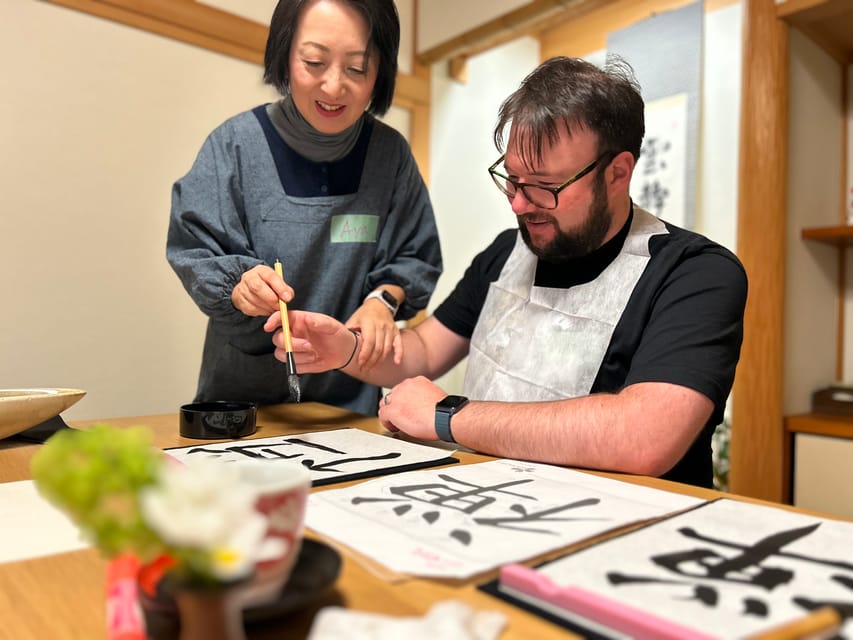
The session begins with explanations of Japanese calligraphy and its place in Japanese culture. Aya has spoken about how she learned the art herself, giving the lesson a personal thread rather than presenting calligraphy as a set of empty rules.
You then learn the basic brush movements. This matters because kanji are not simply drawn like pictures. The order, direction, pressure, and finish of each stroke affect the character’s shape and feeling. A brush held too stiffly can make the writing look mechanical. Too much pressure can make a line heavy. The teacher helps you notice those small changes.
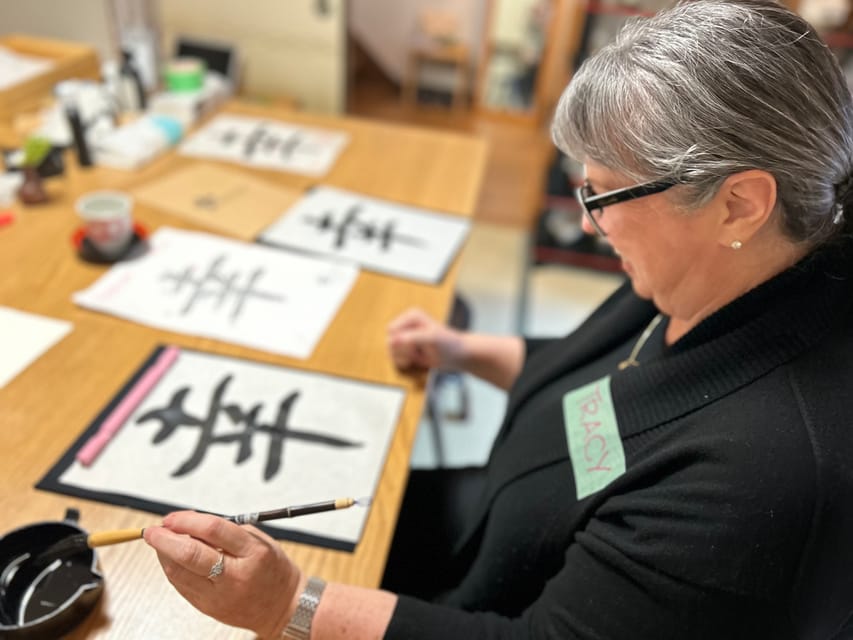
Expect to practice several characters rather than produce a perfect final piece immediately. That practice is useful. It lets you understand how the brush responds before you put your chosen kanji onto Japanese washi paper.
The instructor and assistant can guide your hand and correct your technique as you work. Previous participants have described the teachers as patient, kind, and supportive, which is exactly what beginners need. Calligraphy looks simple when an expert does it. It becomes a different matter when you are trying to make one controlled line yourself.
You will use rented calligraphy tools, ink, and Japanese paper, all included in the $66 price. The materials are not something you need to pack or buy before arrival. The finished paper becomes your souvenir, so you leave with something you made rather than a mass-produced object.
Choosing a kanji with personal meaning
One of the best parts of the class is choosing a character that means something to you. The suggested themes include love, peace, strength, and wisdom, but the useful point is that your selection can reflect your own trip or personal goals.
This gives the artwork more meaning than simply copying a character chosen by the instructor. You are learning the form while also thinking about what you want the finished piece to express.
You can add your own name in Japanese, too. That small detail turns a practice sheet into a personal keepsake. It also creates a natural reason to ask questions about how your name is represented in Japanese writing.
Do not expect every brushstroke to look like a master’s work. That is not the point. The value is in learning the basic movement and seeing how your attempts improve during the hour. One participant sensibly described calligraphy as an art requiring a lot of training and practice, noting that nobody becomes an expert in one session. That is a fair expectation to bring.
Why beginners get so much from the instruction
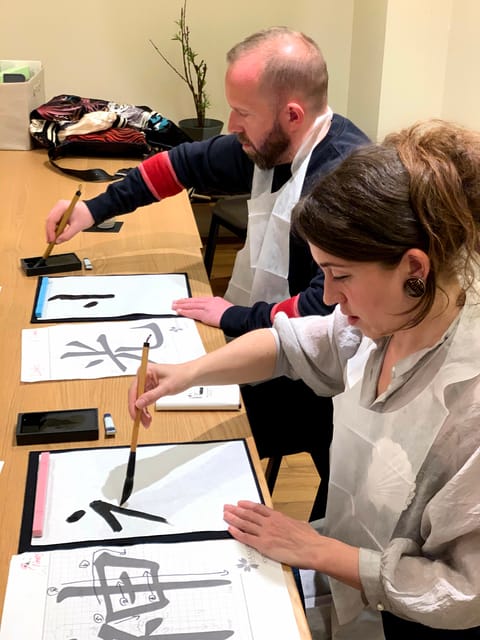
The class appears particularly good for first-time students. You do not need previous calligraphy training, and the teaching focuses on simple, repeatable movements. The instructor demonstrates, you try, and then you receive corrections.
The private-group format helps here. If you book with a partner or small group, you can ask questions without worrying about holding up a larger class. If your group is the only one scheduled, you may receive nearly one-on-one guidance. That happened for one couple, who found the teacher experienced, polite, personable, and helpful.
The mood is another strong point. Several descriptions of the session emphasize how relaxing it felt, even for people who had never tried calligraphy. The repeated brush movement asks you to slow down and pay attention. Kyoto sightseeing can involve crowds, directions, heat, and a lot of walking. An hour spent sitting with ink and paper offers a welcome change of pace.
The lesson is also social. Couples can practice together, laugh at imperfect strokes, and compare their finished characters. One couple received photos and video of the activity, while another honeymooning pair appreciated having artwork to take home as a memory of Japan. Photo or video assistance appears in some visits, but it is best not to assume that every booking includes a formal photography service.
A completely different kind of day out:
- Kyoto: Tea Ceremony in a Traditional Tea House in Kiyomizu
★ 4.9 · 3,519 reviews - Kyoto: Gion Make Your Own Chopsticks with Engraving Option
★ 5.0 · 3,465 reviews - Kyoto Nara Day Trip │ Kiyomizu-dera Temple + Fushimi Inari-taisha Shrine + Nara Park (Departing from Osaka/Kyoto)
★ 4.7 · 3,408 reviews - Kyoto Geisha Walking Tour: Gion District & Hidden Gems
★ 4.7 · 3,273 reviews
A visit with Aya and the teaching style
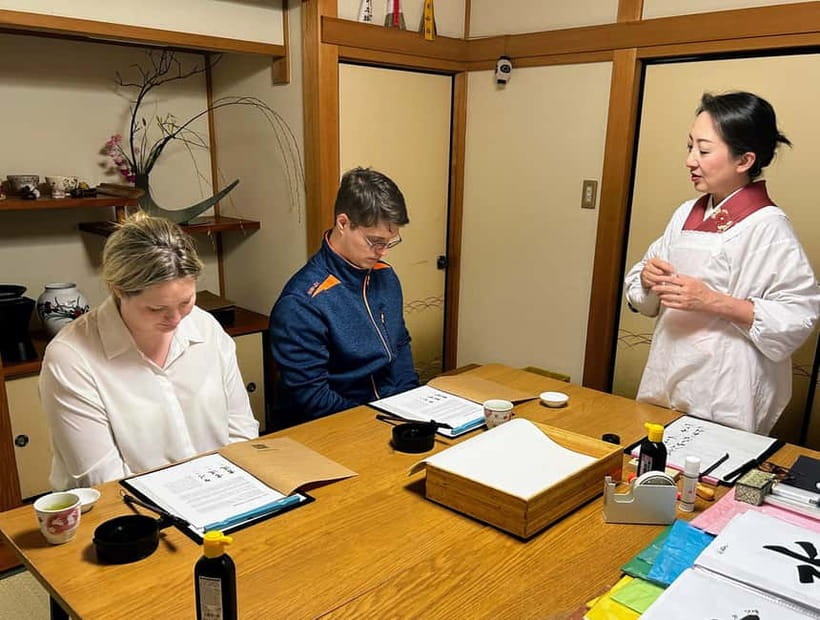
Aya receives especially strong praise for her calligraphy skill and teaching method. She explains the background of the art, answers questions, demonstrates the strokes, and offers constructive advice while you practice.
That combination matters. A teacher can be an excellent artist but a poor beginner instructor. Here, the useful pattern is demonstration followed by patient correction. You are not left to copy a finished character without understanding how it was made.
Aya has also offered recommendations for nearby temples and places to see, adding practical local advice to the class. Her knowledge extends to other traditional artistic techniques as well, so you may find the conversation broadens beyond the character in front of you.
Instruction is available in English and Japanese. That makes the class accessible to English-speaking visitors, while the Japanese setting and terminology remain part of the experience. The pace should suit people who want a friendly introduction rather than a formal certification course.
Price, duration, and overall value
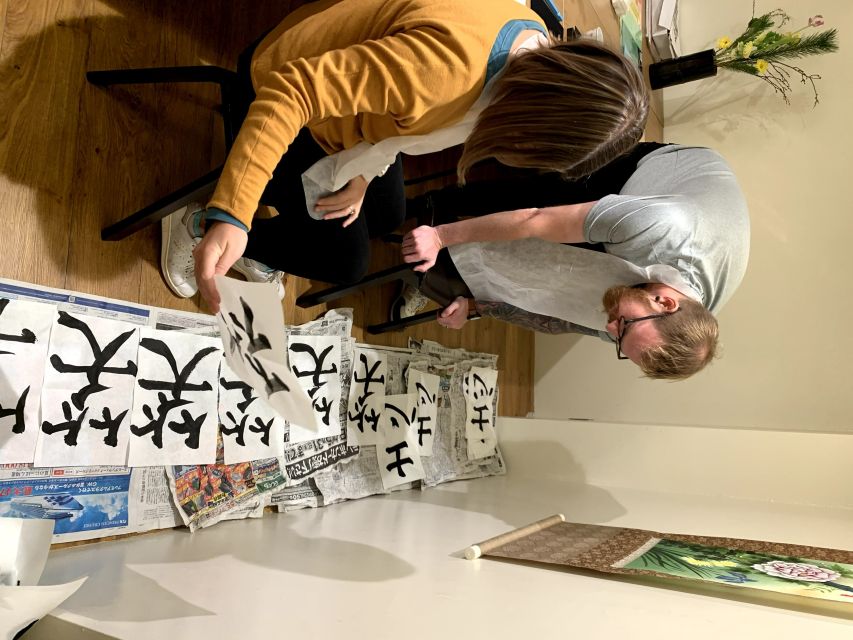
At $66 per person, the class is not the cheapest souvenir activity in Kyoto. Its value comes from the combination of several parts: private instruction, a local home visit, use of tools and ink, washi paper, and a finished piece of art to take home.
The one-hour length keeps the activity easy to fit into a busy itinerary. It can work well on a hot afternoon, before an evening meal, or alongside a visit to Nijo Castle. At the same time, one hour passes quickly. You will not have time for a long lecture, repeated work on many characters, and advanced artistic technique.
I would consider the price fair for a private cultural lesson, especially if you are traveling as a couple or small group and value personal attention. It is less compelling if your main goal is to buy a polished calligraphy souvenir without doing the work yourself.
The free cancellation policy allows a full refund when you cancel at least 24 hours in advance. You can also reserve now and pay later, which helps if your Kyoto schedule is still changing. Those terms reduce some of the risk, but the strict late-arrival rule remains important.
Who should book this Kyoto activity?
I would recommend this class to:
- Couples looking for a shared activity with a personal souvenir
- First-time visitors who want a gentle introduction to Japanese culture
- People who prefer a small private setting to a large group workshop
- Honeymooners or families with teenagers aged 13 and older
- Visitors staying near central Kyoto who can reach the Nijo Castle area easily
- Anyone who enjoys hands-on crafts, quiet concentration, and conversation with local residents
It is not suitable for children under 13. It may also disappoint you if you want a long, formal study of calligraphy. The class gives you a beginning, not a complete course.
The activity is wheelchair accessible, which is useful to know when planning your Kyoto schedule. Indoor shoes are not allowed, and bare feet are unacceptable, so socks are essential. Avoid strong fragrances, since this is a home setting, and smoking and vaping are prohibited.
Practical planning near Nijo Castle
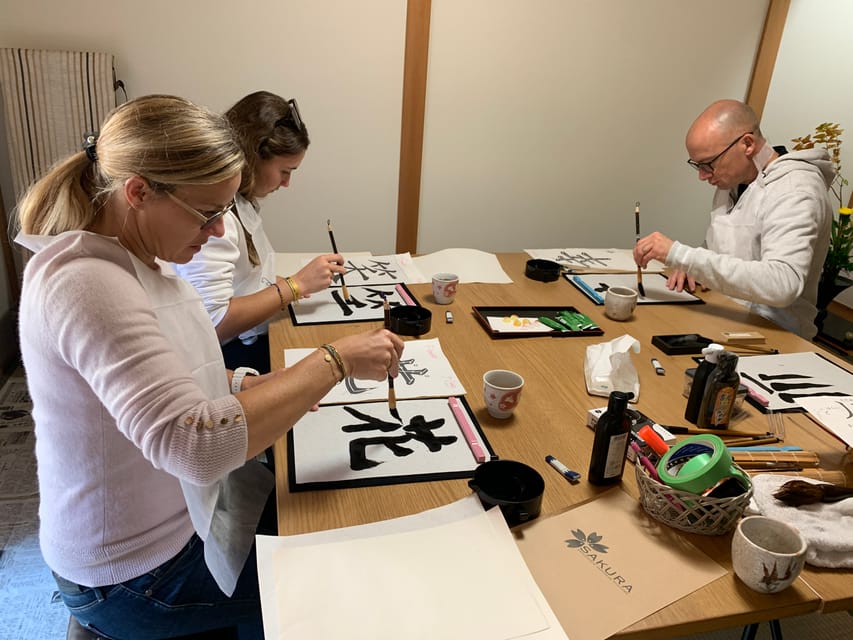
Give yourself enough time to find the venue. The meeting instructions specifically warn that several Kyoto locations have similar names. Enter the venue name in your map application rather than searching only by address. If you use a taxi, provide the driver with the phone number.
The location is west of Nijo Castle, on Ebisugawa Street. Look for the Lions Mansion building across the street on the south side as a visual reference. These details are more useful than relying on a vague pin, particularly if you are navigating Kyoto’s compact streets for the first time.
Arrive five minutes before the scheduled start. Do not arrive far too early, because there is no waiting area. If your day includes Nijo Castle, leave a sensible buffer after the castle visit. Kyoto sightseeing often takes longer than expected, especially when you pause for gardens, photographs, or a snack.
The activity lasts one hour, but plan for the transition into a private home, removing shoes, and getting settled. The class itself is short enough that every minute counts.
What you take home
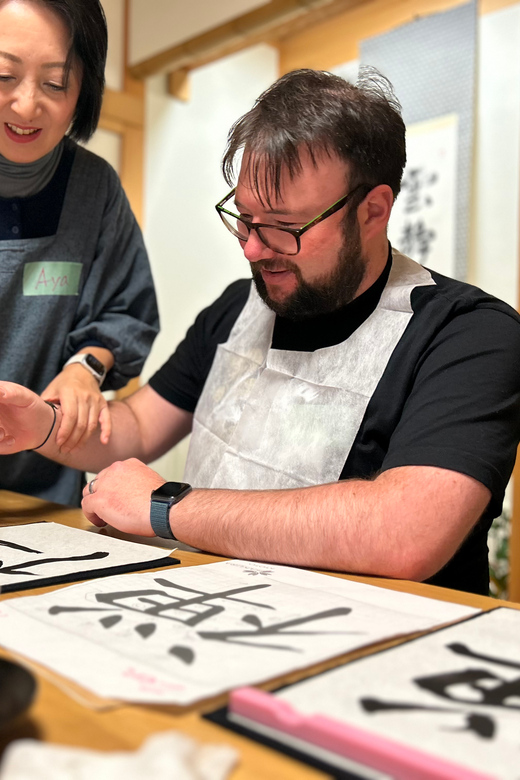
Your finished artwork is the lasting reward. You create it on Japanese washi paper, using the character you selected and your own name in Japanese. It will not be identical to the instructor’s work, and that is part of its charm.
I like souvenirs that carry a memory of an action. A purchased print can remind you of Kyoto, but a brushstroke you struggled to control can remind you of the hour itself. The artwork records both the cultural lesson and your own attempt to express an idea.
You may create several practice characters before settling on the final piece. The instructor’s help should make the final result feel achievable, even if your first strokes are uneven. The goal is not perfection. It is to leave with a character you understand a little better and a piece of paper that is genuinely yours.
Should you book the calligraphy class?
Book it if you want a calm, personal activity with local contact and a useful souvenir. The strongest reasons are the private format, Aya’s patient instruction, the home setting near Nijo Castle, and the chance to choose a kanji that means something to you.
Skip it if you want advanced calligraphy training, a long workshop, or a completely flexible arrival time. One hour is brief, and the late-arrival rule is strict.
For most visitors, this is a good way to slow down during a Kyoto trip. You learn enough to understand why Japanese calligraphy demands care, then leave with your own imperfect but meaningful work. Bring socks, arrive early, and give yourself time to find the correct venue. That small preparation lets you enjoy the part that matters: sitting down, taking the brush, and making a mark that belongs to you.
FAQ
How long does the Japanese calligraphy class last?
The class lasts one hour. Check availability for the starting times offered on your chosen date.
Where is the activity located?
It is about 200 meters west of Nijo Castle, on the north side of Ebisugawa Street, just west of Nishinotoin Street. The Lions Mansion building is across the street on the south side.
What should I bring to the class?
Bring socks. Shoes are not allowed indoors, and bare feet are not accepted. Socks may be available to purchase if you forget them.
Is the activity suitable for children?
No. The activity is not suitable for children under 13.
Is the class taught in English?
Yes. Instruction is available in English and Japanese.
What happens if I arrive late?
Your lesson time will be shortened if you arrive late. The class cannot be offered if you arrive more than 15 minutes after the scheduled starting time, so arrive five minutes early.
Just added in Kyoto
- The “Golden Route” and Ancient Japan by DIAMIR Erlebnisreisen – 14-Day Tour★ 2.0 · 2 reviews
- Japan: Castles & Cuisine by G Adventures – 6-Day Kyoto to Osaka Tour★ 4.5 · 4 reviews
- Cycle Japan by Explore! – 13-Day Kyoto to Tokyo Tour★ 4.7 · 12 reviews
- Cycle Japan by Intrepid Travel – 11-Day Kyoto to Tokyo Tour★ 4.8 · 2 reviews
- Classic Japan by Intrepid Travel – 11-Day Kyoto to Tokyo Tour★ 4.4 · 14 reviews
- Ancient & Modern Japan 14-Day Tour by Exodus Adventure Travels★ 4.4 · 40 reviews
- 5 Day Cultural Adventure of Kyoto, Nara & Osaka by Tourist Journey★ 2.5 · 2 reviews
- 12 Days Kinosaki Onsen Escape: A Journey Through Japan’s Timeless Towns by UME Travel★ 4.8 · 5 reviews
Workshops, compared.

Sushi Making Tokyo Roll and Authentic Japanese Sushi Class
Read our review →
Gion Make Your Own Chopsticks with Engraving Option
Read our review →
Roll and Authentic Sushi Making Class in Asakusa
Read our review →
Ramen Cooking Class at Ramen Factory in Kyoto
Read our review →
Tokyo Asakusa Chopsticks Workshop: Make Your Own Pair
Read our review →
Ring Making Workshop : Vintage Japanese Coin Ring
Read our review →Browse the lists this tour appears in