
Reviewed · WORKSHOPS
Kyoto: Make Your Own “Daruma” Craft & Painting Workshop
Slow down and make something in Kyoto. This two-hour workshop gives you a quiet break from temple crowds, with your choice of a papier-mâché Daruma, lucky cat, dog, or Kitsune fox to paint. I especially like the small group of up to four and the chance to take home something you made yourself.
The complimentary drink and traditional Japanese sweet are thoughtful touches, and May, also called Mei in some bookings, is praised for her warm, patient help. My one caution is simple: your finished piece uses acrylic paint, so you need to protect it from rain on the way back to your hotel.
In This Review
- Key points to know before booking
- A calm creative hour in central Kyoto
- Choosing your Daruma, cat, dog, or Kitsune
- How the two-hour session unfolds
- Why the small group matters
- The host makes the difference
- A good match for families and couples
- A smart plan for rain or a tired afternoon
- What to do with your finished piece
- Is $25 a fair price?
- Practical details that affect your choice
- Should you book the Kyoto Daruma workshop?
- FAQ
- How long does the Daruma painting workshop last?
- How much does the workshop cost?
- Which figures can I paint?
- Do I need previous painting experience?
- Is the workshop suitable for children?
- What is included in the price?
- Is the workshop taught in English?
- Can I cancel the booking?
Key points to know before booking
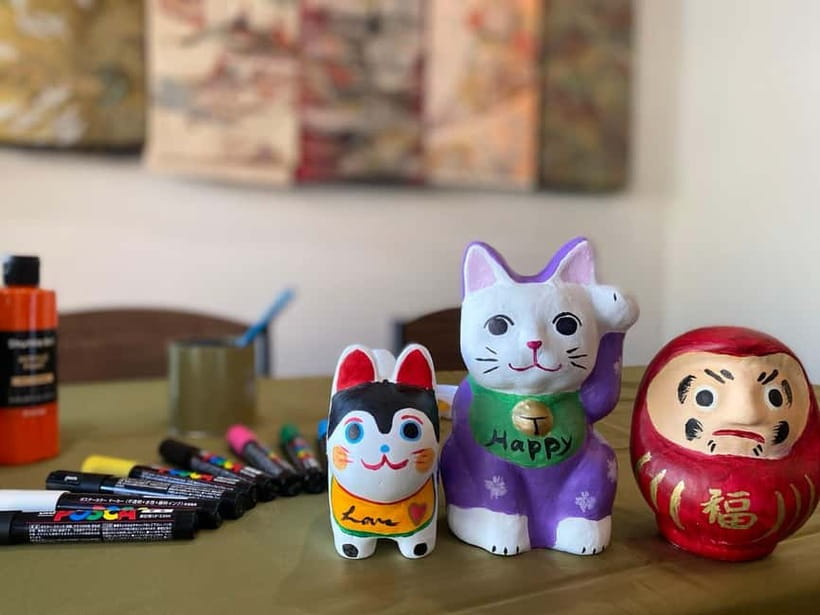
- Four figure choices: Paint a Daruma, beckoning cat, dog, or Kitsune fox in your own style.
- A genuinely small class: With a maximum of four people, the session feels personal rather than like a production line.
- May’s relaxed teaching style: She offers ideas and help when you ask, but gives you room to make your own design.
- Tea and a Japanese sweet included: The snack turns the craft session into an easy cultural afternoon.
- A useful rainy-day activity: You can enjoy it indoors when sightseeing around Kyoto becomes wet or tiring.
- A handmade souvenir: Your finished figure has more meaning than a standard shop purchase because you designed it yourself.
A calm creative hour in central Kyoto
Kyoto is full of famous sights, but a day built only around temples can become tiring. This workshop offers a different rhythm. Instead of walking from one major site to another, you sit down, handle the materials, and spend time making a small object with your own hands.
The activity takes place in a newly renovated boutique workshop in the heart of Kyoto. It is also a craft shop, so the setting has more character than a plain classroom. May is an artist and craftswoman, and her handmade silk kimono items, bags, lacquer boxes, and other pieces may be available to browse or buy.
That shop element is worth noting. You should not feel pressured to purchase anything, but it can be a pleasant chance to see local handmade work. One participant bought handmade bags for herself and a friend, while another found a lacquer box for a family member. Those purchases are optional, not part of the workshop price.
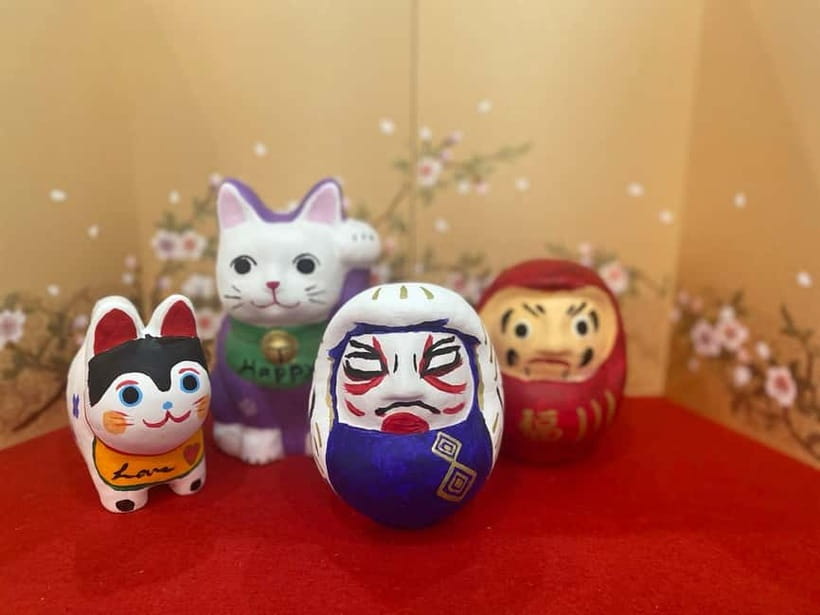
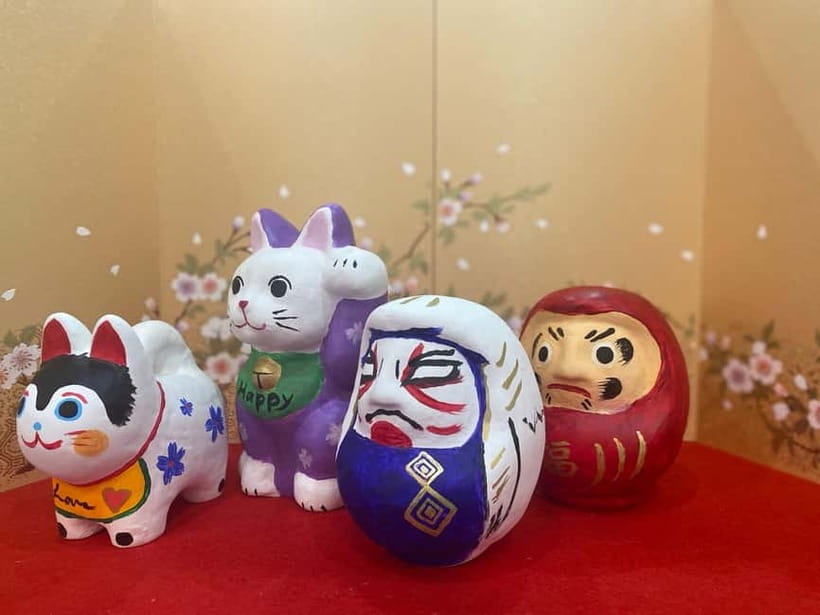
I like the way the session combines structure and freedom. You receive the materials and guidance you need, but you are not expected to copy a fixed sample. You can paint a traditional-looking figure, create bold modern patterns, or make something charmingly uneven. The last option is often the most honest souvenir.
A few more options to weigh up in Kyoto
- PERFECT KYOTO 1-Day Bus Tour
★ 5.0 · 13,518 reviews - [Kyoto & Nara Day Tour] Sagano Scenic Railway & Nara Park & Fushimi Inari Taisha Thousand Torii Gates & Togetsukyo Bridge & Bamboo Grove & Kimono Forest (Departing from Osaka)
★ 4.9 · 10,942 reviews - Kyoto: Fushimi Inari, Kinkakuji, Bamboo Grove 1 Day Bus Tour
★ 4.8 · 4,316 reviews
Choosing your Daruma, cat, dog, or Kitsune
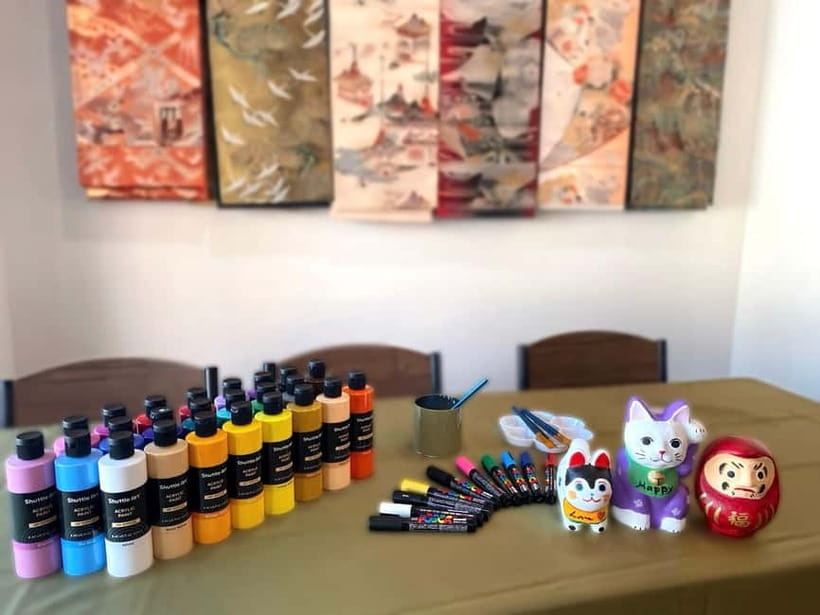
At the start, you choose the papier-mâché shape you want to decorate. The options include the Daruma, beckoning cat, dog, and Kitsune fox. Each has a different look and cultural association, so your choice changes the feel of the activity.
The Daruma is the obvious pick for a classic Kyoto memento. Its rounded body and simple face make it friendly to beginners, while the broad surface gives you room for patterns, symbols, and color. You can keep the design traditional or treat the figure like a small blank canvas.
The beckoning cat, often called a lucky cat, is another easy choice. Its raised paw gives the shape an immediate sense of movement and personality. It suits children, families, and anyone who wants a cheerful object for a desk or shelf.
The dog and Kitsune provide less familiar alternatives. A fox figure connects with Japanese folklore and shrine imagery, while a dog can feel more personal if you are making the piece for a family member or pet lover. The available choices make the class more than a Daruma-only painting lesson.
May explains the symbolism behind the figures as you work. That context matters because it gives your design a little more purpose. You are not simply decorating a generic souvenir. You are learning why these shapes appear so often in Japanese art and gift culture.
The activity is suitable for all ages and skill levels. You do not need drawing or painting experience. If you are nervous about your artistic ability, remember that the point is not technical perfection. The finished piece records your time in Kyoto, including your own choices and small mistakes.
How the two-hour session unfolds
The exact starting time depends on availability, but the activity lasts about two hours. You enter the workshop on arrival, where your host is waiting to greet you. Since the group is limited to four, you should expect direct contact with the instructor rather than a large class with a scripted presentation.
The first stage is choosing your figure and getting familiar with the materials. You then begin painting under May’s guidance. The process is self-directed, but help is available when you want advice about colors, details, or how to approach a tricky section.
This balance received especially strong praise. Some people enjoyed chatting throughout the session, while others appreciated being left alone to work. That makes the workshop suitable for different personalities. You can treat it as a social activity with a parent, partner, or grandchild, or use it as a quiet pause during a busy holiday.
The second stage is adding details and finishing the design. The pace is not meant to be rushed. One participant said the group was allowed to stay a little longer to finish small details, which suggests some flexibility when the class needs extra time. Still, you should plan around the stated two-hour duration rather than assume an extended session.
A drink and one traditional Japanese confectionery are included for each person. The refreshments are modest, but they add to the mood. Several people specifically enjoyed tea, matcha, and the sweet snack while painting. If you choose the workshop for a rainy afternoon, that warm drink may feel like more than a minor extra.
Why the small group matters
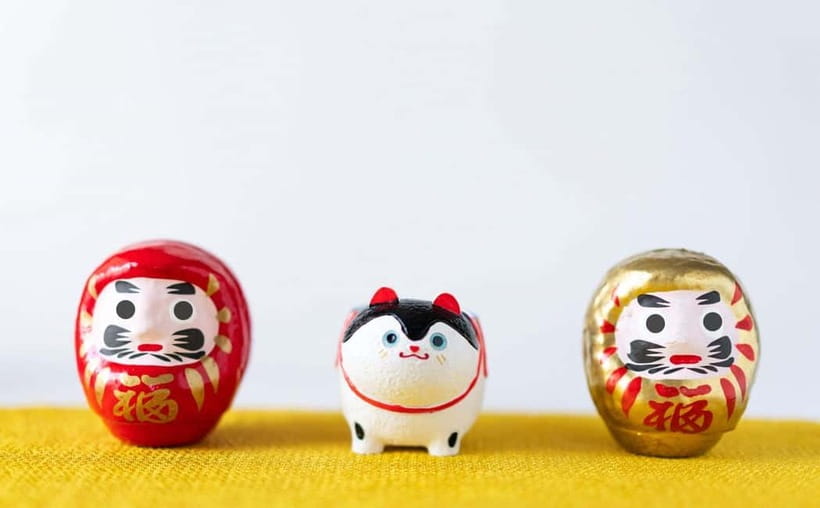
A maximum of four participants changes the whole experience. You can ask questions without interrupting a large class, and May has time to give individual suggestions. If you are visiting with a parent, child, or partner, you can work together without feeling lost in a crowd.
The small size also gives the workshop an intimate quality. One couple had the session to themselves, while another group of three found the atmosphere especially comfortable. You should not assume every booking will be private, but the limit keeps the class personal even when other people attend.
I would choose this format over a larger craft class if you value calm conversation and individual attention. It also helps children. A young painter may need a little help with materials or ideas, and the instructor can respond without making the child feel rushed.
There is a possible tradeoff. If you want a formal art lesson with detailed technical instruction, this may feel too loose. The emphasis is on making and enjoying yourself, not on mastering Japanese painting methods or producing a museum-quality object.
A completely different kind of day out:
- Kyoto: Tea Ceremony in a Traditional Tea House in Kiyomizu
★ 4.9 · 3,519 reviews - Kyoto: Gion Make Your Own Chopsticks with Engraving Option
★ 5.0 · 3,465 reviews - Kyoto Nara Day Trip │ Kiyomizu-dera Temple + Fushimi Inari-taisha Shrine + Nara Park (Departing from Osaka/Kyoto)
★ 4.7 · 3,408 reviews - Kyoto Geisha Walking Tour: Gion District & Hidden Gems
★ 4.7 · 3,273 reviews
The host makes the difference
The strongest part of the experience is the host’s manner. May is repeatedly described as kind, welcoming, patient, and encouraging. She offers suggestions when asked, but does not hover over your shoulder or tell you exactly how the figure must look.
That approach is important for a craft activity. Too much instruction can make a personal project feel like a school exercise. Too little can leave beginners unsure where to start. Here, the available information points to a middle ground: you receive support, then keep control of the design.
May also talks about the meaning of the figures, Japanese traditions, and the local area. The conversation adds cultural context without turning the afternoon into a long lecture. If you enjoy meeting a local maker and asking questions, this is one of the workshop’s best qualities.
The host’s name appears as May in most of the information and as Mei in one description. If you need to contact the provider before arrival, use the booking details to confirm the name. Either way, the person leading the class is presented as the owner and artist behind the shop.
A good match for families and couples
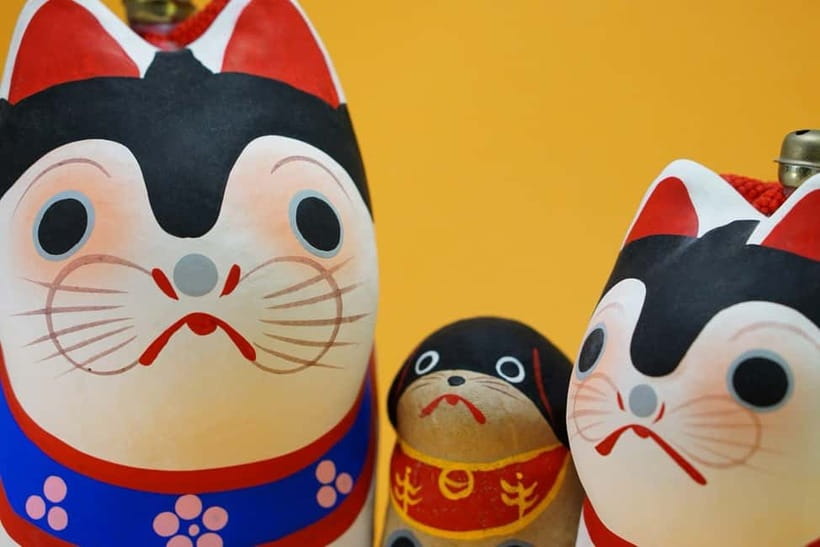
This is one of the easier Kyoto activities to share across generations. A family can sit together, choose different figures, and compare the finished designs. A grandparent and grandchild can take part without needing specialist skills or a long walk between sights.
It also works well for couples. You can make matching figures, create gifts for each other, or simply enjoy a quiet shared activity. One couple liked having the class to themselves, but the four-person limit means the setting remains manageable even when you are not alone.
Solo visitors can also fit in comfortably. The host’s conversational style provides some company, while the self-directed painting gives you something to focus on. You do not need to perform socially for two hours.
I would be more cautious about booking this for someone who dislikes crafts, sitting still, or making creative choices. There is no fast-moving sightseeing component. The value comes from the process, not from ticking off another major Kyoto sight.
A smart plan for rain or a tired afternoon
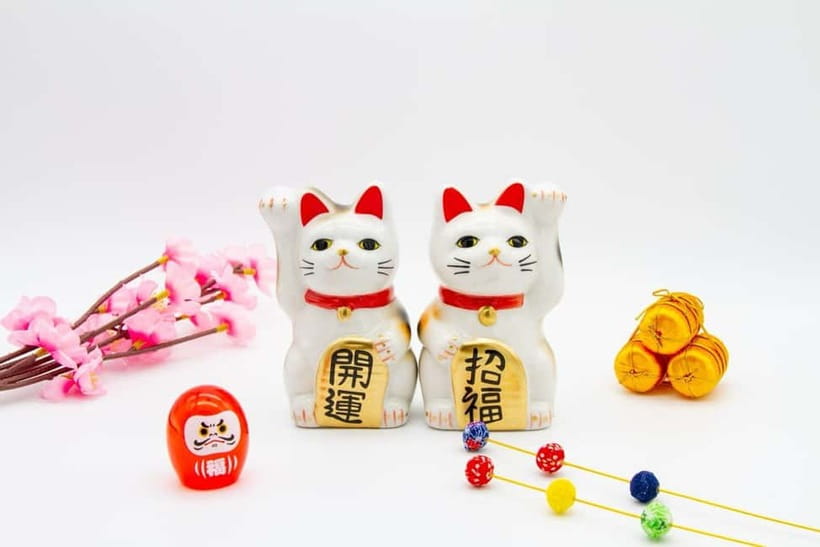
Kyoto weather can disrupt a carefully planned day. This workshop gives you a useful indoor option, especially after a morning of walking. A participant specifically described it as a wonderful rainy-day outing, and that is a fair way to think about it.
The session can also fit after temple visits in the surrounding area. The activity itself focuses on the craft, not on a guided tour of nearby shrines and temples, so you should plan those visits separately. Still, the central location may make it practical to pair the workshop with sightseeing before or after.
The timing works best when you leave enough space around it. Paint can take attention, and you may want a few extra minutes to finish details or browse the shop. I would not place it between two tightly scheduled attractions unless you can comfortably allow for the full two hours.
What to do with your finished piece
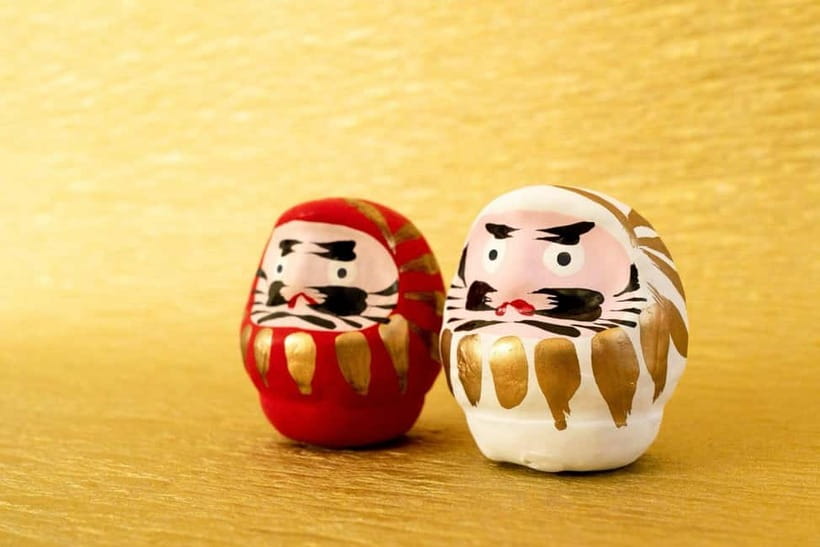
Your figure is a small souvenir, but it is not a fragile idea in the same way as a mass-produced trinket. You choose the shape, colors, patterns, and final details. That personal input gives the object a clear connection to your time in Kyoto.
You should think about how you will carry it for the rest of your trip. One useful tip comes from the workshop experience itself: acrylic paint can be damaged by rain before it is properly protected. If the forecast is wet, bring or buy wrapping and keep the figure covered on the way back.
The piece may also need careful handling in luggage. No special packing service is specified, so do not assume the workshop will prepare it for a long flight. Ask the host about protection if you are concerned, and keep it somewhere secure rather than placing it loose in a packed suitcase.
Is $25 a fair price?
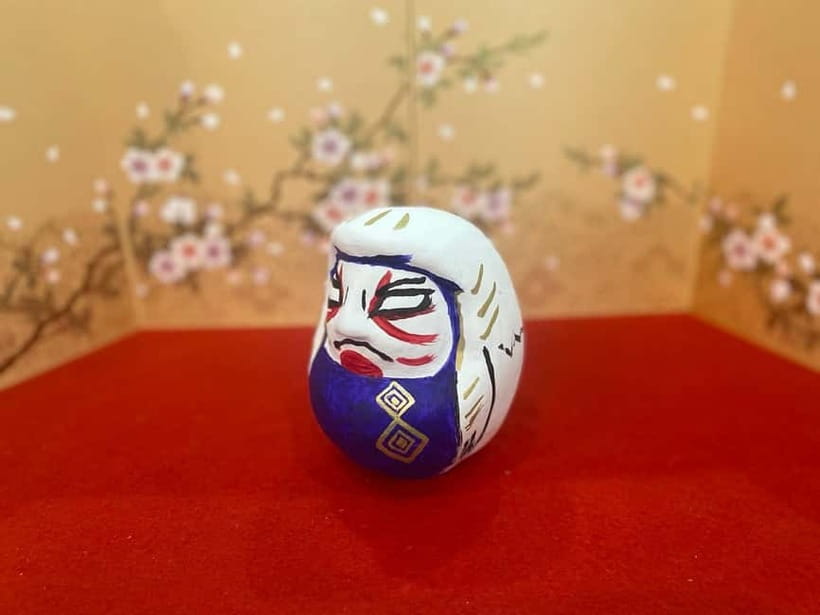
At $25 per person, the workshop is reasonably priced for a two-hour, small-group activity in central Kyoto. The fee includes the figure, paints, tools, instruction, a drink, and a traditional confectionery. You are also paying for time in a small independent craft shop rather than a brief demonstration followed by a quick purchase.
The value is strongest if you want an activity rather than another object. A shop-bought Daruma may cost less, but it will not carry the memory of an afternoon spent making it. If you are buying a gift for someone, the handmade result can also feel more thoughtful than a standard souvenir.
The price may feel less worthwhile if you only want a polished traditional figure and have no interest in painting. In that case, buying a finished piece from a shop could be simpler. I see this experience as a good-value cultural activity, not as the cheapest way to acquire Japanese handicrafts.
The booking terms add flexibility. You can cancel up to 24 hours before the activity for a full refund, and you can reserve now and pay later. That helps if your Kyoto schedule is still shifting.
Practical details that affect your choice
The instructor speaks English, which makes it easier to ask about the figures, symbolism, and painting process. The workshop is wheelchair accessible, and no previous experience is required.
You should enter the workshop when you arrive rather than wait outside for a street meeting. Your host will be there to greet you. The activity lasts two hours, with starting times based on availability.
The format is small group, limited to four participants. That is particularly useful if you want personal attention or are booking for a family. All materials are included, so you do not need to bring paints or craft tools.
The experience is suitable for children and adults, but an adult should still consider the child’s patience and interest in a quiet seated activity. The figures are designed for personal painting, and the workshop is not described as a formal lesson in advanced art techniques.
Should you book the Kyoto Daruma workshop?
I would book this if you want a quiet, hands-on Kyoto activity with a local artist, especially on a rainy day or during a packed sightseeing trip. It is also a strong choice for families, couples, grandparents with children, and anyone who prefers a personal souvenir over a mass-produced one.
Choose another activity if your priority is a guided temple visit, a longer cultural lecture, or advanced instruction in Japanese craft. This workshop is relaxed and creative rather than grand or technically demanding.
For $25, you get two hours of making, conversation, tea, a Japanese sweet, and a figure that carries your own design. That is a fair exchange, and the small class plus May’s patient manner make it easy to recommend.
FAQ
How long does the Daruma painting workshop last?
The workshop lasts two hours. Starting times depend on availability when you book.
How much does the workshop cost?
The listed price is $25 per person.
Which figures can I paint?
You can paint a papier-mâché Daruma, beckoning cat, dog, or Kitsune fox.
Do I need previous painting experience?
No. The activity is suitable for all skill levels, and no prior experience or special skills are required.
Is the workshop suitable for children?
Yes. The activity is suitable for all ages, including adults and children.
What is included in the price?
The price includes all necessary craft materials, the papier-mâché workshop, guidance from a local craft master, one complimentary drink, and one traditional Japanese confectionery for each person.
Is the workshop taught in English?
Yes. The instructor language is English.
Can I cancel the booking?
You can cancel up to 24 hours in advance for a full refund. You can also reserve now and pay later, which keeps your plans flexible.
Just added in Kyoto
- The “Golden Route” and Ancient Japan by DIAMIR Erlebnisreisen – 14-Day Tour★ 2.0 · 2 reviews
- Japan: Castles & Cuisine by G Adventures – 6-Day Kyoto to Osaka Tour★ 4.5 · 4 reviews
- Cycle Japan by Explore! – 13-Day Kyoto to Tokyo Tour★ 4.7 · 12 reviews
- Cycle Japan by Intrepid Travel – 11-Day Kyoto to Tokyo Tour★ 4.8 · 2 reviews
- Classic Japan by Intrepid Travel – 11-Day Kyoto to Tokyo Tour★ 4.4 · 14 reviews
- Ancient & Modern Japan 14-Day Tour by Exodus Adventure Travels★ 4.4 · 40 reviews
- 5 Day Cultural Adventure of Kyoto, Nara & Osaka by Tourist Journey★ 2.5 · 2 reviews
- 12 Days Kinosaki Onsen Escape: A Journey Through Japan’s Timeless Towns by UME Travel★ 4.8 · 5 reviews
Workshops, compared.

Sushi Making Tokyo Roll and Authentic Japanese Sushi Class
Read our review →
Gion Make Your Own Chopsticks with Engraving Option
Read our review →
Roll and Authentic Sushi Making Class in Asakusa
Read our review →
Ramen Cooking Class at Ramen Factory in Kyoto
Read our review →
Tokyo Asakusa Chopsticks Workshop: Make Your Own Pair
Read our review →
Ring Making Workshop : Vintage Japanese Coin Ring
Read our review →Browse the lists this tour appears in