
Reviewed · KIMONO AND CULTURAL DRESS
Kyoto: Meet-and-Greet, Maiko Show and Experience
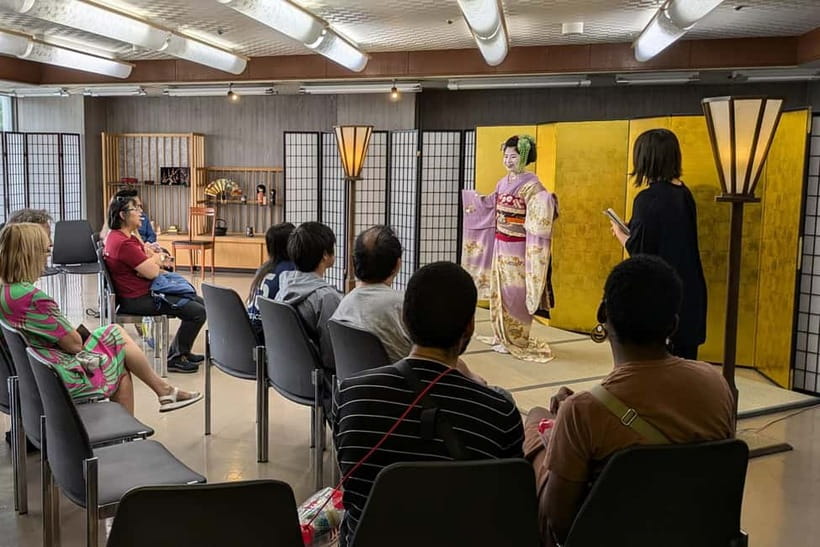
A graceful Kyoto tradition comes alive here. This 45-minute meet-and-greet combines two traditional dances with a clear English introduction, an open question session, and a personal photo with the maiko. I especially like the respectful format and the chance to learn directly from a young apprentice rather than simply watching from a street corner.
I also like the small group size, capped at 30 people, which gives the question session some real value. The main drawback is the setting: the Kyoto Handicraft Center is practical and easy to find, but parts of the room can feel more like a meeting space than an old Kyoto teahouse. The dances are beautiful, though brief.
In This Review
- Key Points to Know Before You Go
- Meeting a Maiko Without Intruding
- Two Short Dances With Careful Meaning
- The English Explanation Makes the Difference
- A Photo Session That Feels Personal
- The Kyoto Handicraft Center Setting
- Timing, Seating, and Getting There
- Is $44 a Fair Price?
- Who Will Enjoy This Experience Most?
- How to Get More From the 45 Minutes
- Should You Book the Kyoto Maiko Meet-and-Greet?
- FAQ
- How long does the Kyoto Maiko Meet-and-Greet last?
- Where is the meeting point?
- Is the event conducted in English?
- Can I take photos with the maiko?
- Is the activity private?
- Can young children and wheelchair users attend?
Key Points to Know Before You Go
- Two dances last about 8 to 10 minutes total, so the main value comes from the explanation and conversation as well as the performance.
- The English-speaking moderator explains the maiko’s clothing, makeup, training, and role before translating questions and answers.
- You can ask the maiko questions directly, with the interpreter helping bridge the conversation.
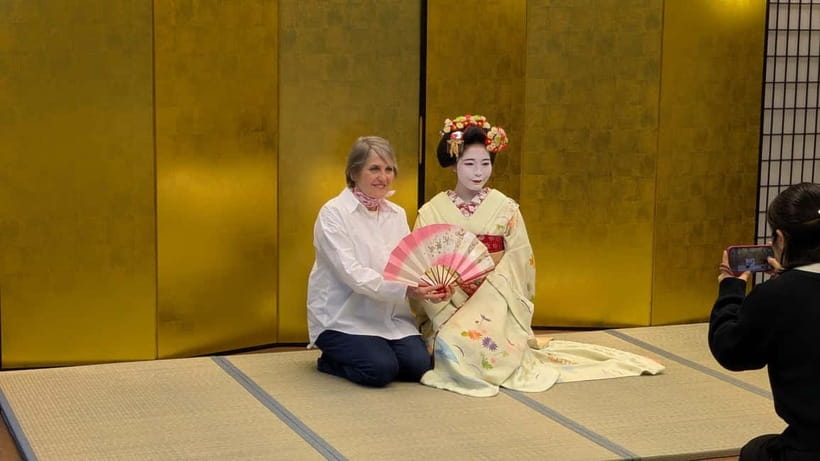
- A commemorative photo is included, using your own camera or smartphone. A professional photographer is not provided.
- The show takes place at the Kyoto Handicraft Center, where you can browse Japanese crafts after the performance.
- Seats are unassigned, and reception opens 30 minutes before the start. Arriving at least 10 minutes early is wise.
Meeting a Maiko Without Intruding
Kyoto’s maiko are young apprentices training in the traditional arts associated with geiko, the Kyoto term for geisha. Their work involves dance, music, tea ceremony skills, conversation, social etiquette, and hospitality. They often entertain at teahouses and banquet halls while preparing for the next stage of their careers.
That background matters because a street sighting in Gion tells you very little. You may see an elaborately dressed woman hurry toward an appointment, but you will not necessarily understand her training, the meaning of her appearance, or how her professional life works. This event gives you that missing context in a controlled and respectful setting.
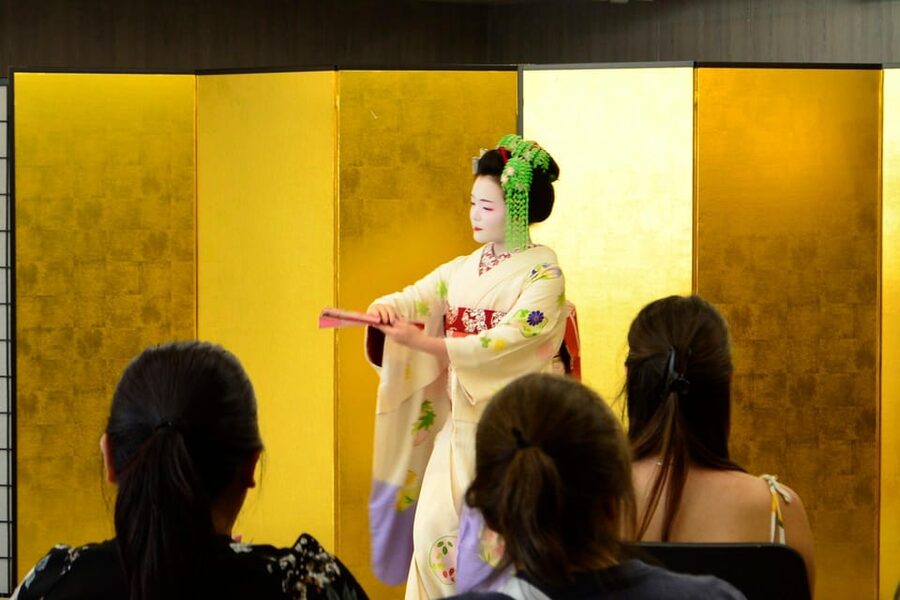
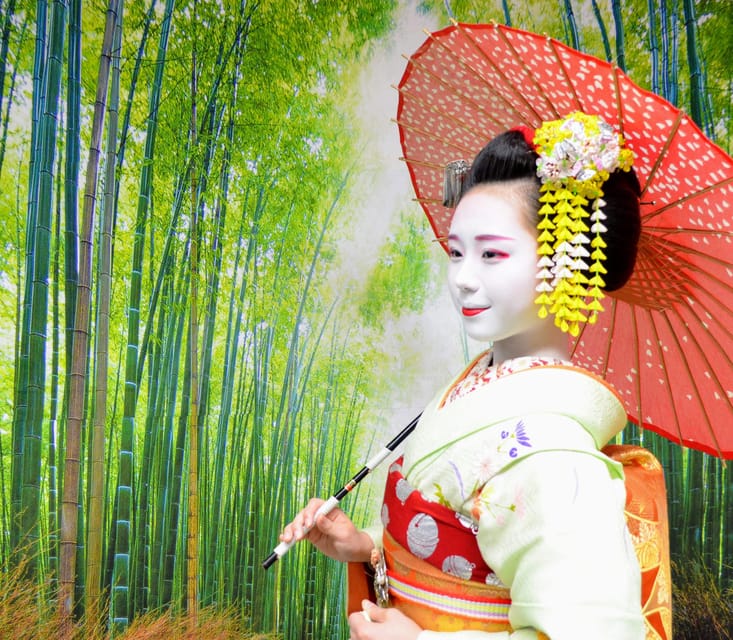
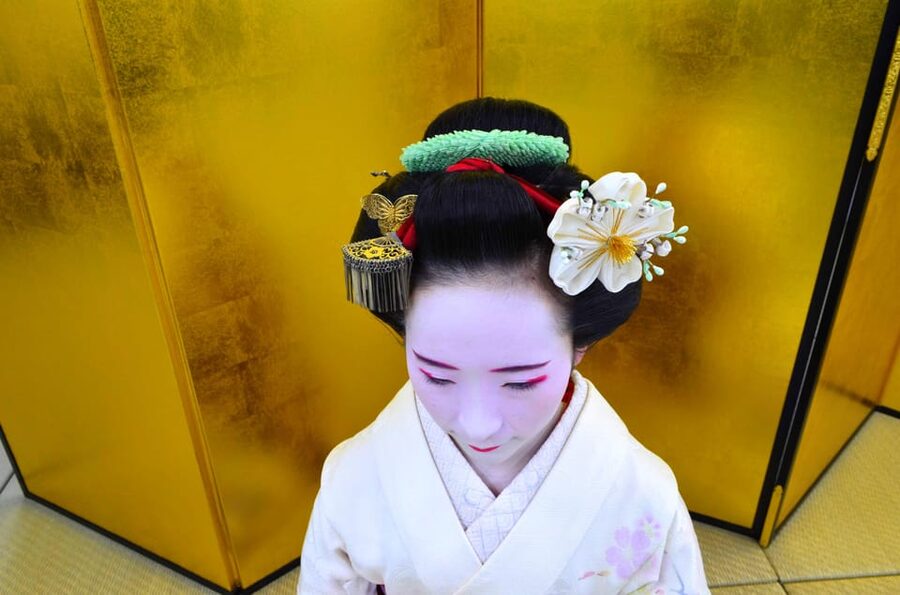
The maiko arrives on stage after a short introduction. Her kimono, hairstyle, hair ornaments, and makeup are part of the lesson. The white face paint, red and black accents, and carefully arranged hair are not simply decorative costume pieces. They help communicate her place within a formal tradition.
The atmosphere is designed for families and first-time visitors. The moderator guides the room in English, explains the customs, and translates the exchange. That structure is useful because the maiko does not need to carry the full burden of explaining a complex tradition in another language.
I appreciate this format for another reason. It offers a way to meet a maiko without treating her as a public spectacle. The event is not a private appointment, but the group is small enough for the interaction to feel personal. With a maximum of 30 participants, you should have a fair chance to see the stage and take part in the question session.
More Kimono Experiences in Kyoto
- [Kyoto & Nara Day Tour] Sagano Scenic Railway & Nara Park & Fushimi Inari Taisha Thousand Torii Gates & Togetsukyo Bridge & Bamboo Grove & Kimono Forest (Departing from Osaka)
★ 4.9 · 10,942 reviews - Kyoto Geisha Walking Tour: Gion District & Hidden Gems
★ 4.7 · 3,273 reviews - Kyoto: Gion Magical Night Walking Tour with Geisha Trivia
★ 4.9 · 2,393 reviews
Two Short Dances With Careful Meaning
The performance includes two traditional dances, lasting roughly 8 to 10 minutes altogether. Do not book this expecting a full evening theater production. This is a compact introduction, not an extended stage show.
Still, the dances are the emotional center of the experience. A maiko’s movements are controlled and deliberate, with small gestures carrying as much weight as larger steps. The performance rewards quiet attention. You will want to watch the hands, posture, fan work, and changes in expression rather than waiting for grand theatrical action.
Because the room is relatively small, the viewing distance is a plus. You are not looking at a distant figure under bright stage lights. The close arrangement helps you notice the details of the kimono and the precision of the movement.
The short length may disappoint you if dance is your main reason for booking. One useful way to think about the schedule is this: you are paying for a cultural conversation that includes a dance demonstration, not for a dance show with a short talk attached.
Photography is allowed during the event, so you can take pictures from your seat. The formal photo session comes later, giving you a more organized chance to stand with the maiko and make a keepsake with your own phone or camera.
The English Explanation Makes the Difference
The English-speaking staff do more than announce the next part of the program. They explain the maiko’s attire and give a brief account of her training and place in Kyoto culture.
That guidance helps you read what you are seeing. Without it, the hairstyle, white makeup, kimono, and dances can blur into a general idea of old Japan. With it, you get a better sense of the discipline behind the appearance and the long preparation required for this work.
The interpreter also makes the question period possible. English speakers can ask about the maiko’s training, daily work, ambitions, and path toward becoming a geiko. Previous questions have focused on her life and work, and the format allows the answers to go beyond a prepared speech.
The quality of this section depends partly on the room and the questions people bring. Some participants have found the discussion especially insightful because it offered a direct look at modern maiko life. Others have felt the schedule moved quickly when many people wanted to ask something.
My advice is to prepare one or two thoughtful questions before you arrive. Ask about training, performance, or the transition to becoming a geiko rather than using the entire opportunity for a broad question that the moderator has already answered. The session is shared with other people, so concise questions give more participants a chance to join in.
A Photo Session That Feels Personal
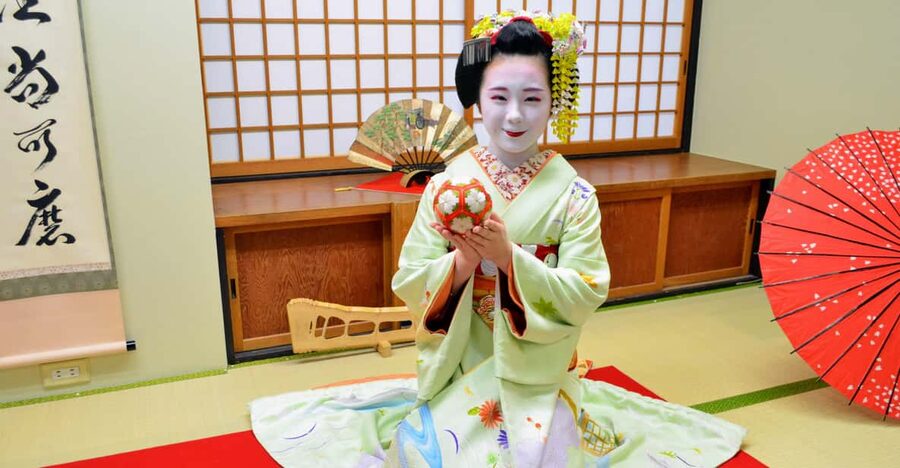
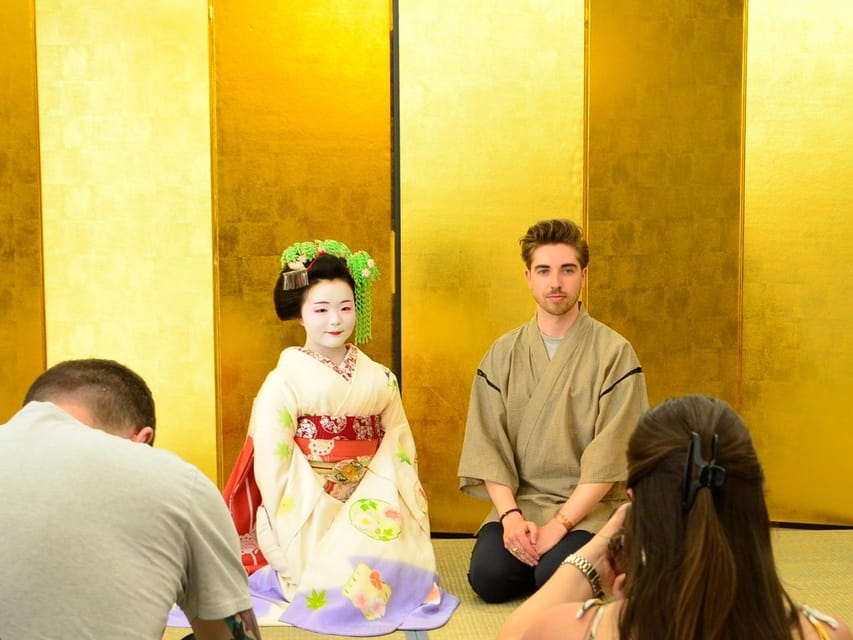
After the questions, about 10 to 15 minutes are set aside for photographs. You use your own camera or smartphone, and staff help organize the process.
This is a simple inclusion, but it adds considerable value. A maiko performance can be difficult to describe once you return home, while a well-composed photo gives you a clear memory of the afternoon or evening. It also means you do not need to pay for a separate photographer.
The photo session is not a private portrait appointment. You are sharing the time with the rest of the group, so keep your camera ready and follow the staff’s instructions. If you are traveling with family, decide in advance who will take the picture and check your phone battery before the show.
The interaction feels more meaningful because it follows the explanation and Q&A. You have already seen the maiko perform and learned something about her training. The picture becomes a closing memento rather than a quick photo taken without context.
A completely different kind of day out:
- PERFECT KYOTO 1-Day Bus Tour
★ 5.0 · 13,518 reviews - Kyoto: Fushimi Inari, Kinkakuji, Bamboo Grove 1 Day Bus Tour
★ 4.8 · 4,316 reviews - Kyoto: Tea Ceremony in a Traditional Tea House in Kiyomizu
★ 4.9 · 3,519 reviews - Kyoto: Gion Make Your Own Chopsticks with Engraving Option
★ 5.0 · 3,465 reviews
The Kyoto Handicraft Center Setting
The meeting point is the Kyoto Handicraft Center, West Building. On the first floor, take the elevator to the second floor and look for the MEET MAIKO welcome sign.
The location has a practical advantage: you can combine the show with browsing Japanese crafts. After the performance, the center offers high-quality goods, including locally made paintings, dolls, and other souvenirs. A small gift is also provided as you leave.
I would allow a little extra time to look around. The center includes museum-level pieces in display cabinets marked not for sale, along with items you can purchase. This makes the venue more than a room where you wait for the show to begin.
The setting is also the clearest weakness. Some people find it easy to locate and enjoy the store, while others find the meeting room somewhat sterile or corporate. It does not recreate the atmosphere of a traditional teahouse, and you should not expect candlelight or an old wooden Kyoto interior.
That trade-off is worth understanding. The modern venue supports clear English interpretation, wheelchair access, orderly seating, and a predictable schedule. If atmosphere matters more to you than comfort and clarity, the room may feel plain. If you want a straightforward introduction without trying to enter a private entertainment world, the location works well.
Timing, Seating, and Getting There
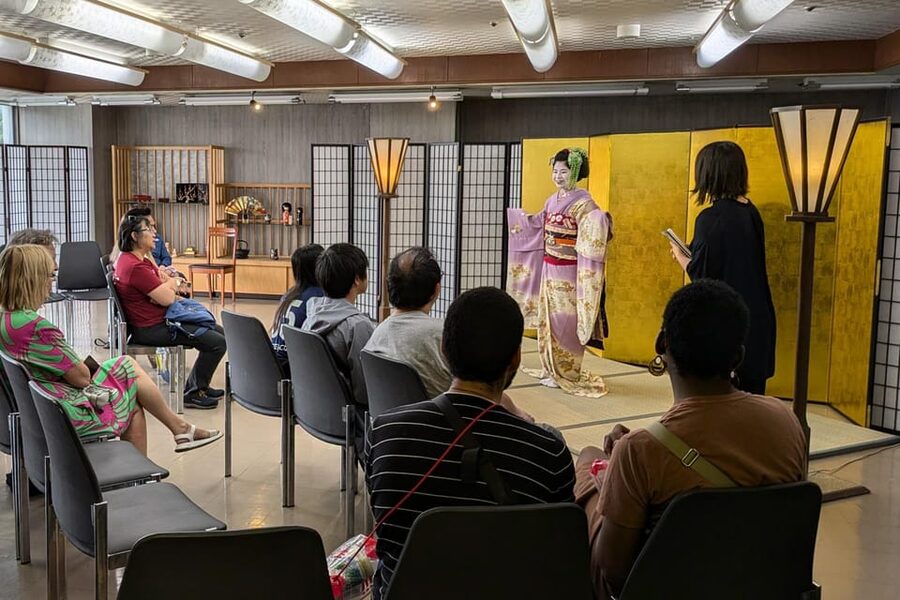
The advertised duration is 45 minutes. Reception opens 30 minutes before the scheduled start, and you should arrive at least 10 minutes early.
Seats are free seating, but all participants can be seated. Arriving early gives you more choice and reduces the stress of finding the welcome sign at the last minute. If you do arrive late, you can still enter during the event, although you may miss the introduction or part of the first dance.
Plan your route carefully in busy Kyoto periods. Taxis can be difficult to catch during high season, and city buses may be crowded. Give yourself more time than the short program length might suggest.
Transportation is not included, and there is no shuttle fee built into the experience. There is also no meal or drink service, no local guide, and no professional photographer. Those omissions are easy to manage, but they matter when you compare the $44 price with a longer guided activity.
Is $44 a Fair Price?
At $44 per person, this is not the cheapest short cultural activity in Kyoto. The show itself includes only two brief dances, so someone interested mainly in performance may decide the price feels high.
I think the value is stronger if you count the entire package. You receive:
- An English explanation of maiko culture and attire
- Two traditional dances
- A live question-and-answer session
- A commemorative photo with the maiko
- A small souvenir
- Access to the Kyoto Handicraft Center before or after the show
The key benefit is access. Seeing a maiko in Gion is never guaranteed, and following one through the streets would not teach you much about her life. Here, you have a scheduled encounter with interpretation and time for questions.
For families, couples, and first-time visitors, the price can make sense as a compact cultural stop. It fits neatly into a day of sightseeing and does not require the expense or formality of a private dinner with geiko or maiko entertainment.
For repeat visitors who have already attended a longer dance performance, the brief dances may feel limited. In that case, the Q&A and the chance to meet a maiko need to be your main reasons for booking.
Who Will Enjoy This Experience Most?
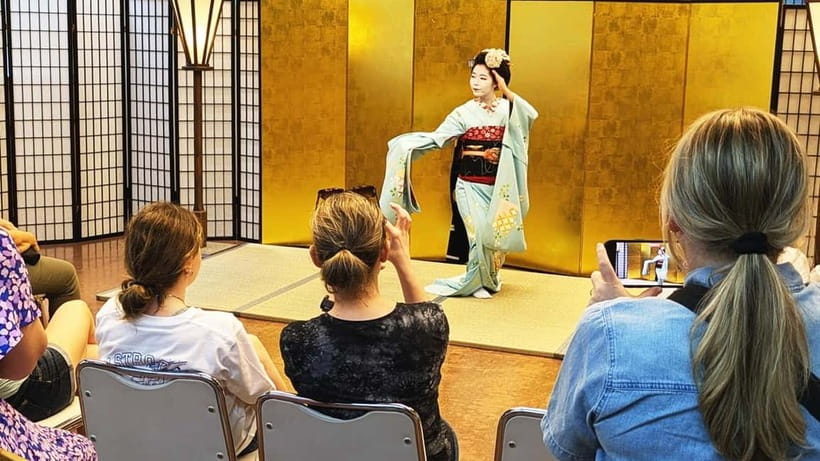
I would recommend it to anyone curious about Kyoto’s traditional arts but unsure how to approach the subject. The English moderation removes much of the guesswork, and the question period makes the event more than a staged demonstration.
It is particularly suitable for:
- Families with children
- First-time visitors to Kyoto
- Couples seeking a memorable photo
- People interested in Japanese clothing, dance, or social customs
- Visitors who want a respectful alternative to trying to spot maiko in Gion
- Anyone with limited time who wants a compact cultural activity
Children aged 0 to 2 can join free if they do not need their own separate seat. The room is wheelchair accessible, and all participants can be seated.
The event may be less satisfying if you want a long dance performance, a meal, a private conversation, or a traditional teahouse setting. It is also a shared activity, not a private plan. Children are welcome, but families should still help them remain quiet during the dances and conversation. A disruptive child can affect the whole room, especially during a quiet performance.
How to Get More From the 45 Minutes
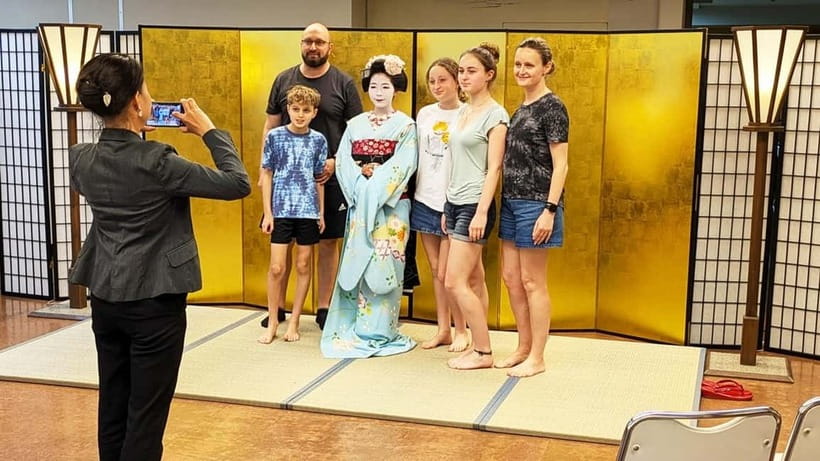
Read a little about the difference between maiko and geiko before you arrive. A maiko is an apprentice, generally young, who is still developing her skills before moving into the geiko profession. Knowing that distinction will help you follow the moderator’s explanation.
Arrive with questions ready. You could ask about the demands of dance training, the meaning of an ornament, the path toward becoming a geiko, or what part of the work she finds most rewarding. The best questions invite a personal explanation while respecting the boundaries of a public event.
Keep your phone available for the photo session, but do not let photography replace watching the performance. The event permits pictures, yet the subtle movements are easy to miss if you spend the dances looking at a screen.
Finally, leave time to browse the Handicraft Center. You may find Japanese-made gifts, paintings, dolls, and other crafts that give the visit a useful second part. You do not have to buy anything, but the displays help place the performance within Kyoto’s wider craft tradition.
Should You Book the Kyoto Maiko Meet-and-Greet?
Yes, if you want a respectful, accessible introduction to maiko culture and value conversation as much as performance. The strongest parts are the clear English interpretation, the intimate group size, the thoughtful Q&A, and the chance to take your own photo with the maiko.
Book with realistic expectations. The dances are short, the venue is functional rather than atmospheric, and the event is shared with other participants. At $44, the price is fair for the direct cultural contact and organized explanation, but less appealing if you are paying only for stage time.
For most first-time visitors, I think this is a worthwhile Kyoto addition. It replaces guesswork with context and turns a glamorous image into a better understanding of the training, discipline, and human effort behind it.
FAQ
How long does the Kyoto Maiko Meet-and-Greet last?
The scheduled duration is 45 minutes. The program includes an introduction, two dances lasting about 8 to 10 minutes total, an explanation of maiko attire and tradition, a Q&A session, and a 10 to 15-minute photo period.
Where is the meeting point?
Go to the Kyoto Handicraft Center’s West Building. Enter on the first floor, take the elevator to the second floor, and look for the MEET MAIKO welcome sign.
Is the event conducted in English?
Yes. English-speaking staff host the event and translate the question-and-answer session.
Can I take photos with the maiko?
Yes. Photography is allowed during the event, and a commemorative photo session is included. You take the picture with your own camera or smartphone. A professional photographer is not included.
Is the activity private?
No. This is a shared event with a maximum capacity of 30 people.
Can young children and wheelchair users attend?
The venue is wheelchair accessible. Children aged 0 to 2 may attend free if they do not occupy a separate seat.
More Show in Kyoto
- Kyoto Sumo Show with Experience & Photo, 2 Drinks Included
★ 5.0 · 941 reviews - Kyoto: Sumo Experience (with Live Show & Audience Challenge)
★ 5.0 · 519 reviews - Kyoto Gion Cultural Walk & Geisha Show with Dining Options
★ 5.0 · 518 reviews - Kyoto Gion Cultural Walk & Geisha Show with Dining Options
★ 5.0 · 483 reviews
Just added in Kyoto
- The “Golden Route” and Ancient Japan by DIAMIR Erlebnisreisen – 14-Day Tour★ 2.0 · 2 reviews
- Japan: Castles & Cuisine by G Adventures – 6-Day Kyoto to Osaka Tour★ 4.5 · 4 reviews
- Cycle Japan by Explore! – 13-Day Kyoto to Tokyo Tour★ 4.7 · 12 reviews
- Cycle Japan by Intrepid Travel – 11-Day Kyoto to Tokyo Tour★ 4.8 · 2 reviews
- Classic Japan by Intrepid Travel – 11-Day Kyoto to Tokyo Tour★ 4.4 · 14 reviews
- Ancient & Modern Japan 14-Day Tour by Exodus Adventure Travels★ 4.4 · 40 reviews
- 5 Day Cultural Adventure of Kyoto, Nara & Osaka by Tourist Journey★ 2.5 · 2 reviews
- 12 Days Kinosaki Onsen Escape: A Journey Through Japan’s Timeless Towns by UME Travel★ 4.8 · 5 reviews
Kimono and Cultural Dress, compared.
![[Kyoto & Nara Day Tour] Sagano Scenic Railway & Nara Park & Fushimi Inari Taisha Thousand Torii Gates & Togetsukyo Bridge & Bamboo Grove & Kimono Forest (Departing from Osaka)](https://media.japanvisits.com/wp-content/uploads/kyoto-nara-day-tour-sagano-scenic-railway-nara-park-fushimi-inari-taisha-thousand-torii-gates-togetsukyo-bridge-bamboo-grove-kimono-forest-departing-from-osaka-k110001-400x257.jpg)

Tokyo Asakusa Kimono&Yukata Rental at Kimono Miyabi Asakusa Station
Read our review →
Kyoto Geisha Walking Tour: Gion District & Hidden Gems
Read our review →
Gion Magical Night Walking Tour with Geisha Trivia
Read our review →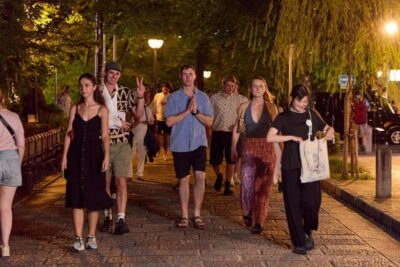
Gion Geisha District Walking Tour – Stories of Geisha
Read our review →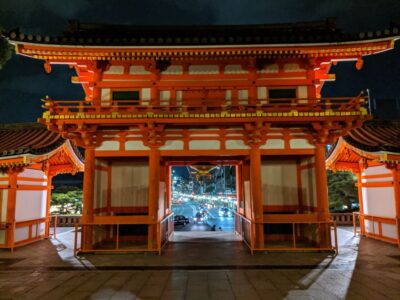
Best of Kyoto: Gion, Geisha, Pagodas & Cobblestones
Read our review →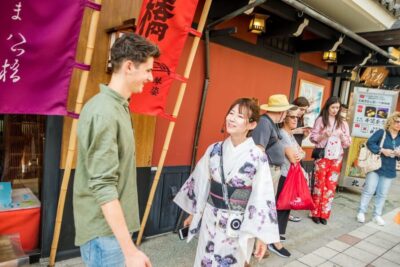
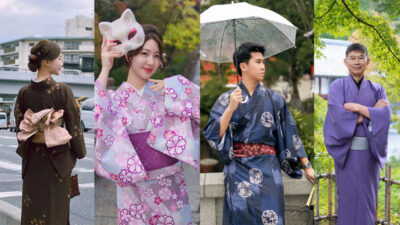
Kyoto Kimono Rental Experience (Optional Exquisite Hair Styling/Japanese Makeup/Photography) (Ookini Kiyomizu-dera Main Store)
Read our review →Browse the lists this tour appears in